One Less Obstacle
Looking at the infrastructure around us through the eyes of people with mobility challenges
As I started doing last newsletter, I'm going to open today by shouting out the local restaurants and establishments that fueled its creation. This week's caloric intake was brought to you by the fine folks at Doyle's, Meconi's, Pho Bac on 11th, Proof, Lele's on MLK, Le Sel Bistro, Olympia Coffee Roasters, Tami’s, and the Lake Limerick Country Club, where we celebrated my mother-in-law's 78th birthday on Saturday evening.
Many of you are familiar with the story of my mom's 2021 accident and her subsequent mobility challenges. Rather than recapping all of that here, if you want that backstory, I suggest you check out this piece.
Subscribe nowThe house my mom lives in is the same house my grandmother lived in. When I was a kid, my mom moved in to help care for my grandmother as her health declined. Now the roles have turned again. My heroic niece lives there, caring for mom. At 85, and after her accident, mom depends on a power chair to get around.
It's unfortunate that it took my mom's accident to make me a disability advocate but I now see the world and infrastructure through her eyes and what I see is often frustrating.
Many of us take our mobility for granted. It is a pernicious form of ableism. We don't think about the spaces that we move through; we are easily able to navigate obstacles. This is to our detriment because if we are lucky to live long enough we will all struggle with some form of disability.
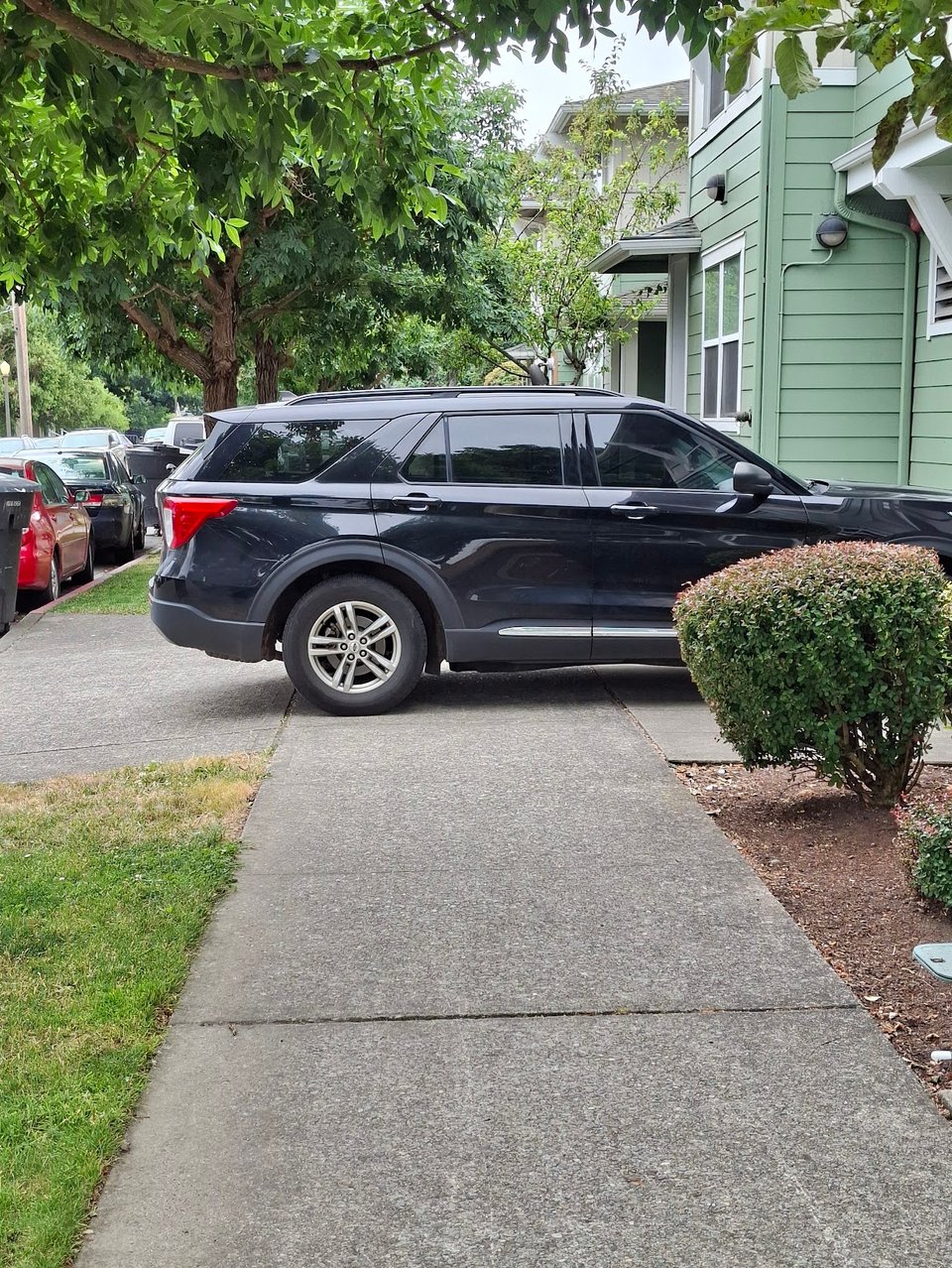
To be clear, I don't assume malice in these instances. But we need to understand that unthinking and careless choices have a rippling impact that goes beyond ourselves. The operator of this vehicle parked their car across the sidewalk with no regard for the people who may need to traverse it. To make matters worse this vehicle was parked across from a supportive housing facility that offers programming for senior citizens, low-income families, and people with disabilities.
It may feel like I'm shoehorning this into the larger discussion, but it's worth taking a brief detour to talk about gentrification and the role it plays in creating mobility obstacles.
At its core, gentrification is the process by which a neighborhood experiences an influx of wealthier residents and investment, often bringing higher property values, new businesses, and changes to the built environment. None of those things are inherently bad. The trouble comes with what often follows: displacement. Displacement occurs when rising housing costs, taxes, rents, or changing neighborhood conditions make it difficult or impossible for longtime residents to remain in the community they call home. The two are closely related, but they are not the same thing.
![Mom and her caregiver, [Redacted], walking along a new sidewalk on MLK next to the light rail](https://assets.buttondown.email/images/b0097b7f-6843-4bf6-98b4-5101df501a64.jpg?w=960&fit=max)
My mom's neighborhood is gentrifying rapidly. Along with the new coffee shops, light rail, and renovated homes has come what I'll politely call more “ambitious landscaping,” which is one of the four buckets of mobility obstacles I want to briefly tackle below:
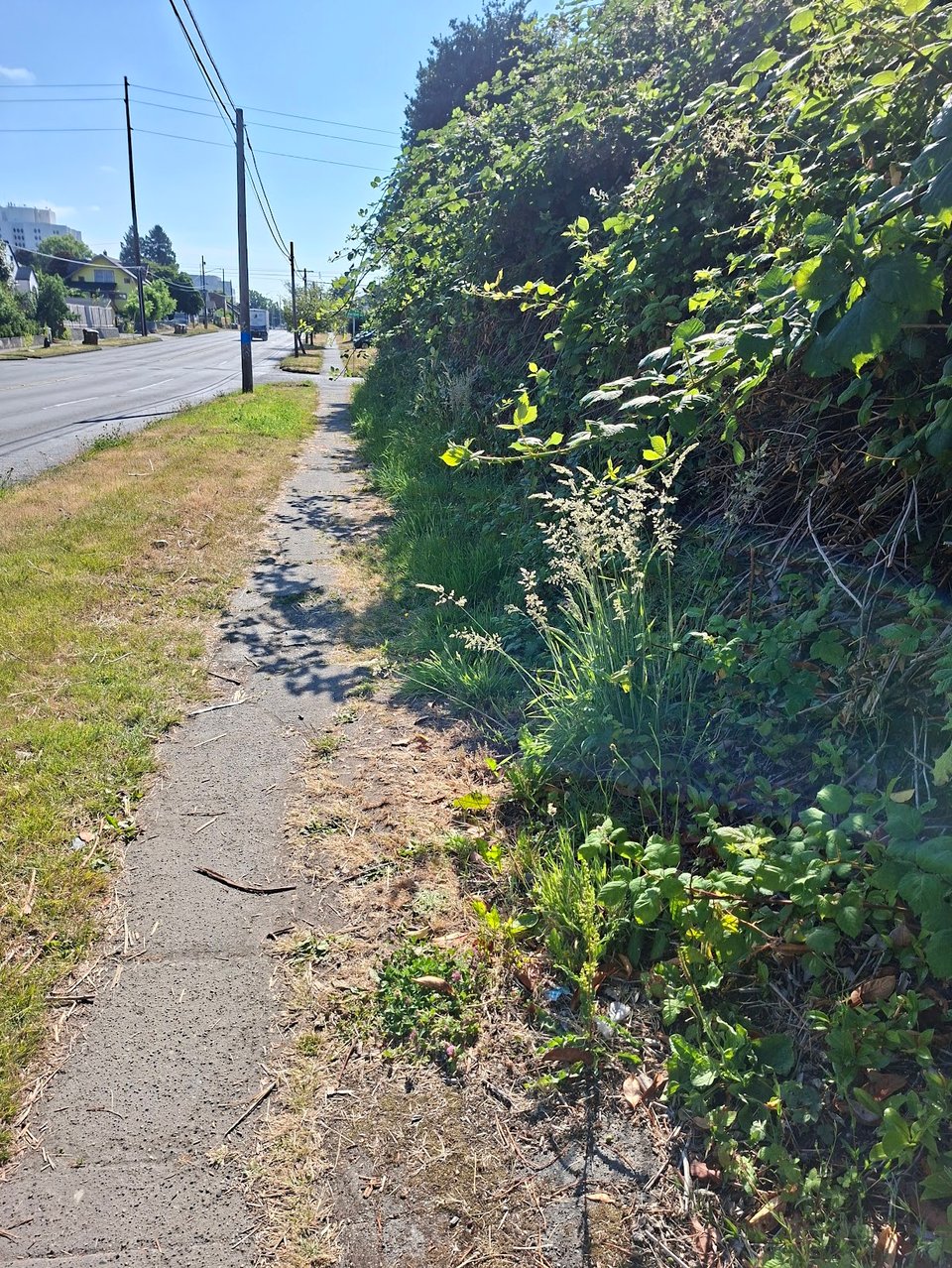
Simple neglect. Hedges, shrubs, and other landscaping are allowed to grow unchecked until they consume large portions of the sidewalk. In some instances the entire sidewalk is blocked or impassable.
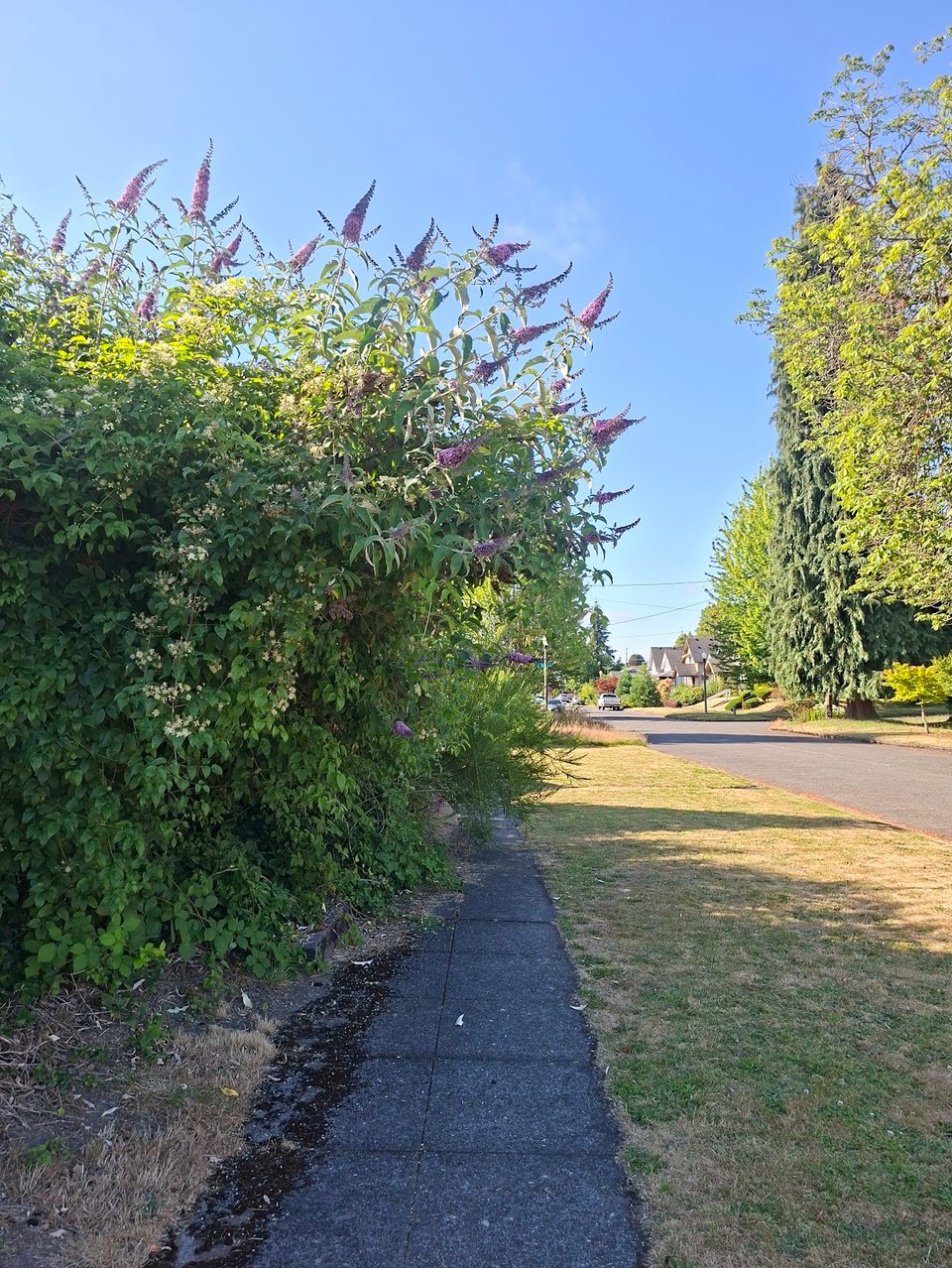
Ambitious landscaping projects. I swear I am not being a hater. Yes, your new giant hedge looks beautiful, but it can inadvertently create a barrier for anyone using a wheelchair, walker, or mobility scooter.
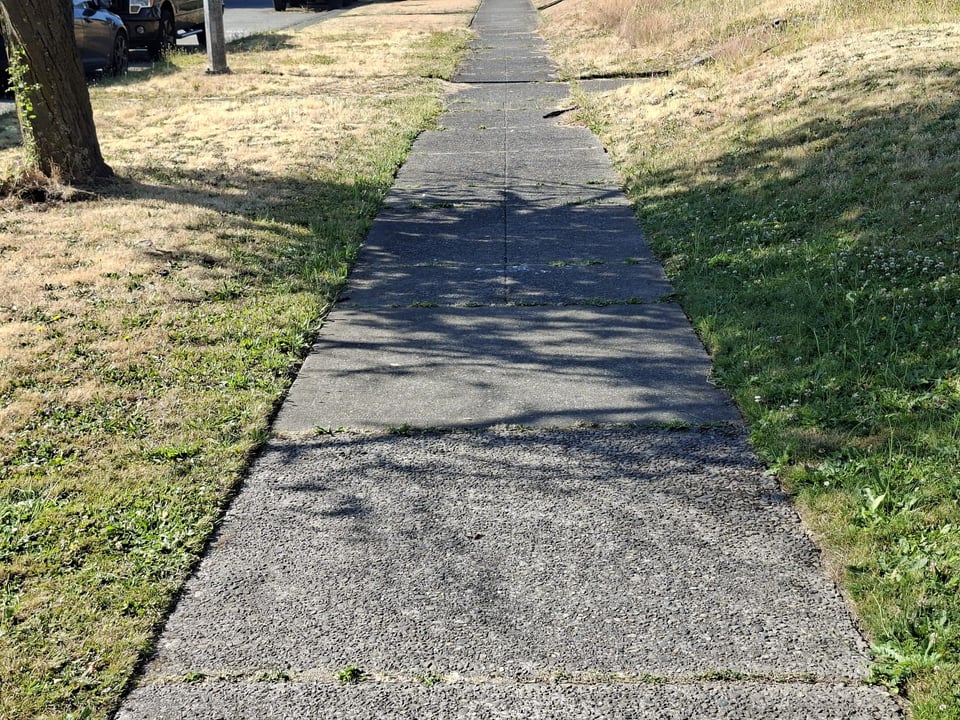
Buckled sidewalks caused by tree roots. I am not daft; I understand the importance of trees in an urban environment. Trees are one of the best investments a city can make. They cool neighborhoods, improve air quality, and make the places where people live feel more humane. But their root systems can also lift and fracture sidewalks, creating obstacles that are impassable for people with mobility challenges. Buckled sidewalks are also a sign of long-term public disinvestment/neglect, a precondition for gentrification.
The absence of curb cuts. Many neighborhoods in the city, including my mom's, were built decades before the passage of the Americans with Disabilities Act in 1990, and their infrastructure reflects that era. A missing curb cut may be a minor inconvenience to an able-bodied person; to someone using a power chair, it can mean the difference between continuing their journey or being forced to turn around.
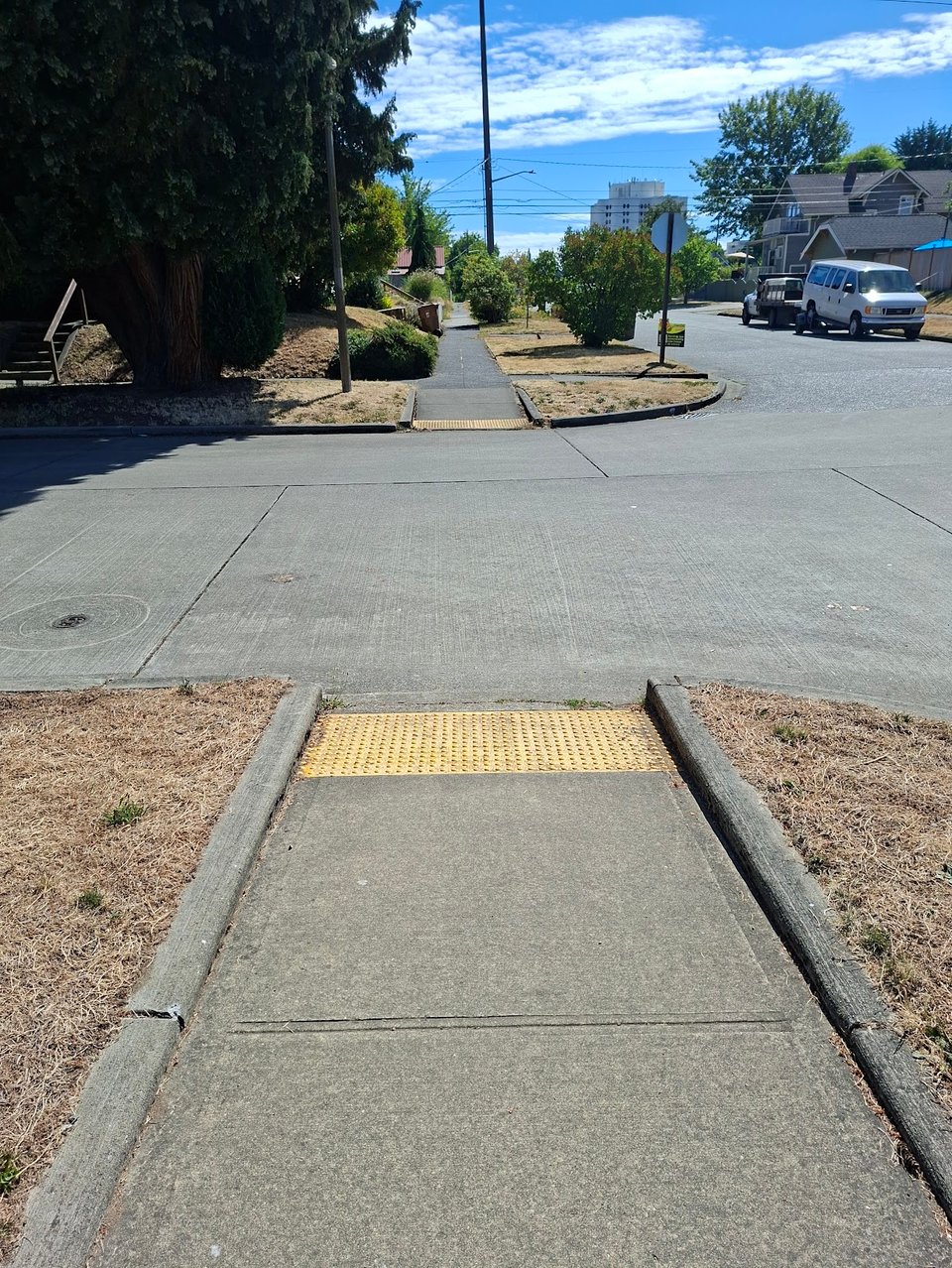
This fourth one is especially important because as I teach in my US government and politics class there is a principle called the Curb Cut Effect (see below), a pillar of inclusive design, that explains that accommodations we make for people with disabilities make life better for everybody. Curb cuts help parents with strollers, people on bicycles, delivery people, or anyone moving around the neighborhood with wheels.
You’ll notice that that list progresses from neglect to infrastructural. I don't wield the power to order sidewalks to be repaired or have curb cuts installed but at the encouragement a friend I have taken matters into my own hands, when it comes to neglect and ambitious landscaping. This summer, I started carrying a pair of garden shears whenever I take my mom around the neighborhood. When we come across an overgrown hedge or shrub blocking the sidewalk, I stop and trim it back.
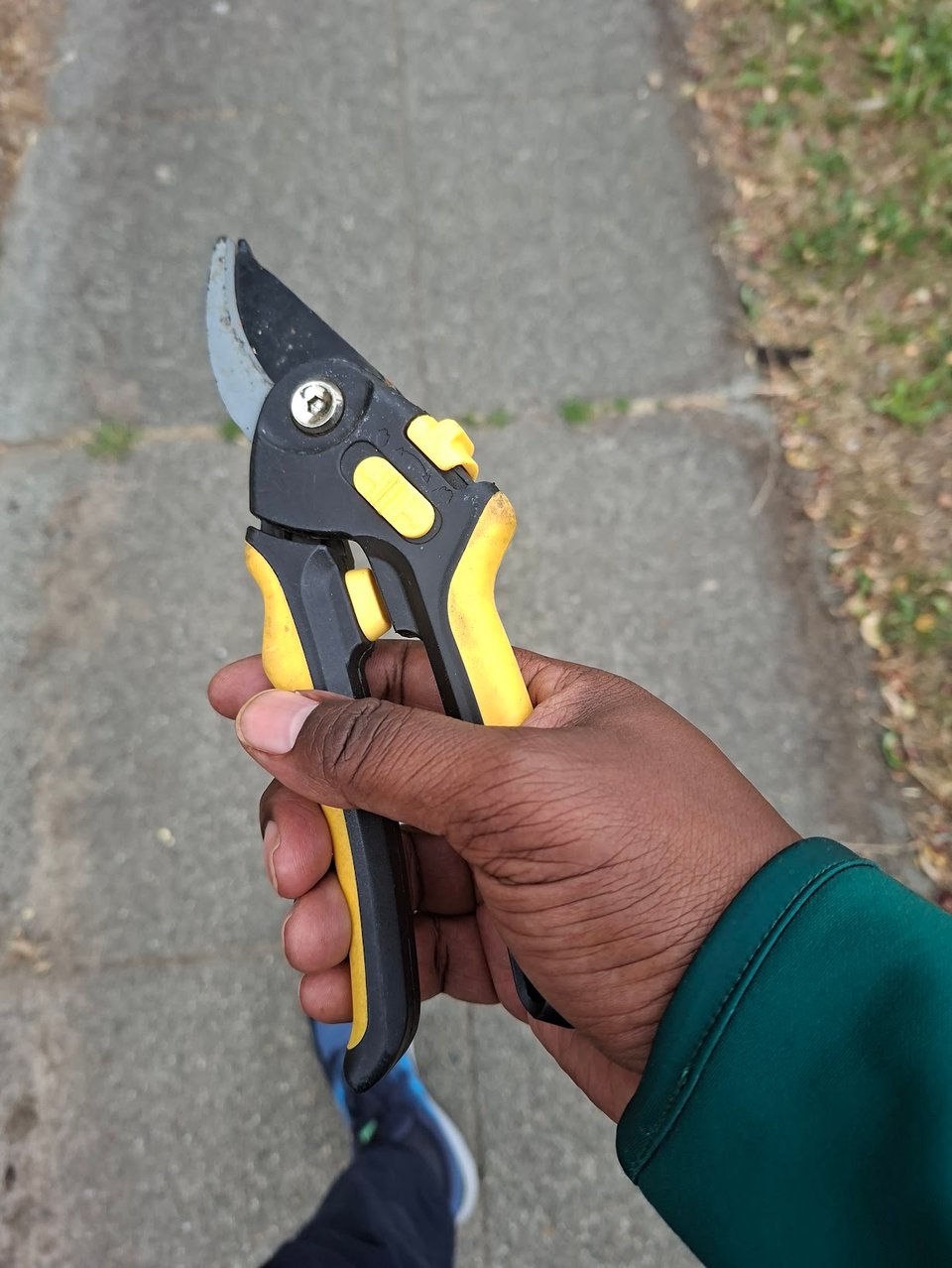
It's not much, but it's one less obstacle than there was five minutes earlier.
So that's my challenge to you. The next time you walk around your neighborhood, try to see it through the eyes of someone pushing a stroller, using a walker, or navigating in a wheelchair. You'll start noticing obstacles you never realized were there. If one of them is on your property, fix it. If it's on your neighbor's, have a conversation. Small acts of maintenance can make a neighborhood dramatically more accessible.
If you're in Tacoma and see mom and me out and about, feel free to honk and wave. We'll wave back.
I'll talk to you next week.