No Red Lines
Tensions are rapidly rising in the region and I know how this goes, unfortunately
W.E.B. Du Bois coined the phrase “double consciousness” in his book The Souls of Black Folk (1903). Du Bois used it to describe the experience of Black Americans constantly seeing themselves through the eyes of a society that devalues them, so that they can never simply be without also watching how they are being perceived. He called it "twoness": two identities, American and Black, forced into one body and never allowed to reconcile.
Subscribe nowIf I am being honest, I’m experiencing a different form of double consciousness today. In the newsletter it’s about time to wind down the series I’ve been writing about AI. I have a bit to say about how anti-scraping measures are making the internet notably worse. But at the same time I am deeply aware of events in the region and the confrontation that appears to be imminent.
I.
The US is signaling that after the upcoming elections (it’s unclear if they mean Israel’s on October 27 or the US on November 3—which itself is something), they intend to renew their attacks on Iran. Iran is signaling back loud as hell that they will respond in ways that have some real implications for my day-to-day life.
This passage from The Guardian piece linked above caught my attention this week. It’s Iran saying we’ve spent the last five months doing our homework and intend to meet fire with fire:
Iran will strike oil facilities, undersea cables, data centres and AI facilities across as many as seven countries in the Gulf in the event of a fresh US-Israeli attack, Mohsen Rezaei, the secretary of Iran’s supreme national security council, has said.
Mehdi Mohammadi, an adviser to Mohammad Ghalibaf, the hardliner who led Iran’s negotiations with the US to end the conflict between the two countries, said Donald Trump and Benjamin Netanyahu had agreed in principle on an attack, but could not guarantee a successful outcome.
He added: “We see the next conflict as an existential threat. The third war in two years means a threat to existence. Our strategy is ‘zero red lines’.”
No red lines.
As you might expect, I have a lot of thoughts about all this but at the same time, I am limited by my employment situation in the amount of commentary I can offer.
I can report that Sunday afternoon was given over to the sober work of contingency planning: an audit of our go-bags, the acquisition of additional household provisions, and the firming up of exit plans for an array of foreseeable scenarios.
We will see what the weeks ahead have in store.
II.
There's an alternate world out there where the AI companies, rather than stealing everything that wasn't nailed down, trained their models on the enormous amount of information in the public domain, estimated at roughly 16 million books and 6.3 million scholarly papers. They didn't choose to do that, because of course they didn't.
You know the story. They scraped everything they could reach, copyrighted or not, licensed or not, permitted or not. Reddit, Wikipedia, books, news, forums, whatever the crawlers touched. Then they called it innovation.
You may have noticed the response.
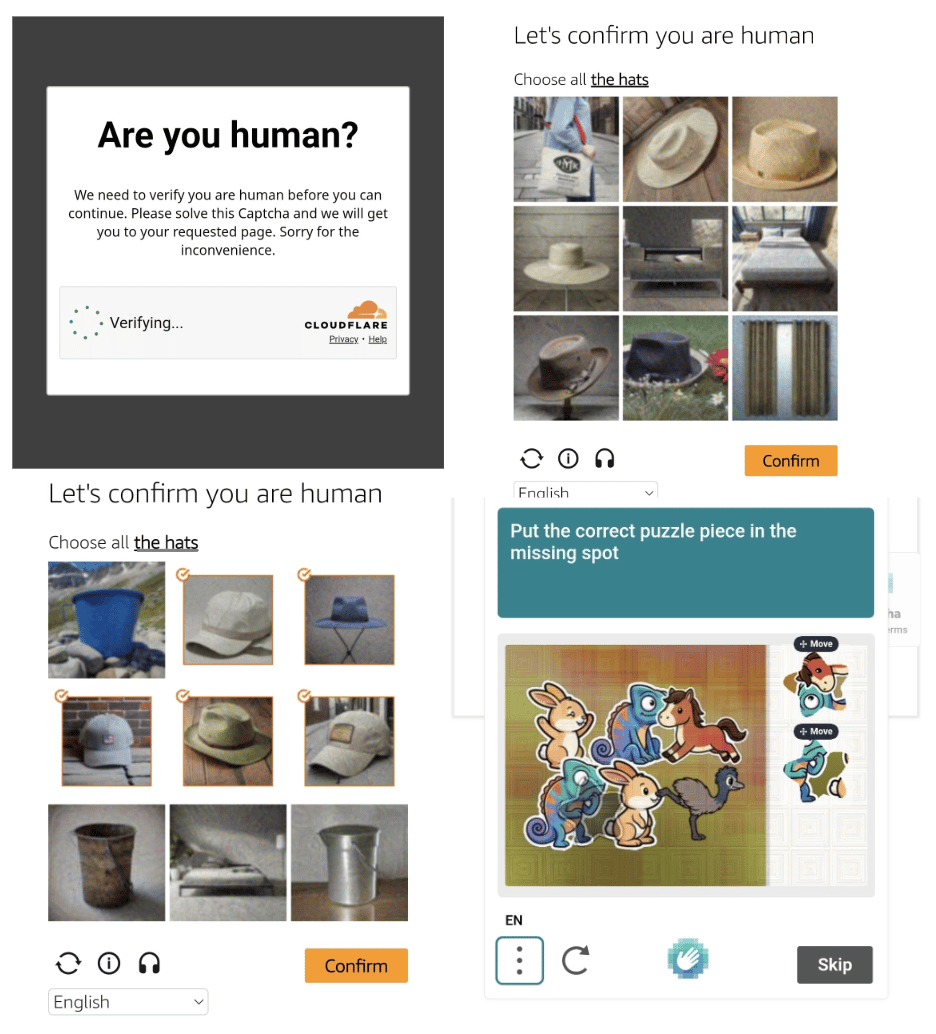
To prevent AI crawlers from taking their materials, many websites are throwing up CAPTCHAs that slow down the user experience for all of us. At first I thought it was just my unique use case. I need to access many websites that are based in the US but geofenced, so I often use a VPN. But I realized recently that it's not my VPN. It's the websites themselves.
Of course, enterprising scammers are now taking advantage of this emerging new status quo and trying to get people to install malware (malicious software) on their devices with fake CAPTCHAs.
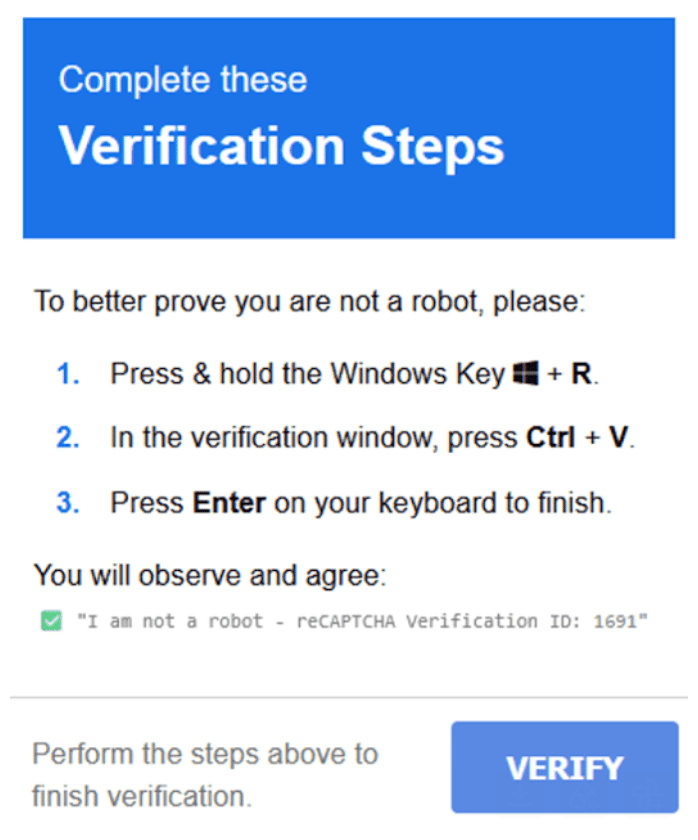
The AI business model is plagiarism. That's the whole thing. They took what didn't belong to them, called it training data, and sold it back to us. And the collective response, from publishers and platforms and everyone else trying to defend themselves, has been to make the internet worse for everyone who isn't a bot. The scrapers adapt. We get the CAPTCHAs.
So the next time you're stuck clicking through traffic lights to prove you're human, remember who you're proving it to. It’s not the thieves; it’s the people who got robbed.
Subscribe now