
The Failures of "Yesteryear," Plus Recent Bylines
Breaking down what works and, mostly, doesn't work about Caro Claire Burke's blockbuster debut "Yesteryear."
This newsletter is free to the public, and appears infrequently due to my chronic illnesses. If you would like to support me, you can subscribe to my podcast's Patreon here. Although I'm on leave, this still helps. Otherwise, feel free to send me a couple bucks through Ko-fi.

Since my last update, I’ve had a couple very big pieces go live. For The Sewanee Review, I interviewed Miriam Toews. This interview is partly available online before you hit a paywall; you can subscribe or buy the issue to read the whole thing. This interview covers Toews’s entire career, though it was originally conceived of in response to her memoir A Truce That Is Not Peace, which came out last year. It is one of my favorite things I’ve done in my career, if not my favorite; Miriam is a truly incredible person and writer and it was a privilege to get to speak to her.
I also wrote about how publishing has responded to the pandemic in an essay for Current Affairs, “We Still Haven’t Processed the Pandemic.” This is also, honestly, one of the pieces I’m most proud of in my career to date; it’s been a very good couple of months for bylines.1 Getting to explore this topic at length, which is obviously very important to me, was incredibly rewarding. Please give it a read (no paywall).
I also wrote a shorter piece for The Sewanee Review’s blog on a new collection of stories by the Irish writer Mary Lavin, focusing on her story “Trastevere,” which you can read online at The New Yorker. I picked this story both because I loved it and because it deals with the topic of suicide, which is one of the central themes of Toews’s work; it felt fitting given that I was asked to write this piece because I had contributed that interview to the print issue of the Review.
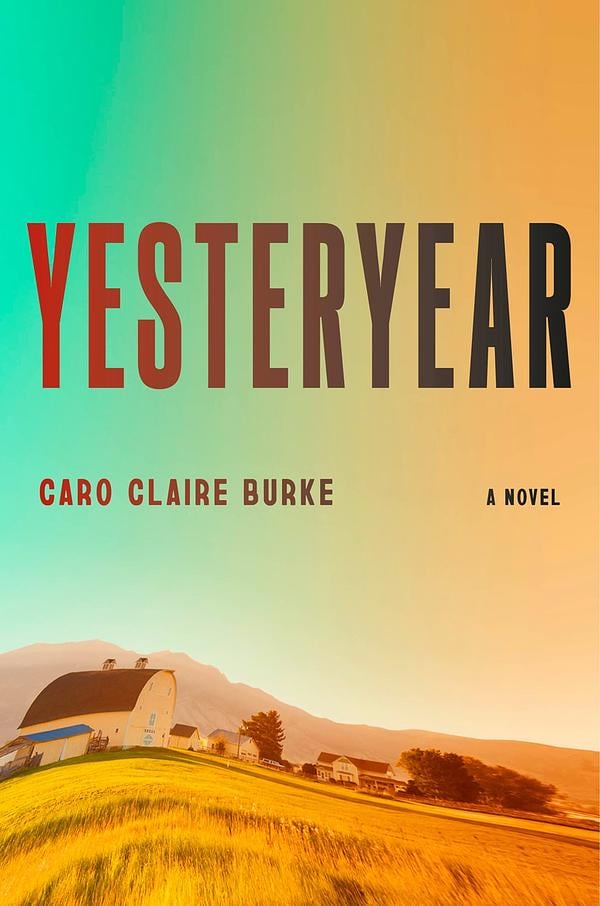
I keep saying I’m going to write about deserving books that have been getting less attention, but I just read Yesteryear, and, like everybody else in America, I have Thoughts. This will also allow me to write a more casual post when I really don’t have the time or energy to write something more polished.
Yesteryear: The Book Taking America By Storm
Do I have to give a synopsis of a book everyone has read or at least heard of? This book tells the story of Natalie Heller Mills, an online sensation whose “tradwife” lifestyle has led to considerable business success. She lives on a farm with her husband, Caleb, and their many children. But one day, she wakes up in 18552, her mid-term pregnancy gone, in a house full of unfamiliar children and an older version (maybe?) of her husband. Suddenly, she has to live like a pioneer for real.
It’s a great premise. The book is, unfortunately, very bad.
Yes, the book is bad, but it is readable. I devoured it in about a day and a half. This isn’t a trivial accomplishment, and writing something that sold so many copies is no small achievement. (I think the book’s popularity has a lot to do with the message it’s sending too, of course, but more on that below.) The pacing is impressive, and I think the writing on a sentence level is very good, too—no big surprise as the author, Caro Claire Burke, has an MFA from Bennington.
I’ve read some reactions to the book that are highly critical of the writing, and while that’s an entirely fair avenue of criticism (obviously, I don’t expect everyone to agree with me), I think I approach this issue from a slightly different perspective than some critics. I remember having a similar reaction to Yellowface (a vastly superior novel to this, it must be said) and seeing others decry its terrible prose. My stance is this: as someone who reads literally hundreds of books every year, I inevitably read a lot of books that are genuinely HORRIBLY written. Right before reading Yesteryear, I read another forthcoming debut that was written really, really badly. So when I picked up Yesteryear the difference in quality was apparent.
What both Yesteryear and Yellowface have in common is that they’re written for commercial audiences. Their prose is not on the level of serious literary fiction, like that of—I’m just looking at the stack of book on my desk—Julie Buntin, Jordy Rosenberg, or Maria Adelmann.3 But writing really good commercial prose is nothing to sniff at either. And it is part of what makes a book read really fast, along with good pacing of course.
That’s basically the only positive thing I have to say about this novel, aside from the fact that Burke obviously tapped into the zeitgeist incredibly effectively; unfortunately, she did so in what reads to me as a purely cynical and false way. To wit…
The biggest problem with this book, to my eyes, is that it is unbelievable in every respect. Psychologically, culturally, practically. The big thematic questions have to do with the protagonist Natalie’s psychology, culture, and religion, but I’m going to leave that for last and tackle the practical aspects of the book, by which I mean plot holes and basic errors, of which there are several.4
Things That Drove Me Crazy Reading This Book
Natalie’s father-in-law, Doug, is a six-term Senator in his fifties. Senate terms are six years long. Do the math.
Doug is obviously a Republican, although Burke annoyingly never explicitly calls him one (we all know! just say it!); his family is deeply Christian (though there’s not much evidence of this…) and when he runs for president later in the book he sounds distinctly Trumpian. But he represents California, which last elected a Republican Senator in 1988.
Natalie meets her husband, Caleb, midway through her freshman year of college. Flash forward, and she’s pregnant in her sophomore year, lording it over her former secular roommate, Reena (who would not be jealous of her situation). She says they got married the summer after their freshman year, which is very fast, though not impossible given their religious backgrounds. Yet the wedding is outrageously elaborate and 400-people strong. This isn’t technically impossible but it is pretty absurd.
There are other logistical problems but they involve the twist at the end. And other basic logic problems, but they involve Natalie’s religion, so I’ll get to them in a minute. These are the most obvious “wtf?” issues that could have been fixed easily. Maybe they seem trivial, but they wrenched me out of the book. The Senate term thing could have been fixed in five seconds.
This illustrates my big complaint about books I’ve been reading this summer, which is that they are not getting edited. I can’t tell you how many galleys I’ve read and felt that there was little to no editing happening, either because I noticed basic errors like this, or because the larger picture felt deeply flawed. (In the case of this book, both.) This feels demoralizing and depressing as a reader and the lack of quality control is a serious problem if publishing wants readers to keep a level of faith in their product.
Of course, the people at Knopf would probably say: what does it matter? The book has sold a zillion copies. It is hard to refute this logic.
If you’re enjoying, subscribe below:
Subscribe now
Anyway. As I was saying…
The bigger problems with this book, which speaks to a lack of editing or thought about its deeper ideas rather than these smaller details, lie with Natalie’s personality and psychology. Natalie and her husband, Caleb, the two most important characters in the book, make no sense, because Burke has constructed them from the outside in, building them based on her ideas of tradwives, influencers, and fundamentalist Christians without taking the time to seriously think about how people who occupy those identity categories (such as they are) actually experience the world. As an influencer, Natalie is more or less persuasive, though not all that interesting (she approaches her project with complete cynicism). As a Christian, she reads as the creation of a secular person who doesn’t understand deeply religious people at all.
I did not grow up evangelical, but Natalie struck me as an utterly phony evangelical. She rarely prays; when she does it feels fake; she thinks things like, “America hates women,” which seems a lot more like an observation a liberal woman would make than a deeply conservative Christian one would. As Jerusalem Desmas writes, “The word “God” is invoked more times as a curse (‘God no,’ Natalie laughs when asked about getting plastic surgery) or descriptor (‘God-awful quilt’) than as the central figure of any Christian’s life.” Natalie doesn’t believe what she’s selling; Burke doesn’t believe what she’s selling. Natalie’s beliefs are a vague fiction made up of stuff Burke read online.
Other people, with a deeper grasp of the fundamentalist world, have parsed this more deeply than I can: Amy Colleen points out that Burke gives no sense of Natalie’s religious community (she doesn’t have one), which is unrealistic and contributes to the novel’s feeling of vagueness. (Ditto Caleb’s family, whose religion is assumed but almost never mentioned.) Both Colleen, Holly MathNerd, and Desmas above call out Burke for her amazingly stupid comment in which she says, “whether it’s Mormonism or evangelicalism or Jehovah’s Witness, it’s really all the same in terms of how women are treated and what the expectations are for them. There are, of course, minor differences.” (Minor differences?!) Therefore, Burke didn’t specify a denomination for Natalie, making Natalie’s entire religious experience fuzzy and unspecific.
What is the point of writing a book about the perils (or evils) of evangelical Christian (or Mormon?)5 tradwives if you don’t actually understand, or attempt to understand, how religion affects these women? I don’t understand why this book exists, except of course to make money. Which it has.
I can’t even get into how incoherent Caleb, the husband, is; let’s just say he evinces a similar lack of psychological realism, changing dramatically in character to suit the narrative’s needs, much like a character in a Thomas Hardy novel. This is the biggest insult I can throw at a novelist. Thomas Hardy sucks.
Basically, this book was written by a highly educated secular woman for highly educated secular women, sneering at evangelical Christian women. I think this is cheap. Right-wing Christian women are not a category of people I sit around feeling sorry for most of the time; the problem is that Burke doesn’t seriously try to interrogate how women in this deeply patriarchal culture are so often both victims and perpetrators of reactionary politics. Instead, Natalie is a weird facsimile: a woman who thinks and talks a lot like a highly educated liberal woman, but who nominally holds conservative beliefs. She makes no sense, but given how well Yesteryear has sold, she clearly makes female liberal readers feel a sense of security in their own identities and (facile) ideas about women on the right. The very idea of sending a tradwife back in time to life in the olden days for real is punitive. It’s a compelling premise, but a mean one. (Also, the sections that take place in the past are boring, which neutralize the promise of the premise. Sorry.)

And now for the twist
It’s clear from early on that Natalie hasn’t actually time-travelled back to the 19th century; something weirder is going on, though it’s not clear what. Instead, it turns out that Natalie has had a psychotic break, been routinely drugged by Caleb and her young children (she’s kept giving birth), and doesn’t remember making the decision to live like settlers for real, without modern conveniences.
This is pretty stupid because the end of the book revolves around Natalie and Caleb having been in hiding from the authorities for years, except they are literally at the same address where they have always lived. (Did the police not just… ring the doorbell at some point?) Their oldest daughter, Clementine, who has been living outside all this madness, shows up with a warrant to take their younger children away, as though she is somehow the police; they give up without a fight, because the narrative says they must. Their decision to birth these children at home without modern medicine has apparently rendered one of them intellectually disabled, though her behavior in the book basically seems like that of a normal little kid (I am truly ??? at this and I can’t think about it anymore). Natalie goes to jail for thirty years for child abuse even though the kids were not physically abused or starved and also she was drugged out of her mind and psychotic.6 The end.
In short: alsad;suhfapdhfapdh????????
Life is too short to get into just how stupid all this is. In the final analysis, though, Burke withdraws agency from Natalie, making her belief in tradwivery, conservative ideals, and so on not something she genuinely believes in or wants to do (even for the cameras, it’s a gimmick to make money), but instead something over which she has no control because she is literally crazy. Interestingly, another trad wife novel, creatively titled Trad Wife, by Sarah Langan, does something similar, albeit with a very different plot. That book isn’t out yet so I can’t say much more, but the opening pages suggest as much, and the book being marketed as a horror novel also suggests as much, so I don’t think I’m spoiling too much here.
Is it so impossible to believe, or tolerate, that women are making these choices affirmatively? Yet also living within a system that, as I said, offers them few other respectable outlets for their creativity and drive. This is a genuine paradox, one that a writer with deeper thoughts on this subject might be able to probe (though the subject is possibly better suited for nonfiction). Instead, Burke makes her narrator a crazy person who can’t make choices for herself or understand her own life. How boring.
If you’re sincerely interested in family influencers, I recommend reading Fortesa Latifi’s excellent book Like, Follow, Subscribe, which doesn’t focus on tradwives but seriously interrogates some of the ideas Burke fails to in Yesteryear.
Leigh Stein also wrote a good piece about the real history that Yesteryear fails to grapple with, which I didn’t have space to mention anywhere else.
But I don’t have much coming up… commission me!! ↩
The galley I read sends Natalie back to 1805, which feels fair to say because it’s already been mentioned by other people, a lot. This speaks to the nonspecific nature of the book’s depiction of “the past,” though it’s good they at least fixed this error (there were no pioneers in Idaho in 1805; the Lewis and Clark expedition set out in 1804). ↩
I do want to say that R. F. Kuang’s new book, Taipei Story, out in September, is serious literary fiction and written brilliantly. It’s her best book. That isn’t really a dig at Yellowface (even if this new one is better); they’re just trying to do different things. ↩
In theory, some of these errors could have been fixed for the final version of the book; I have a galley, which means I can’t quote directly from the book. But most are too embedded in the novel, and probably the easiest fix (the Senate term issue) did make it through because a friend of mine referred to it and she read the finished book. Whoops! ↩
Natalie is obviously based on Hannah Needleman of Ballerina Farms, who is Mormon; there are a couple mentions of Utah etc. in the book, but otherwise no indication that Natalie is Mormon. Yet some readers seem to think she might be, largely because of the real-life connection. A mess! ↩
This is obviously a reference to the Ruby Franke case, but Franke’s actions were considerably worse; Natalie and Caleb might lose custody but the parental rights movement is pretty strong these days, as you might have heard. ↩

