Issue #4: A buyer for lunar water shows up
Mars Mining Weekly Briefing, issue #4. By Mars Mining Desk.
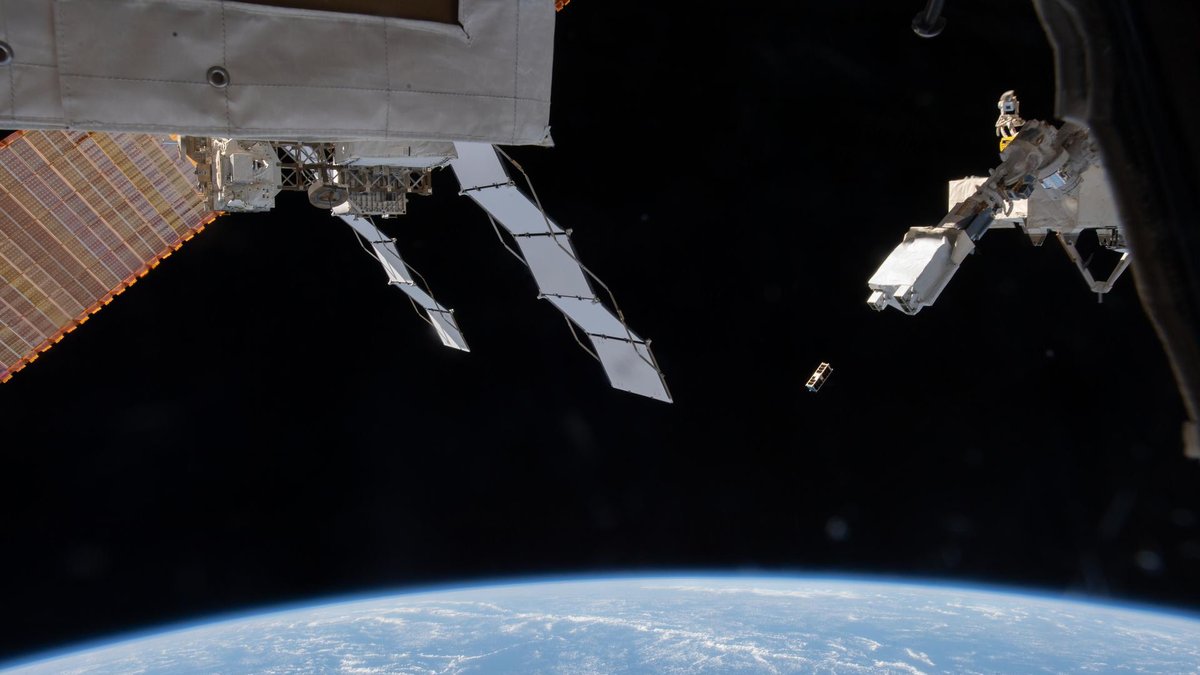 Image: NASA (ISS061-E-51961, Nov. 20, 2019). Deployment of AQT-D, a University of Tokyo CubeSat that tested a water propulsion system.
Last week we said the tanker count was the most useful figure in space resources. This week a company showed up that wants to buy plain water instead of cryogens, and Blue Origin said it may land without transferring propellant at all. First, the things you can apply to.
Opportunities
One day left on the Isakowitz scholarship. The Matthew Isakowitz Commercial Space Scholarship closes Nov. 6 at 11:59 p.m. ET. Graduate students, U.S. persons only, three essays including a 400 to 600 word policy memo or investment thesis. If the memo isn't drafted, tonight is the night. Everything else with a date is on our deadlines page.
ESA's Lunar X-view challenge is open. Match a rover panorama to an orbital map on Kelvins. Free, automatic scoring, public leaderboard. Rules: ESA's announcement.
Five early-career and trades roles posted this week, from the internship board, the entry-level board and the trades board:
- SpaceX, Apprentice Weld Support Technician (McGregor, Texas)
- Relativity Space, Additive Post Processing Technician I (Long Beach, Calif.)
- Rocket Lab, Ground Systems Engineering Intern, Summer 2027 (Middle River, Md.)
- Blue Origin, Facilities Design Civil Engineer I (Space Coast, Fla.)
- SpaceX, New Graduate Engineer, Mechanical, Starlink/Starmind (Bastrop, Texas)
The weld apprenticeship is the one to notice if you don't have a degree. McGregor is where SpaceX fires engines. Relativity's additive post-processing role is the same story on the printed-metal side. Blue Origin's civil engineer I listing is the Florida buildout catching up with the lander race below.
This week's homework
Read lunar water ice, explained, then write one paragraph naming who would buy the water and in what form. If you can't name a buyer whose fuel spec is simpler than cryogenic LOX/LH2, the Argo story below is why that paragraph matters.
The news, briefly
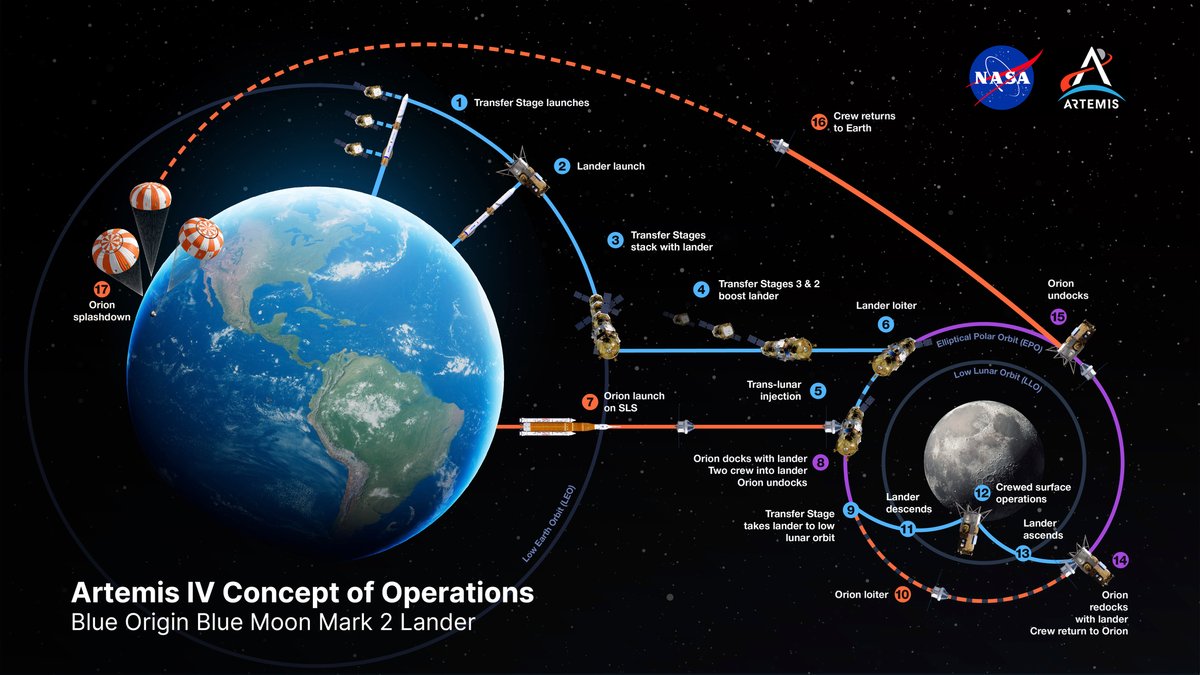 Image: NASA (Artemis IV concept of operations, Blue Moon Mark 2, Oct. 2026)
Blue Origin will try the first Artemis landing without orbital refueling. NASA still hasn't assigned 2028 to either company. It will pick "based on lander readiness," NASA said Oct. 23, and NASASpaceFlight reported Oct. 29 that Blue Origin's plan stacks three transfer stages instead of moving cryogens between ships. New Glenn still has to return to flight after the May pad anomaly; the tower is back up and the company is aiming to fly before year-end. Our read: Blue traded an unproven technology for a launch-count problem. If that works, the first U.S. landing in 50-plus years doesn't need propellant transferred in space, and lunar ice slips off NASA's critical path. A SpaceX win keeps orbital fuel in the middle of the program. For job seekers, the pressure is Florida and Huntsville: lander build, a second pad, rendezvous and propulsion. Our take.
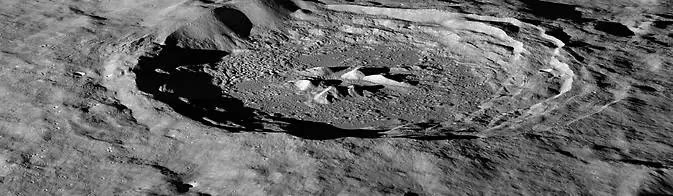 Image: NASA/GSFC (Lunar Reconnaissance Orbiter)
Argo Space wants a fleet that runs on water. That is a lunar ice customer. Three former SpaceX engineers in El Segundo are building spacecraft that launch with liquid water, electrolyze it in orbit and burn the gas. Ars Technica's Nov. 3 profile puts Chiron around 200 kilograms with more than 2 km/s of delta-v, and Argonaut at up to 1,400 kilograms of payload. ispace has a signed contract for Argonaut to haul a lunar relay "as early as 2027." The cold water: Argo's first demonstrator lost a solar array in July and never fired its thrusters. A buyer whose fuel spec is "water" still skips most of the cryogenic chain a lunar miner would otherwise have to sell. For job seekers, a team under 30 people hires generalists who can own electrolysis, power, thermal and transfer guidance. Our take.
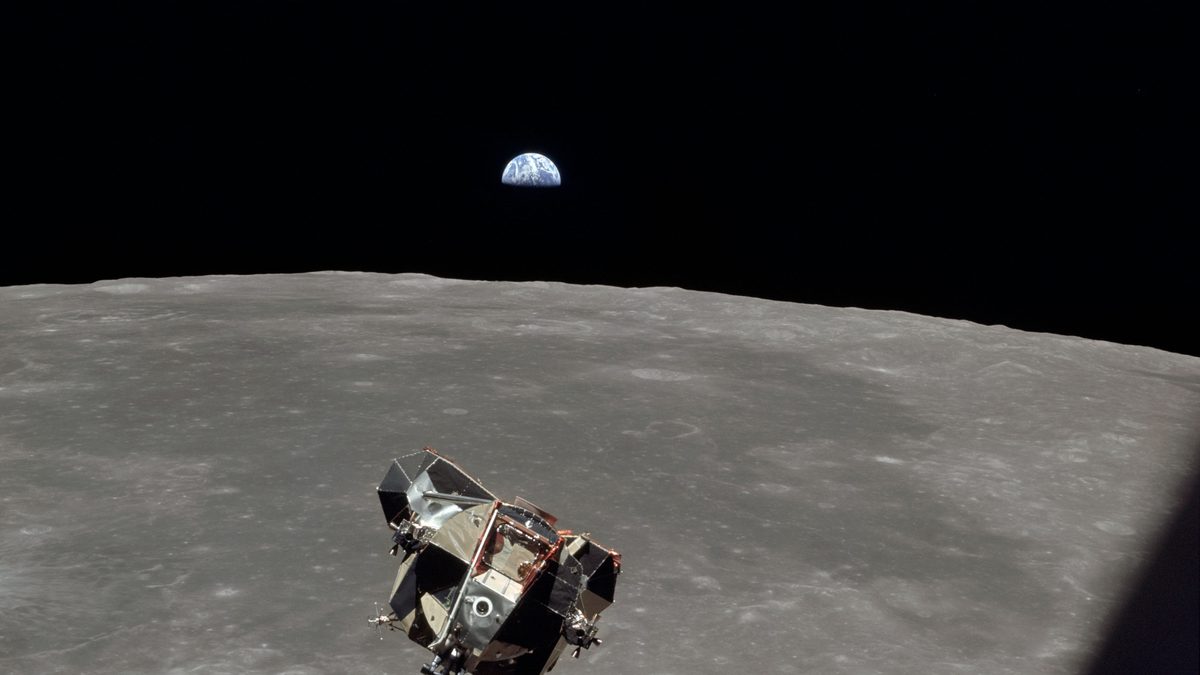 Image: NASA (Apollo 11, AS11-44-6642, July 21, 1969)
China dated its crewed landing. Its chief designer put mining last. At a Beijing symposium on Oct. 31, Wang Xiang walked through four flights to a landing "before 2030," Ars Technica lined up from the slides: uncrewed Mengzhou in early 2027, uncrewed Lanyue in 2028, uncrewed lunar-orbit docking in 2029, then three astronauts with two on the surface. The line that matters for resources came from the state rocket maker: build knowledge "before moving into resource utilization." Anyone reading China as a sprint for south-pole ice is ahead of Beijing's own sequence. Lanyue cargo and nuclear variants are the industrial plan; that tonnage lives in the 2030s after Long March 9. For U.S. job seekers, a race framed against China won't loosen export controls. Our take.
Read next
If the Argo piece caught you, read lunar water ice, explained, then ISRU basics. Other paths are on the topics page.
What would change our mind this week: a New Glenn return-to-flight that slips into 2027, or a Chiron burn that shows the electrolyzer can't keep up. Either would shrink the near-term case we just made.
See you next Thursday.
Mars Mining Desk