Issue #5: NASA puts a drill on the ice
Mars Mining Weekly Briefing, issue #5. By Mars Mining Desk.
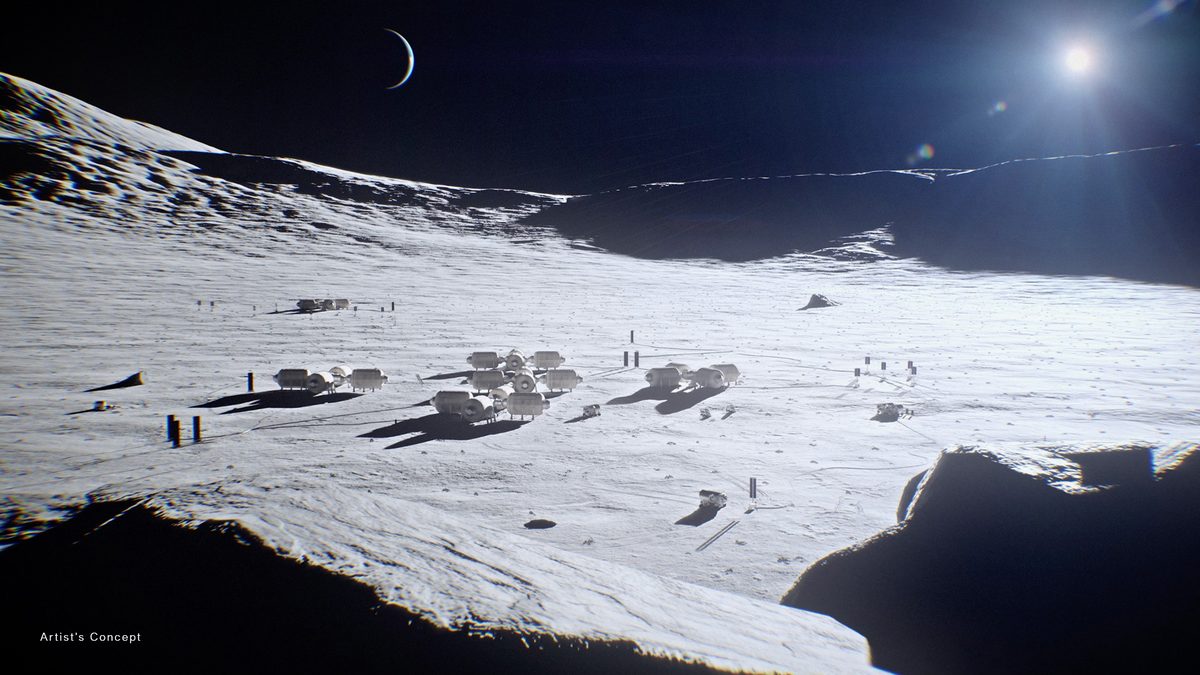 Concept illustration: NASA, living and working at Moon Base.
On Oct. 21 we said NASA's Moon Base rovers would count as prospecting only if one of them carried a drill. On Saturday one did. The same week, a Texas lab got paid to find out whether icy lunar soil can be dug at all, and NASA opened its astronaut application with a lunar geology line in the training list. First, the things you can apply to.
Opportunities
NASA's astronaut application closes Dec. 3. U.S. citizens have until 11:59 p.m. EST. The bar is a STEM master's plus three years of related work, or one of the listed equivalents (two years toward a technical doctorate, a medical degree, test pilot school). NASA's own numbers from the last call: more than 8,000 applications, 10 candidates. If you clear the bar, apply. If you don't, read our breakdown of who qualifies as a three-year job plan. Other dates are on the deadlines page.
Five early-career roles posted this week, across space, robotics, AI and the shop floor. More on the internship board and the entry-level board:
- Blue Origin, Planner/Scheduler I (Huntsville, Ala.)
- Varda Space, CNC Lathe Machinist I and II, Prototype Shop (El Segundo, Calif.)
- Relativity Space, Vehicle Fluids Hardware Development Engineer I (Long Beach, Calif.)
- Skydio, Systems Engineering Intern, Summer 2027 (San Mateo, Calif.)
- Waymo, Summer 2027 ML Intern, MS/PhD, Simulation Realism (World Model) (Mountain View, Calif.)
Blue Origin shows up on nearly every line of Saturday's NASA awards. Its planner job helps stand up scheduling for a new production program, and the listing pitches it to someone early in their career: a way onto flight hardware without designing it. Varda's prototype shop is the trades entry this week. The Waymo internship is the AI pick: world models for driving simulation are the same problem a lunar rover team has when it can't test in the real place.
This week's homework
Read lunar water ice, explained, then write down the two numbers a drill core gives you that an orbital hydrogen map can't. Hint: both show up in the PROMISE item below. If you're coming from a trade instead of a degree, the data center and AI trade programs guide was updated Nov. 7.
The news, briefly
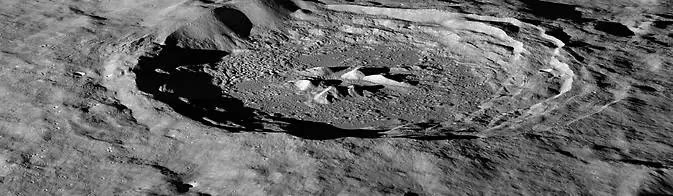 Image: NASA/GSFC (Lunar Reconnaissance Orbiter)
NASA's Moon Base awards put a drill on the ice. NASA announced PROMISE on Nov. 7: a nuclear-powered rover, assembled by JPL largely from Curiosity and Perseverance spares, that drills about 1 meter down to characterize ice. Nuclear power lets it work through the lunar night and inside permanently shadowed craters. Target is a late 2028 launch and an 18-month mission. Payload reports an expected cost under $400 million and a Blue Origin Mark 1 landing under a $94 million base contract. Our read: that's the first real grade-and-depth dataset any ice business plan will get, around mid-2030. The bigger hiring story is the rest of the list, including CLPS 2, eight lander companies sharing up to $10 billion over 10 years. Our take.
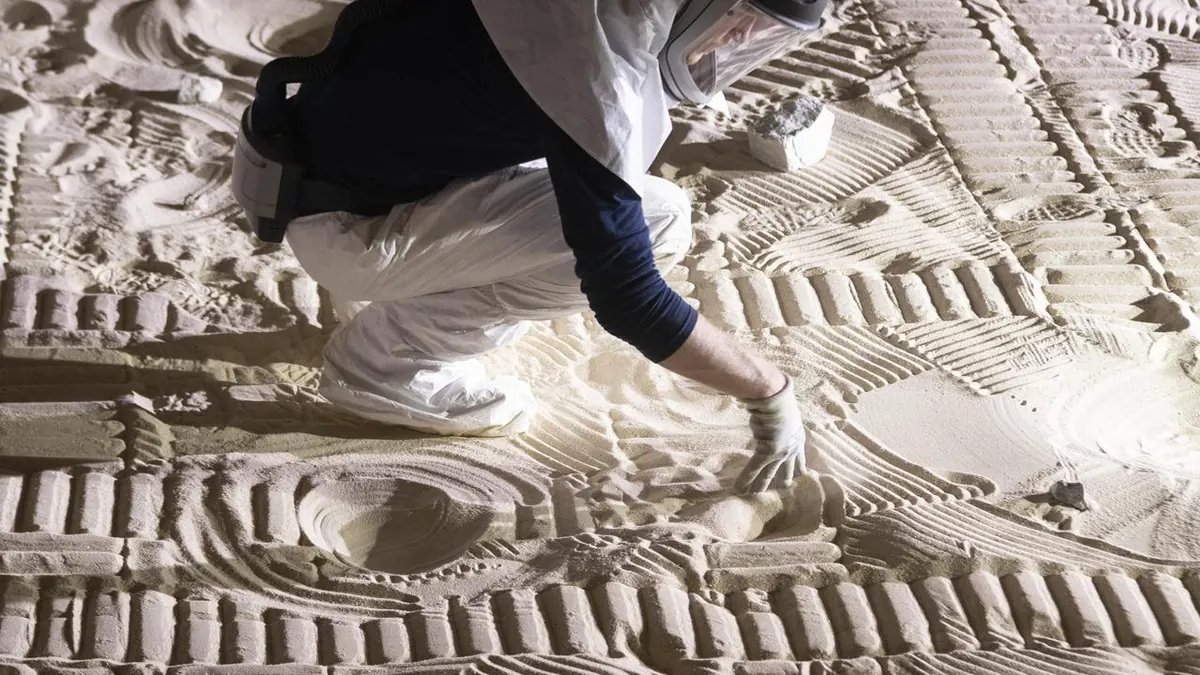 Image: NASA/GRC (VIPER test rover, SLOPE Lab, NASA Glenn Research Center)
A Texas lab gets $1 million to find out if icy Moon dirt is diggable. UT San Antonio will build a chamber that dials in polar temperature, pressure and radiation, then measure cohesion and flow of icy regolith as it cycles. The university's word for it is "scoopability," and nobody has good numbers. Every excavator and conveyor design waits on them. The award, one of 12 under NASA's M-STAR program, also funds three students a summer at JPL, Johnson or Goddard, with paid interns starting in spring 2027. Our take.
ESA is paying for spreadsheets, and that's fine. A Nov. 5 ESA update named three teams modeling lunar resource economics: Imperial College London on construction and manufacturing, the University of Luxembourg on propellant, and Poland's MIRORES on helium-3, using an LLM-driven tool that runs Monte Carlo cost models to find the break-even mass of helium-3 returned to Earth. We'd read that last one first. Our helium-3 reality check says the buyers exist and the reactors don't; a public break-even number would test that.
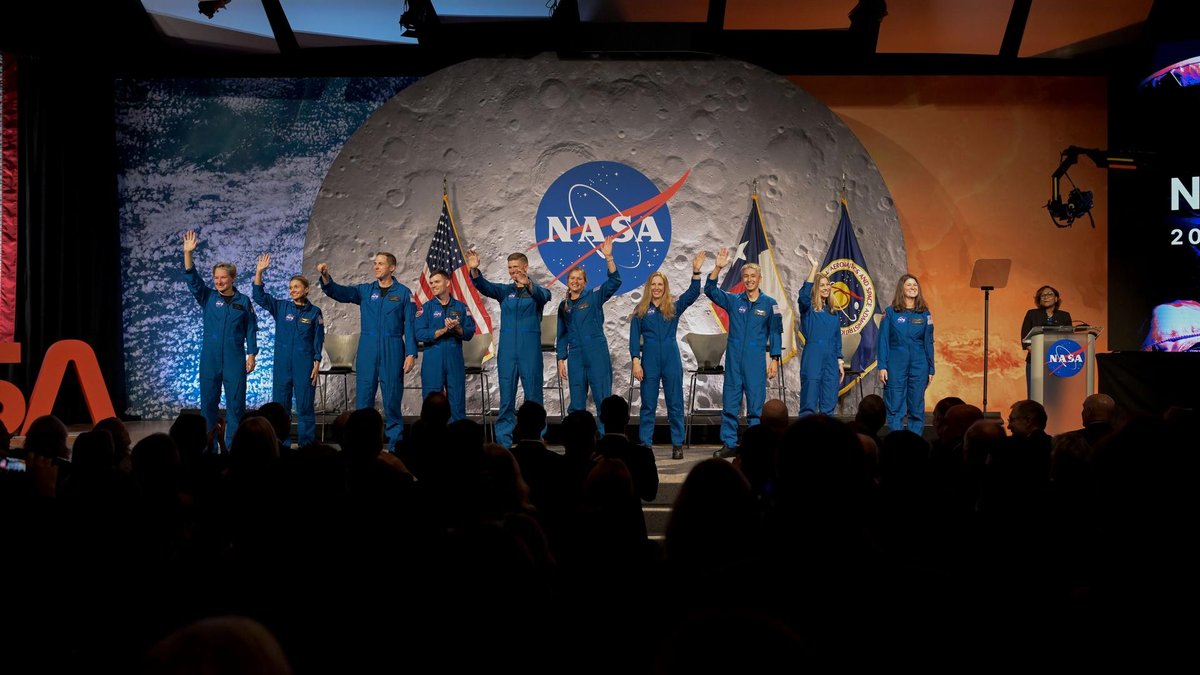 Image: NASA/Helen Arase Vargas (2025 astronaut candidate class, Johnson Space Center)
The next astronaut class trains for Moon Base, lunar geology included. Selection is expected in late 2027. Add roughly two years of training and, by our estimate, this group isn't flight-eligible before about 2029, which lines up with the base build-out rather than the first landings. The first people to look at ice-bearing ground in person will have a geology course behind them and a drilling rover nearby. Our take.
Read next
Start with ISRU basics, then careers in space mining for who hires before anyone mines anything.
What would change our mind this week: a PROMISE slip past 2028, or first MPS2 results showing icy regolith behaves like frozen concrete at expected ice fractions. Either pushes useful mining hardware further out.
See you next Thursday.
Mars Mining Desk