Issue #3: Artemis docks, the tankers decide
Mars Mining Weekly Briefing, issue #3. By Mars Mining Desk.
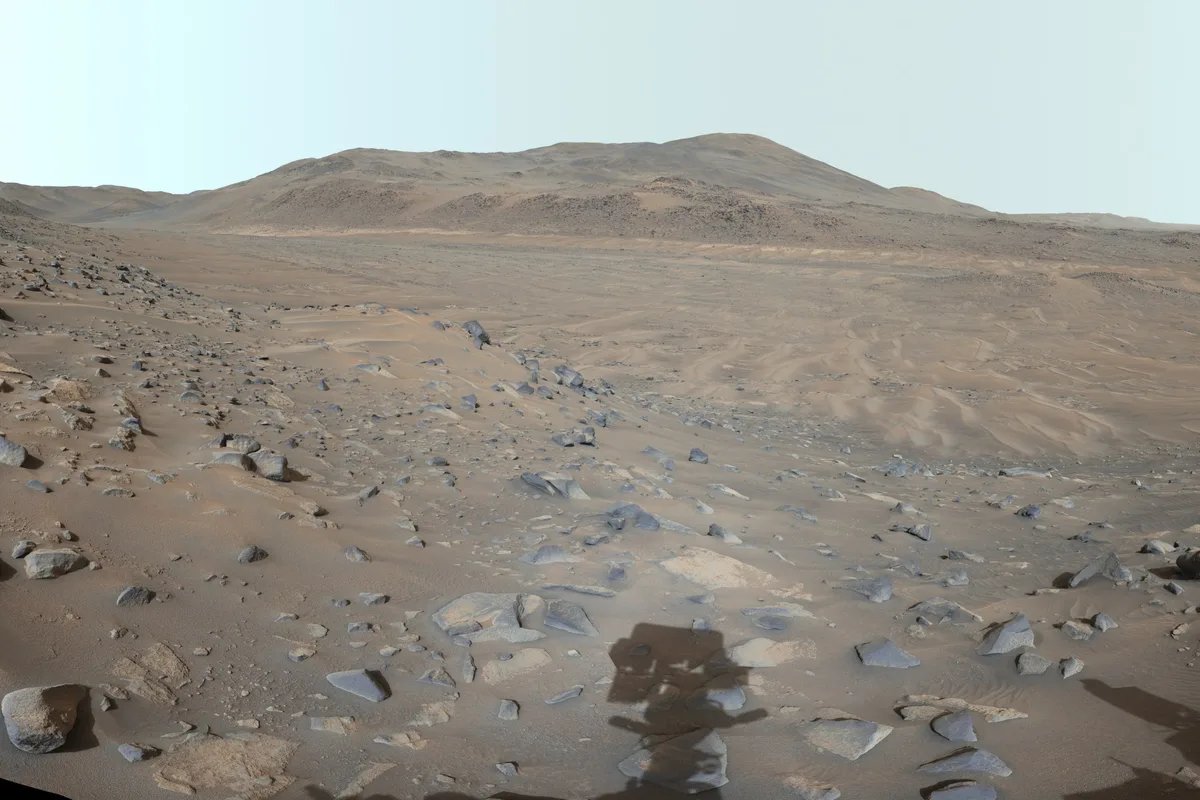 Image: NASA/JPL-Caltech/ASU/MSSS (Perseverance Mastcam-Z, PIA26816)
Last week we said we'd listen to NASA's Artemis briefing for any mission that depends on lunar resources instead of testing them. We heard none. We did hear a lot about fuel, which is close enough to make the point. First, the things you can apply to.
Opportunities
Eight days left on the Isakowitz scholarship. The Matthew Isakowitz Commercial Space Scholarship closes Nov. 6 at 11:59 p.m. ET. It's for graduate students, U.S. persons only, and it needs three essays, including a 400 to 600 word policy memo or investment thesis. If you were planning to start that memo this weekend, this is the weekend. Everything else with a date is on our deadlines page.
A free contest that doubles as a portfolio piece. ESA's Advanced Concepts Team opens its Lunar X-view challenge on Nov. 1. The task is to match a rover's ground-level panorama against an orbital map and work out where the rover is. It's open to anyone, entries are scored automatically, and data and rules go live that day on ESA's Kelvins site. A ranked entry on a public leaderboard is a better résumé line than most class projects. It also lines up neatly with the Skydio postings below.
Five early-career roles posted this week, from the internship board and the entry-level board:
- Relativity Space, GNC Performance Engineer I (Long Beach, Calif.)
- Relativity Space, Apprentice Launch Pad Technician (Cape Canaveral, Fla.)
- Skydio, Autonomy Engineer Intern, Simulation and Robotics, 2027 (San Mateo, Calif.)
- Ursa Major, Summer 2027 Additive Manufacturing Engineering Intern (Youngstown, Ohio)
- Inversion Space, Hardware Test and Automation Engineer I (Playa Vista, Calif.)
The apprentice listing is the one to notice if you don't have a degree. Launch pads need technicians, and an apprenticeship is a way in that doesn't run through a four-year program. Skydio, a drone company, posted a dozen 2027 internships between Oct. 22 and Oct. 26, nine of them autonomy roles. Drones aren't space hardware, but the autonomy work is the same problem the ESA contest poses.
This week's homework
Read robotics career paths, then decide whether you're entering Lunar X-view. If you are, block out the first weekend of November now. Our suggestion: write up your approach as you go, because the writeup is what an interviewer will actually read.
The news, briefly
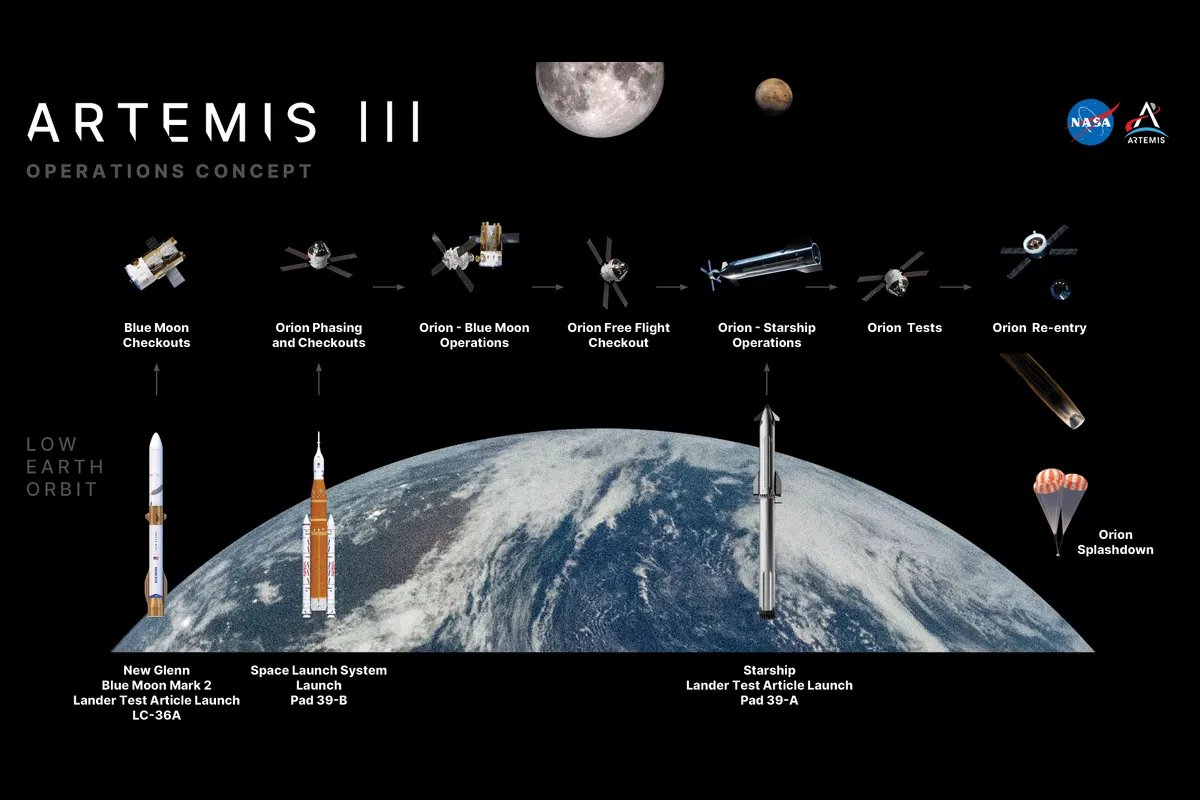 Image: NASA (Artemis III operations concept, Oct. 2026)
Artemis III will dock, not land. NASA laid out a 14-day Earth-orbit mission for mid-2027 on Oct. 23. Orion docks with a Blue Moon Mark 2 test vehicle and the crew spends about two days inside, then docks with a Starship V3 test article for up to two hours without boarding. Officials held to 2028 for two crewed landings. The harder problem is propellant. A NASA safety panel member put the Starship lander's refueling flights at "around 22," and Elon Musk answered "more like 6 to 8." Blue Origin dropped orbital refueling and will use three smaller Blue Moon Mark 1 vehicles as tugs instead. Neither plan uses lunar ice. Every tanker flight in that count is the baseline a future lunar propellant supplier would have to beat on price, which makes the tanker number the most useful figure in space resources right now. For job seekers, it's rendezvous, GNC and cryogenic fluid work. Our take.
Mars dust is finer than we thought, and it clings. Spacesuit fabric swatches on Perseverance spent 1,645 Martian days collecting dust, and NASA's Oct. 26 summary says the PIXL instrument found particles down to about 100 nanometers. Earlier missions could only resolve about 3 micrometers. The dust carries perchlorates and is rich in sulfur, chlorine and iron. Any Mars resource plan starts by digging, crushing and heating regolith, so a processing plant will make this stuff on purpose. Seals and filters become consumables with a replacement rate. Materials, life-support and vacuum test engineers should read the paper when it lands in PNAS. Our take.
Vietnam signs the Artemis Accords, the 78th nation to do so. Science and technology minister Vũ Hải Quân signed in Ha Long, NASA said Oct. 28. That's two signatories in nine days, after Uzbekistan in issue #1. The count matters less than the pattern: each one adds a government on the record that extraction isn't appropriation. The Accords, explained.
The Academies rank Moon sites away from the pole. A National Academies report ranks four nonpolar sites for short crewed sorties: two-person crews, no rover, one to four moonwalks each. NASA commissioned it before refocusing on a South Pole base and hasn't said whether it will act on it. For resources, it's a reminder that the pole wins on ice, not on everything.
Read next
If the dust story caught you, read Mars regolith chemistry, then ISRU basics. Other paths are on the topics page.
What would change our mind this week: SpaceX's first in-space cryogenic transfer, expected early next year, moving tens of tonnes cleanly. That would shrink the tanker count, and with it the near-term case for lunar propellant.
See you next Thursday.
Mars Mining Desk