That Time I Tried To Be Internet Famous (Guts N' Gutters #25, October 2026)
My first foray into memery and being chronically online.
ISSUE #25
TL;DR (Too Long, Don’t (Wanna) Read)
Rise of the Flightless Has Arrived!
Reminder: Follow Sparks, Vol. 1!
Into the Gutters: No Reposts: A Memoir of Memes
Gutter Buds!
Something Old: Morningstar
Something New: Go back Here's Moping
Something Borrowed: The Snowball Effect by Haley Cass
Something Blue: Do Not Open: The Discarded Refrigerators of Post-Katrina New Orleans by Katheryn Krotzer Laborde
WHAT’S THE WORD?
Meme - an amusing or interesting item (such as a captioned picture or video) or genre of items that is spread widely online especially through social media; an idea, behavior, style, or usage that spreads from person to person within a culture.
Rise of the Flightless
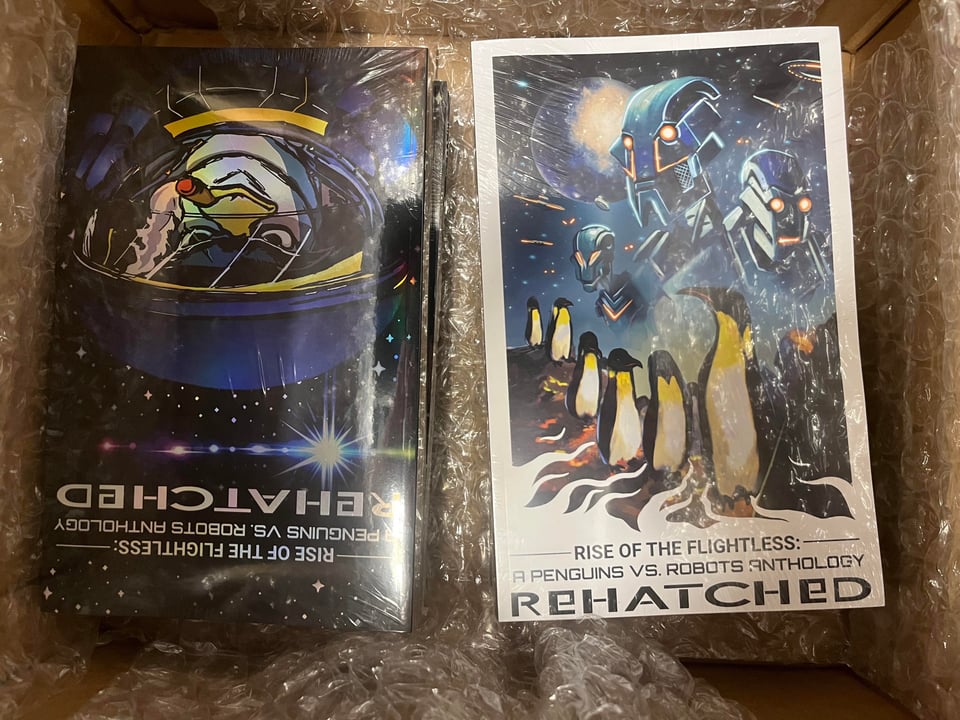
The books have arrived, and shipping will begin asap!
Sparks, Vol. 1
Just a reminder to follow Sparks on Kickstarter! We’re at 8 followers, and I’d love to get that number as high as possible so my crowdfunding hiatus can start on a high note.

INTO THE GUTTERS
No Reposts! A Memoir of Memes

To give myself a little break this month, I decided to share a brief memoir I’ve been hoping to make into a zine, but haven’t had the time to finish designing. I love zines about early internet history because there was so much creativity back then, and I find it fascinating how certain genres and media wouldn’t be possible today. So, enjoy this advanced preview of “No Reposts!”
—
“You haven’t seen Charlie the Unicorn?”
“You don’t know who Smosh is?”
“All of your base are belong to us? Get it? Oh? You don’t?”
I heard phrases like these a lot growing up. My friends always seemed privy to the latest funny video, creepypasta, or odd forum, and I had to be shown these things or have them explained. Viral moments would come late to me. I’d consume them long after the conversation had ended. I didn’t even get a smartphone until my sophomore year of college, so if I wanted to be on the internet, I had to sit in my living room at the family desktop, where there was no privacy.
Looking back, I sometimes feel like I missed a lot of the early internet. I was an overachieving music nerd (both band and orchestra) and an insanely active Boy Scout. My school nights were booked with meetings, practices, rehearsals, or preparing for those three things. Often, my weekends were spent at campgrounds where there wasn’t a cell phone signal, let alone internet. Ironically, though I was the busiest of the bees, I was never hip to the latest online buzz. I think this is why I’ve been fascinated with early online culture and history: I didn’t get to experience it firsthand, and I hated feeling left out. I went along like this until I went to college, and suddenly, the tables had turned.
It’s been so long, I can’t quite remember how I found Tickld, but it was probably through Facebook. Most likely, I was sitting at my desk, taking a break from some college assignment or avoiding practicing my etudes, and zombie-scrolling through my feed when somebody shared a post from Tickld’s page. After seeing a few of these over time, I finally decided to like their page and see their memes more regularly. Again, I don’t remember when I made the switch from casual Facebook lurker to joining the site, but once I did, I was hooked. It was clear that the truly unique memes were within this site, and I wanted nothing more than to be a part of the quirky community (who called themselves Ticklrs) with a banner donning a farting cat. I’d staked my claim on a little slice of the online landscape, and for once, I had jokes and references that my friends needed me to explain.
Searching my Facebook for Tickld posts, I seem to have only been active for about a year between 2013 and 2014, but it definitely left an impression on me. I would argue is what sparked my continual interest in graphic design. Over ten years later, I do freelance design for comic books and crowdfunding campaigns, so I wouldn’t be where I am without the Tickld community. Sadly, the site was later bought out by Gateway Media, and eventually, the community aspect was phased out. Now, it exists purely as a clickbait slop site.
In the 2010s, it seemed much easier to find these little isolated pockets of the internet that would develop their own cultures. To give a better idea of this, I knew no one at my university who frequented Tickld’s site. One time, when I showed my roommate the posts I’d made, he asked if I was “internet famous” because I seemed to be doing well. He had no context for what graced my laptop screen. Even my then-girlfriend (now wife) said I never mentioned posting on this site while we dated. Whether it be Chive, Vine, Reddit, 4Chan, Tumblr, or StumbleUpon, everyone had their own little e-corner, and there wasn’t much crossover.
Tickld seemed less mainstream than those previously mentioned sites, so it called to me. I was a contrarian in college, and this site had an air of being better than the rest of the web. Unlike Reddit, whose goal was to curate the internet, so original content and self-promotion were frowned upon, Tickld demanded original content (often abbreviated to OC). It had strict rules (allegedly) about using the site, such as not advertising, not making posts that were polls or reaching out to specific users, but by far the most important was this:
“DO NOT repost. There’s an easy way to tell if an image is a repost: If you didn’t make it, or if you didn’t remix it yourself, then YOU SHOULD NOT post it. We're better than those other sites that recycle content! Let's keep it that way!”
Each day was a contest to see who could elevate their posts from the “Vote” page by getting 15 votes. Then, posts would move to the “New” page, and if one was lucky enough to get a certain rate of karma in a certain time frame, the post would be thrust onto the “Hot” page. It was a huge deal to make the Hot page, and I only did it a few times.
However, what constituted OC was never clear. During my tenure, the account that received the most karma (the score someone got based on their likes and dislikes) purely posted screenshots from Tumblr. Now, assumedly, the user had made the screenshots and only posted them to Tickld, so it could be arguably original, but felt against the spirit of the site. I remember others complaining about this user often. Even some reposts would make it through the site if the majority of users had never seen it before.
While unaware at the time, it was an interesting philosophical debate we were having. What makes something original? Does making a unique rendition of Overly Attached Girlfriend or Success Kid count? The creator didn’t take the original photo or invent the meme’s format. Was a funny caption enough? Or how about one step further: what about responses to other people’s posts? Is a reaction meme stapled to the bottom of a screenshot truly original?
One of my earlier posts was this graphic telling people about a website called IsItChristmas.com (still functioning!), which will tell you if the current day is Christmas or not.
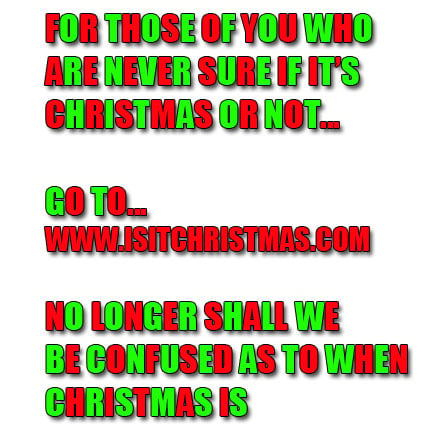
To Tickld, this was a nebulous question, but it seemed that the loudest users craved authenticity and things they could only find on their site. However, there must have been a quiet majority that didn’t mind dozens of Confession Bears and screenshots because they were always in steady rotation on the Hot Page.
At first, I was simply a lurker on Tickld, but I slowly identified with the fervent pro-OC camp and wanted to make my own memes. In high school, I was placed in a Photoshop class when the electives I wanted were full, but fortunately, I fell in love with the program. My parents were gracious enough to buy it for Christmas, even though I had no ambition to use it for anything but fun. Unlike most users who would use Microsoft Paint or meme generators, I was using screenshots and Photoshop.
I had limited success until one day I posted the following meme:
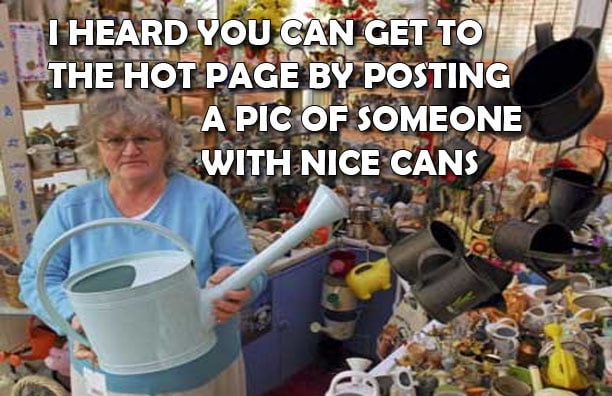
The basic joke was done frequently on Tickld. Somebody would poke fun at the kinds of posts that always made the Hot Page, but with a clever twist. To make this meme, I googled something like “old woman with cans” and made sure not to pick anything from the first few rows of results. It was a badge of pride to find a picture that hadn’t been used before, and though the users were never mean about it, they’d always point out if a photo could be easily acquired. To me, I was putting more effort into my meme, even though I was only scrolling down the results for a little longer than most. People seemed tickled (pun intended) by the photo I’d selected because the old woman looked so earnest.
Finally reaching the Hot Page and hungry for more, I immediately tried to capitalize and created two similar memes:
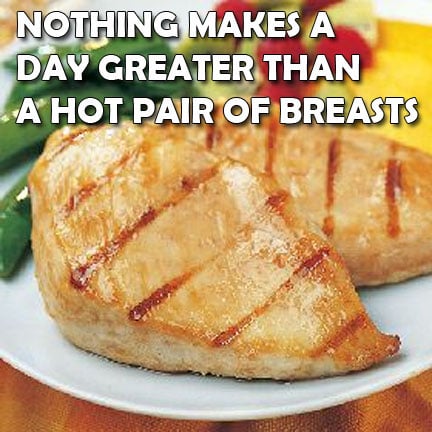
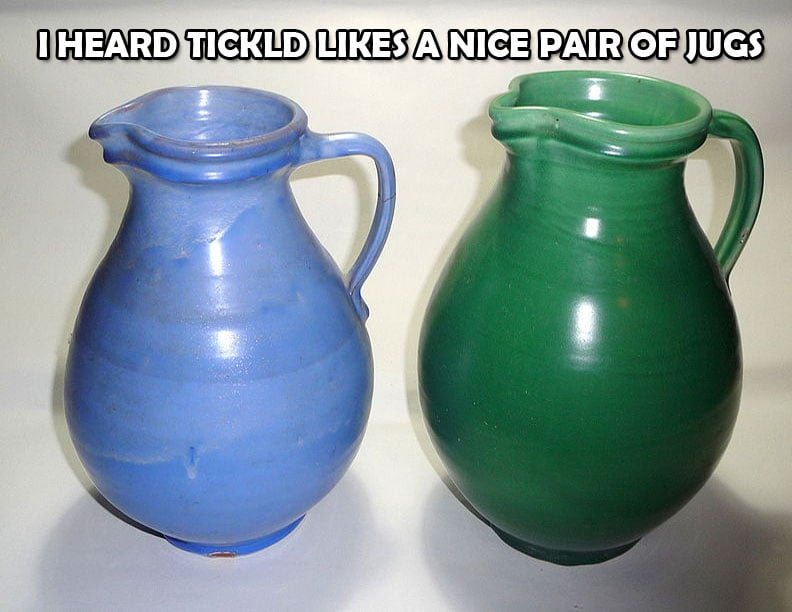
These flopped, and the community was quick to point out that I made the same joke as before. I didn’t fool my fellow Ticklrs. They knew exactly what I was trying to do. If I wanted to make my way back to the Hot Page, I’d have to find lightning in a bottle once again. But lightning never came, and nothing I made hit the same kind of success. I was desperate for notoriety, and I turned to the one thing that was frowned upon more than anything: reposting.
The majority of my posts remained original memes, but I began mixing in things I’d found from other sites. I don’t remember much of what I reposted beyond one that was naively about not getting a divorce and sitting down to talk things out. It caused quite the debate on Tickld and reached the Hot Page. At first, I was thrilled to be back, but unlike last time, the feeling quickly faded. I knew I didn’t make it by my own efforts, and I had gone against the sacred principles I’d adopted. I believe it was here that my interest in Tickld waned, and I visited the site less and less.
Something about my humor didn’t click consistently with Ticklrs, and thinking about it, I believe it was because I wasn’t enmeshed in internet culture like much of the community. Though I enjoyed making memes and feeling included in an exclusive club, I didn’t crave it as deeply as some. Eventually, I stopped visiting Tickld entirely, but I never forgot about that time. It was only a year, and I wouldn’t call my experience life-changing, but I still remember it fondly as an interesting chapter in my story. Not every moment in our lives has to be Shakespeare, but, like memes, they can just be a little something that we passed by on our greater journeys.
If you were curious what Tickld was like, it does still exist somewhat on the Wayback Machine: https://web.archive.org/web/20150217141357/http://www.tickld.com/
GUTTER BUDS
SOMETHING(S) OLD
Morning Star by David “DB” Andry, Tim Daniel, Marco Finnegan, Jason Wordle & Justin Birch
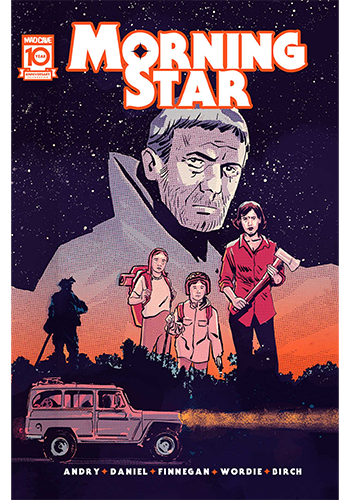
A family goes to spread the ashes of their deceased firefighter father, and things then turn strange. The emotional writing and artwork are superb, and I think this book is such a unique experience in comics that it deserves more readers. It’s strange and uncomfortable, and the story isn’t necessarily linear, but it’s one of the best ways of capturing a specific feeling I’ve encountered.
SOMETHING(S) NEW
Check out these campaigns by friends, colleagues, and things I just thought looked cool:
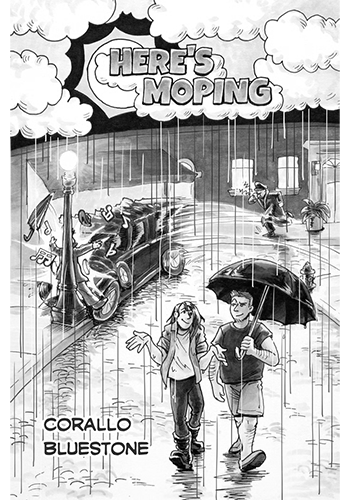
Here's Moping is a black-and-white comic strip that we, Joe Corallo and Chase Bluestone, have been posting online every couple of weeks since March of 2026. This strip deals with a lot of sad stuff, but we think sad stuff is really funny! The topics the strip has tackled so far include divorced directors, movie mashups, trans guys, X-Men, and more cereal-related content than you might suspect.

SOMETHING(S) BORROWED
The Snowball Effect by Haley Cass
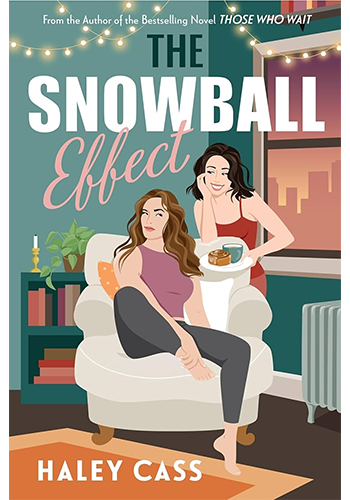
There’s so much I could say and gush about in regards to this book, but I think my favorite is how much variety there is in the queerness presented. One of the love interests, Regan, has never been attracted to a woman before until her nemesis and roommate’s best friend, Emma, moves in temporarily and things start to… snowball. The story doesn’t shy away from the possibility that Regan might only be attracted to Emma and shows how complicated sexuality can be.
SOMETHING(S) BLUE
Do Not Open: The Discarded Refrigerators of Post-Katrina New Orleans by Katheryn Krotzer Laborde
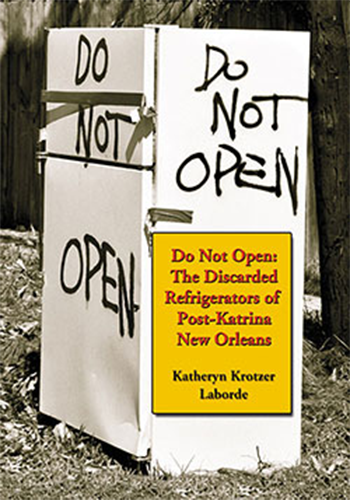
I didn’t get this book in time for last month’s essay, but it’s finally here and it’s a depressing, but fascinating account of the stories behind the Katrina fridges. What I find most fascinating is how people experienced after-the-fact disappointment that they didn’t participate in the phenomena. Art that emerges organically with many people having the same idea is already inspiring, but I think it’s amazing to also hear how something so simple provided a sense of community when people needed it most.