
All It Takes Is One Moment... (Guts N' Gutters #24, September 2026)
Who can be an artist and why you shouldn't deny yourself those moments.
ISSUE #24
TL;DR (Too Long, Don’t (Wanna) Read)
Rise of the Flightless has been ordered!
Next Campaign: Sparks, Vol. 1
New Back-Up Story!
Pitching to Eldritch Lust
Dreamlands, Vol. 2 Coming February 2027!
Temporary Lettering Discounts!
Into the Gutters: Contemplating the Katrina Refrigerators
Gutter Buds!
Something Old: American Splendor by Harvey Pekar at al.
Something New: Go back Moments of Euphoria, Macabre Majesty, and Scum #1
Something Borrowed: Bloom by Delilah S. Dawson
Something Blue: Jimmy’s Blue by James Baldwin
WHAT’S THE WORD?
Inject - to introduce into something forcefully; to force a fluid into (as for medical purposes); to introduce as an element or factor in or into some situation or subject.
Rise of the Flightless
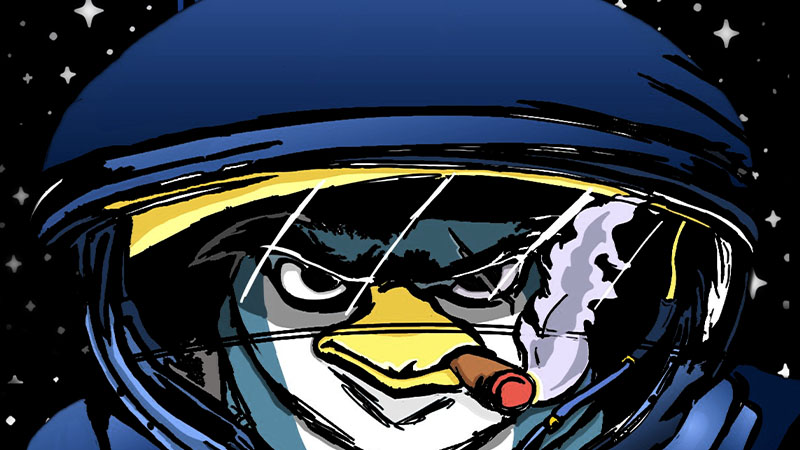
I submitted the print order for the books last weekend, and the proofs should be on their way!
Sparks, Vol. 1 - My Last Campaign For A While…
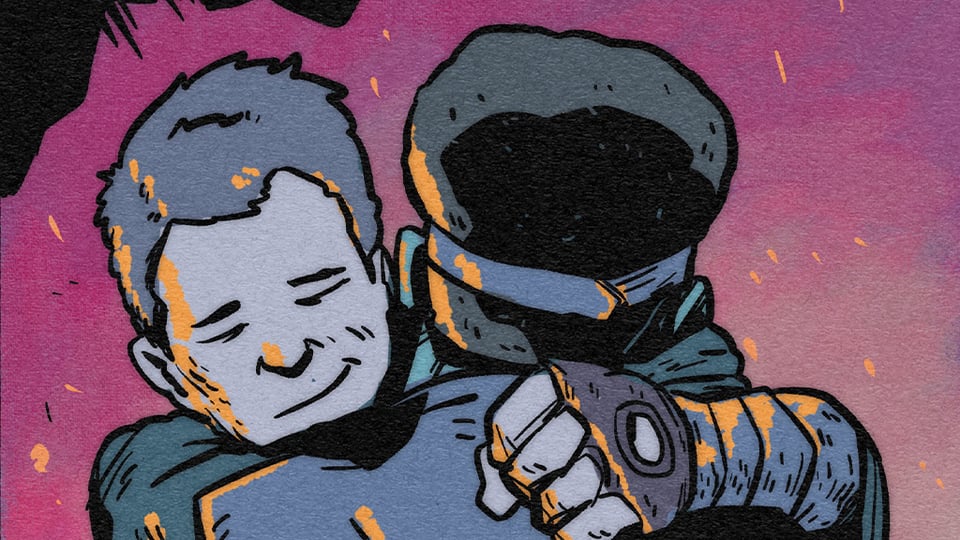
The first campaign I tried to fund was Sparks, Vol. 1–a collection of short comics that really didn’t have much connecting them. Now that I’ve got a wider array of stories to choose from, I’ve assembled this collection that contains 7 comics. There are a few reprints, but for most of the comics, this is the first time they are available in print.
The new Sparks is a collection of comics about hope and finding joy even in dire circumstances. It’s already completed and just needs funds to be printed. It launches in January 2027, so be sure to follow the campaign!

Back-Up Story
A fellow indie comics writer asked if I’d be interested in writing a backup story for their dark fantasy series, and not only did I jump at the opportunity, I already have the entire story outlined. It’s going to be a simple, but meaningful tale of two characters learning they have more in common than they realized and that they should be helping one another to better their situation. Stay tuned to hear which universe I am joining!
Eldritch Lust Pitch
I’ve teamed up with Kaj Kuntsmann (who contributed to Rise of the Flightless) for a pitch to Bone Idol Comics’ Eldritch Lust anthology series. These are collections of erotic Lovecraftian tales, and Kaj and I have whipped up a story called “Complete You” about a mysterious jellyfish creature that washes into a men's prison after a hurricane and needs a host. A corpse of a closeted trans woman is thrown into their waters, and things get strange from there. It’s an exploration of a favorite theme of mine: what lengths would one go to feel at home in their skin. I hope we get selected!
Dreamlands Anthology, Vol. 2
Dreamlands, Vol. 2 should be launching in February 2027!
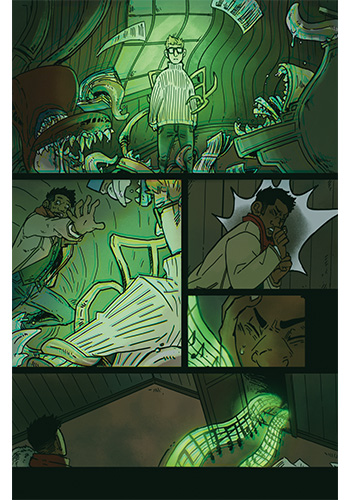
I’ll chuck in some page art for Luce, Yasmine, Kevin, and my story “A Tempest Beneath” so you can get as excited as me:
Special Lettering Rates
Related to my stepping away from self-funded work last month, I am currently offering discounted lettering rates to better my finances.
For the time being, my rates are $5 a page for anything 1-12 pages, and $8 a page for anything over 12 pages. I will also be offering discounted design work for logos, interior comic book pages, and Kickstarter promotional graphics. These will be priced depending on what is needed.
Truly, I’d appreciate any of my readers keeping me in mind for your next project or passing along my info to any peers. My portfolios can always be found at linktr.ee/lukewhenderson.
INTO THE GUTTERS
The Work is the Story
In a world where AI “art” continues to slip–or, more aptly, be forced–between the cracks, questions like “who is an artist?” and “what is art?” have cycled in and out of online discourse. Now, the pro-AI side is often asking these questions disingenuously. They want to avoid grappling with the cognitive dissonance of art requiring work, but not wanting to work themselves. To them, practice, both the act and the idea, is a form of gatekeeping between them and making art. Ableism and classism are thrown out as reasons in favor of the AI use, claiming that it will “democratize” creation much like the internet democratized communication (also a debatable premise). However, if these creators truly believed this, they wouldn’t continue hiding the fact that they were using AI for their work.
In 2025, I backed Bona Books Wrath Month - Stories of Queer Rage and eagerly awaited its planned release later in October. However, the book was delayed. This is common for Kickstarter projects, and the publisher communicated regularly, so no harm, no foul. But later, an odd update was published saying there were “issues” with the book that they couldn’t yet discuss. In July 2026, Bona revealed that they had unwittingly accepted two AI-generated stories.
The first of these was from a woman who wrote as Bella Chacha. According to Bona, she accepted every line edit without question, but did few “big picture” edits outside of one small change to the story. This concerned the publishers and when they requested evidence of her writing, such as early drafts or notes, Chacha promised to send some for months before ultimately admitting she had none. But what’s most revealing is Bona’s video chat with this author:
“Bella gave full, if quite general, answers around the more conceptual aspects of her writing: story ideas, themes, and what stories meant to her. But as we moved on to authorial intention and craft, we kept encountering difficulty.
Bella’s answers would be simplistic, or circle back to those easier discussion points about ideas and themes. As far as we could encourage her to speak about her creative process, she gave a flattened account of ‘having an idea’, followed by ‘writing’. When pressed on matters like character design or structure, she regurgitated the anthology brief back at us.
When we specifically asked how she approached revisions, Bella began vaguely, saying she looked for bits where she “did not do very well”, before “changing” them. When pushed on what sort of changes, she claimed her biggest revision to the story had been adding the genre elements, because the first draft hadn’t been speculative at all. Editors would like to emphasise the absolute absurdity of claiming this for a dystopian sci-fi story about a protagonist who builds a giant angry robot.
She was real, she was funny, she was actually rather charming—but we received no reassurance whatsoever that this person had written “The Machine-Breaker of Aba”.”
One could argue that if AI art is legitimate, why couldn’t writers, like Chacha, not own their process, seek avenues that will accept their stories, or self-publish? Why submit to places where they’re unwelcome and go through a months-long dissection of why the work is flawed? In my opinion, it’s a combination of two things. Like many working-class people, they see the worsening inequality worldwide. For those in the US, educational opportunities that might raise one’s status are slowly becoming more and more out of reach. It’s only natural they would be bitter toward corporations and those who seem to have an advantage. It’s why so many try to perform opulence online but are actually middle class. If the game can’t be won, then they can at least fake having a trophy.
At the same time, they see art as a product, not a practice or means of self-expression. It is something to be made or consumed for specific purposes alone or to send a specific message. Plus, the aesthetics of intellectualism have slowly become trendy over many years. BookTok is one of the most popular hashtags on TikTok, with videos using it garnering over 200 billion views, and more celebrities have either started book clubs or walk around in public with books in hand.
As Nicolette Baker writes for Byrdie, “Artistic and well-read aesthetics are quietly chic. Their references to physical art, books, and cinema connect to the rise in trending textures—suede, deconstructed knits, faux fur, pony hair, and the like—over the past few seasons. Perhaps, we’re collectively reaching towards something quite literally tangible, after a period of being painfully online. Think of it as an attempt to actually ‘touch grass.’”
However, to push back a little against Baker, I agree with her sentiment that “Trying on the ‘uniform’ of a reader (and/or valuing intellectualism in the first place) could lead someone to be a little more curious about the greater community,” but I see this current pursuit not as an attempt to “touch grass” but a mutation of that performative opulence. Perhaps, since appearing wealthy hasn’t worked or is becoming more taboo, appearing as a thought leader is the next logical step. The books, ponytails, and glasses are merely props to further online posturing.
Combining all of this, it’s clear why these AI creators pursue avenues where they’re not welcome. Because art is a product, a means to appear successful and popular, they incorrectly view all professional artists much like they do those corporations: entities who got where they are through privilege or luck that keep others from success. So, the only way to gain that desired prestige is to game the system; find easy ways to make and publish their AI “art”.
I can sympathize with why they might feel this way (nepo babies are a thing and wealth makes it easier to access education), but there are many things wrong about this belief. What’s most egregious, to me, is the view that art isn’t already democratic and requires wealth or status to get ahead. To demonstrate why, I want to discuss a phenomenon that happened during one of the United States’ biggest tragedies of the 2000s: Hurricane Katrina.
A Total Failing
Since reading Naomi Klein’s The Shock Doctrine, I’ve been in a Katrina rabbit hole. I was 12 when the hurricane hit New Orleans, and I realized that I don’t know much despite being alive to witness it. My memories mainly consist of the few times the news was on at home, seeing people walk through chest-high water and the conversations around “looters”. Dave Eggers’ Zeitoun was my college dorm’s book club pick to encourage freshmen to interact, but I read the book on my own and didn’t attend the discussion. Never did I have the full context for how horrific that time was in the US.
In the aftermath, 2005’s Hurricane Katrina was described as “the most destructive natural disaster in U.S. history” by the Bush Administration, but it truly should have been described as one of the biggest failings of American government and culture. As described in Andy Horowitz’s Katrina: A History, 1915-2015, while Katrina was one of the biggest hurricanes in recorded history, decades of poor government decision-making and white flight. Years of racist housing policies made it even worse. The levees and canals built at the beginning of the 20th century are responsible for New Orleans becoming a city below sea level. The surrounding swamps were drained to better connect the Mississippi to the Gulf of Mexico, and this allowed more people (mostly poor black citizens) to find housing in the city. These barriers disrupted the shoreline’s natural rejuvenation via sediment from leftover floodwaters, hastening erosion of the coastline. The Gulf of Mexico would get closer and closer to New Orleans each year, and the city slowly sank from one foot above the sea to many feet below it.
At the time, those building the canals didn’t realize that the swamplands were natural hurricane barriers. The initial storm surge would lessen in intensity as it crossed the marshy land and ultimately cause less damage upon reaching dry land. Decades of efforts to improve and better this system–thus better protecting the city–either went unfinished or were done shoddily. Many experts said New Orleans would not survive “the big one”: a category 5 hurricane.
When Katrina finally came, the levees broke and flooded 75% of the city, but the parts receiving the worst of it were the largely poor, black Eastern half of New Orleans. The water surging from the broken canals got so high that homes were lifted off their foundations and floated down the street. In Netflix’s recent docuseries Katrina: Come Hell and High Water, one victim, Robert Lynn Green Jr., describes his family being on the roof of their home when it floated “like a boat” down the street. It collided with debris and threw his family into the water. They managed to get onto the roof of another house, but before then, his mother and one of his granddaughters went under. He had to make the heartbreaking decision to keep the rest of his family safe rather than diving in to save the other two.
Those trapped in the aftermath had to walk through chest-high water, carrying their children, elderly and disabled family members on air mattresses. Whenever they arrived at the Superdome, Convention Center, or other supposed shelters, they were turned away by the police and military, sometimes at gunpoint, without instructions on where to go next. If they were lucky to be one of the first to find a place, there was no electricity, no functioning bathrooms, and little food or water to share.
Worse still was the news media’s narratives when the food and water started running out. Soaked, starving and dehydrated victims took food and clothing from surrounding stores to stay alive, but were accused of “violence” and “looting”. There were some who took non-essentials from New Orleans’ businesses, but they were a minority. The governor then announced the National Guard would be coming to restore order and would shoot any looters. The narrative encouraged more racial animosity and gave bigoted white citizens in surrounding neighborhoods an excuse to shoot black refugees, some in glee at their vigilantism.
Even when the evacuations finally happened, the victims of Katrina wouldn’t know peace for years. They were pawns in partisan bickering and many politicians saw this not as a tragedy but an opportunity to reimagine the city. White supremacist groups argued that this was the perfect time to rid New Orleans of its black population, and some government leaders and churches claimed the hurricane was God’s will—an act of retribution on the “riffraff” of Louisiana. One can only imagine how thin hope must have been in the face of such dehumanization. It’s here that the Katrina Refrigerators began to emerge.
Sharpied Outrage
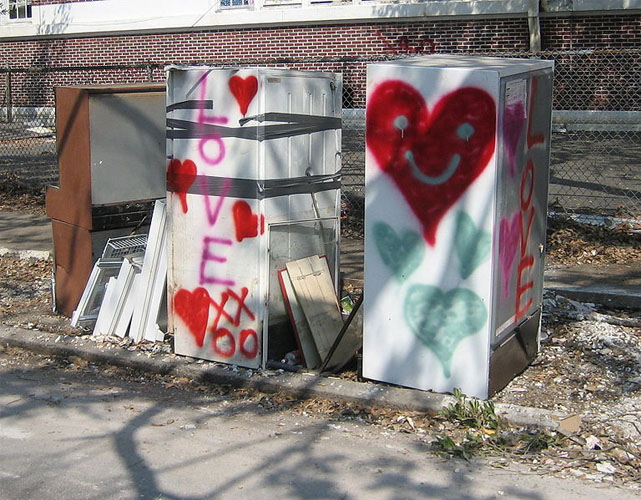
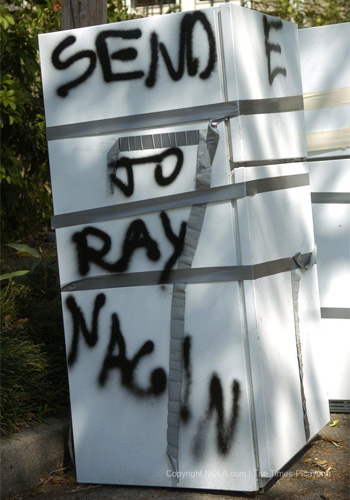
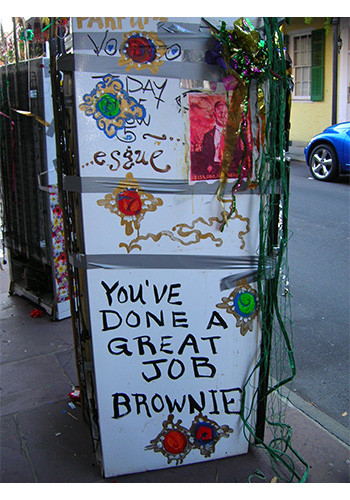
The Katrina Refrigerators appeared in the months after the storm had hit. Citizens, needing an outlet and seeing a sea of plastic canvases, wrote snarky messages to the incompetent leadership like “Good Job Brownie”. They even insinuated that the owner of the Saints football team was inside the fridges after he considered moving them away from New Orleans. Some businesses and churches used them as public message boards. However, to truly understand what makes this simple art so impactful, it’s vital to step into the shoes of its creators:
After months away, Mayor Nagin finally opened your neighborhood, so you return to what’s left of your home. Debris forces you to drive the wrong way down one-way streets because there’s no other way to get home. Dragonflies buzz everywhere—newly hatched from nests that washed into the city and finding a feast of mosquitoes upon their birth. They dive ravenously through the air, and you can’t look anywhere without meeting at least one fly’s alien gaze.
The mayor says you can’t stay overnight, but with the damage to your home, that wasn’t an option regardless, and everything around is unrecognizable, unlike home now.
Finally, you pull up to the front of the house and see the lonely, spray-painted X across the front. It’s a sign that the National Guard already came and, thankfully, found no bodies inside. You park your car and trudge to the door. It bobs gently in the wind, the frame busted from the army men. With a shuddering breath, you push it open and step inside.
“[Alden] McDonald opened the front door. The odor knocked him back. The pungent, swampy stench was of a home soaking in dirty salt water for weeks of scorching, subtropical heat. The sodden furniture and carpeting in the living room gave off its own fusty perfume, but nothing compared to the kitchen.”
From Gary Rivlin’s Katrina: After the Flood
Each step has to be taken with caution. The floors are slick with mud (you hope it’s just mud), but there have also been rumors of people finding startling new residents in their homes: venomous water moccasins, starving, desperate rats, and even an alligator. Not to mention, the boarded-up windows have shattered. A fall could expose you to cuts and any number of viruses.
Beloved photos, keepsakes, and anything not in a watertight container is gone; the water has covered them in mold, or the wind has whisked them away. You turn toward your kitchen and see the refrigerator is still there. Its white plastic exterior is scratched and dirty, but otherwise okay. Perhaps it at least can be saved.
You go to the fridge, pull on the handle, and unleash an assault of noxious air. It only makes sense, you suppose. The power was out, and anything left on the shelves would have rotted a while ago. What you didn’t expect were the bugs and maggots covering everything, that the meat you had set aside for Sunday dinner could become liquid. The fridge, that solid box, a source of sustenance and comfort, was now filled with decay and disease.
“Several weeks without power, it turns out, reveals that your refrigerator is not actually well sealed [...]. Actually, many other things concerning the place of refrigeration in our lives were revealed that most of us would have been happier not knowing.”
David Beriss, Katrina Fridges, 10 Years After
Through gags and retches, you slam the door shut on any hope of saving this appliance. Carefully, you search through the drawers and pull out a roll of duct tape. After sliding the stinking contraption away from the wall, you mummify it in loops and loops of the silver tape. With the last bit of your energy, you drag it through the landmine of your house and lug it to the street. After a moment to catch your breath, you see that your neighbors have all done the same; white boxes line the street like tombstones in a graveyard.
In that moment, something inside breaks. Every bit of emotion you’ve been holding back washes over you. The weight of all that you’ve lost, what everyone around you has lost. The emptiness of everything that was supposed to happen, but now can’t. The slow-burning realization that the people who were supposed to help did nothing but point fingers.
“...that was my year of going, like, starting high school. I was going to the ninth grade. I was enrolled in St. Mary's Academy, which is an all-girls Catholic school here. [...] I had just made the dance team. I think I remember I was the only ninth grader that made the dance team. I was excited because I was going to, basically, debut, you know, in the parade season. Like, that was a big deal [...], and Katrina just came and washed that all away.”
You shut your eyes, but even that can’t provide an escape. Everywhere smells dank, acrid, and putrid. A city shouldn’t smell like this.
You open your eyes. At your feet lies a permanent marker. Snatching it from the ground and snapping off the cap, you stare into its felt tip. It will be your syringe, and everything it touches will be injected with your feelings. As if possessed, the marker takes your hand and slashes four words across the refrigerator’s walls:
Conclusion
These AI creators deny themselves the transcendence that comes from physically manifesting their own intentions. To me, that is the definition of art. It’s transforming the internal into something external. It’s throwing desires, beliefs, and happy accidents into a pot and watching them simmer and caramelize into a thing that reflects the creator, yet speaks to an audience.
Artists don’t need Ivy League educations, a mile-wide circle of connections, or $1000 pencils. They don’t need the correct genetics or to be blessed with some unknowable talent. Artists don’t even need to go through one of the worst tragedies in American history. All that’s required is the will to make something, to work on it until it’s finished.
Art requires a leap of faith: being willing to work on the thing even if it isn’t good. The artist has to humble themselves and realize the only way to get better is to make more things. Even if the art is made only for the artist, there’s a satisfaction in seeing the incremental improvements and getting one’s vision ever closer to being realized. And through making art, the artist learns more about themselves and who they want to be. The realization of the thing moves in parallel with the realization of the person. Simply put, the joy is in the making, and AI takes all of that away.
In Ethicist Shannon Vallor’s The AI Mirror, she aptly observes that “Instead of asking one another what we might now become, we ask AI mirrors to show us who we already are and have been, and to predict from there what must come next.”
Art is not a mirror, but a window. To a degree, it will reflect who made it and who looks at it, but it will never be a perfect reflection. It’s a highly specific experience both as creator and perceiver. Depending on any number of factors, either party could look at the window and have wildly different interpretations, but sometimes the two will see eye-to-eye. Since AI is an amalgamation of millions of experiences boiled down to their most average, it can never replicate this. It will always reflect the sum of what it is given.
The Katrina Refrigerators were made by people in a unique situation, with something unique to express and using the materials around them to say it. They weren’t necessarily intending to make art, but what they made is greater than words alone. In each of these fridges, I see the anger, helplessness, and deep sadness at the loss of a once reliable comfort. To me, it represents the existential horror of supposed dependable systems failing and realizing things are more fragile than thought.
All it took to express this was one Sharpie or can of spray paint.
GUTTER BUDS
SOMETHING(S) OLD
American Splendor by Harvey Pekar at al.
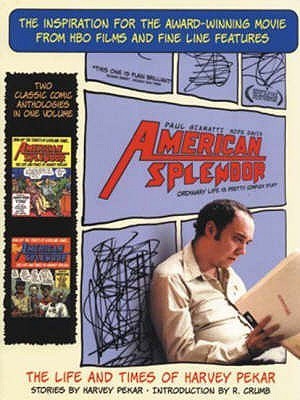
After backing the Kickstarter to save Pekar’s archives, I was compelled to pick up the collected edition of American Splendor. I didn’t really know what to expect, but I found myself developing an odd kinship with this book. Pekar’s and my experiences are vastly different, but the emotions are ones I have felt time and time again.
SOMETHING(S) NEW
Check out these campaigns by friends, colleagues, and things I just thought looked cool:
Moments of Euphoria: An Art Book of Trans Joy & Love
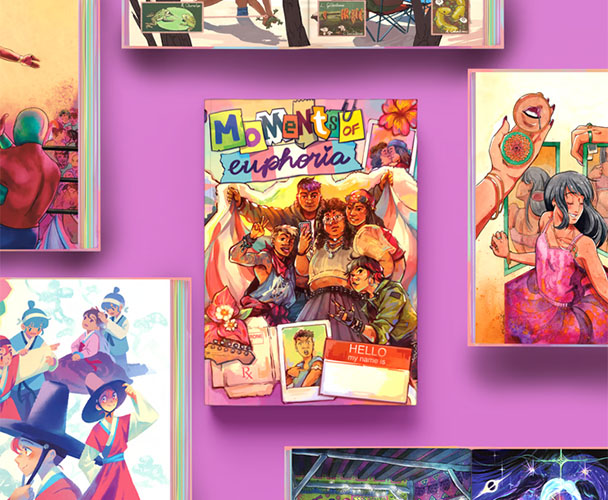
Every trans experience is vividly unique, while also sharing a pursuit of euphoria, love, and acceptance. “Moments of Euphoria” is a collaborative art book focusing on these shared joys. 30+ artists from all over the globe came together to illustrate a wide array of euphoric moments, with expressions both within and outside the binary.
There’s a starry painting representing the agender experience, transmasc luchadores, a trans woman dancing through the ages, Joseon-era trans Koreans, third gender spiritual leaders, and so much more.

Macabre Majesty #1-8 - A Medieval Horror Comic
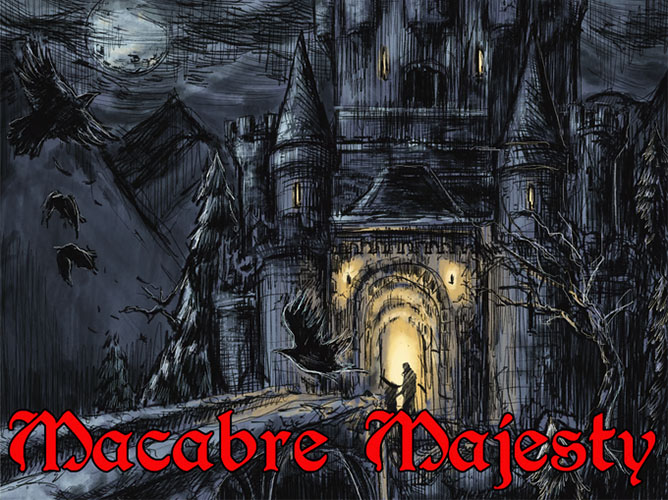
Young Eleanor is sold to a remote mountainside caste for a paltry sum. There, she must navigate her new life tending to a bedridden queen and learning the harsh rules of the castle. Outside the castle walls, something lurks in the woods, preying on the unwary. Paranoia spreads as food dwindles and danger closes in. Will Eleanor remain a captive forever or will she escape?
SCUM #1: A Cyberpunk Heist Thriller
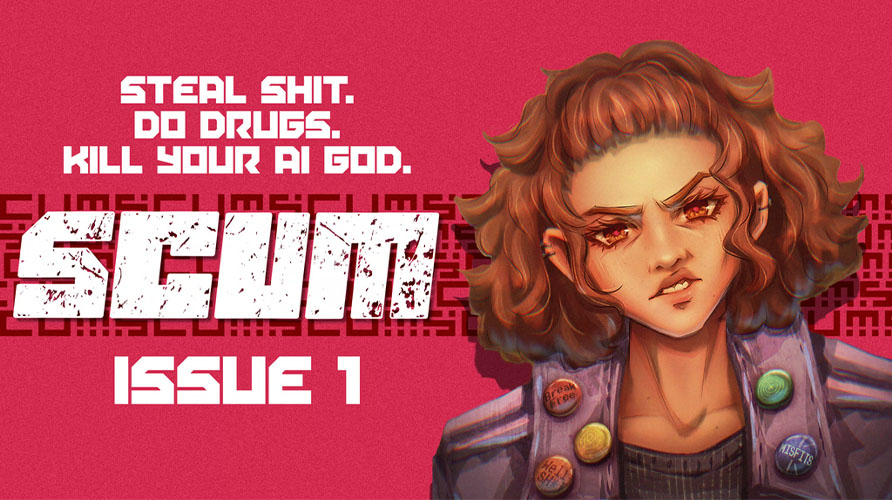
Under the all-seeing eye of an AI god, Sam is the one thing no one is supposed to be... invisible. But after a heist goes wrong, she is given a choice: die the way she was born to, alone in a gutter, or join a conspiracy to kill god.
Well. Not much of a choice, is it?
SOMETHING(S) BORROWED
Bloom by Delilah S. Dawson
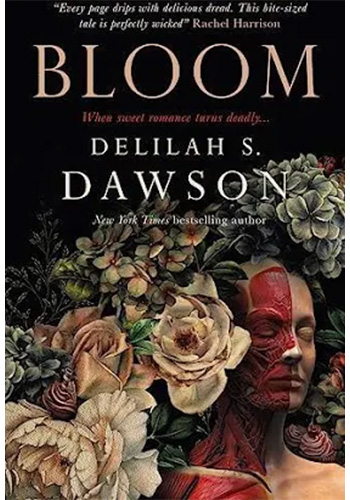
The synopsis of this book should really be “baby gay ignores all the signs”. It’s an incredibly well-written novella and asks the reader to ponder what they might ignore based on the gender of a person. Saying more might spoil things, so–I beg–please go read this.
SOMETHING(S) BLUE
Jimmy’s Blues and Other Poems by James Baldwin
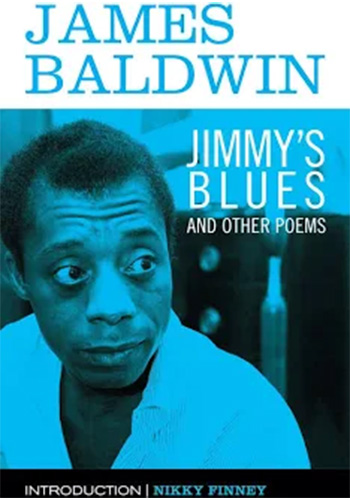
This is my first book of Baldwin’s I’ve read and it’s been an eye-opening experience. I love how he isn’t afraid to weave in and out rhyme; never truly committing to either, but chasing his bliss. These poems are very grounded, but intimate, and Baldwin’s ordinary language packs some deep truth. Plus, this book is physically blue and has “blue” in the title, so this is my most appropriate use of this section, so go read it!