Guest post from Mona
I’m traveling this week, so today’s newsletter is a guest post from my friend Mona Al-Mashharawi, a journalism student living in Gaza.
Mona is a brilliant writer and poet. You may have read her poetry in previous issues of this newsletter. For the past three years, she and her family have been surviving genocide at the hands of U.S.-backed Zionist forces. In three years of forced displacement, the killing of family members, forced starvation and the destruction of the healthcare system, Mona has been caring for her parents, siblings, and young nieces and nephews. She also hasn’t given up on fighting for her future, despite the occupation’s attempts to annihilate Palestinian futurity. Even though occupation forces have destroyed every single university in Gaza and killed thousands of students and teachers (a crime called scholasticide), Mona is still managing to pursue higher education. She is earning a degree in journalism, studying online when internet and electricity are available, and risking her life each time she is able to travel to in-person classes.
Because the Zionist entity is still violating the “ceasefire” by blocking necessary food, fuel, construction materials, medical equipment and other supplies, thousands of families like Mona’s are living in precarious conditions, with limited access to nutrition, water, and medication. Many have to live in tents or the unstable skeletons of bombed-out buildings, one of which collapsed earlier this month, killing over 20 people. Occupation forces have destroyed over 90% of Gaza’s residential buildings. This is called domicide.
Mona’s 20th birthday is next week. Her family’s survival campaign is here. Like many people in Gaza, she and her family rely on these campaigns to continue surviving the unthinkable. I have a recurring donation set up to her campaign and I invite you to do the same.
As we approach the third anniversary of the Zionist entity’s genocidal assault on Palestine, I hope we can all recommit to doing more, both for Gaza, and against Gaza’s genocidaires, until the settler colony that occupies the land is completely dismantled and Palestine is free from the river to the sea.
I am tremendously grateful to Mona for sharing her words with us.
From Mona:
Sometimes I try to explain what my life was like during the war, but I feel that words cannot describe everything I lived through.
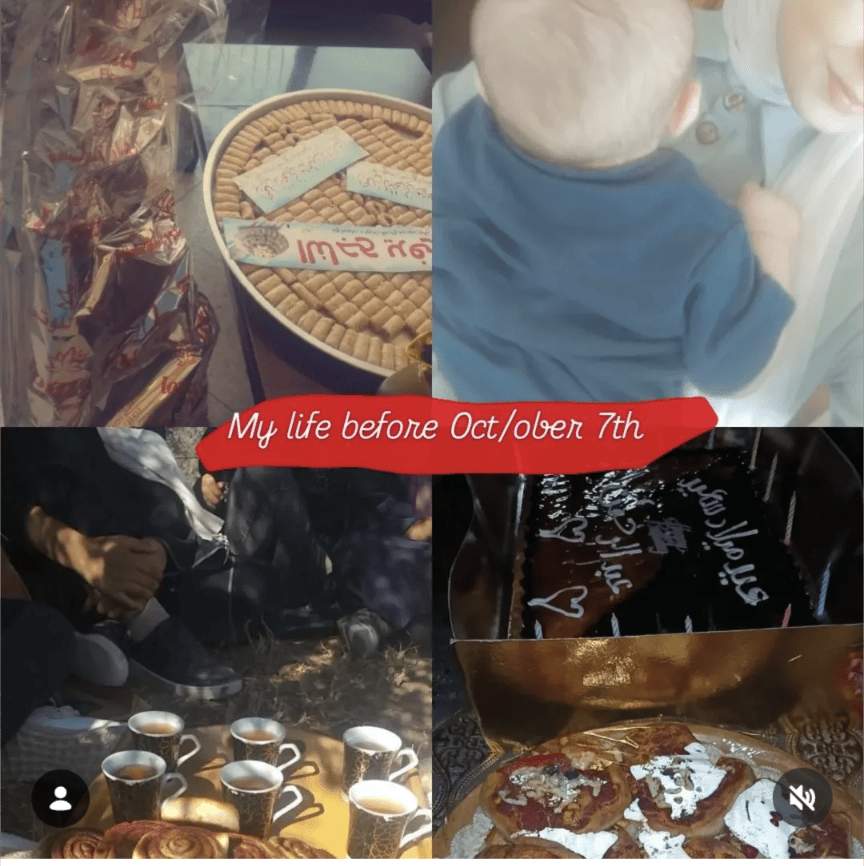
At the start of the war, we lost one of our dearest loved ones: my sister’s husband, who was like a sixth brother to me. The news of his martyrdom struck our hearts like a thunderbolt; we could not bid him farewell, hold a funeral, or even bury him. How can the mind and heart possibly comprehend all of this? Three years have passed since he was killed, and we still wish he had a grave where he could rest in peace—a place we could visit to recite Al-Fatiha for his soul.
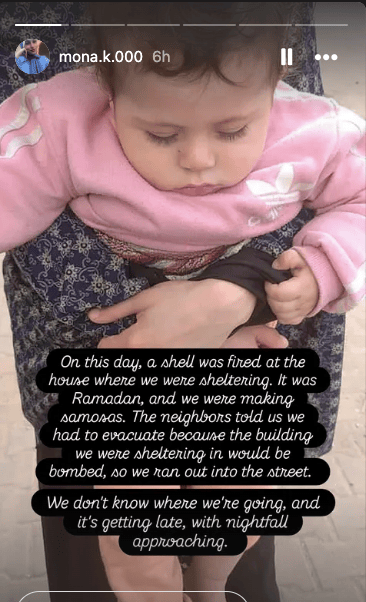
During our first displacement, potable water was unavailable. We were forced to drink salty water, which made us sick. The tent where we took shelter was hardly a home; it was merely a piece of fabric spread over the sand, beneath which we tried to shield ourselves from everything. Insects crawled around us, tormenting us, while we simply tried to make it through those days.
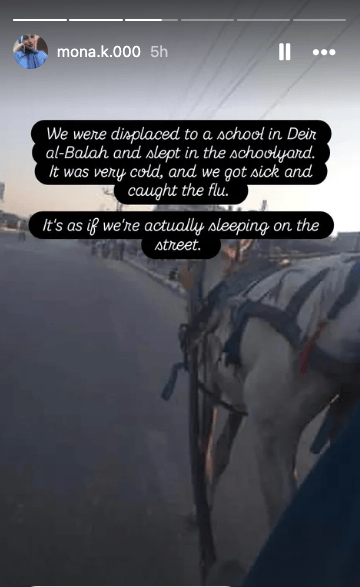
Then came winter.
The rain—which we used to await with joy and happiness back home—had become a source of fear. Our tent flooded, and our belongings were ruined along with it. We no longer had a dry place to store our possessions or a space where we felt safe. We fell ill with the flu; when the flooding hit, we had no winter clothes to keep us warm, no medicine to treat us, and no firewood to light a fire for warmth.
We endured such hunger that we counted every single piece of bread. During the famine, there were times when I could not find even a single loaf to eat. Whenever we managed to get a kilogram of flour, we would divide it among ourselves, bake whatever we could, and then distribute the loaves equally. Each person’s share was just two loaves of bread. Adam was very young and could barely speak, yet when he held a piece of bread, he jumped for joy, exclaiming, "Bread! Finally!" When sugar ran out, the children craved something sweet; Sana, in particular, longed for red jelly. She had fallen asleep crying for it, only to wake up saying, "I dreamt of my father; he fed me jelly and gave me a whole box of it." The simple things that should be available to every child were impossible luxuries here.
Amidst all this, my father suffered an eye injury, and my brother injured his foot. They needed medical treatment, but none was available, and the crossings were closed. We could not find enough to help them; their suffering continued, and the pain grew worse by the day.
As for me, I had to try to keep up with my studies in the midst of it all.
On the first day of my final-year school exams, the occupation forces dropped evacuation leaflets on us. Everyone was tense and terrified; hospitals and neighbors were evacuating. But we didn't leave; my father insisted we stay until I finished my exams, knowing that if we evacuated, I wouldn't find a place with internet access to take them. On the final day of my exams—a day when others my age were celebrating—occupation tanks advanced into the adjacent street. We had to evacuate immediately to avoid being killed. I was forced to flee from Gaza to central Gaza, ending up in a barren area, living in a tent completely cut off from the basic necessities of life. I set out on a journey that took fourteen hours; the occupation gave us no respite, even as we were displaced, firing at us from warplanes. I cannot describe to you just how exhausting, grueling, and terrifying the journey was, nor can I convey the feeling of watching my joy turn into sorrow, fatigue, and exhaustion.
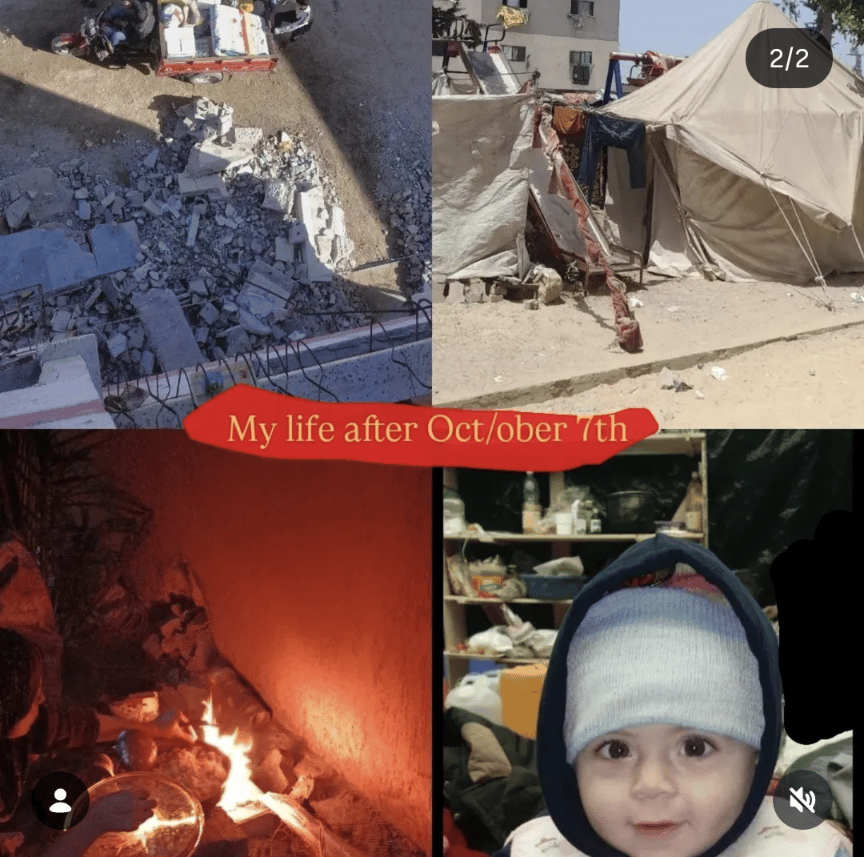
Mona posts about her life in Gaza on Instagram at @mona.k.000
Mona has posted her poetry book at monagaza.cargo.site


Add a comment: