katexic clippings logo

katexic clippings

Archives
Subscribe

katexic clippings katexic clippings

Archive

|k| clippings: 2015-05-20 — who are you, really?

Due to my work and teaching commitments this summer, newsletters might arrive a bit thinner and possibly less often than usual for a while. If you’ve come across anything interesting in your own reading or browsing, I welcome suggestions to share!

WORK

“Finally, I have discovered a horrible, rather brutal method that I recommend only to men of excessive vigor, men with thick black hair and skin covered with liver spots, men with big square hands and with legs shaped like bowling pins. It is a question of using finely pulverized, dense coffee, cold and anhydrous (a chemical term meaning without water), consumed on an empty stomach. This coffee into your stomach, which, as you know from Brillat-Savarin, is a sack whose velvety interior is lined with tapestries of suckers and papillae. The coffee finds nothing else in the sack, and so it attacks these delicate and voluptuous linings; it acts like a food and demands digestive juices; it wrings and twists the stomach for these juices, appealing as a pythoness appeals to her god; it brutalizes these beautiful stomach linings as a wagon master abuses ponies; the plexus becomes inflamed; sparks shoot all the way up to the brain. From that moment on, everything becomes agitated. Ideas quick march into motion like battalions of a grand army to its legendary fighting ground, and the battle rages. Memories charge in, bright flags on high; the cavalry of metaphor deploys with a magnificent gallop; the artillery of logic rushes up with clattering wagons and cartridges; on imagination’s orders, sharpshooters sight and fire; forms and shapes and characters rear up; the paper is spread with ink-for the nightly labor begins and ends with torrents of this black water, as a battle opens and concludes with black powder.”

#211
May 20, 2015
Read more

|k| clippings: 2015-05-18 — the thriller is gone

Today’s work comes via Reader B., who notes that it reminded him of some work found here before (true) and whose accompanying link eventually led me to the intense Behind Their Lines: Poetry of the Great War site.

WORK

“Jo’s Requiem”

He had the ploughman’s strength
in the grasp of his hand;
he could see a crow
three miles away,
and the trout beneath the stone.
He could hear the green oats growing,
and the south-west wind making rain.
He could hear the wheel upon the hill
when it left the level road.
He could make a gate, and dig a pit,
and plough as straight as stone can fall.
And he is dead.

—Ernest Rhys
—from The Leaf Burners

WORD(S)

eunoia /yoo-NOI-ə/. noun. A cultivated, intentional goodwill. In rhetoric, eunoia specifically refers to the feelings of goodwill a speaker inspires in an audience. Aristotle used the term to refer to the kind feelings between spouses which he maintained were the foundation of an ethical life. Eunoia is one of the shortest “panvowels” — words that contain all the vowels just once (see also: “regular panvowels,” or words which contain all the vowels just once and in order, such as facetious). From Greek εὔνοια (well-mind or beautiful thinking).

Poet Christian Bök wrote a book called Eunoia composed of five chapters, each of which use only one vowel…also known as a univocalic work.

“Enfettered, these sentences repress free speech. The text deletes selected letters.” (Christian Bök)

“There are two stories about the Archidamian War. The first is in Thucydides; the second is not (though it has to be pieced together from little bits of evidence in Thucydides along with other evidence). The first is essentially military, the other is not. It is in fact religious or ideological. To put that another way, the first is a story about battles for territory and attempts by one side to kill people on the other side; the second is a story of a struggle for goodwill, Greek eunoia.” (Simon Hornblower)

“The orator produces eunoia through his practical knowledge of the emotions. It is for that reason that the passions form part of the art of rhetoric. The quality of eunoia in the speaker is generated through producing emotions in the audience.” (Eugene Garver)

WEB

  1. Dear Data is a “year-long, analog data drawing project” that is both intriguing and easier to just check out for yourself than have me try to explain. I’m absolutely doing this in some future letters.

  2. The Oxford Centre for the Study of the Book has a great audio/podcast series of discussions about research into the “material history of the book”. The latest discusses a new archive of Graham Greene letters.

  3. Kyua Shim’s site has many examples of his exploration into “code-generated typography.” You’ll have to click the “Portfolio” link to see it…Shim’s web is made in an annoying way that defies direct linking.

  4. Minimalist Vocabulary Posters

  5. Today in 1827, Andrew P. Kehoe firebombs his home and then sets off an explosion in the Bath Consolidated School in Michigan, killing 38 schoolchildren and six teachers, making it the deadliest mass school killing in United States history. Fortunately, 500 pounds of explosives did not detonate or the death toll would have been significantly higher. Kehoe, the school board treasurer and embarrassed loser of an election for a position as the town clerk which he had filled on an interim basis for a few months, was also facing foreclosure on his home. Kehoe, who drove to the school after blowing up his home, would die in a suicide explosion he triggered in his vehicle—which was filled with shrapnel materials—along with the school superintendent he had called out, a local farmer and Cleo Claton, an eight-year-old survivor of the initial explosion who had wandered out of the rubble of the school.

WATCH/WITNESS

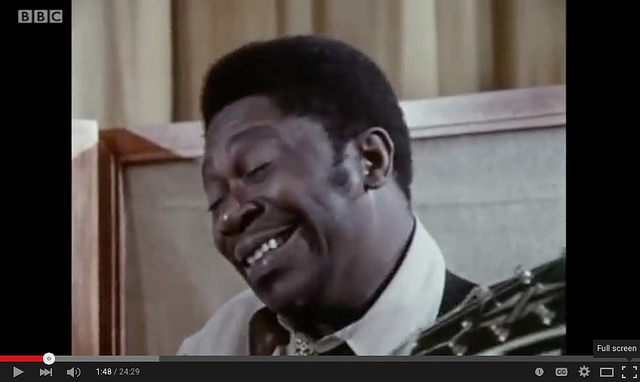
"Sounding Out" with B. B. King

B. B. King passed away last Friday. The 1972 BBC documentary Sounding Out is a great watch. My recommendation for a great listen with just the music: the classic 1965 album B. B. King: Live at the Regal.

REPRISES/RESPONSES/REJOINDERS/RIPOSTES

  • Reader B. sees a connection: “Your combination of odaxelagnia with the poem’s last lines (‘Jesus didn’t / need balance / he had nails’) was fascinating, and a tad arousing.”

  • Reader S. discovers a neat word: “Came across a neat new (to me) word today: aeonium, a type of house leek whose name comes from the Greek word for ageless. One and only one of each vowel…”

  • Reader B. writes in regarding the WORKs selected in honor of the memory of Franz Wright: “Those two selections are amazing.”

  • As does Reader P.: “Sorry, Franz. ¶ Glad to see the choices.”


I welcome comments, suggestions, thoughts, feedback and all manner of what-have-you. Just press ‘Reply’ or email to: clippings@katexic.com.

And please feel free to share anything here as far and wide as you want! If you want to give a shout-out, please link to: http://katexic.com/clippings/.

Daily(ish) email overwhelming you? Email chris+weekly@katexic.com to switch to the weekly digest edition.

#210
May 18, 2015
Read more

|k| clippings: 2015-05-15 — RIP: Franz Wright

RIP, Franz Wright. Another link in my personal poetry safety net undone. One that connected James Wright (obviously), John Berryman and Bill Knott. One that suspends me, sometimes barely, above the ground. One I know is ever-fraying. We’ll return to our regular form, and self, on Monday.

Wright wrote in a variety of styles. Following are two pieces from his 2011 collection of prose poems that are less about being representative of his work than illustrative of my sadness.

#209
May 15, 2015
Read more

|k| clippings: 2015-05-13 — once bitten, twice unshy

WORK

“One”

i’m going in for
a CAT scan i
mean an audition
for an opera
will it finally
break into
Two paths
this suffering One is tiresome
every gentle piece
of marble in
the sun was
once beaten
into shape
this doesn’t
work with people
take many deep
breaths maybe
breathing can help
Jesus didn’t
need balance
he had nails

—CAConrad
—from ECODEVIANCE

WORD(S)

odaxelagnia /oh-DAX-ə-LAG-nee-ə/. noun. One of the many and diverse paraphilias. In this case, sexual arousal through biting or being bitten.

“Biting for sexual pleasure is known as odaxelagnia and is used in courtship rituals to engage one another in the act of copulation among many species. According to the Kama Sutra, biting is an essential part of foreplay and ranges in its aesthetic appeal as well as sensual from nipping and pulling the skin to the ‘lines of jewels’ created by teeth-marks.” (Arlene Russo)

WEB

  1. “As we iterate on the logged out experience and curate topics, events, moments that unfold on the platform, you should absolutely expect us to deliver those experiences across the total audience and that includes logged in users and users in syndication.” → Twitter chief’s six common crimes against the dictionary

  2. The Typewriters in Films tumblr.

  3. Wikipedia’s List of Eponymous Laws. Hat-tip: a reader who I cannot recall right now

  4. Mx to join Mr and Mrs in the dictionary

  5. Today in 1958, a patent is awarded for Velcro—a portmanteau of two French words: velours (velvet) and crochet (hook)—enabling people everywhere to avoid the trauma of tying their shoes. Swiss inventor George de Mestral famously created velcro after a microscopic examination of burrs that were stuck to his dog’s fur after a walk. Despite all our efforts to make it generic, Velcro remains a trademark name for the Velcro Industries product. And George de Mestral had the knack…he went on to invent the hygrometer and an asparagus peeler still sometimes seen in Only on TV ads. A bit of further trivia: George H. W. Bush’s staff coined the term “velcrosis” to describe the way people relentlessly swarmed around him when he made public appearances.

WATCH/WITNESS

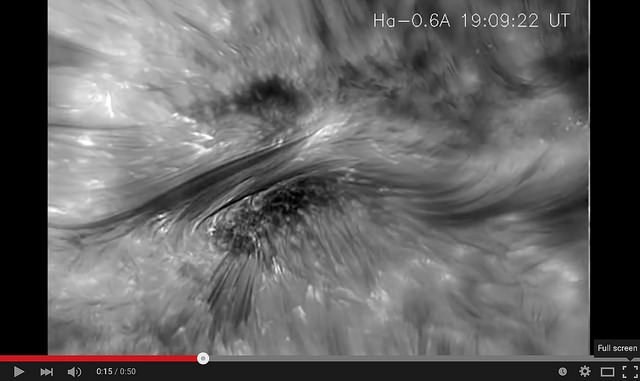
Solar Flux Ropes

NASA had me at: “twisted ropes of hot plasma and light on the surface of the sun that writhe like snakes…”. More sciency info in this article.

REPRISES/RESPONSES/REJOINDERS/RIPOSTES

  • Reader S. shares my pain: “Great. Now I can’t stop watching Seb Lester’s drawings…”

  • Reader N. shares a fascinating link related to last issue’s WORD: “The Megrims” – W. H. Auden on Oliver Sacks’ book Migraines

  • Reader T. doesn’t like it: “The dipped painting story is too precious and pointless for me. It is just posing. ¶ The reality is that everything is eventually washed away, with only tiny unconnected fragments that form the historical record.”


I welcome comments, suggestions, thoughts, feedback and all manner of what-have-you. Just press ‘Reply’ or email to: clippings@katexic.com.

And please feel free to share anything here as far and wide as you want! If you want to give a shout-out, please link to: http://katexic.com/clippings/.

Daily(ish) email overwhelming you? Email chris+weekly@katexic.com to switch to the weekly digest edition.

#208
May 13, 2015
Read more

|k| clippings: 2015-05-11 — keeping them at bay

WORK

“If you want to really hurt you parents, and you don’t have the nerve to be gay, the least you can do is go into the arts. I’m not kidding. The arts are not a way to make a living. They are a very human way of making life more bearable. Practicing an art, no matter how well or badly, is a way to make your soul grow, for heaven’s sake. Sing in the shower. Dance to the radio. Tell stories. Write a poem to a friend, even a lousy poem. Do it as well as you possible can. You will get an enormous reward. You will have created something.”

—Kurt Vonnegut
—from A Man Without a Country

WORD(S)

megrim(s) /MEE-grim(s)/. noun. A migraine headache or the kind of dizziness and vertigo that often accompanies such headaches. In plural form, megrims, depression or melancholy. Rarely, a whim, a caprice or a furtive thought. From Old French migraign, from Late Latin hemicrania (headache).

“If these megrims are the effect of Love, thank Heaven, I never knew what it was.” (Samuel Richardson)

“He was turning around, zipping his fly, talking mostly to keep the megrims away.” (Stephen King)

“Doth the ague, the megrim, or the gout spare him more than us? When age shall once seize on his shoulders can then the tall yeomen of his guard discharge him of it?” (Michel de Montaigne)

“But you told me last night that cricket gave you the pip, which I imagine is something roughly equivalent to the megrims or the heeby-jeebies.” (P. G. Wodehouse)

“Then the megrims began, like claps of thunder trapped inside his skull, and for hours he was forced to lie prostrate in his shuttered cell with vinegar poultices pressed to his brow, as cascades of splintered multicoloured glass formed jagged images of agony behind his eyes.” (John Banville)

WEB

  1. The theorizing about social media is weak and distracts from a devastating story that everyone should probably read → Split Image

  2. The Brooklyn Museum has an exhibit up called Basquiat: The Unknown Notebooks. Even if you can’t attend, there’s gold in the teacher packet (PDF)

  3. I’m fascinated by memory and ephemerality, particularly in this age of permanent impermanence → Oliver Jeffers’s Art of Bearing Witness

  4. Stunning first shots from National Geographic’s 2015 Traveler Photo Contest

  5. Today in 868, a version of the Diamond Sūtra is published in China and is now the oldest surviving complete, specifically dated book in the world. Sealed up in a cave in the year 1000, the scroll was discovered with many others in 1907 by the explorer Sir Marc Aurel Stein and is currently housed at the British Library. The Diamond Sūtra gets its name from the text itself: when asked what this Sūtra should be called, Buddha responds that it shall be known as ‘The Diamond that Cuts through Illusion’. Read a “new translation” of the Diamond Sūtra that integrates more than a dozen different translations.

WATCH/WITNESS

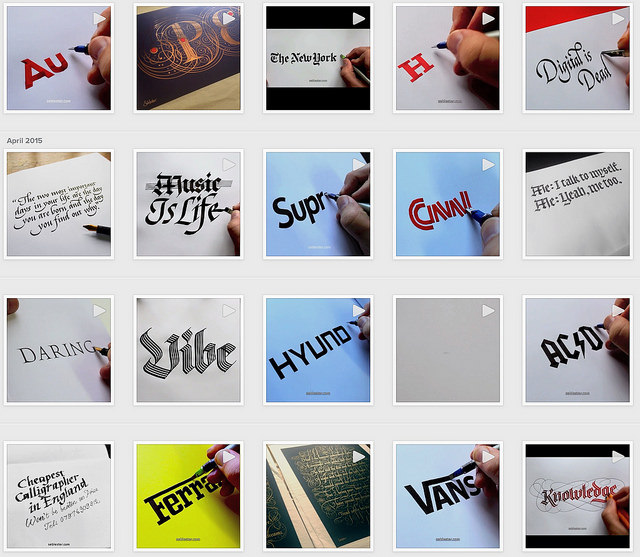
Seb Lester drawing versions of famous logo

I can’t stop watching these videos of Seb Lester drawing versions of famous logos.

REPRISES/RESPONSES/REJOINDERS/RIPOSTES

  • Reader S. found the torture method that might be the origin for ‘kibosh’: "One source claims the British method of execution involved putting burning pitch on people’s heads. ¶ Which is apparently something that actually happened, even if I am lazy and go to Wikipedia: pitchcapping.

I welcome comments, suggestions, thoughts, feedback and all manner of what-have-you. Just press ‘Reply’ or email to: clippings@katexic.com.

And please feel free to share anything here as far and wide as you want! If you want to give a shout-out, please link to: http://katexic.com/clippings/.

Daily(ish) email overwhelming you? Email chris+weekly@katexic.com to switch to the weekly digest edition.

#207
May 11, 2015
Read more

|k| clippings: 2015-05-08 — death mark'd love

WORK

“Early Elegy: Smallpox”

The world has certified itself rid of
all but the argument: to eradicate or not
the small stock of variola frozen,
quarantined—a dormancy it has
refused, just once, for a woman behind a sterile
lens, her glass slide a clearest, most
becoming pane. How could it resist slipping
away with her, that discrete first pock?

—Claudia Emerson
—from Poetry (June 2012)

WORD(S)

kibosh (kybosh) /KIY-bawsh/ or /kə-BAWSH/. noun. To stop, end or finish off. Not an obscure word to most, but interesting because of its possible origins. The most popular—and the one I prefer—places kibosh’s roots in caipín báis, Irish for cap of death, the black cap traditionally worn by English judges when sentencing someone to death. Many reference a single source that it might also refer to a “gruesome” method of execution “employed by British forces against 1798 insurgents,” but I can find nothing further about what that method might be. Other etymological possibilities: Scots kye booties (cow boots), Hebrew kbsh (conquer) or Turkish bosh (empty).

“‘Hooroar,’ ejaculates a pot-boy in parenthesis, ‘put the kye-bosk on her, Mary!’” (Charles Dickens) [first known use of the term]

“For one thing, monsignor, making it hard for those you expose to your high-geared system of kibosh to see a doctor and ask him why the hell they can’t sleep of nights and want to mutilate people.” (Thomas Keneally)

“if there’s anything that can put the kibosh on a literary career, it’s the loving forgiveness of one’s natural enemies.” (Philip Roth)

“Watching her crunch those trout heads and bones with her pretty teeth, I was glad I had put the kibosh on my attack of leg-jealousy.” (Rex Stout)

WEB

  1. Landscapes Made for Satellite Eyes

  2. Hyperbolic, but not wholly unfounded → Louis John Pouchée’s lost alphabets are the most beautiful types ever

  3. Classic Films Summarized by People Who Have Never Seen Them

  4. The Small Colon Collider is returning to action.

  5. Today in 1980, after 184 years, smallpox—the first, and so far only, disease completely contained by man—is certified eradicated by the World Health Organization. The last naturally occurring case was in Somalia in 1977. That patient survived. In 1978, two laboratory workers in Birmingham, England contracted smallpox in a research lab. One of them would later die, but smallpox claimed another victim: the laboratory’s director, who committed suicide.

WATCH/WITNESS

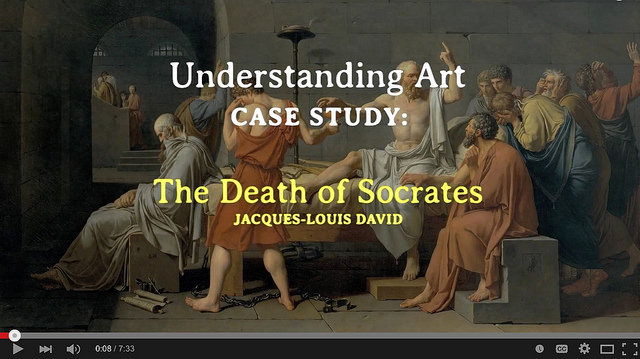
Understanding Art: The Death of Socrates

►Understanding Art: The Death of Socrates: In just over 7.5 minutes I almost guarantee you will learn something about—and perhaps form (more of?) an appreciation for—Jacques-Louis David’s painting. So good (both the painting and Nerdwriter’s series)!

REPRISES/RESPONSES/REJOINDERS/RIPOSTES

  • Reader B. savors a WORD: “‘absquatulate’ is a superb word to say out loud. ¶ absquatulate. ¶ absquatulate. ¶ absquatulate.”

I welcome comments, suggestions, thoughts, feedback and all manner of what-have-you. Just press ‘Reply’ or email to: clippings@katexic.com.

And please feel free to share anything here as far and wide as you want! If you want to give a shout-out, please link to: http://katexic.com/clippings/.

Daily(ish) email overwhelming you? Email chris+weekly@katexic.com to switch to the weekly digest edition.

#206
May 8, 2015
Read more

|k| clippings: 2015-05-06 — savage and beautiful country

WORK

It began in mystery and it will end in mystery. However many of life’s large, captivating principles and small, captivating details we may explore, unpuzzle, and learn by heart, there will still be vast unknown realms to lure us. If uncertainty is the essence of romance, there will always be enough uncertainty to make life sizzle and renew our sense of wonder. It bothers some people that no matter how passionately they may delve, the universe remains inscrutable. ‘For my part,’ Robert Louis Stevenson once wrote, ‘I travel not to go anywhere, but to go. I travel for travel’s sake. The great affair is to move.’ The great affair, the love affair with life, is to live as variously as possible, to groom one’s curiosity like a high-spirited thoroughbred, climb aboard, and gallop over the thick, sun-struck hills every day. Where there is no risk, the emotional terrain is flat and unyielding, and, despite all its dimensions, valleys, pinnacles, and detours, life will seem to have none of its magnificent geography, only a length. It began in mystery, and it will end in mystery, but what a savage and beautiful country lies in between.

—Diane Ackerman
—from A Natural History of the Senses

WORD(S)

absquatulate /ab-SKWAH-chə-layt/. verb. To abscond. To steal away. Rarely: to die. A mock-Latin combination of abscond + squat. See also, absquatulize.

“He certainly had his hump up. He absquatulated. The bung cried: ‘Square the omee for the cream of the valley!’ But the splodger had mizzled with his half-a-grunter.” (Angela Carter)

“And to think that Doña Estefanía absquatulated with all your beautiful chains! That just goes to show you it never rains but it pours.” (Miguel de Cervantes [trans. David Kipen]

“The former owners having been in some haste to absquatulate, random items of inventory had been left behind, the usual two-headed dogs in jars and pickled brains of notable figures in history, many from long before pickling as we know it was invented, the Baby from Mars, the scalp of General Custer, certified to be authentic…” (Thomas Pynchon

“I mistook her for a Tarkington student, maybe the dyslexic daughter of some overthrown Caribbean or African dictator who had absquatulated to the USA with his starving nation’s treasury.” (Kurt Vonnegut)

WEB

  1. Dude! No, seriously, fun stuff… → Top 10 Most Extreme Substances

  2. “The book was, we can now see, crying out for the invention of the web, which would enable the holding of multiple domains of knowledge in the mind at one time that a proper reading requires.” → Finnegans Wake – The book the web was invented for

  3. I don’t read French (the gist: meet a hipster who only watches movies on VHS); it’s the awesome vintage VHS box illustrations for contemporary movies that are worth a click. → De Game of Thrones à Gravity : un hipster parisien regarde tout en VHS

  4. “Maybe every novelist wants to write poetry first, finds he can’t, and then tries the short story, which is the most demanding form after poetry. And, failing at that, only then does he take up novel writing.” → William Faulkner Makes Us Wonder: What’s So Great About Poetry, Anyhow?

  5. Today in 1527, an army of German Lutherans and Spanish Catholics (contempt breeds strange bedfellows) led by Charles Duc de Bourbon of France begin the Sack of Rome, considered by most the end of the Renaissance. This was, for obvious reasons, a significant victory for the Protestants. It was also a significant factor in the terrible and popular story of Henry VIII: Pope Clement VIII—who only escaped the sack with his life due to the bravery of the Swiss Guard (of the 189 members of the guard, only 42 survived), a gigantic ransom payment and a secret passage from the Vatican—was from then on unwilling to offend the Spanish Emperor (Charles V) and thus unwilling to grant Henry’s requested annulment from the (Charles V’s aunt) Catherine of Aragon, which resulted in Henry’s break from Rome. Though responsibility for the whole thing undoubtedly lies with Charles V, there was an immensely complex group of forces at work, not least the Duc de Bourbon’s ongoing protection racket that had ensnared the Pope, conspiracies and betrayal inside the Vatican, and the King of France’s attempts to take advantage of the strife.

WATCH/WITNESS

Apostle Islands Ice Cave (Andy Rathbun)

“Apostle Islands Ice Cave” (Andy Rathbun)

REPRISES/RESPONSES/REJOINDERS/RIPOSTES

  • Reader V. shares a link to complement the Surreal Type Samples: “Browsing further, I discovered more surreal type samples. Enjoy!”

  • Reader B. writes in: “What a feast! ¶ Just blogged that fine alphabet.”


I welcome comments, suggestions, thoughts, feedback and all manner of what-have-you. Just press ‘Reply’ or email to: clippings@katexic.com.

And please feel free to share anything here as far and wide as you want! If you want to give a shout-out, please link to: http://katexic.com/clippings/.

Daily(ish) email overwhelming you? Email chris+weekly@katexic.com to switch to the weekly digest edition.

#205
May 6, 2015
Read more

|k| clippings: 2015-05-04 — Who's the fairest? You're the fairest.

WORK

“A library in the middle of a community is a cross between an emergency exit, a life raft and a festival. They are cathedrals of the mind; hospitals of the soul; theme parks of the imagination. On a cold, rainy island, they are the only sheltered public spaces where you are not a consumer, but a citizen, instead. A human with a brain and a heart and a desire to be uplifted, rather than a customer with a credit card and an inchoate ‘need’ for ‘stuff.’ A mall—the shops—are places where your money makes the wealthy wealthier. But a library is where the wealthy’s taxes pay for you to become a little more extraordinary, instead.”

—Caitlin Moran
—from Moranthology

WORD(S)

epistrophe /ə-PI-strə-fee/. noun. Repetition at the end of successive clauses, verses or sentences for rhetorical effect. From Greek epistrophē (a turning about), from strophē (a turning).

Some example of epistrophe:

“The grove of Angita lamented you,
The glassy watered Fuccinus lamented you,
All limpid lakes lamented you.”
(Virgil)

“…government of the people, by the people, for the people…” (Abraham Lincoln)

“There is no Negro problem. There is no Southern problem. There is no Northern problem. There is only an American problem.” (Lyndon B. Johnson)

“Why I should fear I know not,
Since guiltiness I know not.”
(William Shakespeare)

Bonus: listen to Thelonious Monk’s “Epistrophy” (sic) with this in mind and the title becomes obvious.

WEB

  1. Each May since 1981 (more or less), unknown parties have been placing a series of cryptic ads—in service of an unknown cause/conspiracy—in an Arizona Newspaper. It’s the May Day Mystery. Thanks, Reader K.!

  2. An interactive visualization of Miles Davis’s complete(ish) catalog → Scaled in Miles

  3. Since 2002, retired engineer Đức thắng Nguyễn has been creating an “amazing animated 3D catalog of mechanical contraptions”, including animations available on Nguyễn’s YouTube channel. Thanks, Reader C.!

  4. Feelers: a typeface based on limbs and intestines

  5. Today is Star Wars Day. As yet an unofficial, secular observance, Star Wars Day remains a day characterized by near-religious fervor by some. You might enjoy the listicle “37 Star Wars Facts for Star Wars Day”. Meantime, true believers already know how to celebrate. If you’re not one of them, watch an episode of Chad Vader: Night Shift Manager. May the Fourth be with you.

WATCH/WITNESS

New York World's Fair, 1964

Just one image from
a gallery of wonderful shots of the 1964 World’s Fair in New York City.

REPRISES/RESPONSES/REJOINDERS/RIPOSTES

  • Reader N. shares a triply-relevant satire: “…something I read recently—a satire called Merrie Englande in the Olden Time by one George Daniel. […] Daniel was a popular social satirist and also a lover of Shakespeare. Mr. Bosky is the hero of the satire. I enclose a snippet of his style.”

THE UP-TO-SNUFF FRENCH SCARAMOUCH.

Monsieur Scaramouch, sharp-set enough,
At a Paris dépôt for tobacco and snuff,
Accosted the customers every day
With “Pardonnez moi, du Tabac, s’il vous plâit!”

He look’d such a gentleman every inch,
The Parisians all condescended a pinch;
Which, taken from Bobadils, barbers, and beaux,
Went into his pocket — instead of his nose!

Scaramouch sold, with a merry ha I ha!
Ev’ry pinch to his friend, le marchand de tabac:
Then buyer and seller the price of a franc
To the noses of all their contributors drank!


I welcome comments, suggestions, thoughts, feedback and all manner of what-have-you. Just press ‘Reply’ or email to: clippings@katexic.com.

And please feel free to share anything here as far and wide as you want! If you want to give a shout-out, please link to: http://katexic.com/clippings/.

Daily(ish) email overwhelming you? Email chris+weekly@katexic.com to switch to the weekly digest edition.

#204
May 4, 2015
Read more

|k| clippings: 2015-05-01 — the world as unseen glass

Thanks to Reader C. for today’s WORD which, when I started looking for it, turns up everywhere in books I’ve read, some multiple times. And to Reader B. who recommended the book today’s WORK comes from. How much I must unknowingly miss every minute, every day.

WORK

“Or perhaps it is just that George has spent proper time looking at this one painting and that every single experience of looking at something would be this good if she devoted time to everything she looked at.”

—Ali Smith
—from How to Be Both_

WORD(S)

bosky /BAW-skee/. adjective. Abundant with woods, shrubbery or greenery. Verdant. Rarely: tipsy or drunk. Perhaps a variant of busky (same primary meaning), ultimately from Latin boscus (wood).

“Coming down a stony draw through green and well nigh lightless grottoes where lay stones and windfall trees alike anonymous beneath the mantled moss he saw cross through a bosky glen two equine phantoms pale with purpose: one, the next, and gone in the dark of the forest.” (Cormac McCarthy)

“It was a sight to make one bosky out of hand. Indeed, the warming properties of strong drink give it a more seductive appeal at sea than it ever has ashore” (William Golding)

“Hail, many-colour’d messenger, that ne’er
Dost disobey the wife of Jupiter;
Who with thy saffron wings upon my flowers
Diffusest honey-drops, refreshing showers,
And with each end of thy blue bow dost crown
My bosky acres and my unshrubb’d down,
Rich scarf to my proud earth; why hath thy queen
Summon’d me hither, to this short-grass’d green?”
(William Shakespeare)

"…The green is a reflective green, a green
in the juicy shadows of leaves—a bosky even green—
a word I will learn to use, and use without self-
consciousness, when at last I go to Germany. I have
holed myself away here, sometimes I am not here
at all, and I feel like the nice clean hole in the leaf
    and the magnifying glass above me.
(Patricia Lockwood)

more examples

WEB

  1. A collection of articles based on private journals…including Nina Simone. → The Longform Guide to Diaries

  2. “But IDEA Books also culls together texts so seemingly strange and obscure, volumes you didn’t think could possibly have existed, that you’ll want them for your own shelves immediately.” A strange book collecting niche. → Paper Chase: In Pursuit of Rare Books

  3. Typophiles, prepare a drink → ‘Comic Papyrus’ Is Basically Your Biggest Typographic Nightmare Come True.

  4. Discovery of Long-Lost Silent Film With All-Indian Cast Has Historians Reeling

  5. Today is International Sunflower Guerrilla Gardening Day. In its 9th year, thousands of participants plant/scatter sunflower seeds in urban spots that would otherwise be bare and neglected. See some of the flowers of the guerrilla’s labor in their flickr photo group. There’s even a helpful instructional video.

WATCH/WITNESS

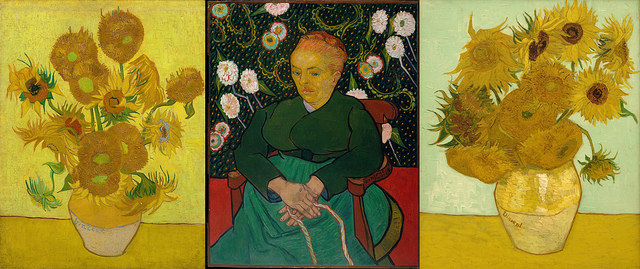
Vincent Van Gogh sunflowers triptych re-creation

A reconstruction of a triptych sketched in a letter by Vincent Van Gogh (use the ‘Facsimile’ link to view).

Check out a large view of the triptych. Download an even larger one. Dig in. Trace the brush-strokes. Seek beginner’s viewing mind, beyond the familiarity.

REPRISES/RESPONSES/REJOINDERS/RIPOSTES

  • Reader E. votes yes on a contest: “Love the idea of the Cormac McCarthy contest. :-) You should look at the O. Henry story contest and the Bulwer-Lytton contests as models…” — Thanks! It’s going to happen soon. You heard it here first…

Multiple readers had thoughts on on Sherman Alexie’s “Facebook Sonnet.” I love hearing from the Clamor!

  • Reader B.: “Arg. I like Alexie. but that’s just more silly tech-bashing. It dates back to Robert Putnam’s foolish insistence that online socialization didn’t count, and now Jaron Lanier’s idiotic but well-paid anti-internet stuff.”

  • Reader G.: “Although I didn’t entirely agree with Sherman’s Alexie’s Facebook poem, I didn’t entirely disagree with it either. I have a connection with many of the people from my past after years of moving and the passage of time. I haven’t taken the time to forge the same connection with people in my present. But my friends on Facebook are my friends because I do value them and I want to know about them and I still care about them. Most of them are not from high school for me, but from everywhere I’ve ever lived. I do find Facebook a place of simultaneous connection and loneliness too. Interesting poem. I keep thinking about it.¶ He wrote a nice sonnet about something many people can relate to I think.”

  • Reader T.: “I think it is more of an observation than a condemnation or a judgment. As in, there is a lot of loneliness on display and/or being facilitated by Facebook, but it’s not so much Facebook causing it. The loneliness was always there, but now at least we’re able to connect more on SOME level.”

  • Reader N. shares a pleasing connection: I enjoyed the Facebook sonnet by Sherman Alexie. It reminded me of the vogue for satire about the too popular watering spots, Bath and Brighton, by Jane Austen and many others. A very popular satire was a full-length book of satirical epistles called “The New Bath Guide” by Christopher Anstey—written in the mid 18th century, several decades before Austen wrote. Here’s a small sample:

Then, O sweet goddess, bring with thee
Thy boon attendant Gaiety,
Laughter, Freedom, Mirth, and Ease,
And all the smiling deities;
Fancy, spreading painted sails,
Loves that fan with gentle gales.—
But hark!—methinks I hear a voice,
My organs all at once rejoice;
A voice that says, or seems to say,
“Sister, hasten, sister gay,
”Come to the pump—room—come away."


I welcome comments, suggestions, thoughts, feedback and all manner of what-have-you. Just press ‘Reply’ or email to: clippings@katexic.com.

And please feel free to share anything here as far and wide as you want! If you want to give a shout-out, please link to: http://katexic.com/clippings/.

Daily(ish) email overwhelming you? Email chris+weekly@katexic.com to switch to the weekly digest edition.

#203
May 1, 2015
Read more

|k| clippings: 2015-04-29 — watching the watchers

I don’t share Alexie’s convictions in today’s WORK, or at least I’m not convinced it is necessarily so. Give the usual nod to the predictable irony that I learned of this poem—and enjoyed Alexie’s reading (he’s a fantastic writer)—on…Facebook.

WORK

“The Facebook Sonnet”

Welcome to the endless high-school
Reunion. Welcome to past friends
And lovers, however kind or cruel.
Let’s undervalue and unmend

The present. Why can’t we pretend
Every stage of life is the same?
Let’s exhume, resume, and extend
Childhood. Let’s all play the games

That occupy the young. Let fame
And shame intertwine. Let one’s search
For God become public domain.
Let church.com become our church.

Let’s sign up, sign in, and confess
Here at the altar of loneliness.

—Sherman Alexie
—from “Moyers & Company” broadcast watch and listen

WORD(S)

sousveillance /soo-VAY-ləns/. noun. A play on the French words sur (above) and sous (below), sousveillance is essentally “undersight”, surveillance from below (the hierarchy) rather than above. It is the recording of an activity by a participant in the activity, typically by way of small wearable or portable personal technologies." More broadly, it refers to people doing the watching rather than governments or other organizations watching from above. Even if you’re too busy doing last-minute shopping—or perhaps especially if you are busy doing last-minute shopping—you can participate in World Sousveillance Day on Christmas Eve.

“Mann further distinguishes between two forms of sousveillance: in-band, which arises from within an organization, and out-of-band, which is external to the organization and frequently arises from the perceived failure of surveillance mechanisms within institutions. It is not coincidental that ‘citizens videotaping police brutality and sending copies to news media’ is used as an example of the latter form.” (Torin Monahan)

“Sousveillance isn’t just a response to surveillance, it is the wellspring of freedom.” (David Brin)

WEB

  1. Not sure about “worst” but…umm…not good. → The 23 Worst Children’s Book Titles In The World

  2. The Keaton Music Typewriter

  3. “…though it will be tempting to dismiss Ex Machina as a kind of nihilist Weird Science wallpapered over with intellectual pretensions, Garland also genuinely grapples with ideas about artificial intelligence and technology.” → Maria Bustillos on the new movie Ex Machina

  4. “…the most perfectly surrealist works of literature are the type samples issued by the great type foundries of the nineteenth and early twentieth centuries.” → “The Dawn of Surrealism”

  5. Today in 1992, four Los Angeles Police Department officers are acquitted on charges of excessive force in the beating of Rodney King, sparking riots that would result in “53 deaths, 2,383 injuries, more than 7,000 fires, damage to 3,100 businesses, and nearly $1 billion in financial losses.” It’s hard to process the events in Baltimore—and so many other places—23 years after this decision and as we approach the anniversary of the murder of two Alaska State Troopers, one of whom was a friend and a good man. Deep waters.

WATCH/WITNESS

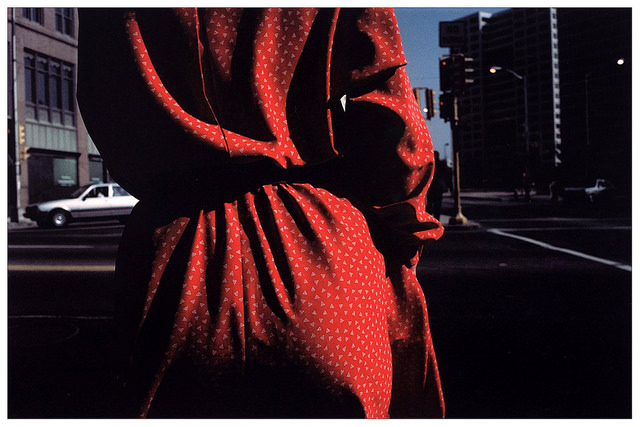
"Untitled" by Harry Callhan, Atlanta, 1984

Untitled, Atlanta, 1984. Photo by Harry Callahan.
See more of Callahan’s work online from the George Eastman House and the Pace/MacGill Gallery.

REPRISES/RESPONSES/REJOINDERS/RIPOSTES

  • Reader B. puts forth a candidate: “‘Crooning a low threnody to her pawky trade.’ I’d nominate this for a contest to determine The Ultimate Cormac McCarthy Sentence.” — That might be a contest I need to figure out how to run. So many candidates…and I need to think of an appropriate prize.

I welcome comments, suggestions, thoughts, feedback and all manner of what-have-you. Just press ‘Reply’ or email to: clippings@katexic.com.

And please feel free to share anything here as far and wide as you want! If you want to give a shout-out, please link to: http://katexic.com/clippings/.

Daily(ish) email overwhelming you? Email chris+weekly@katexic.com to switch to the weekly digest edition.

#202
April 29, 2015
Read more

|k| clippings: 2015-04-27 — maps & letters

WORK

“Outside”

My grandmother sends a letter
from the older country,

large spaces between the words
waiting for me to be born.

In the bedroom upstairs my mother
writes with a red pen in the book of birth.

Outside, the nights are cooler. By the light
of her notebook my sister

imagines her own imagination. She wants
to write everything down at once.

Days are getting shorter.
Leaves are pulling colour from the air.

The school bus stops in front of the house
and the driver calls out. My sister

runs down the steps
toward the open doors

thinking she will know me.

—Robert Gore
—from Contemporary Verse 2

WORD(S)

pawky /PAW-kee/. adjective. Shrewd, cunning, canny. In Scottish dialect: haughty, insolent. From northern English dialect pawk (trick).

“She was at her triturations. Spooning to death in a salver a speckled slug, marked like an ocelot, viscous and sticky. A whitish paste. Crooning a low threnody to her pawky trade.” (Cormac McCarthy)

“Though he is not known as a satirist, his Blood Meridian, about a ruthless band of bounty hunters looking for Indian scalps in Texas in the 1850s, can be read at least in part as a bloody pasquinade on the heroic literature of westward expansion. A pawky gallows humor is a reliable if underappreciated element in much of McCarthy’s work…” (Michael Chabon, from Maps and Legends)

“In this milieu, you suddenly see the urgent meaning of that phrase about everybody needing a good laugh. The Algonquin Round Table could never have been so remorselessly pawky.” (Martin Amis)

“He went on in his pawky way trying to make clear to her his mystical faith in these men who went ragged and hungry because they had chosen once for all between what he called in all seriousness their souls, and this world.” (Katherine Anne Porter)

WEB

  1. Readers will have noticed my slowly developing obsession with Caravaggio. That’s what you pay me for! → “The mystery of Caravaggio’s death solved at last—painting killed him”.

  2. $2 bills have made an appearance here before. Apparently I share this interest with some South Americans → The Curious Case of $2 Bills in Ecuador

  3. For use by “the less formal male” in approaches to “the less formal female” → 19th Century Escort Cards

  4. “I read books by only minority authors for a year. It showed me just how white our reading world is.”

  5. Today in 1963, screenwriter and producer Stephen Russell Davies—better known by his pen name Russell T Davies—is born in Swansea, Wales. Some will know him as the creator of the original Queer as Folk television series, many more for his successful reboot of the Doctor Who franchise in 2005. He’s currently at work on Tofu, the third in a trilogy of series about gay life and culture, that began with Cucumber and Banana. As a fan, his work bringing Doctor Who back is enough for recognition, but his outstanding Fresh Air interview, which is funny, humble and insightful—and has nothing to do with Doctor Who—put me over the top.

WATCH/WITNESS

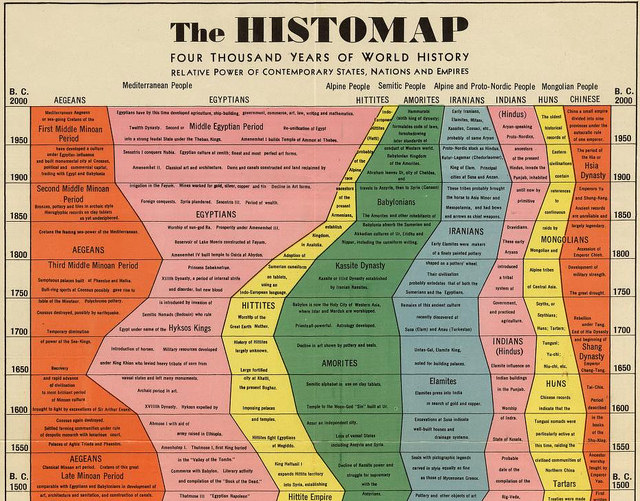
Rand McNalley "HISTOMAP"

View the entire Rand McNalley HISTOMAP: 4000 Years of World History on a Single Map

REPRISES/RESPONSES/REJOINDERS/RIPOSTES

  • Reader C. writes: “My favorite use of scaramouch. Freddy Mercury for the win…” — You might enjoy some of the discussons on the song at SongMeanings.net

  • Reader S. writes w/r/t the toilet repair that resulted in a museum: “The story about the trattoria-turned-museum is the stuff of my fondest dreams. If only…”

  • Reader N. hooks me up with some music: “Have you ever heard the piano duet ‘Scaramouche’ by Darius Milhaud? Here’s an excerpt.¶ It’s very lively and sometimes played on one piano with four hands. You can also find it performed with saxophone or clarinet and orchestra. Milhaud was a member of ‘Les Six’ which also included Poulenc and Honneger. If you like ‘Scaramouche’ you can move on to ‘Le Boeuf sur le toit’ (The Ox on the Roof), a ballet farce and a famous bar in Paris. The bar was named after the ballet and not the other way around.” — Wonderful! I’ve listened to multiple performances of the full piece and Le Bœuf sur le toit (how could I resist a farcical surrealist ballet quoting scores of Brazilian songs made into a show with the help of Cocteau?

  • The same Reader N. saw right through me: “I really enjoyed your collection of quotations about the word. Although Jane Austen and Martin Amis may seem to be strange bed-fellows, he has remained as devout an Austenista as can be since he first read her novels as a teenager.” — The pairing tickled me because I remembered Amis discussing Austen multiple times in his nonfiction (and his differences with this father on the topic, if I recall correctly).


I welcome comments, suggestions, thoughts, feedback and all manner of what-have-you. Just press ‘Reply’ or email to: clippings@katexic.com.

And please feel free to share anything here as far and wide as you want! If you want to give a shout-out, please link to: http://katexic.com/clippings/.

Daily(ish) email overwhelming you? Email chris+weekly@katexic.com to switch to the weekly digest edition.

#201
April 27, 2015
Read more

|k| clippings: 2015-04-25 — cast out, off and away

WORK

“The one thing I can tell you is that you wont survive for yourself. I know because I would never have come this far. A person who had no one would be well advised to cobble together some passable ghost. Breathe it into being and coax it along with words of love. Offer it each phantom crumb and shield it from harm with your body. As for me my only hope is for eternal nothingness and I hope it with all my heart.ghost. Breathe it into being and coax it along with words of love. Offer it each phantom crumb and shield it from harm with your body. As for me my only hope is for eternal nothingness and I hope it with all my heart.”

#200
April 25, 2015
Read more

|k| clippings: 2015-04-23 — and me, and you, and us

Exchanging messages with a reader and I realized that one of the reasons I adore both asyndeton (our last WORD) and polysyndeton (today’s WORD) is because both are methods of manipulating lists, a device I am obsessed with.

WORK

“Reaching the cascade, or rather cataract, the roaring of which had a long time announced its vicinity, my soul was hurried by the falls into a new train of reflections. The impetuous dashing of the rebounding torrent from the dark cavities which mocked the exploring eye produced an equal activity in my mind. My thoughts darted from earth to heaven, and I asked myself why I was chained to life and its misery. Still the tumultuous emotions this sublime object excited were pleasurable; and, viewing it, my soul rose with renewed dignity above its cares. Grasping at immortality—it seemed as impossible to stop the current of my thoughts, as of the always varying, still the same, torrent before me; I stretched out my hand to eternity, bounding over the dark speck of life to come.”

—Mary Wollstonecraft
—from Letters written during a short residence in Sweden, Norway, and Denmark

WORD(S)

polysyndeton /POL-ee-SIN-də-tahn/. noun. The use of several conjunctions—usually repeated—in succession. AKA “overly many conjunctions.” A very common biblical device and one which often adds gravity, mystery, breathlessness, or expansiveness to a phrase. From Greek polu (poly) + sundetos (bound together).

“And I stood upon the sand of the sea, and saw a beast rise up out of the sea, having seven heads and ten horns, and upon his horns ten crowns, and upon his heads the name of blasphemy.” (King James Bible)

“Oh, my piglets, we are the origins of war—not history’s forces, nor the times, nor justice, nor the lack of it, nor causes, nor religions, nor ideas, nor kinds of government, nor any other thing. We are the killers. We breed wars.” (James Goldman)

“Whatever this is that I am, it is a little flesh and breath and the ruling part.” (Marcus Aurelius)

“Unless hours were cups of sack and minutes
capons and clocks the tongues of bawds and dials the
signs of leaping-houses and the blessed sun himself
a fair hot wench in flame-coloured taffeta, I see no
reason why thou shouldst be so superfluous to demand
the time of the day.” (William Shakespeare)

“It came boring out of the east like some ribald satellite of the coming sun howling and bellowing in the distance and the long light of the headlamp running through the tangled mesquite brakes and creating out of the night the endless fenceline down the dead straight right of way and sucking it back again wire and post mile on mile into the darkness after where the boilersmoke disbanded slowly along the faint new horizon and the sound came lagging and he stood still holding his hat in his hands in the passing ground-shudder watching it till it was gone.” (Cormac McCarthy)

WEB

  1. Apocalypse Then: Medieval Illuminations from the Morgan celebrating “the completion of a facsimile of the Morgan’s Las Huelgas Apocalypse—the latest dated (1220) and largest surviving manuscript of a Spanish tradition of illuminated commentaries on the Apocalypse by the monk Beatus of Liébana”

  2. I was initially unsure of this “cradle Christian’s” take on David Foster Wallace, but she nails how his work isn’t religious, but can be complementary to it and—most importantly—that far from being an ironic hipster, Wallace was sincere (in hindsight, perhaps overly so) → “Everybody Worships: On David Foster Wallace”

  3. In part thanks to the popularity of The Imitation Game, the Alan Turing notebook that had been kept a secret due to a “a deeply personal message written in the blank centre pages of the notebook” sold for over a million dollars to an anonymous buyer. More history lost to the highest bidder.

  4. And speaking notebooks found: “Wounded First World War soldier’s notebook of 99 years ago is discovered in drawer by relative”

  5. Today in 1564, William Shakespeare is baptized in Stratford-upon-Avon, inaugurating the daty traditionally observed as his birthday (and St. George’s Day). Shakespeare’s actual date of birth remains unknown, but the symmetry with the date of his death—April 23, 1616—has proven irresistible to historians and aficionados alike. Treat yourself to some words from the Bard! Shakespeare’s plays and sonnets are available all over, such as at Open Source Shakespeare. If you’re a serious reader, you need printed books, and you can’t go wrong with the Arden Shakespeare series which has more supplementary materials, information and notes than most readers will ever need, along with a few necessities from other publishers such as the unconflated Quarto text of King Lear from Oxford Press. Or listen to Shakespeare’s Restless World, a podcast that explores the world of shakespeare through 20 objects from his time. Or watch some clips from the Improvised Shakespeare Company. Or learn about—and possibly support Elsinore—a “time-traveling narrative adventure game based in the world of Shakespeare’s Hamlet.” Or just take in Shakespeare’s entire works one Tweet at a time.

WATCH/WITNESS


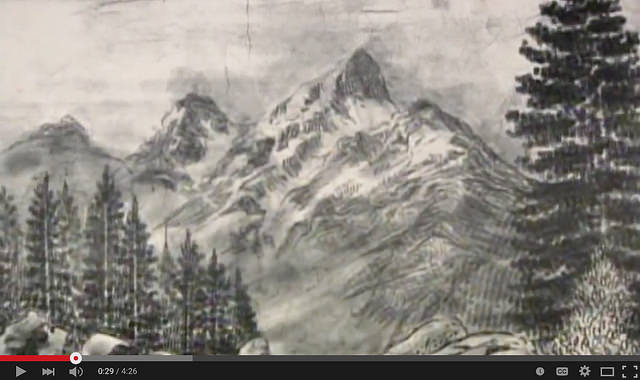
Art by Paul Smith

You probably don’t know what you’re looking at above…take 4.5 minutes to watch and learn the extraordinary story behind the late Paul Smith’s art.

REPRISES/RESPONSES/REJOINDERS/RIPOSTES

  • Reader W. asks: “What happened to the watch/witness? We want and wonder where it went.” — I’d like to claim it was a test to see if anyone cared, but really I managed to be both too busy and too slothful to fit it in!

I welcome comments, suggestions, thoughts, feedback and all manner of what-have-you. Just press ‘Reply’ or email to: clippings@katexic.com.

And please feel free to share anything here as far and wide as you want! If you want to give a shout-out, please link to: http://katexic.com/clippings/.

Daily(ish) email overwhelming you? Email chris+weekly@katexic.com to switch to the weekly digest edition.

#199
April 23, 2015
Read more

|k| clippings: 2015-04-21 — been there, done that, got the t-shirt

Today’s WORD—and likely several more over the next weeks—comes from the delightful book Figures of Speech by Arthur Quinn. Characterized by a subtle, dry wit I sometimes aspire to and a love of Shakespeare I share, anyone who loves words and languages should have a copy of this short, idiosyncratic, intentionally incomplete and funny tour of the more interesting rhetorical figures and devices.

#198
April 22, 2015
Read more

|k| clippings: 2015-04-17 — out of patience

WORK

“Should we continue to look upwards? Is the light we can see in the sky one of those which will presently be extinguished? The ideal is terrifying to behold… brilliant but threatened on all sides by the dark forces that surround it: nevertheless, no more in danger than a star in the jaws of the clouds.”

#197
April 17, 2015
Read more

|k| clippings: 2015-04-15 — watching, wordless

Today’s WORK is from a story that’s a little bit Bruce (Sterling) and a little bit (Paul) Bowles.

WORK

He feels too sick to do anything about it, too sick to go to work. The signal comes for a water delivery, but he’s too weak to walk, let along fight his way through the crowd at the airstrip. The virus proliferates, uses his body’s strength to propagate itself. Ten copies, a thousand copies, a hundred million. It wants him to network, to find its next host, but he’s too contagious; everyone and everything rejects him. Of course he used his last credit on the arm. He has no money for a doctor. At last he connects with a freeware triage, which tells him that he’s in critical condition, and offers him treatments that cost more than he earns in a year. His firewall is crumbling. Offers run right through him, subprime bids for his organs, corporate indentures. Your fatal condition cured in return for ten years’ labor: new life just a click away. The organ dealers say they replace whatever they take with high-grade implants, but everyone knows they put in trash. Cursing the prosthetician’s filthy operating bay, he falls deeper and deeper into trance.

He knows what is coming. Cold sweats and massive synaesthetic pain. Soon, in an hour or two, he will experience massive central nervous failure and then death. After that, rampant looting. Cannibal phages running over his skin, swarms taking whatever’s left of his shelter and possessions. This is what the death of the poor looks like. Absolute annihilation. Tomorrow, no one will even remember he was here.

He drags himself to the door of his hut, to take a last look at the light. Overhead the plume swarms and wheels, eyes trained down on him. The dust begins to silt up against his side in a little dune.

—Hari Kunzru
—from “Drone” (found in Granta #130)

WORD(S)

mamihlapinatapai /MAM-ə-lah-pi-nə-tah-PAY-ee/. noun. A Yaghan word for, as the Guinness Book of World Records has it, “a look shared by two people, each wishing that the other will offer something that they both desire but are unwilling to suggest or offer themselves.” Think two strangers’ sudden, smoldering, wordless look of lovelust across the table. Or, more generally, a moment of silent, mutual understanding. Some Yaghan experts claim the word is a fictional compound coinage. If so, we all owe the unknown linguistic prankster a bit of gratitude. In game theory, the “Volunteer’s Dilemma” is also known as mamihlapinatapai.

“As two people sitting in a dull waiting room both hope that the other will start a conversation, that is mamihlapinatapai. And when two people look into each other’s eyes, with that sudden realisation that lips can be used for something other than talking, but both too afraid to draw the other to them, that is Mamihlapinatapai Rex.” (Christopher J. Moore)

“Wine lovers will immediately seize on it [mamihlapinatapai] to describe that moment when your eyes catch those of your drinking partner and you realise you both know that the wine in your glass is corked.” (Neil Pendock)

“[mamihlapinatapai] expresses the befuddlement that can strike us when love at first sight hits. It describes the sensation of being ‘at a loss which way to go.’” (Erin McKean)

WEB

  1. I thought this was an April Fool’s prank, but apparently not… → World’s first head transplant volunteer could experience something “worse than death”. See also, earlier: Human head transplants could be a reality in just two years.

  2. “1944: The Times Discovers Pizza”

  3. “Twelve Actual AP Headlines Which, When Followed By ‘Doo-Dah, Doo-Dah,’ Can Be Sung To The Tune of ‘Camptown Races’” [thanks, Reader S.]

  4. Some good (and some not-so-good) ideas here…but anything that gets readers writing in books, dog-earing pages and memorizing is alright by me. → 40 Tiny Tasks For a Richer Reading Life

  5. Today in 1992, Leona Helmsley, the “Queen of Mean”, who reportedly said “We don’t pay taxes; only the little people pay taxes,” begins her 19-month prison stint for tax evasion. Helmsley wasn’t all mean, though: in addition to generous donations to the families of 9/11 firefighters and other organizations while she was alive, Helmsley also willed nearly $4 billion to the Helmsley Trust—which supports a range of medical research initiatives—and a $12 million trust fund to her dog (later reduced by the courts to a meager $2 million). Later, Suzanne Pleshette would be nominated for an Emmy and a Golden Globe for her portrayal of Helmsley (and, in the opening sequence, apparently an extra for the Robert Palmer “Addicted to Love” music video) in [►the television movie “The Queen of Mean”].

WATCH/WITNESS


Jellyfish I (Veronika Richterová)

“Jellyfish I” — Veronika Richterová uses, fuses and otherwise abuses PET bottles to create an astounding array of sculptures.

REPRISES/RESPONSES/REJOINDERS/RIPOSTES

  • Reader J. on the Oyster Books Top 100 Books of the Decade So Far: “It’s just possible that the one thing more thankless than publishing best-of lists is further disseminating them: you’re inviting this curse? I’ll say only two things: (1) I just ordered Skippy Dies (I have a cat named Skippy, and the title was irresistible, not to mention tempting); and (2) no Pynchon, Oates, or Murakami (but loads of Tartts, Kings, Strayeds, Eggerses, Moores, Mandels, Doerrs, etc.)? Skippy and I feel so left out! (And don’t get me started on the poetry.)” — I don’t try to keep up with Oates, but the Pynchon is a puzzler. Has Murakami published this decade? And there’s nothing wrong with The Goldfinch! I’ve read perhaps a dozen of the titles listed and they were good reads, worth exploring…*

  • Reader B. expands on nefandous: Your nefandous had another exponent, the spectacular wordsmith HP Lovecraft:

“Three of the men who had been with Ammi returned the next morning to see the ruins by daylight, but there were not any real ruins. Only the bricks of the chimney, the stones of the cellar, some mineral and metallic litter here and there, and the rim of that nefandous well.” (“The Colour Out Of Space”)

“The poor fellow was chanting the familiar stations of the Boston-Cambridge tunnel that burrowed through our peaceful native soil thousands of miles away in New England, yet to me the ritual had neither irrelevance nor home feeling. It had only horror, because I knew unerringly the monstrous, nefandous analogy that had suggested it.” (At the Mountains of Madness)


I welcome comments, suggestions, thoughts, feedback and all manner of what-have-you. Just press ‘Reply’ or email to: clippings@katexic.com.

And please feel free to share anything here as far and wide as you want! If you want to give a shout-out, please link to: http://katexic.com/clippings/.

Daily(ish) email overwhelming you? Email chris+weekly@katexic.com to switch to the weekly digest edition.

#196
April 15, 2015
Read more

|k| clippings: 2015-04-13 — ineffable-ish

WORK

“If I’m a guy who doesn’t seem so merry,
It’s just because I’m so misunderstood.
When I was young I ate a dictionary,
And that did not do me a bit of good.
For I’ve absorbed so many words and phrases—
They drive me dizzy when I want to speak.
I start explaining but each person gazes
As if I spoke in Latin or in Greek.”

—Ira Gershwin
—from “I Forgot What I Started to Say”
—found in The Complete Lyrics of Ira Gershwin

WORD(S)

nefandous /nə-FAN-dəs/. adjective. Unmentionable. Execrable. Too disturbing to be spoken of. Too terrible for words. From Latin nefandous (same meaning), from from ne- (not) + fandus (to be spoken).

“Witchcraft is the most nefandous high treason!” (Cotton Mather)

“He had been brought very close to that immane and nefandous Burke-and-Hare business which made the blood of civilization run cold in the year 1828, and told me, in a very calm way, with an occasional pinch from the mull, to refresh his memory, some of the details of those frightful murders, never rivalled in horror until the wretch Dumollard, who kept a private cemetery for his victims, was dragged into the light of day.” (Oliver Wendell Holmes)

“…the real purpose of the cCmndhd kids was to restore the past and lost glories of the family, who allegedly had been major wool brokers around the time of Shakespeare and well on their way to living in Kensington and spelling their name Smith before some combination of scrapie, long-term climatic change, nefandous conduct by jealous Outer Qwghlmians, and a worldwide shift in fashions away from funny-smelling thirty-pound sweaters…” (Neal Stephenson)

WEB

  1. “For six years, La Blogothèque has changed the way people experience music. We film beautiful, rare and intimate sessions with your favorite artists, and the ones you are soon to fall in love with.” → “La Blogothèque”

  2. “What might have Danny dreamt about? What was the question on his mind? And what was the answer? My personal theory of Stanley Kubrick’s The Shining.” → ►Danny’s Dream, an animated short.

  3. A 19 question survey that helps identify your “circadian rhythm type” and advice for better sleep and rest. It was pretty accurate for me. → Welcome to the Automated Morningness-Eveningness Questionnaire.

  4. “The 38 most amazing vulgar slang terms from colonial times”.

  5. Today in 1976, the U. S. Treasury Department reintroduces the $2 bill as a cost-savings measure: “About $75 million worth of bills of varying denominations are printed each day. The printing cost of any bill is 1.525 cents. ‘Ones’ now account for 55 to 60 percent of the number of pieces of currency in circulation. By replacing about half the ‘ones’ with an equivalent dollar volume of ‘twos’, thus decreasing the number of bills in circulation, the Federal Government will save about $27 million (in 1976 dollars) in printing, handling, storage, and shipping costs between 1976 and 1981. Similarly, individuals will need to carry fewer ‘ones’, thereby facilitating small cash transactions and reducing the number of pieces of currency retailers and banks must handle. Decreased handling, in turn, will help to lower business operating costs.” The redesigned 1976 $2 bill features John Trumbull’s famous drawing depicting the creation of the Declaration of Independence. Despite the government’s optimism, the $2 bill remains elusive in everyday use…so much so that there are blogs devoted to stories of using (or sometimes unsuccessfully trying to use) them.

WATCH/WITNESS


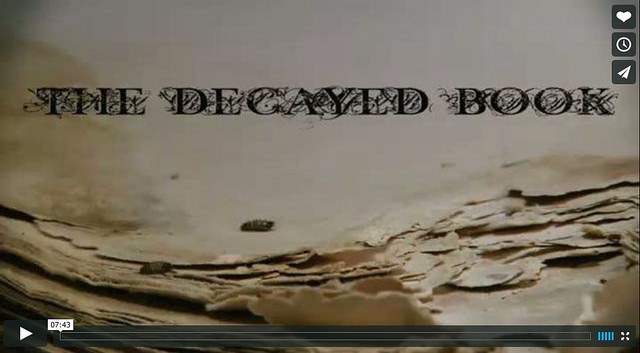
"The Decayed Book"

The Decayed Book is a fascinating video that shows Mark Cockram making a fine, leatherbound book, which is interesting enough, but then—well, the title is a tip…

REPRISES/RESPONSES/REJOINDERS/RIPOSTES

  • Reader J. (p)(f)unnies: “I always enjoy Katexic, but, I have to say, ”Suicide Food“ takes the cake (and eats it too).”

  • Reader B. on Dorothy Sayers’ choice phrase: “‘to knock down time’? what an expression! ¶ It compares nicely to the typically homicidal American version, ‘to kill time’.”

  • Reader K. puts recent WORDs to good use: "I’m having a bit of trouble with one of my employees and awkwardly penciled this out this morning:

Here I sit upon my curple
A business call two minutes hence
I grumpy text a string of grawlix
Does no one here have common sense?

Since her hiring a year ago
The office ladies have gone tense
I sigh and give my mimp a moment
I text: Let the firings commence!"


I welcome comments, suggestions, thoughts, feedback and all manner of what-have-you. Just press ‘Reply’ or email to: clippings@katexic.com.

And please feel free to share anything here as far and wide as you want! If you want to give a shout-out, please link to: http://katexic.com/clippings/.

Daily(ish) email overwhelming you? Email chris+weekly@katexic.com to switch to the weekly digest edition.

#195
April 13, 2015
Read more

|k| clippings: 2015-04-10 — purple nurple x

WORK

“Do not, I implore you, continue in that indolent and soul-destroying habit of picking up a book ‘to distract your mind’ (‘distract’ is the word for it) or ‘to knock down time’ (there is only too little time already, and it will knock us down soon enough). The only respectable reason for reading a book is that you want to know what is in it. Do not choose your literature by the half-witted process of asking the young woman at the library for ‘a nice book’ and enquiring anxiously of her, ‘Shall I like it?’”

—Dorothy Sayers
—from “A Note on Creative Reading”

WORD(S)

curple /KƏR-pəl/. noun. The rump; the buttocks. Particularly an equine’s hind-quarters, AKA a horse’s ass. A corruption of crupper, which could refer to either the rump of a horse or a strap that passed under the tail to secure a saddle. From the French croupière, from medieval Latin and Italian groppa.

“I’m afraid that John Durie has cracked his curple, at least his mouth is closed.” (James Carmichael)

“I’d be mair vauntie o’ my hap,
Douce hingin owre my curple,
Than ony ermine ever lap,
Or proud imperial purple.”
(Robert Burns)

WEB

  1. I don’t pretend these lists mean anything, but I find them useful for exploration (and the occasional debate)…and many of my favorite recent reads show up → The Oyster Review editors pick the 100 Best Books of the Decade So Far

  2. Advertisements featuring animals that desire to be eaten. I have to admit I’ve always found them kind of  creepy (and not just animals…how about the talking M&Ms?) → Suicide Food

  3. I knew the reasons already, but any article that links to postmortem photography deserves a look → Why didn’t people ever smile in old photographs?

  4. The Sheltering Sky, Lucky Jim, and A Dance to the Music of Time rate just one star…others fare better. → Salman Rushdie’s Goodreads account.

  5. Today in 1710, with the support of luminaries such as Jonathan Swift, John Locke and Daniel DeFoe, “The Statute of Anne”—the first government statute regulating copyright—is enacted in England, Wales and Scotland. The statute begins, “Whereas Printers, Booksellers, and other Persons, have of late frequently taken the Liberty of Printing, Reprinting, and Publishing, or causing to be Printed, Reprinted, and Published Books, and other Writings, without the Consent of the Authors or Proprietors of such Books and Writings, to their very great Detriment, and too often to the Ruin of them and their Families: For Preventing therefore such Practices for the future, and for the Encouragement of Learned Men to Compose and Write useful Books; May it please Your Majesty…” and then goes on to outline, among other things, protections for copying of published work for a term of 14 years. The significance of the act can hardly be overstated, for better and for worse, because it was the first to establish copyright as a public law (rather than private agreement between publishers) and to locate the ownership of the work with the writer rather than the publisher. All of this to fulfill the statute’s full title: “An Act for the Encouragement of Learning, by Vesting the Copies of Printed Books in the Authors or Purchasers of such Copies, during the Times therein mentioned.”

WATCH/WITNESS


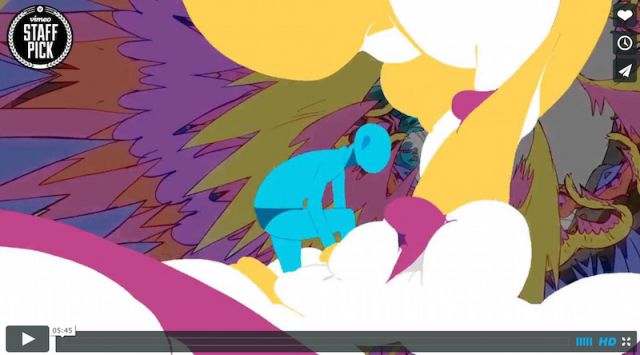
"When I Was Done Dying" (Dan Deacon)

Nine animators created a video journey to accompany Dan Deacon’s song “When I Was Done Dying”

REPRISES/RESPONSES/REJOINDERS/RIPOSTES

  • Reader J. shares another reason to celebrate: “Just FYI, it’s also Jazz Appreciation Month!” — JAM!

  • Reader B. enjoyed the Old Time Radio and shares a book: “Thank you for the radio theater link. Audio art is always a pleasure. ¶ For more on Burgoyne’s campaign, this book was very good.”


I welcome comments, suggestions, thoughts, feedback and all manner of what-have-you. Just press ‘Reply’ or email to: clippings@katexic.com.

And please feel free to share anything here as far and wide as you want! If you want to give a shout-out, please link to: http://katexic.com/clippings/.

Daily(ish) email overwhelming you? Email chris+weekly@katexic.com to switch to the weekly digest edition.

#194
April 10, 2015
Read more

|k| clippings: 2015-04-08 — bleeped

Apparently, April is both National Poetry Month, as mentioned here before (including arguments for and against), and USPS Letter Writing Month. I inadvertently celebrated both by mailing a lot of poems to people earlier this week.

WORK

“Never write a grumbling or an ill-tempered letter, Littera scripta manet. An ill-tempered utterance always seems worse on paper than when it is spoken. If in a moment of bitterness you should write an offensive letter, one calculated to widen rather than heal the breach between yourself and another person, tear it up and put it in the fire. Many people have an impulse when they have any grievance to pour it out on paper to the offender, or to some other person, but it is an impulse to be severely checked. Bitter words should never be spoken, but much less should they be written. The wounds made by ill natured remarks in letters heal more slowly perhaps than any others. Never send to the post at once a letter written in a sour or angry mood; if it is a relief to you to write it do so, but let no eyes but your own see it. Never send such a letter merely because you have not time to write another. No letter is infinitely better than a disagreeable one. If you should ever receive an ill-tempered letter, whether you are in the habit of keeping the letters you receive or not, destroy it at once. The sting it makes is more likely to disappear if the letter is known to be no longer in existence.”

—Arthur Wentworth Hamilton Eaton
—from Letter-writing: Its Ethics and Etiquette, with Remarks on the Proper Use of Monograms, Crests and Seals (1891)

Note: Littera scripta manet … The Written Letter Abides (as seen on the seal of the US National Archives and Records Administration)

WORD(S)

grawlix /GRAW-lix/. noun. A series of typographic symbols used in place of an offensive word or phrase. Coined by Mort Walker in the satirical article “Let’s Get Down to Grawlixes” (which I can’t find online, thanks for $%@&#! nothing, Google) the term took off and has become a standard part of the lexicon of comics. As you can see for yourself, the grawlix originated as a mix of typographic and other symbols. See also: jarns, quimps, and nittles.

Sadly, most of Walker’s other awesome comic-related coinages failed the popularity test, including plewds (the flying sweat droplets that indicate hard work or stress), briffits (the clouds of dust that indicate the swift departure of a character), and squeans (the starbursts, circles and spirals that indicate dizziness or drunkenness).

WEB

  1. Speaking of letters…Kirk Douglas has A Letter and a Challenge for all of us. While writing, you can watch his classic Dean Martin celebrity roast.

  2. The best of the Shakespeare Insult Generators

  3. Outslide cherry picks interesting slides from public SlideShare presentations. Some are bizarre, others are a kind of visual poetry…

  4. Thanks, Scott Walker, for your dedication → End near for Dictionary of American Regional English?

  5. Today in 1820, on the island of Milos, peasant farmer Yorgos Kentrotas discovers an ancient buried statue while plowing the fields…the Aphrodite of Milos, better known as the Venus de Milo. Carved around 150 B.C. by Alexandros from Antioch, the sculpture originally portrayed Aphrodite/Venus holding an apple (“Milos” means “apple” in Greek)…or at least that’s the general consensus. Some argue the statue really portrays the sea goddess Amphitrite, who was worshipped on the island at the time. The arms were found, in pieces, near the rest of the sculpture but lost at sea when the boat transporting them sank. Standing 6-feet, 8-inches high (with measurements proportional to 33–26–38, the same as “the most nearly perfect woman” Elsie Scheel) without her original plinth—and weighing approximately 500 Emma Stones —the formidable statue would originally have been tinted with colored pigments and adorned with jewelry. A significant portion of Venus Demilo’s fame is the result of French government propaganda, eager to establish the importance of its purchase after having to return the prized Medici Venus that Napolean had looted from Italy.

WATCH/WITNESS


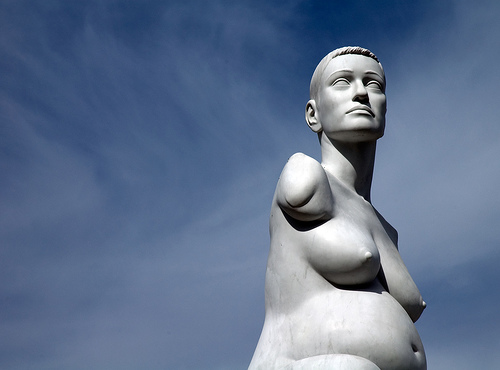
"Alison Lapper Pregnant"

“Alison Lapper Pregnant” by Marc Quinn. Read a story about Lapper and the sculpture.

REPRISES/RESPONSES/REJOINDERS/RIPOSTES

  • Reader M. riffs on the WORK from Eileen Myles. She writes: “I think painting is desire, not a form of it.” — Indeed. I think the same can be said, at its best, about the creative act no matter the medium.

  • Reader B. writes of John Burgoyne: “That Burgoyne quote (mimp! what an insane, irresistible word) connects so strangely with Gentleman Johnny’s subsequent military operations in Canada and New York. So strangely, and also so well. I can picture him leading a miniature version of the high life in camp, with mimpery and fine china, as his army worked its way south towards Saratoga and history-shaking doom.” — I knew nothing of Burgoyne, so thank you for the tip leading to a very pleasant meander around the historical record of this controversial general and playwright (and a fun listen to a 1975 CBS Radio Mystery Theatre program involving Burgoyne and the Indian spirit Windandingo).


I welcome comments, suggestions, thoughts, feedback and all manner of what-have-you. Just press ‘Reply’ or email to: clippings@katexic.com.

And please feel free to share anything here as far and wide as you want! If you want to give a shout-out, please link to: http://katexic.com/clippings/.

Daily(ish) email overwhelming you? Email chris+weekly@katexic.com to switch to the weekly digest edition.

#193
April 8, 2015
Read more

|k| clippings: 2015-04-06 — cakes and cravings

WORK

I think writing
is desire
not a form
of it.

—Eileen Myles
—from “For Jordana”

WORD(S)

mimp /MIMP/. noun or verb. An affected pursing of the lips. An overly prim look. To act in an overly precise, fussy manner. Origin uncertain: the OED states that it may derive from mim, which itself is though perhaps, to be “imitative of the action of pursing up the mouth.”

“She took up her book and began so prettily, and so sensibly, where another miss would have mimp’d.” (Hester Lynch Thrale)

“Paphian Mimp, a certain plie of the lips, considered needful for ‘the highly genteel.’ Lady Emily told Miss Alscrip, ‘the heiress,’ that it was acquired by placing one’s self before a looking-glass, and repeating continually the words ‘nimini pimini;’ ‘when the lips cannot fail to take the right plie.’” (John Burgoyne)

“‘Look at she a-settin’ up ther, mimpin!, idling, playing the fine lady.” (George Dartnell)

“I am so teased and so lectured by the old folks that I sit mimpetty mimp before them merely for peace sake…” (Charlotte Smith)

WEB

  1. I’m not going to describe this experimental reading project lest you miss out on the pleasure of discovering it for yourself. Slightly NSFW (as the videos progress) → hysterical literature

  2. Because there isn’t enough origami—much less moneygami—released into the wild → Banknote Origami Dogs Released onto Streets of London

  3. A compelling series of video essays about film that are astute and wide-ranging → Every Frame a Painting

  4. “…posting tweets starting with ‘I just want…’ + random Flickr image.” Some of the combinations are startlingly good. → Desire Bot

  5. Today in 1930, the Twinkie—the snack cake of (urban) legendary longevity and a mythical courtroom defense (though there was an informally titled “Twinkie law” on the books in Minneapolis), is born. A lot of people like Twinkies…but no one quite as much as ►this guy. I couldn’t match that even if offered the original banana-flavored filling Twinkies boasted until World War II (isn’t it cute that they used to use real fruit to flavor junk food?), when a banana shortage forced a change in formula…but then I long for the return of ►Twinkie the Kid. Now I’m hungry for a Chocodile.

WATCH/WITNESS


"Fernand" (Mikaël Theimer)

“Do you know why my eyes are like this? …”
from Mikaël Theimer’s Humans of the Street series.

REPRISES/RESPONSES/REJOINDERS/RIPOSTES

  • Reader C. shares a vital Jesse James related link: Visit the Jesse James Wax Museum

I welcome comments, suggestions, thoughts, feedback and all manner of what-have-you. Just press ‘Reply’ or email to: clippings@katexic.com.

And please feel free to share anything here as far and wide as you want! If you want to give a shout-out, please link to: http://katexic.com/clippings/.

Daily(ish) email overwhelming you? Email chris+weekly@katexic.com to switch to the weekly digest edition.

#192
April 6, 2015
Read more
  Newer archives Older archives  
Powered by Buttondown, the easiest way to start and grow your newsletter.