
💄 made-up men
sometimes selling sex uses a cowboy hat
I know this newsletter has been quite Playgirl-heavy recently but I haven’t been doing much writing outside of my decks recently (although there is one in the works; stay tuned)! I did just contribute to the latest issue of my lovely friend Sam’s zine, After School—Volume 4: Fork in the Road just dropped! I contributed two pieces, and you can order a copy here :). I’d love to write for some other publications or outlets—suggestions and invitations welcome.
My latest Playgirl piece is about the male beauty space, which is fascinating to me because for so long even things like just washing your face or wearing sunscreen were deemed “girly,” and women have been criticized for elaborate skincare routines and wearing makeup even when they “don’t need it.” But rather than soften beauty standards for women (PSA for men: You probably don’t like natural women; you like natural makeup), men have leaned into beauty under the guise of “personal care.” And don’t get me wrong, I think it’s great that having skin is no longer a gendered condition, but I do think it’s interesting that “empowerment” and “liberation” conveniently have a price tag.
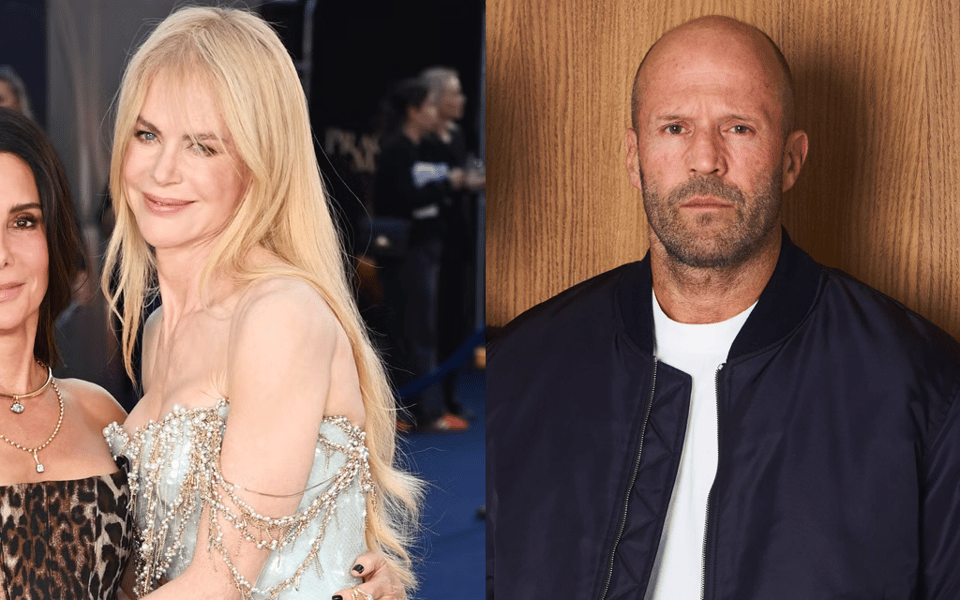
I wrote about the recent wave of male celebrities founding personal care lines in my project about the semiotics of celebrity branding earlier this year—Dwayne Johnson (PAPATUI), Brad Pitt (Beau Domaine), Pharrell (Humanrace), Harry Styles (Pleasing). Harry Styles releasing a nail polish collection and Pharrell releasing a skincare line are very much in line with their personal brands. But über-masculine Dwayne Johnson (who has a clause in his contracts that he cannot lose more than 50% of his fights) selling a line of face washes? Domestic abuser Brad Pitt hawking a line of cosmetics made from the grapes of the same French winery he shared with ex-wife and domestic abuse victim Angelina Jolie that he’s now contesting ownership of in divorce? Those are much harder sells.
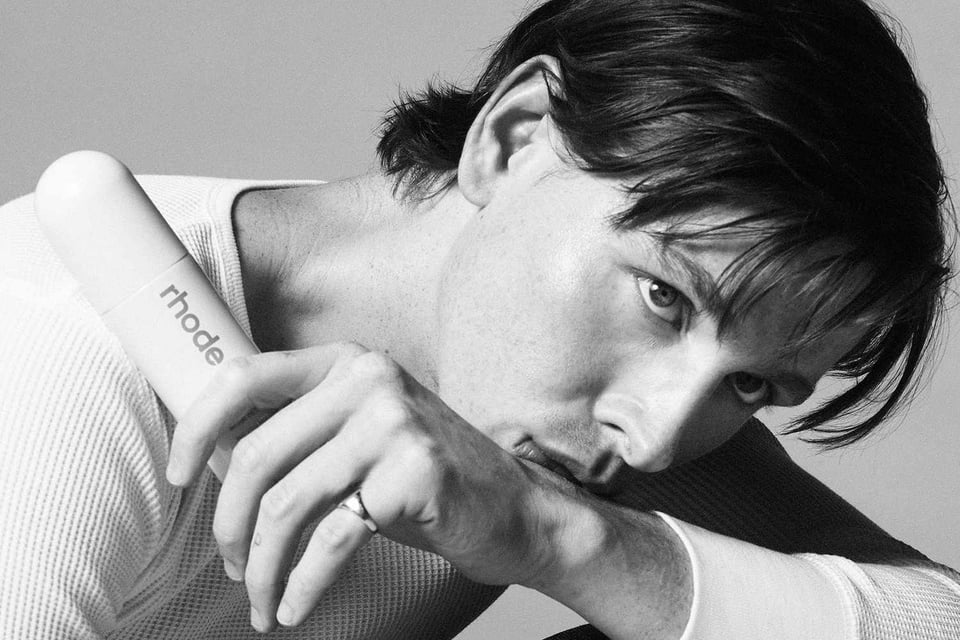
But I’ve recently noticed ads for female-focused makeup brands featuring male “heartthrobs“ (I put this in quotes for a reason): Harris Dickinson for Rhode, Rob Rausch for MAC Cosmetics and Kosas, and Matt Rife for e.l.f. Cosmetics (that’s why). Using hot men to advertise female products is not a new thing. But it tends to be sex-oriented—shots of glistening abs and sharp cheekbones. There’s still a little of that (Rob Rausch leaning into his sex-symbol status) but it’s also selling a much softer, more clothed fantasy.
I do think this an interesting conversation to have right now, especially as “looksmaxxing” rises in influence, because gender has always been a performance but now there’s less shame in that performance (I had the same theory about MAGA beauty—the trying is the status symbol!) and in fact it’s glorified, because if you’re not taking care of yourself, you’re not optimizing. But surely there has to be some middle ground between washing your face and smashing in your cheekbones with a hammer. The male beauty industry would like us to think it’s men wearing lip plumper. But maybe it’s a mindset shift, not a financial one. So the next time you think, Why do men feel comfortable going bare-faced and not women? Why do so many women in Hollywood have scary amounts of filler?, consider the fact that you have been socialized to accept (or even celebrate!) flaws in male faces that you consider “ugly” in female faces (wrinkles, crooked teeth, uneven skin).
🧾 scrap thoughts
The response to MAC’s campaign proved positive, with the Instagram post announcing Rausch’s involvement quickly outperforming others with female celebrity ambassadors like Doja Cat, Gabriette, ADÉLA, and Quen Blackwell
Rausch has shown already that he is acutely aware of and understands how to navigate the female gaze, one that extends beyond just oiled-up muscles—fresh off of his win on The Traitors, he signed a deal with audio erotica app Quinn to narrate a three-part story for a majority female audience
In 2009, TODAY announced that “male makeup among beauty industry’s latest, greatest,” reporting that retailers like Sephora had started carrying male grooming tools like concealer and nail polish
Teen Vogue wrote “in the age of the “metrosexual,” Glambert [Glam Adam Lambert], guyliner, Jersey Shore tans and the skinny jean, is makeup the next step in male evolution?” in 2010
But despite the lucrative male grooming industry and androgynous beauty standards in East Asia, male beauty can still backfire—Chinese drama star Zhang Linghe was criticized as “too pretty” to play an embattled war general
The issue [of male beauty standards] mirrors that of “Call Her Daddy” and “girlboss” culture—appropriating the aesthetics of empowerment without interrogating the oppressing systems at all
Does flipping the lens of objectification make it equality (see: “catching print”)? I’d argue it’s not feminism but rather applying the lens of toxic masculinity and rape culture more broadly
The irony of the crusade against “gender-affirming care,” of course, is that its ire is only directed at trans individuals, saying nothing of breast augmentations, lip fillers, or hair transplants for straight-presenting individuals
Unlike Rhode and Milk, whose monochromatic packaging and neutral language lean more gender-neutral or UN/DN LAQR, which is targeted to men, brands like MAC, Kosas, and e.l.f. Beauty are largely marketed toward women
You can read the full piece on Playgirl website here.

p.s. Obviously, sex sells, but it is interesting to note what kind of sex sells. Instagram metrics aren’t everything but they are revealing—my previous collaboration with Playgirl (about popular Amazon Prime show Off Campus) has 8.8K views after one month, and this collaboration featuring Rob Rausch as the cover photo has 10.7K views after only two days. The Off Campus photo implies a lot more intimacy and the show is known for being “steamy,” and yet...Rob Rausch still wins. These cosmetics brands are onto something.
💖 jenny
Thanks for reading Constellation Theory ✨! Subscribe to receive new posts and first access to projects.
to the stars 🚀This newsletter will always be free. But if you’d like to support the publishing fees or just show some love and appreciation, you can buy me a coffee (or boba) here! 🧋
