
🍒 forbidden fruits and the playgirl revival
and some reflections on side quests
In February, I found out that Playgirl was looking for contributors for its newly relaunched magazine and immediately emailed them.
There’s that joke about “reading Playboy for the articles” but I have actually always found both Playboy and Playgirl intriguing from a journalistic perspective (Eve Babitz and Truman Capote were contributors to Playgirl, and Playboy has featured essays from James Baldwin and interviews with Maya Angelou, so who am I to criticize?). There’s a reason these two publications were successful and it’s not just the nudity—porn has always been accessible!—there’s a fascinating tension between the compulsion for voyeurism and the understanding that sexuality informs so much of our interactions and experiences in the world.
If you haven’t heard of Playgirl before, this is a great primer. But I asked the interim managing editor, Luca, how the magazine, which relaunched in 2024, plans to differentiate itself from others like Cosmopolitan or Vogue.
“We don’t chase news—we’re after depth,” he told me. “While most publications will feature sexuality, we’re uniquely writing through that lens; we don’t do beauty or fashion unless it’s tied to sex.” The cultural strategist in me sees those three things as intrinsically linked.
The new Playgirl wants to be in broader cultural conversation about sex positivity and female agency—over the past two decades it’s kind of lost its edge and is in the process of developing more cohesive, more contemporary messaging. “The WAP deck is very Playgirl,” Luca told me (love that).
My first assignment was to review Forbidden Fruits (2026), the witchy, female-centric comedy/slasher starring Lili Reinhart (who sheds her Riverdale good-girl persona as easily as a cobra), Lola Tung, Victoria Pedretti, and Alexandra Shipp. I watched Jennifer’s Body (2009) in preparation, but as a millennial I already loved Mean Girls (2004) and celebrate the return of “cunty girl cinema.” There’s something quite liberating about watching women be unapologetically evil onscreen.
I haven’t formally published anything since my pop culture criticism fellowship with Bitch Media (RIP) in 2021, but writing for a publication reminds me that I do actually really enjoy being edited, because all of my PowerPoint essays are just me writing alone. And one thing about me is that I find everything interesting, and I will foist those interests upon you, which is why all of my decks are like 50+ slides. What can I say? I relish a deep dive.
However, this also means that for the first time in five years, I had a word limit (700 to be exact), which was quite difficult. Especially for Forbidden Fruits, which is imbued with much of the same DNA as Jennifer’s Body and other film from the cunty girl cinema canon like Heathers (1988) and The Devil Wears Prada (2006), there’s so much cultural context I wanted to include. I enjoyed it, but I don’t think it ever escapes the shadow cast by its predecessors, because what made them iconic was not the films themselves insisting on their icon status but in many cases their absolute refusal to be derivative—this op-ed from IndieWire perfectly articulates what I was feeling.
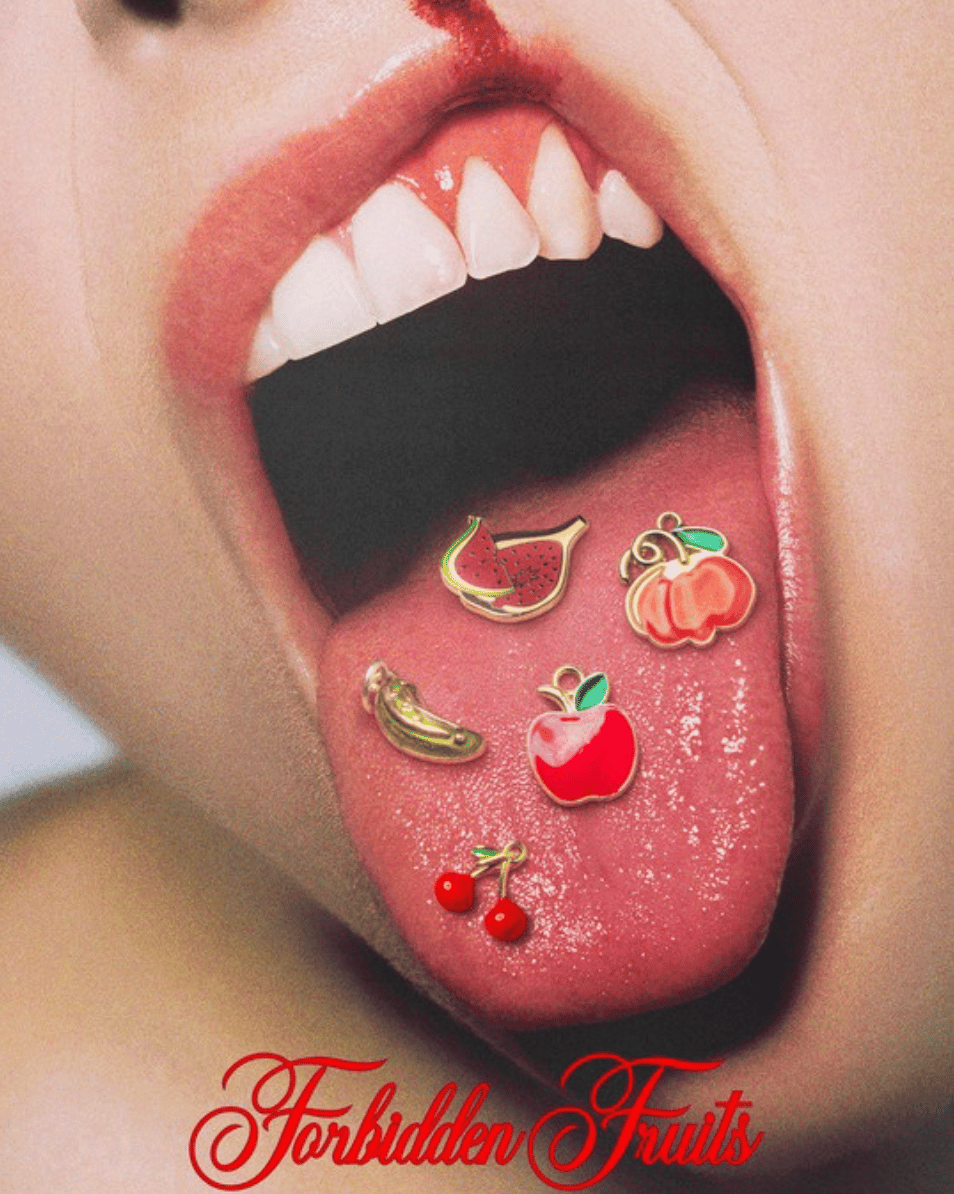
Anyway, I thought I’d use this newsletter to give you a peek at the stuff that didn’t make it into the 700-count word limit—trivia, notes, tangents etc.
🧾 scrap thoughts
The 2019 Met Gala introduced a concept into the mainstream that gave us language to describe a lot of “cult classics”: camp, inspired by Susan Sontag’s essay, “Notes on Camp”: “All camp objects, and persons, contain a large element of artifice. Nothing in nature can be campy ... It is the love of the exaggerated, the “off,” of things-being-what-they-are-not ... In naïve, or pure, Camp, the essential element is seriousness, a seriousness that fails.” It is understood to be an earnest indulgence in extravagance; a little too everything—too loud, too ornate, too garish. And so we could collectively articulate the appeal of movies like Jennifer’s Body—they weren’t necessarily bad; they were camp.
The Fruits embody a brand of unapologetically sexual but quasi-misandrist feminism that manifests today in statement baby tees, a legacy that began with Britney Spears’ iconic “DUMP HIM” shirt in 2002 that she wore post-Justin Timberlake breakup
So many references to original sin (e.g. Apple’s daddy issues) and the idea of what constitutes “monstrous women”—the film is adapted from screenwriter Lily Houghton’s play Of the woman came the beginning of sin and through her we all die (from Ecclesiasticus 25:24)
The iconic Kristin Scott Thomas monologue from Fleabag: “Women are born with pain built in. It’s our physical destiny—period pains, sore boobs, childbirth. We carry it within ourselves throughout our lives. Men don’t. They have to seek it out. They invent all these gods and demons so they can feel guilty about things, which is something we do very well on our own.”
The fountain scene in Forbidden Fruits was filmed in the same mall as the “watering hole” scene in Mean Girls!
It’s contemporary witchcraft with a distinctly provocative flair—their version of “praying” is Apple instructing the girls to “blow [her]” by exhaling smoke from a blunt into her mouth, they take “confessional” in a dressing room and mix a concoction of blood and crushed fruit to drink out of a cowboy boot, reciting an incantation of modernities with the primal cadence of an ancient ritual: “Goat’s milk, thigh gaps, rose petals, bone casts, truffle oil, bitch slaps, blood clots, juice press.”
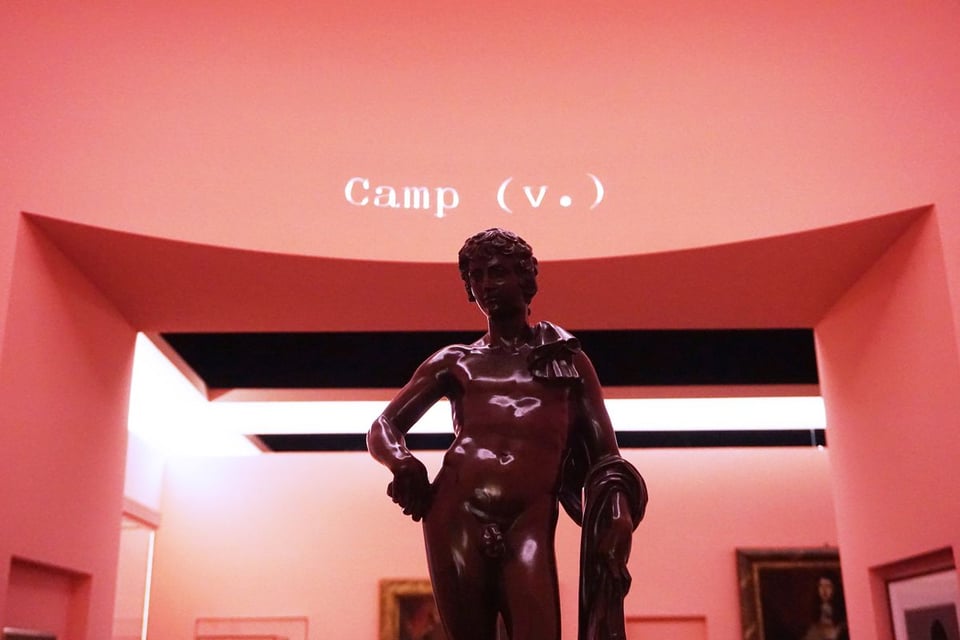
“You’re always on these weird side quests,” my cousin noted affectionately when I told her I was doing this. This is not the first time I’ve heard this. Whether it’s taking a free trip to Paris with Airbnb x VICE to learn about sex and sexuality in French culture (sensing a theme here), hosting media literacy events, or attending lectures around the city, I’m always doing something. Partly because I live in one of the cultural capitals of the world, and I feel like if I’m not doing something, I’m not enjoying the city to its fullest potential. But I don’t feel like these things are random, either.
“Life’s all side quests, isn’t it? Like, that’s the point,” Daniel Radcliffe remarked in a recent interview with Betches, reflecting on his career path.
The older I get, the more I understand that careers are mostly made up, and you can actually do anything you want, a prospect both liberating and terrifying. But I also think all of these seemingly disparate experiences are part of constructing a richer worldview (in other words, constellation theory). Strategists like to talk about the theory and the craft of strategy, but I’ve always been of the opinion that being a good strategist means being out the world and observing. I’ll never be a full-time writer, but I’d love to do more writing that isn’t part of my personal brand, and writing for publications like Playgirl is an excellent way to develop that muscle.
You can read the full review on the Playgirl website here.
💖 jenny
Thanks for reading Constellation Theory ✨! Subscribe to receive new posts and first access to projects.
to the stars 🚀This newsletter will always be free. But if you’d like to support the publishing fees or just show some love and appreciation, you can buy me a coffee (or boba) here! 🧋
