2026 Nᵒ37 - It's not just about the music
Insights on the Playback Theatre musician's role

London, 15th September 2026
👋 Greetings, dear readers.
I hope you had a pleasant week. At this time tomorrow, I’ll be on a plane bound for Malta. The purpose of the trip is to attend the Improvizza festival, where I’ll be performing with my dear colleagues from Acaprov and offering an introductory Playback Theatre workshop for improvisers. Of course, I’m going to follow my curiosity and attend a couple of workshops as well. I’m really looking forward to it!
Last week I had an insightful rehearsal with True Heart Theatre. In that rehearsal, we debriefed on the various roles we can take on in Playback Theatre. For my part, along with others, we focused on the role of the musician, a role I’ve stepped into many times since moving to the UK.
It might seem quite self-explanatory: a musician simply plays music alongside the reenactment, right? But this role requires much more than that. It’s less about raw musical skill and more about understanding Playback. One can be a magnificent musician and still not be a good fit for Playback. On the other hand, someone with simpler musical skills who deeply understands Playback Theatre and its forms can thrive in the role providing atmosphere, soundscapes, and singing to serve the story.
So, here are some things that a Playback Theatre musician can, and should do.
Establish environmental context. Music, sound, or song is always the first thing the audience hears after the conductor’s launching phrase "Let’s watch." It sets the mood while the actors prepare to start, giving them a moment to think about what are they going to do.
Make offers. Every single performer on stage shares the same goal. The person in the musician's seat should hold equal status with the actors when it comes to making offers for the reenactment.
Change the tone. Because the musician's seat offers a complete view of the reenactment, the musician can sense when the attunement with the story feels off. If the actors lean into an emotion that doesn't match the teller's underlying feeling, the musician can nudge things back on track. For example, if the story is somber and the actors play it too light or cheerful, shifting to a minor chord or making a somber sound should hint the actors.
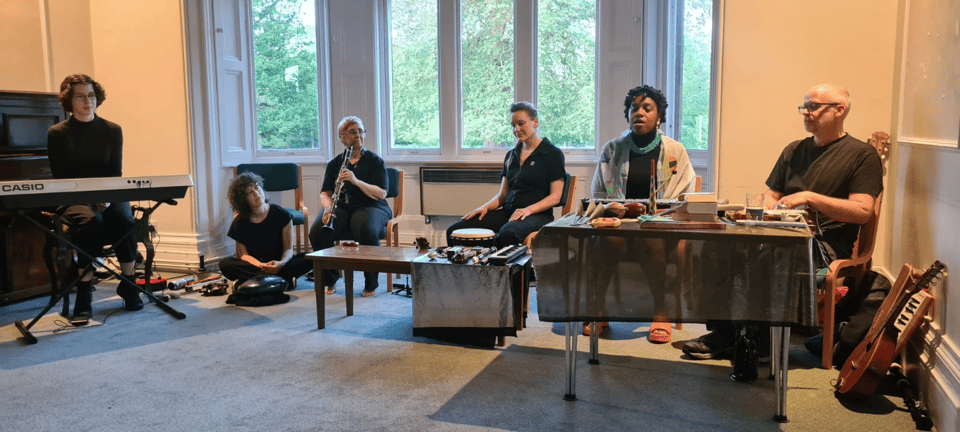
Cue key words from the story. If a reenactment is underway and the musician senses an essential element is missing, singing about it offers a direct, supportive steer. During one reenactment about a date, for instance, the teller had specifically mentioned a long-awaited kiss. When that moment seemed to take forever to appear, I began singing about the kiss, giving the actors a clear prompt to move forward.
It doesn't always have to be about something missing, either. It can simply be about being stuck, like an argument going round in circles, or a dynamic that keeps folding into itself. That’s when the musician can step in with a bold offer to propel the reenactment forward.
And, of course, the most crucial thing a musician can do is frame the forms, especially the short and mid-forms that rely on a clear structure. Clear musical cues are the best support actors can have to follow the rhythm and pattern of a Playback Theatre form.
Of course, it’s up to the actor’s awareness to notice the musician cues! Hence the importance of good listening.
I hope you find this tips useful. I’ll be back next week with a summary of my experience in Malta teaching playback to improvisers.
🫶 Stay hydrated, love to you all.
🎭 The Theatre bit
Inspired by the taster of the play featured in the New Earth Theatre showcase I attended earlier this summer, I got hold of the published script of Shanghai Dolls by Amy Ng, a production commissioned by Kiln Theatre, premiering in London last year.
The semi-fictional play presents the decades-spanning relationship between two notorious women in Hong Kong history: Lan Ping and Li Lin, the pseudonyms of Jiang Qing and Sun Weishi. Qing became Mao Zedong’s fourth wife and Weishi the first woman to direct contemporary theatre in China.
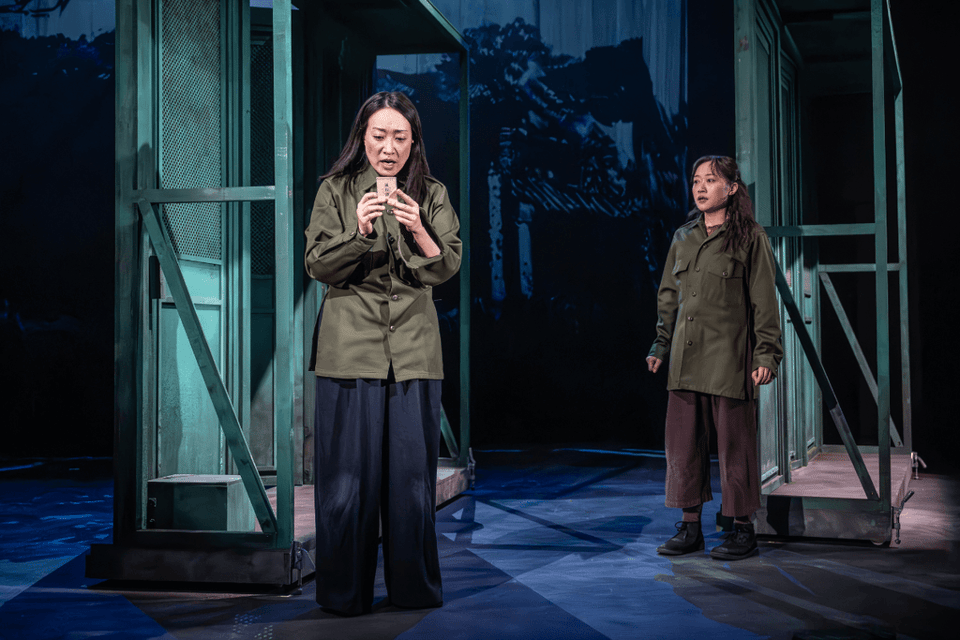
The play is structured in different scenes separated by time jumps, marked by projected headlines that give the political context of the moment. So we experience their relationship through vignettes of their lives at each particular stage.
Although the dialogue is well written, it's sometimes a bit overcharged with context, which makes sense, seeing how much the playwright wants to convey. You can tell Amy Ng is also a historian. Luckily, all those facts still leave a bit of space for feelings, and it’s when the play focuses on the pure relationship between Qing and Weishi that it really shines.
I enjoyed the read while getting educated on a bit of history mostly oblivious to the Western audience.
📆 What is coming up
🇲🇹 18th of September - Intro to Playback Theatre (Valletta, Malta). I´m honoured to be part of the facilitator roster attending the Improvizza! festival in Malta. I´m excited to introduce Playback Theatre to improvisers there. Tickets here.
🇲🇹 19th of September - Acaprov at IMPROVIZZA (Valletta, Malta). Yes, Acaprov will also be performing in Malta as part of the Improvizza! festival programme. If you happen to be there, come by! You’ll find tickets here.
🇬🇧 27th of September - True Heart Theatre open rehearsal (London, UK). We are going to be hosting another open rehearsal at the end of the third quarter. Bring your curiosity and experience Playback Theatre in a safe space. Free registration here.
🇮🇪 2nd of October - C*NTS (Dublin, Ireland). Premiere of the artistic unscripted theatrical piece that my friend Rosalind Grégoire and I will be bringing to Improvfest Ireland. It’ll be… interesting. Come and found out.
🇬🇧 9th of October - Acaprov at Shoreditch Balls (London, UK). It’ll be spooky season! Will our show be? Come and check out. Get your tickets. 🎵
📚 🎮 🎥 📺 The geeky dessert
Earlier this year, I talked about Supergirl: Woman of Tomorrow, a limited comic series by Tom King and Bilquis Evely, and how much I liked it. Last week, I was finally able to watch the loose film adaptation, simply titled Supergirl.
As an adaptation of the source material, I was kind of disappointed. However, Milly Alcock does a great job as Kara Zor-El, and the film is quite entertaining. After all, this is an unpretentious piece of work made to be enjoyed for what it is: a solid introduction to the character in James Gunn’s DC Universe.
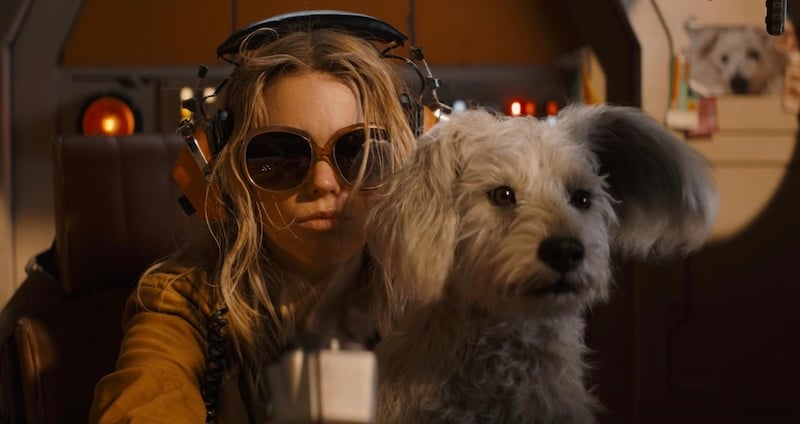
As an aside, it’s worth noticing the social impact of female-led superhero films. Like every single superhero film with a female protagonist, this one had to deal with nasty comments from the nerdy manosphere on social media—shaking their fists at the sky because Milly Alcock is not "pretty enough" and generating AI images of Sydney Sweeney wearing the suit of the daughter of Krypton.
That alone is reason enough to support any piece of media showing that women can kick ass, inspiring little girls to do the same. Those men really need their asses kicked.
📨 That’s all for now
Thanks for reading Playing Back an Improvised Life, a newsletter by Ferran Luengo.
If you like it, spread the voice and share with someone who you think might enjoy it.
If you want to keep in touch, feel free to follow me on instagram (@luenkun).
Want to work with me or start a conversation? email me 😀
Want to support me? You can do it through my Ko-fi page

Ferran Luengo AI Disclaimer: Since English is not my first language, I may have used AI tools to proofread the text, limiting their use to grammar only. Everything in this newsletter has been written by me
-
Useful notes about the role of musician in Playback-theatre ) Shared the link with my team-mates!
Reply: