2026 Nᵒ36 - Seeds need freshwater
On the impact of theatre in education and the patience behind meaningful work.

London, 8th September 2026
👋 Greetings, dear readers.
I hope you are all well. Today is one of those days where London truly lives up to its reputation, offering silver skies and rain, a refreshing change after the heatwave-palooza of previous months that made the UK feel just like my Mediterranean home country.
Despite the weather, I feel pretty good about this week as I resume rehearsals with both London Playback and True Heart Theatre. Maybe it’s because my work has always been tied to education and school settings, but September always feels like the real start of the year for me.
Speaking of education, last week I attended the 30th anniversary celebration of Freshwater Theatre, a company that specialises in theatre in education. It’s inspiring to see what they’ve achieved over all these years, starting with just two women: Carol Tagg and Helen Wood, two actors and educators who joined forces to bring theatre into the classroom. Three decades later, the company has grown significantly, delivering hundreds of sessions across a wide range of themes to schools all over London and the Midlands.
When I decided to study a postgraduate in theatre in education more than ten years ago in Spain, I couldn’t imagine I’d end up actively working in that field across the UK. In Spain, it’s difficult to get these practices inside the schools. That’s why most of my classmates on that postgraduate were teachers, they were already inside the schools. They were there to Trojan-horse theatre into their work.
And as for me, I’m about to start my fifth term with Freshwater Theatre, delivering interactive storytelling and theatrical sessions about different topics. I feel so grateful, because when I first started working for them, I was struggling to find my way as an immigrant in London. You can tell the audition went well, though. 🙂
What I’m trying to convey with this story about Freshwater Theatre is that beginnings aren’t easy, whether we are trying to build a theatre company, make a living in a different country, or even start doing Playback Theatre.
Twenty-first-century society has dangerously evolved into a culture of immediacy: we want to do things now, go big, and make sure everyone notices. I’m not going to be a hypocrite; of course I want people to notice my work ASAP, since this is my craft and my livelihood. That’s precisely why I found inspiration in the story of a humble couple of people who wanted something and, through work, passion, and patience, built something truly meaningful.
I’d truly like to introduce Playback Theatre into schools in the UK, that would be a fit next step to look after. If you have any insight or suggestion on the matter, please reach out to me.
Meanwhile, here’s to trust our work and be patient. 🥂
🫶 Stay hydrated, love to you all.
🎭 The Theatre bit
After a couple of weeks talking about musical theatre, I’m back to Catalan plays. Josep M. Benet i Jornet was one of the most prolific and acclaimed contemporary playwrights in Catalonia. He also worked extensively writing for television, which helped him develop an incredible skill for writing dialogue. Even after his passing in 2020 due to complications from COVID-19, his work remains unmatched.
I read and added to my collection his play Fugaç (Fleeting). The play, written in 1994, is divided into three acts, with the final one being very short and serving as a conclusion. In the first act, we see a slice of life of a family gathering to “make the table dance”, a sort of séance where they ask questions and receive unexpected answers. Because the audience is unfamiliar with this ritual, Benet i Jornet cleverly invites us to witness it from the perspective of a family friend experiencing it for the first time, helping to address any doubts that might pop into our heads about the ritual, including dealing with skepticism.
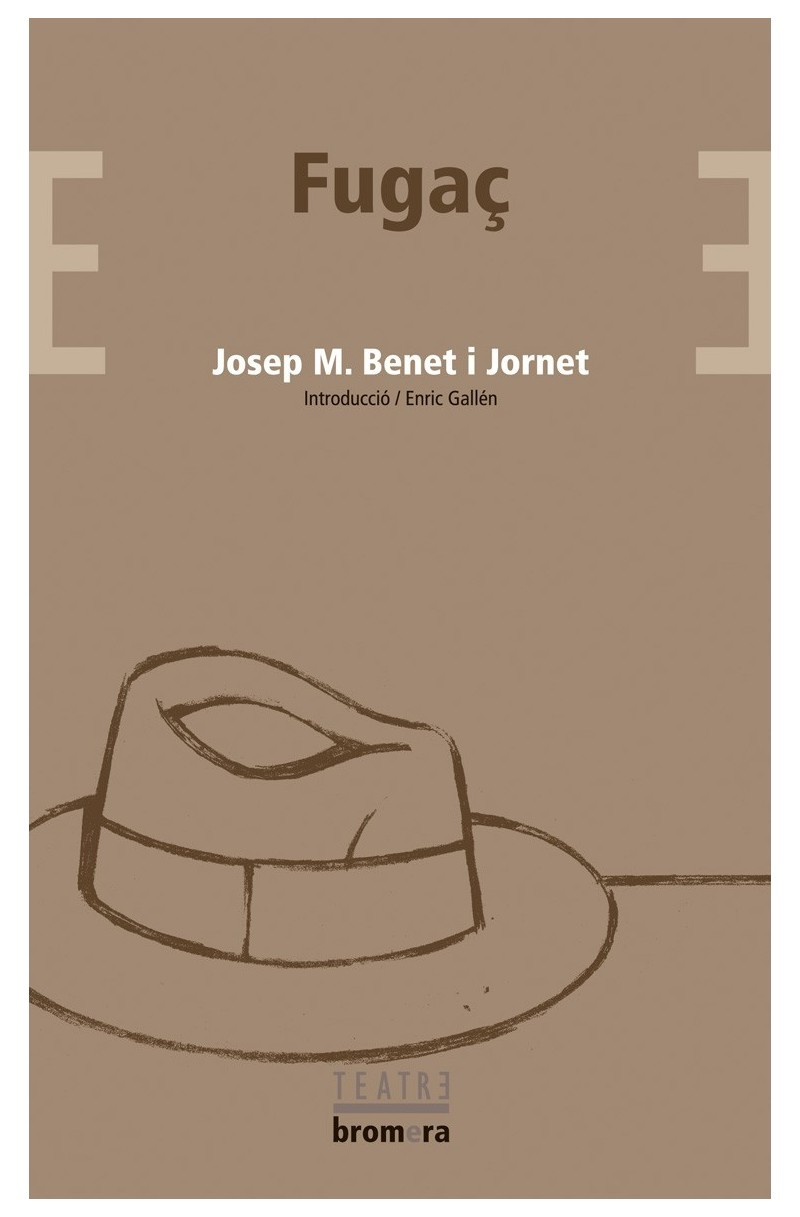
The second act is as beautiful as it is heart-wrenching, as we see a young girl meeting on a bench in the middle of the night with her father, who lives with the aforementioned family, unaware of the existence of his extramarital child. Benet i Jornet balances hope and despair, fatherly love, and even an Electra complex in an engaging, well-rounded single scene that leaves the spectator, or reader, with a knot in their stomach.
The play closes by returning to the family in the same register as act one, yet our insight into the father’s double life makes us see them with an unsettling, lingering sadness.
This is what great theatre feels like.
🎙️ The podcast bit
Whaaaat? A podcast? That’s right! As a companion project to this newsletter, I spent the summer recording conversations with fellow Playback Theatre practitioners and improvisers to bring Playing Back an Improvised Life to your ears! Yesterday, the first episode went live, and you can expect a new one every other Monday for the rest of the year, at least. I’m new to this podcasting thing, but I hope to keep learning and watering this seed.
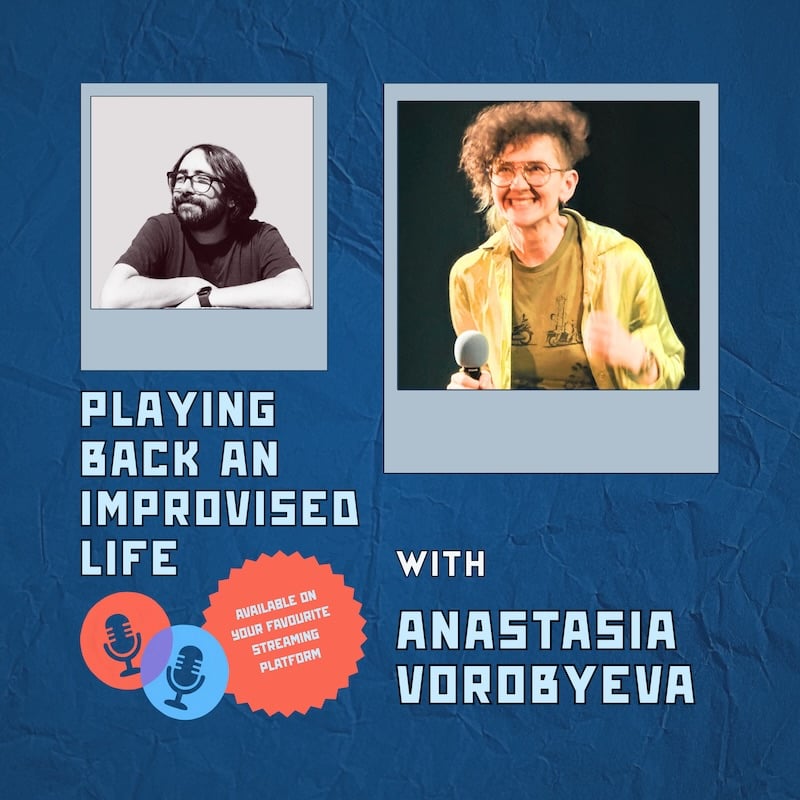
The podcast kicks off with an insightful conversation with Anastasia Vorobyeva. We talked about bending forms in Playback, physical theatre, improv, the International Playback Theatre Camp, cats, and coping with neurodivergence. You’ll have to listen to find out to what extent we tackled those topics.
It’s searchable on your favourite streaming platform, but you can also find links to all of them on the Playing Back an Improvised Life hub site.
https://www.ferranluengo.co.uk/playingback/📆 What is coming up
🇬🇧 11th of September - Acaprov at Shoreditch Balls (London, UK). For so many people, September is a time for another beginning. Kick off the academic year with a musical. Secure your sit.
🇲🇹 18th of September - Intro to Playback Theatre (Valletta, Malta). I´m honoured to be part of the facilitator roster attending the Improvizza! festival in Malta. I´m excited to introduce Playback Theatre to improvisers there. Tickets here.
🇲🇹 19th of September - Acaprov at IMPROVIZZA (Valletta, Malta). Yes, Acaprov will also be performing in Malta as part of the Improvizza! festival programme. If you happen to be there, come by! You’ll find tickets here.
🇬🇧 27th of September - True Heart Theatre open rehearsal (London, UK). We are going to be hosting another open rehearsal at the end of the third quarter. Bring your curiosity and experience Playback Theatre in a safe space. Free registration here.
🇮🇪 2nd of October - C*NTS (Dublin, Ireland). Premiere of the artistic unscripted theatrical piece that my friend Rosalind Grégoire and I will be bringing to Improvfest Ireland. It’ll be… interesting. Come and found out.
🇬🇧 9th of October - Acaprov at Shoreditch Balls (London, UK). It’ll be spooky season! Will our show be? Come and check out. Get your tickets. 🎵
📚 🎮 🎥 📺 The geeky dessert
I love how indie games allow us to experience things that mainstream studios couldn’t fathom funding, let alone developing in the first place. Last weekend, I played Indika, a short game by Russian studio Odd Meter, whose members fled the country, due the war, to finish development before it was ultimately published by the Polish studio 11 Bit Studios.
Indika is an Orthodox nun living in a fictional version of 19th-century Russia and suffering bullying from other members of the convent. Her loneliness is exacerbated by the voice of the demon lurking inside her head. Eventually, Indika is sent away to deliver a letter to another monastery. On the way, she stumbles upon Ilya, an injured fugitive who saves her from a predicament. Upon discovering the letter was a false pretext from the other nuns to get rid of her, she joins Ilya on a pilgrimage to seek a relic that may cure him… or maybe both.

The world presented in Indika is weird and grim, yet beautiful. The game could fit into the category of walking simulators, with some puzzles along the way. Curiously enough, flashbacks are presented in the form of retro pixel-art mini-games that refresh the experience while offering a clear view of Indika’s past.
This isn’t just a game you play to be entertained, though. Indika is deeply philosophical, offering different interpretations and presenting clashing perspectives on religion and its meaning. Keep an eye out for it, it’s available on multiple platforms.
📨 That’s all for now
Thanks for reading Playing Back an Improvised Life, a newsletter by Ferran Luengo.
If you like it, spread the voice and share with someone who you think might enjoy it.
If you want to keep in touch, feel free to follow me on instagram (@luenkun).
Want to work with me or start a conversation? email me 😀
Want to support me? You can do it through my Ko-fi page

Ferran Luengo AI Disclaimer: Since English is not my first language, I may have used AI tools to proofread the text, limiting their use to grammar only. Everything in this newsletter has been written by me
Add a comment: