
The satisfying click that kills your cash flow
Platform loans don't solve the problem. They postpone it →

Well, hello, and welcome to this week's edition of the eCommercer.
Have you ever noticed how the decisions that cause the most damage are rarely the dramatic ones? They're the quiet ones. The ones that feel sensible at the time. The convenient ones.
A pre-approved loan pops up in your Shopify dashboard. You click accept, not because you've run the numbers, but because it's easier than confronting the cash flow problem it's covering up. It's the financial equivalent of taking a painkiller instead of going to the dentist.
This week, we look at how most founders don't have a revenue problem. They have an avoidance problem. And the tools designed to "help" often make it worse by letting you postpone the reckoning a little longer.
Have a great week, wherever you are in the world.
Until next time,
This Week's Episode of the eCommerce Podcast →
The Loan That Looks Like a Lifeline (But Isn't)
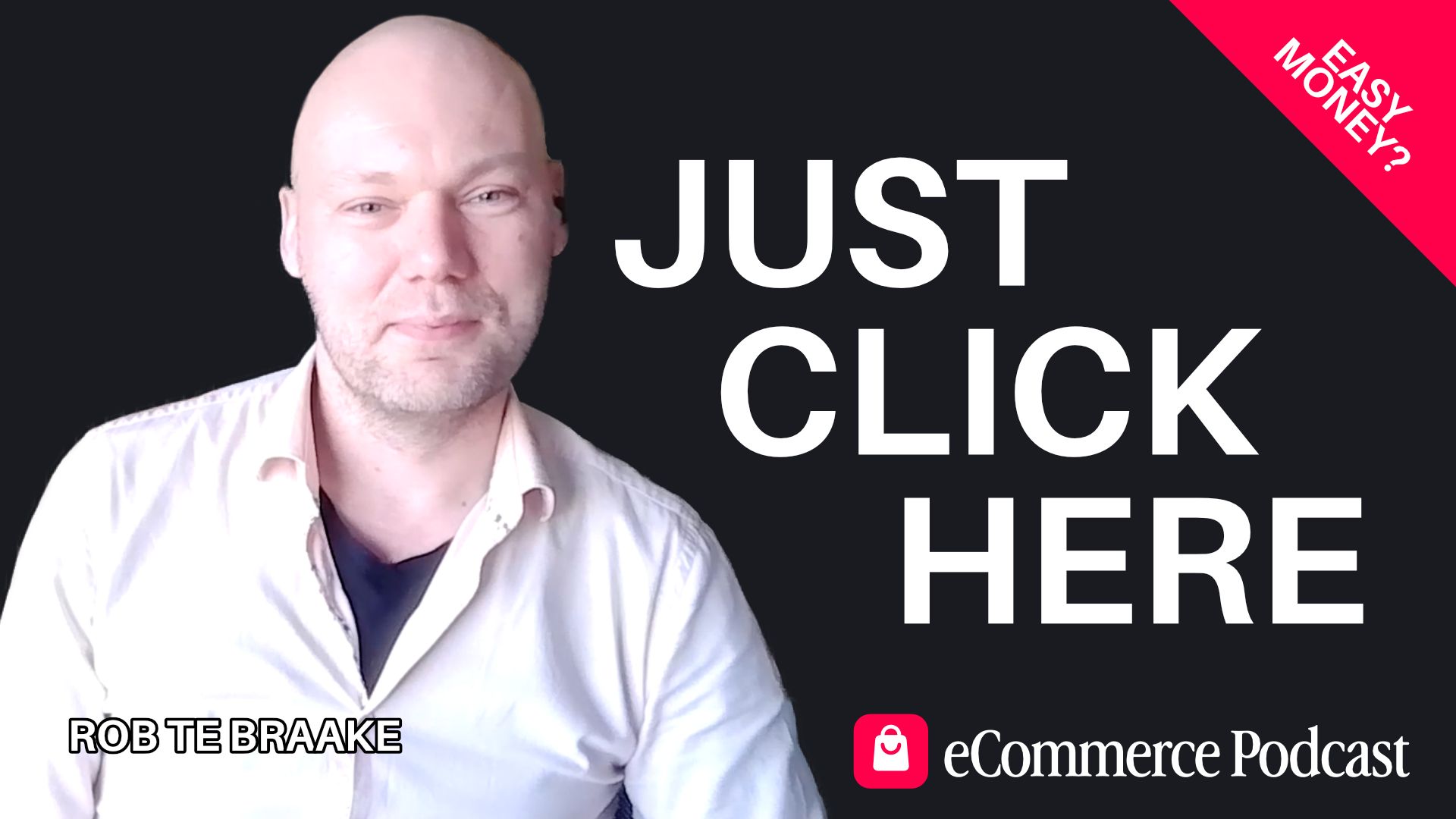
My conversation with Rob te Braake was one of those episodes where I kept thinking, "more people need to hear this." Rob is a fractional CFO for seven and eight-figure ecommerce brands, and he walked me through something he calls the death spiral of platform loans.
It starts simply enough. Shopify or Stripe offers you a pre-approved loan. £20,000. Just click here. The money lands, and a percentage of future sales quietly starts flowing back to the platform. A year later, you need more. The next offer is £40,000. Then £80,000. Before long, more cash goes to repaying loans than it does to marketing, growth, or paying yourself.
"If anybody offers you money with such convenience, just click here and you get it," Rob warns, "you know there is a catch."
The catch is that interest rates are around 20%. But even that isn't the real danger. It's the repayment structure. For every £100 of revenue, you might lose £17 to VAT, then another £17 to loan repayment. That's nearly £34 gone before you've covered a single cost of goods.
Rob also shared three numbers he thinks every founder should know in their sleep.
Gross margin per product group (he won't work with anything below 60%).
CAC to LTV ratio (in the context of your margins, not as a standalone number).
And your working capital cycle, which is how long it takes from buying inventory to becoming cash-flow positive on that batch.
I also loved his advice on forecasting. He insists you build it in a spreadsheet, not with AI. Because the value isn't in the numbers. It's in the thinking. When you map out "if I run this campaign in November, I need to place the order in May," that thought process is where the real understanding lives.
Rob's Links:
Company: Insight Matters → https://connectrob.com
LinkedIn: https://www.linkedin.com/in/robtebraake/
Visit Episode Page →
Related Episode →
When Revenue Becomes the Painkiller
This connects to something Jodi Mercer shared about a year ago, which she called trading dollars for dollars, which is when you turn on the ads, revenue goes up, and you feel like you're winning. Turn off the ads, and revenue drops. You haven't built anything. You've just moved money from one pocket to another.
What Jodi spotted, and what Rob's death spiral confirms, is that the real problem isn't the loan or the ad spend. It's the avoidance. Founders resist financial planning because it forces them to ask uncomfortable questions. How long can I sustain losses? Am I building a business or funding an expensive hobby?
Jodi's phrase for external accountability was brilliant. She said advisors and boards provide "strings to the balloons," keeping visionary founders tethered to reality while still allowing them to soar. Rob's version of the same idea is simpler but equally effective. Build the forecast. Do the thinking. Face the numbers.
Both conversations arrive at the same place. The businesses that survive aren't always the ones with the best products or the cleverest marketing. They're the ones whose founders understood the money.
Be A Guest →
Got an eCommerce business with stories worth sharing?
Come be my guest on the eCommerce Podcast, where I chat with founders about the wins, the disasters, and everything in between. Your story could be the one that helps another founder grow smarter (or avoid your mistakes).