
Your Customers Don't Care About Your Brand
Count the "we" vs "you" on your homepage. The ratio tells you everything →

Well, hello, and welcome to this week’s edition of the eCommercer.
Here's an exercise that will ‘enhance’ your afternoon.
Go to Google. Type "accountants near me." Pick any organic result. Open their homepage. And count how many times the page says "we," "our," or "us" versus how many times it says "you" or "your."
I did this recently with a firm called Jonathan Ford & Co. Nice website. Professional looking. And a ratio of 2.6 to 1 in favour of brand language. For every time they mentioned the customer, they mentioned themselves two and a half times.
Now go and do the same thing on your own homepage. I'll wait.
In this week's episode, I'm unpacking something I call the Story Overlap, which is the only place your brand messaging actually works. And I want to walk you through it here because I think it might change the way you look at your entire website.
Have a great week, wherever you are in the world.
Until next time,
This Week's Episode of the eCommerce Podcast →
Your Customers Don't Care About Your Brand

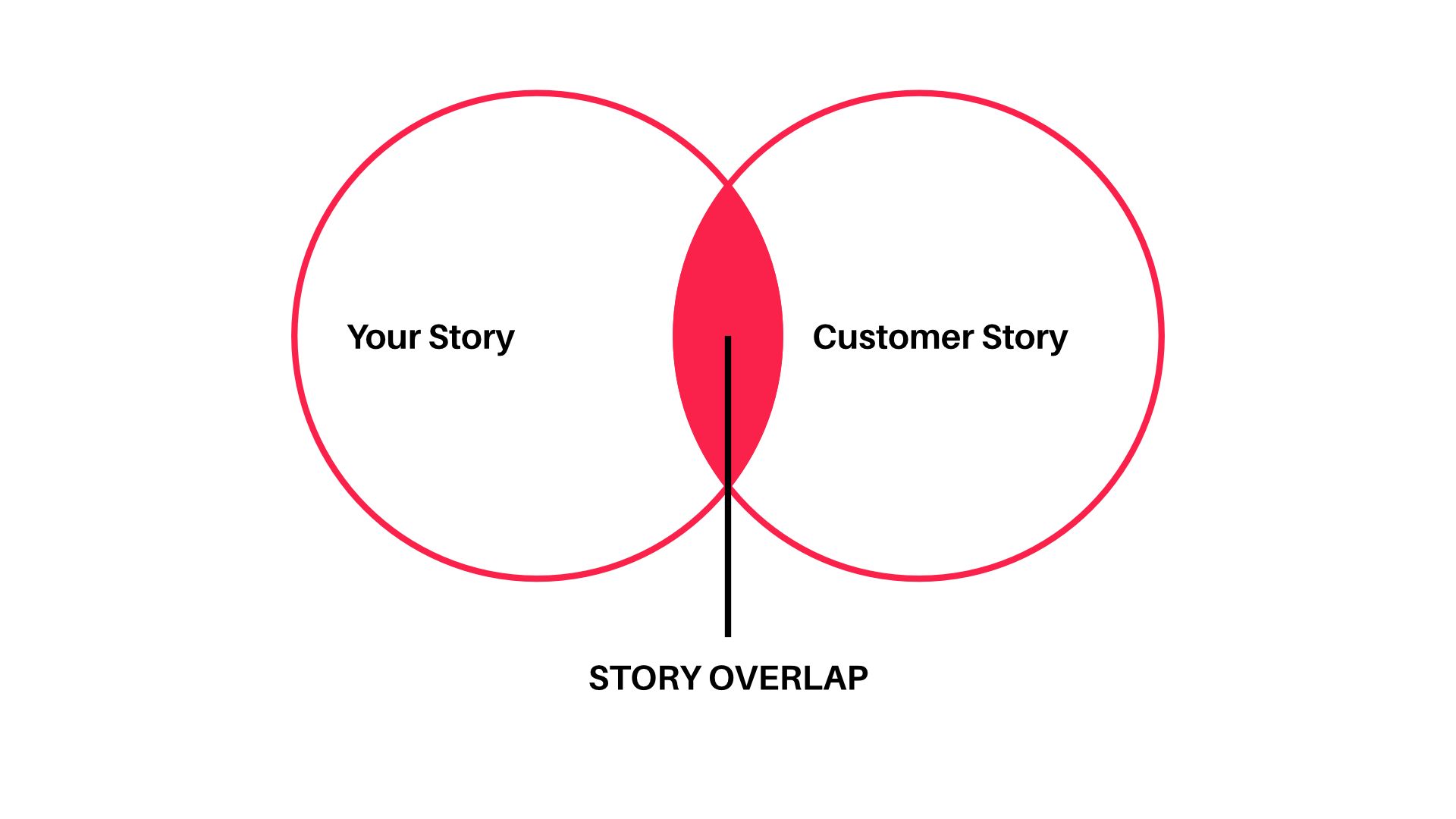
Picture a Venn diagram. One circle is your brand story. Who you are, what you stand for, why you exist. The other circle is your customer's story. Their needs, their desires, the movie playing in their head when they land on your site.
The overlap in the middle is the only bit that matters. Everything outside it is noise.
You can see this everywhere once you know to look. When Apple launched the iPod, every competitor was talking specs. "5GB hard drive." "FireWire connectivity." Apple said, "1,000 songs in your pocket." The 5GB is Apple's story. The 1,000 songs is the customer's story. The overlap is where both exist in the same sentence.
Netflix does the same thing. "Unlimited movies, TV shows, and more. Watch anywhere. Cancel anytime." Not a single "we" in sight. And underneath it there's a beautifully simple formula, which is Verb + Object + Sexiness. Watch = Verb. Movies + TV Shows = Object. Unlimited = Sexiness.
And this isn't just a big-brand game. Hiut Denim, a fifteen-person jeans company in Wales, nails it with their line about making the best jeans, not the most jeans. Their story is craft and reviving a town's tradition. The customer's story is wanting something made with care that actually lasts. That tagline sits right in the overlap.
How to find yours
Step 1 is defining your brand story in one paragraph. Not your history or your awards. Your WHY. Why does your company exist? What do you believe?
Step 2 is mapping your customer's story, and this is where it gets practical. Pull 20 of your customer reviews. A mix of five-star, three-star, and one-star. Look for WHY people buy, not just what they buy. What words do they use? What emotions come through? What do they mention that you never expected? Those phrases are your overlap language, which is the bridge between your story and theirs. AI makes really short work of this now.
Step 3 is finding the overlap itself. Draw the actual Venn diagram. Brand story on one side, customer story on the other. Where do they intersect? Write it in a single sentence. That sentence becomes the foundation of all your messaging.
What this looked like in practice
When we ran Jersey Beauty Company, we shipped everything in jiffy bags. Standard. Quick. Cheap. Then customers started complaining about damaged outer packaging. And it makes sense. It's the bashed tin of beans principle. We won't buy a dented tin even though the beans inside are identical.
So we switched to strong brown boxes. Better. But then came the insight that changed everything.
Our customers weren't buying beauty products. They were buying a gift for themselves. A treat. Their special thing. And once we understood that, we understood their story.
So we wrapped products in tissue paper. Added popcorn-shaped biodegradable packing pieces. Put "Happy. Remarkable. You." messages inside every box. Customers started posting about it on social media. Our repeat purchase rate climbed meaningfully, and the whole brand shifted. Not because of a clever funnel, but because we finally found the overlap.
Visit Episode Page →This Month’s Cohorter →
Tile.co.uk
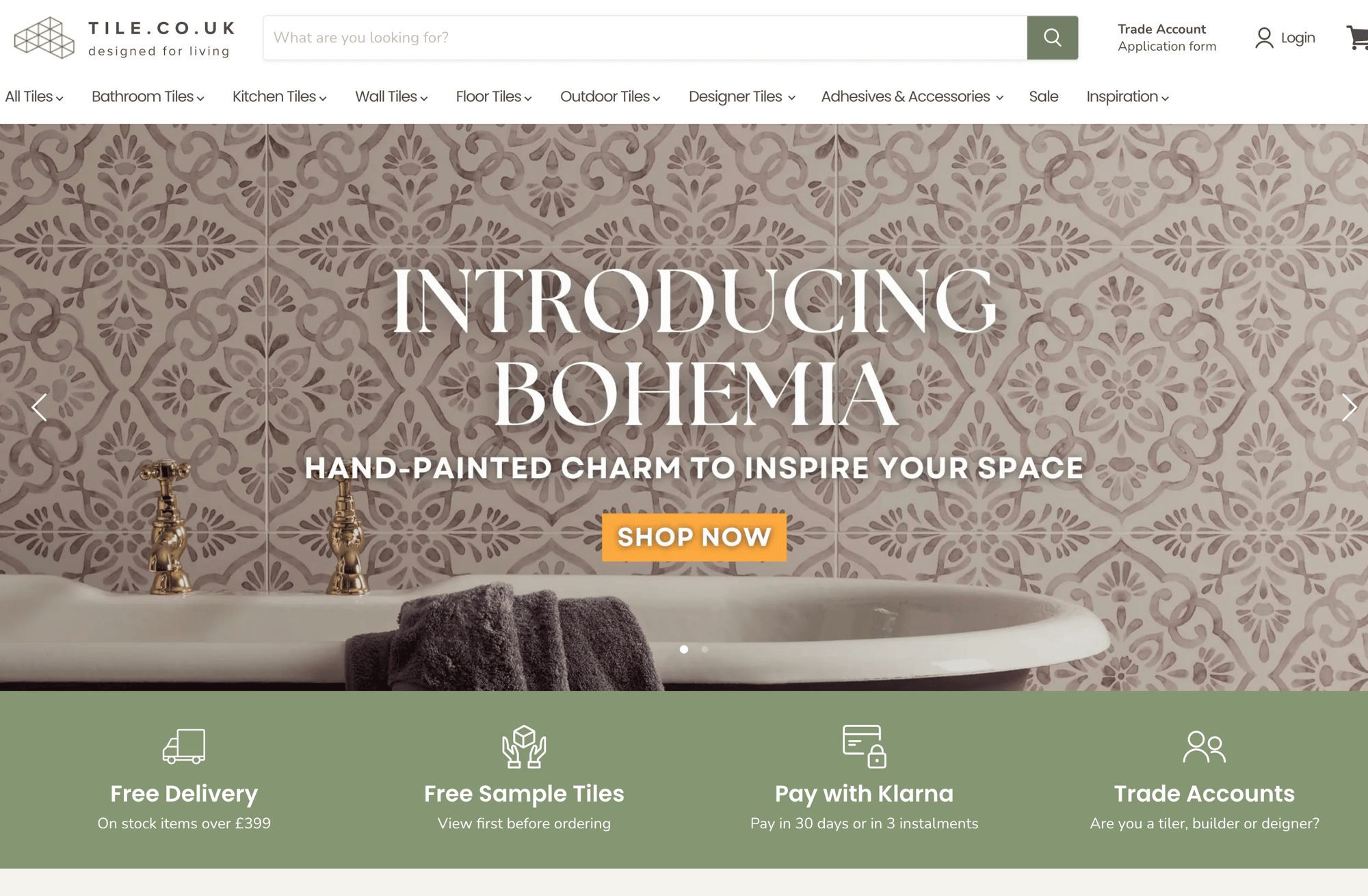
Cohort it our free monthly mentorship programme, and this month the team got to work on Tile.co.uk with Tina Kemp. Here’s what Tina had to say:
After being given the opportunity to run Tile.co.uk by my mentor and boss, I was determined not to let them, or myself down.
Having 27 years’ experience in the Tile industry, product knowledge or business understanding wasn’t the concern but I only had a few years in E-commerce.
I needed to develop my knowledge in all things e‑commerce. Feeling overwhelmed by the many areas involved, I turned to podcasts for help.
I started listening to the Ecommerce Podcast over a year ago, and what stood out was that Matt spoke my language. I never felt out of my depth because his delivery is honest, relatable, and grounded. Every episode and every guest bring something genuinely valuable.
I signed up for the newsletter last summer, and shortly after, Matt reached out to discuss joining the Cohort. This monthly call has introduced me to a group or people I truly enjoy learning from. Everyone brings their own challenges, knowledge and experience, and the feedback is refreshingly honest and genuine.
I realised I’d been missing the accountability partner Matt talked about in one of the episodes — but through this Cohort, I’ve found that again. It’s become a space that motivates me, challenges me, and in turn helps me bring back to the team.
Tina Kemp, tile.co.ukIf you’re not in one of our Cohort groups and would like to know more about how to get involved - check out https://www.ecommerce-podcast.com/cohort for more info.
Freebie of the Month →

The Story Overlap Finder
I've put together a workbook that walks you through all three steps. It's got the Venn diagram template, AI prompts for mining your customer reviews, the Image Buckets exercise, a we/you audit checklist, and worked examples from real businesses including Jersey Beauty Company.
Start with Step 2. Pull 20 reviews and mine them for the language your customers actually use. That's where the overlap starts to reveal itself.
Be A Guest →
Got an eCommerce business with stories worth sharing?
Come be my guest on the eCommerce Podcast, where I chat with founders about the wins, the disasters, and everything in between. Your story could be the one that helps another founder grow smarter (or avoid your mistakes).