🧬 Stanford discovery rewrites origin of human brain
Stanford researchers proved the human brain consists of two completely separate organs
September 19, 2026
Stanford researchers proved the human brain consists of two completely separate organs
The Deep End
Stanford Discovery Shows Human Brain Evolved as Two Distinct Organs
Stanford researchers proved the human brain consists of two completely separate organs. Distinct progenitor cells create the forebrain and hindbrain during early embryonic development. This parallel evolution blocked lab growth of hindbrain neurons for decades. Now, scientists can grow these vital cells to target fatal motor neuron diseases like ALS.
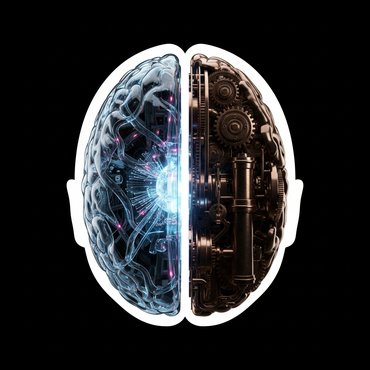
Science treated the human brain as a single organ for centuries. Stanford Medicine discovered two distinct cell lineages form the front and back regions. The forebrain handles abstract thought. The hindbrain manages critical survival functions like breathing and heart rate.
Misunderstanding this dual origin stalled neurological disease research for decades. Researchers can now grow functional hindbrain motor neurons in petri dishes for the first time. This breakthrough unlocks new treatments for fatal conditions like ALS and spinal muscular atrophy. It also illuminates how hunger circuits react to modern weight-loss drugs.
Key Takeaways:
- Dual progenitor cell lineages form the brain, debunking centuries of single-origin developmental theory.
- Targeting Gbx2 progenitor cells enabled lab growth of hindbrain neurons -- solving decades of failed attempts.
- Leverage lab-grown hindbrain motor neurons to model motor neuron diseases like ALS and SMA.
The Periphery
Why Modern Computational Science Demands Open Source Software Code
Closed code threatens modern research. Hidden algorithms obscure scientific logic and block result verification. Software now encodes computational science's core math. This analysis reveals why open source code acts as the modern scientific method. You will learn how reproducible tools like NixOS protect research validity and speed up discovery.
Computational science fails without readable software code. Paper citations mean nothing if researchers cannot execute the underlying models. Software bugs currently trigger dozens of high-profile journal retractions every year. Closed algorithms create unverified scientific claims across major research fields.
Key Takeaways:
- Closed code breaks scientific validity because hidden scripts prevent researchers from testing predictive models.
- Software bugs force major journal retractions -- unverified dependencies ruin credibility across complex fields.
- Implement reproducible environments like NixOS to freeze dependencies for future code execution.
Why AI Proof Generators Force Mathematics to Value Clear Explanation
AI proof generators now produce correct theorems without human insight. That disconnect undermines proofs as the sole metric of mathematical progress. Grant Sanderson proposes elevating motivated explanations into credited academic achievements. This framework shifts focus from machine-driven proof output to human understanding, ensuring mathematics remains collaborative and valuable.
Automated tools now write complex mathematical proofs instantly. AI models helped solve Erdős Problem 1196 in early 2026. Pure proofs no longer measure true human understanding. Mathematicians must value clear explanations over raw theorem production.
Key Takeaways:
- AI proof generators decouple theorem production from human insight, cheapening traditional mathematical proofs.
- Raw calculation outputs lack context — human mathematicians must translate automated proofs into understanding.
- Establish formal academic credit for researchers who solve open exposition problems.
How Strategic Decor Swaps Elevate Living Rooms Without Full Renovations
Custom drapery and vintage textiles elevate living rooms far faster than full structural renovations. Cheap machine-made rugs lack character. A single $200 estate-sale vintage carpet anchors the entire space. Designer Jade Joyner recommends swapping builder-grade fixtures for targeted textures. This guide outlines high-impact swaps that turn basic living rooms into curated spaces.
Most home upgrades cost thousands in structural tear-downs. Interior designer Jade Joyner uses targeted material swaps instead. Replacing sofa-matched pillows with mixed velvet and linen textures instantly creates depth. Mixing distinct fabrics signals deliberate curation rather than catalog buying.
Key Takeaways:
- Mixing distinct pillow fabrics like linen and velvet creates visual depth over matching sets.
- Estate sale vintage rugs provide unique room character at a fraction of retail prices.
- Audit your living room fixtures to replace basic ceiling fans with unique lighting.
Why Android 17 Breaks Open Source Tradition by Withholding AOSP Code
Google is shifting new Android 17 APIs directly to proprietary services rather than publishing source code to AOSP first. This move echoes Android 3.0 Honeycomb, when fast platform pivots drove closed development. Understanding this shift helps engineering teams prepare for fragmented OS access and changing open-source commitments across ecosystem devices.
Google is changing how it distributes new Android APIs. Android 17 adds developer capabilities without publishing matching source code to AOSP. This breaks a long tradition of open development dating back to Android 3.0. Platform strategy is moving toward proprietary Google Play Services instead.
Key Takeaways:
- Google's closed API strategy in Android 17 shifts platform power toward proprietary Play Services.
- Withholding AOSP code creates massive friction -- independent hardware makers lose day-one feature access.
- Audit your system dependencies today to reduce reliance on unreleased open-source platform features.
The Firehose
Computing & Security Innovations
- How AI Solved a WWI German Radio Cipher Historical Cryptographers Missed
- How Grants Are Driving Security Upgrades in Open Source Embedded Compilers