📢 Unencrypted keys found on Flock surveillance cameras
Stored encryption keys allowed hackers to unlock 1.6 million images from a stolen Flock camera
September 18, 2026
Stored encryption keys allowed hackers to unlock 1.6 million images from a stolen Flock camera
The Deep End
How Reverse-Engineered Flock Cameras Expose Flaws in Automated Surveillance
Stored encryption keys allowed hackers to unlock 1.6 million images from a stolen Flock camera. Unprotected drive partitions exposed critical flaws in the surveillance network. Computer vision models explicitly track pedestrians alongside vehicles, taking up to 100 photos per encounter. This analysis reveals how physical access risks leaked data and why public resistance to automated surveillance is surging.
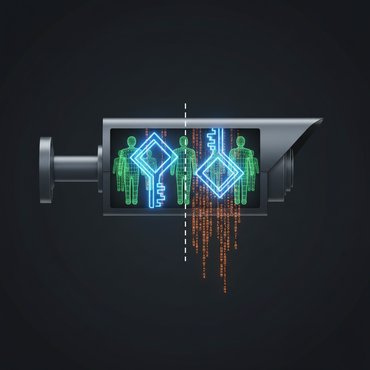
Hackers extracted drive contents and encryption keys directly from a stolen Flock camera. The recovered logs showed 1.6 million images captured across 50,200 vehicles in 21 days. These physical breaches expose massive privacy risks within nationwide law enforcement networks. The internal software explicitly tracks pedestrians and bicyclists alongside passing vehicles.
Physical security oversights completely negate Flock's on-device encryption claims. Hackers found an unencrypted media partition containing the key to unlock raw video clips. The device suffered 27,000 storage errors while running about 20 custom Android applications. Communities will likely see increased device tampering as reverse-engineering tools spread publicly.
Key Takeaways:
- Flock stored unencrypted keys on device partitions, allowing hackers to easily unlock stored footage.
- On-device models explicitly log pedestrians -- expanded computer vision tracking extends far beyond license plates.
- Audit edge device physical security and cryptographic key management to prevent local hardware exploitation.
The Periphery
Why OpenAI Custom Built Astra for Law to Transform Legal Research
Dedicated search indexing and tailored instructions push Astra for Law past generic web tools. The system passed 54% of benchmark research questions compared to 38.7% for standard GPT-6 Astra. Direct access to 230 million legal records helps lawyers verify precedents fast. Built-in governance features safeguard confidential client records across complex practice areas.
OpenAI built Astra for Law to solve specialized legal research challenges. The platform indexes 230 million legal URLs across federal and state court records. Lawyers retrieve 54% more relevant opinion passages during complex case analysis. Custom privacy controls guarantee zero data retention for sensitive client matters.
Key Takeaways:
- Dedicated legal search indexes increase research accuracy by grounding responses in verified precedents.
- Astra for Law retrieves 54% more relevant court passages due to specialized indexing.
- Audit your law firm workflows to integrate customized AI connectors and privacy controls.
Why Daily Micro-Tricks Compound Into Massive Engineering Team Productivity
High-leverage engineering output stems from small, targeted nuggets of practical knowledge. Reusing HTTPS connections in Node.js slashes network latency through socket persistence. Tools like git pickaxe surface lost commit context in seconds. This analysis explains why senior engineers should share one daily micro-trick on Slack. Small daily insights build team capability without causing cognitive fatigue.
Small technical tricks deliver massive productivity gains without heavy mental overhead. Passing an HTTP agent into Node fetch calls preserves open connections to drop latency. Running git log -S instantly tracks when specific code strings entered or left your repository. Knowing these small patterns saves hours of debugging across long engineering projects.
Key Takeaways:
- Persistent HTTPS agents cut Node network latency by keeping underlying socket connections open continuously.
- Git pickaxe searches pinpoint historical code changes fast because they filter by content modifications directly.
- Share one actionable technical tip in Slack daily to compound team domain knowledge seamlessly.
Why 1.76-Bit Compression Makes 27B AI Models Run on Laptops
Ternary Bonsai 2 shrinks 27B models down to 5.9GB. It retains 98.2% of full-precision performance. Extreme quantization at 1.76 bits slashes memory needs 9x. Complex agent workflows no longer suffer from severe accuracy drops. This breakthrough lets high-capability coding and vision tasks run directly on laptops. Teams can now deploy private local intelligence without expensive cloud infrastructure.
PrismML released Ternary Bonsai 2 27B to redefine edge AI deployment. The model compresses to 5.9GB using 1.76 bits per weight. Developers get 98.2% of Qwen3.8 27B performance on ordinary laptops. Local devices can finally run complex coding agents and vision tasks efficiently.
Key Takeaways:
- Ternary quantization slashes 27B model footprints 9x by compressing weights to 1.76 bits.
- High throughput of 143 tokens per second cuts inference power usage by 40%.
- Deploy local open-weights models to secure sensitive data and eliminate cloud API fees.
Why Self-Hosted Search Engines Outperform Cloud Indexing for Personal Knowledge
Commercial search engines index the public web but ignore your personal history. Hister fixes this gap by creating a local full-text index of every web page you visit and file you store. Running entirely on your own hardware protects your data from third-party tracking. This analysis explores how local indexing improves personal knowledge retrieval without privacy tradeoffs.
Finding specific information across past browser sessions and local files remains difficult. Public search engines only index public web pages. Hister solves this problem by building a local full-text search engine on your machine. Its browser extension captures pages as you browse them, storing every word in a private local index.
Key Takeaways:
- Local full-text indexing captures visited pages instantly to create a searchable personal archive.
- Zero telemetry default settings protect sensitive search queries from third-party data tracking.
- Download the Hister binary today to index your local files and browser history.
The Firehose
AI Systems Optimization
- How Bend Uses Formal Proofs and Parallelism to Stop AI Code Errors
- Why Direct Logit Readout Beats Text Generation for Local Model Decisions
Low-Level Memory Performance
- Why x86 Memory Model Emulation Bottlenecks ARM Chip Performance
- Why Jemalloc 5.4.0 Overhauls Thread Caching and Memory Allocation