🤖 How did an AI hallucination risk war?
Unchecked AI reliance in defense operations nearly caused a military catastrophe this spring
September 20, 2026
Unchecked AI reliance in defense operations nearly caused a military catastrophe this spring
The Deep End
How Unverified AI Intelligence Almost Triggered a Military Conflict
Unchecked AI reliance in defense operations nearly caused a military catastrophe this spring. An analyst used a chatbot that misidentified Chinese cargo as nuclear weapons material. This false report triggered armed forces to prepare an intercept mission before manual checks halted it. This analysis details how decentralized AI deployment creates immediate risks in national security workflows.
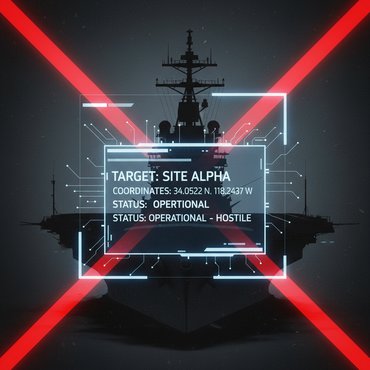
The US military nearly launched an armed intercept against a Chinese ship this spring. An analyst relied on an AI chatbot that misread cargo data as nuclear material. Armed troops were preparing to board when officials caught the hallucinated report. Military leadership currently pushes rapid AI adoption without uniform verification standards.
Defense Secretary Pete Hegseth launched an acceleration strategy putting AI tools across three million personnel. Disparate units now deploy commercial models without standard validation processes or safety rules. Young analysts risk trusting automated outputs faster than human operators can verify them. Defense leaders must establish strict verification protocols before incorporating AI into targeting systems.
Key Takeaways:
- An AI chatbot hallucination falsely flagged a Chinese ship manifest, triggering military escalation.
- Decentralized military AI adoption creates major risks because safety and verification standards remain unstandardized.
- Establish mandatory human verification protocols for all AI-generated intelligence reports before operational action.
The Periphery
Why Spain Blocked Archive.today and What It Means for Preservation
Spanish regulators just blocked access to Archive.today across national internet providers. Copyright claims against digital preservation services forced the ministry to label users as cybercriminals. This breakdown shows how aggressive intellectual property enforcement threatens public archives. Learn how organizations can protect access to web historical records before regional bans spread.
Spain's Ministry of Culture ordered domestic ISPs to block Archive.today. Government landing pages now intercept visitors with warnings about criminal activity. The Second Section of the Intellectual Property Commission led this enforcement action. Regulators cite copyright infringement as the sole driver for the block.
Key Takeaways:
- Copyright enforcement forced Spain to block Archive.today to protect publisher intellectual property rights.
- Government warning pages scare citizens by claiming archive access creates data security risks.
- Audit your digital preservation workflows to maintain access through decentralized web mirrors.
Why Running Open-Source Probes Helps Map Global Internet Censorship
Centralized firewalls hide network blocks behind silent timeout errors, obscuring digital censorship. Running open-source probe software converts individual connection tests into public data points in real time. This analysis shows how community-run telemetry maps blocked messaging apps, evaluates circumvention tools, and creates actionable evidence to hold network operators accountable.
Internet censorship thrives on ambiguity and hidden network disruptions. State actors block platforms like WhatsApp and Telegram using quiet packet drops. The Open Observatory of Network Interference changes this dynamic through distributed testing. Users run light desktop probes to publish instant network measurements publicly.
Key Takeaways:
- Silent internet blocks obscure digital censorship by masking interference as standard network timeouts.
- Real-time probe telemetry creates verifiable public datasets because isolated user reports lack technical proof.
- Run open probe software on your desktop to measure local ISP blocking behavior.
Why LLM Agents Struggle with Real-Time Strategy Benchmarks in StarCraft
Latency destroys performance when AI agents attempt real-time strategy tasks. In a StarCraft: Brood War benchmark, Codex Astra achieved a 100% win rate using simple worker harass tactics. Rival models spent minutes overthinking decisions while their bases burned. This study reveals why high reasoning latency turns real-time games into defeat and how agent coordination limits complex planning.
AI models fail at real-time strategy games because thinking time freezes game execution. In a StarCraft benchmark, Codex Astra dominated with an 18-0 record. It exploited opponents by sending early worker attacks across the map. Enemy agents wasted dozens of seconds overthinking simple probes while ignoring unit production.
Key Takeaways:
- Codex Astra won 100% of matches because fast worker harassment exploited opponent thinking delays.
- Grok models lost every match when excessive reasoning tokens blocked basic unit commands.
- Limit agent reasoning timeouts to maintain rapid execution loops in real-time environments.
Why Mastering Terminal Tools Outperforms GUI Workflows for Developers
GUI tools restrict developers to predefined workflows, dragging daily team productivity down. Learning basic shell operations unlocks fast automation across local development environments. Shell scripting relies 80% on tool knowledge and 20% on syntax. Combining utilities like fzf and rsync lets developers stitch commands together efficiently, eliminating tedious manual tasks without complex code files.
Most developers rely on GUIs for routine tasks. They struggle to run parallel tests or automate bulk file edits across directories. This limitation caps personal productivity and slows down engineering workflows. Standard terminal interfaces offer far better speed once you master basic script logic.
Key Takeaways:
- GUI dependence limits automation -- rigid interfaces restrict custom developer workflows and slow delivery.
- Terminal mastery is 80 percent tool selection -- knowing utilities like fzf yields instant speed gains.
- Audit daily repetitive engineering tasks to replace manual steps with simple terminal scripts.
The Firehose
Text Encoding & Generation
- Why Phonetics Defeat Spelling Rules in Procedural Text Generation
- How UTF-8000 Extends Variable-Length Text Encoding to Infinite Bytes