
Daily Log Digest – Week 24, 2026
2026-06-08
Spatial Homogenisation and Coffee Shops
Welcome to the Pinterest Ghetto
Came across this nice reel on Insta, which gave me a nice term to describe something I have always observed - "spatial homogenisation". This reel talks about it in the context of Indian coffee shops, but tbh this is true for coffee shops across the whole world.
Welcome to the Pinterest Ghetto.
Step into any specialty café from Bangalore to Bandra, shut your eyes, and try to guess what city you are in. Chances are, you can’t.
Exposed brick, industrial black metal, a lone monstera plant, and hanging Edison bulbs. It’s an identical aesthetic template that has quietly colonized our urban spaces.
In design theory, this is called spatial homogenisation. Somewhere along the line, the Indian middle class was taught that to look “sophisticated,” our spaces must mimic a gentrified warehouse in Brooklyn.
By letting global algorithms dictate our surroundings, we are substituting genuine, climate-responsive architectural restraint with theatrical props built purely for an Instagram grid.
Our public spaces are where urban culture is performed. If the stage looks identical everywhere on earth, our culture starts to feel identical, too.
It’s time to look past the feed and look again.
Here is the substack post on the same topic from the author: Lesson 1.1: The Pinterest Ghetto and the Loss of Vernacular Space
I Want You To Be Happy by Jem Calder
I Want You to Be Happy: The Sally Rooney-approved book of the summer
In the 18th century, great novels followed certain tropes. The love stories were grand and convoluted, often tragic but nearly always neatly resolved by the end. These were books about relationships which took place in grand country houses, in which communication was careful and often declared on some type of bucolic pastoral background. Marriage and babies inevitably followed. But that was then, and this is now. In 2026, nobody kisses hands over white silk gloves and promises their estate to their one true love. In 2026, we have something much worse: the situationship.
Jem Calder’s new novel, the aptly-titled I Want You To Be Happy, follows its two protagonists Chuck and Joey over the course of an (arguably) always doomed, always poorly defined relationship. It begins inauspiciously. Chuck, a 35-year-old copywriter who dreams of writing the next great novel, has just broken off an engagement with his long-term partner when he gets drunk in a bar and chats up Joey, a 23-year-old barista and sometime poet with crippling impostor syndrome. They find kinship in the threadbare nature of their lives in London; their unfulfilling jobs, the loneliness and atomisation of trying to build a life in a city that seems, by its very existence, ambiently determined to make you broke and unhappy. But this is not, let’s be clear, a love story.
“… I think older people think that people are pursuing these kinds of relationships for the sake of it, because there’s a freedom to it, but ultimately it just ends up being the hedonistic treadmill of the dating app, and another way to make you feel completely replaceable and cog-like in this very impersonal feeling city.”
But Calder, 34, does not want his novel to be read as ‘relationship negative or pessimistic’. “I think people can have meaningful encounters with other people that can be sustaining and creatively generative, and formative in terms of identity, but at the same time there’s a bitter irony as the novel goes on that this relationship just means fundamentally different things to these people.”
I Want You To Be Happy ends on an open, unfinished note. It invites the reader to imagine the possibilities for Chuck, for Joey, for every corporate drone millennial in London. It confronts us with the cold hard facts: that our capacity to imagine a world better than situationships, flat-shares, overdrafts and horrendous WhatsApp chat is up to us. Good luck.
you might be into what you say you don’t want
I’ve always thought there’s something very powerful about Carolyn Elliott’s framework of Existential Kink. Sasha has a great post about it, but I’ll roughly summarize it as integrating your shadow (in the Jungian sense) by accepting that you might be into what you say you don’t want. Like, let’s say you complain all the time about your terrible job, but you’ve refused to quit over a period of years. You might actually achieve integration by realizing that you actually, in her language, get off on hating your job. In other words, you have what you want.
The Jevons Misunderstanding
The Jevons Misunderstanding #ai #software
The Jevons Misunderstanding assumes the old production system continues to scale when demand expands as a result of the new technology.
That was more plausible in earlier industrial cases where efficiency made the existing resource economy larger.
AI is different because it can re-architect the production system itself. It:
Separates the worker from the customer,
Turns the augmented worker’s continued expertise into raw material for training,
Codifies craft by progressively unbundling previously tacit knowledge into components that can be absorbed by the tool.
Expansion no longer has to pass through the old labor bundle. It can bypass it - meaning the worker stays employed but at progressively lower wages in worse conditions, not seeing the benefits of the market expansion.
That is what the Jevons debate misses. The issue is not whether AI expands demand. It often will. The issue is whether workers sit above the algorithm, using AI as leverage, or below the algorithm, feeding the system that captures the value.
2026-06-09
Indian Uncles
accurate tbh
LET ME TELL you how to identify an Indian uncle. A dead giveaway is the phrase “let me tell you”. It is inevitably followed by a thesis on what really ails the country. Another hallmark is unsolicited advice, veering from career counselling (“only girls study literature”) to dietary prescriptions (“eat five soaked almonds to build immunity”). But the defining feature of the Indian uncle is his bottomless disdain for the youth of today: feckless phone-addled softies, the lot of them. They need discipline.
The uncle reigns supreme across India’s divides of religion, caste and language. He earns his radioactive confidence through the simple act of reaching middle age, thereupon instantly gaining omniscience. But despite proselytising the Way of the Uncle on WhatsApp, his authority extends only to his own circle. The uncles who run India, however, know no such boundaries. They inflict their fossilised notions upon the nation. India is a republic of the uncles, by the uncles, for the uncles.
The Indian uncle’s toolkit for dealing with criticism is limited. At home it starts and ends with “Don’t talk back okay!”
Influencers vs Evidence-based medicine
Part 1: Influencers v evidence-based medicine (part one)
Part 2: Influencers v evidence-based medicine (part two)
Very informative two-part podcast which might help you discern when to listen to health influencers. I learnt a lot about how this influencer and treatment/drug marketing works behind the scenes.
For e.g. this bit about the usefulness of various measuring devices and trackers
Assumption in healthcare, the more data we collect, the better. Yeah, that’s a much better way of thinking about my question. Condense up for you. And that’s not always the case. Sometimes it is. It’s on very much a case by case basis.
The evidence seems to suggest in terms of the footstep count and everything else, there’s a period where it’s effective and then there’s a novelty effect. And what systematic reviews have found is they don’t tend to lead to much health gain in the long run.
She knows, she’s like, why can’t I just go out and enjoy the beautiful Scottish countryside and I turn it into a festival of data misery instead with all my apps and wires and everything else.
And there can be benefits there and there can be communities, but it depends what your end goal is. But does it make you fitter? No, not necessarily.
But the problem is, is this idea of generalizability. So a lot of the studies are done on athletes where they are shaving a second off. An event means the difference between winning gold and silver. That ain’t me that’s like chugging along on a treadmill in a gym.
specifically continuous glucose monitoring
So one example is continuous glucose monitoring.
So, your body has homeostatic mechanisms. If you eat bar of chocolate, your glucose goes up and guess what? It should come back down again. If it doesn’t come back down again, then you might start thinking, do I have diabetes? Yeah.
And these devices are used for people with type 1, type 2 diabetes in particular that use insulin to monitor their condition to help them adjust their.
This is life or death.
The evidence currently would say no, we don’t know whether it makes any difference in the short or long term and the reason why you monitor your insulin or your glucose if you’ve got type 1 diabetes, the immediate effects of the ketoacidotic coma or hypoglycemia, but longer term it’s the impact on your blood vessels.
And some practical advice at the end of the first podcast.
Alok Jha [00:32:24] That’s perfectly preempted my last question, which is going to be, none of these technologies are going away. What practical advice can you give to people about how to sort of harness all of this in a constructive and informed way? Because there is something good in there, it’s just how do you find it?
Deborah Cohen [00:32:39] I think we’re learning. I think were at the foothills. So two things really, if you’re on social media is, first of all, why is this person telling me this? What is the incentive? It might be perfectly well-meaning, but how are they making the money? What’s the incentives behind them being there? And it’s just being a bit healthily sceptical. If they’re only telling me about the benefits and not telling me the harms, are they telling me their full story? If it’s a personal experience, are there other sources of information I can go to that provide more of a evidence-based look at this particular condition or treatment. You might get your preliminary sort of warmth and relationships and everything else from social media, but there are other sources. Just cross-check. And what are the conflicts of interest? And then if you’re using a wearable, why am I measuring this metric? Will altering this metric do anything good for me in the short term or even the long term? So if you’re radically change in your diet, like with the glucose example and introducing loads of burgers rather than bananas, you might think, well, further down the line, that might not be a good thing. And that’s why I wrote the book. I was trying to show people how doctors think when they’re in a healthcare setting and the questions they ask and the question they want to know when they are diagnosing or they’re interpreting tests or they are looking at the benefits and harms of treatment.
Alice and Steve
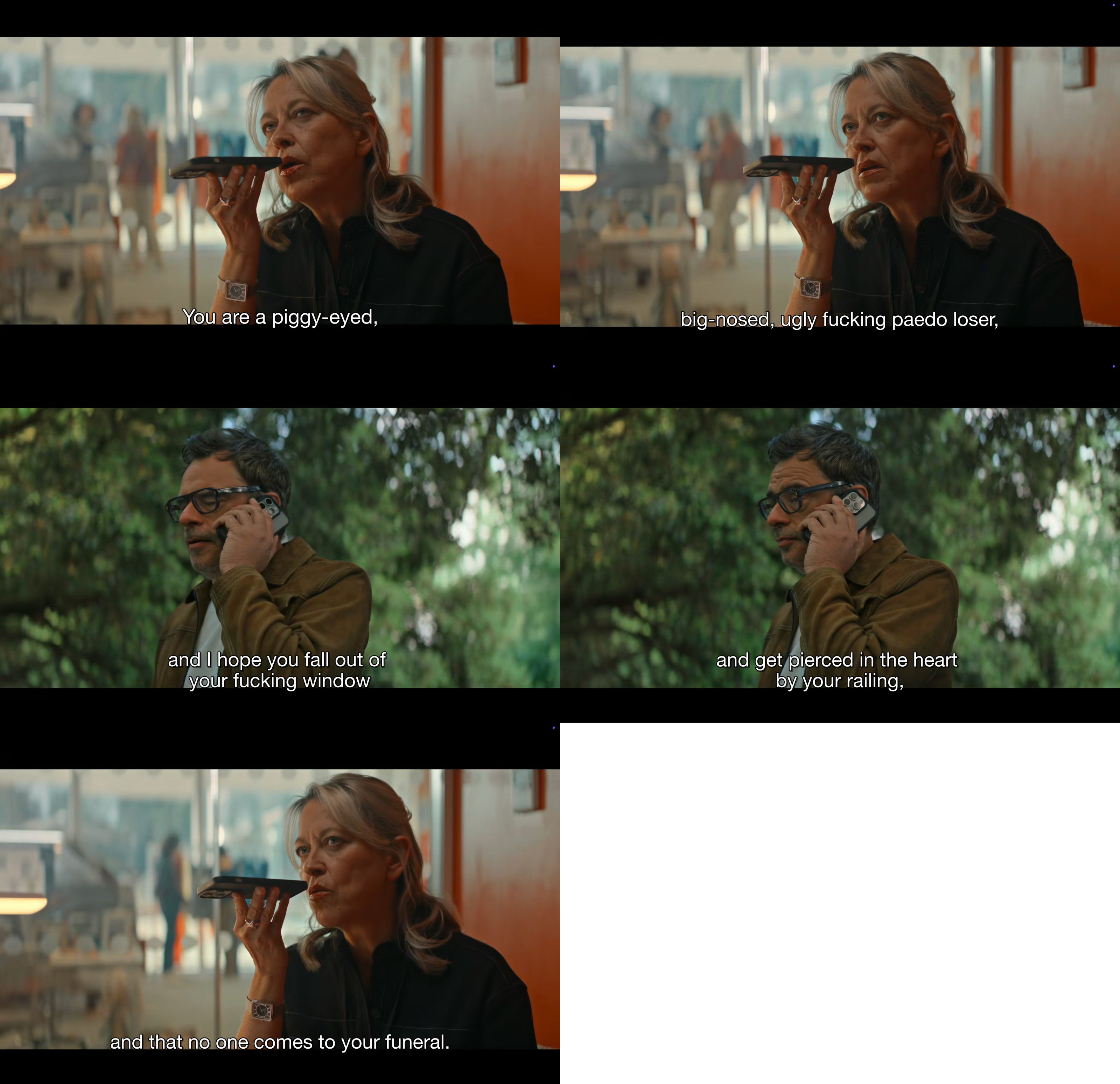
Founds this lovely British comedy on Hulu: Alice and Steve (TV Series 2026– ) ⭐ 6.3 | Comedy, Drama, Romance
A two and-a-half decades long friendship between Alice and Steve becomes strained when Steve starts dating Alice's daughter.
The effect of environment on classifying mental health "disorders"
We pathologise the kid who won't sit still, the adult who can't focus, the teenager who sleeps wrong, the griever who grieves too long, the worker who burns out. At some point the sheer number of "disorders" should make you suspect often the problem is the yardstick, or the environment , not the people.
2026-06-11
India's Mango Exports
The Ken has a nice little podcast breaking down India's mango export market.
Full Transcript: Daybreak - India's mango paradox | Transcript Reader
India produces nearly half of the world's mangoes over 24m metric tons a year. But it exports only around 30,000 tons of fresh fruit. Of every thousand mangoes, basically, that are grown in this country, roughly 1 or 2 leave it as fresh fruit. To be fair, India does export significant volumes of mango pulp. But pulp is not what commands £19 to £20 a box in London.
The fresh market is where the ambition lies, and that is precisely where India keeps losing ground. So why does a country that grows half of the world's mangoes keeps getting shut out of market after market?
Mubi Podcast about Bend It Like Beckham
BEND IT LIKE BECKHAM — Gurinder Chadha shoots and scores - MUBI Podcast
This podcast was a throwback to a very different time. But I also learned some new interesting things about how music was such a big part of the movie and how Bally Sagoo made tracks for the movie. The bit in the podcast tracing Bally Sagoo's musical history was nice.
NEETs in UK
No job, no future? Inside Britain’s new ‘Bedroom Generation’
Dave is far from the only one stuck in this cycle. It is no secret that the job market is in a dire state. Rising employment costs, the advent of AI, and ghost jobs have created a perfect storm of employment scarcity, which young people who are attempting to enter the workforce for the first time are bearing the brunt of. According to a recent government report by Alan Milburn, approximately one million young people across the UK are not in employment, education or training – ‘NEETS’. The number of NEETS is the highest it’s been in 12 years: the Milburn report refers to the situation as a “moral crisis” and paints a bleak picture of a lost, “bedroom generation”. It’s a story, Milburn writes, “that should disturb anyone who cares about the future of young people in this country”.
2026-06-13
Boast of Quietness by Jose Luis Borges
Writings of light assault the darkness, more prodigous than meteors.
The tall unknowable city takes over the countryside.
Sure of my life and death, I observe the ambitious and would like to understand them.
Their day is greedy as a lariat in the air.
Their night is a rest from the rage within steel, quick to attack.
They speak of humanity.
My humanity is in feeling we are all voices of the same poverty.
They speak of homeland.
My homeland is the rhythm of a guitar, a few portraits, an old sword, the willow grove’s visible prayer as evening falls.
Time is living me.
More silent than my shadow, I pass through the loftily covetous multitude.
They are indispensible, singular, worthy of tomorrow.
My name is someone and anyone.
I walk slowly, like one who comes from so far away,
he doesn’t expect to arrive.
I was at a book launch event for Kiran Desai's latest book The Loneliness of Sonia and Sunny in German translation. In a wide ranging conversation she referenced a poem by Borges and I had to look it up.