Daily Log Digest – Week 22, 2026
2026-05-24
Marilyn Monroe
The rare midnight photos that might reveal the ‘real’ Marilyn Monroe
“Men don’t see me,” Marilyn Monroe once said. “They just lay their eyes on me.” She was born Norma Jeane Mortenson in 1926, a century ago this year; by 1962, she was dead, aged just 36. We have been trying to see her clearly ever since.
Trying to catch a glimpse of the true Marilyn in photography and footage is, to some degree, a fool’s errand: if interviews and transcripts of her therapy sessions have famously revealed her to be a well-read neurotic rather than a trifling bauble, her command of the lens is so uncompromising that we only really get to see her exactly as she wanted to be seen. “I never knew anyone who even came close to Marilyn in natural ability to use both photographer and still camera,” Arnold said. “She was special in this, and for me there has been no one like her before or after.”
The French Colonial Tourism in Morocco
Podcast: The French Colonial Tourism Industry in Ifrane, Morocco | Maghrib in Past & Present | Podcasts
Full Transcript: The Cosmopolitan - The French Colonial Tourism Industry in Ifrane, Morocco | Transcript Reader Great short podcast on an interesting aspect of colonialism - the promotion of tourism.
This is a good explanation of the concept of "Hill Stations" - prevalent also in British colonies like India.
So Ifran is a colonial hill station, and a hill station is a type of urban settlement generally located high up in the mountains and generally located up where the climates are cooler. In East Asia and South Asia, we have about a 108 hill stations mapped out. And Ifran is an example of 1 of these places, but it's within Northwest Africa. Hill stations, I would define as having a couple requisites. The first being climate and the second being health.
European So colonialists at this time generally believed that climate and health were very, very closely interlinked. That's the reason that you get places like the now abandoned hospital in Benzmir, Morocco, high up in the mountains. These places were types of sanitariums. And over time, places of rest became places of leisure. So when European colonists are settling the interiors of Morocco and interiors of other countries within the Colonial Hill Station model, they established tourism over time.
And what's important to note about Colonial Hill Stations is that they're a settlement. They're not a place that existed otherwise. So if you look at Ifrane itself, it was developed in about 6 months in 1929 from near nothing. I'm not going to say nothing because many Tamazare speaking communities lived there, especially the Benny Magild imagines. But the place sprung up very quickly.
Another thing about Hill Stations is that the people that worked there, the people that labored are not necessarily the people that benefited from this, and this is where the colonial relationship really comes in. Within Ifran, we have photographs and records of about 400 prison laborers from the area who were forced to labor to build this town, And this is common within the French Empire and common within other hill stations more broadly. And hill stations generally located high up in the mountains are located far away from the so called native in the European colonial relationship. And this is why you get the sister city of Tim Dakin next to Ifren, which originally was a Bidonville, a shanty town. And of course, Tim Dakin has gotten better over time, especially after independence.
But the population that worked in Ifren did not live there. The population that was served in Ifran was visiting there from outside. And even before that, they were settler colonialists coming in either from Europe or coming in from Morocco's coast towards the interior.
Within the advertising, there's 1 document I have that talks about the civilized man and camping. It's an advertisement for a camper van. And roughly translated, it says, the civilized man, part excellence, is an animal of luxury. He has demands. The civilized woman is doubly demanding.
It is necessary for the civilized man to adapt to the savage life, only being able to live in it with certain commodities. This is a rough translation of a document within Archie de Marocque. The reason I bring this up is that within the French civilizing mission, it permeates the tourism industry as well, where there are ideas about bringing civilization to Morocco, sort of differentiating between the civilized and the savage. And this goes back to classic orientalism and what we see with Edward Said's work. The idea of there's a people who need to be protected until they're ready to become sovereign.
And that's the whole foundation of the French protectorate. So in advertising the camping industry and camper vans in a way that makes it seem as if there's a way to experience this savage land in a civilized way, It's another way in which the French justified empire. And if it was in an advertisement for a camper van, imagine it in military and political activities as well.
How to have friends past 30
How to have friends past age 30 #friendship
Stumbled upon this article because of another recent article I came across on this substack and got sucked into the rabbithole. Nothing too remarkable here (it is after all billed as a quick and simple guide), but I thought this part was worth re-emphasising
There are basically two things that define a really close friendship: understanding, and interdependence. Your close friend has to understand who you really are, and you also have to know that you can count on them if you need help. If a friendship has only one of those things and not the other, it’s not really a close one.
Understanding gets built up over time, but it can’t reach a truly deep level without confessions. We all have certain things that we’re reluctant to tell other people about ourselves — not necessarily secrets, but core truths of our lives that we don’t like yelling at everyone we meet at a party. Occasionally these might be facts about your life, but usually they’re just vulnerabilities and desires and fears.
In order to make a really close friend, you have to tell them at least some of those things, and they have to tell you theirs. You have to have moments when you open yourself to another person and make yourself vulnerable to them. And you also have to have moments where they do this for you. You don’t both have to do it at the same time, but it has to happen on both sides.
Those moments of vulnerability and openness can happen in a group setting, but much more often they happen one-on-one. So you have to hang out with your friends outside of the group sometimes.
The other thing you need for a close friendship is interdependence — you need to know you can rely on your friend, and they need to know they can rely on you. There’s no way to prove this in an absolute sense, of course — you’ll almost certainly never know if your friend would really lay down their life for you, because that sort of situation almost never actually comes up.
Instead, what you need is to ask favors of your friends, and do favors for them as well. Maybe you help them put together a bookshelf, and then borrow their car. Maybe they take care of your rabbit, and you help them find a job. Etc. You have to not be afraid to ask for favors from your close friends, and you have to want to do favors for them too. Don’t intentionally test people by seeing if you can get them to do stuff for you, of course. Just wait until you really need something, then ask. Eventually this builds up, like a muscle — whenever you learn that your friend needs help, you won’t even think twice before you offer to do it.
I have always struggled with the interdependence part, and I suspect so have many others.
2026-05-25
The Job Search has become a humiliation ritual
The Job Search has become a humiliation ritual
AI tools appear to be on the rise on both sides of the job search, creating uncanny automations like getting a rejection email message 40 seconds after submitting a labor-intensive application. It has grown easier than ever for a person to apply, in a desultory, semi-automated way, to a job, whether by having Claude write their cover letters or hitting EasyApply on LinkedIn, which means that within 24 hours any job posting online might already have 100 applicants. LinkedIn reports applications went up 45 percent annually, averaging 11,000 a minute. Employers, overwhelmed, returned fire with their own automations. The result: a maelstrom of AI-powered résumé screening, chatbots for early interviews, gamified skills tests, and unconventional-to-jarring behavioral interview modes that are trying to control for the likelihood that a candidate is typing prompts into Claude or ChatGPT to cheat through the interview.
Many of the people I spoke to about their job searches are office workers and would be considered part of or on track for the PMC, or professional-managerial class. Their jobs have historically been often better-paid and relatively shielded from poor working conditions. But now, the promise of upward mobility and identity through a job is starting, slowly, to dissolve, leaving a generation of laptop workers confronting a new, hostile economic and cultural landscape.
We’ve long been sold the idea of work as identity, purpose, and social mobility. So what happens if the machine breaks down? When people are doing everything “right” — networking, optimizing, trawling LinkedIn — and still hearing nothing back? What does it feel like to search for employment now, to swim against the current in the sea of American insecurity?
“I will certainly not get a job I don’t apply to,” David notes wryly. “I will almost certainly not get a job I do apply to. And that ‘almost’ is why I keep applying. It’s like going to services for a religion I don’t believe in. It’s a ritual.”
Large cohorts of economically stranded young people have been fertile ground for radical solidarity movements and reactionary politics alike. That’s not hopecore, just historical comprehension. The Gilded Age, the Depression, the waves of deindustrialization in the late 20th century — each period produced its own hybrid of worker despair and immiseration, followed by reform and reinvention. The worker gains of the 20th century — including unions, Social Security, civil-service protections, and the weekend — were all wrested into being by people who refused to see themselves as failures in isolation and instead recognized themselves as part of a mass that were being failed. It is fashionable among elites now to frame the majority of people as “NPCs,” or non-player characters, in the parlance of video games: unthinking, sheeplike, atomized automatons. But deny a vast multitude what they need for long enough and you’d be surprised at how many decide to play.
Midlife Crisis–ing in the End-times
Midlife Crisis–ing in the End-times
Older millennials now have less money and more problems than ever before. Basically, we’re in retrograde
This time around, I have almost 20 years of experience in my field. I have a diverse set of skills and I’ve even written a book, Life After Ambition, which was published this year and became a national best seller in Canada where I live. And yet, like so many of my friends right now, I am out here applying for (and being rejected by) random content jobs at places that won’t exist in a year. We’re midlife millennials, now in our mid-30s and early 40s, still spinning in circles like we had to do in the early aughts, during 9/11, the ensuing wars in Afghanistan, or the 2008 financial crash — retrograde, let’s call it — only today we have kids or pets or mortgages or aging parents or all of the above.
Even during that horrible year of job searching in my early 20s, I truly believed things would work themselves out. Now I’m scared for the future in a way I have never really been. Between AI, climate change, and ongoing social, political, and financial global chaos, and the fact that every single thing a human being needs to be comfortably alive now costs twice (at least) as much as it used to, I don’t see things getting better. The best we can hope is that they don’t get worse.
I talked to writer Rainesford Stauffer, who covers work and affordability and has talked to people on all sides of this issue about why things are so bad and what’s next. I asked her if things really are as bad as they feel. “Based on what I’m hearing from millennial and Gen-Z workers, it feels like a really horrific time to be finding a job, be in a job and try to navigate the rest of your life alongside that job,” she says. She’s talked to people who are mid-career who are competing for jobs alongside workers who are a lot younger, “who employers in turn can offer lower compensation because they have less experience.” Plus you get workers in their 40s who feel pressure to “age-proof” their résumés so that they appear younger, now nervous about discrimination as well as exploitation. We’re still too young to get ahead and increasingly too old to be competitive with our younger colleagues.
2026-05-26
Buddhist Nationalism
How is Buddhist nationalism transforming Asia? In conversation with Sonia Faleiro by Reading Our Times #religion #culture #politics
Listened to this on a commute and learned a lot about the politics of Sri Lanka, Myanmar and Thailand.
Buddhism is often seen in the West as a religion of peace and serenity - rarely, if ever, associated with violence. But that comforting image has obscured a darker and more complex reality playing out across Southeast Asia.
> Journalist and author Sonia Faleiro joins Nick Spencer to explore her latest book The Robe and the Sword, which examines how Buddhist nationalism has fuelled ethnic tension, discrimination, and outright genocide in Sri Lanka, Myanmar, and Thailand. From the militant monks who emerged out of Sri Lanka's brutal civil war, to the Facebook-driven hatred that preceded the Rohingya genocide in Myanmar, the patterns Faleiro uncovers are uncomfortably familiar to anyone watching the rise of religious nationalism elsewhere in the world.
You can buy Sonia's book, _The Robe and the Sword: How Buddhism is Shaping Modern Asia, here: https://globalreports.columbia.edu/books/the-robe-and-the-sword
Dutton Ranch
Dutton Ranch (TV Series 2026– ) ⭐ 8.5 | Drama, Western #tv
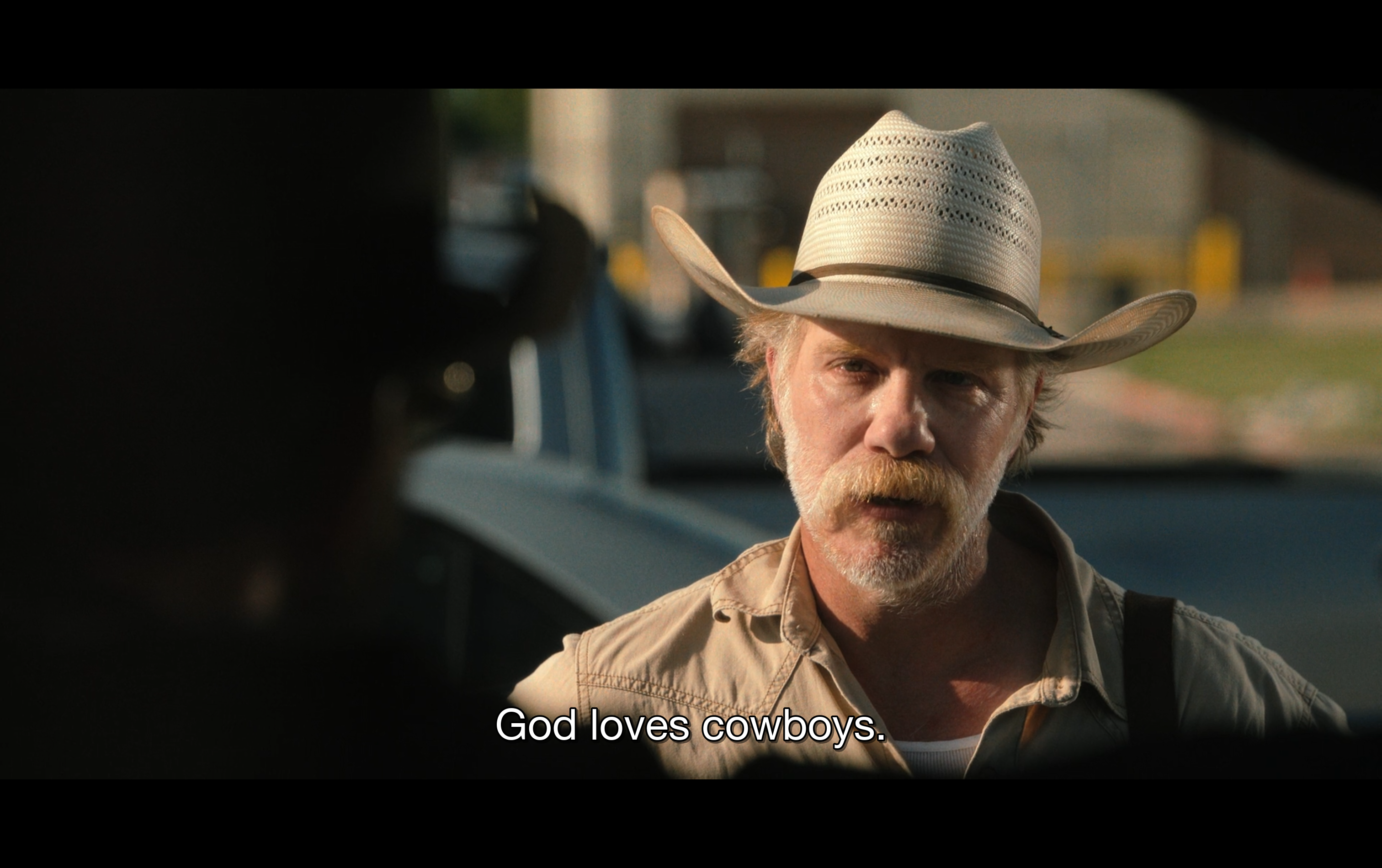
By the time I had got on the Yellowstone train, it was too late. The show was too many seasons in and I had no patience to catch up.
Which is why I intend to catch the Dutton Ranch train early. This show is pure entertainment.
2026-05-29
Lower Value Human Capital
Standard Chartered to replace “lower-value human capital,” cutting jobs “in favor of the machines”
Just logging this for the sheer brazenness of somebody using the word "lower value human capital" in a sentence.
The Vibecession
Is AI Going to Destroy our Lives or Not?
Some insights from Kyla Scanlon's latest
People are living in fear of the economy.
The vibecession, the marked disconnect between economic data and consumer sentiment, is back in the discourse again, with terrific new research from Jared Bernstein and Daniel Posthumus pointing to enormous price level variability as a driver of negative sentiment and Annie Lowrey at the Atlantic advocating for erasing the term entirely and replacing it with the term “permacession.”
I read the 600+ comments on her piece — all of them, plus many on r/Economics. Most relitigated what she’d already granted and what many people grant when the vibecession comes around: that housing and healthcare and groceries are brutal. But the ones who actually engaged her question — why the vibecession exists — kept talking about the concept of economic security, which appears to be defined as a:
- Bounded downside: an illness or layoff can’t erase everything you’ve built
- Predictable floor: you can count on and plan around where you are
- Reward for work: A perceived link between effort and outcome still holding
- Anticipated progress: And a believable path to the next thing: the job, the house, the kid.
The vibecession is complicated, but there seems to have been a structural break in sentiment in 2022, I think largely driven by structural gaps in how people feel connected to their economic reality. Economic data captures a moment, but I think sentiment is capturing people’s concern about their economic future. People can’t save, so of course, they aren’t going to think to positively about the future they can’t save for.
AI and other people
I don't care who you are, there will always be times when hell is other people. Not because other people are horrible – quite the opposite! Other people are wonderful, but boy are they ever stubborn.
Billionaires poured trillions into AI because they are obsessed with the fantasy of a world without people. Mark Zuckerberg would like to replace your on-platform friends with chatbots. Sure, your friends are the reason you're stuck on his platforms, but your friends are stubborn and thus suboptimal. Remember: hell is other people, so while your friends unreasonably refuse to leave Facebook with you and follow you to another platform (this is bad for you, but good for Zuck), they also refuse to organize their social media lives to "maximize your engagement" and thus the number of ads you see (which is bad for Zuck). By replacing your friends with chatbots, Zuck hopes to reinvent social media without the socializing:
https://pluralistic.net/2026/04/17/for-youze/#forever
Billionaires are betting that bosses (and other would-be billionaires) will spend trillions buying AI products, captured by the fantasy of a workplace without workers. They think AI could be the remedy for the ancient, nameless dread that bosses experience every time they contemplate the fact that if they don't show up for work, everything hums along fine; whereas if the workers don't show up, the whole enterprise collapses. Secretly, bosses are haunted by the fear that they're not driving the car, they're strapped into the back seat, amusing themselves with a toy steering-wheel:
https://pluralistic.net/2026/01/05/fisher-price-steering-wheel/#billionaire-solipsism
Four Seasons
The Four Seasons (TV Series 2025–2026) ⭐ 7.2 | Comedy, Romance #tv
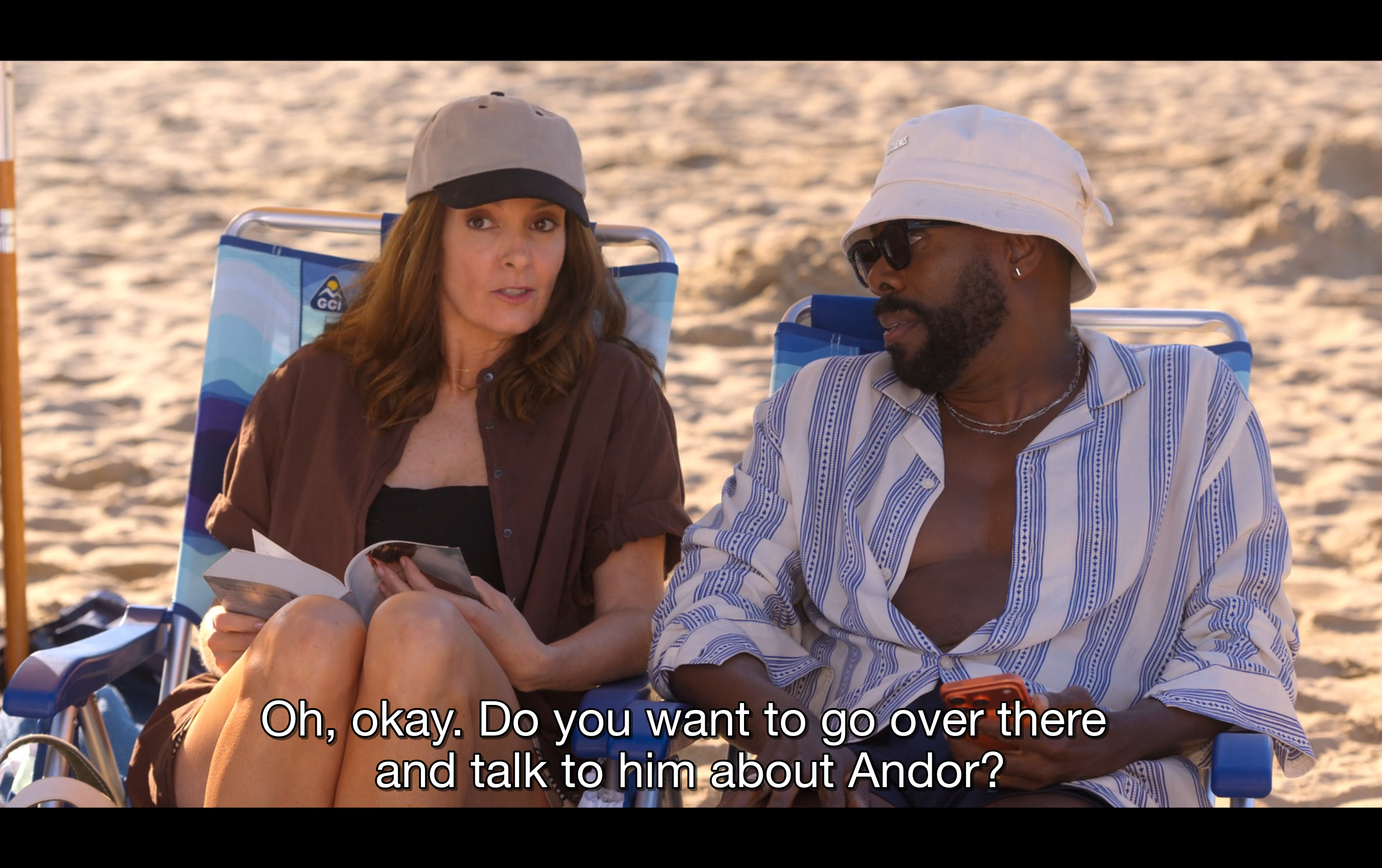
I like this show, but as an Andor superfan this was a bit triggering 😀!
and this