
Daily Log Digest – Week 21, 2026
2026-05-17
Tech Minimalism
In what way if any are you a tech minimalist while maintaining your job/love for tech? | Lobsters
Very relatable thread
Curious what others think about this recently popular lifestyle shift. I love my coding, selfhosting, and useful tools but I’ve found myself moving towards “low” tech solutions such as pen and paper or just micro, iPod, a physical calendar versus all these different SaaS and selfhosted services.
2026-05-18
Toronto Multicultural Slang
The strange, multicultural slang of Toronto’s teenagers #linguistics
This new dialect emerged from an impoverished cluster of public-housing projects in Toronto—namely Driftwood, Shoreham and Jane & Finch (a district as well as a shopping centre). It is known as Toronto Mans. Differing from Canadian norms through features like TH-stopping (saying “dis” instead of “this”), it is defined by rapid, intense speech, or “squawking” as one speaker puts it. It is, a teenager admits, used by gangs or “wannabe gangsters”.
Much of Toronto Mans is borrowed from the languages of immigrants: from Jamaican patois comes “ah lie” (meaning “right?”) and “two-twos” (“being honest”); from Somali there is “kawal” (to “scam”) and from Arabic “wallahi” (an exclamation, “by Allah”). The roots of others like “crodie” (meaning “brother”) and “gerbert” (meaning “immature”) may well be local.
Slang from Britain also packs the dictionary: “peng” (“beautiful” or “great”), “ends” (the area in which one lives), “oppblock” (an area in which one’s enemies reside), “wasteman” (loser), and “mandem” (a group of men). The “Mans” in “Toronto Mans” is a derivative of “mandem”. “We take a lot of inspiration from London,” says one Driftwood resident. “But we mix it up.”
Either way, Toronto Mans is spreading. TorontoTide, a social-media channel, posts videos of teens speaking the dialect. Filmed in Yorkdale Shopping Centre, a fancy mall, these kids boast the loudest screeches. Their Jane & Finch counterparts say they are exaggerating for clout, and that many of them come from nicer suburbs like Vaughan. “There’s nothing going on in Vaughan,” tuts a Driftwood teen.
In Shoreham not everyone is enamoured. A young dad who speaks in the dialect says he will teach his child “proper English first” so they can succeed at work. Another forbids his daughter from using the lingo: “I don’t want to hear that in my household,” he says. What clearer marker of success than parental censure?
Laptop Free Cafes
Can “laptop-free” coffee shops survive in the digital age? - Coffee Intelligence
Here in Berlin, a LOT of cafes have a weekend laptop-free policy which I thought is a great compromise.
“Our main purpose is to give our customers an outstanding coffee experience,” he says. “The share of travellers who come specifically to us for this is over 50%. We love to offer them a seat to enjoy their coffee.
“At the same time, we can see a desire from those working remotely to do so in a cafe.”
While this dual function may seem complementary, it often creates friction in practice. Coffee shops are designed around turnover – not extended occupancy – and prolonged laptop use can disrupt both revenue and atmosphere.
In some cases, the financial impact is significant.
In response, some coffee shops have introduced restrictions on laptop use, aiming to restore balance between hospitality and productivity by effectively driving laptop users out.
Other approaches across the industry include limiting laptops to specific tables, removing power outlets, or restricting WiFi access altogether.
At The Barn, Ralf says that this has taken a structured approach, aiming to accommodate laptop users while also preserving the ambience of the coffee shop environment.
“We therefore started a café-wide policy of restricting laptop users to 1 hour, or we ban it completely on specific days, for instance during busy weekends,” he explains.
Pea Protein Dumping in US
Really interesting video I came across randomly. I have no idea how legit it is, or whether it is a whole lot of propaganda.
Some excerpts from transcript summary
The US is the largest global market for pea protein, accounting for about 70% of demand. However, China has been dumping low-quality pea protein, a byproduct of their pea starch production, into the US market at artificially low prices. This has created a glut of cheap product, undermining domestic producers who invest heavily in infrastructure. The Chinese imports are subsidized by their government, enabling them to undercut prices and attempt to gain market control.
The imported Chinese pea protein mainly originates from peas grown in Canada and Russia, with Russia’s share increasing significantly in 2023. Puris emphasizes that producing pea protein domestically supports US farmers and ensures a secure and resilient supply chain. Maintaining domestic processing capability is critical for food security and industry stability.
New York and Affordability
In a City of Big Dreams, Many Young Adults See a Cloudy Future #nyc
NYC is among the top two cities I have lived in ever, so this breaks my heart
It was around No. 87 when Soban Ali started to lose track of all his job applications.
He had moved to New York City, eager to start life away from the Washington area, where he was born and raised. But seven months after arriving, he was laid off from his job at a federal contractor during last fall’s government shutdown. So he started a spreadsheet: “The Great Job Hunt of 2025.”
He applied to roughly 450 openings. He landed upward of 10 interviews. He still doesn’t have a full-time job.
Now, Mr. Ali, 24, feels guilty telling friends he can’t join them for dinner. He wants to start a family one day, but worries. “I can’t even afford myself, so how am I going to afford someone else?” he said. And he laments that he can’t pursue some of the hobbies that have always brought him joy, such as hip-hop dance. Classes are too expensive: about $25.
“It’s this existential depression and existential dread of, ‘What am I going to do with my life?’” said Mr. Ali, who earns $18 an hour working part-time at an after-school program. That’s just $1 more per hour than minimum wage.
He wonders about five years from now: “Am I going to be making a good, livable income? Or am I going to be flipping burgers?”
It’s a rough time to be a young adult. Young college-degree holders face their worst spring in the U.S. job market since the coronavirus pandemic.
And if headwinds are blowing across the United States, they can feel like gale-force squalls in New York, one of the world’s most notoriously expensive cities.
2026-05-19
Before you move to San Francisco, read this.
Before you move to San Francisco, read this.
Tech didn’t always run San Francisco. There’s a reason we call this industry Silicon Valley. For the last fifty years, most of tech existed forty miles south of here, in Mountain View and Palo Alto and Cupertino.
But tech isn’t the only thing here. If you fly in from Twitter, tech is what you see. It has the easiest front door with its conferences, hacker houses, demo days, group chats and dinner parties. But the other scenes are still here. There are still surfers at Ocean Beach, parents in Noe Valley, a gay scene in the Castro. You can find any of them. You just have to look harder.
Most people don’t look that hard. Instead, they dive headfirst into venture-backed tech. They work in startups, socialize with other startup people, and spend most of their time in the same few neighborhoods. There’s nothing wrong with that. SF is one of the only places on earth where you can do this. The unhappiness arrives when people do this and wonder why they haven’t found the community they came here for.
Modern Sleep
Reading this feels a bit wild to me. It's just hard to imagine things were actually this way
Continuous sleep is a modern habit, not an evolutionary constant, which helps explain why many of us still wake at 3am and wonder if something’s wrong. It might help to know that this is a deeply human experience.
For most of human history, a continuous eight-hour snooze was not the norm. Instead, people commonly slept in two shifts each night, often called a “first sleep” and “second sleep.” Each of these sleeps lasted several hours, separated by a gap of wakefulness for an hour or more in the middle of the night. Historical records from Europe, Africa, Asia and beyond describe how, after nightfall, families would go to bed early, then wake around midnight for a while before returning to sleep until dawn.
Breaking the night into two parts probably changed how time felt. The quiet interval gave nights a clear middle, which can make long winter evenings feel less continuous and easier to manage.
The midnight interval was not dead time; it was noticed time, which shapes how long nights are experienced. Some people would get up to tend to chores like stirring the fire or checking on animals. Others stayed in bed to pray or contemplate dreams they’d just had. Letters and diaries from pre-industrial times mention people using the quiet hours to read, write or even socialise quietly with family or neighbours. Many couples took advantage of this midnight wakefulness for intimacy.
The disappearance of the second sleep happened over the past two centuries due to profound societal changes. Artificial lighting is one of them. In the 1700s and 1800s, first oil lamps, then gas lighting, and eventually electric light, began turning night into more usable waking time. Instead of going to bed shortly after sunset, people started staying up later into the evening under lamplight.
Biologically, bright light at night also shifted our internal clocks (our circadian rhythm) and made our bodies less inclined to wake after a few hours of sleep. Light timing matters. Ordinary “room” light before bedtime suppresses and delays melatonin, which pushes the onset of sleep later.
The Industrial Revolution transformed not just how people worked but how they slept. Factory schedules encouraged a single block of rest. By the early 20th century, the idea of eight uninterrupted hours had replaced the centuries-old rhythm of two sleeps.
Relationship Wisdom
This is ostensibly an article about dating, but as it often happens it actually is an article about relationships
The hardest thing about dating is learning to see people clearly. It requires you to first see yourself clearly, how your biases and desires color your perspective. It’s easy to become enamored with an aspect of a person and blow it up into a grand idea of who they are. There’s a quote attributed to Marcel Proust that goes, “it is our imagination that is responsible for love, not the other person.”
One of the most misleading ideas in dating is that there exists a “right person” for you. I think you can have many meaningful intimate relationships, and if you’re monogamous, then you are simply selecting one person to build a life with. Some might genuinely believe their partner is “the one,” but you don’t need that kind of conviction in order to feel happy and fulfilled. Dating has no end game. We can’t optimize our choice of a partner.
Unfortunately, social media trains our brains to keep filtering for unrealistic specifications. To feel envied is to feel powerful is Instagram’s implicit motto. By feeding us images of people living their best lives, it creates the illusion that everyone’s relationship is more beautiful, nurturing, exciting, and adventurous than our own. The comparison worms its way into our brains, making us tetchier the next time our partner does something that annoys us.
and also some social media wisdom thrown in
When we curate pictures of our life on Instagram, we’re effectively narrating in the third person. I believe it is possible to share what genuinely excites us without performing for an audience. But it takes intentionality and inner attunement, and love, which is by nature an act of imagination, is particularly susceptible to the trappings of fantasy on our screens.
Simone de Beauvoir on Marriage
Simone de Beauvoir on Marriage and the Freedom to Change
In between laying out her resolutions for a life worth living and contemplating how two souls can interact with one another in friendship and love, she observes that “the true self” is discovered through an interplay between the freedom of choice and the constraints of circumstance. But because circumstances are always changing and choices are dynamic processes rather than static products of the will, the self is a moving target. She writes:
A choice is never made, but constantly in the making; it is repeated every time that I become conscious of it.
With an eye to “the great hatreds of love, the irremediable pride, the passionate ruptures, the mutual tortures” that would bedevil every love if we didn’t counter them with “a lot of tenderness and pity,” she considers the tenderness for change — in oneself and in the other — essential to love yet unaccounted for in the fundamental premise of marriage:
The horror of the definitive choice is that we engage not only the self of today but also that of tomorrow. And this is why marriage is fundamentally immoral. Thus, we must try to determine which one repeats our changing self the most often. One must create a sort of abstract self and say to oneself: this is the state in which I find myself the most often; this is what I want the most often; thus, this is what suits me.
AI as the new avatar of American capitalism
AI as the new avatar of American capitalism
So we have AI looming over our withering creative industries, a generation of young people who are angry and disillusioned by the lack of opportunities, and precarity and anxiety nearly everywhere. In exchange, we get a new batch of tech oligarchs, new shady billion-dollar businesses that employ no one at all and use AI to evade consumer protection laws—that pretty unequivocally leave the world worse off in the wake of the founder’s mad dash to personal enrichment—and new tools for the unscrupulous to accumulate wealth at the expense of those still following the rules, whether in stock trading, prediction markets, or even online poker. That and Claude Code.
That’s why the students are booing, I think.2 They’re experiencing AI in realtime as a forecloser of futures; as the cruel new face of hyper-scaling capitalism, as the prime agent moving a world that’s become a deck stacked against them.
Clippers
The clippening TIL about clippers
Clippers are largely anonymous social media accounts whose sole purpose is to rack up views. The accounts take a piece of long-form content — an hourslong livestream, for example, or a podcast — and pull out the most exciting, controversial, or shocking moments. Sometimes the accounts are dedicated to clipping, but companies will also recruit accounts with existing followers. Clippers can be based anywhere in the world (one tech founder who uses clippers has described some of them as “hungry Slovakian teenagers”) while targeting English-speaking audiences.
After clippers get the source material that a brand wants to promote, they cut it down and blast their version into the open web. Hundreds or even thousands of clipping accounts might be sharing similar videos, all in competition with one another. You have perhaps learned about a TV show moment, a celebrity podcast appearance, or a new band via clippers without even realizing it; it just looks like someone sharing something. Clippers do not need to be affiliated in any real way with the subjects they are clipping, and the clipped content does not need to be creative, transformative, or even interesting. It is the cartilage of the internet, the placeholders for the algorithm to suck in and spit out.
For well over a decade, content creators have worked to reverse engineer “the algorithm.” Deploying clippers allows companies to gamble on content at scale, without paying a network of contractors upfront: Why bet once, when you could bet 50 times? Clipping is nothing new, despite the recent discourse around who uses it and why, and whether paying random accounts to share content promoting something is deceptive or manufacturing fake fandom. The reality is that more and more, the social internet is filled with clips, paid and unpaid, that stand in for the full-length podcast, video, film, album, or piece of writing. As online content increasingly becomes abstracted from the original work, what purpose does making the full version even serve?
Converting tech job ads to plain english
The Pulse: Forward deployed engineering heats up again
too real
Here’s what I reckon some of the terms in Google’s job advert will add up to on the job:
- “Founder’s mindset”. No one will provide a spec, and scope creep is your problem to deal with. If your project doesn’t ship, that’s also your problem
- “High-agency”. There are no resources besides your own
- “White glove”. Do not say “no” to anything the customer suggests, even when they should probably listen to your feedback about whatever it is
- “Critical feedback loop transforming real-world field insights into Google Cloud’s future product roadmap”. You will file tickets and a few PMs at Google may read some of them
2026-05-21
High Agency
Opinion | All the Worst People Seem to Want to Be ‘High Agency’
A bit late reading this article, but I mostly logged it for its title.
2026-05-22
Darecation
Who wants to relax on holiday?
TIL - Darecation
“A vacation having nothing to do and all day to do it in,” said Robert Orben, an American comedy writer. Summer holidays have long involved reclining on a far-flung beach. But more tourists are forgoing sun loungers in search of adrenalin-packed pursuits, such as canyoning (scrambling down gorges) and abseiling (descending rock faces). “Darecations” are a top tourism trend of 2026, according to Pinterest, a social-media firm. Around 14% of international travellers are keen on such pursuits, suggests the Adventure Travel Trade Association (ATTA), a trade group.
There is “a shift away from fly-and-flop holidays”, notes Lisa Marçais of Airbnb, and towards “immersive and memorable travel experiences”. As the wealthy amass even greater riches, they have more to splurge on tailored trips. Darecationers say they want to get off the beaten track; many see adventure travel as a status symbol.
Where do Men Go From Here
Where Do Men Go from Here? #masculinity
Full Transcript: Critics at Large | The New Yorker - Where Do Men Go from Here? | Transcript Reader
There are many statistics that show that men are falling behind women in grade school, that they enroll in college in lower numbers, that their career prospects are dwindling, that their lifespans are shorter than women's lifespans. And on top of the stats, we're seeing a very distinctive cultural moment that's been going on for a little while, but is really worth highlighting, which is the world of the manosphere. Men who traffic in an aggressive misogyny and the idea that masculinity is directly about suppressing women, subjugating women, and maximizing their own sexual worthiness by all kinds of cosmetic interventions, surgical interventions, hormonal interventions. This has become a huge part of discourse around masculinity, and I would totally argue, probably not alone, a big part of what is going wrong for men right now.
I loved how the podcast breaks down each of the TV shows and how they reflect the culture.
In terms of culture right now, we're seeing a "two roads diverge in a wood" situation. On one hand, there are cultural texts like the new HBO show Half Man, created by Richard Gadd, which really leans into the violent aggression of the alpha male, investigating where that comes from and what its consequences are. On the other hand, we have something like Heated Rivalry, which asks whether men can get back in touch with their softer side—what might be available to them emotionally, whether boys can cry, and so on. That, I think, is what we're dealing with in culture right now.
I'd take it back, honestly, to the feminist movement—we're still in the midst, not even close to the tail end, of the backlash that came out of the women's liberation movement of the seventies. Some men (not all men—this episode should really be called "Not All Men") felt overlooked, oppressed, and disturbed by the recalibration of gender roles, responsibilities, and identities, and out of that grew a men's rights, men's pride agenda. When I think about that, I think about a fictional character from the late nineties: Frank T.J. Mackey from Paul Thomas Anderson's 1999 film Magnolia. Mackey is a men's rights advocate who gives seminar performances, rising up before a group of frankly lame dudes and enjoining them, as Nomi said, to "respect the cock."
This is the clip being referred to in the para above 👆🏽
And a reference to Fight Club
I'm thinking about another movie from the same year, in fact: David Fincher's Fight Club, which treats the crisis in masculinity less from the position of being cucked by women and more in the sense of the softness that capitalism has begat. It's made men into softened cucks, and the way to confront that, of course, is by going to the underground fight club, where a fist hits flesh, blood spurts, and the man feels alive again—regaining the powers that the late twentieth century has sucked out of him.
Heated Rivalry
Well, we we've talked about our beloved Heated Rivaly, which also takes place in a highly masculinist world of professional sports. And the sports professional sports sphere in which it takes place allows for a kind of, like, old school closetedness that, creates kind of a plot possibilities and tonal possibilities. And these two characters, Ilya and Shane, should by all rights be expected to be Reuben [reference to Half Men], right, to be these killers who cannot kind of accept any sign of kind of, like, softness or or weakness or anything that diverts from kind of alpha masculinity, hyper straight, and so on. And yet, the show shows them exploring exactly that and shows the joy that they find.
…
…The thesis of Heated Rivalry is that you need to let the sunshine in. The the that you need to expose things. You need to be living in the open. Let the world catch up with you. Take the risk. It's worth it not to feel the degrading shame that comes with living in the shadow in the closet.
and the show Adoloscence
A couple of years ago, we also had Adolescence, also from the UK, about a young man who, under the sign of bullying, commits the heinous crime of killing his female classmate—a little girl. Adolescence isn't the opposite of Half Man, exactly, but by situating the problem among children, it felt like it carried this ray of possibility that things could be otherwise, if only we would all change. I think that was very much the point. Created by Jack Thorne, it's been shown in schools in France, the Netherlands, and the UK as an educational text meant to make the youth aware of toxic masculinity—though I'd be curious how that's actually worked out, because I wouldn't recommend making art in the service of educating anyone, certainly not the youth. I respect the youth too much for that. Adolescence was riveting, and it's also didactic, and the same is true of Half Man. There was a female columnist in England who said she thought Half Man should be shown anywhere men are gathered—strong disagree. What's that going to do? The idea that you'll see the consequences of your actions and feel so horrified you change your ways—I find that such an irritating approach to both men and art. Both deserve better.
The Forsytes
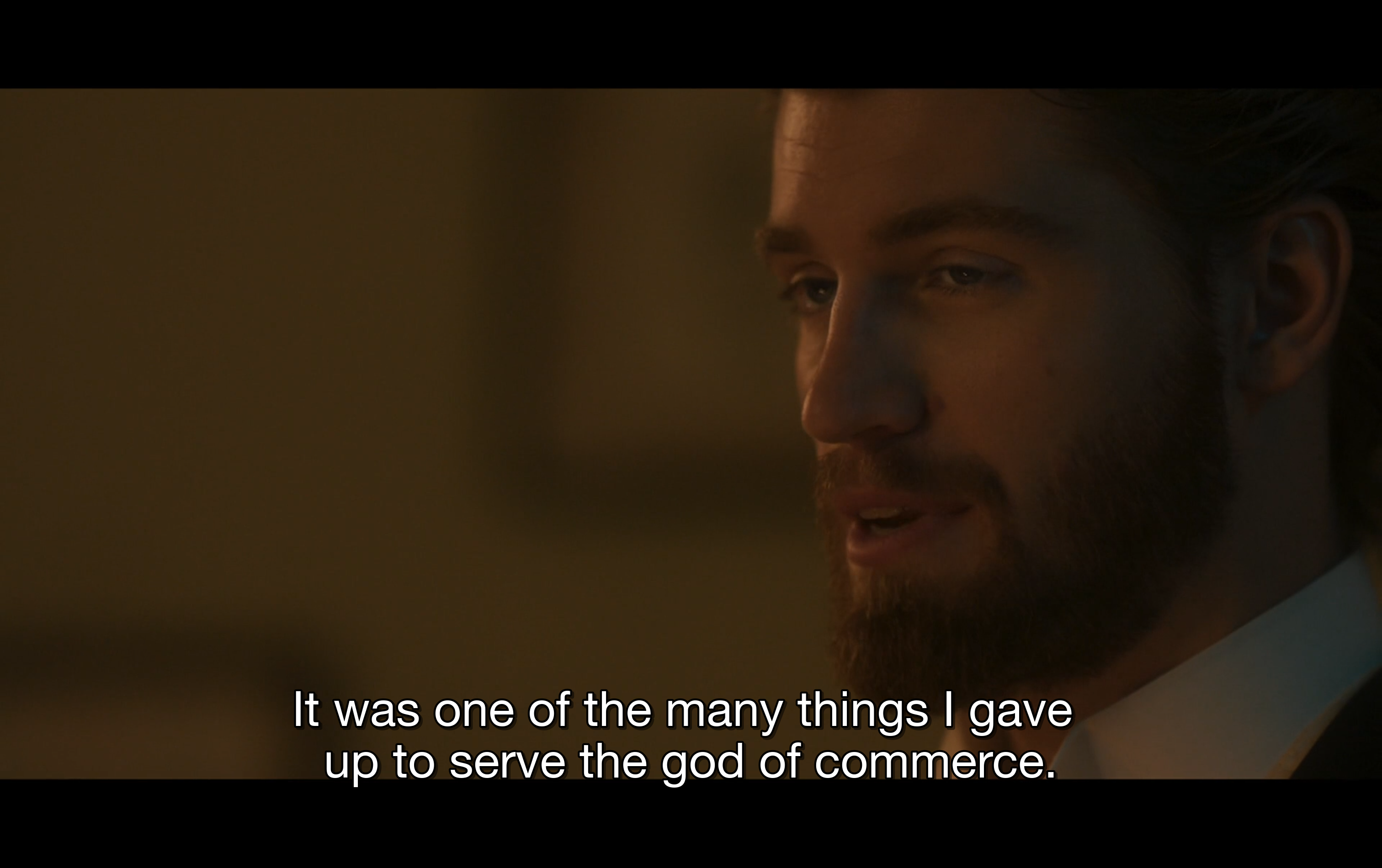 Starting watching this show, and loving it so far.
The Forsytes #tv
2026-05-23
Reading Gap Relationships
Help! My boyfriend doesn’t read
They’ve now been broken up for over a year, and while there were many reasons for the split, April attributes at least some of it to the reading gap. “I remember feeling really lonely at times because I would be excited by something I was reading, and I was just never able to have conversations about it with him,” she recalls.
TIL 👇🏽 women read books and men listen to podcasts (fwiw, I do BOTH, and quite extensively as to - so where does that leave me I wonder 🤷🏽♂️😂!)
Whether it’s through restrictive gender norms or marketing by the book publishing industry, we have, over time, been conditioned to think of reading for pleasure as a feminine hobby. Even when it comes to non-fiction, which men have typically preferred, they’re getting their information elsewhere: men aged between 25 and 34 now make up the largest audience for podcasts. With the reading gap between men and women continuing to widen, it’s not surprising that reading gap couples exist. But how much should these gaps actually matter in dating, and does a literary mismatch really have to be a dealbreaker?
Exercise Addiction
For some exercisers, a healthy habit spins out of control
many such cases
The unhealthy pattern commonly described as exercise addiction (or exercise dependence) can begin unremarkably enough. At first, a person might decide to run just a little more or lift a little heavier. The exercise routine steadies them emotionally. Someone with anxiety, for example, might start adding an extra 20 minutes to their training sessions and feel immediate relief. The routine becomes the anchor that holds the day in place. But over time, the anchor grows heavier. The workouts start to be seen as the only reliable way to manage emotions, stress and frustrations. Tension builds, training provides relief. The routine hardens.
Typically, someone who has developed an exercise addiction plans their life around their workouts. They might wake before dawn to train because the idea of missing a session feels intolerable. Taking a rest day, usually a welcome pause, breeds irritation or guilt. The run or bike ride starts to feel like an obligation that must be met to regain a sense of equilibrium. A major motivation to exercise becomes avoiding withdrawal symptoms – such as irritability, disturbed sleeping patterns, or anxiety – that one experiences without it.
Eventually, compulsive exercise can have adverse effects on a person’s physical, psychological and social wellbeing. The runner who keeps adding ‘just a few more kilometres’ may find himself treating minor injuries and fractures that never quite heal. The teen who doubles up on gym sessions could struggle with persistent fatigue. Other compulsive exercisers might frequently decline social invitations that interfere with their routine, frustrating friends and family. The exercise routine can reshape and shrink the rest of someone’s life.
Letting Friendships Die
This is what I’ve learned. Some friendships should die as we change and grow. I’m not meant to maintain every connection forever, while the guilt of letting relationships fade is often less painful than the slow suffocation of maintaining them. When I stopped propping up every connection, I discovered which ones had actual life – the ones that can handle silence and absence, that don’t require constant performance. Those are the friendships worth having.
Real friendship doesn’t need the artificial respirator of scheduled meetings. It can handle the messiness of people who sometimes don’t text back, or disappear for weeks, or show up unexpectedly on a Wednesday with chai and nowhere particular to be. And it can survive the people we become – because we do become different people, and not every friendship is meant to make that crossing with us.
Frantz Fanon's Wretched of the Earth
This is one of the best overviews of the book that I have ever come across. It was convenient that I was listening to it while going about the house taking care of stuff, because I am not sure if I would have had the patience to read through it.
Having listened to it, I did read through the transcript: Overthink - Closer Look: Fanon, Wretched of the Earth | Transcript Reader
Ellie, today we're going be talking about a text that is really important in philosophy, but also in some ways very unique, and that is Franz Fanon's The Wretched of the Earth. It is a wonderful text that has been quite influential in a number of fields, including political theory, decolonial philosophy, philosophy of race, phenomenology, psychoanalysis, you name it, the text has left its mark. And the reason that I say it's also a unique text is because it's a text that was written at the very end of Fanon's life when he was dying from leukemia in the 1960s. And so it is Fanon's final word to the world. And, the text is written both as a work of philosophy, but it also reads very much like a manifesto of sorts, which is why it doesn't really have a lot of references or citations.
And so that makes it somewhat challenging from the standpoint of a scholar.
I think one of the important things to mention about this text is that it was banned in France upon publication. And this is due to one of the things that we're going be talking a lot about today, which is its advocacy of violence. I mean, Fanon thinks that decolonial projects require violence that was obviously very threatening in France at the time.
Yeah. It tells you something about the place that it occupies in the contemporary philosophical landscape, but I also want to say that it was already that influential already 50 years ago back then, because there is in the foreword by Homi Bhabha, a passage where Homi Bhabha talks about just how many revolutionary movements in the 1960s and onward were influenced by this particular text, which has been called the Bible of Decolonization.
But even beyond that, Fanon says, even if we accept the colonizer colonized distinction, at some point we also have to go beyond that because even that is not granular and nuanced enough, especially when you consider that in a colonial setting, you can have a lot of people who are members of the colonized race or nationality, but who are complicit because either they work for the colonial rulers or because they get some kind of economic benefit. So you can be a member of the colonized and still have a vested interest in the maintenance and the perpetuation of the system of colonialism. And similarly, he says, it's in theory possible to find a member of the colonizing group who at some point turns on the colonial regime and becomes an ally to the decolonial cause.
And this is where he takes us from maybe a purely, let's say, destructive interpretation of violence to a more constructive understanding of violence, where violence actually achieves something positive precisely at the moment that it seeks the annihilation of the colonists. And I really love the way Fanon puts this. He says, What violence does for the colonized is it restores them their basic dignity and humanity of which they have been robbed by the colonizing force.
And so with violence, see actually, a restoration or a recreation of the very humanity of the colonized.
Yeah. And I think also what's powerful about these case studies in part is that they show that Fanon is not offering in this text a celebration of violence. I think the fact that he offers a defense and a justification of violence sometimes gets misunderstood as like, oh my God, he loves violence. And no, if anything, I think what these cases really show are the tragedies that violence wreaks on individuals. But as you mentioned, David, those individual tragedies speak to broader social systems.
And so I think his, I read his point about we have to fight violence with violence as somewhat an expression of resignation and compatible with the acknowledgement that violence is a tragedy.
So Fanon describes this post colonization period as requiring the development of a national consciousness because that national consciousness doesn't exist just in virtue of overthrowing the colonial power.
He says at first, it's just a crude empty shell. And 1 of the big obstacles to developing a national consciousness is a tension between the colonized bourgeoisie and the colonized proletariat. He says that the elite and the masses don't really have a lot of practical ties. You know, the elite or the colonized bourgeoisie are accustomed to being a lot closer actually to the colonizers than they are to the other colonized. And so there has to be a long process of development of national consciousness, which then he says leads to a development of social consciousness and education has a really big role there.
And he says, even if you manage to overcome that problem, which is a practical one of creating the infrastructure that is a precondition for a nation state, then you have a second problem, which is that if the nation state that you decide to create really tries to embody this new humanism that is more collective, more socialist, and more communitarian, you have to now face the danger of other already existing nations putting pressure on you not to go down this socialist communist path. And so it's not as if the kind of country that people create is not going to be subjected to new pressures once that country enters into the international sphere, right? Like that's what we know has happened throughout the twentieth century, that whenever any country challenges the hegemony of capitalism, that country is squashed by an alliance of capitalist nation states. And so I say that only to underscore that he is painfully aware of just how difficult the path ahead is and to avoid this impression that violence will bring about a fully formed new nation from one day to the next.