
Choosing Curiosity
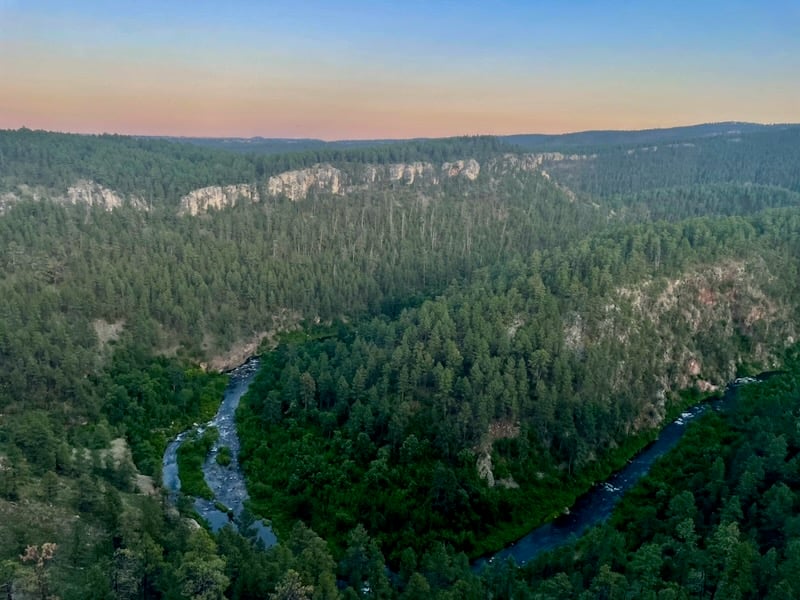
One of the pleasant surprises of my sabbatical so far has been spending time with a few scientists and naturalists who are really into their work.
During our stay at Casa Adobe in Costa Rica, I tagged along as a graduate student led a couple of groups of visitors through the community. We walked around the neighborhood before cutting through an old coffee farm and into a river valley which has been degraded by an industrial landfill. The young man casually described the interconnections between the neighborhood and surrounding ecosystem before showing us the variety of native trees he and his community have been planting along the river and what specific benefits each of them provide to their habitat.
Later, during our week on the Pacific coast, our family spent a day at Manuel Antonio National Park. We got up early that morning so that we could meet our guide when the park opened at 7:00. We wanted the chance to see as much as possible before the heat of the day drove the creatures deeper into the forest. Despite how regularly he leads people through the park, our guide couldn’t have been more excited. Each time we saw another insect, frog, or sloth, he began sharing quickly and quietly the seemingly endless amount of information he knew about whichever species he’d spotted for us.
I spent this past week in the Black Hills of South Dakota surrounded by geologists, ecologists, biologists, and their students at the Wheaton College Field Station. I’m not a scientist, not by a long shot, but it was delightful to listen to conversations I could just barely keep up with, including a particularly great explanation about the sex lives of native freshwater mussels. I visited the sustainability class which has been studying at the station throughout the summer and answered a few questions about how our congregation has tried to incorporate ecological justice into our discipleship to Jesus. The students’ obvious desire for their churches to more proactively care for creation made me hopeful.
Something all these people share is an obvious and genuine curiosity about the world. They each know far more than I do about the natural world, and not just about their particular areas of expertise. The stories they’ve told me about their research – dolphin observation in Chile, geological mapping in the Andes, fisheries research in Africa’s deep-water lakes – have always included moments of wonder. These new friends are quick to acknowledge how much they don’t know, often in great detail. But these admissions of ignorance are simply opportunities for more curiosity. More wonder.
There’s nothing new about noticing the persistence of curiosity in the scientific fields. Neither is it novel to notice how few of us non-scientists retain a commitment to wonder as we move past our years of innate childlike curiosity. Still, experiencing these small communities where curiosity is expected, encouraged, and honored has made its absence in the places I spend most of my time obvious and strange.
It’s been very hot during my visit to the Black Hills and rain has been scarce this summer. I’m driving back to Chicago where thick smoke from Canadian wildfires have made it unhealthy to go outside. Meanwhile, central Texas is being devastated by record-setting rainfall. Despite these obvious manifestations of climate change, it’s my experience that most of us aren’t particularly interested. Few of us seem to wonder about the ways our world has been impacted by our war-making and wealth-hoarding. Even fewer of us appear to be curious about how we might live with greater care for this aching planet.
That sounds judgey, doesn’t it? I wonder, though, if our collective lack of curiosity is less a result of individual choices than it is a product of a society which thrives on distraction. The industries and corporations which profit from destruction also benefit from the diversions which capture our attention. The endless hours sacrificed to our screens provide information and entertainment at, I suspect, the expense of our sense of wonder. And what about curiosity, when our questions can quickly be resolved by a consultation with a chat-bot? We’re left with lots to say about the latest political corruption, celebrity gossip, or sports intrigue while remaining mostly ignorant about the human and non-human neighbors with whom we share our homes.
One of the results of this sort of inflicted distraction is that when a flesh-and-blood crisis becomes terrible enough to arrest our attention we quickly become overwhelmed. Because we’ve not been alert to the subtler, closer opportunities to lovingly repair our communities, we lack the imagination for the practical and proactive. Along with curiosity, distraction has stolen our agency too.
But if our curiosity has atrophied under the influence of greed-fueled distraction, my scientifically curious companions this summer are a reminder that our situation doesn’t have to be permanent. Wonder can be reawakened. We don’t have to settle for the twitchy distractions fed to us by corporations and their algorithms.
We can do this by setting aside our screens. Leave the phone at home occasionally. Trade one of your shows for a few daily minutes with a book. Schedule a regular evening walk around the neighborhood. If much of our distracted state can be traced to the screens surveilling our every move, we can foster the conditions for attention simply by turning away.
And then turning toward. There is so much to be curious about in this strange and magnificent world. Much that is worthy of our sustained attention. I’m reading a book about oaks and am amazed at the diversity of lives these common trees sustain in neighborhoods throughout this continent. I spotted my first black-headed grosbeak while at the field station and heard western birdsong unfamiliar to my Midwestern ears. I took out my sketch book and drew (badly!) a few times. I flopped into a chilly reservoir and floated beneath an unbothered osprey perched 20 feet above the shoreline.
These particular acts of attention may not arouse your curiosity and that’s OK. With just a bit of spaciousness your gaze will fall on your own fertile places of wonder. A few quiet minutes at the beginning of the day or a weekend afternoon away from notifications and alerts or an uninterrupted conversation over a good meal… our capacity for wonder doesn’t need much to be revived.
“Attention, taken to its highest degree,” wrote Simone Weil, “is the same thing as prayer.” I’m not sure prayer requires anything as impressive as the “highest degree,” but Weil is right that prayer requires attention. So as we foster the conditions for curiosity, we shouldn’t be surprised to find that our reawakened wonder nudges us back to its Source.
Reading
Whereas Black Americans could reasonably never want to touch plants again because of their association with trauma, our heritage of Black botanical wisdom has been critical to advancing agricultural practices and associated agricultural-based wealth in America, and reclaiming our expertise is a feasible–I would argue essential–part of our fully embracing our bountiful and full history and legacy in America, and beyond.
Beronda L. Montgomery, When Trees Testify
The View From Here
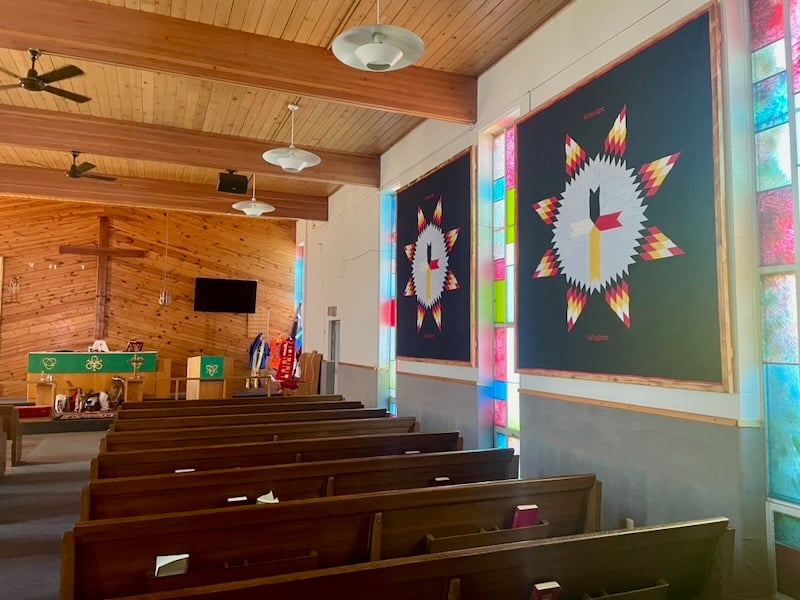
One of the highlights during my week in the Black Hills was spending a morning with Pastor John Old Horse at Woyatan Lutheran Church (a “traditional Lakota congregation in Rapid City, a ministry by and with Lakota people”) learning about their community engagement work. I’m still on sabbatical, but it was impossible not to think about the things our church’s nonprofit organization could learn from this amazing community.


