The OctoPost: Many Meetings
Cephalopod News
It’s cute, it’s blue, and it lives more than a mile underwater.
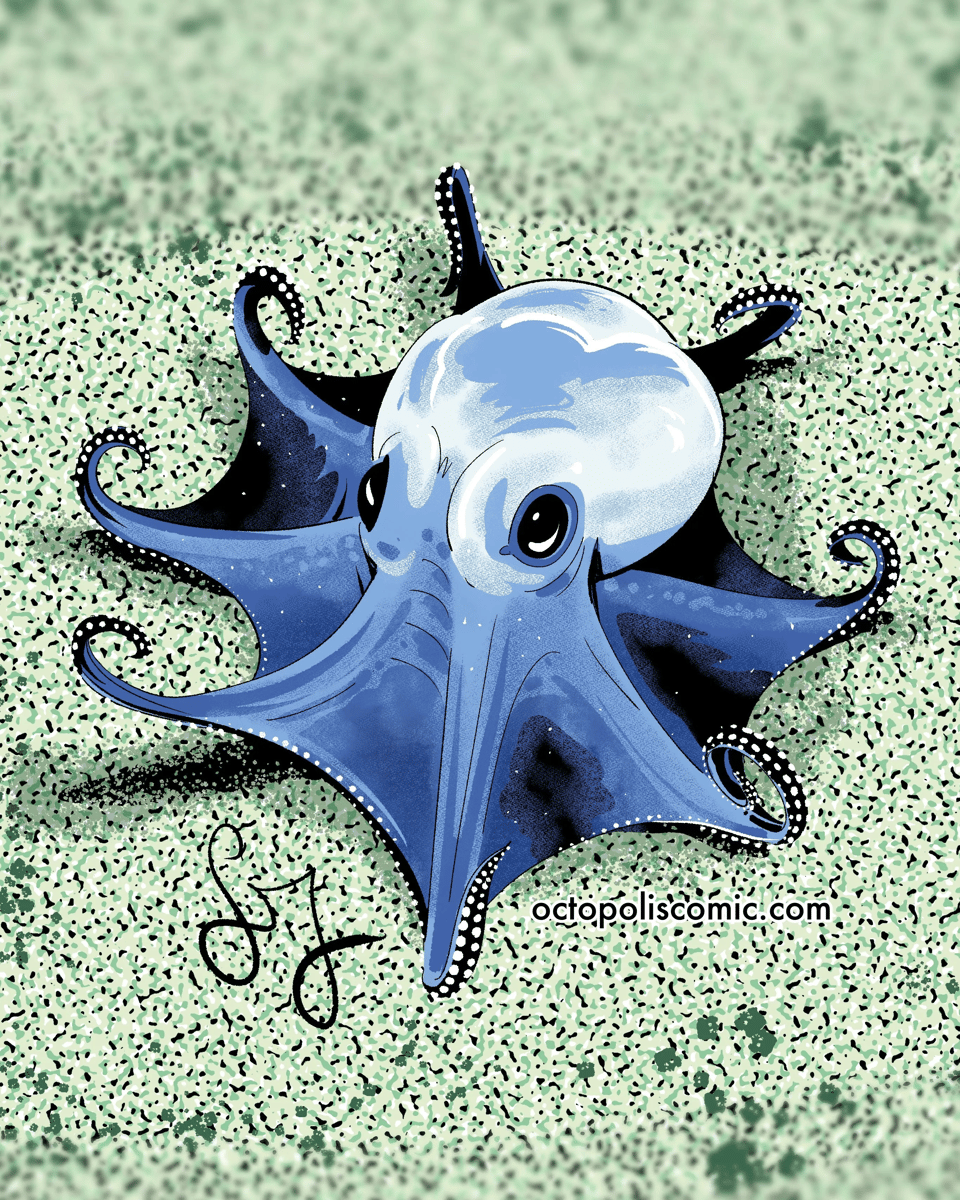
It’s Microeledone galapagensis, a species that was discovered in 2015 but only just received a full scientific description and a name. This is typical for new species, as it can take a long time both to connect a specimen to the experts who can study it and to conduct the study itself. Scientists also need to see an animal’s internal anatomy in order to describe it as a new species, but they didn’t want to chop up their singular specimen. They decided to use a non-destructive CT scan:
With CT imaging, thousands of X-rayed slices of an object are digitally compiled to create a 3D model of that object, inside and out. They can reveal what’s inside of an object without cutting it open. In the case of the little blue octopus, the researchers were able to see fine details of its internal organs, including its mouth, that helped provide the information needed to declare it a new species to science and suggest where it fits among other octopods.
This is fantastic from the point of view of scientists, who now have the inside scoop as well as an intact specimen to archive, but I can’t help reflecting that it’s all the same from the point of view of the dead octopus. I wonder if it might be possible one day to conduct scans in situ on a living organism, who would then be released to live out the rest of its life.
On the other side of the planet, a UK filmmaker produced a delightful four-minute documentary about the country’s recent abundance of octopuses, called “Bloomin’ Octopus: A Tentacular Spectacular.” (I do recommend it, but be warned there is a brief scene of octopuses being cooked.)
Meanwhile, out of the wild and into the lab, researchers successfully trained three octopuses to locate prey using a mirror. Initially, all the octopuses tried to go after the reflection of a crab, but after 10-12 trials they figured out the mirror is a tool that indicates the crab’s true location. As the authors explain,
…octopuses in this study were able to extrapolate the location of a future reward that was not along the line of sight based on what they saw in the mirror…representing the first evidence of this capability in octopuses, and, to our knowledge, in invertebrates.
My News
Last week I went to the east coast of the US to meet a plethora of amazing entities: authors, scientists, and cephalopods!
On Tuesday, I returned for the first time in many years to Woods Hole, an epicenter of marine science and home to two powerhouses of research: the Woods Hole Oceanographic Institution (WHOI) and the Marine Biological Laboratory (MBL). Michelle Cusolito, author of a kids’ science book about the submersible Alvin as well as many other awesome titles, showed me around WHOI.
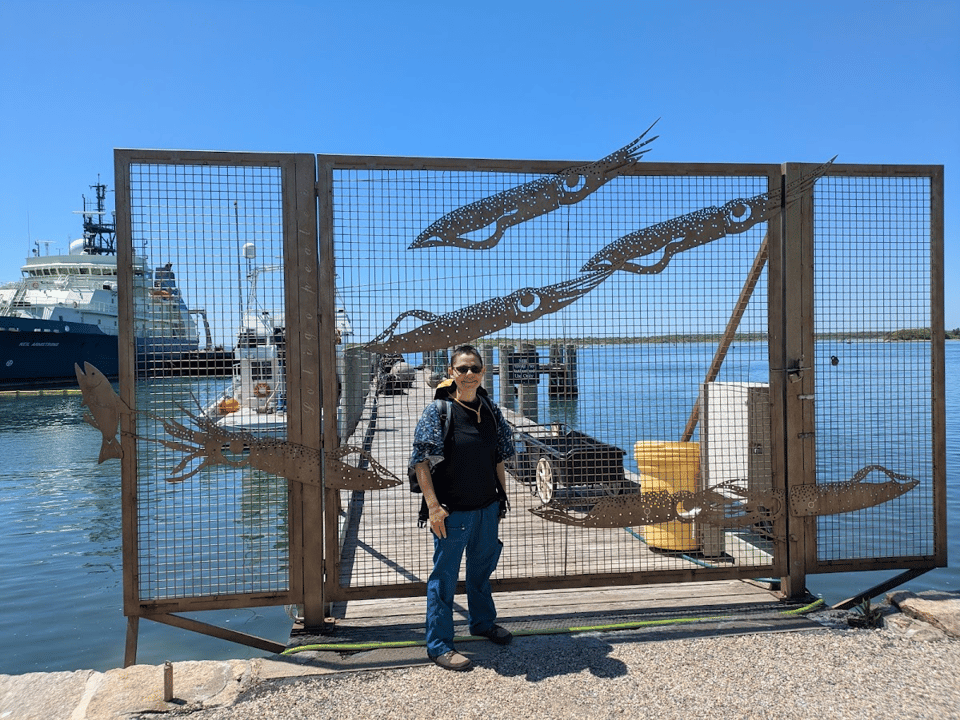
Then I took us to the MBL for a lovely visit with cephalopod camouflage virtuoso Roger Hanlon. While he was giving us a tour, we ran into another of my favorite scientists, Carrie Albertin of baby squid fame, giving a tour to a different group. I didn’t know any of that group, at least not until Thursday…
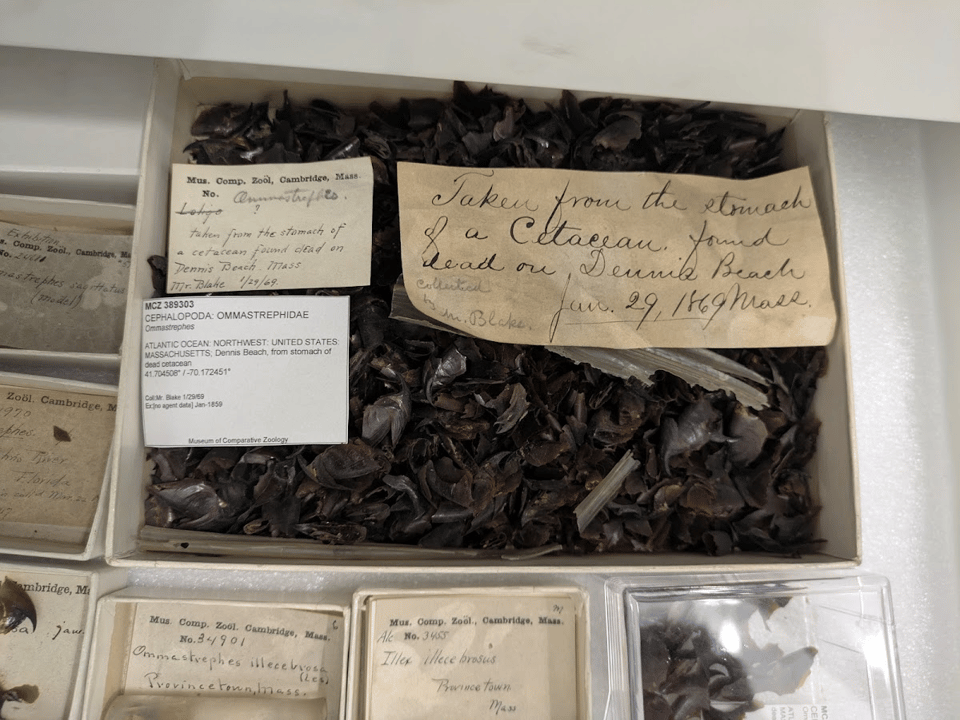
…when I met some curators at the Harvard Museum of Natural History who’d also been in Woods Hole on Tuesday, and turned out to be the very group Carrie had been showing around. Curator Jennifer Trimble kindly introduced me to the museum’s malacology collection!
Finally, just before jetting back home, I was lucky enough to connect in person with Sy Montgomery, whose writing has inspired me for many years!
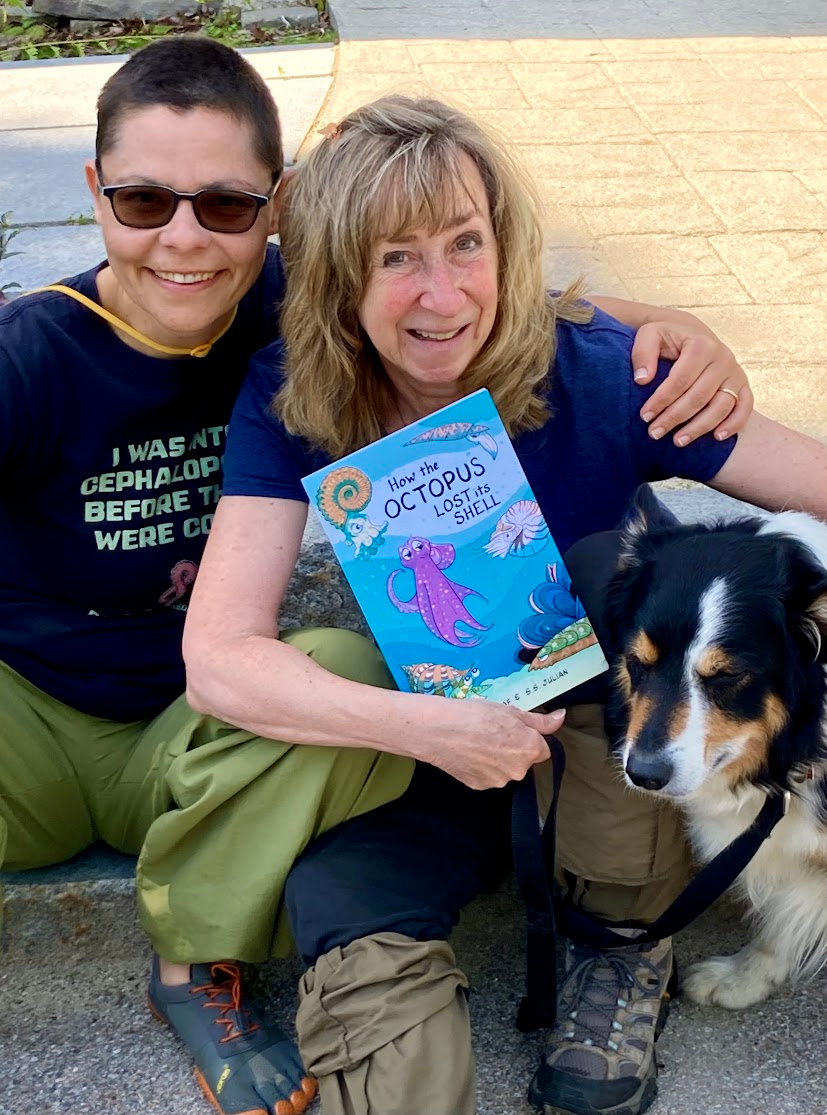
Up next: I’ll be at San Diego Comic-Con with Sam Julian and Josue Cruz for our popular “How To Draw An Octopus” panel, on July 25th at 1:30pm in the How To Room.
Funny Pages
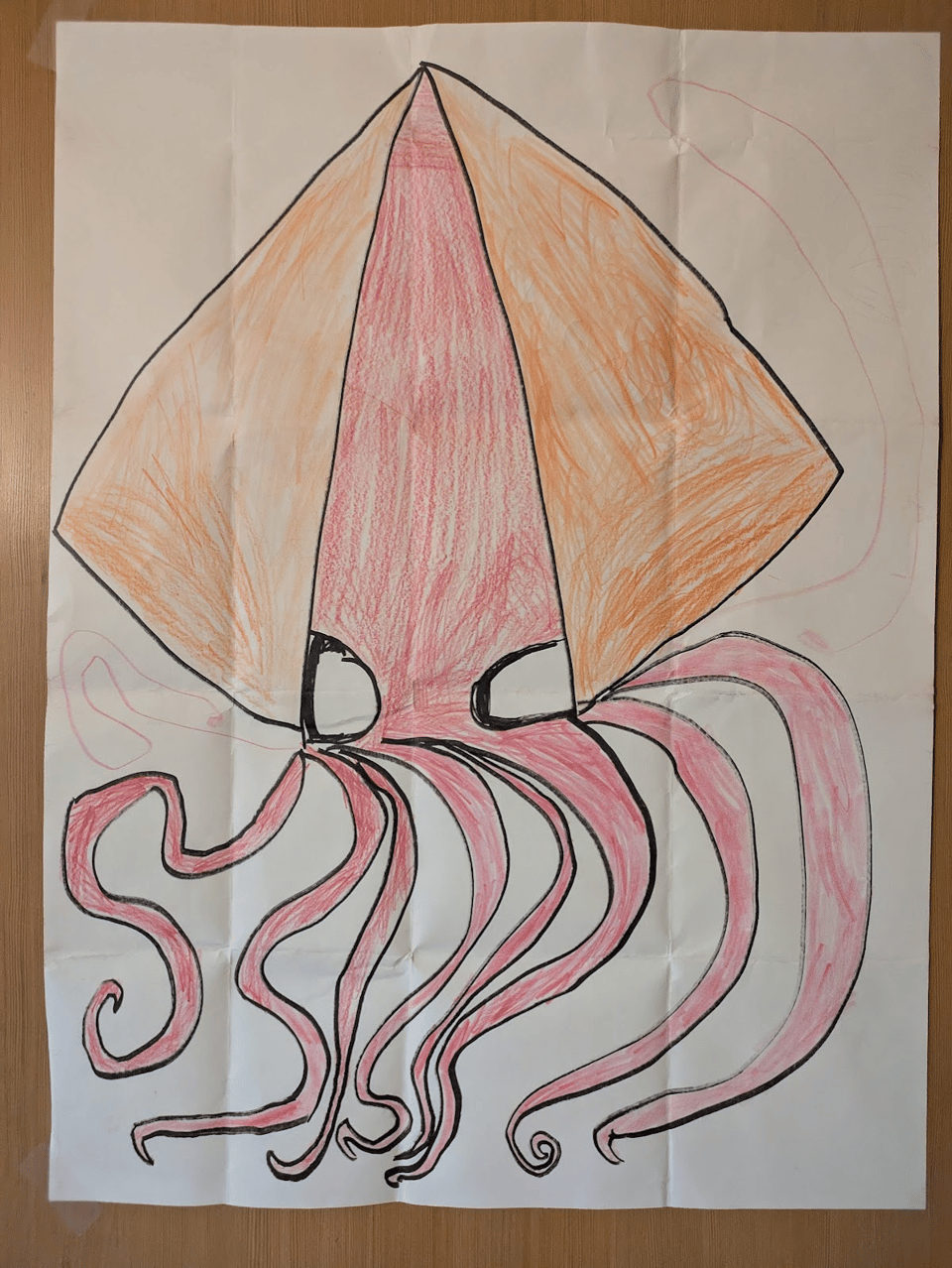
I’m so proud to share some guest art today! In Boston I met an amazing cephalopod-obsessed seven-year-old fan, who gave me this beautiful poster. We talked about cephalopods for over an hour and could have gone longer! He and his parents gave me permission to share his art.
Add a comment: