The OctoPost: Parasites and Pianos
Cephalopod News
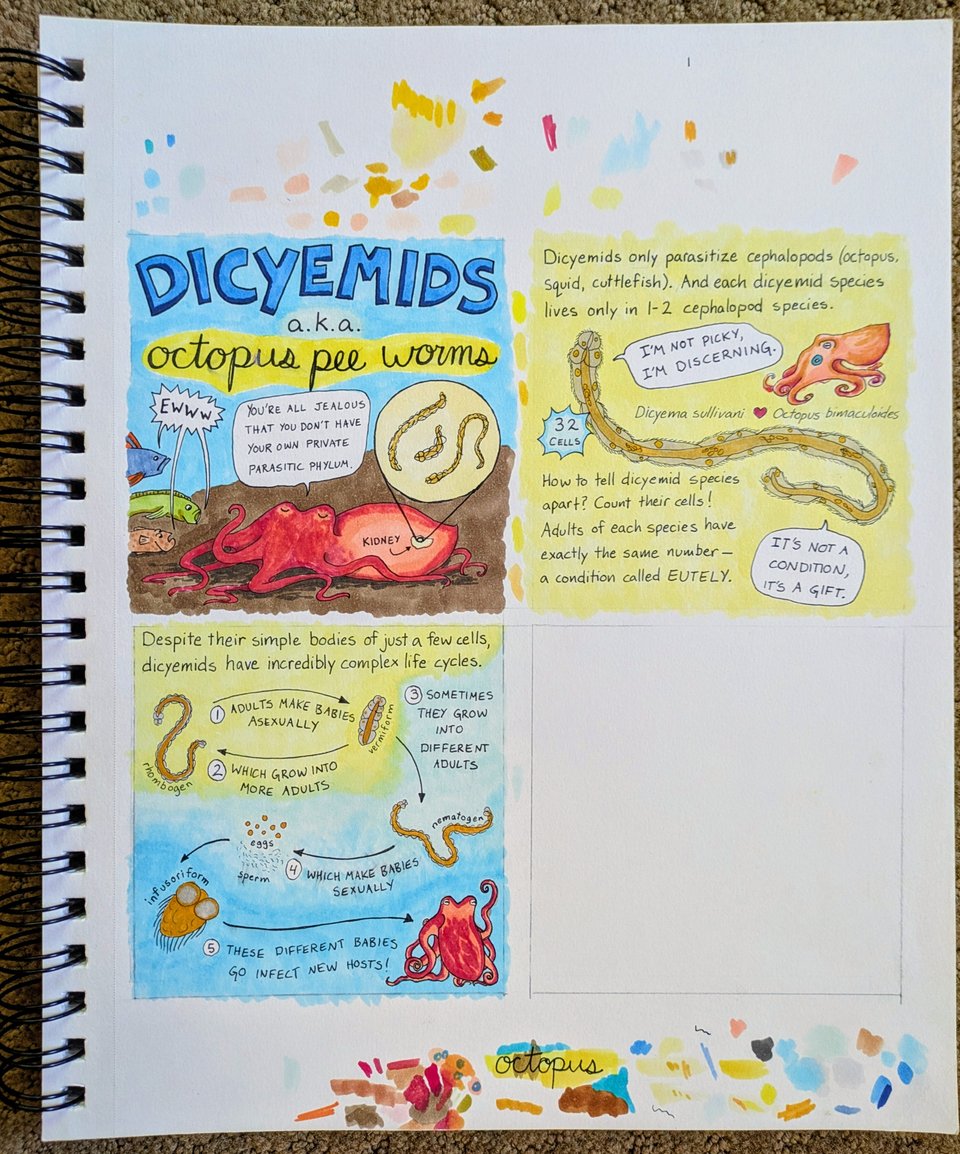
New research is giving me a kick in the pants to finish my dicyemid comic! It turns out there may be wayyyy more species of octopus pee worms than anyone knew. Typically scientists have used anatomical differences to distinguish species, but dicyemids are so anatomically minimalist there aren’t many differences to find. Their DNA, though? That’s got differences galore. For example, the four anatomical types of dicyemid found in common cuttlefish are comprised of forty-six distinct genetic types! They can’t be called species without further analysis; still I think the cuttlefish deserves an award for renal diversity.
I’ve been hearing about “octopus-inspired robotics” for decades, but the similarities between soft robots and living cephalopods are often superficial. Now for the first time suckers containing sensors and processors have been integrated into a robotic arm. This actually lets it behave like a real octopus arm. As reported in the Brighter Side:
“By integrating sensors and signal processing directly into the suction cups, the arm reacts to contact in real time and precisely, without relying on centralized control,” said Emanuela Del Dottore, first author of the study.
In sadder news, scientists have already shown that an elevated carbon dioxide level affects the behavior of bigfin reef squid. Now, they’ve also found that this level (which Earth is predicted to reach by 2100) causes squid to grow much smaller brains.
I’m feeling buoyed up, though, by Elizabeth Preston’s The Creatures’ Guide to Caring: How Animal Parents Teach Us That Humans Were Born to Care. If you liked Nursery Earth, you’ll love this book, which looks at many of the same topics from the parent’s side instead of the baby’s. Octopuses get several shout-outs!
My News
July 25th at 1:30pm: “How To Draw An Octopus” panel with Sam Julian and Josue Cruz at San Diego Comic-Con
October 17-18: Lectures in Okinawa, Japan—details to come!
Funny Pages
While hanging out with musicians I happened to be thinking about cows (for reasons), so I asked what would happen if you could milk a piano, and my husband suggested the possibility of sour notes. He now regrets making that suggestion.
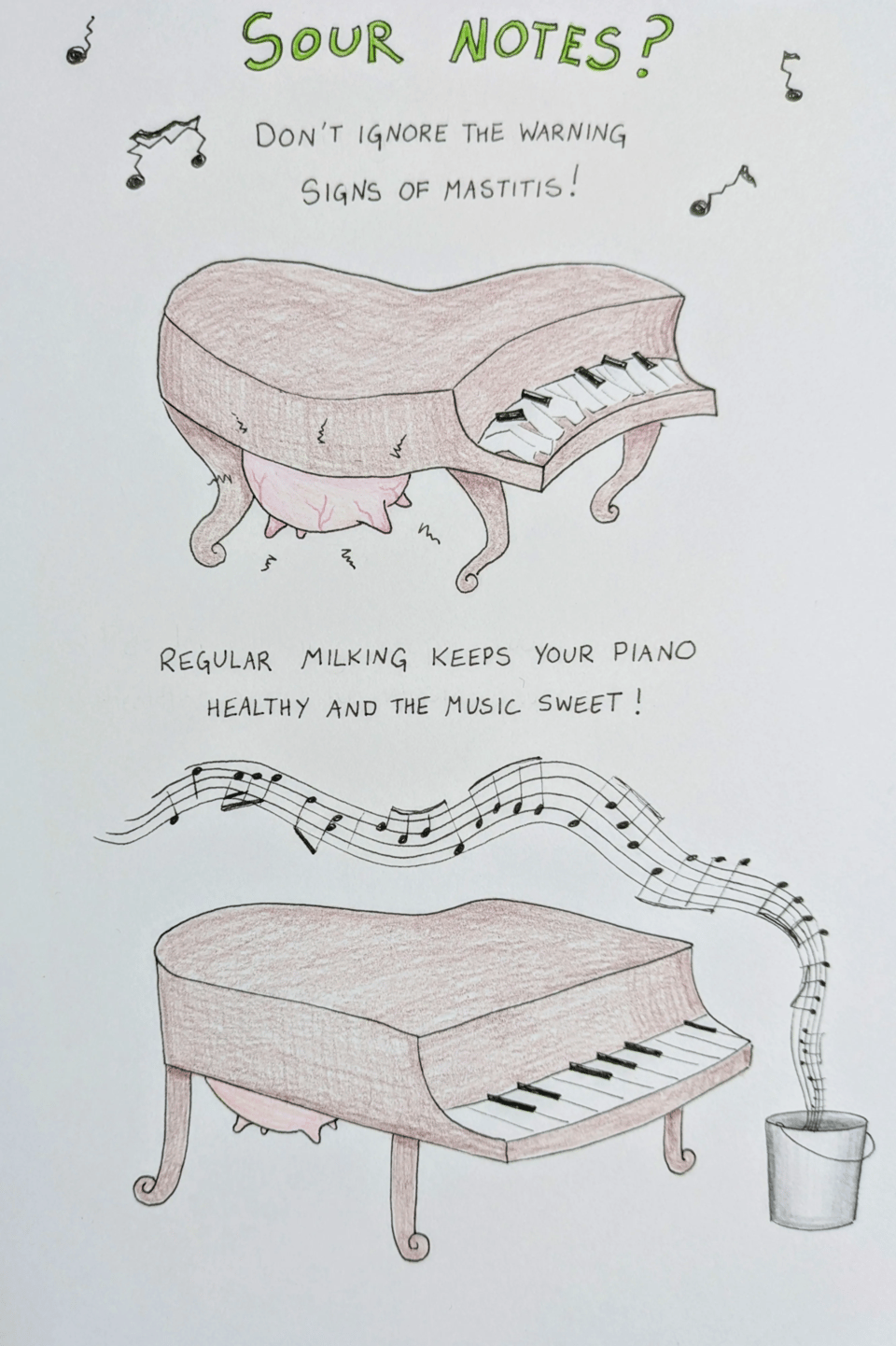
I’ve always considered this kind of thing humor, but it’s come to my attention that some people consider it horror. Thus, a survey:
Add a comment: