My Favorite Books I've Read Lately
My novel Lessons in Magic and Disaster just came out in paperback! You can get a signed copy from Green Apple.
My Star Trek comic, Zero Point, comes out mid-October, but your local comic store might not have a copy for you unless you tell them by Sept. 7 that you want one.
I’m heading to Worldcon! I’m on some panels, but also if you want to hear me read from my new novel about time-traveling vampires, come to my reading on Monday at 12:30.
We’re doing another Bookstore and Chocolate Crawl on Sept. 19!
More Books I Love Right Now
Here’s the second in a series of book-review roundups in this newsletter. (Here’s the first!) I’m not only going to review science fiction/fantasy books, but also other fictional genres and even some non-fiction. Also, some of the books may be older releases that I finally got around to reading. With that out of the way…
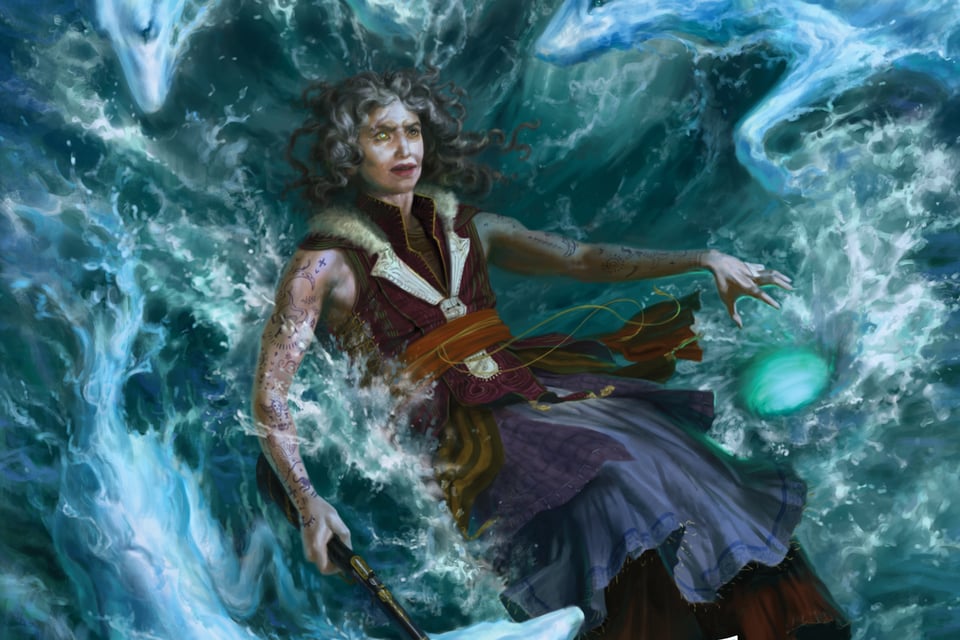
Pasha the Storm by Linda H. Codega
I enjoyed Codega’s Motheater a whole lot, so I was pumped for this secondary fantasy about a legendary pirate queen, long thought dead, who is strong-armed by a discredited aristocrat into joining a quest to kill a supernatural whale. And this book is even better than Motheater — thrilling, expansive and very horny.
Codega’s worldbuilding is incredible and the little details of sailing and naval combat from the Age of Sail are incredibly well realized.
Pasha, meanwhile, is an example of a type of protagonist we don't see often enough: the saucy, flirty, bawdy older woman who has Seen Some Shit and is both tortured by her past and kind of a lot. Atle, Pasha’s captor and eventual love interest, is an uptight enby whose aristocratic swagger hides a lot of insecurity and a desire to do justice. The larger stakes sort of hang over everything.
Subscribe now! ! ! ! !!!!Codega creates a super compelling magic system that involves a deep connection with "eikons," which are a sort of preserved god essence — people gain power from their connection to a ship or a place, allowing them to affect their surroundings in dramatic ways. Over time, the "eikonic" magic starts to feel like a version of personalism, or "l'etat, c'est moi": the evil Queen Thivaldís has the magic of her whole realm, while Pasha has the magic of her ship and the surrounding sea. The politics get a bit murky and sequences from the POV of the queen are compelling because she's such a thrillingly fucked up character, not because of the underlying political shenanigans. Still, the Queen and Pasha form an interesting counterpoint in how they use their power (and how power uses them), and I’d definitely read the heavily-telegraphed sequel.
All in all, Pasha the Storm is thrilling and intensely fun, with some of the best action I've seen lately. This book does not fuck around. Definitely pick this one up!
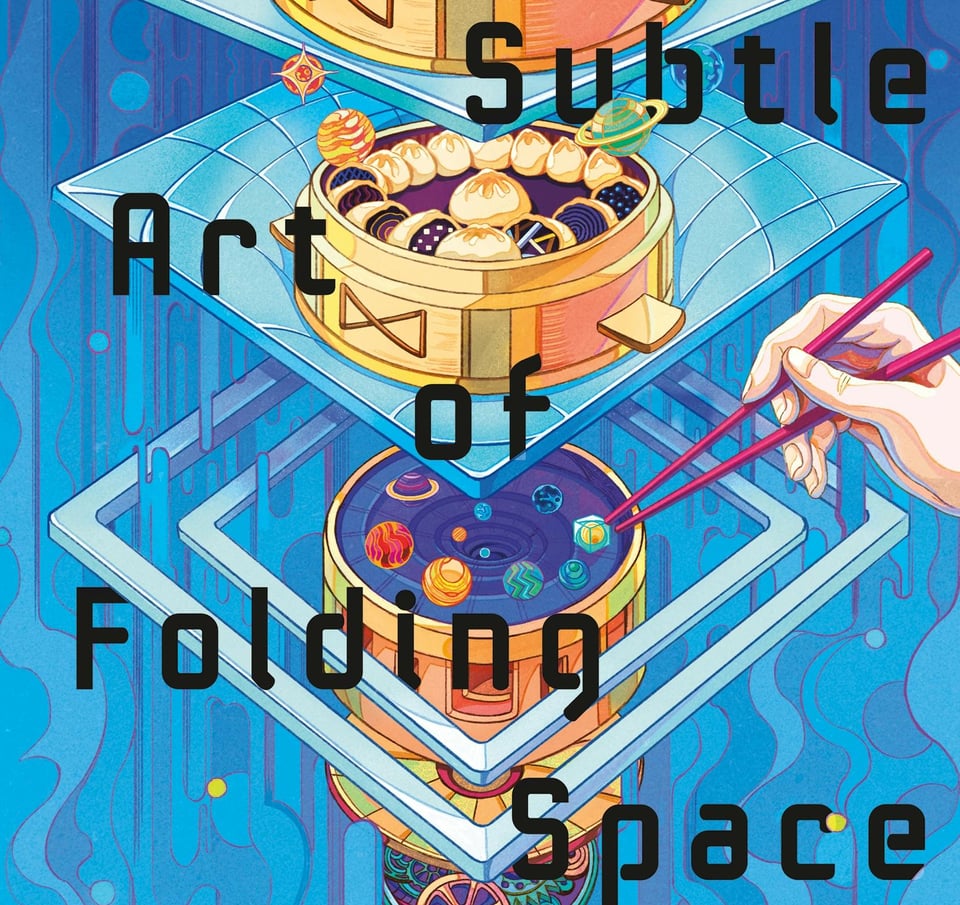
The Subtle Art of Folding Space by John Chu
Ellie is a member of a secret group of “maintainers” that tends the machinery that keeps our universe running, known as the Skunkworks. Ellie’s mother has been in a coma for a long time, and when Ellie’s cousin discovers a machine wired into the Skunkworks that changes the laws of physics to keep Ellie’s mom alive, Ellie has no choice but to disconnect it — earning the ire of her sister Chris, who already tries to kill her regularly. Soon, Ellie and Daniel are uncovering a conspiracy to mess with the laws of physics in a more sweeping, and potentially disastrous, fashion.
I enjoyed Chu’s debut a lot: it features a super interesting science-fictional conceit. Chu’s writing is very understated for the most part — upsetting stuff happens and Ellie feels mildly aggrieved. The book goes to some pretty dark places, but the tone remains funny and cute. Daniel is the book's best character, and the book seems to know it. His habit of producing incident reports in the form of tasty Chinese food is never anything but delightful.
I did become a bit frustrated at times, however. A lot of the story hangs on Ellie's relationships with her mother and sister, but we barely spend any time with Ellie’s sister before the novel's climax. Meanwhile, of course, Ellie’s mother is already dead at the start of the book (and there are no flashbacks to when her mother was alive.) Also, the sinister plot to change the laws of physics becomes more and more abstract, until it’s hard to understand what’s going on. That said, the ramifications of that plot do slowly come to feel like a clever metaphor about the ways that powerful people can reshape reality to suit their own preferred narratives.
The stakes in Subtle Art are unimaginably high, but they’re married to a sustained commitment to cuteness, which made the book more fun but also made it harder to take those stakes seriously.
Subscribe now! ! ! ! !!!!! ! ! ! ! !!Still, the friendship between Ellie and Daniel is a non-stop source of joy, and so are all the clever, inviting touches of worldbuilding. The Subtle Art of Folding Space is a quick read, and mostly a delightful one as long as you don't worry too much about the plot.
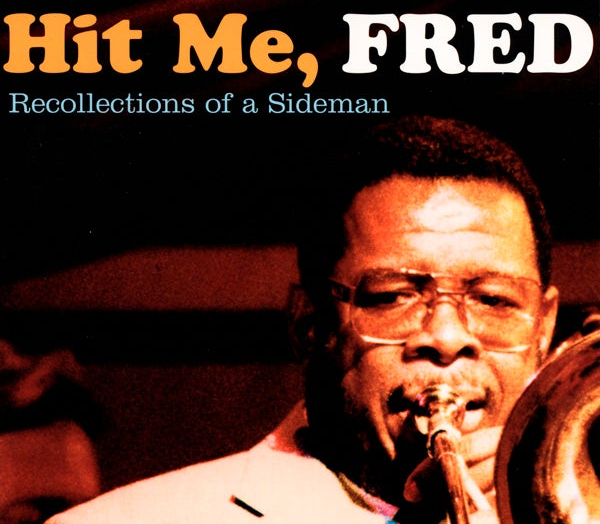
Hit Me, Fred: Recollections of a Sideman by Fred Wesley
Fred Wesley is one of the most important figures in the history of funk music: a trombone player who played on most of James Brown’s hits and then helped George Clinton usher in the Mothership Connection era of Parliament-Funkadelic. Plus he arranged “Take Your Time (Do It Right)” by the S.O.S. Band! Honestly, I could be here all day listing his achievements.
Wesley published a memoir back in 2003, and I’ve had it sitting on my shelf for years — so I finally made time to read it. And wow, it is spicy.
Once you get past the slow first chapter about Wesley’s childhood, the book becomes a fascinating read, especially for anyone who already loves either funk or jazz. Fred Wesley has a first-hand account of what it was like to be present for the creation of some of the greatest songs of all time, including James Brown's "Soul Power" and Parliament's "Give Up the Funk." He also offers deep and somewhat technical insights into musicianship, the music business and the mechanics of going on tour. There are so many weird and off-the-chain anecdotes.
But the main subject of Hit Me, Fred is really the psychology of destructive narcissists. From Ike Turner and Hank Ballard to James Brown and George Clinton, Fred Wesley worked closely with a slew of bandleaders, and he carefully paints a portrait of the kind of personality that turns a performer into a star.
Upgrade now! If you want.What emerges is a sense that there are two different kinds of musical superstars: manipulative egomaniacs, and incompetent trainwrecks. And if you have to choose, always go with the manipulative egomaniacs, because at least they know how to get things done. Wesley is savagely critical of the musicians he's worked with and a few he never did — in addition to flatly stating that James Brown possessed zero musical talent, he also goes out of his way at one point to declare that Miles Davis was a mediocre trumpet player at best. Even the people Wesley admired come in for some pretty harsh criticism. (Fair warning: Wesley was born in the early 1940s, and there's a generous amount of light sexism sprinkled with a wee bit of homophobia.)
Still, Wesley comes across as a decent human being who treats other people with respect and mostly got through some of the most high-pressure, bizarre situations in music with his self-respect and integrity intact. Hit Me, Fred is a super compelling read, both as a tell-all memoir and as a deep character study of some of music's most enduring innovators.
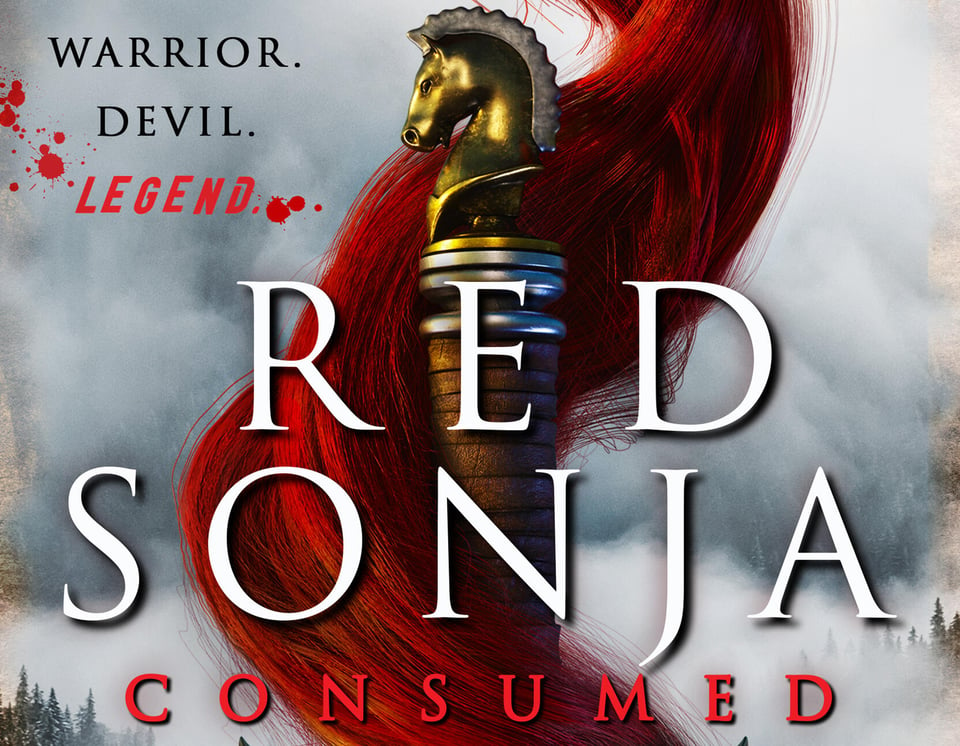
Red Sonja: Consumed by Gail Simone
I adored Simone’s run on the Red Sonja comic (with lovely art by Water Geovanni) so I was pumped for her prose novel about the flame-haired she-devil. And Red Sonja: Consumed did not disappoint: it contains a lot of what made the comic so fantastic.
With prose at her disposal (and no page limits), Simone gets a chance to delve deeper into Red Sonja’s internal monologue and also flesh out her backstory. Red Sonja is both larger than life and a very lived-in character, with anxieties and regrets alongside an absolutely indomitable determination to keep going. And as in the comics, Sonja has a prodigious appetite: much like Pasha the Storm, Consumed is a wonderfully horny book.
But Simone doesn’t limit herself to Sonja’s perspective — her writing is lightly omniscient, dipping into other viewpoints and showing us events outside anyone’s POV from time to time. Simone sometimes also takes a chapter or two to plunge us into the thoughts of a side character or antagonist. Consumed contains plenty of badassery but also some genuine pathos. My only complaint is that one antagonist seems to be built up to be the book’s main villain, only to fade from view a bit as the book goes on.
Subscribe now! It’s free.Gail Simone understands heroic stories and why we need them at a deeper level than almost anyone else writing today. The main thing Red Sonja: Consumed leaves me with, though, is its beautiful portrayal of HORSE CULTURE. Sonja is Hyrkanian, the product of a culture that truly loves horses. Having recently visited Turkmenistan, a place where horses are magnificent and part of the family, it really hit home. My favorite bit in Consumed is when Red Sonja’s horse stops in the middle of crossing a river, and Sonja realizes that she can push the horse to finish crossing, but after that she’ll no longer be his friend — she’ll be his master instead. So she waits for the horse to rest and feel up to crossing the rest of the way. Sonja's horse takes a beating but always comes back strong — he's her secret weapon but also her best friend (or really, only friend). Red Sonja: Consumed is a thrilling book about the transcendent love of horses.
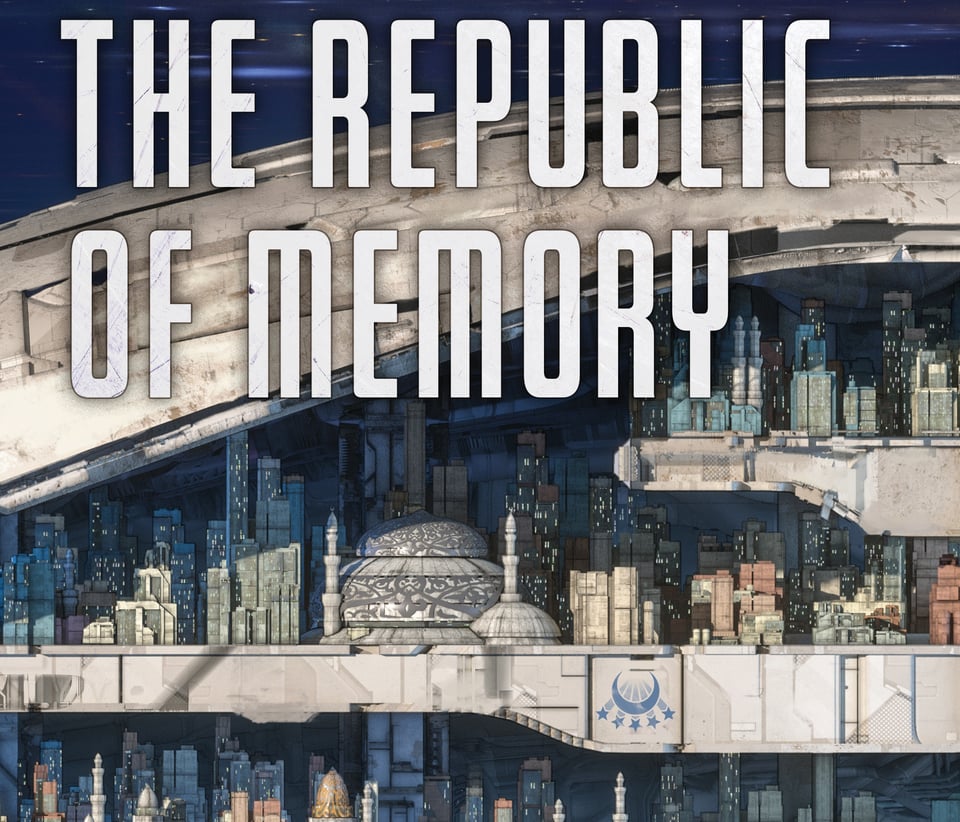
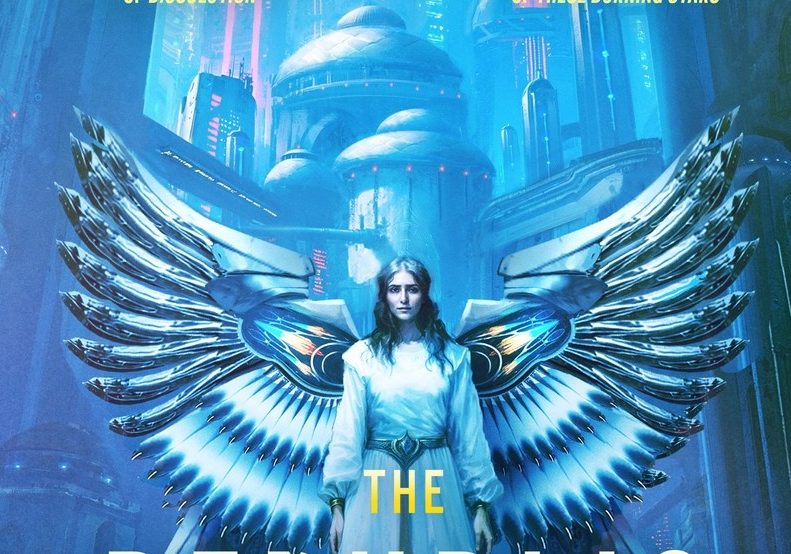
The Republic of Memory by Mahmud El Sayed
I’ve read a handful of generation-ship books before, but The Republic of Memory is probably my favorite now. The Safina has a human crew, representing a bunch of cultures from Earth, but also thousands of colonists in cryosleep, waiting to be awakened when the ship reaches its destination. Iskander Ezz, a translator, tries to work within the extremely flawed system of the ship, while his sister Damietta gets involved with plotting a revolution. And then things take a really intense turn halfway through.
A book like Republic of Memory lives or dies based on its worldbuilding, and El Sayed has done a fantastic job of creating a complex society, full of delicious-seeming food, believable religions and politics, and tons of intercultural tensions. This generation ship really does feel like a city: multi-cultural, stratified, oppressed, dysfunctional. A lot of this book feels like social realism, jumping from POV to POV and exploring lots of different perspectives. But another thing I admire about Republic of Memory is the way it hops genres, going from slice-of-life story to detective tale and then at last turning to propulsive action. This is a long book, which ends by setting up a sequel, but it never feels ponderous or predictable. The Republic of Memory keeps you guessing.
Language is at the heart of this book: people on the Safina are divided based on languages rather than race, class or other identities. The Translator character, Iskander, is a marvelously drawn portrait of someone trying to do good within a messed-up system. The kreyol spoken by some characters in the book is a fascinating stew of different languages including Arabic, Spanish and odd bits of Scottish slang. As brilliant as so many aspects of Republic of Memory are, its games with language are the most dazzling part, and I found myself re-reading some sections to pick up all the clever multilingual wordplay.
The Republic of Memory is the best book I’ve read in ages, and I can’t recommend it enough.