How to Bring Back Doctor Who
Please ask your local comic book store to reserve a copy of Star Trek: Zero Point #1 for you! I am having so much fun writing this comic and you are not ready for all the thrills and weirdness.
You can pre-order a signed paperback of my mother-daughter witch book Lessons in Magic and Disaster from Green Apple!
Annalee Newitz and I will be guests of honor this July 4 weekend at BayCon! You can still register!
How to Make Doctor Who Brand New Again
So it's official. Doctor Who is taking an indefinite hiatus, and there will be a new head writer and new Doctor at some point, after a competitive bidding process. The upcoming Christmas special, which was supposed to put a capstone on Russell T Davies's second run as head writer, has been shelved.
I've been thinking for a while about what the next showrunner of Doctor Who should do to refresh the venerable program. Before I go any further, however, let me say that I have adored the past twenty years of stories, and I feel so lucky to have gotten so much incredible storytelling in the 21st century so far. This has been a fantastic time to be a Doctor Who fan, and none of the suggestions below should be interpreted as a criticism of what has already aired. I’m also extremely sad and upset about this news, not least because new Doctor Who has been one of the things I’ve always had to look forward to during a truly horrendous time in human history.
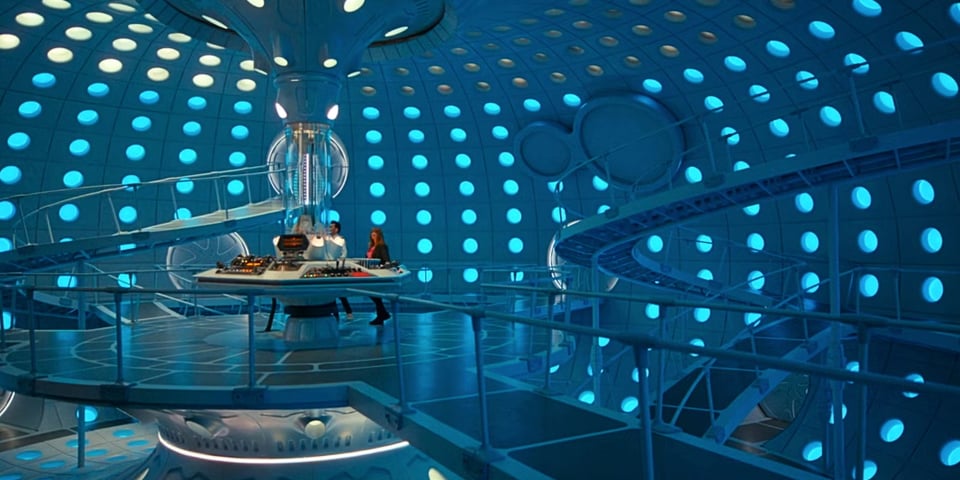
I liken the current state of Doctor Who to Star Trek in 2005: the end of Enterprise capped a nearly twenty-year flood of new Star Trek, much of it excellent. By 2005, however, Trek had been around a long time and was still relying on some of the same creators and narrative approaches as Star Trek: The Next Generation. Incidentally, one reason I love both Doctor Who and Star Trek so much is because they have never reached the heights of popularity of, say, Star Wars or Marvel — Who and Trek remain extremely popular but somehow never quite big enough to support $300 million-budgeted films. Which, thank goodness.
In fact, as I wrote before, Doctor Who has always reinvented itself. That's how it has survived for so long. It's changed with the times, borrowed like a magpie from whatever was popular at any given moment, and radically reinvented its format. The only thing that never changes about Doctor Who is that it always changes. Now, as the Time Lords say at the end of “The War Games,” it is time to change once again.
Sooo here are some random ideas.
Have a clean slate — at first at least
This is the most obvious suggestion. The contrast between the 1996 TV movie and the 2005 revival is pretty stark — and I'd argue one of the latter did a much better job of setting the show up for success.
The TV movie makes a point of bringing back the previous doctor, Sylvester McCoy, only to kill him off almost immediately. It delves way too deep into the show's lore and bombards audiences with too much information. "Rose," the first episode of the new series, just dives right in and assumes you know nothing about the Doctor or anything else. Then, over a period of a few years, most of the show’s classic elements get reintroduced one by one, always refreshed for a new era.
Over on Bluesky, the amazing Jessie Gender and others were debating how Doctor Who should pay off the cliffhanger at the end of “The Reality War,” in which Ncuti Gatwa’s Doctor apparently regenerates into Billie Piper. My response was: “Don't pay it off. Ignore it, hand-wave it, explain what happened in a throwaway line or in an episode two years after the show comes back.” Yes, a tiny number of people on the internet will yell about this loose end — which is why the new showrunner should do an interview saying that the Billie Piper cliffhanger will be addressed in due time, and leave it at that at first. For Doctor Who to feel fresh and new again, it must start over with a clean slate.
Update the comps
When Doctor Who relaunched in 2005, it was cutting edge. It drew from Buffy the Vampire Slayer, the Harry Potter movies, and a host of other influences that felt of that moment.
When Doctor Who came back, Russell T. Davies talked quite a bit about Buffy as an influence. And the character of Rose Tyler, in particular, feels as though she’s cut from some of the same cloth as Buffy Summers. The 21st century Doctor Who companion has frequently had a bit of Buffy-style “girl power” vibes, and her connections to a family and community on present-day Earth have at times felt very Buffy-coded. Still, over time, the Buffy influence has faded to background noise.
Subscribe now!!! ! !!!The Harry Potter influence on Doctor Who feels more pervasive, and I’d argue a bit more concerning. Just as Harry Potter is “the boy who lived,” Amy Pond is “the girl who waited.” And then, for good measure, Maisie Williams played “The Girl Who Died” and “The Woman Who Lived.” Russell T. Davies modeled the Master in “The End of Time” on Voldemort. Little Harry Potter motifs of this sort tend to pop up here and there – though of course, Harry Potter itself is a hodge podge of stuff borrowed from older works, some of which Doctor Who could be lifting from directly.
More to the point, the tone of post-2005 Doctor Who feels very indebted to Harry Potter, both the books and the movies. There’s a certain twinkly humor that is quintessentially British, but with an added layer of what I’d call “twee solemnity” laced with a bit of the grotesque. Everyone is special and chosen, there are prophecies everywhere. We constantly encounter institutions that, like Hogwarts, are fancy and cozy but also full of secrets and hidden dangers. Murray Gold’s music, for some reason, has always felt a bit Potter-ish to me. And so on. This is very much about vibes, but I’ve felt as though Doctor Who has clung to the Potter ethos long after Harry Potter became both toxic and kind of old hat.
So it's time for Doctor Who to find new inspirations. There has been so much great fantasy and science fiction television of late, much of which is for all audiences. I would point to the Percy Jackson TV show, Marvel's Wanda duology, Wicked, One Piece, Backrooms, Five Nights at Freddy's, plus recent fiction trends like romantasy, cozy fiction, and a whole new wave of horror.
Upgrade now!! !!I also think Doctor Who is coming off a period where it had sky-high budgets that allowed it to look absolutely fantastic. It's unlikely that the next iteration of Who will have that much money to play with, but the show can turn this into a virtue by steering clear of the aesthetics of prestige tv. This could go along with less serialization and hopefully longer seasons full of standalone episodes.
It might also be good to have fewer big set pieces per episode — especially set pieces that are tangential to the plot and are simply a cute flourish — and more claustrophobia.
Rethink the companions
One of the great innovations of the 2005 relaunch was having companions who were from present-day England and frequently returned home to visit their family and/or loved ones. This made Doctor Who more explicitly a portal fantasy, which is excellent, and allowed the companions to feel more grounded in reality.
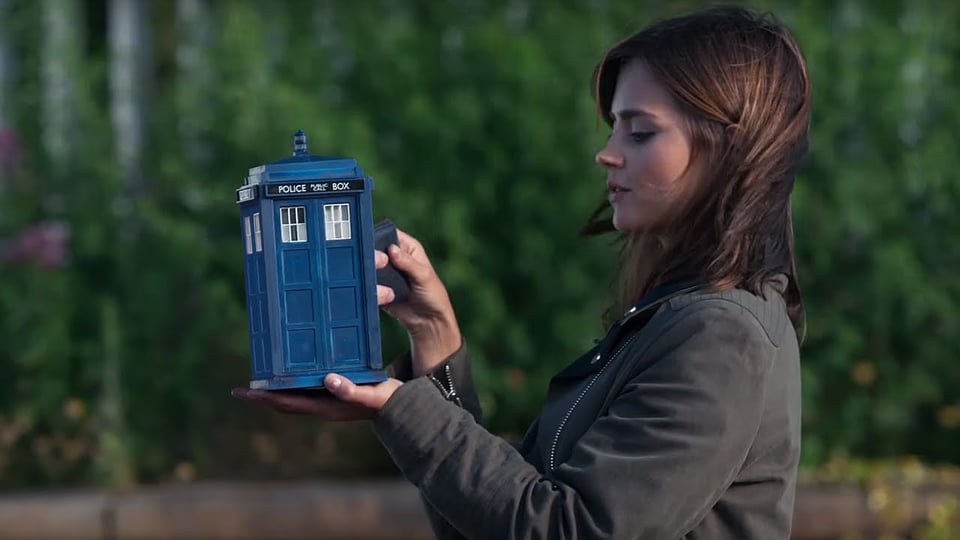
I think, however, it might be time to return to having companions who are a bit more unusual in their own right. And here's where I think of something like One Piece, where every member of Monkey D. Luffy's crew is a colorful character with a fancy backstory. Maybe it's time for another companion from the future, or the distant past. Maybe we could get someone a bit more akin to Captain Jack Harkness, who did travel in the TARDIS occasionally but never quite settled in as a companion.
It would also be interesting to have companions with more personal issues of their own, not focused quite so much on their relationship with the Doctor — and maybe no more companions who are at the center of a great mystery in which they’re the MacGuffin rather than the detective. My ideal companion would be Inigo Montoya from The Princess Bride: constantly chasing revenge against the person who did them wrong, while the doctor tries to temper their fury and every adventure brings them closer to their goal. (Doctor Who did this a bit with Graham in Jodie Whitaker's first season, but only a bit.)
Lean into science fiction and horror
I wrote a while ago that I think Doctor Who should return to featuring more hard science fiction, and perhaps educating viewers a bit more about real science. I still believe this. I also think Doctor Who should double down on horror a bit more — and maybe not just the psychological horror of monsters that you mustn’t take your eyes off (because if you’re not looking, they can move, or you’ll forget them, or the shadows will change shape.) Just… lean into scary monsters once again. And by “monsters,” I mean creatures that just want to eat you and don't have to necessarily obey any complicated vision-based rules.
I would also encourage the next head writer of Doctor Who to put a lot more energy into developing a new generation of villains — perhaps avoiding any old villains for a year or two to give the new baddies have a chance to breathe. It always strikes me that most of Doctor Who's iconic enemies were created between 1963 and 1973, culminating with the Sontarans.
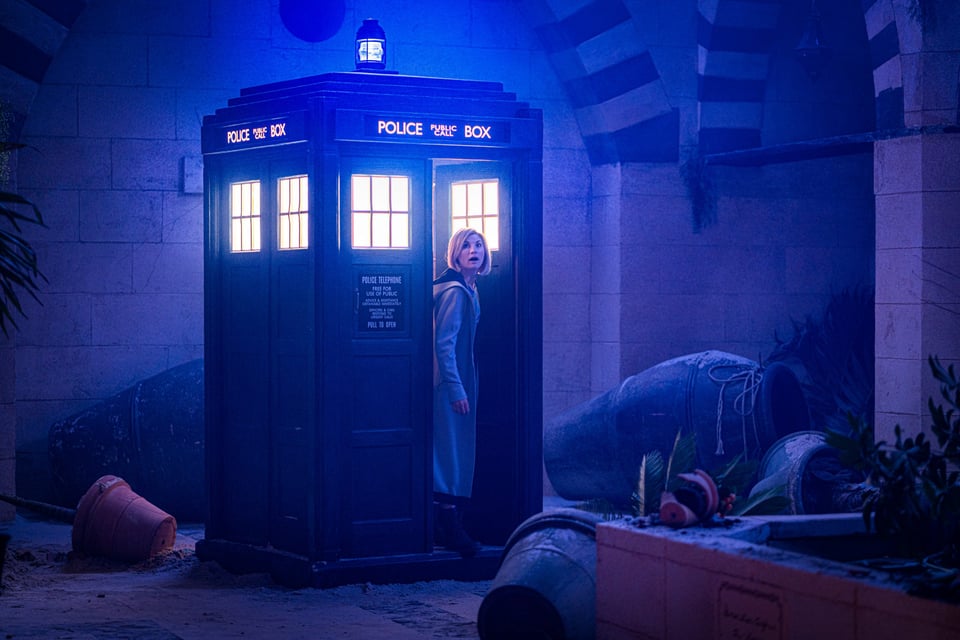
It's not impossible to create a new rogues gallery for Doctor Who, but it will be a major challenge. Most old fantasy and science fiction universes are still recycling their old villains — I can’t think of an iconic new Trek baddie to come along since Q and the Borg, for example. Still, it’s very doable, and part of the key is creating some baddies who are the right amount of scary, relentless and malevolent. Another key factor: persistence. For every Dalek or Cyberman, early Doctor Who had a few failed villains like the Voord, the Mechanoids, the Quarks, etc.
Make the Doctor anti-authority again
There's a bit of a pendulum with Doctor Who: the Doctor goes back and forth between being a loner who distrusts authority, and an authority figure who pals around with the soldiers and scientists of U.N.I.T. You saw this in the classic series, going from Troughton to Pertwee to Tom Baker. You've also seen this a bit in the new series, with Christopher Eccleston’s Doctor appearing to loathe any kind of authority and not being super keen to collaborate with the military, and then over time the Doctor starts hanging out with government entities on a regular basis, and even at one point gets named President of Earth.
Subscribe nowI would like to see the Doctor return to being a bit more of an iconoclast who doesn't get along with authority figures as a general rule. And honestly, I would find a way to get rid of the psychic paper — which frequently serves as a shortcut to the Doctor being accepted as an authority figure wherever they go. I understand why the psychic paper was introduced: it allows episodes to be forty-five minutes long, because you don't waste half an hour on the Doctor having to prove they have good intentions. Still, I think the Doctor having to save the day while everyone in charge is scapegoating them and trying to kill them is kind of an entertaining formula, and I'd love to see it come back.1
On that note, I'd also like to de-center the Doctor a bit. All too often, creators try to make the Doctor the center of the universe — either by having everybody know about the Doctor and in awe of their achievements, or by coming up with storylines where the Doctor is a mythological figure from Time Lord history, or at the center of a mysterious prophecy, or most recently the progenitor of all Time Lords.
I think the Doctor works extremely well as a random nobody who has a knack for wandering into trouble and somehow finding their way out again, while saving as many people as possible.
And last but not least, the Doctor could stand to be a bit more vulnerable. In the old series, when someone points a regular firearm at the Doctor, it is a big deal. Many 1970s cliffhangers consist of “someone is pointing a gun at the Doctor, oh no.” Sylvester McCoy’s Doctor basically dies of gunshot wounds, in fact. In the new era, however, if you want to kill the Doctor, you have to find a special lake that's a stillpoint in time, a child who was conceived in the TARDIS, and a host of other things. Killing the Doctor is also so tricky and important that people are willing to risk destroying the universe to do it by creating a great big crack in reality.2
These two tendencies for the Doctor — making them more of an authority figure, and making them so epic and iconic and powerful that they can't simply be menaced by a random thug with a gun — feel like a natural outgrowth of trying to build out the world of the show. (They’re also what tends to happen to most venerable characters over time.)
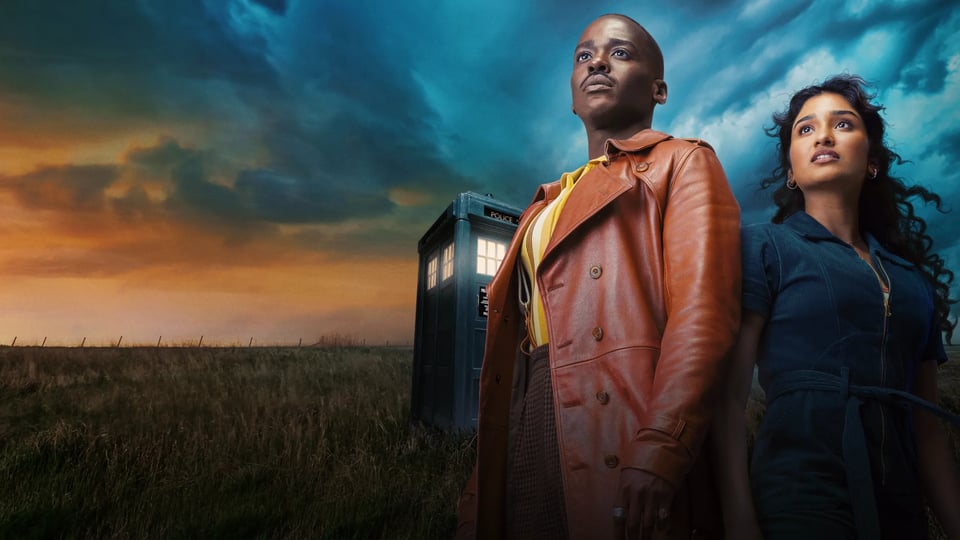
I would argue these two trends actually get in the way of making the Doctor a figure of mystery — not a person who doesn't know their own past, but someone whose past is somewhat mysterious. I think the Doctor can be mysterious once more, if they are downsized a bit and are holding their cards close to their chest — in part because they are easy to kill.
While I was in the middle of writing this newsletter, I read the recent Deadline article, which suggests that Doctor Who may not be back until 2028 at the earliest, or possibly as late as 2031. Which honestly sounds about right, going by the example of Star Trek in 2005. A moderate rest will have the effect of making a lot of well-worn story elements seem brand new again — but I would still argue that for Doctor Who to thrive, the show needs a bit of a reinvention.
I’m very conscious that some of the items on this list amount to “go back to the way old-school Doctor Who used to do things,” which I’m very much trying to avoid. That said, there is so much old Doctor Who that any reinvention of the show will inevitably cherry-pick some aspects of the past or use them for inspiration. It’s perfectly possible to borrow from the past without explicitly referencing it, also! People do it all the time. ↩
In the early 1970s, they took away the Doctor’s TARDIS. In the early 1980s, the Doctor lost the sonic screwdriver. I can think of a dozen ways to put a new Doctor in a situation where their back is against the wall more often. ↩