
Paper Towns · The Catalog · №013
A fake town on a 1930s map caught copiers. What happens when AI copies your strategy? This week: Dylan meets the Pope, a robot’s 350-mile walk, Kalshi’s midterm predictions, and more AI music. The Catalog is a weekly shortlist of what’s worth learning, exploring, or watching.
Welcome back to The Catalog. Here’s what’s worth learning, exploring, or watching this week, so you can start with a shortlist instead of sifting through noise.

CONTENTS
- New Arrivals (Dylan Meets the Pope, Robots on Treadmills, Google in Schools, Chinese Export Controls)
- The Feature (Paper Towns)
- Observations (Election Prediction Markets, More Artificial Music)
NEW ARRIVALS
01 · Dylan Meets the Pope in a Hoodie
Bob Dylan met Pope Leo XIV at the Vatican on Wednesday wearing a black hoodie with the hood up and a loose tie. Leo gave Dylan a rosary, and Dylan gave Leo a signed copy of his 2004 memoir, Chronicles: Volume One.

Dylan’s planned visit was between his Italian tour dates in Milan and Rome. Pope Leo grew up in Chicago listening to Bob Dylan’s music and quoted his unreleased 1963 song “Go Away You Bomb” in the foreword to his new book on peace as a warning against global rearmament and nuclear weapons.
02 · Robots on Treadmills
Figure’s humanoid robot walked nearly 350 miles on a treadmill over a nine-day endurance test. The robot logged about 1.2 million steps, roughly a marathon and a half a day. Founder Brett Adcock posted the run on October 19 and called it a side project “to stress the robot for any failures.”
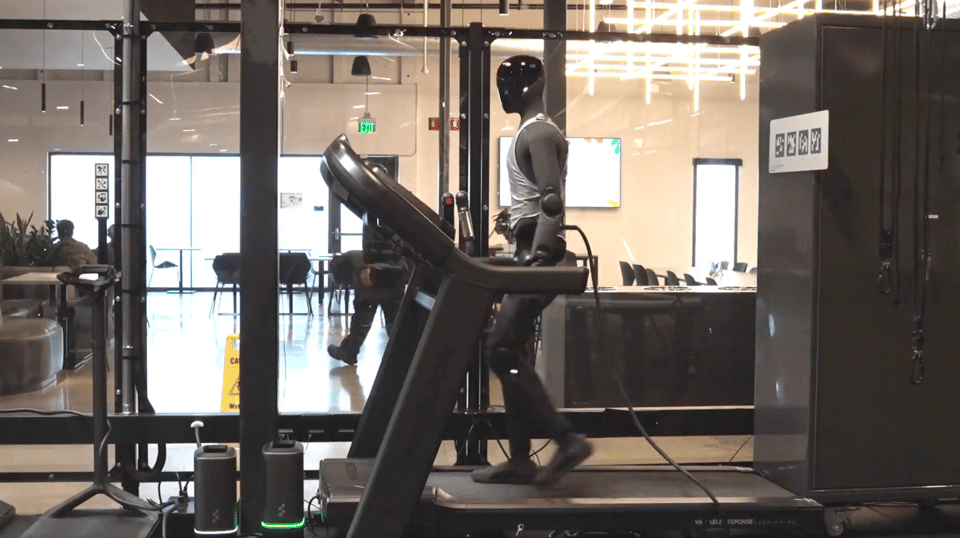
The Figure humanoid was plugged into a power cable, so this test was all about motors and joints, not battery power. Factories are watching Figure’s durability, and Figure says it built its 1,000th Figure 03 in July.
03 · Google Switches AI off in Schools
Google will soon switch its AI tools off by default for K-12 student accounts, and that includes Google Search. School administrators must explicitly opt in to turn Search back on, and it now comes with AI Overviews and AI Mode attached. Districts that keep AI blocked lose Google Search entirely. Google offers school leaders a choice of whether kids are exposed to AI through search, or can’t access Google Search at all.
04 · China Export Controls
China announced last month it’s going to restrict or ban exports of 40 advanced technologies spanning artificial intelligence, chips and solar power as its tech race with the United States intensifies. You can read about China’s drafted export controls, where 23 of the 40 technologies relate to artificial intelligence.
Exporting the weights of any model with 2 trillion parameters or more would need a government license, a line that already catches China’s own flagships like Moonshot’s Kimi K3 and Alibaba’s Qwen 3.8-Max. If your team builds on Chinese open-weight models to save money, that’s now a supply risk. Both countries now treat their best AI models like controlled goods, and the U.S. briefly asked Anthropic in June to keep foreign nationals off two of its own.
THE FEATURE
Paper Towns
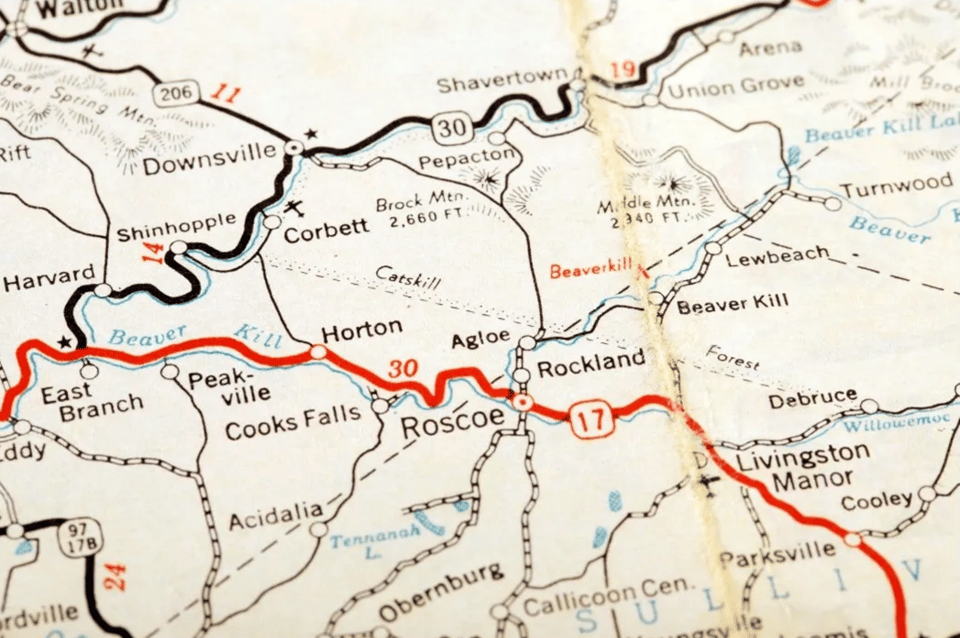
In the 1930s, two mapmakers at the General Drafting Company invented a town in the Catskills. Otto G. Lindberg and Ernest Alpers scrambled their initials into a name, Agloe, and placed it where a country road meets NY 206 near Roscoe.
This fake town was a trap.
If Agloe ever showed up on a competitor’s map, they’d know exactly who copied them.
Then things got strange. Someone actually opened an Agloe General Store at the intersection because the map said a town was there. When Agloe turned up on a Rand McNally map, Rand McNally pointed to the store as evidence for including the town on its map. The fake town had become just real enough to plausibly deny plagiarism.
This “paper town” tactic gets reused today. In 2011, Google planted about 100 nonsense searches like “hiybbprqag” with hand-picked results, then watched them show up on Bing. More recently the crowdsourced lyrics database and song annotation platform Genius alternated straight and curly apostrophes in its lyrics to spell out the words “red handed” in Morse code. Genius found the pattern in more than 100 of Google’s lyric results.
Genius still lost in court, because it didn’t own the lyrics it had transcribed.
I found my own paper town during my final weeks at Sitecore. A colleague headed to Australia asked me to help them prepare for a personalization workshop, because the customer had already been working on implementing “their personalization roadmap.” When we opened the roadmap together, I immediately recognized my own work. The first activity on the roadmap summary slide read “Onsite Workshop in UK.”
This was certainly a screenshot of a client roadmap I’d delivered almost a year earlier to a different customer, in a different industry, in Europe. I recognized my swimlanes and the 30 or so activities and tactics we’d numbered and ordered together onsite. I’d written and carefully phrased each item on the slide together with that account team about a year ago.
I don’t normally mind when people build on my work. I like creating systems and frameworks that scale. In the band, hearing up-and-coming bands influenced by MO’s albums was rewarding. At Sitecore, I’d sometimes spot my sketches in ppt decks presented in places I’ve never been like India or Saudi Arabia, and that made me proud. Sharing Customer A’s plan with Customer B is a different story, though.
That sort of thing will get harder to identify. AI won’t hand anyone a screenshot with “UK” on it. It hands back a generic and polished copy of a copy that’s close enough to good.
I’ve even tested this myself, like in the video below from 2023.
Over the years I’ve reverse engineered many of my own strategic planning methodologies and frameworks by using AI to make a guess with outside-in information, and the results landed somewhere between inspiring and disillusioning. The 2023 video above walks through two simple use cases I setup with an early version of GPT-4. Back then this sort of work was a novelty for strategic consultants. Today's new frontier AI models rapidly finish entire account research reports that used to take me entire workdays to complete.
This sort of outside-in, AI-driven strategy can look good to casual observers, but today it doesn’t really get work done. The people responsible for building or creating didn’t come up with the ideas, vote on them, or agree on dependencies and what needs to get done. An agentic execution layer will soon change that, and it could lead to a sea of sameness across categories.
The Australian team I mentioned had a screenshot of a plan without any of the rationale, context, or ownership in the decisions behind it. That’s exactly why they weren’t sure where to begin.
These last couple of weeks, I’ve been looking closely at the intersection of entertainment and technology, and how it shapes culture. I keep coming back to businesses and projects positioned to ride the coming wave of agentic AI: leisure, live entertainment, and the software at the center of how work gets assigned and distributed between people (and increasingly machines). Each one sits close enough to human passion, or to how work actually gets done, that it gets more valuable every time the models get better.
OBSERVATIONS
Kalshi Keeps Score
I’m very happy midterm season is over. Now my phone will finally stop lighting up every hour with texts and calls from local politicians’ lists I never signed up for.
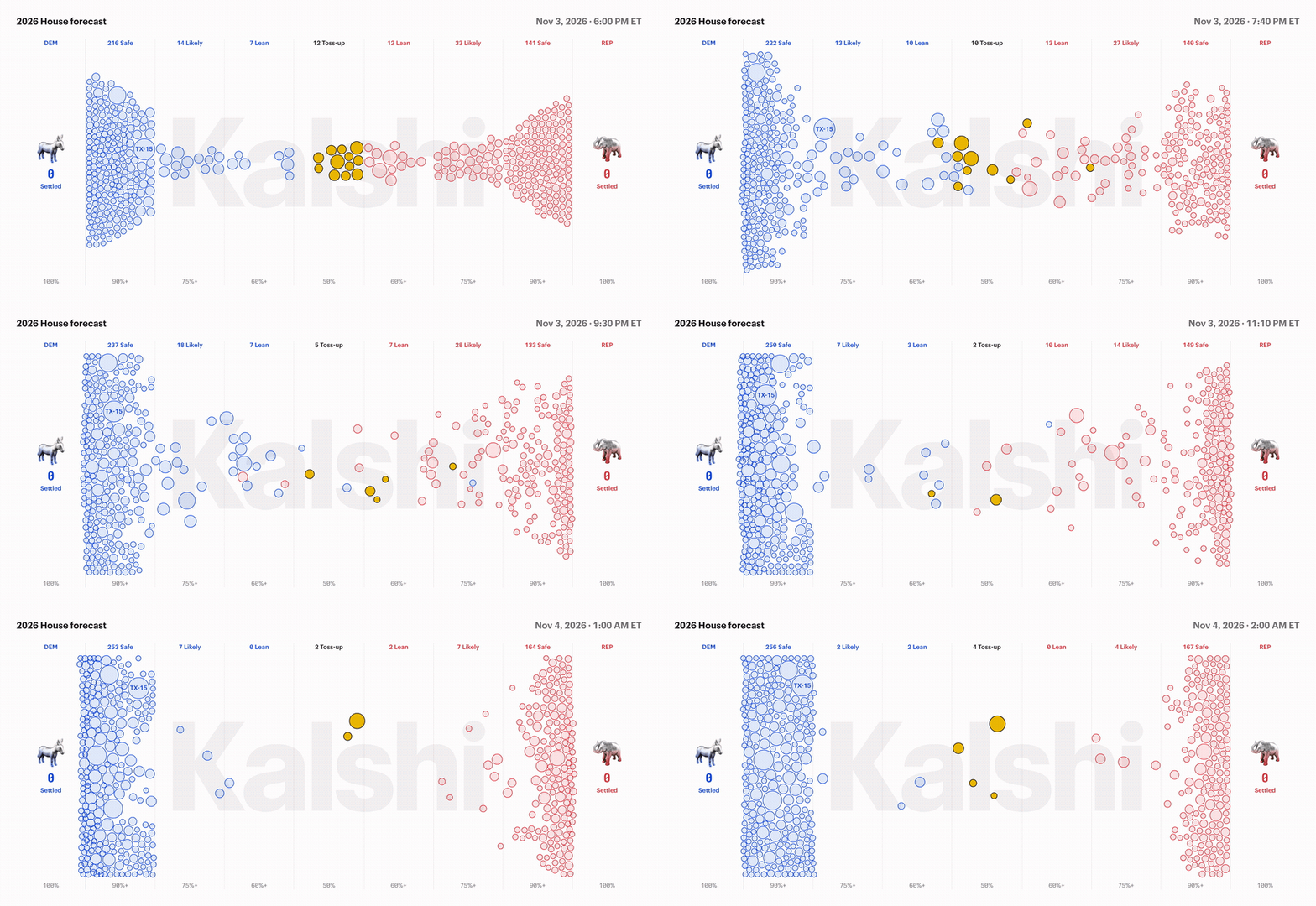
I was up late watching the United States midterm results roll in this week, and afterward I found a Kalshi recap that caught my attention. Kalshi is a federally regulated U.S. prediction market where users buy and sell binary “Yes” or “No” contracts on the outcomes of real-world events. It’s claiming its users called 98% of midterm results before a single vote was counted.
Get enough people betting real money, and the market gets very good at calling elections. Midterm trading passed $2.5 billion, almost double the 2024 cycle.
Kalshi said the favorite on its markets won a staggering 98%, 479 of 487 races. Their traders priced Democratic control of the House at 99% by 8:10PM Eastern on election night.
More Music Than Listeners
Deezer says more than half of the music uploaded to its service every day is now fully AI-generated, about 90,000 tracks a day this summer. Those tracks make up only 1–3% of streams, and Deezer says 85% of those streams were fraudulent last year.
Real people choosing to listen to AI music is closer to a rounding error. AI keeps making high-fidelity music easier to conjure, and demand still hasn’t moved, which I’d love to read as proof that people can hear the difference, except I’ve played enough half-empty clubs to know listeners are loyal to whatever’s playing, and some quiet part of me suspects that once the artificial stuff gets good enough (and cheap enough, and endless enough), most people will like it fine.
ABOUT THE CATALOG
These days everything moves at hyperspeed. We’re creating and producing more content, with less certainty, than at any point we can remember. New emerging technologies are fundamentally reshaping how work gets done, how content is produced, and how we communicate with each other, faster than we can keep up with.
As an experience strategist I read a lot, and I continually run across things that are useful or worth thinking about. In fast moving environments, the hardest part can be deciding what deserves attention.
In the Catalog, I aim to capture what I’ve found each week that’s worth learning, exploring, or watching, so you can start with a shortlist instead of sifting through noise.
Learn more about why I started writing this newsletter in Issue 000.
See you next week,
J Corley


Add a comment: