
Pins on the Map · The Catalog · №014
You can now claim your business profile inside ChatGPT. Huang's out at Nvidia, the end of the Cybertruck, and an AI that finished 41% of real freelance jobs. The Catalog is a weekly shortlist of what’s worth learning, exploring, or watching.
Welcome back to The Catalog. Here’s what’s worth learning, exploring, or watching this week, so you can start with a shortlist instead of sifting through noise.

CONTENTS
New Arrivals (Business Listings in ChatGPT, Sitecore Launches MarketingIQ, Huang is Out at Nvidia, No More Cybertrucks)
The Feature (Pins on the Map)
Observations (Fable 5.2 Passes Freelance Test, Underwater Umbrellas)
NEW ARRIVALS
01 · Business Listings Inside ChatGPT
OpenAI now lets businesses claim and verify their profile in ChatGPT. The beta opened Tuesday, and it works a lot like claiming a business listing on a map. Just verify by phone, text, or DNS, correct your details, and add product feeds with pricing and availability.
Once you’re in, an OpenAI dashboard called Business Hub shows how many times ChatGPT mentioned you and how many people clicked through. This feels like the early days of Google’s webmaster tools, back when brands first got a glimpse of how people were finding them.
02 · Sitecore Launches MarketingIQ
At Sitecore Symposium in Orlando this week, Sitecore launched MarketingIQ, a new tool that notices when a brand is missing from AI answers and turns that gap into a campaign. AI agents draft the brief, the content, and the page changes, and people review everything before it goes live.
The foundational signals come from Scrunch, the AI search visibility startup Sitecore bought back in June, a month before I left Sitecore.
IFS CMO Oliver Pilgerstorfer put it this way in Sitecore’s announcement: “It’s one thing to understand how we show up in AI-based search results, but it drives little value unless you act upon it.”
03 · Huang’s Out at Nvidia
Jensen Huang co-founded Nvidia in 1993 and ran it for more than three decades, and things fell apart in about two weeks after reports of an affair with an alleged Chinese spy. Here’s a timeline of how fast it moved:
October 29: NY Times reports Huang’s close relationship with a woman named Alice Huang (no relation). Nvidia says his interactions with her were “not unusual or unexpected.”
November 6: A secret U.S. memo leaks saying officials believe Alice Huang is a spy for China’s Ministry of State Security.
November 8: Huang writes to employees that he “was unfaithful to my wife,” and says the board opened an independent investigation.
November 9–11: Nvidia shares fall more than 5% in a single day and are down 11% over five days.
November 12: SEC filing confirms the Nvidia board accepted Huang’s resignation. CFO Colette Kress steps in as interim CEO.
04 · No More Cybertrucks

Tesla will stop making Cybertrucks in 2027 and repurpose the factory space to build two-seater Cybercab robotaxis.
The Cybertruck was promised in 2019 at under $40,000 with up to 500 miles of range. It showed up two years late at around $60,000, with more than 100 fewer miles. Elon Musk predicted about 250,000 sales a year. Tesla has sold fewer than 100,000 in three years, total. That surprised me, because I feel like I see one or two every day. Maybe they’re just so angular you can’t miss them.
THE FEATURE
Pins on the Map
Before I left Sitecore this summer, I spent a couple of years as one of Sitecore’s AI Champions. There was one champion designated for each major part of the business, like legal, product, and marketing, etc. I represented about 70 people in pre-sales spread across all our global offices. I count it as a career highlight.
As AI Champions, we were tasked with finding out where our colleagues were using emerging AI capabilities to drive business value. I tracked the solutions engineers and consultants who were creating disproportionate value with AI. Our team was spread across offices and home offices around the world, so I worked with the regional pre-sales leads to name their most AI-forward people. We met monthly to compare notes, and I used what we found to fill in a scorecard that went up to our CEO and ultimately the board.
Some of our solutions engineers had started using Cursor, and a few of them became what I’d call 10x SEs. They did the same job ten times as fast, or seeded entire worlds of demos far better than anything we’d had before. Presales had some of the sharpest minds at Sitecore, and they were exploring new tools in their own ways.
It wasn’t always easy to fill out a scorecard that tracked this kind of innovation. Sitecore was a strong Microsoft ecosystem partner, so the question I got most often was how Microsoft Copilot was creating value. As I tracked colleagues’ work and reported successes, I included other AI pilots and experiments too. It soon became clear that the best work didn’t always fit inside the clean, neat enterprise box the board wanted justified. I was asked to measure the impact of the tool we’d paid for, and much of the value was coming from somewhere else.
Those monthly AI Champion scorecards have been on my mind this week, because OpenAI just handed every marketing team a new one.
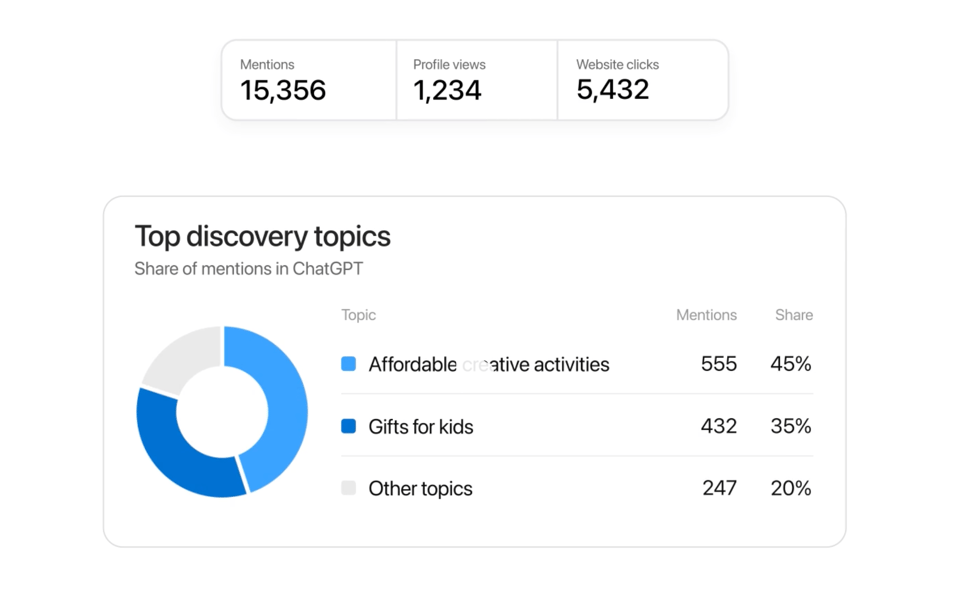
As I mentioned above, businesses can now claim their profile in ChatGPT.
Once you’re verified, a dashboard shows how often ChatGPT mentions your business, how many people view your profile, how many clicked through to your website, and your top five “discovery topics” over the last 7 or 28 days.
That’s more than marketers have ever been shown about what happens inside an AI answer. It still seems thin. You can’t see prompts people are typing or how you compare with your competitors, and OpenAI’s own help note says clicks “don’t confirm website visits or conversions.”
Keep in mind that OpenAI also now sells ads.
The Next Web reports that ChatGPT ads passed a $1 billion annual run rate in August, and a business can now sponsor its own branded agent inside ChatGPT as the place those ads send people. OpenAI says paying doesn’t change how often ChatGPT recommends you. Maybe that is actually true, but it means there’s now a company that answers your customer’s questions, counts your mentions, and sells the placement next to the answer.
This week my old company announced something similar. Scrunch, which Sitecore bought in June, tracks how brands show up when people ask AI assistants like ChatGPT and Gemini for recommendations, including the questions where a brand is missing or described wrong. At Symposium, Sitecore launched MarketingIQ to turn those gaps into campaigns.
My friend James Gray at Horizontal Digital wrote a solid recap of Symposium this week with a line that I reread a few times: “More visibility isn’t automatically more revenue.”
Similar wavelengths. I was reminded of a conversation last year, when a marketing leader at a major hospital network told me their conversion rates were suddenly “artificially inflated.”
Organic and search traffic to their site was falling, but the traffic that actually did land and browse was converting at a much higher rate than they ever used to expect. My read was that people were now showing up primed for conversion by AI tools.
Someone who clicks through to your site from an AI chat has already done their awareness, discovery, and sometimes comparison somewhere else, so they arrive ready to convert. A lot of marketing’s work is being offloaded to the output of these black box systems, and people are beginning to trust them more and more.
So should you claim your ChatGPT profile? Yes. I can’t see any reason against it, and there’s probably a solid first-mover advantage. Showing up well in ChatGPT, Gemini, and Claude should be near the top of any marketing leader’s list right now.
I’d just keep a separate scorecard of my own parallel to OpenAI’s, and here’s what’s on mine:
Revenue against a baseline, not clicks or conversions. Are you selling more because of this?
Experiments in sprints. Change the content for one product, hold another back, and compare revenue.
Traffic and conversion rate (ratio). Fewer visitors converting at a higher rate means discovery moved somewhere you can’t see.
Check your own answers: Find a solution that can run your top 20 buyer questions through ChatGPT, Gemini, and Claude every month, and write down whether you’re named and described correctly.
What do your customers tell you? Add “an AI assistant” to “How did you hear about us?” on forms, at checkout, and in sales calls.
OBSERVATIONS
Fable 5.2 Passes the Freelance Test
Anthropic released its newest model, Claude Fable 5.2, on Monday. I tested it this week on various workstreams. This latest release seems to have some serious horsepower.
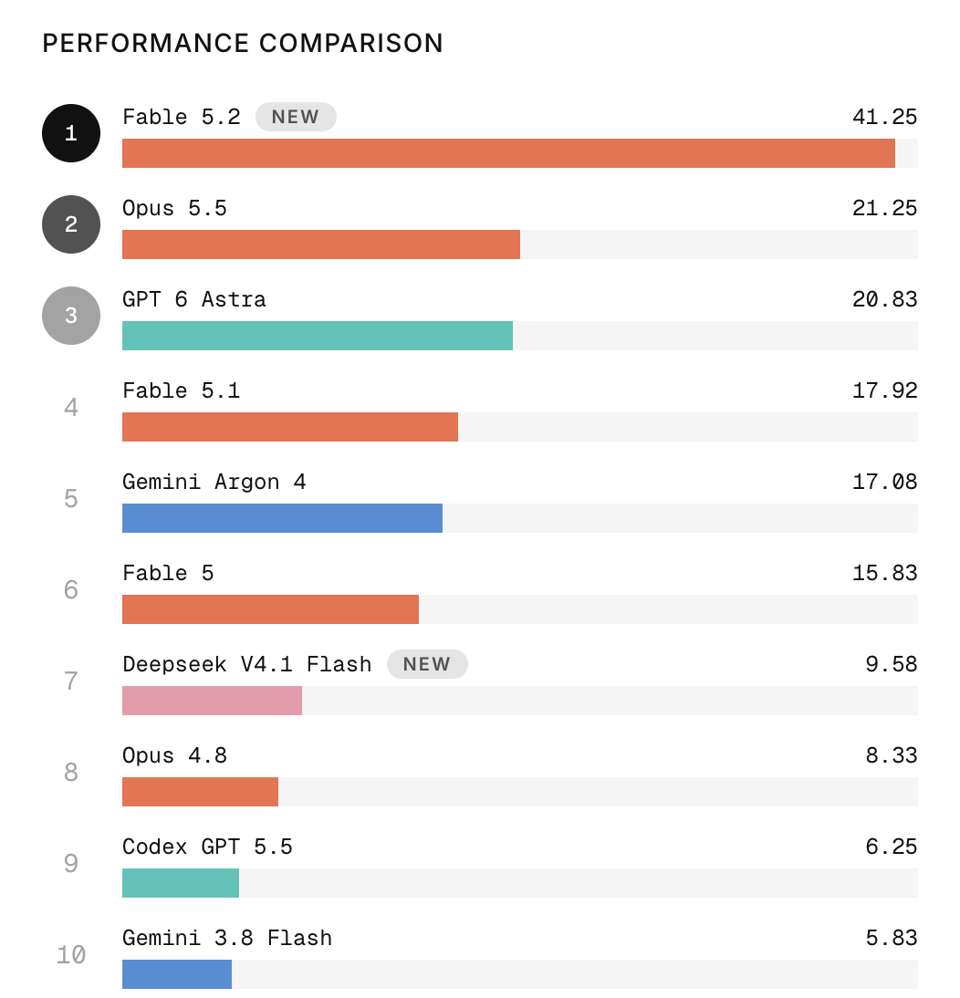
The Remote Labor Index tests AI agents on 240 real Upwork projects, the kind of paid freelance work a client either accepts or sends back. A year ago, the best AI finished 2.5% of them at a level a client would accept. Fable 5.2 finished 41%, almost double the previous leader. That growth is staggering.
As benchmarks continue to adapt to expanding capabilities, what made me pause this week was something the new Fable release created. On a live stream, Riley Brown gave Fable 5.2 a single prompt and got back a 60-second ad for Claude. The model didn’t generate the video the way Sora or Veo would. It wrote code that built and lit an entire room in Blender, from the desk and laptop to the lamp, so what came back is a project you can open and change.
Underwater Umbrellas
Researchers in the Florida Keys floated $30 shades made of PVC, spray foam, and shade cloth over brain corals during the 2024 marine heatwave. The shaded corals stayed darker, and the exposed ones paled. By March 2025, 84% of the world’s reefs had faced bleaching-level heat.
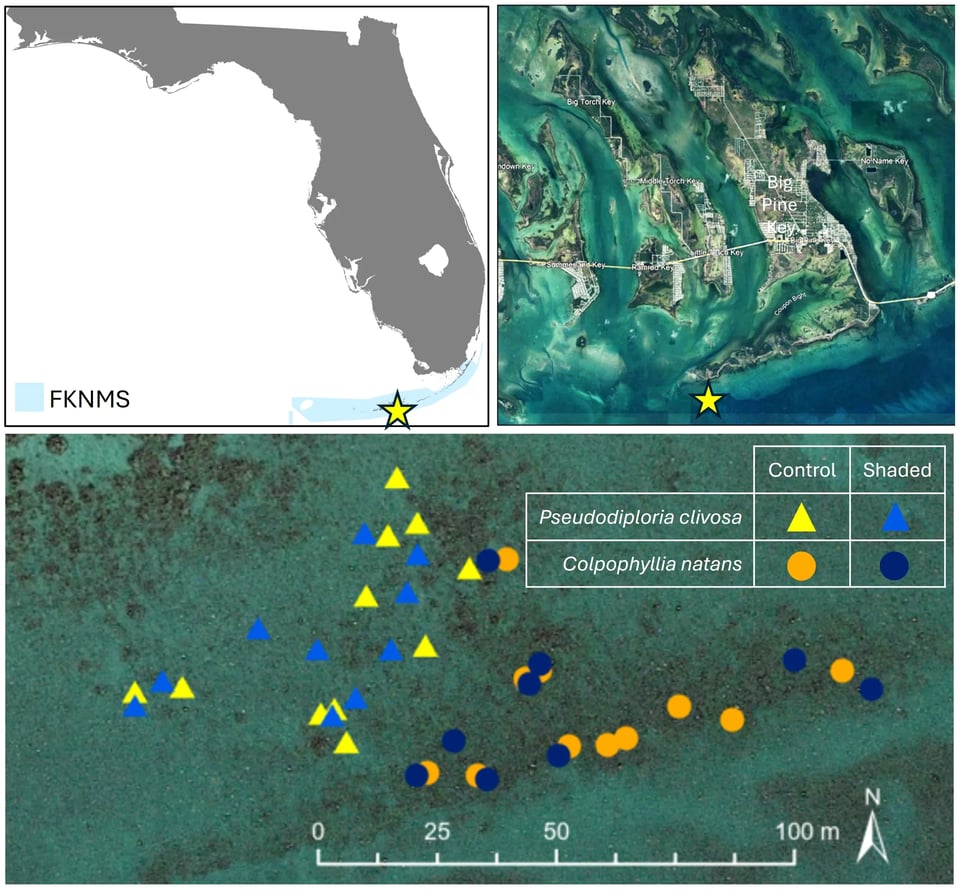
I love how low-tech this is. The tools were a dive slate, a color card, and simple parts from a hardware store.
Once the heat passed, the unshaded corals bounced back faster than the shaded ones. The shade softened the dip, and it didn’t speed the comeback.
It’s a sort of triage, like covering the plants you care about most before a frost. Protecting something isn’t the same as helping it adapt.
ABOUT THE CATALOG
These days everything moves at hyperspeed. We’re creating and producing more content, with less certainty, than at any point we can remember. New emerging technologies are fundamentally reshaping how work gets done, how content is produced, and how we communicate with each other, faster than we can keep up with.
As an experience strategist I read a lot, and I continually run across things that are useful or worth thinking about. In fast moving environments, the hardest part can be deciding what deserves attention.
In the Catalog, I aim to capture what I’ve found each week that’s worth learning, exploring, or watching, so you can start with a shortlist instead of sifting through noise.
Learn more about why I started writing this newsletter in Issue 000.
See you next week,
J Corley


Add a comment: