Friday's Elk

Archives
Subscribe

Friday's Elk

Archive

Friday's Elk, October 25, 2017


I'm in the middle of proofreading She Has Her Mother's Laugh, which has slowed me down on other fronts. But it's a pleasure to see the book continue its odyssey towards publication in May. (Reminder: you can pre-order it now!)

I've got a few talks coming up in the next few weeks, but there's one I want especially to draw your attention to. One week from tonight, I'll be in New York for the second night in my "What is Life?" series.

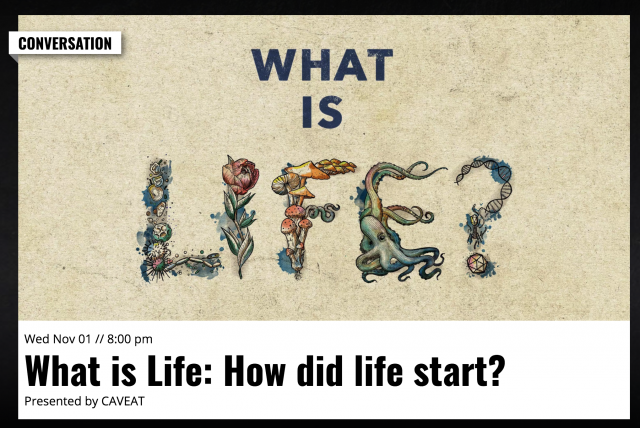
On November 1 at Caveat, you can join me for conversations with a pair of leading scientists about how life began--about the wild history of research into life's origins, and the current debates about how it got started some 4 billion years ago. The first night of the series, in front of a sold-out house, was a blast, so I'm very excited about the next one. You can find information about the event and tickets here.

 
Upcoming Talks

October 27, San Francisco. The Festival of Bad Ad Hoc Hypotheses. Details. SOLD OUT.

October 28 & 29, San Francisco. World Conference of Science Journalists. I'll be speaking at two sessions. Details.

November 1, New York. "What Is Life? Night 2; How did life start?

November 8, University of Oxford. "The Philosophical Virus." The Twelfth Annual Baruch Blumberg Lecture:

December 6, New York. "What Is Life?" Night 3: Is life inevitable?

December 20, New York. "What Is Life?" Final night 4: What did the first life look like?

January 3-7, 2018 San Francisco: Society for Integrative and Comparative Biology Annual Meeting, Plenary Lecture

February 15, 2018, Rochester, NY: Neilly Series Lecture. Details to come.
 
The End
 
As always, if you have friends who would enjoy getting this newsletter, please let them know they can sign up at http://tinyletter.com/carlzimmer.

You can also follow me on Twitter, Facebook, Goodreads. LinkedIn, and Google+. And there's always carlzimmer.com.

Best wishes, Carl
Free post
#77
October 24, 2017
Read more

Friday's Elk, October 14, 2017


Greetings! It's been a pretty busy week.

Last Saturday night, the Online News Association held their annual award ceremony in Washington. My "Game of Genomes" series for Stat won an award for explanatory reporting.

I couldn't be there to accept it, but if I had been, I would have done so on behalf of the talented team who turned my obsession into a stylish piece of online journalism: my editor Jason Ukman; Stat's multimedia guru Jeff Delviscio; Alissa Ambrose for visual editing; Molly Ferguson for the delightful illustrations; Dom Smith for the smart animations; the web masters Corey Taylor, Ryan DeBeasi, and Jim Reevior; Tony Guzman, the project manager; copy editor Sarah Mupo; and Stat's fearless leader, Rick Berke.

On Thursday, I went to Stony Brook University to give a lecture entitled "Science Reporting in the Age of Fake News." Bat Boy figured prominently in it. The talk was recorded, and you can watch it here.

Also on Thursday, I reported for the New York Times about a surprising new study on how skin gets its color. An investigation of the genes behind light and dark skin reveals how variants for different colors were present in our pre-human ancestors--and are now spread around the world.

Finally, if you live in San Francisco (or are coming to this year's World Conference of Science Journalists in that fine city), I hope you can join me at the Festival of Bad Ad Hoc Hypotheses on October 27. Here's how the organizers describe it:

The Festival of Bad Ad Hoc Hypotheses (BAH!) is a celebration of well-argued and thoroughly researched but completely incorrect evolutionary theory. Six brave speakers will present their bad theories in front of a live audience and a panel of judges with real science credentials, who together will determine which speaker takes home the coveted sculpture of Darwin shrugging skeptically. And eternal glory, of course.

Adam Savage, former Mythbuster, will give the keynote. The evening will be hosted by Dr. Kelly Weinersmith. I'll be one of the judges, along with Maggie Koerth-Baker (senior science writer, FiveThirtyEight), ecologist Gail Patricelli, and astrophysicist Katie Mack.

You can order tickets here.
 
Upcoming Talks

October 20: New York: Imagine Science Film Festival Closing Night. Details.

October 27, San Francisco. The Festival of Bad Ad Hoc Hypotheses. Details.

October 28 & 29, San Francisco. World Conference of Science Journalists. I'll be speaking at two sessions. Details.

November 1, New York. "What Is Life?" Night 2: How did life start?

November 8, University of Oxford. "The Philosophical Virus." The Twelfth Annual Baruch Blumberg Lecture:

December 6, New York. "What Is Life?" Night 3: Is life inevitable?

December 20, New York. "What Is Life?" Night 4: What did the first life look like?

January 3-7, 2018 San Francisco: Society for Integrative and Comparative Biology Annual Meeting, Plenary Lecture

February 15, 2018, Rochester, NY: Neilly Series Lecture. Details to come.
 
The End
 
As always, if you have friends who would enjoy getting this newsletter, please let them know they can sign up at http://tinyletter.com/carlzimmer.

You can also follow me on Twitter, Facebook, Goodreads. LinkedIn, and Google+. And there's always carlzimmer.com.

Best wishes, Carl
Free post
#76
October 13, 2017
Read more

Friday's Elk, October 7, 2017

As regular readers of Friday's Elk know, I've been chugging away for a couple years now on a book about heredity--its history and its future, what scientists have discovered about it and what it means to us all.

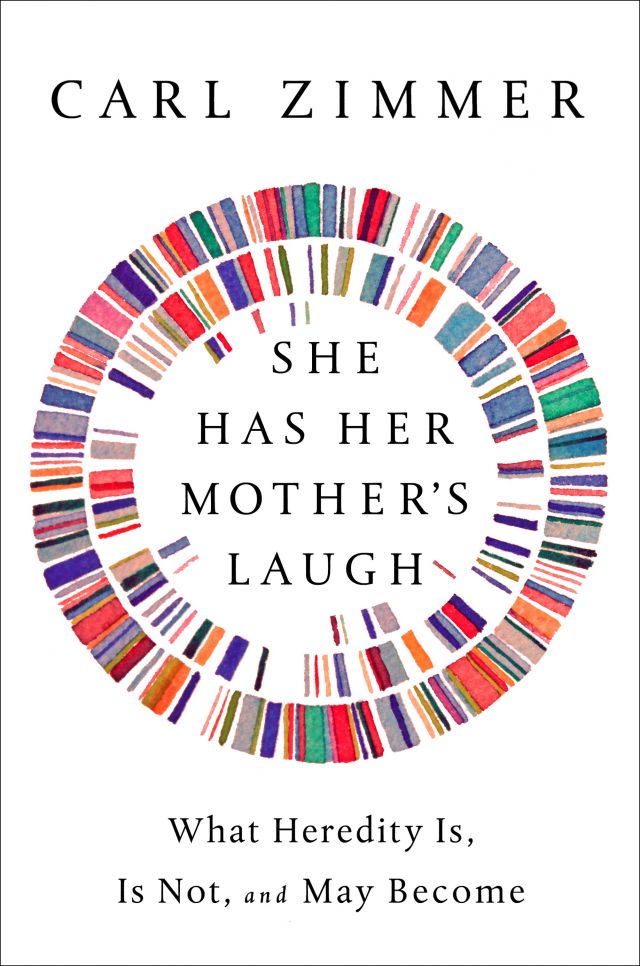
At last, I can share with you the cover of She Has Her Mother's Laugh: What Heredity Is, Is Not, and May Become. I wish I could say that this lovely image was my idea. But the jacket design is the work of Pete Garceau, and the art was created by Sandra Culliton.

The book will arrive in bookstores May 29, 2018. But already my publisher is getting some endorsements. Ed Yong, staff writer at The Atlantic and author of I Contain Multitudes, has this to say:

"She Has Her Mother's Laugh is a masterpiece--a career-best work from one of the world's premier science writers, on a topic that literally touches every person on the planet."

Even though the official publication date is months away, you can pre-order the book now. And I hope you do! Pre-ordering, you may be surprised to learn, is a huge boon to authors these days. It helps make a book more prominent on book-selling web sites, which in turn helps bring it to the attention of radio producers, reviewers, and others who can help spread the word even more.

So I'd be incredibly grateful if you'd help build the momentum. Take your pick from these links (and share them with your friends!): Amazon, Barnes and Noble, IndieBound, or iBooks.

I was inspired to write this book because heredity is at once so familiar and so alien. It is something we all know about, and yet it also manages to keep us perpetually perplexed. What do we inherit from our ancestors, exactly? How does life's past shape its present? DNA is an important part of the answer, but we can't stop there. If we do, we fall prey to all sorts of fallacies. For example, it can come as a surprise to learn that if you go back nine or ten generations, you can find many ancestors from whom you inherit no DNA at all.

In She Has Her Mother's Laugh, I explore the history of this intimately mysterious concept--the shifting explanations as to why like engenders like. I trace the origins of our modern concept of heredity through long-running obsessions with breeding crops and livestock, with defining races of people to be persecuted and even enslaved, with searching for the causes of medical disorders that arise from within. I look at how twenty-first-century studies of genomes have shed light on the astonishing complexity by which heredity influences traits ranging from height to intelligence. And I show how genetic explorations of our ancestry challenge simplistic notions of our inherited identity.

In the book, I consider how we can expand our notion of heredity. It takes place not just betweeen generations, but within our own bodies as well. You can trace a genealogy of the cells in your brain, for example. I also examine controversial arguments that heredity can take place beyond genes, carried across the generations through other channels such as culture or even microbes. A broader understanding of heredity is vital for us to grapple with our new found power--thanks to tools like CRISPR--to alter heredity itself: to steer it on new courses or simply break its familiar rules.

I'll have more news about the book in future issues of Friday's Elk.

Meanwhile...I published a couple things this week in the New York Times.

First up is a column about one especially weird form of heredity: ancient viruses. A surprising amount of our genome is made up of DNA from viruses that infected our ancestors millions of years ago. We've inherited their genes ever since. A series of new studies have provided new clues to how important they are for our health--even for our survival as embryos.

The Times also asked me to investigate the strange row between the U.S. and Cuba, sparked by a mysterious outbreak of nausea and other symptoms in American diplomats. The idea that the diplomats are being attacked with a sonic weapon has gained a lot of currency. But acoustics researchers I talked to found that notion unlikely. In the Friday paper, my article on sonic weapons appeared, plus a "Times Insider" piece on what it's like to wade into international disputes as a science writer.

This week, Medscape posted a video interview I had with Eric Topol about becoming a science writer, reporting on genomics, and contending with genetic tests that assure me I'm a bald warrior.

And, finally, on Thursday, October 12, I'll be speaking at Stony Brook, giving the first AAAS Kavli Lecture. My talk is called "Science Reporting in the Age of Fake News." It will be livestreamed, too: details here.

 
Upcoming Talks

October 12, Stony Brook University, New York: Provost's Lecture. Science Reporting in the Age of Fake News.

October 20: New York: Imagine Science Film Festival Closing Night. Details.

October 28 & 29, San Francisco. World Conference of Science Journalists. I'll be speaking at two sessions. Details.

November 1, New York. "What Is Life?" Night 2: How did life start?

November 8, University of Oxford. Twelfth Annual Baruch Blumberg Lecture

December 6, New York. "What Is Life?" Night 3: Is life inevitable?

December 20, New York. "What Is Life?" Night 4: What did the first life look like?

January 3-7, 2018 San Francisco: Society for Integrative and Comparative Biology Annual Meeting, Plenary Lecture

February 15, 2018, Rochester, NY: Neilly Series Lecture. Details to come.
 
The End
 
As always, if you have friends who would enjoy getting this newsletter, please let them know they can sign up at http://tinyletter.com/carlzimmer.

You can also follow me on Twitter, Facebook, Goodreads. LinkedIn, and Google+. And there's always carlzimmer.com.

Best wishes, Carl
Free post
#75
October 6, 2017
Read more

Friday's Elk, September 24, 2017

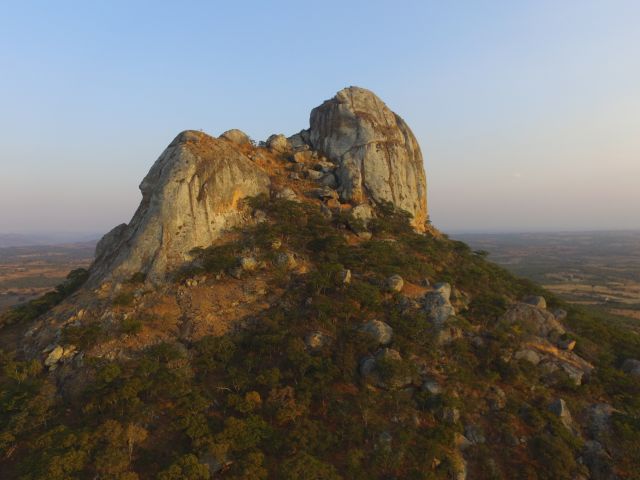
(Photo of ancient DNA site in Malawi, Jacob David)

In the field of ancient DNA, scientists keep doing the impossible. The very idea of reading genes from organisms that died thousands of years ago once seemed absurd. Then it became fairly commonplace. Still, some kinds of old DNA seemed off limits. The only place scientists could hope to find it was cold places where the molecule had a chance of surviving for millennia. Finding ancient DNA in a place like Africa seemed a fool's errand.

Scientists are crashing through that barrier, too. A place like Africa may not be as cold as Alaska. But it does include sites--high-altitude caves, for example--where some DNA can survive. And new, sensitive tests can detect DNA in samples that would have seemed gene-free a few years ago.

This week in the New York Times, I wrote about a new study on 16 samples of ancient DNA from human remains, ranging in age up to 8,000 years old. The new results complement archaeological research, showing how populations have migrated across Africa, sometimes overrunning each other, sometimes merging together. Check it out.


Upcoming Talks


October 4, Boston, Festival of Genomics. "Game of Genomes: How the Public Can Learn About Genomics Through about Their Own Genomes." A panel discussion with some of the scientists who helped me with my series for Stat.

October 11, Stony Brook University, New York: Provost's Lecture. Science Reporting in the Age of Fake News.

October 20: New York: Imagine Science Film Festival Closing Night. Details.

October 28 & 29, San Francisco. World Conference of Science Journalists. I'll be speaking at two sessions. Details.

November 1, New York. "What Is Life?" Night 2: How did life start?

November 8, University of Oxford. Twelfth Annual Baruch Blumberg Lecture

December 6, New York. "What Is Life?" Night 3: Is life inevitable?

December 20, New York. "What Is Life?" Night 4: What did the first life look like?

January 3-7, 2018 San Francisco: Society for Integrative and Comparative Biology Annual Meeting, Plenary Lecture

February 15, 2018, Rochester, NY: Neilly Series Lecture. Details to come.
 
The End
 
As always, if you have friends who would enjoy getting this newsletter, please let them know they can sign up at http://tinyletter.com/carlzimmer.

You can also follow me on Twitter, Facebook, Goodreads. LinkedIn, and Google+. And there's always carlzimmer.com.

Best wishes, Carl
Free post
#74
September 23, 2017
Read more

Friday's Elk, September 16, 2017

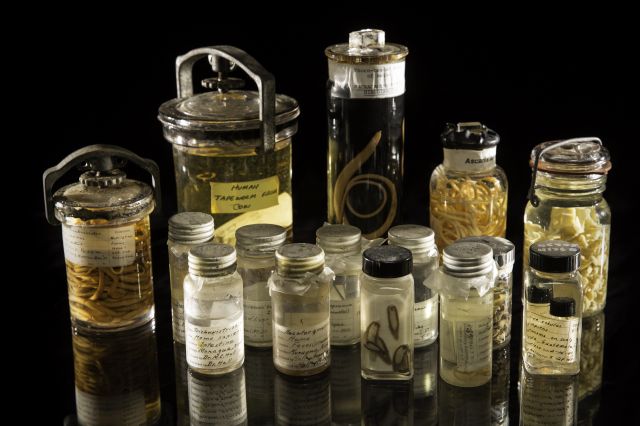
(Photo by Paul Fetters for the Smithsonian Institution)

This week I asked my editor at the New York Times if I needed to make a disclosure of possible conflict of interest. The trouble is that I have a tapeworm named after me: Acanthobothrium zimmeri.

The reason for the question was the topic of my column: the dire threat that parasites now face. A massive study of parasites around the world shows that climate change could drive as many as 1 in 3 species extinct. I worry that Acanthobothrium zimmeri, which infects a tropical skate, will wink out of existence. My editor didn't see the need for a disclosure. But I figured that you, dear reader, should know.

On a separate note, the video of my recent talk about science, journalism, and democracy, is now posted on YouTube.

I've got more talks coming up, listed below--including a couple new additions: I'll be talking on the closing night of the Imagine Science Film Festival in New York on October 20, and I'll be speaking in Rochester NY in February.


Upcoming Talks


October 4, Boston, Festival of Genomics. "Game of Genomes: How the Public Can Learn About Genomics Through about Their Own Genomes." A panel discussion with some of the scientists who helped me with my series for Stat.

October 11, Stony Brook University, New York: Provost's Lecture. Science Reporting in the Age of Fake News.

NEW: October 20: New York: Imagine Science Film Festival Closing Night. Details.

October 28 & 29, San Francisco. World Conference of Science Journalists. I'll be speaking at two sessions. Details.

November 1, New York. "What Is Life?" Night 2: How did life start?

November 8, University of Oxford. Twelfth Annual Baruch Blumberg Lecture

December 6, New York. "What Is Life?" Night 3: Is life inevitable?

December 20, New York. "What Is Life?" Night 4: What did the first life look like?

January 3-7, 2018 San Francisco: Society for Integrative and Comparative Biology Annual Meeting, Plenary Lecture

NEW: February 15, 2018, Rochester, NY: Neilly Series Lecture. Details to come.
 
The End
 
As always, if you have friends who would enjoy getting this newsletter, please let them know they can sign up at http://tinyletter.com/carlzimmer.

You can also follow me on Twitter, Facebook, Goodreads. LinkedIn, and Google+. And there's always carlzimmer.com.

Best wishes, Carl
Free post
#73
September 16, 2017
Read more

Friday's Elk, September 8, 2017


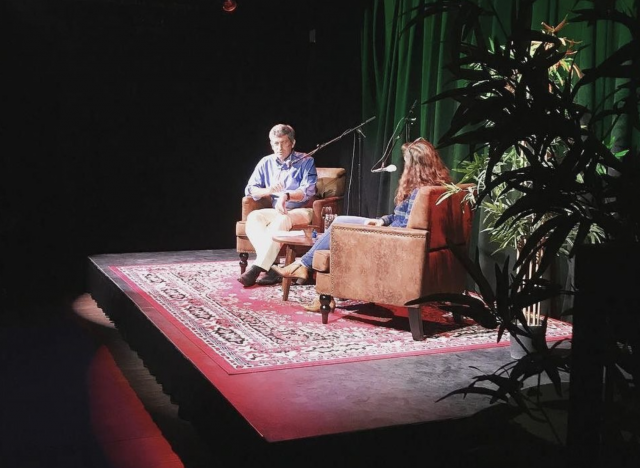
It was a sold-out night on Wednesday at Caveat, the new New York science-themed venue that's hosting my live series, "What is Life?" this fall.

I talked to a philosopher and an astrobiologist about how they define life, bringing out some props to figure out where they stand, life-wise: some lichen from my yard, a wind-up toy, a vial of viruses, and a rusty nail.

Sara Imari Walker of Arizona State University (in the photo) told the audience that I was talking about life as a thing, whereas she thought of it as a process. I took an applause-based survey, and discovered that they agreed.

The next Caveat conversation will be on November 1. The question of the night will be, How did life start?

Earlier on Wednesday, I gave the keynote talk at a meeting at Rockefeller University called "Science, Democracy, and Journalism." I explored a disastrous episode in the history of science, when the Soviet Union turned away from biology and persecuted geneticists. I found some disturbing parallels to the state of science in the United States today. I posted the text of my speech on Medium, with links and sources.

 
Upcoming Talks

October 4, Boston, Festival of Genomics. "Game of Genomes: How the Public Can Learn About Genomics Through about Their Own Genomes." A panel discussion with some of the scientists who helped me with my series for Stat.

October 11, Stony Brook University, New York: Provost's Lecture.

October 28 & 29, San Francisco. World Conference of Science Journalists. I'll be speaking at two sessions. Details here.

November 1, New York. "What Is Life?" Night 2: How did life start?

November 8, University of Oxford. Twelfth Annual Baruch Blumberg Lecture

December 6, New York. "What Is Life?" Night 3: Is life inevitable?

December 20, New York. "What Is Life?" Night 4: What did the first life look like?

January 3-7, 2018 San Francisco: Society for Integrative and Comparative Biology Annual Meeting, Plenary Lecture

NEW: February 15, 2018: Rochester, NY: Neilly Lecture Series, River Campus Libraries. 
 
The End
 
As always, if you have friends who would enjoy getting this newsletter, please let them know they can sign up at http://tinyletter.com/carlzimmer.

You can also follow me on Twitter, Facebook, Goodreads. LinkedIn, and Google+. And there's always carlzimmer.com.

Best wishes, Carl
Free post
#72
September 8, 2017
Read more

Friday's Elk, August 25, 2017

Last week I let you know about my upcoming series of talks about life. Here's an update with the details of the full schedule. All four events will take place at Caveat in Manhattan:

9/6 I'll kick off the series with the fundamental question, "What is life?" First I'll talk to a philosopher, Carlos Mariscal, about why this question is so hard to answer--perhaps because the question itself doesn't make sense. Then I'll speak with Sara Imari Walker, a physicist and astrobiologist, about how she answers the question as part of the search for extraterrestrial life.

11/1 How did life start? Geochemist H James Cleaves II and I will talk about the century-long struggle to answer that question. I'll then talk with astrobiologist Caleb Scharf about where that struggle has left us today, and where it's headed.

12/6 Is life inevitable? MIT physicist Jeremy England and I talk about his theory about how life emerges out of physics. I then ask biologist Steven Benner about whether life has to be the way it is on Earth, or if it can exist in weird forms we can barely imagine.

12/20 What did the first life look like? Microbial ecologist Donato Giovonelli and I will talk about his travels to the extreme places on Earth that may be the best models for where the earliest life existed. Finally, I'll talk to Kate Adamala about how she studies the first life forms--by trying to create them from scratch.
 
The Seasons of the Microbiome

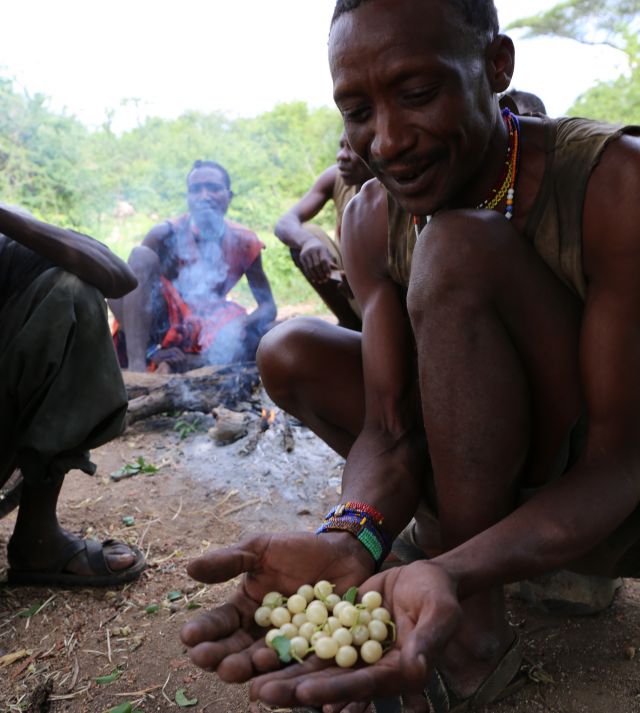
In 2010, I wrote my first article for the New York Times about the human microbiome. In the seven years since, research on our bacterial ecosystem has taken off. It's now becoming clear that there is no such thing as "the" human microbiome. There are many of them, and they're different from place to place. If you are a suburban American, for example, you have a microbiome that's shaped by your existence--the refined foods you eat, the antibiotics you take for infections, the antibacterial soap you use to wash your hands, and so on. If you're a hunter-gatherer, you have a microbiome shaped by your very different life.

Researchers are now gaining an understanding of the many human microbiomes. In my column this week for the New York Times, I report on research on the Hadza, a small group of hunter-gatherers in Tanzania. The work is revealing all sorts of surprises, including a microbiome that cycles with the seasons. (Photo by Jeff Leach.)
 
Award News

This week the finalists were announced for the Online Journalism Awards. I'm delighted that my series for Stat, "Game of Genomes" is a finalist for explanatory journalism.

 
Upcoming Talks

September 6, New York, "What Is Life?" Details here.

September 6, New York, Rockefeller University. "Science, Journalism, and Democracy: Grappling with a New Reality." I'll be giving the keynote lecture for this day-long meeting. You can watch in person or via livestream. Details here.

October 4, Boston, Festival of Genomics. "Game of Genomes: How the Public Can Learn About Genomics Through about Their Own Genomes." A panel discussion with some of the scientists who helped me with my series for Stat.

October 11, Stony Brook University, New York: Provost's Lecture

October 28 & 29, San Francisco. World Conference of Science Journalists. I'll be speaking at two sessions. Details here.

November 1, New York. "What Is Life?" Night 2: How did life start?

November 8, University of Oxford. Twelfth Annual Baruch Blumberg Lecture

December 6, New York. "What Is Life?" Night 3: Is life inevitable?

December 20, New York. "What Is Life?" Night 4: What did the first life look like?

January 3-7, 2018 San Francisco: Society for Integrative and Comparative Biology Annual Meeting, Plenary Lecture
 
The End
 
As always, if you have friends who would enjoy getting this newsletter, please let them know they can sign up at http://tinyletter.com/carlzimmer.

You can also follow me on Twitter, Facebook, Goodreads. LinkedIn, and Google+. And there's always carlzimmer.com.

Best wishes, Carl
Free post
#71
August 24, 2017
Read more

Friday's Elk, August 18, 2017


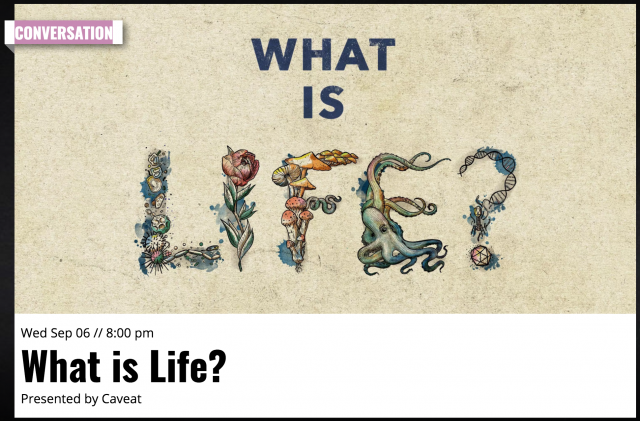
I'm excited to let you know about a series of live events I'll be presenting this fall in New York.

It's called, simply, "What is Life?" I'll be talking on stage, one-on-one, with scientists and philosophers about this fundamental question. We're going to explore the latest insights science has provided us about how life began, how to find it on other planets, and how to think about it.

The events will take place at Caveat, a new Manhattan science-focused venue (complete with food and drink). The first one will be on September 6 at 8 pm. I'll speak first to Carlos Mariscal, a philosopher from the University of Nevada, and then to Sara Imari Walker, a physicist at Arizona State University.

To get more information and tickets, go here. Please share the link to anyone who you think might want to come.

There will be three more evenings in the series over the course of the next few months--I'll send out those details soon.
 
How Many Kinds of Cells Do We Have?

It's a simple question--with no good answer. For my column this week in the New York Times, I explore the quest to find one. Scientists are having some success figuring out how many kinds of cells are in a tiny worm. Scaling up to our 37-trillion-cell bodies is going to be a challenge, though.

 
Upcoming Talks

NEW: September 6, New York, "What Is Life?" Details here.

September 6, New York, Rockefeller University. "Science, Journalism, and Democracy: Grappling with a New Reality." I'll be giving the keynote lecture for this day-long meeting. You can watch in person or via livestream. Details here.

October 4, Boston, Festival of Genomics. "Game of Genomes: How the Public Can Learn About Genomics Through about Their Own Genomes." A panel discussion with some of the scientists who helped me with my series for Stat.

October 11, Stony Brook University, New York: Provost's Lecture

October 28 & 29, San Francisco. World Conference of Science Journalists. I'll be speaking at two sessions. Details here.

November 15, University of Oxford. Twelfth Annual Baruch Blumberg Lecture

January 3-7, 2018 San Francisco: Society for Integrative and Comparative Biology Annual Meeting, Plenary Lecture
 
The End
 
As always, if you have friends who would enjoy getting this newsletter, please let them know they can sign up at http://tinyletter.com/carlzimmer.

You can also follow me on Twitter, Facebook, Goodreads. LinkedIn, and Google+. And there's always carlzimmer.com.

Best wishes, Carl
Free post
#70
August 17, 2017
Read more

Friday's Elk, August 11, 2017


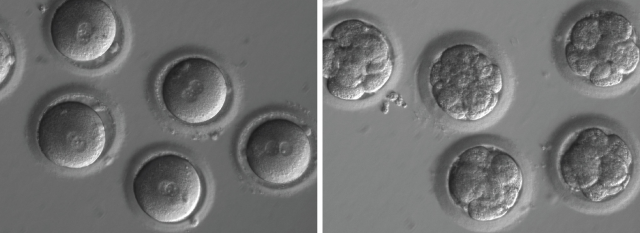
Greetings! I'm back from my break and putting the finishing touches on my heredity book. This is the anxious stage when I have to try to artfully slip late-breaking news--such CRISPR-edited human embryos (shown above)--into the manuscript. Everyone who writes a book about science silently wishes that scientists would halt all their relevant research once the book goes to the printer. After the book has safely made it to the paperback edition stage, I think it would be okay for the research to start again...

Speaking of CRISPR, I talked this week to Michael Barbaro of "The Daily," the New York Times podcast. In a week dominated by talk of nuclear war, I was grateful to get a chance to chat about biology. Here's the episode. My portion starts around 7:00.

For my first post-break "Matter" column for the New York Times, I write about some beautiful new fossils that tell us something new about the history of mammals. In the Age of Dinosaurs, a number of them glided overhead.

Also, I'm going to be giving a lot of talks this fall--in New York, San Francisco, and elsewhere. I've added some new entries below, and I have a few more to pass along once they get officially locked down. Stay tuned.
 
Upcoming Talks

NEW: September 6, New York, Rockefeller University. "Science, Journalism, and Democracy: Grappling with a New Reality." I'll be giving the keynote lecture for this day-long meeting. You can watch in person or via livestream. Details here.

NEW: October 4, Boston, Festival of Genomics. "Game of Genomes: How the Public Can Learn About Genomics Through about Their Own Genomes." A panel discussion with some of the scientists who helped me with my series for Stat.

October 11, Stony Brook University, New York: Provost's Lecture

October 28 & 29, San Francisco. World Conference of Science Journalists. I'll be speaking at two sessions. Details here.

November 15, University of Oxford. Twelfth Annual Baruch Blumberg Lecture

January 3-7, 2018 San Francisco: Society for Integrative and Comparative Biology Annual Meeting, Plenary Lecture
 
The End
 
As always, if you have friends who would enjoy getting this newsletter, please let them know they can sign up at http://tinyletter.com/carlzimmer.

You can also follow me on Twitter, Facebook, Goodreads. LinkedIn, and Google+. And there's always carlzimmer.com.

Best wishes, Carl
Free post
#69
August 10, 2017
Read more

Friday's Elk, July 14, 2017


Greetings! I'm taking a summer break, but I wanted to let you know about a couple of new pieces of audio for your listening pleasure.

--This week, I spoke with BBC World Service's show, "The Inquiry." The title of this week's episode is, "Is Gene Editing Out of Control?" I told the story of how we got to the point where we can even ask that question.

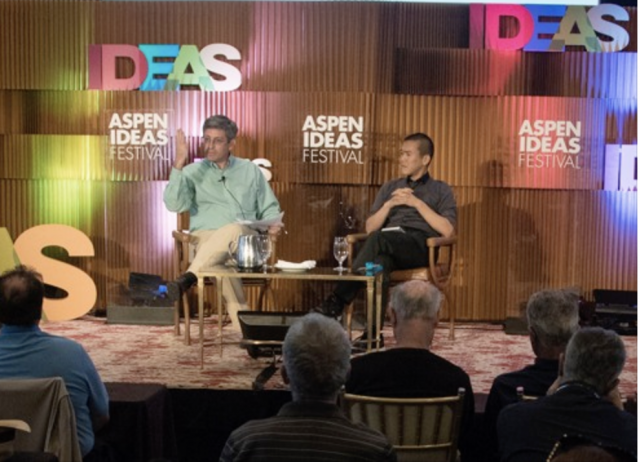
--At last month's Aspen Idea Festival, fellow science writer Ed Yong and I had a lively conversation in front of a live audience about the many ways science undermines our notion of ourselves as individuals. We roved over new discoveries about the human genome, microbiomes, and brains. You can listen to the hour-long recording here.
 
Good Stuff

A podcast history of how twenty women tried to reach the North Pole.

Scientists have now discovered a grand total of four Denisovans.

How CRISPR may save island birds from their invasive enemies.

 
Upcoming Talks

October 11, Stony Brook University, New York: Provost's Lecture

November 15, University of Oxford. Twelfth Annual Baruch Blumberg Lecture

January 3-7, 2018 San Francisco: Society for Integrative and Comparative Biology Annual Meeting, Plenary Lecture
 
The End
 
As always, if you have friends who would enjoy getting this newsletter, please let them know they can sign up at http://tinyletter.com/carlzimmer.

You can also follow me on Twitter, Facebook, Goodreads. LinkedIn, and Google+. And there's always carlzimmer.com.

Best wishes, Carl
Free post
#68
July 13, 2017
Read more

Friday's Elk, July 1, 2017

(Image: Macalester College)

A number of people just signed up this week for Friday's Elk--I'm guessing after seeing a link to it in my Reddit Ask-Me-Anything session on Tuesday. Welcome!

Just so you know, I use this email to keep interested folks up to date with my writing and talks. And, taking a page from science writer Ed Yong (who puts out a superb email newsletter), I'm going to start sharing the science-related things I'm consuming--articles, podcasts, etc.--that I consider particularly link-worthy.
 
The Ultimate Parasite

Parasites are a thing for me. In Parasite Rex, I sang the praises of creatures like tapeworms. (One of my career highlights is lending my name to the tapeworm Acanthrobothrium zimmeri.) I've explored the exquisite stripped-down cunning of viruses in A Planet of Viruses. I have defended the reputation of parasites on Radiolab. But this week was the first time I reported on what is perhaps the ultimate parasite: deformed proteins called prions.

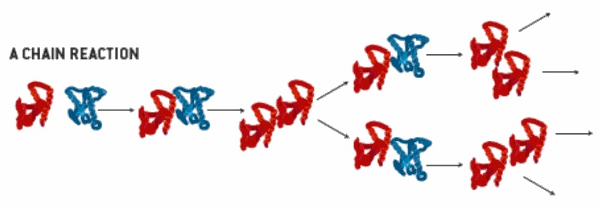
Prions replicate by forcing normal proteins to bend into their own disease-causing shape. On Tuesday, I wrote a story in the New York Times about a raging epidemic of prions that's spread across much of the United States over the past fifty years. Aside from hunters, most people aren't familiar with it. That's because chronic wasting disease attacks only deer and elk. For now, there's no clear evidence of people getting sick from eating prion-laced meat from these animals. But that's no reason not to be concerned. One expert told me he sees only one promising way to slow down the outbreak: fire. (You could say, "Kill it with fire," except that the prion was never really alive to begin with.)
 
The Gene That Makes Men Live Longer

To understand why we get old, scientists have been searching for genetic variations that are more common in long-lived people. It's been a hard search, but in recent years scientists have had a few successes. I wrote earlier this month in the Times about a variant in the gene for the receptor for growth hormone that appears to extend people's lives by a decade. For some reason, though, the effect only works on men. The study raises a lot more questions than it answers, so don't expect an army of immortal men any time soon. Here's my story.
 
The Genetics Revolution

The Aspen Ideas Festival asked me a few questions about how CRISPR and other new technologies are changing science and shaping our future. Here's my response.
 
Social Media Notes

If you like to get your updates on Goodreads, here is my page. On Facebook, I've started posting updates on my books and such on my author page. Hit "like" to get the posts in your feed.
 
Good Stuff

Your moment of geological Zen.

STAT looks at the horrifying future of opioid addiction.

The White House's Office of Science and Technology Policy is now entirely empty.

How climate change will impoverish the American South.

Following up on my recent story on genes that influence intelligence, a geneticist shows just how badly they predict actual intelligence--at least for now.

A landmark study nails down just how dangerous a popular class of insecticides are to bees.

NASA runs a child slave ring on Mars. At least that's what Alex Jones is suggesting.

British journalist Adam Rutherford has published a great book on how genetics is changing how we think about human ancestry: A Brief History of Everyone Who Has Ever Lived. It will come out in the U.S. in October, but you can pre-order it now.

Maia Szavalitz writes about the Holocaust survivor who is bankrolling the psychedelic revolution in psychology.

John Oliver continues to bring the science: this week he talked about vaccines.

 
Upcoming Talks

October 11, Stony Brook University, New York: Provost's Lecture

November 15, University of Oxford. Twelfth Annual Baruch Blumberg Lecture

January 3-7, 2018 San Francisco: Society for Integrative and Comparative Biology Annual Meeting, Plenary Lecture
 
The End
 
As always, if you have friends who would enjoy getting this newsletter, please let them know they can sign up at http://tinyletter.com/carlzimmer.

You can also follow me on Twitter, Facebook , LinkedIn, and Google+. And there's always carlzimmer.com.

Best wishes, Carl
Free post
#67
June 30, 2017
Read more

Friday's Elk, June 9, 2017


It's been a big news week--and not just when it comes to politics.

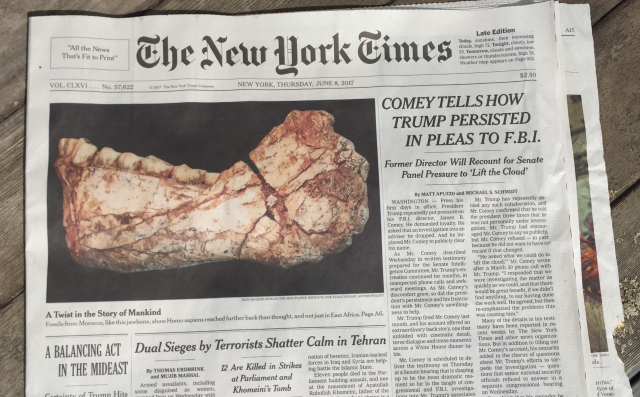
In yesterday's New York Times, I reported on the discovery of the oldest known fossils of our species. Their discovery represents a huge jump back in time. Before now, the oldest known fossils of Homo sapiens were 195,000 years old. The new ones are over 300,000 years old. Aside from breaking records, the fossils also tell us new things about how our species evolved. A picture of one of the fossils made the front page of the paper, making for quite a contrast with news about Comey's testimony, terrorism in Tehran, and all the rest of our species's current concerns. You can read the online ​version of my story here.


Here are a couple other pieces I've written since my last email.

1. Scientists who study intelligence have long wondered what role biology plays in the differences in people's test scores. In recent years, they've discovered genetic variants that influence those differences. While each only plays a tiny role, they may guide us to particular aspects of the human brain. Here's my column on the latest advances in this research.

2. Regardless of the blithe dismissals of global warming's importance by the current administration, scientists are continuing to uncover worrying clues that climate change will cause wide-ranging, damaging impacts on the world's ecosystems. I wrote about miniature ecosystems that scientists are experimenting on to see how high temperatures and high levels of carbon dioxide will alter the ocean's food webs. 


Since my last Friday's Elk, I've been finishing up my book on heredity, She Has Her Mother's Laugh, and showing it to a few people for comments and corrections. Fellow scribe Ed Yong approves, thankfully. The book will probably be coming out in late spring 2018. I'll send out more information when I get it.

On the talk front: a couple months ago, I gave a talk about getting my genome sequenced. It's now on YouTube.

And here are my upcoming talks...

June 25-28, 
Aspen Ideas Festival

October 11, Stony Brook University, New York: Provost's Lecture

October 27-29, San Francisco: World Conference of Science Journalists

November 15, University of Oxford: Twelfth Annual Baruch Blumberg Lecture

January 3-7, 2018, San Francisco: Society for Integrative and Comparative Biology Annual Meeting, Plenary Lecture
 
The End
 
As always, if you have friends who would enjoy getting this newsletter, please let them know they can sign up at http://tinyletter.com/carlzimmer.

You can also follow me on Twitter, Facebook , LinkedIn, and Google+. And there's always carlzimmer.com.

Best wishes, Carl
Free post
#66
June 8, 2017
Read more

Friday's Elk, April 27, 2017

A few days ago I reached the end of my manuscript for my upcoming book about heredity, which I've tentatively called She Has Her Mother's Laugh. Of course, I'm not quite done: there are still a few [Fill in really complicated stuff here] markers that I'm going to have to attend to. Nevertheless, it is a huge relief to type those three letters. In future emails, I'll send updates on the book: the cover, the official publication date next year, talks, reviews, Instagrams of uses as doorstops and paperweights, etc.
Since the last Friday's Elk, I've written a few columns for the New York Times:

1. This week, some scientists made a pretty bold claim: humans were in California 130,000 years ago. That's extreme for a few reasons, such as the fact that they'd probably have to be Neanderthals or some other population of humans not around today. In my column, I lay out the evidence, and the objections from other scientists. (And here's a Q & A I did for "California Today," a newsletter from the Times.)

2. Different species make for different parents. For the first time, scientists have been able to cross-breed two species (mice in this case) and discover a genetic difference that helps make parents either doting or absentee.

3. The Industrial Age has altered the planet in many ways. It has changed the chemistry of the atmosphere, acidified the ocean, and raised the average surface temperature by about 2 degrees F since 1880. A new study shows that by pumping carbon dioxide into the atmosphere, we've also accelerated the photosynthesis of plants worldwide.

--On the talk front, last week I joined a panel of scientists and journalists at Yale for an event called "Truth in the Internet Age: Science Under Siege.” You can watch the video here.

I've got a few more talks falling into place in the next few months. Details to come for all of these...

June 25-28, Aspen Ideas Festival

October 11, Stony Brook University, New York: Provost's Lecture

October 27-29, San Francisco: World Conference of Science Journalists

November 15, University of Oxford: Twelfth Annual Baruch Blumberg Lecture

January 3-7, 2018, San Francisco: Society for Integrative and Comparative Biology Annual Meeting, Plenary Lecture

Finally, I wanted to send out another reminder about "Thread," a four-day storytelling workshop in June at Yale. I'll be joining a pretty great crew of journalists, podcasters, and multimedia machers. Join us!


The End
 
As always, if you have friends who would enjoy getting this newsletter, please let them know they can sign up at http://tinyletter.com/carlzimmer.

You can also follow me on Twitter, Facebook , LinkedIn, and Google+. And there's always carlzimmer.com.

Best wishes, Carl
Free post
#65
April 27, 2017
Read more

Friday's Elk, March 25, 2017


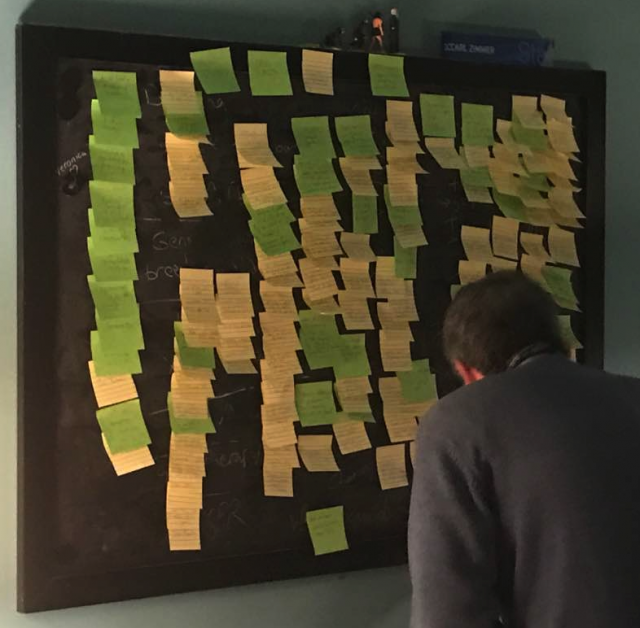
The other day I used Post-it notes to organize my ideas for the last chapter of my book about heredity. On the one hand, getting to this point feels good: Last chapter! Lots of ideas! On the other hand, you readers probably won't be happy with a pile of Post-it notes at the end of my book. So...I'm busy.

Since the last Friday's Elk, I've published a couple columns for the New York Times. Recently, a group of scientists published a review about the emerging science of making embryo-like...things. They're not eggs fertilized by sperm. They're reprogrammed stem cells that, when combined with each other, start to develop embryo-like features. We can learn a lot from them. But how far should we let them go? Here's my look at the ethics of this brave new world.

In another column, I wrote about the deep history of Australia. People arrived in Australia well over 40,000 years ago, judging by their skeletons and artifacts. In recent years, geneticists have also been finding clues to their history, in the DNA of living Aboriginal Australians. I wrote about a new study that suggests the first Australians arrived around 50,000 years ago, spread quickly around the perimeter of the continent, and then pretty much stayed put. There was no major mixing of the regional populations once they settled down. You can read about the study here.

Finally, Stanford Medicine published a nice piece on the talk I gave there earlier this month about looking at my genome.
 
The End
 
As always, if you have friends who would enjoy getting this newsletter, please let them know they can sign up at http://tinyletter.com/carlzimmer.

You can also follow me on Twitter, Facebook , LinkedIn, and Google+. And there's always carlzimmer.com.

Best wishes, Carl
Free post
#64
March 24, 2017
Read more

Friday's Elk, March 3, 2017


I'm writing to you from the lovely town of La Jolla, California, where I'm participating in Future of Genomic Medicine, a meeting where scientists are talking about how sequencing our DNA is going to affect our lives. I gave a talk yesterday about the experience of getting my genome sequenced. If you're on Twitter, you can read about the presentations under the hashtag #FOGM17.

From here, I'm heading to Palo Alto. If you live anywhere near Stanford University, please consider joining me for a talk at 1 pm on Monday, March 6, in McCaw Hall. I'm giving the keynote address at the annual meeting of the Stanford Center for Computational, Evolutionary and Human Genomics. Details here.

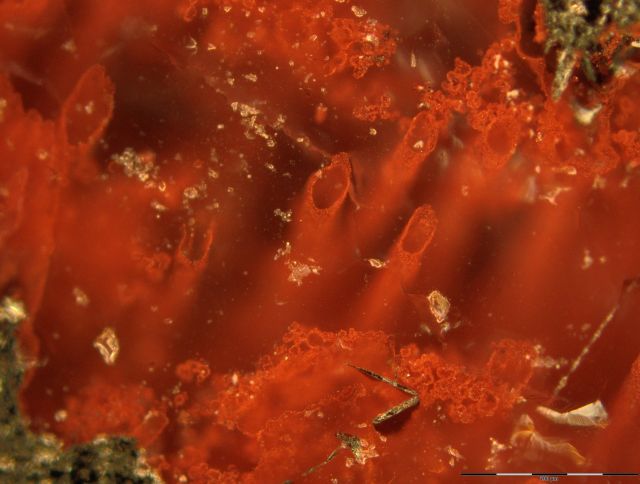
In my column this week for the New York Times, I wrote about what may be the world's oldest known fossils. Or not. They may be 3.77 billion years old. Or 4.2 billion. What's half a billion years between friends? This sort of uncertainty comes with the job when you're a scientist trying to reconstruct the first chapters of Earth's history. These fossils come from what may be the world's oldest known rocks, from a formation in Canada. I wrote about the debate over their age in 2014 in Scientific American.

This week I also spoke to the BBC about de-extinction. I joined a group of scientists and writers on BBC Newshour Extra. You can listen to it here. And here's a feature on de-extinction I wrote for National Geographic.


The End
 
As always, if you have friends who would enjoy getting this newsletter, please let them know they can sign up at http://tinyletter.com/carlzimmer.

You can also follow me on Twitter, Facebook , LinkedIn, and Google+. And there's always carlzimmer.com.

Best wishes, Carl
Free post
#63
March 2, 2017
Read more

Friday's Elk, February 17, 2017


Greetings! Here's a quick update since the last Friday's Elk.

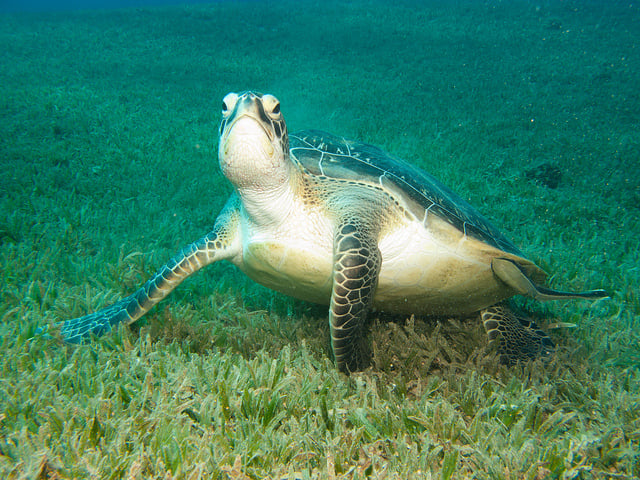
1. The oceans contain vast underwater prairies known as seagrass meadows. For my column this week in the New York Times, I write about the remarkable services they provide to us--including killing off disease-causing bacteria. Maybe if we come to appreciate their value, we'll stop destroying them at the rate of a football field every thirty minutes. (Image: prilfish via Creative Commons)

2. Why do we sleep? For my previous "Matter" column, I write about scientists who are inspecting the molecular changes that occur in the brain when we doze. Their results suggest that we prune away some connections between our neurons--sharpening our memories, as it were.

3. My latest Science Happens video for Stat is up! I visit a lab where engineers are reinventing the MRI scanner, to make it tiny enough to fit in the back of an ambulance and rugged enough to set up in a battlefield hospital.

4. I'll be giving a couple talks in the next few weeks:

-->March 2: Future of Genomic Medicine, La Jolla, California. Details here.

-->March 6: Palo Alto: Keynote lecture at the annual meeting at the Stanford Center for Computational, Evolutionary and Human Genomics. Free and open to the public. Details here.

5. If you're writer, podcaster, multimedia master, or other species of professional communicator, please consider attending Thread at Yale in June. I'll be one of the instructors at this three-day event. Details here.

6. On his blog, Francis Collins, the director of the National Institutes of Health, very kindly mentioned my book Parasite Rex, calling it "a riveting, firsthand account of how 'sneaky' parasites can be." It's 17 years too late for the hardback blurbs, but maybe I can sneak onto the next paperback printing!
 
The End
 
As always, if you have friends who would enjoy getting this newsletter, please let them know they can sign up at http://tinyletter.com/carlzimmer.

You can also follow me on Twitter, Facebook , LinkedIn, and Google+. And there's always carlzimmer.com.

Best wishes, Carl
Free post
#62
February 16, 2017
Read more

Friday's Elk, January 22, 2017


Greetings! I have just a couple notes for you in this issue of Friday's Elk.

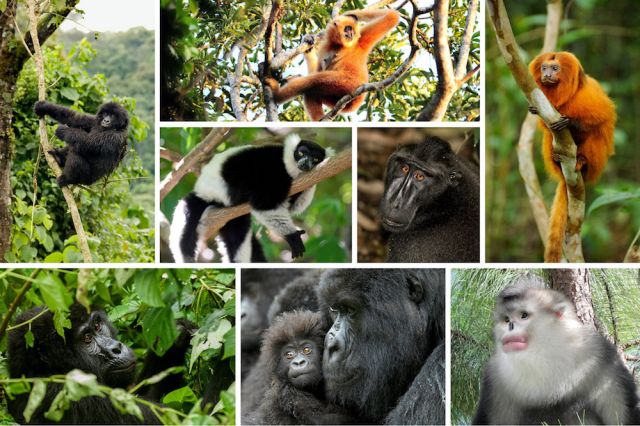
1. Earlier this week, I published a column in the New York Times about the awful state of our fellow primates. Many species are dangerously close to extinction, due to human activity across the planet. If we want to save them, the time is now.

2. If you're going to the Rancho Mirage Writers Festival this coming weekend, please join me on Saturday at 3:40 pm and on Sunday at 12:40 pm. I'll be talking about the dangers of viruses, both old and new.

3. Finally, in a nice bit of news, I found out this week that the video series I host for Stat, "Science Happens," is a finalist for a National Magazine Award!

 
The End
 
As always, if you have friends who would enjoy getting this newsletter, please let them know they can sign up at http://tinyletter.com/carlzimmer.

You can also follow me on Twitter, Facebook , LinkedIn, and Google+. And there's always carlzimmer.com.

Best wishes, Carl
Free post
#61
January 21, 2017
Read more

Friday's Elk, January 6, 2017


Happy 2017! (I confess, I had to correct that from "2016" just before sending this out.)

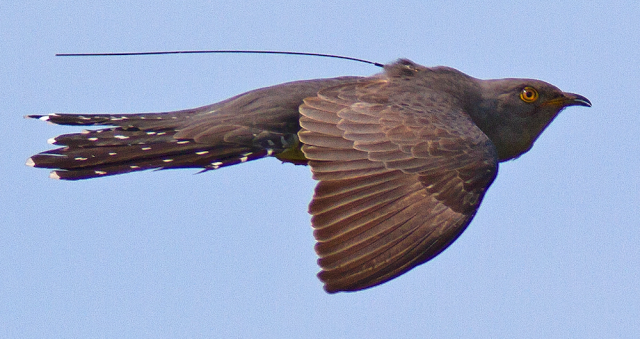
This week I wrote a column about migrations. There's something endlessly fascinating about migratory animals: namely, the huge amount of things we don't understand about them. We're not sure how they manage to make the same journeys every year. Sometimes it's hard to know why they bother. Sometimes we don't even quite know the course they take.

For this week's Times column, I looked at new technologies that are revealing how birds sync their migrations for thousand of miles to the seasonal cycles of plants, ensuring that whenever they land, there's food to eat. Like so many things in the natural world, this new research shows, climate change may prove incredibly disruptive to these migrations. (Image: Palle Sørensen)

(I've written about animal migrations before here and here and here.)

This week I also wrote a story for Nautilus about the birth of biotechnology. As is so often the case, a powerful application emerged out of pure curiosity. That should be a lesson to people who think scientists should only study things they know in advance will benefit humanity.
 
The Talks

January 28-29, 2017 Rancho Mirage Writers Festival I will be speaking about the year in viruses, both on Saturday at 3:40 pm and on Sunday at 12:40 pm. Full schedule here.

March 2-3, 2017 San Diego. The Future of Genome Medicine. Details here.
 
The End
 
As always, if you have friends who would enjoy getting this newsletter, please let them know they can sign up at http://tinyletter.com/carlzimmer.

You can also follow me on Twitter, Facebook , LinkedIn, and Google+. And there's always carlzimmer.com.

Best wishes, Carl
Free post
#60
January 6, 2017
Read more

Friday's Elk, December 23, 2016

It's hard to believe this will be the last Friday's Elk of 2016. I just wanted to thank everyone for being curious enough about my work to clutter your inboxes with emails from me.

One of the advantages of sending out a semi-regular newsletter is that it's easy to scan back over them and consider which experiences of this past year stood out.

This fall marked my one-year anniversary as a contributing national correspondent for Stat. Among the most satisfying features I wrote for them were a story about the struggle to find the molecular basis of memory, a piece about an experimental procedure to save a man's life with viruses, and a three-part series about getting my genome sequenced.

At the New York Times, I continued in 2016 to focus on our species and what scientists are learning about its history, including the identity of the first farmers and how our species started in Africa and then spread around the world. I also wrote a profile of one of the leading explorers of ancient human DNA. A piece on our extensive interbreeding with Neanderthals and Denisovans even inspired a love song from comedian Harry Shearer. In addition, I looked further back into our deep history, considering how our fins became hands and where we fit on the tree of life.

On the book front, A Planet of Viruses got translated into French, and Parasite Rex got translated into Spanish. And, of course, I worked like mad on my next book, on heredity. It's such a rich subject that I will probably be spending the next few months deciding what to leave out. Killing my darlings, in other words. I'll keep you updated in the coming year about its progress.

I spent a fair amount of the year on the road and the phone, talking about science. Among my favorites is a conversation I had in the spring with the historian Daniel Kevles about the prospect of reengineering humanity. Inquiring Minds had me on their show to talk about viruses. In Texas, I gave the Stephen Jay Gould Prize Lecture about human evolution. On Innovation Hub, I talked about what our genomes can and can't tell us. And at the end of the year, I talked about writing about science with the good people at Longform.

Finally, here's my latest Matter column, just out on Wednesday in the Times. I consider the question of maturity--when we are old enough to vote, to drive, to be tried as an adult. Judges would like some easy answers from neuroscience, but the picture that the researchers are uncovering is not simple. But it is fascinating in its complexity.

Best wishes for 2017. We will be living through some interesting times, to put it mildly. I'll be doing my part to chronicle them.
 
The Talks

January 28-29, 2017 Rancho Mirage Writers Festival. I will be speaking about the year in viruses, both on Saturday at 3:40 pm and on Sunday at 12:40 pm. Full schedule here.

March 2-3, 2017 San Diego. The Future of Genome Medicine. Details here.
 
The End
 
As always, if you have friends who would enjoy getting this newsletter, please let them know they can sign up at http://tinyletter.com/carlzimmer.

You can also follow me on Twitter, Facebook , LinkedIn, and Google+. And there's always carlzimmer.com.

Best wishes, Carl
Free post
#59
December 22, 2016
Read more

Friday's Elk, December 9, 2016


The writing life can be lumpy. Last week was so quiet that I didn't bother sending out a Friday's Elk. Today, on the other hand, I've got a batch of things to tell you about.
 
A Talk With Longform

I'm a huge fan of the Longform podcast, a weekly interview with journalists about their careers and how they do their work. When I teach writing, I always make sure to include links to some Longform episodes on the syllabus so that students can get a sense of what it's really like to be a journalist.

This week they had me on their show. I talked with Evan Ratliff (founder of the Atavist and a fine journalist in his own right) about the consolations of science, about finding stories, and a childhood puzzlement over ticks. You can listen here.
 
A Shot to the Heart (of Viruses)

A century ago, scientists discovered viruses that kill bacteria. They started using them as a way to fight infections, a method called phage therapy. But when antibiotics arose, phage therapy faded away from medicine in the United States and Europe. For Stat, I've written a story about scientists who are trying to bring phage therapy back to the west. They injected viruses discovered in a lake into a man's chest to save his life. Check it out.
 
Watching Evolution in Action (The Scary Kind)

This week I have a new Science Happens! video for Stat. I paid a visit to a lab where scientists have built a gigantic petri dish the size of a ping-pong table. They can observe bacteria evolve resistance to antibiotics in real time. You can watch it here.
 
Why Don't Monkeys Talk?

For my latest "Matter" column for the New York Times, I take a look at the evolution of speech. People naturally learn to speak, but other primates have never been documented to do so. A team of scientists who have video-taped monkeys have concluded that they have the anatomical wherewithal for human speech. The crucial differences may therefore be in the brain. You can read my column here.


The Talks

January 28-29, 2017 Rancho Mirage Writers Festival

March 2-3, 2017 San Diego. The Future of Genome Medicine. Details here.
 
The End
 
As always, if you have friends who would enjoy getting this newsletter, please let them know they can sign up at http://tinyletter.com/carlzimmer.

You can also follow me on Twitter, Facebook , LinkedIn, and Google+. And there's always carlzimmer.com.

Best wishes, Carl
Free post
#58
December 8, 2016
Read more
  Newer archives Older archives  
Bluesky
Threads
LinkedIn
Powered by Buttondown, the easiest way to start and grow your newsletter.