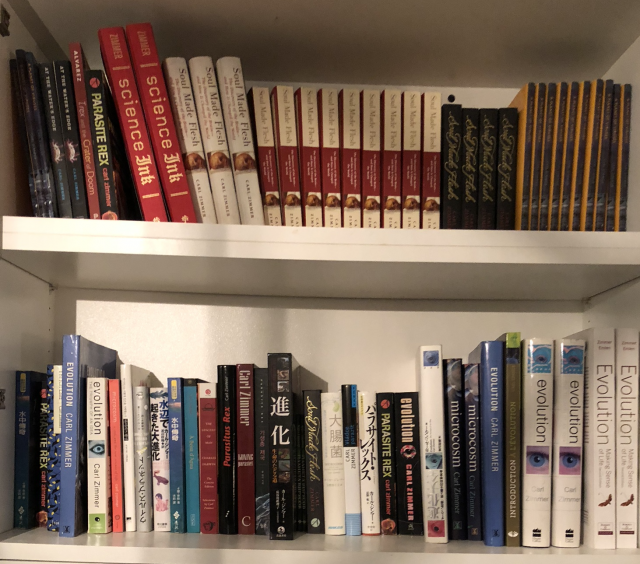
Friday's Elk

Archives
Subscribe

Friday's Elk

Archive

Friday's Elk, PUBLICATION DAY EDITION [INSERT FIREWORKS HERE!] May 29, 2018

Tweet by Kelly Ann Taylor
 
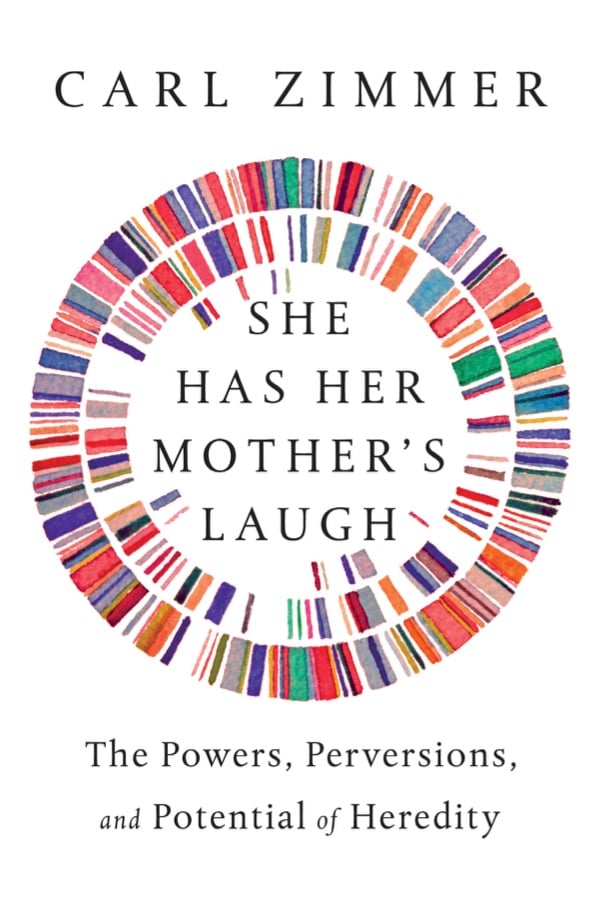
Today, She Has Her Mother's Laugh officially goes on sale. If you pre-ordered it (thanks!) it should be thumping on your welcome mat very soon. If you like it, please consider reviewing and rating it on Amazon, Goodreads, or your favorite book site.

I've been very busy the past few days spreading the word about the book. Here's a quick run-down of things that may be of interest to you. (Forgive the abundance of exclamation marks. It's an exciting day!)

1. Reviews!

Nature calls the book "a beguiling narrative...In She Has Her Mother’s Laugh, Zimmer has built a subtle, multifaceted and deep understanding of heredity, grounded in revelatory insights from genome sequencing. And he shows that we will need it to face our uncertain future.”

2. Wired Q/A!

I talked with Megan Molteni about why heredity ≠ genetics.

3. Podcast!

Wendy Zukerman of the wonderful "Science Vs" podcast interviewed me about one chapter of the book, about how the science of heredity went off the rails in the early 1900s, becoming a justification for institutionalization, sterilization, and much, much worse. I tell the story through the life of one long-forgotten New Jersey woman, Emma Wolverton, who became the face of eugenics. You can listen to their podcast here. I'll be doing more podcasts and radio shows in the next few weeks and will post links in future issues of Friday's Elk.

4. Ask Me Anything, Reddit!

I'll be coming back to Reddit for another AMA (ask me anything) on Thursday, May 31, at 4 pm. Join me then. Proof.

5. A new excerpt!

Dutton, my publisher, has posted the prologue of She Has Her Mother's Laugh on the book's web page.

6. Hitting the road!

This week I'm giving three talks in three days. If you're in Boston, Connecticut, or New York, please join me.

May 30, 2018 Harvard Book Store

May 31, 2018 RJ Julia Bookstore, Madison CT

June 1, 2018 World Science Festival, New York (In conversation with Maria Konnikova)
 

7. My Mother Is Outraged!

Not about the book, but about the results I got when I looked at my own genes linked to intelligence. Over at the Atlantic, I write about how we shouldn't take these tests personally, because they're based on populations, not persons.
 

Future Talks

June 6, 2018 Kramerbooks, Washington DC

June 19, 2018 Commonwealth Club Silicon Valley, Palo Alto CA

June 20, 2018 Denver Museum of Nature and Science (details to come)

June 21-24, 2018 Aspen Ideas Festival (details to come)

September 20, 2018 University of Bath (UK), Evolution in the 21st Century

October 17, 2018 Colorado State University: Murray Honors Visiting Scholar Lecture (details to come)

October 19, 2018 CSICon, Las Vegas

October 25, 2018 Mount Holyoke College (details to come)

November 7, 2018 University of Pennsylvania, Philadelphia (details to come)

November 14, 2018 Stevens Institute of Technology, Hoboken, NJ (details to come)


You can find information and ordering links for my other books here. You can also follow me on Twitter, Facebook, Goodreads, and LinkedIn. If someone forwarded this email to you, you can subscribe to it here.

Best wishes, Carl
Free post
#97
May 28, 2018
Read more

Friday's Elk, May 22, 2018


First Excerpt from "She Has Her Mother's Laugh"

At long last, I can start sharing some of the stuff in my new book, which arrives in book stores one week from today. (You can pre-order it now.)

She Has Her Mother's Laugh is all about heredity, including forms of heredity that don't get as much attention as they deserve. This morning's New York Times has an excerpt about one of those unexpected forms: our inner heredity. Our development into human beings begins with one fertilized egg dividing in two--into a pair of "daughter cells," as scientists call them--which divide in turn. You can draw our entire body as a genealogy of mother and daughter cells. And in some of the body's lineages, genes mutate, turning us into mosaics. We're only starting to grapple with what this genetic diversity in our bodies means for our lives.

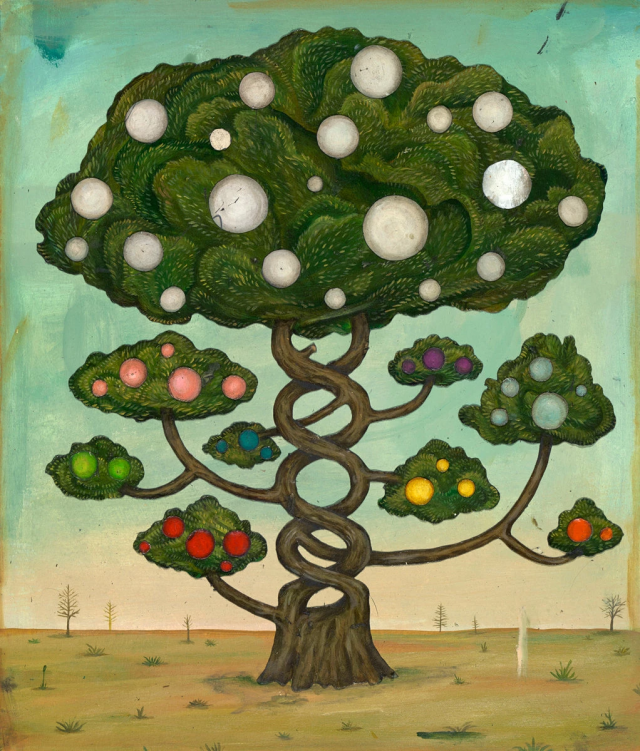
The artwork for this excerpt is both lovely and spot-on, giving nods to DNA, family trees, and real trees (which are exceptionally mosaic, giving rise to the notion that witches ride on brooms--I explain how in the excerpt and book). Thanks to Jason Holley for the image.
 
Joining Forces in DC with Ed Yong

I'll be in Washington on June 6 to talk about She Has Her Mother's Laugh at Kramerbooks. I'm delighted to announce that the intrepid writer Ed Yong (author of I Contain Multitudes) will join me there for a conversation about heredity. As long as he doesn't get us onto the topic of hippo feces (which, yes, are very, very important), it will be an excellent evening.

I'm continuing to add new book-related events to my talks page and the list of talks at the end of the newsletter.
 
Science Magazine Is Entertained

Yesterday, Science reviewed She Has Her Mother's Laugh: "Zimmer is one of the best science journalists of our times, with a long history of setting the bar for beautiful, clear, and scholarly writing. He is true to form in this book…She Has Her Mother’s Laugh is more than a historical account of the field of genetics. It’s a treasure trove of curious facts, contextual tidbits, and up-to-date reports on the trials and tribulations of heredity told in a most entertaining way.”
 
Talks

May 30, 2018 Harvard Book Store

May 31, 2018 RJ Julia Bookstore, Madison CT

June 1, 2018 World Science Festival, New York (In conversation with Maria Konnikova)

June 6, 2018 Kramerbooks, Washington DC (In conversation with Ed Yong)

June 19, 2018 Commonwealth Club Silicon Valley, Palo Alto CA

June 20, 2018 Denver Museum of Nature and Science

New->June 21-24, 2018 Aspen Ideas Festival (details to come)

September 20, 2018 University of Bath (UK), Evolution in the 21st Century (details to come)

October 17, 2018 Colorado State University: Murray Honors Visiting Scholar Lecture (details to come)

October 19, 2018 CSICon, Las Vegas

October 25, 2018 Mount Holyoke College (details to come)

New->November 7, 2018 University of Pennsylvania, Philadelphia (details to come)

November 14, 2018 Stevens Institute of Technology, Hoboken, NJ (details to come)


You can find information and ordering links for my other books here. You can also follow me on Twitter, Facebook, Goodreads, and LinkedIn. If someone forwarded this email to you, you can subscribe to it here.

Best wishes, Carl
Free post
#96
May 21, 2018
Read more

Friday's Elk, May 12, 2018


Coming to a City Near (Some of) You!

I'm excited that at long last I get to hit the road to talk about my new book, She Has Her Mother's Laugh. The book will officially be published on May 29, and my first batch of talks has offically taken shape. While I always post a running list of talks at the end of my newsletters and on my web site, I just want to bring these book-launch events to your attention, in case you live in the area(s):

If you're in Boston, you can catch me at the Harvard Book Store on May 30.

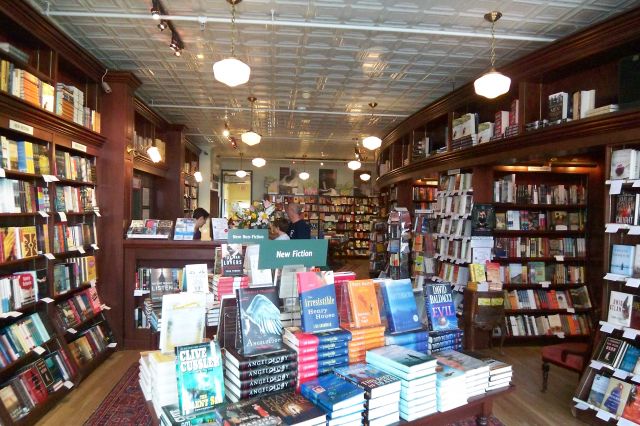
If you're in Connecticut, I hope you can join me at the wonderful RJ Julia Bookstore in Madison CT on May 31 (pictured above).

On Friday, June 1, I'll be in New York to talk about my book at the World Science Festival

A few days later, I'll head down to Washington DC to talk at Kramerbooks on June 6.

On June 19, I'll be on the other side of the country, in Palo Alto, CA to talk at the Commonwealth Club Silicon Valley

The next day, June 20, I'll be in Colorado to speak at the Denver Museum of Nature and Science.


Five Years of Matter

Five years ago, my editors at the New York Times suggested I write a weekly column about science. In May 2013, cicadas were emerging out of the ground in my town, so I suggested reporting on why these strange insects spend years hiding in the Earth before emerging in vast swarms.

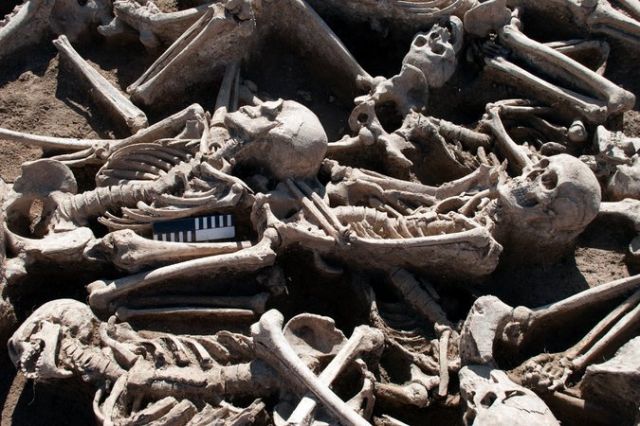
Just about every week since, I've had the good fortune to write about other remarkable corners of science. For my fifth-anniversary column this week, I chose a topic that brings together two of my long-running obesssions: ancient DNA and viruses. Researchers have discovered the DNA of the hepatitis B virus lurking in the teeth of skeletons dating back as far as 7000 years. Before now, the oldest DNA of any human infectious virus every found was just 450 years old. This new work opens up an entirely new frontier in the study of the evolution of diseases--a topic I hope to report on in my column in years to come. Check it out.
 
Talks

May 17, 2018 "Exploring the Complexity and Controversy of Heredity" Keynote Lecture, Bio-IT World, Boston

May 21, 2018 "Biotechnology and Its Future Impact on Greater Boston" (panel discussion) Boston Athenaeum (sold out)

May 30, 2018 Harvard Book Store

May 31, 2018 RJ Julia Bookstore, Madison CT

June 1, 2018 World Science Festival, New York

June 6, 2018 Kramerbooks, Washington DC

June 19, 2018 Commonwealth Club Silicon Valley, Palo Alto CA

June 20, 2018 Denver Museum of Nature and Science (details to come)

September 20, 2018 University of Bath (UK), Evolution in the 21st Century (details to come)

Changed date-> October 17, 2018 Colorado State University: Murray Honors Visiting Scholar Lecture (details to come)

October 19, 2018 CSICon, Las Vegas

October 25, 2018 Mount Holyoke College (details to come)

New->November 14 25, 2018 Stevens Institute of Technology, Hoboken, NJ (details to come)


You can learn more about my other books here. You can also follow me on Twitter, Facebook, Goodreads. LinkedIn, and Google+. If someone forwarded this email to you, you can subscribe to it here.

Best wishes, Carl
Free post
#95
May 11, 2018
Read more

Friday's Elk, May 4, 2018


Book Giveaway: Two Is Better Than One!

Earlier this week, I walked into the office of my editor, Stephen Morrow, to discover a stack of books. Real books--not pdf files, not galleys, but hardback copies of She Has Her Mother's Laugh suitable for curling up in bed with or propping open your front door or cracking open walnuts (warning: past performance is no guarantee of future results).

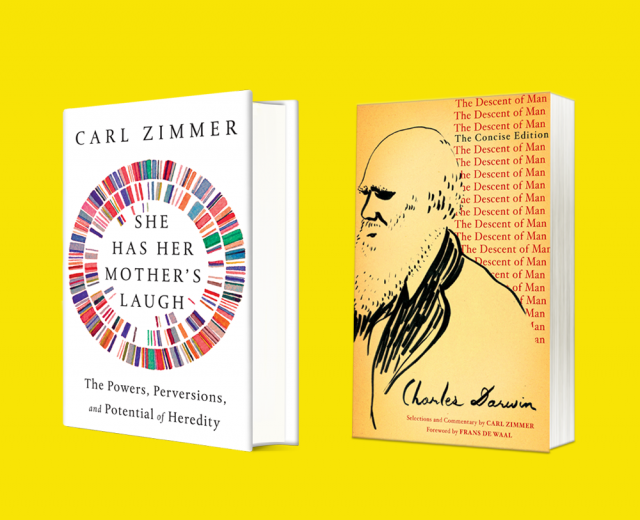
In celebration of this glorious event, my publisher is going to pick ten Friday's Elk readers to win a two-book pack: a finished copy of She Has Her Mother's Laugh, plus The Descent of Man: The Concise Edition.

The Descent of Man is one of Darwin's underappreciated classics--partly because it's a massive, catalog-like tome. For my concise edition, I selected some of the key passages that have framed our thinking about human evolution ever since, and wrote a set of essays to accompany them. You can get more information about The Descent of Man: The Concise Edition on my web site.

All current readers of Friday's Elk--plus anyone who signs up by May 14--will be eligible. If you know of anyone who'd like to receive these books, forward them this email and let them know they can subscribe to it here.

And to new subscribers who learned about this book giveaway on social media (Twitter, Facebook, Goodreads, Linkedin) welcome! I try to get this newsletter out each week, letting readers know about stuff I've been up to--stories, books, podcasts, talks, etc.--and sometimes share stuff from other people that's been intriguing me. You can read past issues of Friday's Elk here.
 

In Search of the First Animal

For my column this week in the New York Times, I take a look at the dawn of the animal kingdom. Over 650 million years ago, our single-celled ancestors evolved bodies, and the world was never the same. We don't know exactly what that ur-animal looked like, but now a pair of scientists have taken a different look at it: they've reconstructed some of its genome.
 
Talks
 

May 17, 2018 "Exploring the Complexity and Controversy of Heredity" Keynote Lecture, Bio-IT World, Boston

May 21, 2018 "Biotechnology and Its Future Impact on Greater Boston" (panel discussion) Boston Athenaeum

May 30, 2018 Harvard Book Store

May 31, 2018 RJ Julia Bookstore, Madison CT

June 6, 2018 Kramerbooks, Washington DC

June 19, 2018 Commonwealth Club Silicon Valley, Palo Alto CA

June 20, 2018 Denver Museum of Nature and Science (details to come)

September 20, 2018 University of Bath (UK), Evolution in the 21st Century (details to come)

October 19, 2018 CSICon, Las Vegas

October 25, 2018 Mount Holyoke College (details to come)

NEW-->November 7, 2018 Colorado State University: Murray Honors Visiting Scholar Lecture (details to come)


You can find out about my other books here. You can also follow me on Twitter, Facebook, Goodreads, and LinkedIn. If someone forwarded this email to you, you can subscribe to it here.

Best wishes, Carl
Free post
#94
May 3, 2018
Read more

Friday's Elk, April 28, 2018

One Month To Go!

The official publication date for She Has Her Mother's Laugh is May 29. My fingernails are already nubs. As any author will tell you, these days pre-orders make a huge difference to the launch of a book. I'm deeply proud of this book and hope you'll find the subject as fascinating as I did writing about it. Please consider pre-ordering a copy. And tell all your friends who have ever wondered about heredity to consider doing so, too. Ordering early will help me bring the book to the attention of even more potential readers. Many thanks!
 

Big Stories in Little Things

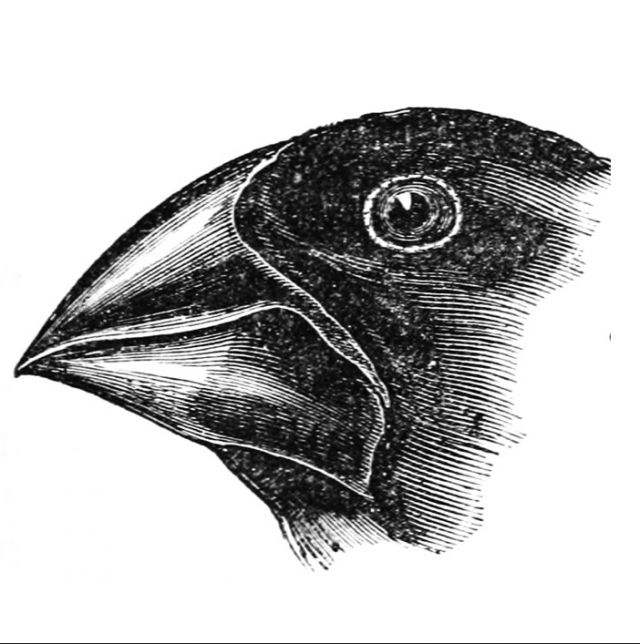
I've written another Facebook post about science books. Today, it's Jonathan Weiner's The Beak of the Finch, one of the books that showed me as a young science writer how it's done. Nearly a quarter of a century later, the science has moved on, but the book remains a classic.

 
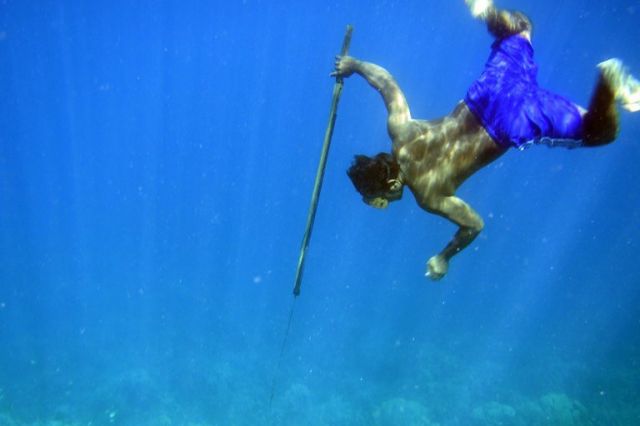
Photo: Melissa Ilardo
The Evolution of Human Divers?

In southeast Asia, a group of extraordinary divers have plunged deep underwater to fish for centuries. A new study suggests they've adapted to their way of life, evolving larger spleens to deliver more oxygen. I wrote about the research last week for my column in the New York Times. (While the researchers I contacted for the story were impressed with the research, some scientists took to Twitter for a little critical post-publication peer review--see population geneticist Matthew Hahn and physiologist Michael Joyner.)
 
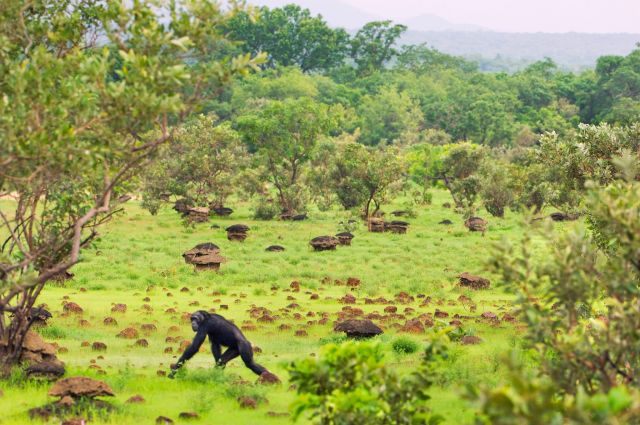
Photo: Frans Lanting

Hot Chimps

Oe a trip to Africa in 1995, I spent a few days in a cloud forest in Rwanda. There were chimpanzees around me, but I never got to see them. Only the seasoned experts at the field station could navigate the dense vegetation and catch glimpses of the apes. They became my personal icons of chimpanzees--creatures of the cool, wet canopy. But chimpanzees are more flexible than that. Some in Senegal live on a savanna that can hit 110 degrees. For my column this week, I wrote about a long-term study of these very different chimpanzees--and the hints they offer us about how our own ancestors abandoned forests for the open plains.

 
"The Code"--all of it
 
All three episodes of Retro Report's series on the past and future of genetics are now online. You can watch them here.

Talks
 

May 2, 2018 "From Ebola to Dinosaurs to 23andMe: Writing about the Science of Life" Columbia School of Journalism

May 3, 2018 MIT, Knight Science Journalism seminar

May 17, 2018 "Exploring the Complexity and Controversy of Heredity" Keynote Lecture, Bio-IT World, Boston

May 21, 2018 "Biotechnology and Its Future Impact on Greater Boston" (panel discussion) Boston Athenaeum

May 30, 2018 Harvard Book Store

May 31, 2018 RJ Julia Bookstore, Madison CT

June 6, 2018 Kramerbooks, Washington DC

June 19, 2018 Commonwealth Club Silicon Valley, Palo Alto CA

June 20, 2018 Denver Museum of Nature and Science (details to come)

September 20, 2018 University of Bath (UK), Evolution in the 21st Century (details to come)

October 19, 2018 CSICon, Las Vegas

October 25, 2018 Mount Holyoke College (details to come)

You can find information about my other books here. You can also follow me on Twitter, Facebook, Goodreads. LinkedIn, and Google+. If someone forwarded this email to you, you can subscribe to it here.

Best wishes, Carl
Free post
#93
April 27, 2018
Read more

Friday's Elk April 20, 2018

Wikipedia
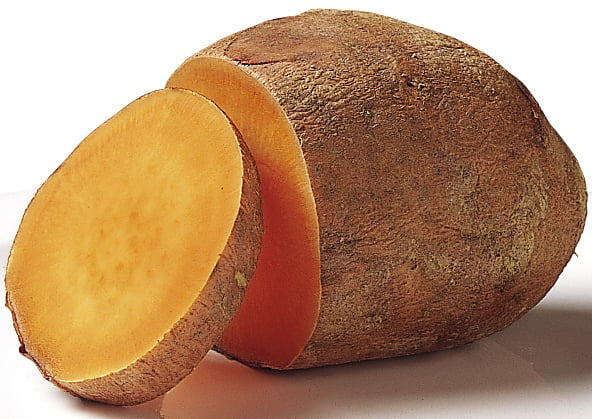
The Voyage of the Sweet Potato

I had no idea that the origins of sweet potatoes were so mysterioius until I dug into a new study on their DNA. Turns out, it helped inspire Thor Heyerdahl's famous voyage on the Kon-Tiki. He wanted to test the idea that sweet potatoes got from the Americas to remote Polynesian islands through pre-Columbia contact. The new study claims instead that the sweet potatoes spread across thousands of miles of ocean on their own. Here's my New York Times story on the ongoing debate.
 
National Library of Medicine
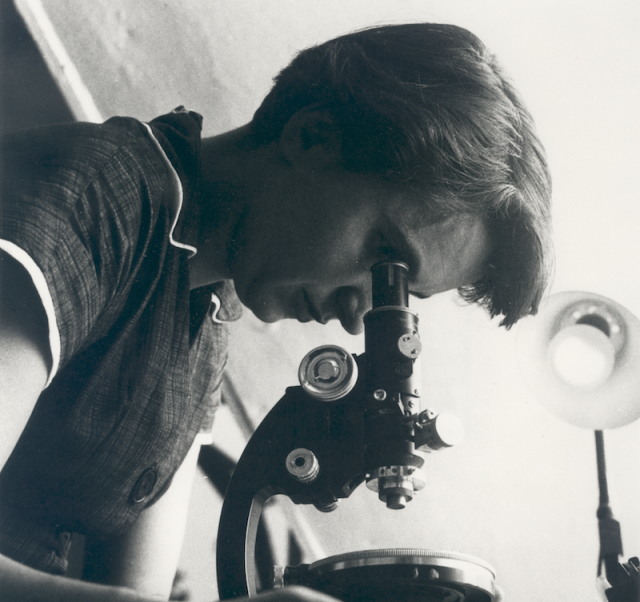
Resurrection by Biography

I've written a third post about books on my Facebook author page. This time I take a look at a fine biography of Rosalind Franklin, who did pioneering work on DNA only to sink into obscurity. (Here's a previous post on Stalin and the Scientists, and here's one on Being Mortal.)
 

"A wide-ranging and eye-opening inquiry into the way heredity shapes our species."

Booklist gives a starred review to She Has Her Mother's Laugh. It's the third star for the book, coming after one from Publisher's Weekly and one from Kirkus Reviews.


Episode Two of "The Code"--Can We Cure Diseases By Altering Our DNA?
 
Watch it here!

Talks

April 27, 2018 "The Library of Babel: On Trying to Read My Genome" Yale University, Applied Data Seminar

May 2, 2018 "From Ebola to Dinosaurs to 23andMe: Writing about the Science of Life" Columbia School of Journalism

May 3, 2018 MIT, Knight Science Journalism seminar

May 17, 2018 "Exploring the Complexity and Controversy of Heredity" Keynote Lecture, Bio-IT World, Boston

May 21, 2018 "Biotechnology and Its Future Impact on Greater Boston" (panel discussion) Boston Athenaeum

May 30, 2018 Harvard Book Store

May 31, 2018 RJ Julia Bookstore, Madison CT

June 6, 2018 Kramerbooks, Washington DC

NEW--> June 19, 2018 Commonwealth Club Silicon Valley, Palo Alto CA

June 20, 2018 Denver Museum of Nature and Science (details to come)

September 20, 2018 University of Bath (UK), Evolution in the 21st Century (details to come)

October 19, 2018 CSICon, Las Vegas (details to come)

October 25, 2018 Mount Holyoke College (details to come)


She Has Her Mother's Laugh will be published on May 29, but you can pre-order it now. You can find information and ordering links for my other books here. You can also follow me on Twitter, Facebook, Goodreads. LinkedIn, and Google+. If someone forwarded this email to you, you can subscribe to it here.

Best wishes, Carl
Free post
#92
April 12, 2018
Read more

Friday's Elk, April 7, 2018


Books to Consider

A few months ago, I participated in Facebook's #Readtolead Program, sharing some of my favorite books of 2017. The response was so enthusiastic, I decided to write some new posts about books I've been reading. For the foreseeable future, I'll be posting them each Friday.

So far, I've written two. The first is about Stalin and the Scientists by Simong Ings. I had grown interested in Soviet science as a result of the research I did on the Stalnist biologist Trofim Lysenko and his crackpot notions about heredity for She Has Her Mother's Laugh. I read more about Lysenko for a lecture I gave in September on journalism, science, and democracy. Only last month did I come across Ing's 2016 book. Primed as I was, I blasted through it.

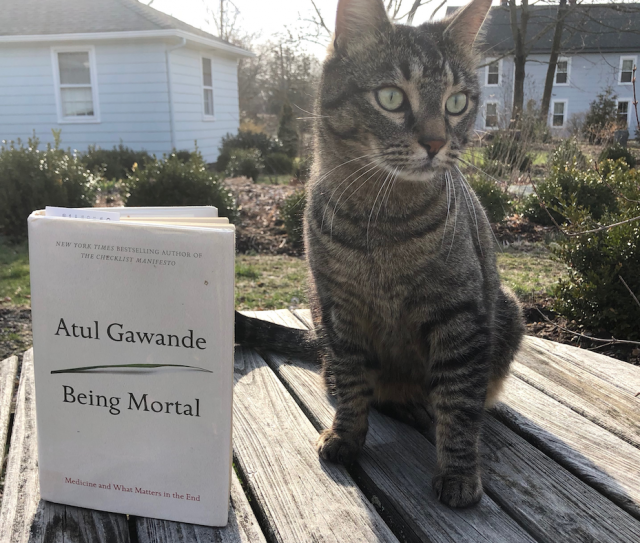
Yesterday I posted my second piece, on Being Mortal, by Atul Gawande. I reverse engineer the book to see why it succeeds. I also explain why a cat is a useful reading companion for the book.
 

Storify Is Dead. Long Live Storify

Sometimes the ongoing conversation on Twitter produces an exchange I'd like to save. I used to use a site called Storify to preserve them, but Storify is now shutting down. I'm trying out a new service called Wakelet, which seems to work pretty well. Earlier this week, I asked Twitter whether math is discovered or invented. Mathematicians, scientists, and philosophers shared some interesting tweet-length thoughts, which I've preserved here.
 
More Ata Updates

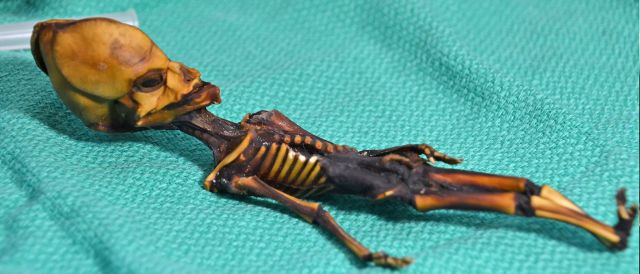
It's been a couple weeks now since scientists published a study on a mysterious, tiny mummy from Chile, debunking suggestions that "Ata" (a k a "the girl from La Noria") was a humanoid belonging to another species. It kicked up quite a controversy, and things have not settled down yet.

--In response to the uproar from the Chilean scientific community about the ethics of the study, the scientists published a statement. So did the journal Genome Research, where the study appeared.

--Those statements did not quell critics. Three Chilean anthropologists published an essay this week on the right and wrong ways to study human remains. They are not impressed by the justification from the Genome Research scientists about their work: they didn't know at first whether the remains were human or not. As the anthropologists note, a Chilean newspaper has confirmed that the owner of Ata's remains asked a forensic scientist to look at them five years before the DNA study began. The forensic scientist concluded the remains were of a human fetus. (The story, in Spanish, is online here.)

--Meanwhile, I'm getting emails and tweets from UFO fans telling me my reporting is a giant fraud and part of a massive coverup. If you are both curious and masochistic, you can watch this 112-minute interview with the producer of a documentary about UFOs, who supplied the scientists with a sample of Ata's bone marrow to study. I'm left wondering why my huge check from the CIA has not yet arrived.
 
Introducing A New Series on The Future (and Past) of Genetics

I've long been a fan of Retro Report, which produces fascinating videos that set today's news in the long arc of history. I was delighted to team up with them to create a three-part series on genetics called "The Code." We take a look at today's headlines about precision medicine, genetic tests, and genetic editing, and discover how, in some ways, we've been here before. You can watch the first episode now over at Stat.
 
Talks!

After a lull, I'm putting together a bunch of events over the next few months, mostly to talk about She Has Her Mother's Laugh. Here's the list so far--updates to come.

April 27, 2018 "The Library of Babel: On Trying to Read My Genome" Yale University, Applied Data Seminar

May 2, 2018 "From Ebola to Dinosaurs to 23andMe: Writing about the Science of Life" Columbia School of Journalism

May 3, 2018 MIT, Knight Science Journalism seminar

May 17, 2018 "Exploring the Complexity and Controversy of Heredity" Keynote Lecture, Bio-IT World, Boston

May 21, 2018 "Biotechnology and Its Future Impact on Greater Boston" (panel discussion) Boston Athenaeum

May 30, 2018 Harvard Book Store

May 31, 2018 RJ Julia Bookstore, Madison CT

June 6, 2018 Kramerbooks, Washington DC

June 20, 2018 Denver Museum of Nature and Science (details to come)

September 20, 2018 University of Bath (UK), Evolution in the 21st Century (details to come)

October 19, 2018 CSICon, Las Vegas (details to come)

October 25, 2018 Mount Holyoke College (details to come)


You can find information and ordering links for my other books here. You can also follow me on Twitter, Facebook, Goodreads. LinkedIn, and Google+. If someone forwarded this email to you, you can subscribe to it here.

Best wishes, Carl
Free post
#91
April 6, 2018
Read more

Friday's Elk, March 29, 2018


Chilean Scientists Protest the "Ata" Study

Last week, I reported on a study by American scientists on a mysterious, tiny mummy from Chile that some claimed was an alien. The study demonstrated it belonged to a stillborn Chilean girl. In response, the Chilean scientific community has spoken out against the research, contending that the mummy was illegally removed from its grave and then exported illegally out of the country. Some of them are even calling for the study to be retracted. And the Chilean government is stepping in to investigate.

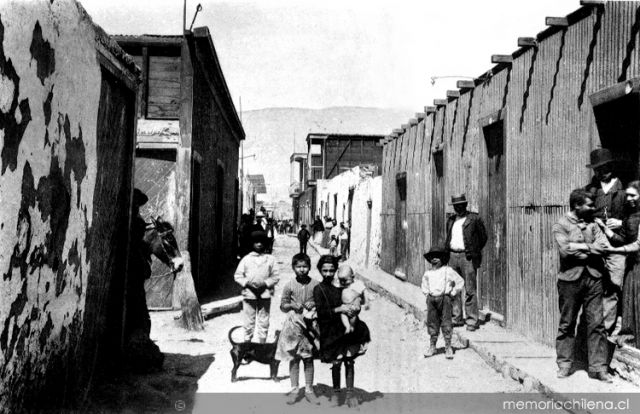
Here's my update, which appeared in Thursday's New York Times. I also highly recommend a commentary published on Sunday by Chilean biologist Cristina Doridor, which provides important historical context about where the mummy was found. (The photo above, of the ghost town where the mummy was found, comes from that piece.)

This blowback reminds me of other incidents, some of which I've reported on. Geneticists these days are eager to use their newly developed tools to sequence as much DNA as they can, in order to better understand human history. But their work comes at the end of a long--and often ugly--history of troublesome relationships between Western scientists and communities of minorities and indigenous people. Here's a piece I wrote about the controversy that arose when scientists sequenced Henrietta Lacks's genome without even contacting her family first. And here's a story about the long-running conflict over "Kennewick Man," an 8500-year-old fossil found in Washington State.
 

The Frogs Are Vanishing (But A Few Are Coming Back)

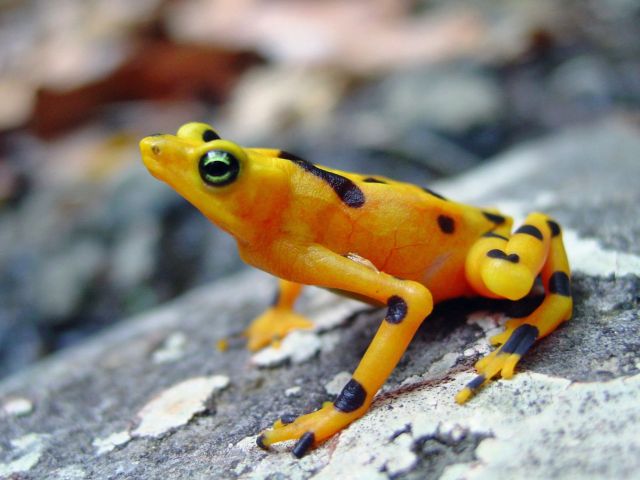
For some two decades, a deadly fungus has been spreading around the world and wiping out frogs. Many species may already be extinct, with more that may be doomed. But scientists have also found that in recent years a few species seem to be coming back. Here's my column on recent research on the mystery of their rebound.
 

Viruses Infect TV Tonight

I got interviewed for a three-part series about viruses, "Invisible Killers." It's premiering tonight on the Discovery Channel and the Science Channel. Here's a preview where I talk about the kinky sex life of influenza (and why their viral orgy kills so many of us).
 

Two Months Till Publication! (And a Goodreads Giveaway)

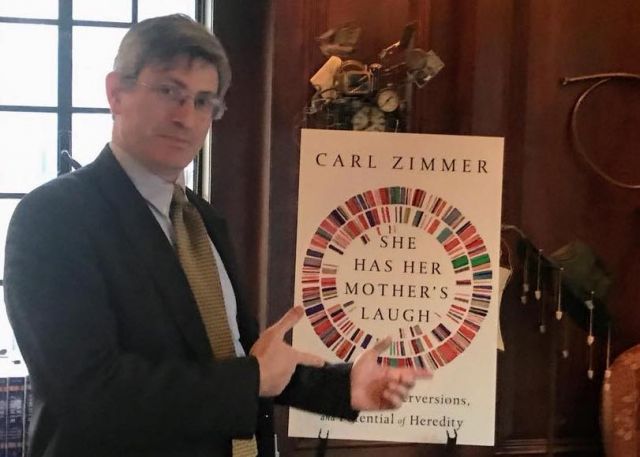
Two months left before She Has Her Mother's Laugh comes out! (The photo is from a party I had to spread the word recently.) As part of the run-up, Goodreads is giving away 20 copies. If you get the book and like it, please tell your friends. Tell strangers! And if you don't get it, pre-order it. You'll be doing me a big favor, because pre-orders play an important part in bringing attention to a book when it finally comes out.

If you'd like to hear me talk about the book, you can check out my talks page. I'm only starting to add events there, and more will be falling into place in the weeks to come. I'll post an updated schedule in a future email newsletter.

You can find information and ordering links for my other books here. You can also follow me on Twitter, Facebook, Goodreads. LinkedIn, and Google+. If someone forwarded this email to you, you can subscribe to it here.

Best wishes, Carl
Free post
#90
March 28, 2018
Read more

Friday's Elk, March 22, 2018

A Visit to An Ancient DNA Lab

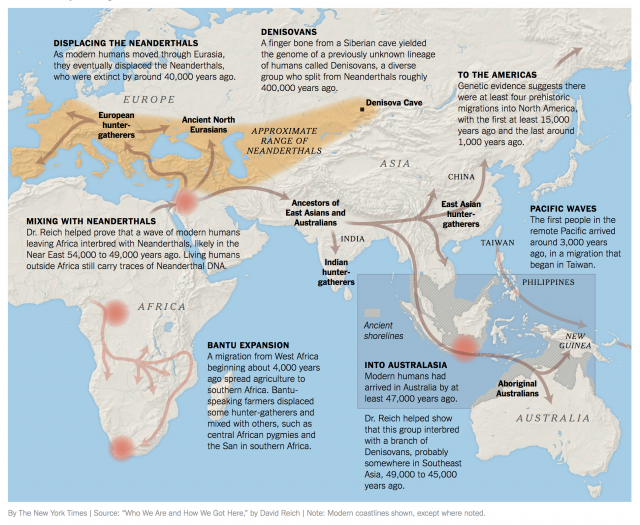
Many of the remarkable studies about human history I've been reporting on in recent years have come from the Harvard laboratory of David Reich. Recently I took a trip to Boston to see how Reich's team rescues DNA from bones dating back thousands of years, and how they then use those genetic fragments to reconstruct the movements of people across the planet. Here's my profile of Reich, in Tuesday's New York Times. I was delighted that the Times's graphics wizard Jonathan Corum created a map for the story, adapted from Reich's new book, Who We Are and How We Got That Way.
 
A "DNA Autopsy" of a Mysterious Mummy

Some UFO fans make a great deal out of a miniature mummy discovered in the early 2000s in a ghost town in Chile. A team of Stanford scientists got hold of some of its tissue and have reconstructed its genome. Proving it was human was just the start of their research; they've found mutations that could account for its ET-like anatomy. Here's my column on what one expert is calling a "DNA autopsy."
 
Book News: A Star from Kirkus and an Interview about Heredity

Kirkus Reviews published a starred review of She Has Her Mother's Laugh on Monday: "A thoroughly enchanting tour of big questions, oddball ideas, and dazzling accomplishments of researchers searching to explain, manipulate, and alter inheritance.” You can read the full review here.

Meanwhile, Publisher's Weekly asked me some questions--
 
What was the most surprising thing you learned while working on this book?

I was surprised by how so many animals have to inherit bacteria from their ancestors in order to survive. Cockroaches, for example, carry bacteria that have to infect their eggs so that the next generation can use them to survive. It’s a parallel kind of heredity happening all around us—and maybe even inside us, too.

You can read the full interview here.

My latest book, She Has Her Mother's Laugh: The Power, Perversions, and Potential of Heredity, comes out in May. You can pre-order it here. You can find information and ordering links for my other books here. You can also follow me on Twitter, Facebook, Goodreads. LinkedIn, and Google+. If someone forwarded this email to you, you can subscribe to it here.

Best wishes, Carl
Free post
#89
March 21, 2018
Read more

Friday's Elk, March 10, 2018

(Image: Mayo Clinic)
Tracing Diseases to Their Dawns

One of the great milestones of medicine, as I write in my new book She Has Her Mother's Laugh, was the discovery that some diseases are inherited--even when the parents of sick children seem perfectly healthy.

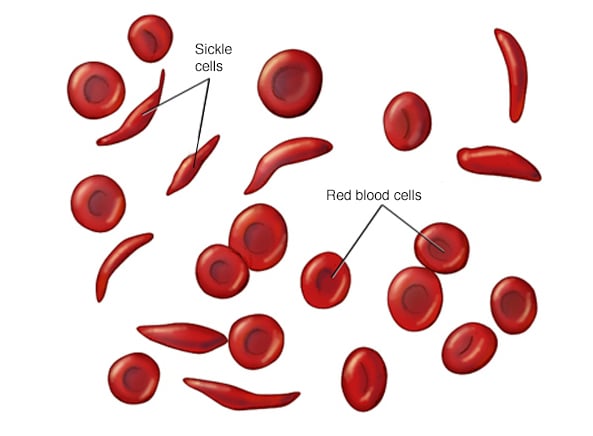
These hereditary diseases, known as recessive disorders, manifest themselves when both copies of a gene carry a disabling mutation. They include cystic fibrosis and Tay-Sachs disease. But the most striking of them all is sickle cell anemia. An unusually high number of people in some parts of the world are carriers of the disease, because having a single copy of the sickle cell mutation can actually be good for your health.

As a hereditary disease, sickle cell anemia has a history--or, more accurately, a genealogy. Trace mutations back through the generations far enough, and you'll get to the original copy, which arose in a single person's DNA. In my new column for the New York Times, I write about a new study that may have traced sickle cell anemia to its source--in a child who lived some seven thousand years ago in the Sahara, back when it was watered by rivers and lakes.
 
There's This Thing Called the Internet...

Way, way back in 1999, I left the staff of Discover for the life of a freelancer writer. Freelancers at the time pitched editors with clips--photocopies of previous work. It was a huge pain in the neck, and I thought it might be simpler to make a web site where I could post some of my stories. That way, I could just shoot an editor a few links, rather than a packet of snail mail.

To my surprise, web sites soon became essential online hubs for writers. I loaded mine with information on my books as they came out, and added links to past and upcoming talks. Instead of a small clip file, I expanded it to include an archive of my journalism--pushing two decades of articles now.

But over time, it fell out of date. My head shot took on the cast of Dorian Gray. The underlying bones of html grew brittle. And forget about looking at the site on a phone. It was created at a time when that was an absurd idea.

Now, at last, the designers Michelle Lee and Thomas Fondano have rebuilt my web site from the ground up. In addition to information on my books, articles, and talks, I'll also be importing my blog posts onto the site. I hope you like it.
 
"An Endlessly Mesmerizing Journey"

Thanks to Maria Konnikova, Brian Hare, and Jennifer Ackerman for their kind words about She Has Her Mother's Laugh, :

“Traversing time and societies, the personal and the political, the moral and the scientific, She Has Her Mother’s Laugh takes readers on an endlessly mesmerizing journey of what it means to be human. Carl Zimmer has created a brilliant canvas of life that is at times hopeful, at times horrifying, and always beautifully rendered. I could hope for no better guide into the complexities, perils, and, ultimately, potential of what the science of heredity has in store for the world.” —Maria Konnikova, author of The Confidence Game and Mastermind

“With his latest work, Zimmer has assured his place as one of the greatest science writers of our time. She Has Her Mother’s Laugh is an extraordinary exploration of a topic that is at once familiar and foreign, and touches every one of us. With the eloquence of a poet and the expertise of a scientist Zimmer has created a nonfiction thriller that will change the way you think about your family, those you love, and the past and future.” —Brian Hare, co-author of The Genius of Dogs

“She Has Her Mother’s Laugh is at once enlightening and utterly compelling. Carl Zimmer weaves spellbinding narrative with luminous science writing to give us the story of heredity, the story of us all. Anyone interested in where we came from and where we are going—which is to say everyone—will want to read it.”—Jennifer Ackerman, author of Chance in the House of Fate: A Natural History of Heredity
 
Book Giveaway Reminder

On Thursday, my publisher will pick five subscribers to "Friday's Elk" to receive a free copy of She Has Her Mother's Laugh. Stay tuned!

You can follow me on Twitter, Facebook, Goodreads. LinkedIn, and Google+. If someone forwarded this email to you, you can subscribe to it here.

Best wishes, Carl
Free post
#88
March 9, 2018
Read more

Friday's Elk


The Importance of Clocks

In many branches of science, a good clock can make all the difference. The better we can determine how old things are and when events happened, the better we can put the pieces of history back together. It's important to know that the universe started 13.73 billion years old, for example, and that the Earth is 4.56 billion years old.

There is no one clock to rule them all, though. Each science requires a clock of its own, and some of them require a whole wall of timepieces. For the universe, we have to use old light to tell time. For the Earth, certain radioactive elements like strontium have ticked away accurately since the planet's formation.

Without a good clock, scientists are left to struggle to determine which things came before other things, which are the causes and which the effects, which are the first of their kind and which are late arrivals. The discovery of a good clock can immediately cast some versions of history into the trash, and cause us to take others more seriously. Just such a rethink is now happening in the study of human origins.

Ancient paintings on cave walls are among the most important markers in our history. Whoever painted a lion tens of thousands of years ago--or a series of parallel lines or even the outline of his or her own hand--must have had a mind that could conceive that expressive act, that could generate the desire to travel deep inside a cave to do so.

For all its importance, though, cave art is particularly hard to date. If there’s enough carbon in the paint—from charcoal, for example—you can use radiocarbon dating to determine its age. But some paintings have no carbon to measure. And if that art is old--older than 50,000 years, roughly speaking--the radiocarbon clock becomes useless.

In recent years, scientists have created a different clock for cave art. Sometimes water flows over those paintings, and it gradually deposits lumps or sheets of rock on them—known as flowstones. Those flowstones are laced with tiny levels of uranium—parts per billion. But if you know how to measure those trace amounts, you have yourself a clock, one that will put a minimum age on the paintings underneath.

Some of the paintings in European caves turn out to be very old. So old, in fact, that modern humans could not have painted them. Who did? You can get the whole story in my column this week in the New York Times.


The Happiness of Readers

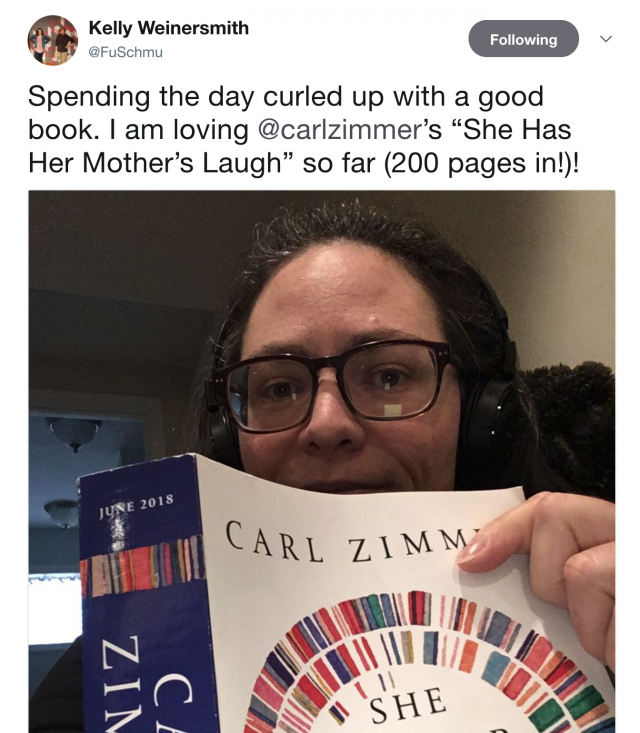
Thanks to Kelly Weinersmith (co-author of the delightful Soonish) for tweeting kindly about my book. Making readers happy is my mission! Just a reminder--subscribers to Friday's Elk will be eligible for a book giveaway on March 15. If you know of friends who might be interested, please forward this email, or let them know they can sign up for Friday's Elk here. 


My latest book, She Has Her Mother's Laugh: The Power, Perversions, and Potential of Heredity, comes out in May. You can pre-order it here. You can find information and ordering links for my other books here. You can also follow me on Twitter, Facebook, Goodreads. LinkedIn, and Google+. If someone forwarded this email to you, you can subscribe to it here.

Best wishes, Carl
Free post
#87
February 24, 2018
Read more

Friday's Elk, February 16, 2018


Greetings to New Readers

To those of you just signing up for Friday's Elk, welcome! I generally send this newsletter out each Friday, as the name suggests, but sometimes life gets in the way. You can peruse back issues of the newsletter for free in this archive. There you'll find links to stories I've written, videos of talks I've given, podcasts and radio shows I've spoken on, details on upcoming events, and updates about my next book, She Has Her Mother's Laugh, coming out in May. On March 15, my publisher and I will randomly pick five Friday's Elk subscribers to receive free early copies of the book.
 
The Future of Biology (And Shrimp on Treadmills)

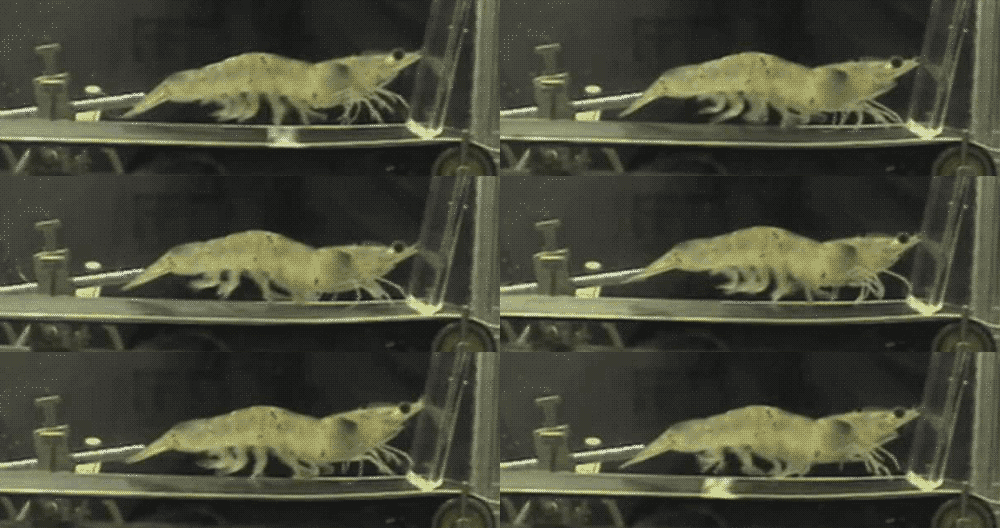
In January, I gave the plenary lecture at the annual meeting of the Society for Integrative and Comparative Biology. I talked about the destructive pressure that politicians are putting on some forms of basic research these days. After the lecture, I sat down with Art Woods and Marty Martin, a pair of biologists who recently launched a new podcast called "Big Biology." (Itunes).

In our chat, we looked ahead at the future of biology--from genomes to cancer biology to the microbiome. We also talked about how biologists can continue to study things that might seem silly to some, but ultimately give us profound insights into how life works. You can listen to the official episode or the full, unedited conversation.

All for now!

My latest book, She Has Her Mother's Laugh: The Power, Perversions, and Potential of Heredity, comes out in May. You can pre-order it here. You can find information and ordering links for my other books here. You can also follow me on Twitter, Facebook, Goodreads. LinkedIn, and Google+. If someone forwarded this email to you, you can subscribe to it here.

Best wishes, Carl
Free post
#86
February 15, 2018
Read more

Friday's Elk, February 13, 2018


A Book Giveaway!

Some good news for loyal readers of Friday's Elk: to celebrate the coming publication of She Has Her Mother's Laugh, my publisher is going to give away free copies of the book to five randomly chosen subscribers. We'll make the pick on March 15 and be in touch!


England's Lost Roots

In 1903, archaeologists discovered a 10,000-year-old skeleton in a British cave. Found near the village of Cheddar, it came to be known as Cheddar Man. Over a century after its discovery, scientists have figured out how to extract Cheddar Man's entire genome from his bones. Working with Ceylan Yeğinsu, a Times reporter in the London office, I wrote a piece for the New York Times on this study. The big excitement over the research swirls around Cheddar Man's skin, shown here in a reconstruction at the Natural History Museum in London. It's now possible to look at genetic variants and predict people's skin color. And it turns out Cheddar Man was probably dark brown.

This is cool, but it's not terribly surprising. I wrote a few years ago about how the hunter-gatherers who lived in western Europe before the rise of farming had dark skin. Cheddar Man turns out to have belonged to those people--and so he had the same pigmentation. What is most intriguing is that Cheddar Man has very little kinship with living Brits, thanks to two later waves of immigrants that swamped his island home. (I write in more detail about the complexity of skin color's history in She Has Her Mother's Laugh.)
 

People Love The Mutant Crayfish

It's always a pleasure to discover other people share my odd obsessions. My story last week about a new species of all-female crayfish clones seems to have struck a note. I got tons of queries on Twitter and Facebook about how they taste. (I haven't eaten them myself, but they're getting cooked up in Madagascar since their spread there from Germany.) The story also climbed the charts at the Times, and even earned a "short imagined monologue" in McSweeney's: "I'm Just a Misunderstood Marbled Crayfish (Overlord) Who Is Certainly Not Planning World Domination." Meanwhile, species expert Jerry Coyne questions whether the new species is a new species at all--mainly because our concepts of species are blunt instruments.
 
Hello Rochester!

On Thursday, February 15, I'll be in Rochester, New York, to give a public talk. It's called "A Voyage to the Center of the Brain." Details here


My latest book, She Has Her Mother's Laugh: The Power, Perversions, and Potential of Heredity, comes out in May. You can pre-order it here. You can find information and ordering links for my other books here. You can also follow me on Twitter, Facebook, Goodreads. LinkedIn, and Google+. If someone forwarded this email to you, you can subscribe to it here.

Best wishes, Carl
Free post
#85
February 12, 2018
Read more

Friday's Elk, February 5, 2018

Greetings! Here are some things I've been up to...
A Species Is Born
 
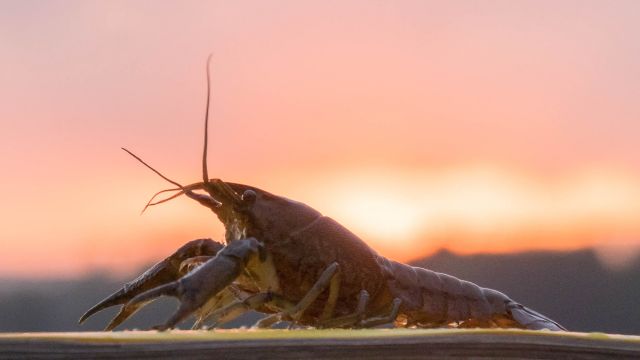
Charles Darwin warned that studying the origin of species wouldn't be easy. When we look around at distinct species alive today, we're looking at the tips of evolutionary branches that reach back thousands or millions of years. But sometimes scientists catch a break. Today in the New York Times, I write about a species of crayfish that leaped into existence thanks to a single mutation about 25 years ago. And ever since, it's been spreading like wildfire.
Can Famines Reprogram People For Life?

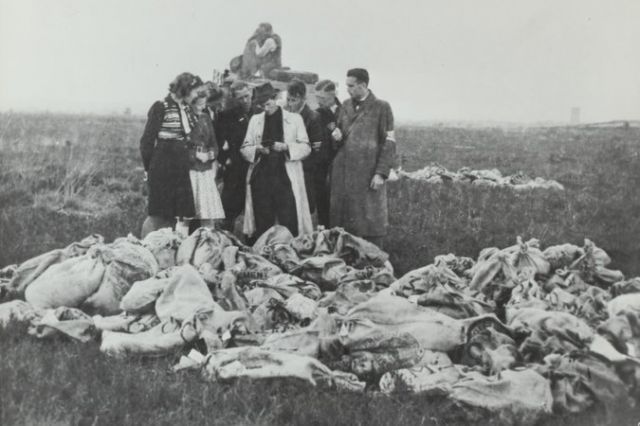
The Netherlands suffered through a six-month famine during World War II. Ever since, researchers have been studying the shadow it has cast over Dutch people's health. Some studies suggest that the children of women who were pregnant during the Hunger Winter have experienced a greater risk for a range of problems, both psychological and physical, throughout their lives. Here's a piece I wrote about a new study on the way that epigenetics may have played a role in that long-lasting effect.
The Genes Inside You--And Around You

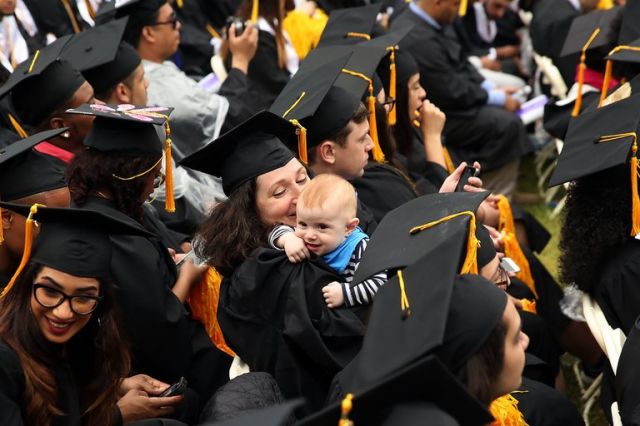
Genes can influence our lives in many ways--including how long we stay in school. But when scientists discover a gene that can add or subtract a few weeks to that total time, they have to be careful. It's possible that the gene doesn't have any influence on how children do in school or at their homework. Instead, they may simply share a gene with their parents--a gene that influences how those parents build an environment that can influence how long children stay in school. While working on my story about a new study that documented this effect, I found that psychologists were very excited by the results--while biologists and animal breeding experts had a sense of deja vu. They've known about this phenomenon--which they call indirect genetic effects--for decades. I wonder how many other concepts have yet to take the leap over the barriers separating scientific disciplines?
 
Four Months Left Till Pub Day!

May 29--the publication date for She Has Her Mother's Laugh: The Power, Perversions, and Potential of Heredity--is not that far away. I'll have more news to share in the next four months, including a book giveaway. In the meantime--here's a fresh batch of nice words people have to say about the book...

“She Has Her Mother’s Laugh is at once far-ranging, imaginative, and totally relevant. Carl Zimmer makes the complex science of heredity read like a novel, and explains why the subject has been–and always will be–so vexed.”—Elizabeth Kolbert, New Yorker staff writer and author of Pulitzer Prize winner The Sixth Extinction

“One of the most gifted science journalists of his generation, Carl Zimmer tells a gripping human story about heredity from misguided notions that have caused terrible harm to recent ongoing research that promises to unleash more powerful technologies than the world has ever known. The breadth of his perspective is extraordinarily compelling, compassionate, and valuable. Please read this book now.” —Jennifer Doudna, professor of Biochemistry and Molecular Biology at UC Berkeley, co-author of A Crack in Creation

“Zimmer is a born story-teller. Or is he an inherited story-teller? The inspiring and heartbreaking stories in She Has Her Mother’s Laugh build a fundamentally new perspective on what previous generations have delivered to us, and what we can pass along. An outstanding book and great accomplishment.”—Daniel Levitin, McGill University, author of The Organized Mind and This is Your Brain on Music

“With this book, Carl Zimmer rises from being our best biological science writer to being one of our very best non-fiction writers in any field, period.”—Kevin Padian, professor of Integrative Biology and curator of Museum of Paleontology at UC Berkeley

“Nobody writes about science better than Carl Zimmer. As entertaining as he is informative, he has a way of turning the discoveries of science into deeply moving human stories. This book is a timely account of the uses and misuses of some of the science that directly impact our lives today. It is also a career moment by one of our most important and graceful writers. Here is a book to be savored.”—Neil Shubin, University of Chicago, author of Your Inner Fish

"In this beautifully written, heartfelt and enjoyable masterpiece, Zimmer weaves together history, autobiography and science to elucidate the mysteries of heredity and why we should care. I couldn't put this book down, and can’t recommend it too highly." Daniel E. Lieberman, Harvard University, author of The Story of the Human Body
 
Upcoming Talks

February 15, 2018, Rochester, NY: Neilly Series Lecture. "A Voyage to the Center of the Brain."

(More to come!)

My latest book, She Has Her Mother's Laugh: The Power, Perversions, and Potential of Heredity, comes out in May. You can pre-order it here. You can find information and ordering links for my other books here. You can also follow me on Twitter, Facebook, Goodreads. LinkedIn, and Google+. If someone forwarded this email to you, you can subscribe to it here.

Best wishes, Carl
Free post
#84
February 4, 2018
Read more

Friday's Elk January 20, 2018

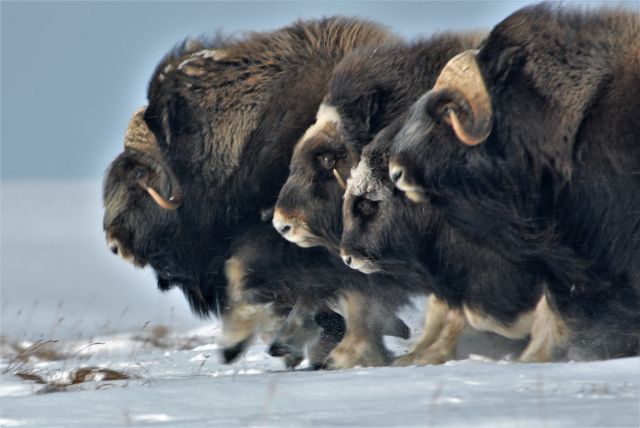
(Photo by Joel Berger)

Some muskoxen weigh over a thousand pounds. They're hard animals to miss--that is, if you've hopped in a snow machine and traveled across an Arctic tundra for a few hours in search of a herd. But to understand muskoxen there's no alternative but to be where they live. You can't Google-Earth your way to insight.

This week in the New York Times, I wrote about Joel Berger, a biologist who has spent a lot of time looking at muskoxen over the past decade. Berger's research has revealed a worrying vulnerability in these polar giants. Climate change may starve pregnant muskoxen mothers. You can read the whole story here.

Of course, Western scientists are not the only people who have spend time observing muskoxen and other animals of the Arctic. Berger has also been integrating the knowledge and language of the Inupiat people who live in Alaska into his own understanding of muskoxen and their environment. In the thousands of years they've lived in the Arctic, the Inupiat and other indigenous peoples have seen a lot--including huge ice tsunamis that might also pose a threat to animals like muskoxen. Maddie Stone at Earther and Robinson Meyer at the Atlantic both report on that aspect of the work.
 
Upcoming Talks

February 15, 2018, Rochester, NY: Neilly Series Lecture. "A Voyage to the Center of the Brain."


My latest book, She Has Her Mother's Laugh: The Power, Perversions, and Potential of Heredity, comes out in May. You can pre-order it here. You can find information and ordering links for my other books here. You can also follow me on Twitter, Facebook, Goodreads. LinkedIn, and Google+. If someone forwarded this email to you, you can subscribe to it here.

Best wishes, Carl
Free post
#83
January 19, 2018
Read more

Friday's Elk January 12, 2018

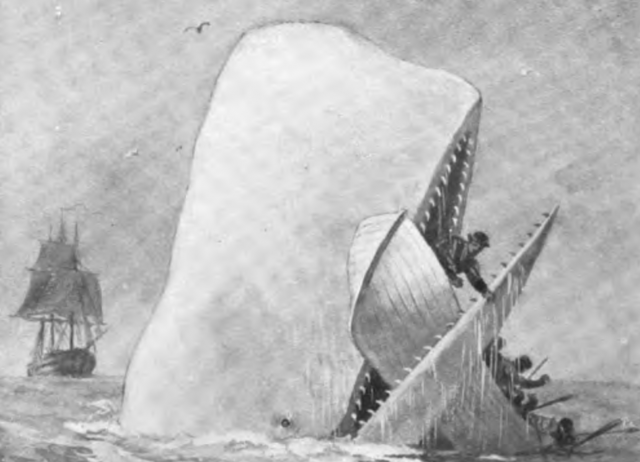
(Source)

This week I went to Minneapolis to speak about science writing at a conference at the University of Minnesota. I wanted to mention one of my favorite novels in the talk, Moby-Dick. My view of Melville's book has evolved from my days as a college English major to my current existence as a science writer. I've grown increasingly fond of the "cetology" chapters, in which Melville veers away from the story of Ishmael to explore the biology of whales. In 2013, I was asked by the Los Angeles Public Library to write an essay on the subject for an online celebration of the novel. I wanted to put a link to the essay on a slide for my Minnesota talk, but I discovered that the whole site for the project had disappeared. Such is the tenuous legacy of writers in the digital age. So I fished the piece out of my hard drive and revived it on Medium. You can read it here.

As for fresh writing, I've published my first three New York Times columns of 2018 since my last email.

The first one is about fiber. We always hear that dietary fiber is good for us, but scientists are still figuring out why. We don't get direct benefits, because we can't digest it. But our microbes can--and it may fuel their good works in our bodies.

The second column is about one of the great human migrations: the arrival of people in the Americas. Three years ago I wrote about the remains of an 11,500-year-old infant found in Alaska, from which scientists succeeded in extracting bits of DNA. Now another team has managed to get the whole genome out. They've discovered that this infant girl belonged to a previously unknown, early-branching population of Native Americans. Her genome provides a lot of new clues about the Asian roots of Native Americans, and how they branched into different lineages as they moved into the Americas.

On Wednesday, I published my latest column on lakes and rivers in a greenhouse world. As we put carbon dioxide into the atmosphere, some of it is getting into inland waters. It may alter the chemistry of some lakes and rivers, in a way that may seriously alter freshwater life. As I tried to convey in the column, this is a pretty new field of research, and so there are a lot more questions than answers at this point.

Finally, I'm happy to report that a couple more writers have had nice things to say about She Has Her Mother's Laugh:

“Carl Zimmer is not only among my favorite science writers—he’s also now responsible for making me wonder why there is more Neanderthal DNA on earth right now than when Neanderthals were here, and why humanity is getting taller and smarter in the last few generations. She Has Her Mother’s Laugh explains how our emerging understanding of genetics is touching almost every part of society, and will increasingly touch our lives.” —Charles Duhigg, author of Smarter Faster Better and The Power of Habit

"Carl Zimmer lifts off the lid, dumps out the contents, and sorts through the pieces of one of history’s most problematic ideas: heredity. Deftly touching on psychology, genetics, race, and politics, She Has Her Mother’s Laugh is a superb guide to a subject that is only becoming more important. Along the way, it explains some remarkably complicated science with equally remarkable clarity–a totally impressive job all around.” —Charles C. Mann, author of 1491: New Revelations of the Americas Before Columbus

We're now less than five months away from publication! Pre-order your copy here.
 
Upcoming Talks


January 18, 2018 Guilford CT: Guilford Free Library. "Can We Edit Life? Should We?" Details here.

February 15, 2018, Rochester, NY: Neilly Series Lecture. "A Voyage to the Center of the Brain."

More to come--stay tuned!
 
The End
 
As always, if you have friends who would enjoy getting this newsletter, please let them know they can sign up at http://tinyletter.com/carlzimmer.

You can also follow me on Twitter, Facebook, Goodreads. LinkedIn, and Google+. And there's always carlzimmer.com.

Best wishes, Carl
Free post
#82
January 11, 2018
Read more

Friday's Elk: End of 2017 Edition!


At the close of 2017, I just wanted to thank all of you for reading "Friday's Elk" through the year. One of the joys of this job is learning more about the world. Another one is sharing that joy.

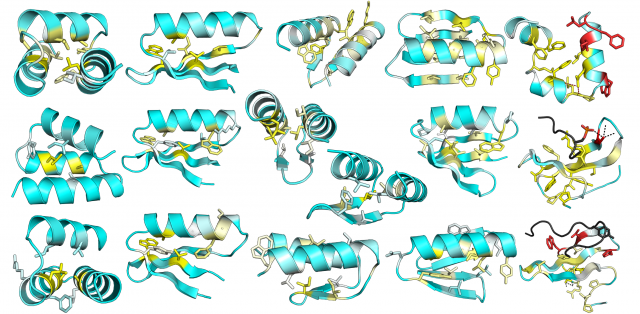
To round out the year, here's a feature I published this past week in the New York Times about the mysteries of proteins.

The genesis of the story goes back seven years ago, to a podcast I recorded with a biologist named David Baker. He explained to me just how hard it was for scientists to figure out the rules by which proteins fold into their final shapes. Protein scientists simply call this challenge "the folding problem."

A couple months ago, I had the chance to meet Baker in person and hear him deliver a lecture about what he and his colleagues have been up to in the past few years. To my surprise, they had figured out so much about the folding problem that they were making designer proteins from scratch to do things ranging from fighting the flu to detecting trace amount of illegal drugs. If my story leaves you intrigued, you can join the effort by letting Baker take over your computer or your Android phone.

This year has been full of remarkable science that I've had the privilege to report on--from giant penguins to telescope-like scallop eyes, ancient African genomes, healing seagrass beds, the oldest known fossil of our species, dinosaur-age gliding mammals, deer-killing proteins, embryo-like organisms, risky gene drives, and our endangered primate cousins. And then there were really strange assignments, like writing about rumors of sonic rifles in Cuba. (One highlight of the year for me was a prize for some work I did in 2016: an Online Journalism Award for my Game of Genomes series at Stat.)

The talks I gave in 2017 spanned the range from science to politics (a range that's a lot narrower than some people may have realized till recently). On "The Daily," the excellent news podcast from the New York Times, I talked about advances in gene editing. In March I gave a lecture about what lurks inside our genomes. In June I chatted at the Aspen Ideas Festival with fellow science writer Ed Yong about our shared obsessions about subjects such as Neanderthals and neuroscience. In 2017, I also talked about the state of science in the Trump era. In September, I offered a warning from the past about the threats science can face. And in October I talked about reporting on science in an age of fake news.

As for 2018, I can offer a few promises.

1. For starters, I will be giving more talks that I hope you can come to. I'll add them to this newsletter's running list as they get locked in.

2. In 2017, I ran a series of talks at Caveat in New York about the nature of life. It was a blast to interview a philosopher, a chemist, a synthetic biologist, and others in front of a live audience about the Big Question. If all goes according to plan, the recordings of those talks will get released as a podcast series in early 2018.

3. There will be a book! At the start of 2017, I wasn't 100% sure there would be one--or at the very least I knew I had a scary amount of work left to do on it. But at the end of the year, I have proof that it's a thing. She Has Her Mother's Laugh will be out in the spring, but you can pre-order a copy now.

Upcoming Talks

January 3, 2018 San Francisco: Society for Integrative and Comparative Biology Annual Meeting, Plenary Lecture: "Science and Scandal: Reporting on Biology In An Age of Controversy."

NEW! January 18, 2018 Guilford CT: Can We Edit Life? Should We? Details here.

February 15, 2018, Rochester, NY: Neilly Series Lecture. Details to come.
 
The End
 
As always, if you have friends who would enjoy getting this newsletter, please let them know they can sign up at http://tinyletter.com/carlzimmer.

You can also follow me on Twitter, Facebook, Goodreads. LinkedIn, and Google+. And there's always carlzimmer.com.

Best wishes, Carl
Free post
#81
January 1, 2018
Read more

Friday's Elk, December 13, 2017


Autographed Books!

I have a couple shelves of my books I need to clear out. You have to buy holiday gifts. We need to talk!

If you'd like to get an autographed copy of one of my books, please check out the Amazon links below. They're all in good or like-new condition.

Amazon's gotten a little buggy when it comes to presenting used books, but these links should take you to a collectible offer marked "Carl Zimmer--Author." First come, first serve!

Evolution: Making Sense of Life (First edition, hardback)

Evolution: The Triumph of An Idea (Look for the offer from "Carl Zimmer--Author")

Microcosm: E. Coli and the New Science of Life (British hardcover edition)

Parasite Rex (British paperback edition)

A Planet of Viruses (Hardback first edition)

Science Ink: Tattoos of the Science Obsessed

Soul Made Flesh (American paperback edition)

Soul Made Flesh (American hardback edition)

​Soul Made Flesh (British paperback edition)

The Tangled Bank: An Introduction to Evolution (First edition, hardback)

The Tangled Bank: An Introduction to Evolution (Second edition, paperback)

If you have any trouble ordering these items, let me know.

 
Giant Penguins and Information Injections

Here are my two most recent New York Times columns for your reading pleasure.

First up: scientists have figured out how to "inject" information directly into the brains of monkeys. This Matrix-like experiment hints at a way to use implants to help people with strokes.

Second up: giant penguins once roamed the southern oceans. I mean, GIANT. Why are they gone?

 
What Is Life? The Final Night!

Last week at Caveat in New York, a great crowd came out to hear Jeremy England of MIT talk about how irreversible physics can lead to life and life-like things. And then I spoke to Steven Benner of the Foundation for Molecular Evolution about how weird life might get elsewhere in the universe. (Horta!)

Next week, on Wednesday December 20, I'll be hosting the final night of the "What Is Life?" series. After wondering what life is and how it began, we are now going to take a look at life in its infancy.

Donato Giovennelli of Rutgers will talk about traveling to Earth's remote corners to get hints about what life looked like four billion years ago. And then we'll talk with Kate Adamala of the University of Minnesota about studying the earliest life forms by trying to make them.

Doors open at 7:30 and the fun starts at 8. You can get tickets here (or at the door).

(And congratulations to the folks at Caveat for this delightful review in The New Yorker!)


She Has Her Mother's Laugh Featured in Publisher's Weekly

I was thrilled that Publishers Weekly picked my forthcoming book as one of next year's "books people are going to be talking about." She Has Her Mother's Laugh will be out in the spring, but you can pre-order a copy now.

 
Upcoming Talks


December 20, New York. "What Is Life?" Night 4: What did the first life look like?

January 3, 2018 San Francisco: Society for Integrative and Comparative Biology Annual Meeting, Plenary Lecture: "Science and Scandal: Reporting on Biology In An Age of Controversy."

February 15, 2018, Rochester, NY: Neilly Series Lecture. Details to come.
 
The End
 
As always, if you have friends who would enjoy getting this newsletter, please let them know they can sign up at http://tinyletter.com/carlzimmer.

You can also follow me on Twitter, Facebook, Goodreads. LinkedIn, and Google+. And there's always carlzimmer.com.

Best wishes, Carl
Free post
#80
December 12, 2017
Read more

Friday's Elk, December 2, 2017

(Image via Wikipedia)

Greetings. I hope all American readers had a happy Thanksgiving. A sudden arrival of stuffing and turkey slowed down my email newsletter production, and so I have a bit to catch up on here.

First off, the columns.

While working on She Has Her Mother's Laugh, I got obsessed with the germ line. The nineteenth-century biologist August Weismann argued that what joined each generation to the next was an unbroken lineage of cells, carrying some mysterious hereditary factors. He traced the germ line through the cells that gave rise to eggs and sperm, then on to the cells in new embryos, and then still further on to their own eggs and sperm. The germ line, Weismann said, was effectively immortal.

But modern molecular biology raises a profound question about the germ line. We know that cells accumulate damage to their proteins over time and pass it down to their daughter cells. That accumulating cellular damage is an important part of why we get old. If the germ line lives beyond us, shouldn't it become vastly more damaged?

On November 22, I wrote a column about a new study on the germ line's immortality. In an experiment on worms, researchers found evidence that eggs carry out a burst of cellular house-keeping before they become new embryos. Check it out.

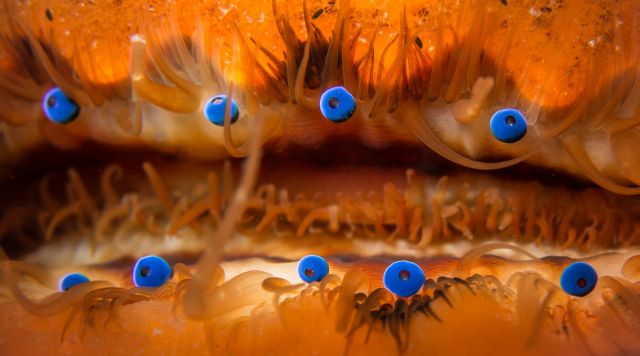
This past Thursday I changed gears to an entirely different topic: the remarkable structure of eyes. In particular, I wrote about scallop eyes. I wouldn't be surprised if you dind't know scallops had eyes; I didn't either till I started writing about the evolution of vision. But, indeed, those delicious scallops grow hundreds of eyes.

These visual organs are so delicate and intricate that their function has largely escaped understanding until now. For my column, I wrote about what the latest generation of microscopes is revealing about scallop eyes. It turns out they work a lot like the radio telescopes we use to observe distant galaxies. I kid you not.

Earlier this week, Setsen Altan-Ochir published a story about a recent Q & A I did in San Francisco with Joe DiRisi, a biologist who is hunting for diseases by isolated fragments of DNA in people's bodies. In 2014, I wrote in the New York Times about DiRisi's first high-profile success with this method, identifying the bacteria threatening a boy's life. As Altan-Ochir reports, he's made major advances since then, which might help bring us to a day when doctors can diagnose diseases in a matter of a few hours by uploading DNA sequences to the cloud.

Also, a little reminder for New York-area readers: I'll be hosting my next evening in the series, "What is Life?" on Wednesday, December 6. The theme will be, "Is Life Inevitable?"

I'll be talking to Jeremy England, an MIT physicist who sees life as stitched into the physical laws of the cosmos. Then I'll be talking to Steven Benner, a leading expert on the origin of life, who will tell us about all the weird forms life might take elsewhere in the universe.

The evening will take place at Caveat, in lower Manhattan, at 7:30 pm on December 6. You can get a ticket here.

Finally, here are a few stories from this week that I enjoyed and wanted to share:

*It’s been 15 years since SARS came out of nowhere, killed almost 800 people, and vanished. Now scientists have found close cousins of the virus in a Chinese bat cave. David Cyranoski has the story for Nature.

*Scott Waldman, writing for E & E News, reports on EPA Administrator Scott Pruitt's drive for a "red-team blue-team" debate over climate change. This isn't actually how science works. For a reality check, here is a 2014 report from the National Academy of Sciences and the Royal Society on our understanding of climate change. And here is a new report from the U.S. federal government's scientists.

*Magie Koerth-Baker writes an epic tale of panda sex for FiveThirtyEight. I have nothing else to add. Just read it.


Upcoming Talks


December 6, New York. "What Is Life?" Night 3: Is life inevitable?

December 20, New York. "What Is Life?" Night 4: What did the first life look like?

January 3, 2018 San Francisco: Society for Integrative and Comparative Biology Annual Meeting, Plenary Lecture: Science and Scandal: Reporting on Biology In An Age of Controversy

February 15, 2018, Rochester, NY: Neilly Series Lecture. Details to come.
 
The End
 
As always, if you have friends who would enjoy getting this newsletter, please let them know they can sign up at http://tinyletter.com/carlzimmer.

You can also follow me on Twitter, Facebook, Goodreads. LinkedIn, and Google+. And there's always carlzimmer.com.

Best wishes, Carl
Free post
#79
December 1, 2017
Read more

Friday's Elk November 16, 2017

Three years ago I wrote about a provocative new idea for the gene-editing technology known as CRISPR. Maybe conservation biologists could wipe out invasive species with a fast-spreading gene.

One of the key thinkers behind that idea was a biologist named Kevin Esvelt. Recently Esvelt did something remarkable: he got in touch with me to let me know he now thinks that the idea is a bad one. Maybe even a dangerous one. This week, I wrote about Esvelt's change of heart in my column for the New York Times.

If this drama intrigues you, you can find a lot more where that came from in my book She Has Her Mother's Laugh, which is coming out in May. CRISPR is so powerful that it forces us to think hard about what about heredity matters to us, and why it exactly it does so.

I'm done with the proofreading for the book, and now I'm starting to get it in front of some early readers. Two personal writer-heroes of mine have kind things to say about it:

David Grann, New Yorker staff writer and author most recently of Killers of the Flower Moon, says, “No one unravels the mysteries of science as brilliantly and compellingly as Carl Zimmer, and he has proven it again with She Has Her Mother’s Laugh-—a sweeping, magisterial book that illuminates the very nature of who we are.”

And here's Robert Sapolsky, a Stanford physiologist whose latest book is Behave: “Humans have long noticed something remarkable, namely that organisms are similar but not identical to their parents—in other words, that some traits can be inherited. From this observation has grown the elegant science of genetics, with its dazzling medical breakthroughs. And from this has also grown the toxic pseudosciences of eugenics, Lysenkoism and Nazi racial ideology. Carl Zimmer traces the intertwined histories of the science and pseudoscience of heredity. Zimmer writes like a dream, teaches a ton of accessible science, and provides the often intensely moving stories of the people whose lives have been saved or destroyed by this topic. I loved this book.”

(In the last issue of Friday's Elk, I used a bad link for pre-orders. You can pre-order the book here.)

In other news: I'll be hosting my next evening in the series, "What is Life?" on December 6. The question we'll explore will be, "Is Life Inevitable?" I'll be talking to Jeremy England, an MIT physicist who sees life as stitched into the physical laws of the cosmos. Then I'll be talking to Steven Benner, a leading expert on the origin of life, who will tell us about all the weird forms life might take elsewhere in the universe.

The conversations will take place at Caveat, in lower Manhattan, at 7:30 pm on December 6. You can get a ticket here.


Upcoming Talks


December 6, New York. "What Is Life?" Night 3: Is life inevitable?

December 20, New York. "What Is Life?" Night 4: What did the first life look like?

January 3-7, 2018 San Francisco: Society for Integrative and Comparative Biology Annual Meeting, Plenary Lecture

February 15, 2018, Rochester, NY: Neilly Series Lecture. Details to come.
 
The End
 
As always, if you have friends who would enjoy getting this newsletter, please let them know they can sign up at http://tinyletter.com/carlzimmer.

You can also follow me on Twitter, Facebook, Goodreads. LinkedIn, and Google+. And there's always carlzimmer.com.

Best wishes, Carl
Free post
#78
November 16, 2017
Read more
  Newer archives Older archives  
Bluesky
Threads
LinkedIn
Powered by Buttondown, the easiest way to start and grow your newsletter.