Friday's Elk

Archives
Subscribe

Friday's Elk

Archive

Friday's Elk, May 3, 2019

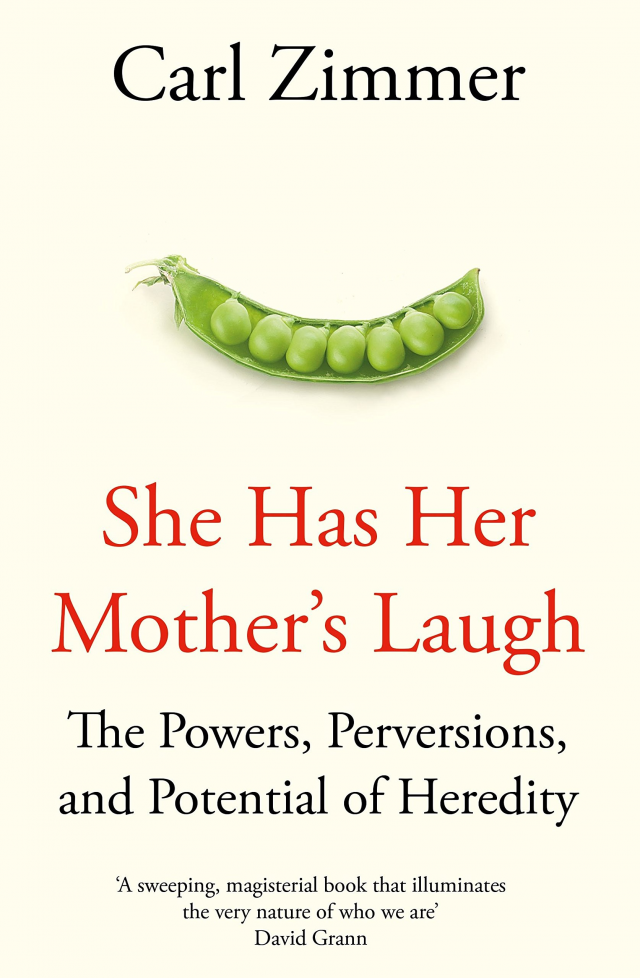
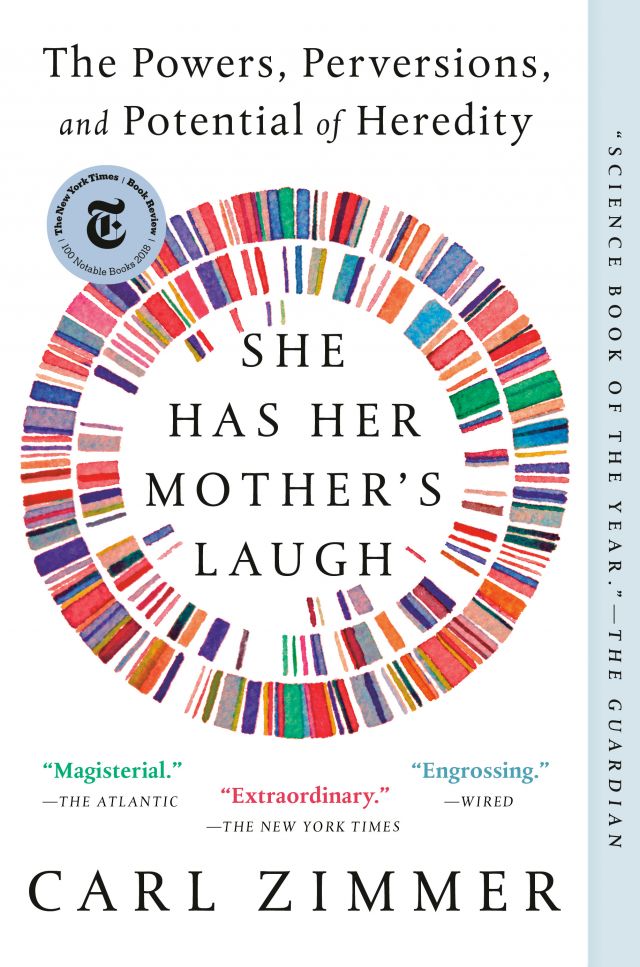
Book alert! She Has Her Mother's Laugh is coming out in paperback on June 4. I'm delighted to share the snazzily updated cover:


You can pre-order it now from fine book mongers, including Amazon, Barnes and Noble, BAM, Hudson Booksellers, and IndieBound.

Seven Misconceptions about Heredity

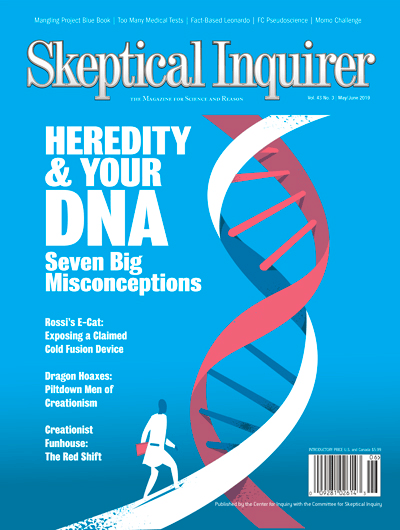
In the cover story for the May/June issue of Skeptical Inquirer, I explore some of the biggest misconceptions about heredity. With the ongoing explosion of DNA testing, it's urgent that we understand what the results of those tests can and cannot tell us.

So long, Denisova

Eight years ago, I had the privilege to introduce a new word into the New York Times lexicon: Denisovan. I was writing about the discovery of human-like DNA in a fossil tooth in a Siberian cave called Denisova. It represented a new lineage of humans, which the researchers named after the cave.

As the years passed, archaeologists found more Denisovan remains in the cave, spanning over 200,000 years. But they didn't find any Denisovans anywhere else, despite compelling--albeit indirect--evidence that they lived across much of Asia, and perhaps beyond.

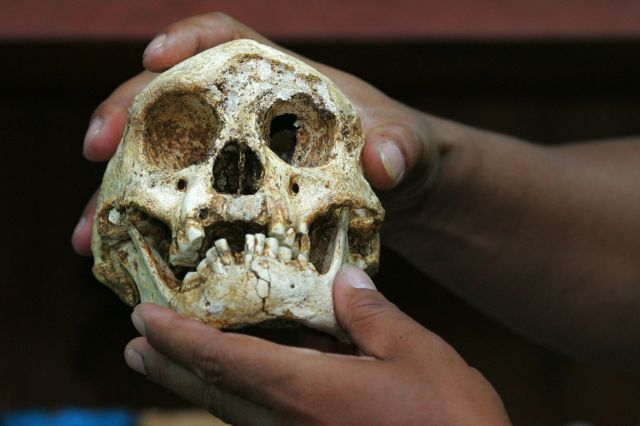
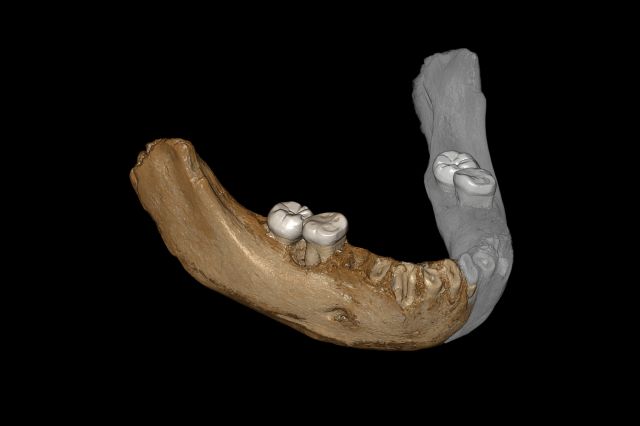
Now, at last, a Denisovan beyond Denisova has come to light. The irony is that the fossil was actually discovered 40 years ago in Tibet. You can read my story about this remarkable development here.
 
PLUS...

Here are some of the stories I enjoyed reading this past month--

Reassessing Seal Rescue, by Cathleen O'Grady (Hakai)

Jakarta Is Sinking, by Matt Simon (Wired)

US Science Academy Leaders Approve Plan to Expel Sexual Harassers, by Sara Reardon (Nature)

Permafrost Collapse Is Accelerating Carbon Release, by Merritt R. Turetsky et al (Nature)

U.N. Issues Urgent Warning on the Growing Peril of Drug-Resistant Infections, by Andrew Jacobs (New York Times)

Scientists Discover Nearly 200,000 Kinds of Ocean Viruses, by Jonathan Lambert (Quanta)

The World Lost a Belgium-sized Area of Primary Rainforests Last Year, by Mikaela Weisse and Elizabeth Dow Goldman (World Resources Institute)

How Kenya’s Push for Development Is Threatening Its Famed Wild Lands, by Adam Welz (Yale e360)

USDA orders scientists to say published research is ‘preliminary’ By Ben Guarino (Washington Post)

‘I Want What My Male Colleague Has, and That Will Cost a Few Million Dollars’, by Mallory Pickett (New York Times)

Scientists Partly Restore Activity in Dead-Pig Brains, by Ed Yong (The Atlantic)

Facing Up to Injustice in Genome Science, by Giorgia Guglielmi (Nature)

 
Upcoming Talks

May 16, 2019 Ames, Iowa. Genome Writer’s Guild

May 25-26, 2019 Copenhagen: Bloom Festival.

June 23, 2019 Providence, RI. Society for the Study of Evolution. Vice Presidential Symposium: Politics, the Public, and Science: Navigating the New Reality”

July 2, 2019 Lausanne, Switzerland. World Conference of Science Journalists

July 13, 2019 New York. Northeast Conference on Science and Skepticism Keynote Address

August 31, 2019 Decatur, GA. Decatur Book Festival.

NEW--> September 17, 2019 Washington, DC. Smithsonian. “An Evening With Carl Zimmer.” Details to come.

NEW--> October 23, 2019 San Francisco. Arts & Ideas at the JCCSF. Details to come.

NEW--> October 24, 2019 San Francisco. The Exploratorium. Details to come.

November 21, 2019 Paris. TimeWorld 2019

You can find information and ordering links for my books here. You can also follow me on Twitter, Facebook, Goodreads, and LinkedIn. If someone forwarded this email to you, you can subscribe to it here.

Best wishes, Carl
Free post
#117
May 2, 2019
Read more

Friday's Elk, April 12, 2019

I held off on the April edition of Friday's Elk for a couple late-breaking pieces I've been working on. Here they are, plus some interesting reading from other writers if you're looking for something to feed your mind. And be sure to check out the new entries in my speaking schedule at the end of this email. (Even more talks to come!)

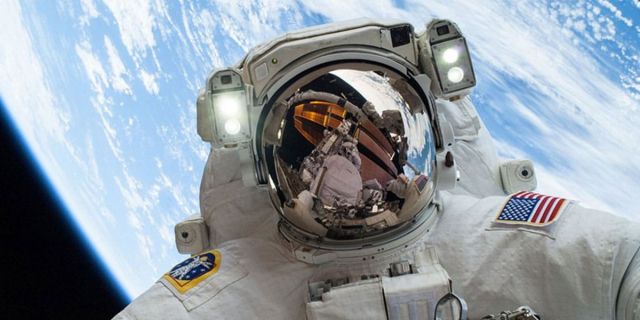
An Astronaut, Down to His Molecules

Today, I had a full-page story about an exceptional piece of science: the NASA Twins Study. During Scott Kelly's 340 days aboard the International Space Station, scientists monitored practically every aspect of his existence, from the expression of his genes to his microbiome to his performance on cognition tests. It's a vast, data-rich profile of a person, made all the more compelling by the fact that scientists compared his results to tests on his twin brother Mark. Some researchers looked at the results and saw a dire warning about any dreams of going to Mars. But how much can we ever know about human biology from a single person? Would ten astronauts studied so carefully give some clearer answers?
 

Meet Homo luzonensis

This week researchers announced the discovery of a new species of our genus in a cave in the Philippines. About 50,000 years ago, a tiny human-like species lived on the island of Luzon. It's the second case of island "Hobbits"--are there more for scientists to dig up?


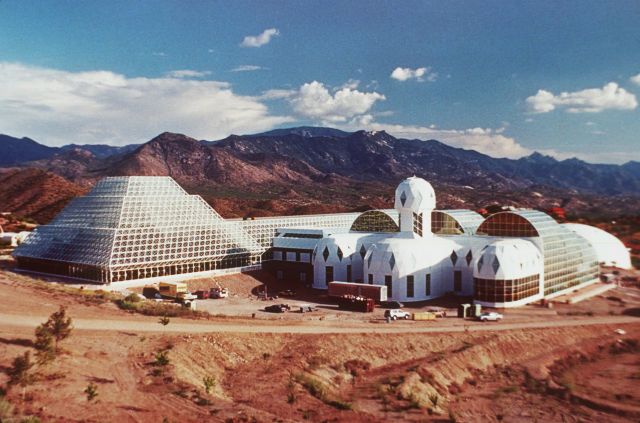
The Lost History of the Biosphere

In Arizona, there's a remarkable sealed building called Biosphere 2. What's even more remarkable is that eight people lived inside of it for two years in the early 1990s, trying to grow their own food and drink recirculated water. I've been fascinated by Biosphere 2 ever since it was first built. In the Sunday Review, I took a look at its turbulent history, which included dead hummingbirds, triumphant cockroaches, and a cameo by Steve Bannon.
 

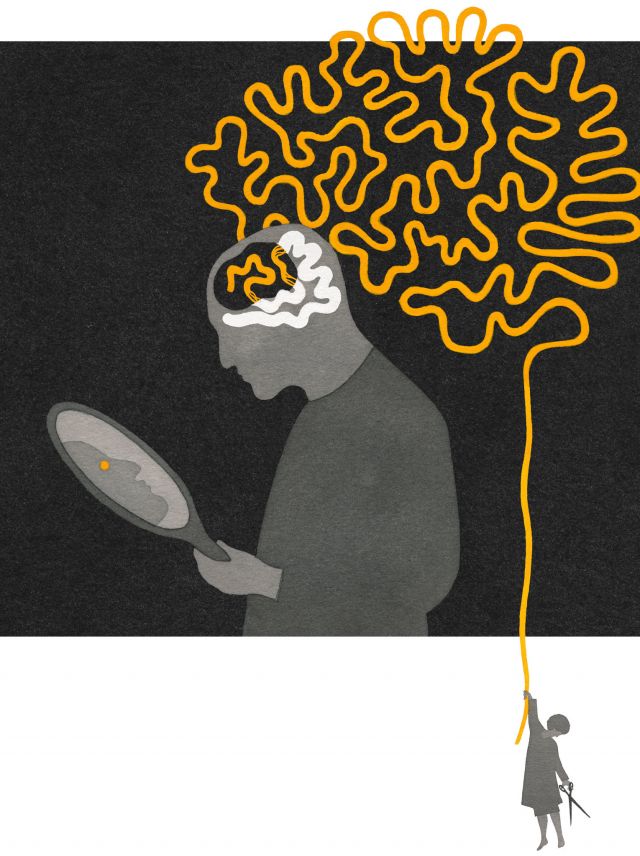
Klotho: The Ethics of Enhancement

For years, scientists have been puzzling over a protein made in our brains known as Klotho (named for one of the Greek fates who measures the thread of life). It appears to shield the brain from some of the devastation Alzheimer's, and it seems to enhance learning and memory in healthy brains. Now there are two companies trying to create Klotho-based treatments, and bioethicists are grappling with the prospect of a double-edged drug. Here's my feature in the Times.
 

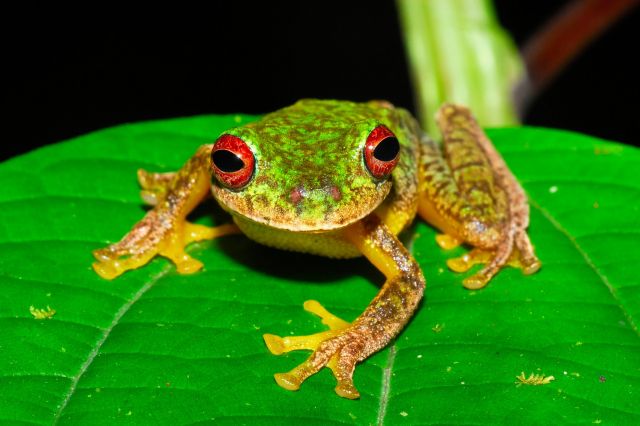
As If the Frog Plague Could Be Any Worse

For years, one of the biggest, scariest stories on the conservation biology beat has been the relentless spread of a frog-killing fungus around the world. Now, it turns out that this catastrophe is actually far worse than scientists previously estimated. I take a look at the first global survey of the damage done.
 

The Deep History of a Place

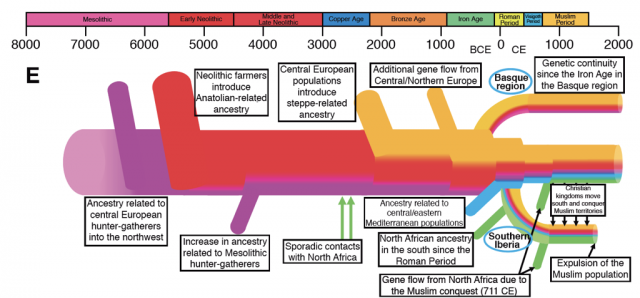
The ancient DNA revolution is enriching our understanding of history. The latest demonstration of this is a pair of new studies on genetic material extracted from skeletons found in Spain and Portugal, dating back as far as 11,000 years. They show how Iberia has been a crossroads since the Ice Ages, a place where people from different regions--even different continents--come together and mix their genes. This figure, taking from the original paper, does an excellent job of communicating the complexity of one place's history.


Why Would an Animal Trade One Body for Another?

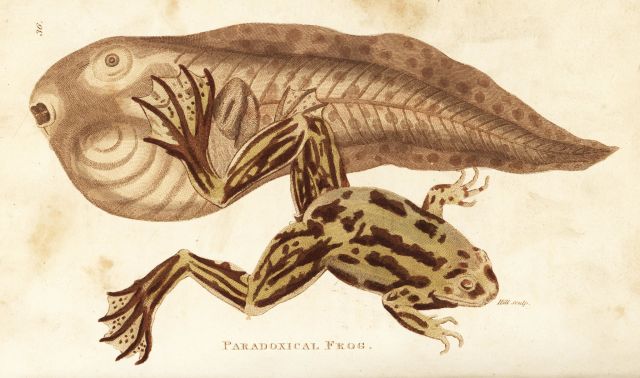
Metamorphosis is a marvel that any child can appreciate by watching a butterfly emerge from its chrysalis or a tadpole turn into a frog. But why should they have all the fun? I wrote about the scientific paradox posed by the evolution of metamorphosis, and about the ideas scientists are exploring to understand how it came to be so common in the animal kingdom.

 
Talking Heredity

On my recent trip to Australia, I talked with Radio National about She Has Her Mother's Laugh.

And on DNA Today I talked about how you can be more closely related to some of your full siblings than others (genetically speaking)..
 
PLUS...

‘As Native Americans, We Are in a Constant State of Mourning’ By Chip Colwell, New York Times

The absurdly high cost of insulin, explained. Julia Belluz, Vox.

Domestic cats (Felis catus) discriminate their names from other words Saito et al, Scientific Reports

Last time CO2 levels were this high, there were trees at the South Pole. Damian Carrington, The Guardian

The remarkable impact of bivalent HPV vaccine in Scotland. Julia Brotherton, BMJ

There was actually a study to determine if red wolves are wolves. The answer could have doomed them. Darryl Fears, Washington Post.

Death By 1,000 Clicks: Where Electronic Health Records Went Wrong. Fred Schulte and Erika Fry, Kaiser Health News

DeepMind and Google: the battle to control artificial intelligence. Hal Hodson, 1843 Magazine

Goop Is Making a Killing Off Women Who Want More Than a Doctor's Advice. Riley Griffin, Bloomberg

The Fertility Doctor’s Secret, by Sarah Zhang, The Atlantic

Antibiotics set to flood Florida’s troubled orange orchards. Maryn McKenna, Nature

After Two Decades, a Fishy Genetic Mystery Has Been Solved. Ed Yong, The Atlantic

Climate change making storms like Idai more severe, say experts. Matthew Taylor, The Guardian.

An Elusive Whale Is Found All Around the World, by Karen Weintraub, The New York Times

In blow to climate, coal plants emitted more than ever in 2018. By Chris Mooney and Brady Dennis, Washington Post

EPA Science Panel Considering Guidelines That Upend Basic Air Pollution Science. Rebecca Hersher, NPR

YouTube Executives Ignored Warnings, Letting Toxic Videos Run Rampant. By Mark Bergen, Bloomberg

 
Upcoming Talks

NEW--> May 2, 2019 Genspace, New York. DNA Day talk. Details to come

NEW--> May 16, 2019 Ames, Iowa. Genome Writer’s Guild

May 25-26, 2019 Copenhagen: Bloom Festival

NEW--> June 23, 2019 Providence, RI. Society for the Study of Evolution. Vice Presidential Symposium: Politics, the Public, and Science: Navigating the New Reality”

NEW--> July 2, 2019 Lausanne, Switzerland. World Conference of Science Journalists

NEW--> July 13, 2019 New York. Northeast Conference on Science and Skepticism Keynote Address

NEW--> August 31, 2019 Decatur, GA. Decatur Book Festival.

NEW--> November 21, 2019 Paris. TimeWorld 2019


My newest book is She Has Her Mother's Laugh. If you've read it and liked it, please rate/review it on your favorite book site, such as Goodreads or Amazon. Thanks!

You can find information and ordering links for my other books here. You can also follow me on Twitter, Facebook, Goodreads, and LinkedIn. If someone forwarded this email to you, you can subscribe to it here.

Best wishes, Carl
Free post
#116
April 11, 2019
Read more

Friday's Elk, March 8, 2019

Happy March! Here's a late-winter selection of updates...


Doubling DNA, Twins CSI, and Mice in Conversation

Since the last Friday's Elk, I wrote three pieces for the New York Times on three rather different topics.

1. Your DNA is spelled out in an alphabet of four "letters." Now scientists have added another four, and found that this new eight-letter DNA can still work as a way to store genetic information. Perhaps we will use this molecule to store movies and spreadsheets someday. Leading the effort is a scientist named Steven Benner. You can listen to Benner and me talk about just how weird life can get in this episode of my podcast, "What Is Life?"

2. Identical twins are not exactly identical, even though they descend from a single fertilized egg containing a single genome. Mutations arise in embryos as their cells divide, and when twin embryos split apart, one may end up with a few mutations that the other lacks, and vice versa. Forensic scientists have wondered for many years if a DNA test could ever tell twins apart. I tell the story of the long search for such a test--and puzzle over why it isn't being used right now to solve cold cases. 

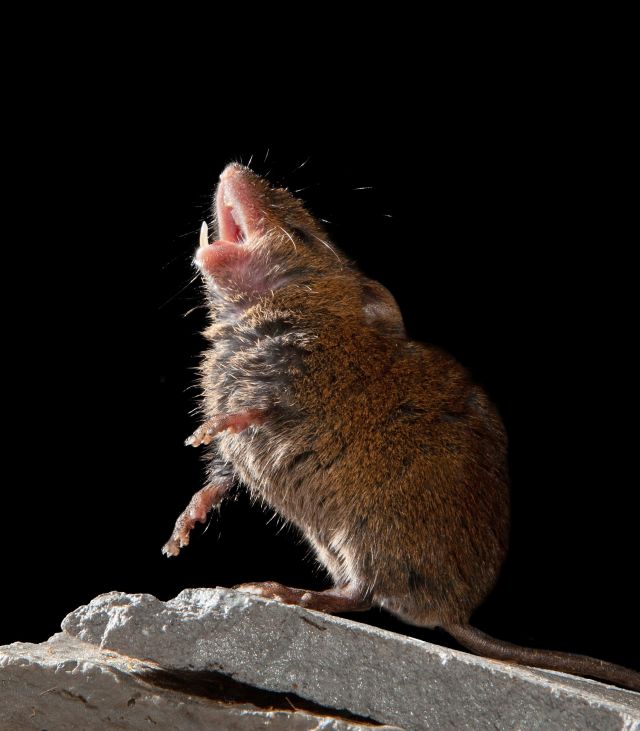
3. Our power of language may be one of the most important features that sets our species apart from all other living things. But language's building blocks may have been evolving for 100 million years. I write about a strange singing mouse that seems to communicate in conversations--and uses some of the same brain circuitry we use to do so. (Mouse photo by Christopher Auger-Dominguez)

What's In Your Genome?

The newest episode of Radiolab takes a look at that bizarre attic that is our genome. I talked with producer Pat Walters about some of the junk that, with a little evolutionary altering, has become downright useful--even essential. Take a listen. (Here's a story I wrote for the New York Times Magazine about junk DNA, and here's a blog post I wrote about the viral gene without which none of us would be born.)

By coincidence, a couple other podcasts have just posted interviews about She Has Her Mother's Laugh: Point of Inquiry and Curiosity Daily.


Cold, Hot, Cold

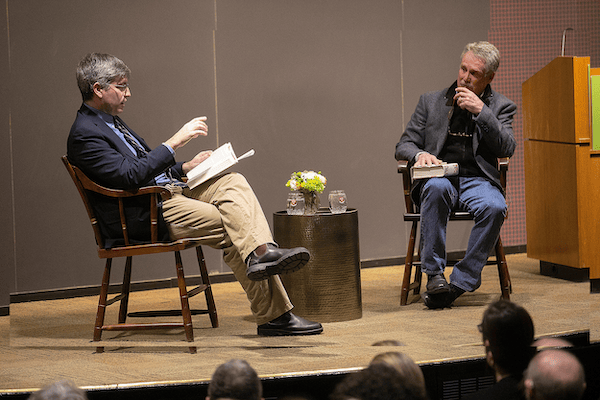
As spring approaches, I'm starting to scramble again, traveling hither and yon to give talks. This past week, I headed to snowy Cambridge, Mass., for a conversation with David Quammen, then journeyed to the sultry city of Adelaide in Australia for their writers festival, and finally returned to the snow to give a lecture at the University of Illinois.

Here is a nice write-up in the Harvard Gazette of my conversation with Quammen about the tree of life, writing about nature, and more. The video will be available within a few weeks; I will keep you posted.

 
From Bellybuttons to the Roman Empire

Tim Flannery, an Australian biologist and author of many fine books, wrote a gratifying review of She Has Her Mother's Laugh for the New York Review of Books. (First time I've been reviewed in their pages!)

Snip:

“A grand and sprawling book that investigates all aspects of inheritance, from ancient Roman law to childhood learning, and on to the bacteria that inhabit our belly buttons (which are surprisingly varied among individuals). Along the way, the book provides many amusing historical anecdotes and important scientific insights…Some of the most fascinating material Zimmer covers concerns the phenomena of mosaicism and chimerism, in which individuals are made up of cells with differing genetic inheritances.”

 
Upcoming Talks

More talks coming soon...

March 15, 2019 Brookline, MA. “Science On Screen” at the Coolidge Theater. (A double-feature: a talk about heredity and a screening of the heredity-based comedy, Flirting With Disaster.)

April 9, 2019 Wellesley College. Mayer Lecture. Details to come.

May 25-26, 2019 Copenhagen: Bloom Festival.


If you've enjoyed reading She Has Her Mother's Laugh, please rate/review it on your favorite book site, such as Goodreads or Amazon. Thanks!

You can find information and ordering links for my other books here. You can also follow me on Twitter, Facebook, Goodreads, and LinkedIn. If someone forwarded this email to you, you can subscribe to it here.

Best wishes, Carl
Free post
#115
March 7, 2019
Read more

Friday's Elk, January 31, 2019


New Year, New Podcast

For the first Friday's Elk of 2019, I have some good news. In some earlier newsletters I wrote about a live series of conversations I hosted in New York about the nature of life itself. Now you can listen to the podcast edition of "What Is Life?"--eight episodes of talk with fascinating thinkers about what it means to be alive. Here's a link to iTunes. Also I've put together a page on my web site with show notes and embedded recordings, plus a set of pages on Medium. It should also be propagating itself to Sticher and other podcast services. Thanks to Ben Lillie and all the good people at Caveat for making this happen!
 
Decoding Watson

PBS recently ran a thorough and provocative documentary about Jim Watson, who shared the Nobel Prize for discovering the structure of DNA. You can watch it here. I show up from time to time to offer some talking-head narration. For more on the show, you can read this New York Times article by Amy Harmon--and her follow-up piece on the fall-out that ensured after the show aired.
 
CRISPR on The Daily

Jennifer Senior interviewed me about the ongoing CRISPR baby saga for the Daily podcast from the New York Times. Listen here.
 
Crickets and Spies

Here's what I've been writing for the New York Times since the last Friday's Elk:

1. Numerous remains of Aboriginal Australians are scattered in museum collections around the world. DNA may help bring them back home to rest.

2. In Cuba, American diplomats have suffered mysterious neurological symptoms. One common report was that they heard strange sounds before falling ill. Was it a sonic weapon--or Cuban crickets?

3. There's evidence suggesting that our microbiome is talking to our brains. And that conversation may have an influence on the development of conditions ranging from Alzheimer's to autism. For this feature, I tried to balance the excitement of the science with the profound mysteries that remain. Don't expect a quick probiotic cure for Parkinson's any time soon.

4. A quarter million years of Denisovan history. The Denisovans are an extinct branch of the human family, known only from a single Siberian cave. Now their fossils have a clear-cut timeline. They lived in the cave for at least 250,000 years and may have gained the powers of self-expression along the way.
 
New to the Calendar

A couple updates to my upcoming appearances:

If you're heading to the annual AAAS meeting in Washington DC, please consider coming to my lecture on Saturday at noon. I'll be signing books afterwards.

I'm looking forward to a live conversation with David Quammen at Harvard on February 28.

 
Upcoming Talks

February 16, 2019 Washington DC AAAS Topical Lecture: "Heredity: Our Defining Mystery"...followed by a book signing.

February 20, 2019 Connecticut College, New London CT: “The Deep History of Global Affairs”

February 28, 2019 Harvard Museum of Natural History: A Conversation with David Quammen..

March 3, 2019 Adelaide Writer’s Week

March 7, 2019 University of Illinois, Urbana-Champaign. Thomas M. Siebel Lecture Series in Science and Society. Details to come.

March 15, 2019 Brookline, MA. “Science On Screen” at the Coolidge Theater. (A double-feature: a talk about heredity and a screening of the heredity-based comedy, Flirting With Disaster.)

April 9, 2019 Wellesley College. Mayer Lecture. Details to come.

May 25-26, 2019 Copenhagen: Bloom Festival. Details to come.


If you've enjoyed reading She Has Her Mother's Laugh, please rate/review it on your favorite book site, such as Goodreads or Amazon. Thanks!

You can find information and ordering links for my other books here. You can also follow me on Twitter, Facebook, Goodreads, and LinkedIn. If someone forwarded this email to you, you can subscribe to it here.

Best wishes, Carl
Free post
#114
January 30, 2019
Read more

Friday's Elk, December 14, 2019


A Year in Friday's Elk!

 
Thanks to everyone for subscribing to this newsletter through the year. Wrapping up 2018, I have some additional news to share about She Has Her Mother's Laugh

1. The New York Times Book Review named it one of the notable books of the year.

2. The Guardian picked it as the Science Book of 2018.

3. She Has Her Mother's Laugh also got onto a variety of other Best-of-2018 lists, including The Sunday Times (UK), Kirkus Reviews, New Scientist, Smithsonian, Science News, and Science Friday

4. I made the long list for the PEN/EO Wilson Literary Science Writing Award alongside some amazing writers--both veterans and first-timers. Check them all out!

 
The CRISPR People Have Arrived

At the end of She Has Her Mother's Laugh, I write about the discovery of the gene-editing technology called CRISPR, and the power it offered to alter heredity. As I was wrapping up the manuscript, scientists were starting to unveil experiments in which they altered DNA in human embryos. An international call went out to resist taking the next step--to implant those embryos and allow them to become babies.

But last month, a Chinese scientist named He Jiankui ignored that call and decided to cross the line. He edited a gene in two embryos. And then He announced had developed into twin baby girls born in November.

For the Sunday Review section of the New York Times, I tried to put this news in some historical context, drawing on a section of She Has Her Mother's Laugh about "three-parent babies." This is new territory in some ways, and yet, in another sense, we've been here before. Genetically modified people already walk among us.

You can also listen to my conversation with Joshua Johnson on NPR's 1A about what He's misadventures portend.

 
Other Intelligences, Other Inheritances

1. The Science Times section of the New York Times recently celebrated their 40th anniversary. As part of a special package of essays observing this event, I wrote about what we've learned so far about how humans evolved, and the most interesting questions left to explore.

2. A big part of the story of human origins is the evolution of our intelligence. But intelligence of different sorts has arisen on other branches of the animal kingdom. I wrote about the paradox of intelligence in the octopus and other cephalopods--animals that seem to defy the pattern seen in other smart creatures.

3. A lot of people are concerned about CRISPR because of how it might alter the future of heredity. I'd argue that a few people who get disease-causing mutations removed from their DNA will have a minuscule impact on the inheritance we leave to future generations. In She Has Her Mother's Laugh, I argue that we must also consider the environmental inheritance humans leave for their descendants. And if we look back at a catastrophic burst of climate change 252 million years ago, it bodes ill for our legacy.

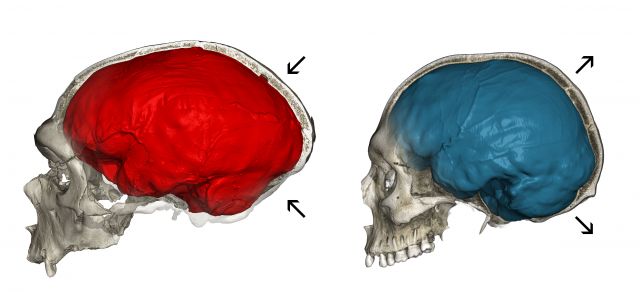
4. For my most recent column, I wrote about what happens when people inherit certain genes from Neanderthals. It turns out that they can slightly reshape our brains. This research may give scientists clues to the evolutionary steps that made our brains so different from that of extinct humans. (In the figure above, the red brain is a Neanderthals, the blue a modern human's.)
 
Next Year's Travels

I've added a few more talks to my itinerary for the new year. If you're in Adelaide, Boston, or anywhere else on the list, I hope you can join me!
 
Upcoming Talks

January 15, 2019 New York: House of Speakeasy, “Secrets and Lies”

February 16, 2019 Washington DC AAAS Topical Lecture: "Heredity: Our Defining Mystery"

February 20, 2019 Connecticut College, New London CT: “The Deep History of Global Affairs”

February 28, 2019 Harvard Museum of Natural History: A Conversation with David Quammen. Details to come.

March 3, 2019 Adelaide Writer’s Week

March 7, 2019 University of Illinois, Urbana-Champaign. Thomas M. Siebel Lecture Series in Science and Society. Details to come.

April 9, 2019 Wellesley College. Mayer Lecture. Details to come.

May 25-26, 2019 Copenhagen: Bloom Festival. Details to come.


If you've enjoyed reading She Has Her Mother's Laugh, please rate/review it on your favorite book site, such as Goodreads or Amazon. Thanks!

You can find information and ordering links for my other books here. You can also follow me on Twitter, Facebook, Goodreads, and LinkedIn. If someone forwarded this email to you, you can subscribe to it here.

Best wishes, Carl
Free post
#113
December 13, 2018
Read more

Friday's Elk, November 19, 2019: The One More Final Vote Edition!


Goodreads Choice Award--The Final Round

Thanks to your support, She Has Her Mother's Laugh is now a finalist for a Goodreads Choice Award! I'm writing to ask for your vote one last time, this time for all the marbles. You can make your pick till November 26. Here's where you can cast your vote. Thanks again!

 
Amazon's Best-Of Lists

A double hit of nice news: Amazon selected She Has Her Mother's Laugh for their Top 100 Books of the Year, as well as their Best Science Books of 2018.
 

Back From London

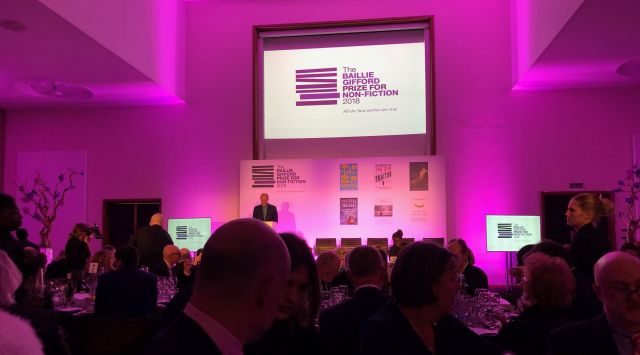
My wife and I spent a few delightful days in London this past week for the Baillie Gifford Prize For Nonfiction. The six finalists got together Tuesday to give a public talk about our books. Listening to the other authors, I could imagine any of them winning, and the following evening we found out that the actual winner was Harvard historian Serhii Plokhy, for his excellent book Chernobyl: The History of a Nuclear Catastrophe. Plokhy combed through Ukraine KGB archives and other sources to put together his new chronicle of this terrifying disaster. The details of this very human failure remain chilling decades later.
 
Heredity On TV--And Other Interviews

I'm on this week's episode of Open Mind, which airs on many PBS stations. I talked with host Alexander Heffner about genes and inheritance. You can watch the interview on YouTube here.

If you prefer audio over video, check out the latest episode of the Sapiens podcast, a great new series about anthropology. They dedicate the full episode to a conversation I had with host Chip Colwell about She Has Her Mother's Laugh.

And if print is your game, here's an interview in Penn Today about the dangers of fake news to science reporting, plus a Q/A with LitHub about the Baillie Gifford Award, including the best writing advice I ever got.
 

Columns: The Oldest Pictures of Animals, the Peopling of the Americas, and More

Before I hit the road, here's what I reported on this month for New York Times:

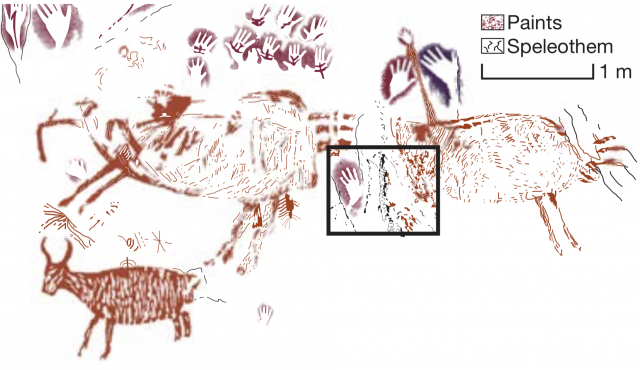
1. Deep in the rainforests of Borneo are caves decorated with pictures of animals. It turns out that people started making these images over 40,000 years ago--meaning they are the oldest evidence of figurative art on Earth. For my column, I explore what this new finding tells us about the development of human culture.

2. How did people first spread across the Americas? In the past few years, geneticists have sequenced hundreds of ancient genomes from Alaska to Chile. This DNA is offering some new clues about ghost populations and previously unknown waves of people on the move from continent to continent. For my column, I try to make sense of all the new findings.

3. The search for a better flu vaccine continues. Here's a piece I wrote about a radically different approach to protecting us from a virus that kills hundreds of thousands of people every year.

 
Upcoming Talks

February 16, 2019 Washington DC AAAS Topical Lecture: "Heredity: Our Defining Mystery"

February 20, 2019 Connecticut College, New London CT: “The Deep History of Global Affairs”

NEW-->February 28, 2019 Harvard Museum of Natural History: A Conversation with David Quammen. Details to come.

March 7, 2019 University of Illinois, Urbana-Champaign. Thomas M. Siebel Lecture Series in Science and Society. Details to come.

NEW-->April 9, 2019 Wellesley College. Mayer Lecture. Details to come.


If you've enjoyed reading She Has Her Mother's Laugh, please rate/review it on your favorite book site, such as Goodreads or Amazon. Thanks!

You can find information and ordering links for my other books here. You can also follow me on Twitter, Facebook, Goodreads, and LinkedIn. If someone forwarded this email to you, you can subscribe to it here.

Best wishes, Carl
Free post
#112
November 18, 2018
Read more

Friday's Elk, October 31, 2018 [Get Out the Goodreads Vote Edition!]


Goodreads Choice Award--Can I Get Your Vote?

I'm sending this newsletter out a couple days early because of some late-breaking developments. She Has Her Mother's Laugh has been nominated for the Goodreads Choice Award in the Science & Technology category. This is a wonderful honor, because the award is the only book prize out there entirely determined by readers, rather than a judging panel made of critics, media, etc. (Not that those aren't great, too!) You can now vote for your favorite nominees in each category. The opening voting round ends on November 4. Here's the link. Thanks!
 
In Other She Has Her Mother's Laugh News

1. Dutton has put together an elegantly designed book club guide that you can download from my web site

2. Publisher's Weekly put She Has Her Mother's Laugh on their list of the Best Ten Books of 2018.

3. Three new reviews came out. The London Review of Books calls the book "an unlikely page-turner." In the Longview, Texas, News-Journal, columnist Frank Pool writes, "I just finished the best science book I’ve read in years." And the Guardian writes, "The book offers clear insights into a fast-moving area, and asks big questions. Scientists can eradicate diseases, alter DNA and change human heredity. Should they? What could be at stake if they get it wrong?"
 
Fake News, Heredity, and Other Talk Updates

1. I'm back from a string of talks, some of which were reported on. Here's a story about my lecture on heredity at Colorado State University. At Mount Holyoke College, I talked about science writing in the age of fake news (featuring the original master of fake science news, P.T. Barnum). And here's a story that covers a talk I gave at CSI Con in Las Vegas on the top misconceptions about heredity.

2. I had a great conversation earlier this month with anthropologist Jennifer Raff and Wall Street Journal science writer Robert Lee Hotz about heredity, ancestry, and how we use both to define ourselves. You can now watch the video.
 
Elizabeth Warren's DNA, Wildfire Refuges, and More Columns

It was a busy month on the science news front over at the New York Times:

1. I wrote about Elizabeth Warren's DNA, explaining how researchers use genetic material to learn about people's ancestors--and what that does and does not mean for people's own identity. The day that piece came out, a GOP operative and a Wall Street Journal pundit used my reporting on genetic ancestry to make distorted accusations against the senator. So I wrote a fact-checking tweet storm. That got people's attention, so I turned the tweets into a fleshed-out essay, which appeared in the Sunday Review. With tens of millions of people looking at genetic tests for clues to their ancestors, the week's events resonate far beyond one political conflict.

2. It turns out that healthy cells are riddled with mutations in genes strongly linked to cancer. So where is the line between health and disease?

3. This year's ravaging wildfires left some refuges behind, as all fires do. Scientists suspect refuges are vital to the long-term well-being of ecosystems. But climate change could wipe many of them out.

 
Upcoming Talks
 

November 2, 2018 West Stockbridge, Massachusetts: Stanmeyer Gallery

November 7, 2018 University of Pennsylvania, Philadelphia: Science Reporting in the Age of Fake News

November 13, 2018 Waterstone's, London: An Evening With The Baillie Gifford Prize for Non-Fiction Shortlist

February 16, 2019 Washington DC AAAS Topical Lecture: "Heredity: Our Defining Mystery"

March 7, 2019 University of Illinois, Urbana-Champaign. Thomas M. Siebel Lecture Series in Science and Society (details to come)


If you've enjoyed reading She Has Her Mother's Laugh, please rate/review it on your favorite book site, such as Goodreads or Amazon. Thanks!

You can find information and ordering links for my other books here. You can also follow me on Twitter, Facebook, Goodreads, and LinkedIn. If someone forwarded this email to you, you can subscribe to it here.

Best wishes, Carl
Free post
#111
October 30, 2018
Read more

Correction to an upcoming talk

Sorry to clog your inbox, but I needed to send out a correction. My upcoming talk at the Stanmeyer Gallery in West Stockbridge, Massachusetts, is not on November 2. It is on Saturday, November 3, at 2 pm. Here's the Facebook event page. Hope to see some Friday's Elk readers from the Berkshires this weekend!

Carl
Free post
#110
October 30, 2018
Read more

Friday's Elk, Ocotber 5, 2018


Happy First Friday!

September hurried by in a rush as I zipped around for much of the month. One of my favorite stops along the way was the lovely English city of Bath. I traveled to the university there for a conference to celebrate the opening of the Milner Centre for Evolutionary Biology. The University of Bath has long been a powerhouse for evolution research, and I expect the new center will up their game even more.

For two days, we listened to talks on topics ranging from the evolution of deadly bacteria to the Cambrian explosion to Darwin’s finches to the domestication of dogs. At the end of the conference, I moderated a panel on the future of evolution research, talking with Patrick Goymer from Nature Ecology and Evolution, Aiofe McSlayt from Trinity College Dublin, Michael Purgannan of New York University, Roli Roberts from PLOS Biology, Nina Waddell of the University of Exeter.

They agreed that the science of evolution has been profoundly accelerated by DNA sequencing. It's now possible to put hypotheses to the test that until now were practically untestable. As a result, a lot of arguments are getting resolved, and evolution is becoming more and more of an applied science—helping to explain precisely how HIV becomes resistant to antivirals, for example, or determining the best way to treat cancer.

While the technology we talked about might be new, it struck me that the concepts were not. The researchers talked about things like natural selection, genetic drift, character displacement, adaptive radiation—concepts that have been part of the language of evolutionary biology for decades. When I asked if the future of evolutionary biology was going to see the emergence of new concepts, the panelists shrugged their collective shoulders. They considered the conceptual toolkit of evolution to be in good shape.


More News about She Has Her Mother's Laugh

A big highlight of the month was learning that She Has Her Mother's Laugh is on the shortlist for the Baillie Gifford Prize, Britain's top prize for nonfiction books! The winner will be announced next month. The web site Five Books interviewed one of the judges about their choices. I'm looking forward to reading clear the other books on the shortlist.

In other book news...

I spoke to BBC about heredity.

PBS put together a nice video about the inheritance of height, based on a chapter from the book.

The Beagle Has Landed, a podcast about clinical genetics, interviewed me about She Has Her Mother's Laugh.

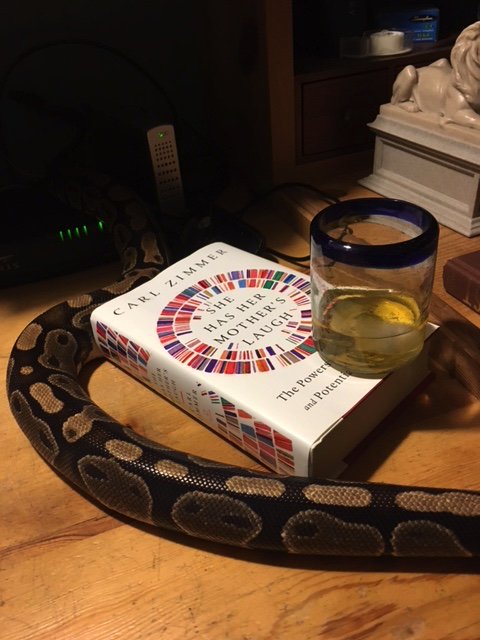
And, last but not least, it was a surreal delight to find David Quammen, a writer I deeply admire, posting a picture of my book on Twitter, posed with a tumbler of a whiskey and a python.

Colorado, Massachusetts and more: October's Talks

For reasons unknown, I am rushing around to a bunch of talks this month--a few of which fell into place just recently. Here are the details for October. (Full calendar at the end, as usual.)

On Tuesday, October 9, I'll be at New York University for an event called "Why You’re You: Explaining Heredity to a Confused Public." I'll be talking with Jennifer Raff, an anthropologist at the University of Kansas, and Wall Street Journal science writer Lee Hotz.

The next day, Wednesday, October 10, I'll be at Yale Law School to talk about the science of science communication. Why is it that science news or a visit to the doctor can change the way some people think but not others? Why is global warming controversial, but lasers aren't? I'll be discussing these issues with Dan Kahan and Kathleen Hall Jamieson, two of the leading researchers in this field, and Sarah Smaga, a Yale graduate student who dedicating a lot of her efforts to science outreach.

A week later, on Wednesday, October 17, I'll be talking about She Has Her Mother's Laugh at Colorado State University as a Murray Honors Visiting Scholar Lecture.

On October 19, I'll be in Las Vegas to talk about heredity and its misconceptions at CSICon.

And, finally (for October), I'll be speaking at Mount Holyoke College on October 23.

 
Jellyfish and Borrowed Neanderthal Genes

My batch of New York Times columns in September runs the biological gamut:

Chimps and bonobos are generous--up to a point. And being human means going beyond that point.

We don't know much about most of our genes--and that's a problem.

Jellyfish: It's what's for dinner

Neanderthals may have given us the flu, or viruses like it

 
Upcoming Talks 

October 9, 2018 New York University: "Why You’re You: Explaining Heredity to a Confused Public"

October 10, 2018 Yale Law School: "The Science of Science Communication"

October 17, 2018 Colorado State University: Murray Honors Visiting Scholar Lecture

October 19, 2018 Las Vegas, CSICon

October 23, 2018 Mount Holyoke College

November 2, 2018 West Stockbridge, Massachusetts: Stanmeyer Gallery

November 7, 2018 University of Pennsylvania, Philadelphia: Science Reporting in the Age of Fake News

November 13, 2018 Waterstone's, London: An Evening With The Baillie Gifford Prize for Non-Fiction Shortlist

February 16, 2019 Washington DC AAAS Topical Lecture (details to come)

March 7, 2019 University of Illinois, Urbana-Champaign. Thomas M. Siebel Lecture Series in Science and Society (details to come)


If you've enjoyed reading She Has Her Mother's Laugh, please rate/review it on your favorite book site, such as Goodreads or Amazon. Thanks!

You can find information and ordering links for my other books here. You can also follow me on Twitter, Facebook, Goodreads, and LinkedIn. If someone forwarded this email to you, you can subscribe to it here.

Best wishes, Carl

Free post
#109
October 5, 2018
Read more

Friday's Elk, September 9, 2018


Living Medicines

For a science writer, it's always exciting to report on the dawn of a new kind of science.

In the 1990s, journalists furiously wrote about gene therapy, a treatment that medical researchers promised would cure hereditary diseases by injecting working genes into people's cells.

At the same time, champions of the Human Genome Project also promised tremendous benefits to mapping all our DNA.

By the end of the 1990s, a new field, known as synthetic biology, was also hatched. Researchers sought to rewire the genes of cells like electronic circuits, promising to fashion organisms that could carry out all sorts of new tasks for us.

But science writers also have a responsibility to follow these fields beyond their grand birth announcements, and see whether they live up to the promises--and, if they do, to see how long the process takes.

Gene therapy did not quickly deliver a panacea for hereditary diseases. Instead, after a death during a clinical trial, the field ground to a halt for years and then regained ground slowly. Five years ago, I wrote about this hard rebound for Wired, profiling the scientist who ran the infamous trial that put the brakes on gene therapy. Just a few weeks ago, my New York Times colleague Gina Kolata reported on how gene therapy is starting to get FDA approval. And yet, she notes, there are still unresolved questions about how effective it will prove in the long run.

The Human Genome Project provided scientists with a tool that's now essential for studying our DNA. It's allowed scientists to tie many genes to many different diseases. In some cases, that knowledge is leading to new medicines and new ways to estimate people's risks. But it certainly hasn't made a big dent in major diseases like Alzheimer's and diabetes. The video series The Code, which I helped create, offers a look at where we stand now.

And then there's synthetic biology. Among its exciting promises was the possibility of cheap, plentiful drugs to cure malaria. The drug, called artemisinin, is naturally produced by certain plants. Synthetic biology offered the possibility of retooling microbes to churn it out in far bigger amounts for far less effort. Here's a 2006 Q/A I did for Discover on the project, talking with its leader, Jay Keasling. The pharmaceutical giant Sanofi ramped up Keasling's technology to an industrial scale.

But they couldn't make a lot of artemisinin from microbes, and what little they made proved expensive. As Mark Peplow recently reported in Chemical and Engineering News, researchers are still searching for a formula that can truly deliver on this particular promise of synthetic biology.

Another idea that's been tossed around is to use synthetic biology to make microbes that can treat diseases inside our bodies. I've heard people talk about this for years. I've seen prototype bacteria in labs that can do simple things like change color when they detect a pathogen. But it's no small task to gather all the data on one of these "living drugs" that could give it a chance of getting FDA approval.

This week in the New York Times, I looked at one such case: a microbe that's programmed to make an enzyme that people with a hereditary disease can't make for themselves.

History has taught me to not hold my breath until these microbes are curing real people of real diseases. But I still think it's an important milestone in the ~20-year history of synthetic biology.


She Has Her Mother's Laugh: Two Lists and an Interview


It was a delight to discover that Vanity Fair put She Has Her Mother's Laugh on their list of the summer's best nonfiction, while Goodreads put the book on its own list of the best new nonfiction.

Meanwhile, Canada's Globe and Mail interviewed with me on the future of heredity. A snip:

Q: In addition to CRISPR, you talked about recent research where scientists take skin cells from mice, make them into stem cells and then in turn make those into sperm or eggs. If I understand this correctly, that could mean a homosexual couple could make sperm and eggs to have babies just like heterosexual couples do. How close are we to that happening?

A: I think we’re pretty close, as strange as that sounds. Something we would have thought was profoundly mysterious and defied the laws of nature turns out to be just a matter of finding the right chemicals to dunk your cells into. There are still a lot of obstacles for them to overcome but the fact that they’ve gotten so far already is pretty mind-blowing.

I think that that kind of technology could unsettle our ideas about heredity much more than CRISPR. Imagine one man takes a cheek scraping, turns them into stem cells, turns some of those cells into sperm and eggs, fertilizes the eggs with the sperm, and that turns into an embryo. That’s a one-parent embryo! Theoretically that’s possible!

Now imagine that you pluck a cell from that tiny little embryo, when it’s just a clump of cells, and you then grow eggs or sperm from that. Remember this is an embryo that has never turned into an adult. Then you fertilize another egg created this way, and you do that for a few generations. If an embryo that develops from that is now implanted into a woman and is able to grow into a person, that person has no parents… has no grandparents! That family tree is pretty much impossible to draw. So when I think about that possibility it just seems like we could really be going into a science fiction future.


Read the full interview here.

 
Talk to You In October!

This summer was a whirlwind of the best sort. I'm incredibly grateful to everyone who came out to hear me talk about She Has Her Mother's Laugh, or listened to me on radio shows or podcasts. As the summer progressed, I also started getting a gratifying supply of emails and tweets from readers who let me know how much they enjoyed the book. (Please share your enthusiasm with everyone you know! And people you don't know on Goodreads or Amazon!) 

Now my work is shifting to a different phase. I'm back to teaching my writing course at Yale. I'm continuing writing weekly for the Times. And, as you can see below, I've got a busy travel schedule for public lectures over the next few months.

With my work on She Has Her Mother's Laugh pretty much done, I'm shifting back to the earlier stages of the book life cycle. I'm working on the third edition of my evolution textbook with my co-author, the biologist Doug Emlen. And I'm spending a lot of time grazing for new ideas for a new trade book. Finding them requires me to take a fair-sized jump from the topic of my previous books. It has to provide me with enough excitement to fuel the long haul of writing another book. And gathering that fuel will take some time.

So I'm going to dial this newsletter back to a monthly pace. You'll still get plenty of warning about upcoming stuff, and I'll keep you up to date with the recent things I've been up to. But I'll also have a chance to be a bit more reflective about what I've been reading (or watching).

Think of this now as First Friday's Elk.

 
Upcoming Talks

September 20, 2018 University of Bath (UK), Evolution in the 21st Century

October 4, 2018 92nd Street Y, New York: "What Makes Us Human? Panel with Maria Konnikova, Nathan Lents, and Sebastian Seung.

October 9, 2018 New York University: "Why You’re You: Explaining Heredity to a Confused Public"

October 17, 2018 Colorado State University: Murray Honors Visiting Scholar Lecture (details to come)

October 19, 2018 Las Vegas, CSICon

October 23, 2018 Mount Holyoke College "Science Reporting in the Age of Fake News"

November 7, 2018 University of Pennsylvania (details to come)

November 13, 2018 New York, House of Speakeasy

November 14, 2018 Stevens Institute of Technology, Hoboken, NJ (details to come)

February 16, 2019 Washington DC AAAS Topical Lecture (details to come)

NEW! --> March 7, 2019 University of Illinois, Urbana-Champaign. Thomas M. Siebel Lecture Series in Science and Society (details to come)


You can find information and ordering links for my other books here. You can also follow me on Twitter, Facebook, Goodreads, and LinkedIn. If someone forwarded this email to you, you can subscribe to it here.

Best wishes, Carl
Free post
#108
September 8, 2018
Read more

Friday's Elk, August 24, 2018


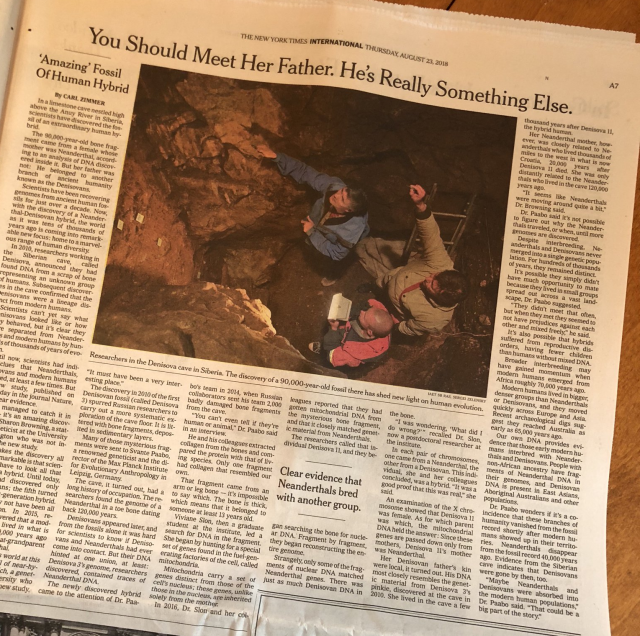
Her Mother Was A Neanderthal, And Her Father Was A Denisovan

A remarkable new study on a 90,000-year-old fossil fragment gives us an extraordinary look at what the world was like when a wide range of humans walked the planet. It was a real privilege to get to write up this discovery for the New York Times. You can read my story of this find here. (I'm also experimenting with responding to comments on the article.)

 
Elephants Fighting Cancer: Another Weapon

Along with ancient DNA, evolutionary medicine is another obsession of mine. It's fascinating to see how scientists gain new insights about diseases and health by observing how different branches of the tree of life have adapted. Some species have evolved some remarkable defenses against cancer, for example. I've written previously about naked mole rats, which have strange proteins that may keep them from ever getting cancer. Elephants ought to get more cancer than they do. In 2015 I wrote about one intriguing mutation that may protect them. Now scientists have found another unique feature of the species that may allow them to kill off mutant cells more effectively than we can.

 
Interviews: Psychology, Heredity, and (Non-)Science Degrees

1. I had a great chat with the psychologist Scott Barry Kaufman about what heredity can tell us about psychology (and can't).

2. Sapiens, the online anthropology magazine, has launched a podcast. I'm delighted to be a guest on their first episode, "Is Your DNA You?"

3. The Open Notebook, a great web site on science journalism, asks whether you need a science degree to do the job. My answer: I sure hope not!

 
Upcoming Talks

September 20, 2018, University of Bath (UK): Evolution in the 21st Century

October 4, 2018, 92nd Street Y, New York: "What Makes Us Human? Panel with Maria Konnikova, Nathan Lents, and Sebastian Seung.

NEW!--> October 9, 2018, New York University: "Why You’re You: Explaining Heredity to a Confused Public"

October 17, 2018, Colorado State University: Murray Honors Visiting Scholar Lecture (details to come)

October 19, 2018, Las Vegas: CSICon

October 23, 2018: Mount Holyoke College

November 7, 2018: University of Pennsylvania, Philadelphia (details to come)

November 13, 2018, New York: House of Speakeasy

November 14, 2018: Stevens Institute of Technology, Hoboken, NJ (details to come)


If you've enjoyed reading She Has Her Mother's Laugh, please rate/review it on your favorite book site, such as Goodreads or Amazon. Thanks!

You can find information and ordering links for my other books here. You can also follow me on Twitter, Facebook, Goodreads, and LinkedIn. If someone forwarded this email to you, you can subscribe to it here.

Best wishes, Carl
Free post
#107
August 23, 2018
Read more

Friday's Elk, August 12, 2018


Hello, UK!

This week, She Has Her Mother's Laugh came out in the UK. Many thanks to Ravi Mirchandani and the rest of the team at Picador for this lovely edition. (Amazon UK link)

 
Three Conversations

The writer Philip Ball interviewed me for the Sunday Observer. You can read our Q/A here.

I had a great chat with Michael Ian Black, host of the podcast "How to Be Amazing." You can listen to our conversation about science writing here.

The cosmologist Sean Carroll and I have known each other for eons, ever since we discovered each other through our blogs. (Remember blogs?) Now Sean is diving into the next big thing--podcasts--and invited me to chat with him for his latest episode of "Mindscape." It's my favorite kind of conversation--more like a talk at a bar than a job interview. We talk about quantum epigenetic yoga, whether designer babies are inevitable, and much more.
 

Two Decades of Following Life into the Water

It's been twenty years since I published my first book, At the Water's Edge. It grew out of my earliest feature writing at Discover, where I had the privilege to report on some of the most exciting fossils discoveries in the history of paleontology--like whales with legs. In 1998, when I published my book, scientists had only barely started to look at the DNA of whales for clues to their evolution. But it was clear that genes could have a lot to say. For one thing, they suggested that hippos were the closest living relatives of whales--something that paleontologists had not guessed at looking at fossils alone.

In the two decades since, paleontologists have found many more transitional fossils. And geneticists are pinpointing some of the molecular changes that occurred when mammals took to the sea. This week a particularly intriguing study came out, showing that whales, seals, and manatees repeatedly lost the use of the same gene. While this loss may have been significant for taking up a marine life, it may now put these animals at risk, as they are exposed to modern pesticides. I take a closer look at the study in my column for the New York Times.
 
Upcoming Talks

September 20, 2018 University of Bath (UK), Evolution in the 21st Century

October 4, 2018 92nd Street Y, New York: "What Makes Us Human? Panel with Maria Konnikova, Nathan Lents, and Sebastian Seung.

October 17, 2018 Colorado State University: Murray Honors Visiting Scholar Lecture (details to come)

October 19, 2018 CSICon, Las Vegas

October 23, 2018 Mount Holyoke College

November 7, 2018 University of Pennsylvania, Philadelphia (details to come)

November 13, 2018 House of Speakeasy, New York

November 14, 2018 Stevens Institute of Technology, Hoboken, NJ (details to come)


If you've enjoyed reading She Has Her Mother's Laugh, please rate/review it on your favorite book site, such as Goodreads or Amazon. Thanks!

You can find information and ordering links for my other books here. You can also follow me on Twitter, Facebook, Goodreads, and LinkedIn. If someone forwarded this email to you, you can subscribe to it here.

Best wishes, Carl
Free post
#106
August 12, 2018
Read more

Friday's Elk, August 3, 2018


A Troika of Stories

This turned out out be a busy news week. Here are three stories I wrote for the Times.

1. On Monday I wrote about "global greening." That's the increase in photosynthesis spurred by all the carbon dioxide we're pumping into the atmosphere. It may sound like a lovely thing, but an expert on global greening I interviewed says it's no reason to celebrate--or to stop looking for a way to fight climate change.

2. On Wednesday, I covered the nomination of a new White House science advisor. This was a particularly newsworthy event, given that the post has been vacant for so long--and given how often the administration has brushed off scientists and scientific evidence. The nominee is Kelvin Droegemeier, a University of Oklahoma meteorologist. I talked with his colleagues to find out about his career, and what they expect from him when he goes to Washington.

3. And yesterday, I wrote about a fun tale of failure and discovery and tiny elephants. The Indonesian island of Flores seems to have a powerful shrinking effect on mammals that have washed onto its shores. Elephants became dwarf elephants there--twice. And humans and human relatives appear to have evolved a pygmy-sized body at least twice as well.
 
Radio and Reviews

1. I talked with Doug Fabrizio, host of Radio West on KUER in Salt Lake City, about She Has Her Mother's Laugh. You can listen to our hourlong conversation here.

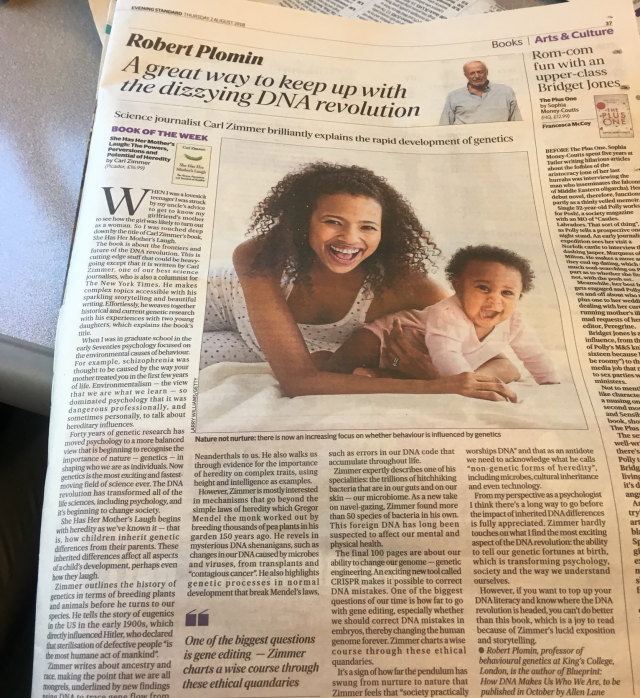
2. Sometimes there's just no substitute for the print version of a review. Here's a piece in the London Evening Standard by behavioral geneticist Robert Plomin. Thanks to Camilla Elworthy for posting this photo of the full-page treatment!

 
Upcoming Talks
 

September 20, 2018 University of Bath (UK), Evolution in the 21st Century

October 4, 2018 92nd Street Y, New York: "What Makes Us Human? Panel with Maria Konnikova, Nathan Lents, and Sebastian Seung.

October 17, 2018 Colorado State University: Murray Honors Visiting Scholar Lecture (details to come)

October 19, 2018 CSICon, Las Vegas

October 23, 2018 Mount Holyoke College (PLEASE NOTE CHANGED DATE)

November 7, 2018 University of Pennsylvania, Philadelphia (details to come)

November 13, 2018 House of Speakeasy, New York

November 14, 2018 Stevens Institute of Technology, Hoboken, NJ (details to come)


If you've enjoyed reading She Has Her Mother's Laugh, please rate/review it on your favorite book site, such as Goodreads or Amazon. Thanks!

You can find information and ordering links for my other books here. You can also follow me on Twitter, Facebook, Goodreads, and LinkedIn. If someone forwarded this email to you, you can subscribe to it here.

Best wishes, Carl
Free post
#105
August 2, 2018
Read more

Friday's Elk, July 29, 2018

The Past and Future of Genetic Modification

A number of scientists hope that GM foods can be part of the solution to feeding the world, as the population grows and climate change puts crops under stress. But GM crops also inspire fierce opposition, because many people worry that they may be harmful to the environment or human health.

In the past few years, scientists have begun using CRISPR and other gene-editing technologies to alter the DNA of crops. This week, the top court in the European Union ruled that these crops should be considered GMOs, and thus be subject to the same tight regulations that cover crops produced by older methods. Except for methods that are really old...

Confused? Well, I did my best to make sense of the situation in an article for the New York Times. You can read it here.
 
Heredity and School

I tackled another controversial topic this week: the influence of genes on behavior. Genes have an influence on just about every kind of behavior that researchers have studied, although it's often weak and indirect. The biggest study of human behavior so far came out this week--a survey of the DNA of 1.1 million people, revealing over 1200 genes linked to how long people stay in school. Here's my story.
 
She Has Her Mother's Laugh: Radio, TV, and Reviews

1. Over the weekend BookTV aired a conversation I had with the anthropologist Chip Colwell before a live audience and the Denver Museum of Nature and Science about She Has Her Mother's Laugh. You can watch it here.

2. The UK edition is coming out next week, and some reviews are coming out there. New Scientist says the book "balances eloquent story-telling with well-researched science...Anyone interested in their path through history, and what they may hand on, will find much to excite them.” The book also got the reviewer for Current Biology regaling his dinner party guests with all sorts of strange tales of heredity.

3. On the audio front--you can listen to my Science Friday interview here. I also talked with the Big Picture Science about how heredity can run backwards or sideways, turning people into chimeras.
 
Science, Science Fiction, and Other Parts of A Healthy Book Diet

The Boston Globe runs a column called Bibliophile, where they interview writers about what they read. I went through a bunch of books to write my own. And now I'm diving into other books to recuperate and think about what I might want to write next. You can read my interview with them here.

Upcoming Talks

September 20, 2018 University of Bath (UK), Evolution in the 21st Century

October 4, 2018 92nd Street Y, New York: "What Makes Us Human? Panel with Maria Konnikova, Nathan Lents, and Sebastian Seung.

October 17, 2018 Colorado State University: Murray Honors Visiting Scholar Lecture (details to come)

October 19, 2018 CSICon, Las Vegas

October 25, 2018 Mount Holyoke College (details to come)

November 7, 2018 University of Pennsylvania, Philadelphia (details to come)

November 13, 2018 House of Speakeasy, New York

November 14, 2018 Stevens Institute of Technology, Hoboken, NJ (details to come)


If you've enjoyed reading She Has Her Mother's Laugh, please rate/review it on your favorite book site, such as Goodreads or Amazon. Thanks!

You can find information and ordering links for my other books here. You can also follow me on Twitter, Facebook, Goodreads, and LinkedIn. If someone forwarded this email to you, you can subscribe to it here.

Best wishes, Carl
Free post
#104
July 28, 2018
Read more

Friday's Elk, July 20, 2018


Tune In!

1. This afternoon, I'll be on Science Friday starting about 3 pm ET. Ira Flatow and I will talk about She Has Her Mother's Laugh. Catch us on the radio, or listen live online.

2. If you want to catch me in pixel form, I'll be on BookTV on C-SPAN on Sunday at 5 pm ET. They'll be broadcasting a recent conversation I had at the Denver Museum of Nature and Science with anthropologist Chip Colwell in front of a live audience.

3. The Aspen Ideas Festival posted the audio of the book talk I gave for them last month. Listen here.
 
The Illusions of Genealogy

The Globe and Mail, one of Canada's leading newspaper, has published an adaptation of part of my book about genealogy. I consider why we are so drawn to our family trees, and how we see more in them than actually exists. Check it out.


Upcoming Talks
 

September 20, 2018 University of Bath (UK), Evolution in the 21st Century

October 4, 2018 92nd Street Y, New York: "What Makes Us Human? Panel with Maria Konnikova, Nathan Lents, and Sebastian Seung.

October 17, 2018 Colorado State University: Murray Honors Visiting Scholar Lecture (details to come)

October 19, 2018 CSICon, Las Vegas

October 25, 2018 Mount Holyoke College (details to come)

November 7, 2018 University of Pennsylvania, Philadelphia (details to come)

November 13, 2018 House of Speakeasy, New York (details to come)

November 14, 2018 Stevens Institute of Technology, Hoboken, NJ (details to come)


If you've enjoyed reading She Has Her Mother's Laugh, please rate/review it on your favorite book site, such as Goodreads or Amazon. Thanks!

You can find information and ordering links for my other books here. You can also follow me on Twitter, Facebook, Goodreads, and LinkedIn. If someone forwarded this email to you, you can subscribe to it here.

Best wishes, Carl
Free post
#103
July 19, 2018
Read more

Friday's Elk, July 13, 2018

(Image: Zhaoyu Zhu)

When Did People Leave Africa?

We know that our ancestors diverged from other apes in Africa. And for millions of years that's where they remained. But at some point hominins expanded to other continents, in a series of waves that included our own species roughly 70,000 years ago.

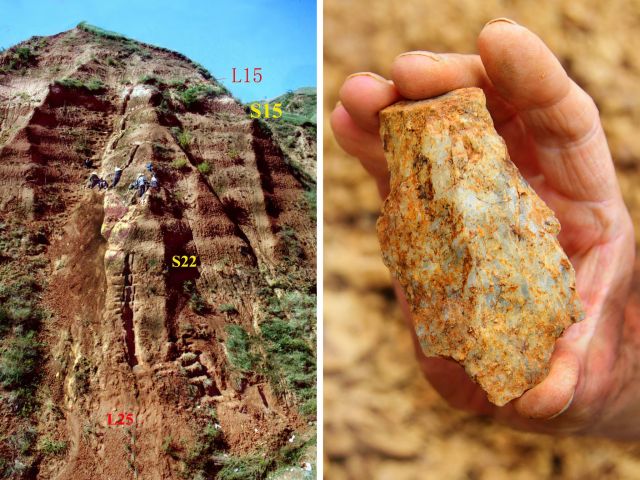
When was the first trip out? The clearest answer to that question would come from skeletons. The oldest skeletons of hominins yet found outside of Africa are about 1.7 million years old, found in the republic of Georgia. But this week, a team of researchers who have worked for years digging into a giant gulley in China, say they have found tools as old as 2.1 million years.

This is much more than just a matter of re-pinning an event to a new page of the calendar. The age of these tools--if they are tools--says a lot about what sort of folks walked out of Africa. Were they tall, big-brained people like us, or were they basically upright apes?

I dig into this fascinating study this week in the New York Times.

 
She Has Her Mother's Laugh: Conversations in Print and in Person

1. National Geographic's Simon Worrall interviewed me about my new book.

When I told my wife the title of your book, and that it was about heredity, she said: “I got my mother’s laugh and voice from being around her.” So, Carl, is it genes or the environment—nature or nurture—that make us who we are?

No one has done a rigorous genetic study of the genetic inheritance of laughter. [laughs] But researchers have studied behavior in general, and genetics, which show that there are different kinds of behavior and aspects of people’s personalities that are “heritable.” This means that if you look at the variation in a trait in a big group of people, some of that variation is due to the genes that they inherit. Identical twins, for instance, will tend to be more similar to each other in that trait than their siblings.

But I would be surprised if laughter had even 10 percent heritability. Genes you inherit may play a role in your laugh being somewhat similar to your parents’, but you’re also growing up with them and listening to them laughing, and we’re a very imitative species. There’s no way you could drill down and say we have identified that 10 percent of your laugh came from your DNA. We’d like it to happen. That’s why consumer genetic tests are incredibly popular. Somehow we want to look inside our DNA and get a precise measurement of why we are the way we are.

Certainly our genes are enormously important, but they’re not the only things that are passed down from our parents. I would argue that you should think beyond genes when trying to understand the full scope of heredity. For example, we humans are cultural animals and culture works like its own form of heredity. You’re probably already discovering, for example, that your children or grandchildren are a lot better than you are at using a smart phone. They may go on to think about a new way of designing phones, which will then get passed down to future generations.


You can read the rest here.

2. Thanks to Thrillist for naming She Has Her Mother's Laugh one of the best books of 2018 so far!

3. The new issue of O Magazine is out, calling the book "a story filled with palace intrigue and breathtaking innovation.”

4. Here's a podcast recording of my conversation at the Silicon Valley Commonwealth Club from last month.

 
Upcoming Talks

September 20, 2018 University of Bath (UK), Evolution in the 21st Century

October 4, 2018 92nd Street Y, New York: "What Makes Us Human? Panel with Maria Konnikova, Nathan Lents, and Sebastian Seung.

October 17, 2018 Colorado State University: Murray Honors Visiting Scholar Lecture (details to come)

October 19, 2018 CSICon, Las Vegas

October 25, 2018 Mount Holyoke College (details to come)

November 7, 2018 University of Pennsylvania, Philadelphia (details to come)

November 13, 2018 House of Speakeasy, New York (details to come)

November 14, 2018 Stevens Institute of Technology, Hoboken, NJ (details to come)


If you've enjoyed reading She Has Her Mother's Laugh, please rate/review it on your favorite book site, such as Goodreads or Amazon. Thanks!

You can find information and ordering links for my other books here. You can also follow me on Twitter, Facebook, Goodreads, and LinkedIn. If someone forwarded this email to you, you can subscribe to it here.

Best wishes, Carl

Free post
#102
July 12, 2018
Read more

Friday's Elk, June 29, 2019

Wall Street Journal review and more

I'm back from the long journey west. Since I last wrote, there's been more news about She Has Her Mother's Laugh.

1. In the Wall Street Journal, William Saletan gets it--

"Nature’s laws are violated all the time, and the cardinal violator is nature itself. This is the paradox that Carl Zimmer explores in She Has Her Mother’s Laugh: The Powers, Perversions, and Potential of Heredity. Mr. Zimmer, a New York Times science columnist and author, is careful and well-informed. So when he says that research is overturning things you were taught in biology classes, he’s worth heeding. Acquired traits can be inherited. Biological time can turn backward. And monsters are real."

2. Nature Genetics, the top genetics journal in the world, gives a shout-out to the book in the current issue's editorial, urging care in drawing conclusions from new studies on the link between genes and intelligence and personality--

"In his superb book on heredity, She Has Her Mother’s Laugh, Carl Zimmer discusses how the proper understanding of heritable influences on intelligence and the related trait of educational attainment could be used to guide the design and evaluation of improved educational strategies. Intelligence, like height, is highly heritable, polygenically inherited and depends environmentally upon nutrition and opportunity. For this new knowledge to be used effectively, he argues, the very real genetic influences should be considered constitutional potential, rather than the more frequently grasped concept of genetic essence."

3. The Times of Israel interviewed me about the book.

4.Here's an episode of the Good Life Podcast in which I have a lively conversation with host Jonathan Field.

5. The New York Times Book Review included the book in its list of recommendations this week.
 
How old can we get?

Two years ago I wrote about a provocative study in which scientists claimed we have a fixed maximum lifespan of 115 years or so. Now comes a new study of 105+year-old Italians that suggests that if there is a limit, we're nowhere close to it. And maybe some interesting biology happens inside of people after they cross the century mark. Here's my column on the ongoing debate in the New York Times

 
More talks

I've added some new talks to my list below. More to come!
 

NEW July 9, 2018 Breakwater Books, Guilford CT

September 20, 2018 University of Bath (UK), Evolution in the 21st Century

NEW October 4, 2018 92nd Street Y, New York (Panel with Maria Konnikova, Nathan Lents, and Sebastian Seung. More details to come)

October 17, 2018 Colorado State University: Murray Honors Visiting Scholar Lecture (details to come)

October 19, 2018 CSICon, Las Vegas

October 25, 2018 Mount Holyoke College (details to come)

November 7, 2018 University of Pennsylvania, Philadelphia (details to come)

NEW November 13, 2018 House of Speakeasy, New York (details to come)

November 14, 2018 Stevens Institute of Technology, Hoboken, NJ (details to come)


If you've enjoyed reading She Has Her Mother's Laugh, please rate/review it on your favorite book site, such as Goodreads or Amazon. Thanks!

You can find information and ordering links for my other books here. You can also follow me on Twitter, Facebook, Goodreads, and LinkedIn. If someone forwarded this email to you, you can subscribe to it here.

Best wishes, Carl
Free post
#101
June 28, 2018
Read more

Friday's Elk, June 19, 2018


News from the Road

Greetings from the road--or, to be more precise, Palo Alto, where I'm talking tonight at the Commonwealth Club Silicon Valley. Tomorrow I'm zipping over to Denver, to talk with anthropologist Chip Colwell at the Denver Museum of Nature and Science. It looks like we'll be filmed by the good people at Book TV. When and if CSPAN decides to air our talk, I'll share the information.
 
Word of Mouth--and of Keyboards

I have a favor to ask. I am doing my best to let people know about She Has Her Mother's Laugh, but I'm only one person. If you've already read my book and would like to help spread the word, please rate/review it on your favorite book site, such as Goodreads or Amazon. There's strength in numbers. Thanks!
 
Two Podcasts and a Video

This Sunday, Jennifer Raff's wonderful review of She Has Her Mother's Laugh appeared in the print edition of The New York Times Book Review. The editor of the review, Pamela Paul, invited me on her podcast to talk about heredity. You can listen here.

I also talked with the good folks at the "Stuff to Blow Your Mind" podcast. And, if you'd rather watch a video, here's a conversation I had with microbiologist Ben Libberton for Nature Research Microbiology.
 
Want a Bookplate?

I am happy to sign books at public events until they drag me from the venue. But if your path and mine don't intersect, I'd be just as happy to send you an autographed bookplate. I simply need to see that you've bought the book and get your address. You can email me a receipt or a picture of yourself holding the book at carl@carlzimmer.com. Or, if you'd like to help spread the word on social media, you can post a photo of you and the book on Twitter, tagging @carlzimmer and @duttonbooks so that we see you and can get in touch. Or you can put it in a comment on this post on my Facebook page.
 
 
Upcoming Talks

June 19, 2018 Commonwealth Club Silicon Valley, Palo Alto CA

June 20, 2018 Denver Museum of Nature and Science (to be recorded for Book TV).

June 24, 2018 Aspen Ideas Festival SOLD OUT!

September 20, 2018 University of Bath (UK), Evolution in the 21st Century

October 17, 2018 Colorado State University: Murray Honors Visiting Scholar Lecture (details to come)

October 19, 2018 CSICon, Las Vegas

October 25, 2018 Mount Holyoke College (details to come)

November 7, 2018 University of Pennsylvania, Philadelphia (details to come)

November 14, 2018 Stevens Institute of Technology, Hoboken, NJ (details to come)


You can find information and ordering links for my other books here. You can also follow me on Twitter, Facebook, Goodreads, and LinkedIn. If someone forwarded this email to you, you can subscribe to it here.

Best wishes, Carl
Free post
#100
June 18, 2018
Read more

Friday's Elk, June 12, 2018


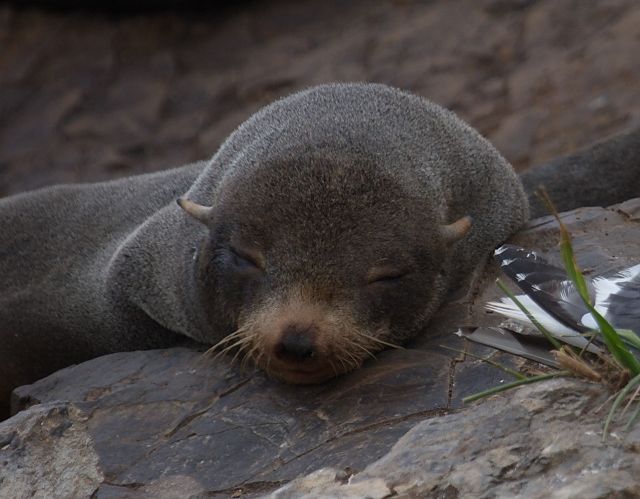
What Seals Can Tell Us About Our Dreams

Sleep is one of my enduring fascinations. I've revisited the research on sleep from time to time in my work at the New York Times. In my first piece, back in 2005, I looked at research on how different animals sleep, and how it can help shed light on the mystery of why we need to sleep at all. Two years later, I looked more closely at the strange sleeping habits of birds--especially ones that can fly for thousands of miles.

When did sleep evolve? Well, the chemistry that makes it possible may have started hundreds of millions of years ago, as our single-celled ancestors rose and fell through the ocean over the course of each day. More recently, we humans may have evolved better sleep when we came down from the trees and began sleeping on the ground. The molecular study of sleep has revealed important clues too; here's a piece I wrote about research that suggests we sleep in order to clear out the brain's metabolic garbage that piles up each day.

For last week's column, I came back to the question of sleep once more. In particular, the strange bouts of activity known as REM sleep. A new study on seals reveals that they experience REM sleep like no other animal ever studied before. And those patterns point to an intriguing function that REM sleep may carry out: brain shivers.
 

CRISPR, Cancer, and the Stock Market

In She Has Her Mother's Laugh, I explore the discovery of the gene-editing technology CRISPR and consider its possible use to fix hereditary diseases. Yesterday, several companies seeking to make medicine out of CRISPR. They all fell at 11 am. The reason? Two studies were published in Nature Medicine pointing to how cells respond to having their DNA altered. Basically, they don't like it. Does that mean CRISPR raises the risk of cancer? Or does it mean that Wall Street has a hard time waiting for science to do its thing? I take a look at the situation for my column today in the New York Times.
 

More Book News

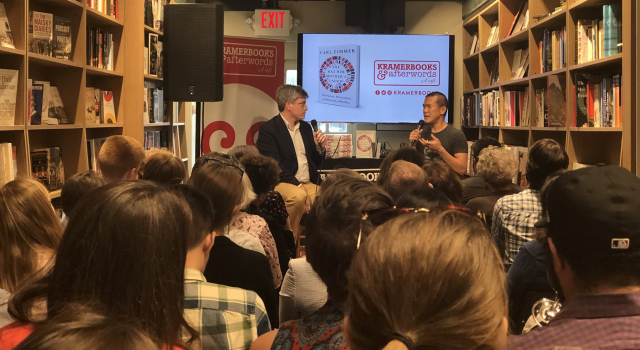
1. Ed Yong and I had a great time at a packed house at Kramerbooks in Washington DC on Wednesday, talking about She Has Her Mother's Laugh. Thanks to @MezidaSaeed for the photographic evidence!

2. I talked to Terry Gross on Fresh Air

3. Historian Nathaniel Comfort reviewed She Has Her Mother's Laugh in the new issue of the Atlantic: "Magisterial...In Zimmer’s pages, we discover a world minutely threaded with myriad streams of heredity flowing in all directions, in variegated patterns and different registers.”

4. Writer Hamilton Cain reviews the book for the Minneapolis Star Tribune: "A leading contender as the most outstanding nonfiction work of the year"

5. Jerry Coyne reviewed my book for the Washington Post, praising "its combination of accuracy, journalistic clarity and scientific authority....If the science doesn’t matter to you now, it will soon." Coyne also recommended the book for summer reading on his blog, Why Evolution Is True.

6. I stopped by WNPR's new studio in New Haven to talk for an hour about heredity.

7. Next week I'm heading off for the western leg of my book tour. First stop, Palo Alto. Hope to see you there! (Details below.)
 
Upcoming Talks

June 19, 2018 Commonwealth Club Silicon Valley, Palo Alto CA

June 20, 2018 Denver Museum of Nature and Science

June 21-24, 2018 Aspen Ideas Festival

September 20, 2018 University of Bath (UK), Evolution in the 21st Century

October 17, 2018 Colorado State University: Murray Honors Visiting Scholar Lecture (details to come)

October 19, 2018 CSICon, Las Vegas

October 25, 2018 Mount Holyoke College (details to come)

November 7, 2018 University of Pennsylvania, Philadelphia (details to come)

November 14, 2018 Stevens Institute of Technology, Hoboken, NJ (details to come)


You can find information and ordering links for my other books here. You can also follow me on Twitter, Facebook, Goodreads, and LinkedIn. If someone forwarded this email to you, you can subscribe to it here.

Best wishes, Carl
Free post
#99
June 11, 2018
Read more

Friday's Elk, June 3, 2018

Thirteen Things

Whew. The first week since the publication of She Has Her Mother's Laugh publication day has been busy. Here's a linky list of thirteen things that happened:

1. An incredibly gratifying review ran in the Sunday Times Book Review, calling She Has Her Mother's Laugh "extraordinary."

2. I talked about the possible science-fiction futures of heredity on WBUR's Radio Boston.

3. Amazon put She Has Her Mother's Laugh on its "Best of the Month" list.

4. The Daily Beast published the prologue of She Has Her Mother's Laugh

5. I talked to Jonathan Capehart about heredity on WNYC New York's Midday.

6. My publisher, Dutton, put a few minutes of the audiobook version on Soundcloud. Take a listen.

7. I answered some questions on Reddit.

8. Stat published another excerpt from the book, in which I write about how microbes can be inherited much like genes, and how our life depends on this microbial inheritance.

9. My mom, local historian extraordinaire, took a closer look at my chapter on eugenics, which is set not far from where I grew up in New Jersey.

10. The New York Post ran a quick piece on the book's exploration of chimeras.

11. Here's an episode of the podcast "Talk Nerdy To Me" hosted by Cara Santa Maria all about She Has Her Mother's Laugh.

12. I talked to Joanne Manaster and Jeff Shaumeyer about heredity for their YouTube show, Read Science!

13. I squeezed in a new column on a particularly cool study of heredity. It's about the peopling of the Americas. Ancient DNA suggests that humans came into North America from Asia, split about 13,000 years ago, stayed genetically separate for thousands of years, and then merged back together some time before 5,000 years ago.

There's more to come, which I'll be able to share next week. And to all you folks around DC: please join me and Ed Yong at Kramerbooks on Wednesday. See below!

 
Upcoming Talks
 

THIS WEDNESDAY! June 6, 2018 Kramerbooks, Washington DC, with Ed Yong

June 19, 2018 Commonwealth Club Silicon Valley, Palo Alto CA

June 20, 2018 Denver Museum of Nature and Science

June 21-24, 2018 Aspen Ideas Festival

September 20, 2018 University of Bath (UK), Evolution in the 21st Century

October 17, 2018 Colorado State University: Murray Honors Visiting Scholar Lecture (details to come)

October 19, 2018 CSICon, Las Vegas

October 25, 2018 Mount Holyoke College (details to come)

November 7, 2018 University of Pennsylvania, Philadelphia (details to come)

November 14, 2018 Stevens Institute of Technology, Hoboken, NJ (details to come)


You can find information and ordering links for my other books here. You can also follow me on Twitter, Facebook, Goodreads, and LinkedIn. If someone forwarded this email to you, you can subscribe to it here.

Best wishes, Carl
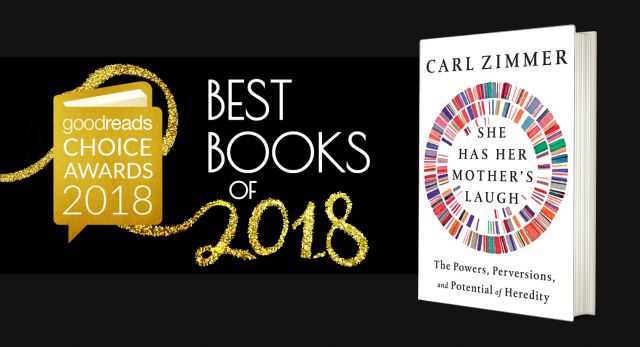
Free post
#98
June 3, 2018
Read more
  Newer archives Older archives  
Bluesky
Threads
LinkedIn
Powered by Buttondown, the easiest way to start and grow your newsletter.