
Does Getting Botox Hurt What to Expect and How It Feels
Does getting Botox hurt? Learn how much it stings, why pain varies, and how Beverly Wilshire Aesthetics keeps injections quick and comfortable.
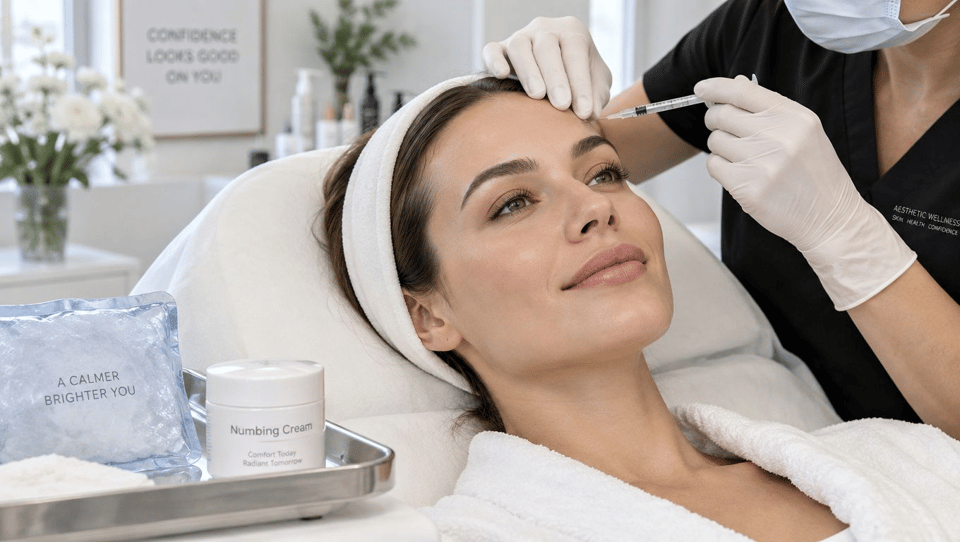
Facial Botox with a 30-gauge needle averaged 4.16 pain on a facial pain scale, compared with 3.41 with a 32-gauge needle, and clinically significant pain showed up in 40% of facial injections with 30G versus 15% with 32G. That means Botox usually isn't severe pain. It's more like a quick pinch or mosquito-bite sting that stays localized, then fades fast, which is exactly why technique, needle choice, and injection site matter so much when you're deciding whether to book.
If you're reading this with a consultation tab open, you're probably doing what almost every first-time patient does. You're not really wondering whether Botox works. You're wondering whether you'll tense up the moment the needle comes near your forehead.
That hesitation makes sense. Faces are personal. Needles feel bigger in your mind than they do in real life. And online answers often swing too far in either direction, either making Botox sound dramatic or pretending you won't feel anything at all.
The honest version sits in the middle. Most patients feel a brief sting, a tiny prick, or a quick pressure point for seconds. The discomfort can vary from one area of the face to another, and it can vary even more depending on who is injecting, what needle they use, and how carefully the treatment plan matches your anatomy.
That's the piece people miss when they ask, does getting Botox hurt. The better question is: how can the experience be made precise, brief, and predictable?
At a doctor-led clinic, that answer comes down to needle science, anatomy, and restraint. Natural-looking Supreme Skin results don't come from rushing through a series of pokes. They come from controlled placement, measured depth, and a plan designed to soften movement without making you look treated. If you want smoother lines and a refreshed expression, the short-lived sting is usually a very small trade for the result.
Introduction: Does Getting Botox Hurt, Really?
A common scene goes like this. You've noticed the line between your brows lingering after long workdays, maybe your forehead looks a little more etched on Zoom than it used to, and you've finally decided to consider Botox. Then the last question stops you: how much will it hurt?
The practical answer is reassuring. Botox feels like a tiny pinch that lasts only seconds per injection. The sensation is short, focused, and over quickly enough that many patients say the anticipation is worse than the treatment itself.
Why the Fear Feels Bigger Than the Procedure
Needle anxiety doesn't mean you're bad with pain. It usually means you don't like uncertainty. Your mind fills in the blank and turns a tiny facial injection into something much larger than it is.
Botox is different from the procedures people often compare it to. It isn't a long infusion, a blood draw, or a treatment that creates broad soreness. It's a series of very small injections placed into precise facial muscles, with each sensation ending quickly.
Key insight: Most first-timers don't need bravery. They need an accurate picture of what the treatment actually feels like.
That accurate picture matters if you care about both comfort and outcome. Cosmetic Botox became part of modern aesthetic medicine when the U.S. FDA approved BOTOX Cosmetic on April 12, 2002, for temporary improvement of moderate to severe glabellar lines, after therapeutic approval dating back to 1989. Older clinical work also showed that comfort measures can make a meaningful difference. In one study, EMLA cream reduced pain by 60%, with 73 of 100 injection sites rated painless on the treated side versus 11 of 100 on the control side in this clinical review of Botox history and pain control.
What Matters More Than Pain Tolerance
People often assume Botox pain depends mostly on whether they have a “high pain tolerance.” That's only part of the story. The larger drivers are often more mechanical:
- Needle selection: Smaller, finer needles can feel different from thicker ones.
- Facial location: Some areas are more sensitive.
- Injector control: Speed, steadiness, angle, and depth all shape comfort.
- Treatment planning: Fewer, more precise injections can feel easier than careless over-treating.
If your goal is smooth but natural results, this should reassure you. Precision is doing two jobs at once. It supports comfort during the appointment, and it supports a more polished result after it.
How Botox Injections Feel and Why
The sensation of Botox makes more sense once you know what your skin and nerves are registering. There isn't one single feeling. Most patients notice two quick parts: the needle entry, then the tiny deposit of fluid.
The First Sensation is the Prick
The needle part is the sharpest part, but it's also the shortest. Patients often compare it to a mosquito bite, a quick eyebrow pluck, or a light rubber-band snap. The key word is brief.
That prick tends to register more in the face than in less sensitive areas of the body. In a JAMA Dermatology study, facial injections had higher pain scores than arm injections. Mean facial pain scores were 4.16 with 30-gauge needles versus 3.41 with 32-gauge needles, while arm injections were much lower overall at 1.66 versus 1.21. That supports what patients often say in real life: you feel the face because facial skin is more expressive and more innervated, but the discomfort is still localized rather than overwhelming.
The Second Sensation is the Pressure
After the prick, some patients notice a moment of pressure, stinging, or mild ache as the medication is placed. This part is subtle and short. It's not the same as deep soreness after a workout or the burning of a larger-volume injection.
A useful mental model is this:
- Skin contact: a tiny pinch
- Product placement: a small pressure point or sting
- Immediate fade: the sensation drops off quickly
- Next injection: the process repeats for a few seconds
That sequence is why Botox usually feels manageable even if you're not “good with needles.” Your nervous system doesn't have to tolerate a long event. It only has to tolerate a few fast moments. Practical rule: Botox discomfort is usually measured in seconds, not in sustained minutes of pain.
Why the Face Feels Different From the Arm
Facial anatomy is designed for expression. You have thin skin in some areas, active muscles just beneath it, and dense sensory input around the forehead, glabella, temples, and eyes. That's why a tiny movement there can feel more noticeable than a shot in the arm.
The good news is that sensitivity doesn't automatically mean suffering. It means details matter. Small changes in where the injector places the needle, how quickly they inject, and which needle they choose can turn the experience from “I was nervous” into “That was much easier than I expected.”
Why Pain Varies From Person to Person
Two patients can get the same product on the same day and describe the treatment differently. That isn't imagination. It's anatomy, equipment, and psychology combining in real time.
Needle Gauge Changes the Experience
This is one of the clearest variables. In a randomized cosmetic botulinum toxin study, 30-gauge needles were associated with clinically significant facial pain in 40% of patients versus 15% with 32-gauge needles, with an odds ratio of 3.80 and p = .04.
A newer peer-reviewed comparison also found that subjective discomfort was greatest with 30G needles and lower with 33G and 34G needles. With 30G needles, reported mean discomfort scores were 3.9 ± 1.6 for the forehead, 4.3 ± 1.7 for the glabella, and 4.0 ± 1.6 for the temple, while the finer options produced significantly less discomfort in this 2024 needle gauge comparison.
That doesn't mean every treatment should use the tiniest needle for every situation. It does mean a clinic that pays attention to instrumentation is usually thinking carefully about patient comfort.
Some Facial Zones Are Simply Touchier
The glabella, forehead, and temple don't all feel identical. Areas with thinner tissue, more sensory awareness, or tighter muscle activity can feel sharper for a moment. That's one reason one patient says the forehead was easy, while another says the space between the brows got their attention.
This also helps explain why one-size-fits-all advice is weak. “Botox doesn't hurt” is too broad. “Botox may feel more noticeable in certain facial zones, but the sensation is quick and can be reduced with technique” is much more accurate.
Technique Changes What Your Nerves Register
Injector skill isn't only about symmetry and natural movement after the treatment. It affects comfort during the treatment too. A controlled injector pays attention to:
- Angle: A smoother entry often feels cleaner.
- Depth: Correct placement avoids unnecessary tissue trauma.
- Pacing: Fast enough to be efficient, calm enough to stay accurate.
- Stability: Less tugging and repositioning usually means less sensation.
Patients considering alternatives or complementary treatments like Morpheus8 in Beverly Hills often compare products before they compare technique. Product choice does matter, and some readers looking at options such as Daxxify treatment details are really trying to understand longevity, feel, and appointment experience together. But the hand holding the syringe still has an enormous effect on how the visit feels.
Your Own State Matters Too
Anxiety turns the volume up. If you go into the appointment holding your breath, tightening your forehead, and expecting pain, each poke can feel more dramatic. A few patient factors can shift the experience:
- Previous experience: Second-timers are often calmer because nothing is unknown.
- Stress level that day: Tension makes the face more reactive.
- Baseline sensitivity: Some people register needles more intensely.
- Reason for treatment: Someone seeking therapeutic injections for pain may experience the contradiction of a shot that stings briefly even though botulinum toxin can also help reduce certain pain conditions over time.
Comfort Options That Make Botox Easier
You don't need much to get through Botox comfortably. But if you're very needle-aware, there are several ways to lower the sensation without turning a simple appointment into a production.
Topical numbing cream | Dulls surface sensation before needle entry | Patients most worried about the first prick |
Ice | Temporarily cools and distracts the area | Small treatment zones and quick visits |
Vibration distraction | Competes with pain signals at the skin level | Patients who tense up during each poke |
Guided breathing | Lowers anticipatory tension and muscle guarding | Anyone whose anxiety is worse than the actual pain |
Ultra-fine needles | Reduces tissue disruption and sharpness | Patients wanting the most refined injection feel |
What Works Best in Real Life
Topical numbing can be helpful, especially if your stress is focused on skin entry rather than deeper pressure. The strongest support for this approach comes from the earlier clinical data showing reduced discomfort with EMLA cream. If you want to understand how these products work in a broader pain-management context, this guide to topical pain relief gives a practical overview of lidocaine-based numbing options.
Ice is simple, fast, and often enough for small facial areas. It doesn't erase all sensation, but it can blunt the first sting and make the skin feel less reactive. Vibration is underrated. By giving the nerves another signal to pay attention to, it can make each injection feel less prominent. Think of it as interrupting the brain's tendency to zoom in on the poke.
Choosing the Right Comfort Plan
If you're deciding what to ask for, use your own pattern instead of copying someone else's:
- If you fear the needle itself: Numbing cream or ice may help most.
- If you get lightheaded from anticipation: Breathing and a slower setup usually matter more.
- If you're sensitive in the glabella or temple area: Fine-needle selection becomes more important.
- If you've had a painful injection elsewhere before: Ask what needle gauge and pacing the clinic uses.
A doctor-led clinic can customize that plan rather than applying the same routine to everyone. Beverly Wilshire Aesthetics offers injectable treatments in a medical setting where comfort choices can be matched to anatomy, treatment area, and anxiety level instead of treated like a generic spa add-on. That tends to matter most for first-timers and detail-oriented patients who want both polished results and a controlled experience.
What to Expect During Your Botox Appointment
Fear usually drops once the appointment stops being abstract. Botox visits are straightforward, and most of the stress comes from not knowing the sequence.
First Comes Facial Analysis, Not the Needle
A proper visit starts with assessment. You'll be asked where your lines bother you, what expression changes you want to avoid, and whether your goal is softer movement, a brow refresh, or subtle prevention. The injector will usually examine your face at rest and in motion because Botox is a movement-based treatment, not a paint-by-number procedure.
Then the skin is cleansed. Some injectors mark points lightly, especially in more technical areas. If you've asked for comfort support, this is when numbing, cooling, or other measures are usually handled.
The Injections Are Quick and Precise
The treatment itself is a sequence of small injections. Each one lasts seconds. You may feel a tiny sting, then a brief pressure sensation, and then it's over.
Most patients find it easier than they expected because there's no long build-up between each injection. The visit keeps moving. That rhythm matters psychologically. You don't have time to dwell on one poke before the injector has already moved on with control and precision.
A few things you might notice right away:
- Small bumps at injection points: often temporary
- Mild redness: common after any tiny skin puncture
- Tenderness if you touch the area: possible for a short time
- A sense of relief: because the feared part is already done
You Can Usually Go Right Back to Your Day
Patients often schedule Botox in the middle of a workday for a reason. It's efficient. You may leave with a little pinkness or a few tiny raised spots that settle, but you'll feel presentable quickly.
If you're prone to headaches in general, it can help to plan a lower-key schedule afterward, hydrate, and avoid over-focusing on every sensation. Some patients who like conservative wellness support for tension also look into options such as THC-free CBD for headache relief as part of their broader self-care routine, though that's separate from the injection process itself.
If natural outcomes matter to you, don't judge a clinic only by speed. Efficient is good. Rushed is not. The best Botox appointments feel calm, exact, and measured. If you want to understand what that can look like aesthetically when researching the top Beverly Hills CA Botox clinics, a before and after gallery for facial injectables helps set realistic expectations for refreshed rather than frozen results.
After Your Treatment: What Is Normal and When to Call
The first few hours after Botox can be anticlimactic, which is a good thing. Most of what you may notice is superficial and localized to the injection points.
FDA labeling states that localized pain, tenderness, swelling, erythema, and/or bleeding or bruising may occur at the injection site, and it also recognizes discomfort or pain at the injection site as an adverse effect. In older double-blind adult studies, injection-site pain and hemorrhage were among the most frequently reported adverse events in 3% to 10% of patients.
What's Usually Normal
A little tenderness doesn't mean anything went wrong. It often just means a needle passed through the skin and the tissue is settling. Common short-term reactions may include:
- Mild soreness: especially if you press on the area
- Small pink marks: often fading quickly
- Tiny raised bumps: usually temporary at injection points
- Minor bruising: possible in any injection-based treatment
The important theme is localized. Botox discomfort is usually not a whole-face pain event. It's a small, site-specific after-effect.
What to Do After the Appointment
Keep your aftercare simple and clean. Follow the clinic's instructions closely, and avoid fussing with the treated areas. A sensible post-visit approach often includes:
- Leave the sites alone. Don't rub or massage unless your injector specifically instructs you to.
- Stay aware of pressure. Tight hats, aggressive facials, or firm face massage right away aren't helpful.
- Pause unnecessary touching. Repeated checking in the mirror usually creates more anxiety than insight.
When It Makes Sense to Call
You should contact the clinic if the reaction feels outside the range of mild, local irritation or if something seems to be worsening instead of calming. Patients generally do best when they don't self-diagnose through online forums after treatment. If discomfort is sharp, spreading, or paired with symptoms that feel unusual for you, call the office directly and let the injector guide you.
The bigger picture is easy to miss in this phase. The tiny soreness, if you have any, is short. The aesthetic payoff arrives later. Local tenderness doesn't predict a poor result, and it doesn't cancel the value of the treatment.
Book With Confidence for Natural, Doctor-Led Results
For those seeking the best Botox in Los Angeles, the question isn't only whether Botox hurts. The question is whether the treatment feels worth it when done well. For most patients, the answer is yes. Brief, manageable discomfort is a small exchange for smoother skin, softer expression lines, and a more rested look that still looks like you.
That value becomes clearer when the injector's priorities are aligned with yours. If you want natural movement, not stiffness, and precision, not overcorrection, the appointment should be built around anatomy and restraint. Supreme Skin results come from measured dosing—making it essential to know how to spot over-diluted Botox strategic placement, and the judgment to stop at elegant, not excessive.
Why Discerning Patients Choose a Medical Setting
The face doesn't reward shortcuts. It rewards expertise. For patients who want a physician's eye on balance, movement, and safety, working with a dual board-certified doctor matters. You're not just paying for the product in the syringe. You're paying for assessment, control, and a treatment plan designed to preserve character while softening what's distracting.
That's especially relevant if you've been hesitating because of pain. The more precise the plan, the less chaotic the experience tends to feel. Better needle selection, efficient placement, and calm execution all support a visit that feels easier than expected.
What Your First Visit Should Deliver
When evaluating Botox Beverly Hills clinics, a worthwhile consultation should leave you with clarity, not pressure. You should understand which muscles are being treated, what level of softening is realistic, how the injections are likely to feel, and how the plan supports natural outcomes.
If that doctor-led approach is what you want, reviewing Dr. Behnoush Zarrini's Realself profile and treatment philosophy is a sensible next step before booking. The goal isn't just to get Botox done. It's to get it done with the kind of precision that makes the result look effortless and the appointment feel controlled. A polished result starts before the first injection. It starts with choosing the right hands.


