
Reinventing Wang Yibo: Part 1
A look back at Wang Yibo's career.
Hello, all! Welcome to all my new subscribers! I’m so surprised and happy to see you! I’ve been anticipating writing this update for like…idk two months now, but then suddenly a bunch of new people subscribed, so I am making myself actually update this for once instead of telling myself I will and then getting around to it nine months later.
Most of you have recently found your way to this little newsletter because of my recent link-drop to it in The Rec Center, where in honor of Devil Wears Prada 2 I got to write an overview of the fandom—one of the all-time femslash greats—and a lovely roundup of some of my favorite Mirandy fics new and old (plus one Andy/Emily fic!). I did not anticipate when I started this newsletter that it would eventually contain multiple references to Miranda Priestly, but I suppose it’s fitting, because if any fictional character would approve of Wang Yibo’s brand positioning, stone-cold rejection of industry expectations, tireless work ethic, and above all his impeccable innate fashion sense, it is La Priestly.
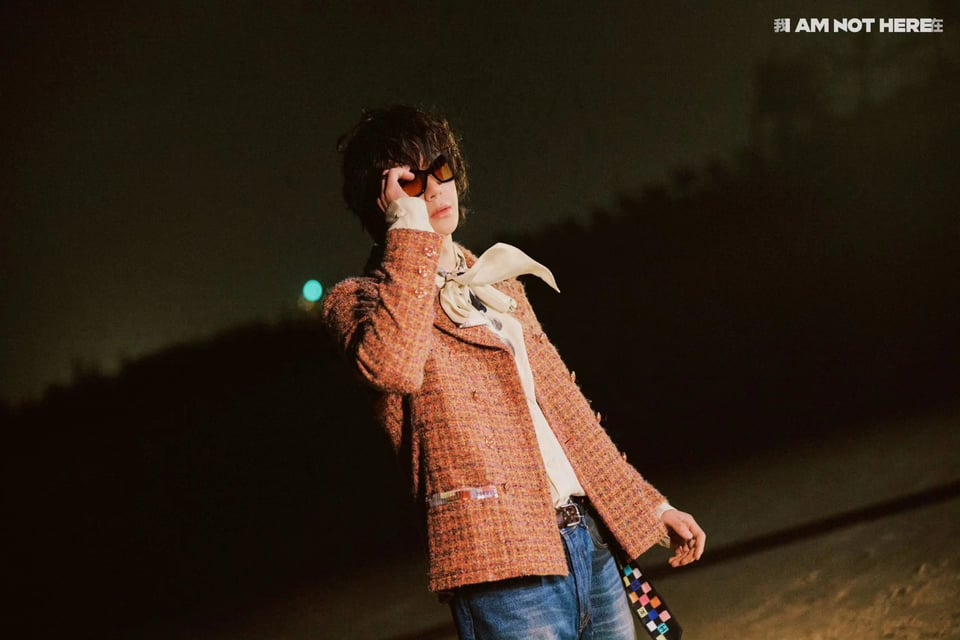
For anyone new to this who may be wondering who this Wang Yibo person is: in a nutshell, he is an unbelievably popular 28-year-old Chinese mega-star whose life and career yield so much interesting paths for rumination and reflection that I made this newsletter so that I could—occasionally—ruminate and reflect upon them.
To expand on that a bit more: Yibo’s entire career trajectory so far seems, to me, a person who thinks about such things, quite remarkable, both because it contains a lot of drudgery and because he’s managed to reinvent himself at least four different times over the course of his career, very successfully and nigh-effortlessly each time.
Today I’m going to walk through the first three of those four reinventions. Tomorrow, we’ll talk about the final—or at least latest—reinvention, and the larger cultural influences with which it intersects. Next week I’ll write the newsletter update I was actually intending to write before my brain said let us gather around the campfire and retell the Old Tales.
The First Reinvention
Yibo’s been dancing and rapping since he was a child. His parents, instead of dissuading him from this madness, as most parents would, fully supported him, to the extent that when Chinese idol management studio Yuehua recruited him to go to Korea and become a trainee (after he placed 16th in a national hip-hop dance-off, to tell you how much his talent and natural charisma made him stand out in a crowded field), they said yes. So little 13-year-old Yibo went off to Korea, worked hard, and eventually debuted as part of the five-member, short-lived band Uniq. (We could posit that turning himself into K-pop band material was his first major reinvention, but I also think there’s a strong possibility that our Yibo was born this way.) Uniq was well-received, and K-pop fans still talk about “EOEO.” But in 2016, a year into Uniq’s existence, all five members abruptly had to pack up and go back to China. Yibo had to restart his entire career from the ground up. This was reinvention #1.
This happened because Xi suddenly soft-banned K-pop, leading formal Korean-Chinese cultural exchange to fall apart and immediately unemploying dozens of Chinese K-pop performers who’d joined K-pop bands as part of cross-cultural promotions—like all the members of Exo-m, for example. By “soft” ban, i mean that there’s no official law against it, but the CCP issue decrees that make it very, very clear that you Should Not. Becoming a fan of Chinese entertainment means accepting that this sort of thing happens every two years on average. Video games? Palace dramas? Boys Love? The NBA? Rap music? Series with… too… many… episodes?!? It’s an arbitrary, unpredictable list, and you never know what thing you love will be next on the chopping block, usually because it gains massive popularity and becomes a perceived threat to the authority of the state.
Sometimes the banned things are able to make a slow-drip cultural comeback. K-pop has not been one of them, and that’s created a different, related problem for Xi. Absent K-pop itself, Chinese pop culture soon welcomed a barrage of Korean-styled Chinese idols, in variety show competitions or in historical dramas featuring fey couples with tiny waists and high cheekbones. Over the years, these “idol dramas” have become wildly popular—the main vehicle through which many actors elevate their careers. But the government has encouraged their cultural disparagement as well. Early-career male idols get branded “little fresh meat” and are generally considered within the culture to be all flash and no substance. These actors have a relatively short career shelf-life, unless they can, ironically, find a way to elevate themselves out of the stylized androgyne mode that they had to cultivate to have a hope of succeeding in C-Ent to begin with.
Caught between the scylla and charybdis of needing to maintain his idol image to start working and needing to ditch his idol image to keep working, Yibo did an unusual thing for an actor of his stature—one who was fairly well-known, but nowhere near well-known enough to helm a big-budget production. He mostly maintained his idol persona—beautiful, fey, aloof, be-earringed, typically sporting a heady mix of streetwear and women’s couture fashion. But he also took the most unglamorous “jobbing” role he could possibly have gotten: Young jack-of-all-trades host on entertainment talk show Day Day Up.
DDU was an enormously popular weekly show that ran for nearly 15 years and then abruptly folded in 2022. One of the things that likely ultimately tanked it was that Wang Yibo’s fame eventually outstripped, by magnitudes, the point where he should still have been a lesser variety show TV host; when he left—a pattern that repeated with our beloved Street Dance of China, may it rest in peace—the show struggled to regain its footing without him.
Yet DDU was arguably largely responsible for Yibo’s eventual astronomical fame, because back in 2017 when his career was foundering, it gave him a bunch of things that no other industry job could have given him at that point. Stability while he auditioned and worked his way up through the c-drama ranks. An enormous rolodex of industry contacts, because everyone went on DDU. Mentorship from the show’s widely respected host, Wang Han, who’s been open about his affection and protectiveness of Yibo over the years. A structured environment where his tireless work ethic was perpetually rewarded. The chance to constantly try out new things/projects/tools/sports/stuff. Being nurtured by an entire network that clearly adored the hell out ot him.
Yibo’s role on DDU required him to be the hard-working, naturally talented wunderkind who learns new stuff quickly and shows it off by the end of the episode. The thing about Yibo is that he really was that hard-working wunderkind (and that whole concept would later underpin his nature docuseries Exploring the Unknown, which we know he started to pitch not long after his DDU run ended). Yibo clearly loved what DDU gave him, because he stayed on the show a whole two years longer than he reasonably should have, and he kept finding ways to reunite with his DDU co-hosts for years after he left.
Without the experience, connections, and skills he gained from DDU, Yibo’s second reinvention arguably couldn’t have taken place, at least not as effectively. This second reinvention happened after he abruptly shot to tremendous fame thanks to The Untamed in 2019.
The Second Reinvention
You all probably know Chen Qing Ling aka The Untamed already, but just in case—one of my friends became his fan through SDC3, it happens!—this was an enormously popular cultivation fantasy c-drama that aired in the summer of 2019 and made both of its stars, Xiao Zhan and Yibo, incredibly famous. The show was based on author MXTX’s wildly popular webnovel Mo Dao Zu Shi (The Grandmaster of Demonic Cultivation), which falls into the category of danmei, or Boys Love / queer fiction. Yibo played a beautiful stoic lovesick yearner who didn’t talk much, and he was captivating. When I wrote about it in 2020, I talked about Yibo conveying character complexity “primarily through mesmerizing infinitesimal facial adjustments that somehow contain Grand Canyons of emotional depth that will leave you clawing the floor.”
CQL was not technically a Boys Love drama, but only depending on your viewpoint. It was close enough that it’s occupied a paradoxical position in pop culture since then: culturally it’s considered a shining example of brotherhood, social justice, and c-dramas that have broken containment to become beloved worldwide. But because it’s also based on a queer text—and especially because it briefly opened the floodgates on other less circumspect BL dramas before the government dropped the banhammer so hard the clang still reverberates—it’s almost never formally acknowledged, and neither of its stars ever talk publicly about the show that made them famous.
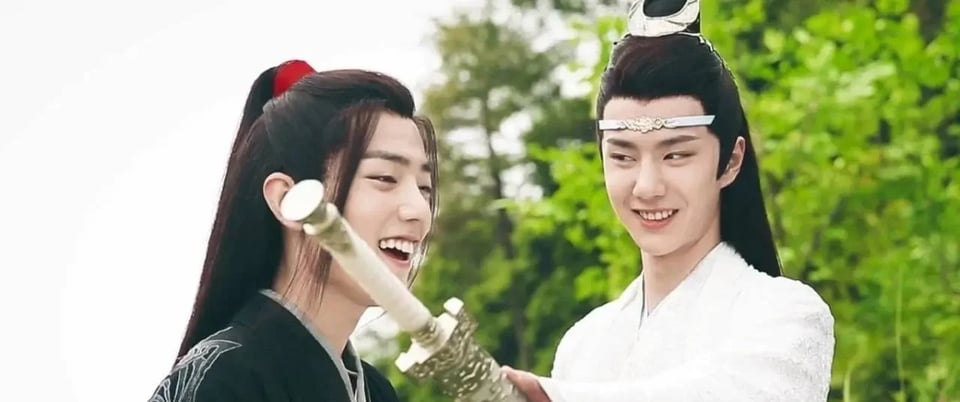
(Xiao Zhan actually has talked about CQL once or twice in the last seven years, and to this day he lists《陈情令》in his Weibo as one of his primary credits, despite adding and changing each of the other representative titles over the years. Xiao Zhan is also the bravest motherfucker alive.
Yibo, too, stubbornly listed CQL in his Weibo credits for years afterwards, until his own fans finally came for him over it during a brief boycott of his studio in 2023, reportedly as part of a list of demands. At that point he wiped his entire credit list at once and replaced all his drama credits with his recent slate of films. Perhaps this was just to create a clean slate. I like to think that it was closer to: if I can’t have CQL, then you assholes can’t keep anything else, either.)
CQL started heads turning in Yibo’s direction. He was a well-known face across China, but in a background “that kid from DDU” way. Now he had a chance at major roles in S-tier productions—but also, now he was on a timer: he had to immediately pivot away from the waiflike ethereal aura of The Untamed’s Lan Zhan, towards roles that were tougher, more masc, definitely not gay.
He played a lovable rogue in Legend of Fei and then a butch cop in Being a Hero, both very on-brief. But it was becoming a captain in Street Dance of China S3 in 2020 that really changed the entire game for Yibo, permanently.
Ironically, the biggest reinvention of all for Yibo was just… Yibo being himself, reintroducing everyone to who he’d been all along.
I’ve written about this before, at least twice on Tumblr, but this is my favorite fairy tale, so indulge me once more. Yibo wasn’t even supposed to be on SDC3. He was a last-minute substitute choice because one of the pre-selected captains got embroiled in a scandal—celebrities are always getting embroiled in scandals and getting hastily removed from things. Yibo, who’d once protested to his bandmates that he wasn’t talented enough to be an SDC dancer, was suddenly thrust into the spotlight as the show’s blatant newcomer idol alongside his much more famous co-captains Zhang Yixing of Exo and Jackson Wang from Got7. (And Wallace Chung, also a last-minute add, bless him, delightfully repping the dad demo.)
It seems clear looking at the first few episodes that the SDC producers never intended for Yibo to run away with the entire show and the hearts of all the dancers and viewers to the extent that he did. There are a few remarks in episode one about how hot he is, but initially the editing makes it seem as if all the dancers purportedly write him off. He came in last place in the dancers’ first vote for their preferred captains and had to spend the next two episodes scrambling to make up for his competitive disadvantage.
But from the moment he stepped on set, Yibo just… shone. He took the competition more seriously than anyone yet had in the previous two seasons, bonded with the dancers, worked just as hard as they did on his routines, and was conscientious about making sure everyone had a good time and felt the joy of what they were doing. In his audition “street” he immediately won the dancers’ respect by having them all freestyle with him for a bit to warm up, then calling out a dancer for copying another dancer’s style.
Soon it was clear the dancers all respected the hell out of him. Could not stop talking about what an authentic dancer he was, how he knew and understood the whole culture around street dance and wasn’t just a superficial idol who could perform K-pop choreo but do little else. In the competitive challenges he won back nearly all of the towels (towels served as selection tokens on the show) that he lost in the opening vote. When the time came for captains to woo dancers, Yibo gave out tokens of appreciation to the dancers he wanted but didn’t have enough towels to select, and nearly all of them chose him anyway even though they weren’t his highest priority dancers.
What’s more significant: millions and millions of viewers were watching this and having their minds blown every week by how talented and clever and hard-working Yibo was. I was one of them. I thought I knew Yibo by that point in my fandom life, but SDC showed me a whole side of him that I really had no idea existed: extremely smart, ingenuitive, versatile, adaptable, quick on his feet, the whole package. And I wasn’t alone. Countless viewers started watching SDC3 just so they could see what all the fuss was about Wang Yibo. SDC was already a very popular show, but during SDC3, which had a magic chemistry and joy between all the captains and the dancers that aided Yibo’s rise to prominence, the show’s overall ratings increased by over 60%.
The whole show was full of talent, but Yibo’s team won the season. Then, in SDC4, he won the whole season again. In SDC5 they brought him back as more of a mentor figure than an active participant, but his presence still dominated the entire season. He didn’t participate at all in SDC6, but because he returned for the live finale, the entire audience was there solely for Yibo, to the point the dancers themselves were optional. It’s not really a surprise that the show hasn’t returned for season 7; it’s still so tied to Yibo that it can’t move beyond him.
The Third Reinvention
By this point his fame was massive. By branding himself effortlessly as an athlete and dancer as well as an entertainer, Yibo had lured more endorsements than any other celeb, a title he still holds six years later, which is unhinged and exhausting to think about, but shows how much cultural sway he holds. His image is everywhere. He’s consistently ranked as one of the highest-earning celebrities in the country. His studio, Yuehua, credited him at one point with bringing in over 90% of its quarterly revenue. Insanity.
Now came what was likely the trickiest reinvention of his career. Having elevated his cultural status from “idol” to “serious performer,” it was time to elevate his status as an actor. Post-CQL his acting resume was hit-and-miss. Legend of Fei was a ratings grab, but was mired in controversy and criticized for terrible writing and editing. Being a Hero drew critical respect but not a lot of views (though when it was re-broadcast in 2023 or 2024?) it was a huge hit with the older adult audience, arguably because by then Wang Yibo was a household name who had established himself as the nation’s very good boy). So, throughout 2022, Yibo worked his ass off and then, in the first half of 2023, released not one, not two, but three films in short succession:
Hidden Blade, Cheng Er’s arthouse spy-thriller which won critical acclaim for Yibo and a fucking Golden Rooster nomination for Best Supporting Actor, making him the youngest actor to ever be nominated in this category! This is China’s Academy Awards, this is huge.
Born To Fly, which cast Yibo as, essentially, the equivalent of Maverick in Top Gun, let that sink in, and which had originally been scheduled to drop in 2022 before it was delayed, likely thanks to a tricky mix of soft geopolitics we won’t get into, but the important thing is: Yibo as the equivalent of peak-career Tom Cruise
One and Only, which became the highest-grossing Chinese sports film, garnered Yibo another Golden Rooster nomination for Best Actor (!!), and solidified his branding as an all-rounder actor-dancer-athlete.
What’s significant about all these films is that they’re wildly different from each other. Hidden Blade culled from him an unbelievably tricky performance that balanced extreme restraint with extreme violence, with deep heartache and exhaustion and grit woven through all of it—a role you’d expect someone much older to handle, but not someone who was only 24 at the time of filming.
Born To Fly positioned him as the bright but cocky pilot who learns to respect the system and be part of a team, and the appeal was watching him move between engaged curious whiz kid to arrogant obstinate jock.
One and Only was a dance film written for him to star in because of how much he wowed the street dance community in SDC—which is a whole statement in itself. It would have been fine, even expected, for Yibo to just play himself. Instead he built a character in Chen Shuou that was so similar (talented, hard-working, soft-spoken) and yet so dissimilar (naive, guileless, sort of innately dorky) that every time I watch it I’m thrown into a kind of uncanny valley about it. It’s a great performance.
Each of these films in isolation would have made Yibo someone to watch, but they didn’t individually perform well enough to be game-changers for his career. The three of them together, though, showed exactly how versatile and how bankable he was. The following year he dropped War of Faith (2024), which was an absolute banger of a Republic-era drama series whose success (as a slippery piece of Communist propaganda that’s also an incredible edge-of-your-seat drama about banking that’s also an intense sublimated homoerotic love story that’s subtextually horrified at the cult it’s trying to lionize) hung entirely on the shoulders of its stars, especially Yibo. It was an enormous hit, but the way people talked about Yibo’s performance was significant: the public was really impressed by him, by how much range he showed, by how engaging he was, how much he’d grown as an actor.
It’s hard to overstate how much buzz there was around Yibo by this point. Many of you were there, I’m sure you recall! And then came the Olympics. Fresh off the success of War of Faith (or at least I assume that’s the timeline, but it’s possible he was selected months before? days before? who knows), Yibo was chosen to be China’s final torchbearer, which meant he jogged through Paris for a couple of blocks on one of the final legs of the torch’s journey, and people came out in droves to watch him. I can’t think of anything that better sums up what Yibo had come to mean to people by that point than China sending him, their shining star, to represent the nation on the world stage.
When he got back on the bus with his fellow torchbearers, they all applauded.
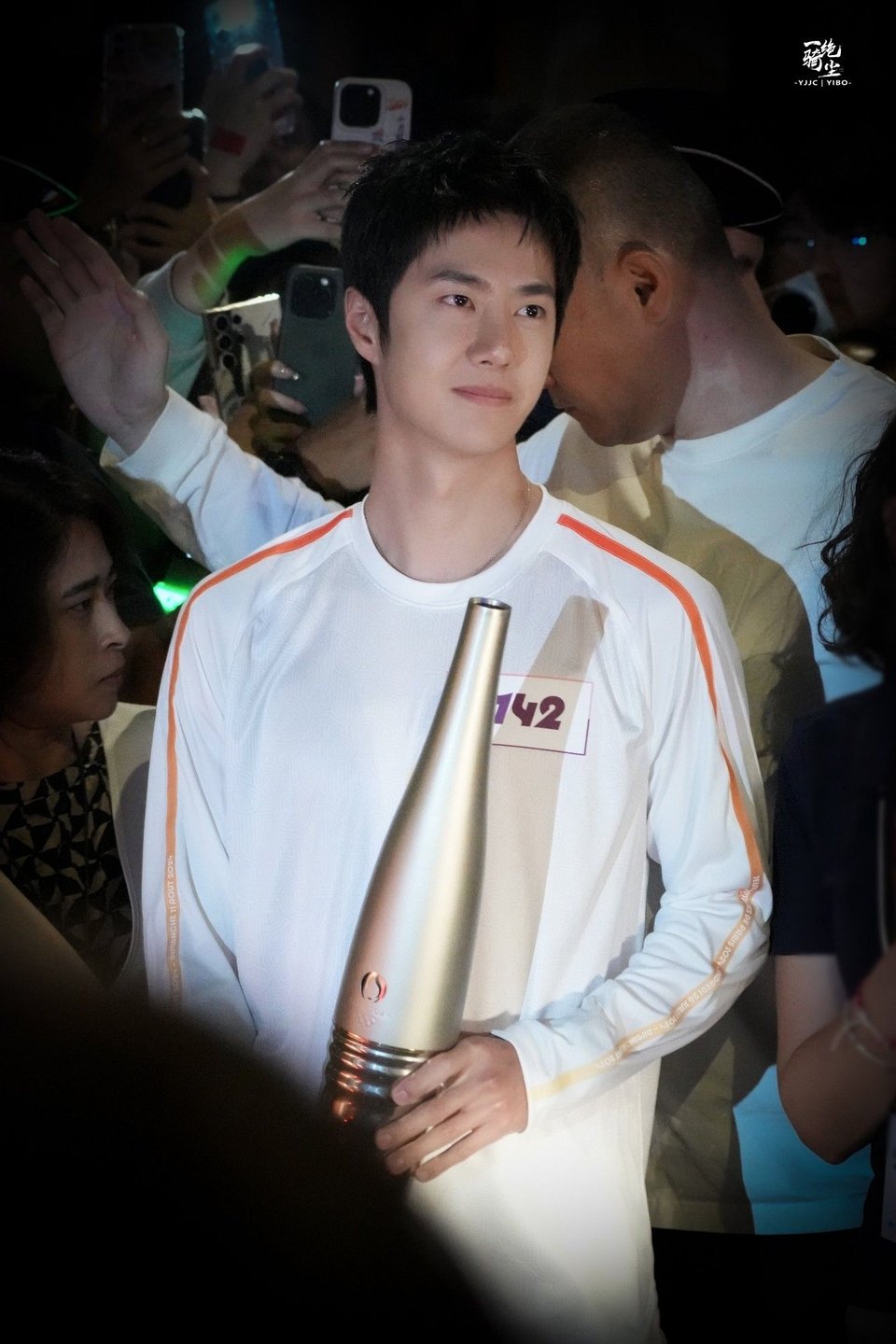
I think it’s a valid question to ask: Was this the pinnacle of Yibo’s career? After all, this is the kind of honor you often usually only receive after career achievements and cultural recognition accrued over decades. And here was Yibo, bearing the torch for the second-largest country on earth at just 26 years old.
Where do you even go from here?
Tomorrow, we’ll find out where Yibo went! :)

