
Reinventing Wang Yibo: Part 2
A deep dive into Yibo's latest reinvention, and what it all means!
Hello, friends! This is the second part of a two-part overview of Yibo’s career to date. I don’t normally put out two newsletters in one week; in fact you’re typically lucky to get two newsletters in one year. But this one felt like it needed to be a two-parter. We ran through more than a decade of Yibo’s career yesterday! That’s a lot!
Next week I’ll also hopefully have another newsletter update for you—just on a topic I’ve been thinking about for a while. I don’t ordinarily update this newsletter regularly; I like keeping it spontaneous, and I’m not really concerned about growth or anything, just happy to share with those of you who find it and enjoy it. Thank you all for being here!
Coincidentally, I also have a longread today in Fansplaining that’s about regressive laws encroaching upon fanworks around the globe. I walk through various ways numerous governments (including China) are increasingly regulating and marginalizing communities and forms of expression that are adjacent to or directly impact fandom. Give it a read and consider subscribing for all the other incredible work at Fansplaining! (It’s totally free to sign up and read articles!)
Alright, enough housekeeping, as they say: Let’s dive in and continue our walkthrough of Yibo’s final reinvention!
The Fourth Reinvention
So. Here’s Yibo, in 2024, 26 years old. His very first year of filmmaking has netted him not one, but two Oscar-equivalent Golden Rooster nominations. He’s strategically clambered to the highest height of C-Ent. Positioned himself as a global brand, endorsed by Chanel, Lacoste, Loewe, and at one point Nike before he was snatched up by Nike’s biggest Asian shoe competitor, Anta.
The Chinese government regularly trots him out for glitzy displays of propaganda. People, even regular non-fan viewers, were so incensed that he didn’t get an acting nomination for War of Faith that it sparked a whole cultural conversation about acting categories and cast listings. Everyone is waiting for what he does next.
And he………… disappears into the forest.
I mean. Literally. Disappears into the forest for half a year and then re-emerges with a hit documentary series, Exploring the Unknown, which follows him through a series of extreme outdoor adventures as he learns to do them all for the first time.
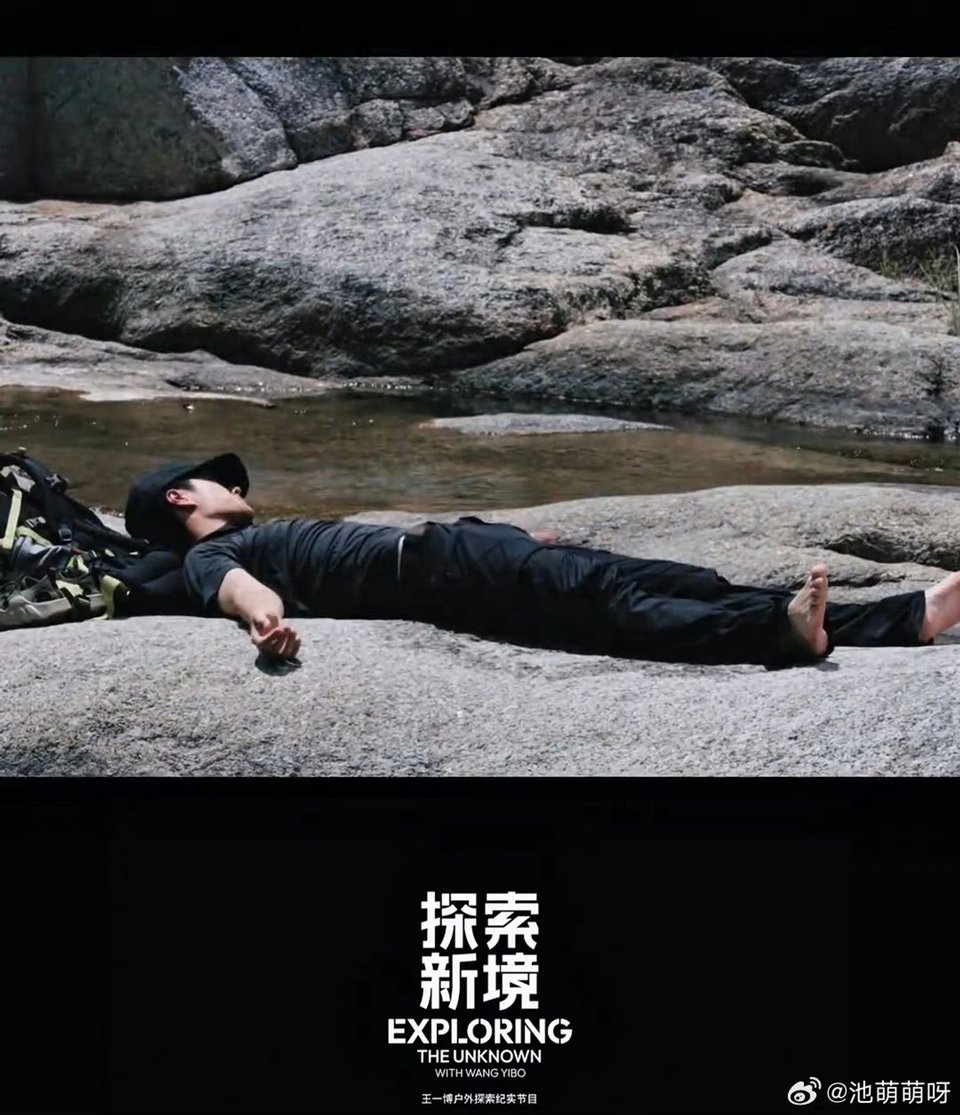
Who does that? Who capitalizes on such an enormous amount of cultural and industry momentum by taking off for months and doing the relatively niche thing he wants to do, that has nothing to do with acting? Who else would leverage their huge cultural cache on the gamble that the public would eagerly tune in just to watch him be mostly alone on camera for 12 episodes, climbing rocks, exploring caves, battling altitude sickness, hanging around with monkeys?
Apparently, the answer is no one, because no one else at Yibo’s level has ever fucked off at the peak of their success to make a nature documentary, let alone somehow turned it into an award-winning hit series that impossibly elevates his cultural status even more, then done it all over again for a second season that was just as popular as the first. Eat your heart out, Chalamet!
This final reinvention is the one that blows my mind the most, while at the same time I’m fully like ‘well obviously Yibo ran off to hide in the mountains for two years while refocusing himself and his career.’ It stands as a testament to a few things: First, the magic of having had, at every step of his career, even as a pre-teen, a clear vision and a dedicated work ethic that supported that vision, no matter what.
Second, I think it speaks to a bottomless well of self-confidence, the kind you can only develop from actually testing yourself time and again, and achieving, time and again. Third, the kind of instinct for knowing his own industry and his own position in that industry that a person can likely only develop from having spent most of their life as a jobbing entertainer, doing that work and knowing, by this point, exactly which levers to pull to get what you want. Even and especially if what you want is to fuck off with your entire career for a few years and then come back with your career completely intact.
There are stages of knowing Yibo that people tend to go through. At first glance, he often strikes people as unintelligent, because he rarely speaks, and unless he’s talking about a subject he knows well, he can be quite halting. (It doesn’t help that anti-fans constantly revive old, oft-debunked accusations that he’s illiterate—although, from what I can tell, most people treat this like the “Lea Michele can’t read” meme: funny and absurd on its face to all but the most obsessive haters.)
At second glance, however, Yibo nearly always completely reverses that first impression by revealing himself to be extremely articulate and intelligent when he’s talking about subjects he does know well. And then it quickly becomes clear that he’s also kind of a bubbly passionate genius polymath who seems to be magically good at everything. He’s good at strategy. He’s good at fashion. He’s good at business. He’s good at a whole litany of sports. He’s good at all these ancillary things that have nothing to do with his main career focuses, and then on top of all that, he’s brilliant at what he’s actually focused on. This is sort of the trajectory that the viewing public went on with Yibo during SDC3, after which SDC itself became in large part a full-on celebration of his talent.
When you look closer, though, I think even that impression is false. It assumes that there’s a level of innate talent Yibo possesses that elevates him above the average person. And there is, definitely—but the thing about Yibo is that he’s not the most talented. Up until the most recent half-decade of his career, he usually began in the middle of a crowded pack and fought his way to the front, over and over again. He didn’t win the contest that led to his trainee selection—he came in 16th. He wasn’t the smartest trainee in his school class in Korea, but he was one of the smartest.
The selection process for his hosting stint on Day Day Up was literally like this, with Yibo starting as one of like 12 people all vying for the gig, only to very quickly become the one who was always onstage, until finally he was the only one left. You could argue that the producers of SDC3 intentionally set him up for a battle-back after he came in last in the judge’s round, only for him to battle back harder than they ever anticipated, ending up with all the best dancers on his team and running away with the rest of the season.
He wasn’t immediately chosen to play Lan Zhan in CQL, the role that changed his entire career; he had to submit his photos to the casting director at least twice before they finally called him in for the audition (where they were then supposedly instantly like ‘that’s our guy’). He wasn’t immediately chosen to play Chen Yu in Being a Hero because the director initially thought he was too young and inexperienced; he was chosen after he explained to the director how much of himself he saw in the character, and the director realized that actually, Yibo was exactly like Chen Yu: hard-working, precocious, determined, incapable of taking ‘no’ for an answer, and above all, singularly committed to his goal.
I think, ultimately, that’s the quality that each of these career reinventions have in common: they’ve all been very deliberate, incredibly intentional, dogged forays into new sides of himself. This expansion is, I believe, Yibo’s ultimate goal. If the nominal purpose of this newsletter is to probe the question “what would Yibo do?” then I think each of these reinventions prove that Yibo would constantly be on a quest for himself: himself in relationship to himself, and himself in relationship to other people and the world; remember, energy is (his) eternal delight.
The grandmaster of spiritual cultivation
There is, inevitably, another side to this. China could not have found another megastar entertainer who so fully and conveniently embodies Xi’s propaganda about self-reliance, athleticism, hard work, adaptability, community volunteerism, and masculinity. I’m constantly wondering: did that version of Yibo come first? Or did he tailor himself to be that embodiment, especially because he understands his assignment and Yibo has always understood the assignment?
I have watched other actors try/succeed/fail in various ways to adapt to various parts of this checklist over the years, and to me it doesn’t at all seem like this idealized persona is something that comes with enough money or polish. You could, perhaps, make the cynical argument that maybe that’s just because no one else has Wang Yibo money. But I think even the stars who do have that kind of money struggle with it. Zhang Yixing, Wang Hedi, Wang Jiaer, even Cheng Yi all come to mind: Even when they’re doing everything right, they sometimes let the mask slip and seem to be grappling with the gap between themselves and the idealized image they’re required to present in order to keep on this tightrope career. (Xiao Zhan’s quote about how “there’s this other person called Xiao Zhan and we all work for him” comes to mind. Nobody knows how this works better than him.)
Yibo, on the other hand, somehow simultaneously is That Guy, just naturally, and also knows how to perform being That Guy for the benefit of the State and for the benefit of his brand. And he knows how to perform being that guy while creating the impression that “That Guy” is an ever-changing, ever-ascending journey that he’s invited us all to go on together.
I haven’t even touched on Yibo’s side gigs as first moto racer and then professional racecar driver—a hobby he began to seriously pursue during this two-year hiatus. But look how clearly they align with Exploring the Unknown in furtherance of this strategy: they’re performative masculinity, because that’s always a mandatory part of this in Xi’s China; they’re performative self-reliance—increasingly, another mandatory part of this; they’re savvy brand-builders; and, perhaps most importantly, they allow him to perform an idealized version of Confucian self-cultivation through a riveting cycle of try/fail/achieve, try/fail/achieve. Win or lose, he expands his understanding of himself.
This shit is like catnip to me and I’m not even part of a culture where this cycle is framed as an idealized state of personhood. Yibo understands the assignment. One of the things I’ve always wanted this newsletter to allow me to get closer to is an understanding of how Yibo manages to be this embodiment of a cultural identity (and an arm of the state) without ever letting the mask slip, but I think possibly the simplest answer might be that it’s not a mask.
And yet, he’s absolutely learned how to weaponize the not-mask in ways that feel strategic. Why doesn’t this feel artificial? Why don’t we ever feel, when watching Yibo, like this guy surely can’t be this authentic, this genuine?
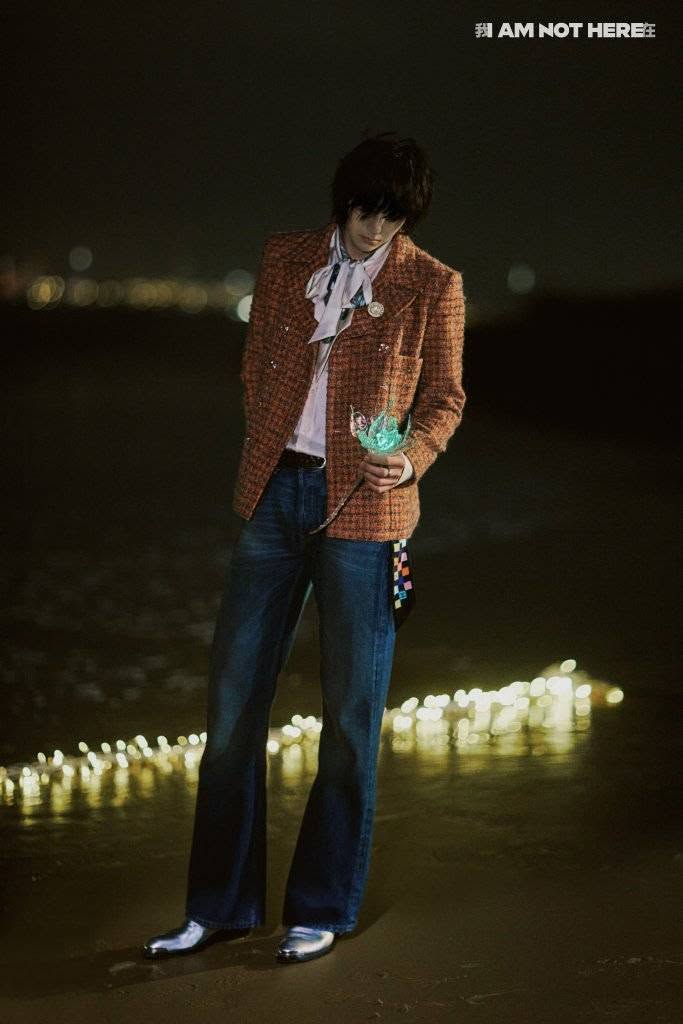
Perhaps the reason is that Yibo still withholds so much of himself from us, unapologetically and often without much explanation at all. He’s famous for never giving his fans selfies unless he’s completely disguising his face; when he finally did drop a few during the filming of Exploring the Unknown, they were notably unglamorous, featuring a disheveled, sweaty, ridiculously healthy-looking Yibo sans makeup, wearing helmets or with frizzy unkempt hair. Even as a teen, he telegraphed to fans that everything he does or doesn’t do, he does on his own terms, and his fans rarely factor in.
It’s not true, of course; we know that he has constant obligations; that his schedule is typically packed; that as he said in the 2020 short documentary about him, “my time becomes other people’s time;” that he has regular government duties to fulfill. But he’s excellent at filtering from public view all of the things that look too much like business, or paying dues, or unglamorous hours of photoshoots and paperwork. He’s elusive, which makes his transparency feel that much more intense.
Going away to film ETU for two seasons was arguably the bossest of moves in this regard. Lest you worry, as I occasionally have, that the whole stint would hurt his career and set him back a few rungs in the industry, think again: Yibo still constantly stars on the Weibo hot search for all kinds of reasons, whether or not he’s been heard from in weeks.
Two weeks ago, renowned director Derek Yee, who’s also the chairman of the Hong Kong Film Awards, which is basically like being chairman of the Academy Awards, was at a film fest talking about how difficult it is for new directors to get well known actors to sign onto their projects, and then he casually added, “If you find Wang Yibo for your next film, you don’t need a script, you can start shooting.” That led to yet another Hot Search trend about how in-demand Yibo is in the industry. This is a guy who hasn’t released a film in three years! Hasn’t done a drama in two years! Hasn’t given a single hint about what he’s going to do next!
(The elephant in the room here is Intercross, the film he made with Cheng Er following the success of Hidden Blade. It’s so under wraps that some people don’t even think it exists. It seems to, but whether the censors will ever let it see the light of day remains to be seen. We continue to wait and hope!)
What is he going to do next? Does it matter? This week he’s racing in Zhuhai with latest sponsor Red Bull and thousands of fangirls crowding the bleachers. His presence has smashed attendance records for GT racing for the last two seasons. There’s every chance those crowds will dwindle once he moves on, but for now, we’re in thrall to the joy on his face when he’s racing.
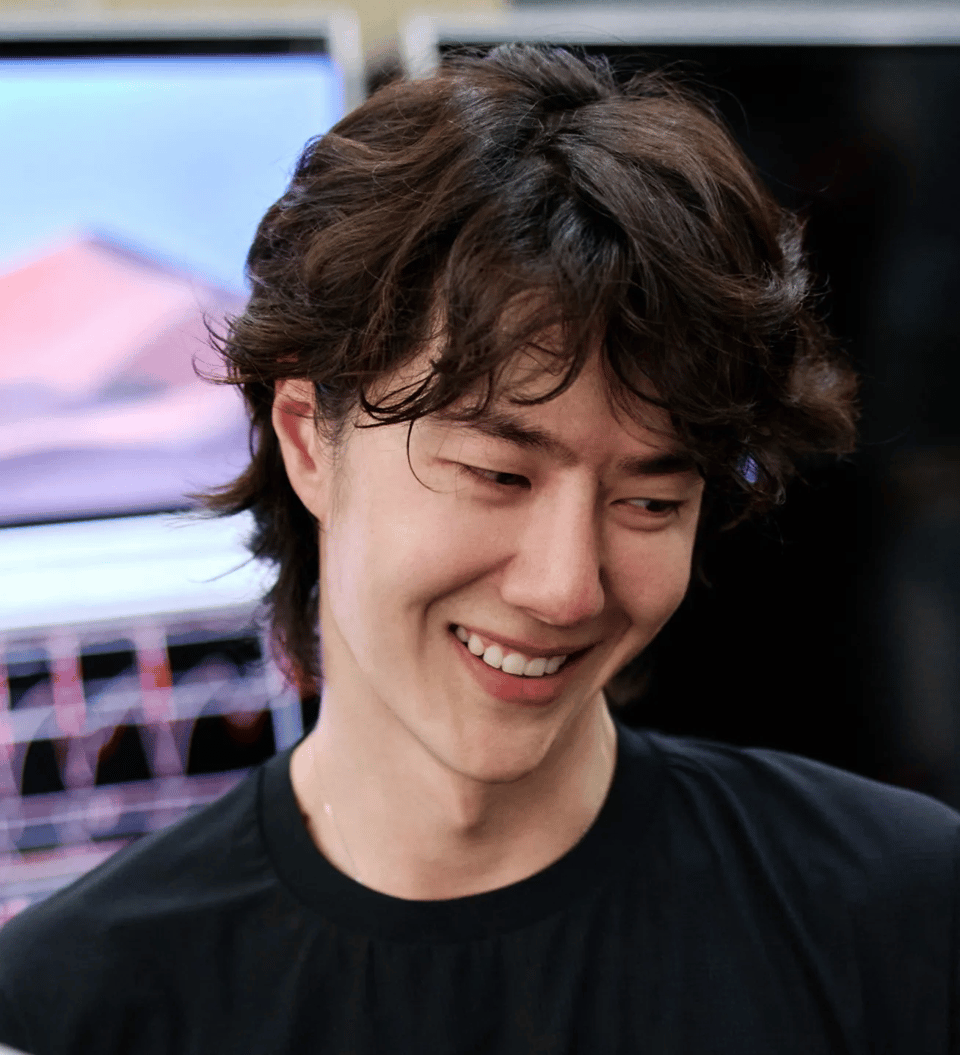
Above all, it seems abundantly clear that Yibo’s massive fandom, and the generally adoring public, will happily wait for his next reinvention. And hopefully, as always, he’ll let us come along for the ride.

