
This week: The Truth About Lindens
Hello!
Tilia americana, commonly called American Linden or Basswood, is a gorgeous shade tree native to the eastern half of the United States. It’s notable for its usefulness to wildlife and humans throughout history in surprising ways, no lie.
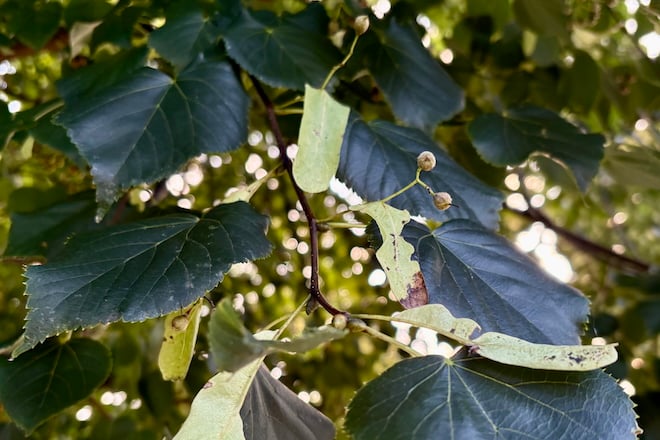
But first, the basics. Basswood trees stand out because of their size. They quickly grow 60 to 100 feet tall, and their trunks are wide — three to four feet in diameter. The canopy is dense, and the branches are low, providing plenty of shade. The foliage is heart-shaped, and leaves commonly grow four to eight inches wide. The tops of leaves are dark green, while the undersides are a greenish silver. Clusters of small, light yellow flowers bloom in late spring and early summer and develop into a pair of creamy-colored nutlets attached to a light green, papery bract that aids in wind dispersal of the seed. In the fall, the leaves turn pale yellow.
Birds, Butterflies, Lightning Bugs, and Honeybees!
Basswoods commonly live for 200 years and, in old age, develop cavities that become nesting nooks for birds. Squirrels and other small animals feast on the nutlets. The tree is also a larval host for the Eastern Tiger Swallowtail, Red-spotted Purple, and Mourning Cloak butterflies. If that weren’t enough, the nectar also attracts scores of lightning bugs.
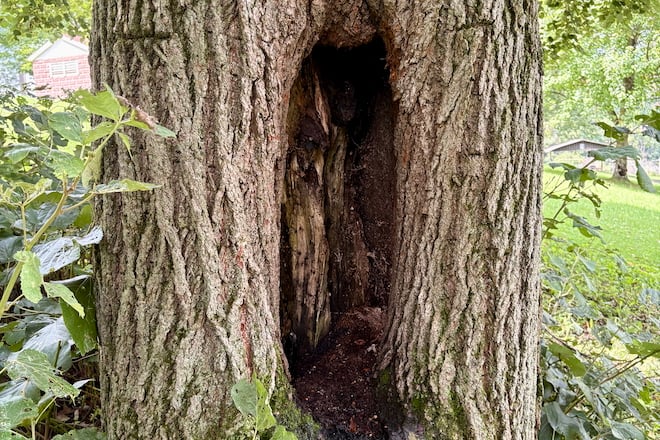
But perhaps the tree is best known for its honey. When the flowers are in bloom, honeybees swarm the tree and even build their honeycombs in its cavities. When you see Basswood honey in stores, it’s been carefully harvested during the bloom to preserve the single-flower taste.
Traditional Uses & Folklore
In North America, Indigenous people used the inner bark as a fiber for basketry and cordage. This inner bark is called “bast,” which is where Basswood gets its common name. It also had medicinal uses and is still found in some nighttime herbal teas today.
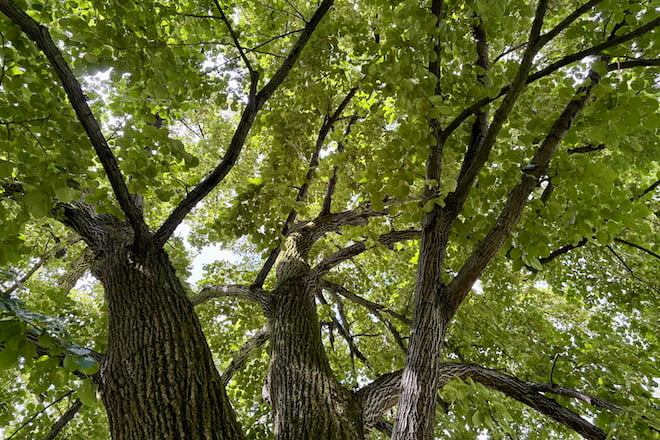
But let’s travel across the ocean for more fun facts. Tilia trees in Europe (informally called Lindens or Limes) have deep roots in Slavic and Germanic folklore. The tree is dedicated to Freya, the goddess of truth and love, and it was commonly believed that you could not tell a lie under a Linden tree. As a result, weddings and legal proceedings took place under the canopy to ensure their validity. Whether the tree helped the cause of truth and love or not, these big, beautiful trees still serve as gathering spaces today, offering shade for people to enjoy.
Elsewhere:
Interested in collecting native seeds to grow next year? This guide from the University of Maryland Extension will teach you how.
Happy Labor Day!
Julie