
This week: Really Big Acorns
Hello!
This week, I walked through a park, noticed a majestic tree, and stumbled down a rabbit hole about acorn sizes and prairie fires. Bur Oaks can happen to anyone, and they are about to happen to you!
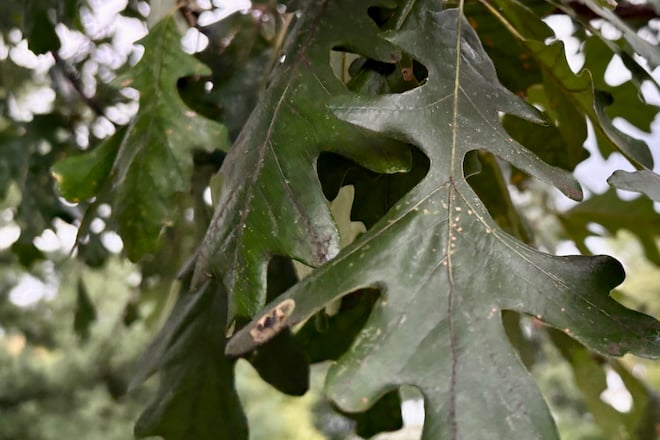
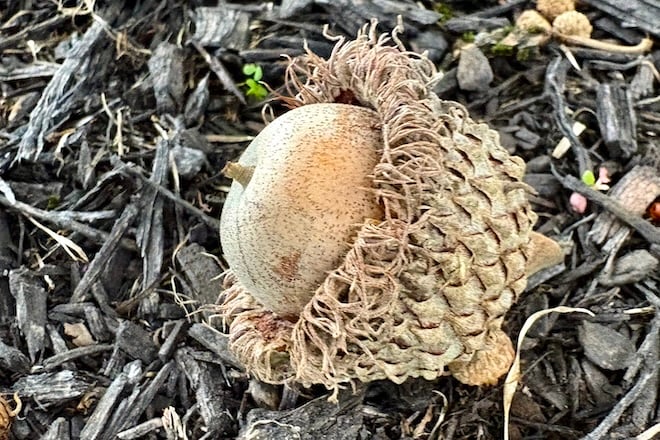
Bur Oaks (Quercus macrocarpa) are enormous native shade trees with giant acorns. They grow 80 to 100 feet tall and are at least that wide, if not wider. A mature tree’s trunk can be 8 feet in diameter, and the tree can live for at least 400 years. The leaves are four to 10 inches long and are fiddle-shaped with rounded lobes (the Bur Oak is a kind of White Oak). Befitting the tree’s size, its acorns are the largest among native North American oaks, growing to 1.5 inches long, with a cap that covers a third to half of the nut. Spot an acorn, and you’ll be able to identify this tree because the acorn’s cap has a fringe—the “bur.”
The acorns are an important food source for mammals and birds, including the usual suspects like squirrels and Blue Jays, as well as black bears. Their mislaid acorn caches help plant future Bur Oaks. Its spring flowers support pollinators, and it hosts the larvae of the Edwards Hairstreak and the Horaces Duskywing butterflies. Oaks are keystone species that host an abundance of caterpillars and other bugs, providing copious baby food for birds.
Bur Oak Savannas
But that’s not even the most interesting thing about Bur Oaks. I spotted a Bur Oak in an urban park, where they are often planted for the shade and because they tolerate pollution. You might also find them gracing large suburban yards. But this is not where they are most at home. In nature, Bur Oaks are pioneer species that grow at the edges of prairies and meadows in grassy woodlands called savannas. Their native range includes parts of Pennsylvania and the Eastern half of the United States, especially around the Great Lakes and in the Plains states.
In the pre-settlement Great Plains, Bur Oak savannas were commonplace. In part, this was because they were maintained by frequent burns conducted by Native Americans. For example, in the Black Hills, the Lakota set areas of the prairie alight in the fall. This drove grazing bison into different parts of the prairie for the winter, enabling the Lakota to create hunting areas closer to their camps. The following spring, the burned prairie would be revitalized, attracting bison for grazing and providing clearer sightlines for summertime hunting. They also used “controlled burns” to clear brush and tall grasses around their camps, protecting their homes from fire and making approaching outsiders easier to spot.
Because Bur Oaks can survive fire once established, frequent blazes kept the canopy open and competition for sunlight low, enabling the large trees to thrive. However, American settlers arrived in the 1800s and managed the land differently—clear-cutting the oak savannas to make farmland, putting out fires rather than starting them, and changing where and how Native people lived. As a result, Bur Oak savannas are threatened habitats and rare finds. So the next time you spot a fringe-capped acorn, let it take you back to a land before there were farms and towns as we know them today.
Elsewhere:
Fall is a great time to plant trees and shrubs. But what about flowers and grasses? This guide to fall planting from Izel Plants offers tips for getting plants into the ground.
Have a great week,
Julie