
This week: Partridge Pea Improves Soil
Hello,
Native annuals aren’t talked about much, but one, Partridge Pea (Chamaecrista fasciculata), is surprisingly common! It’s usually found in seed mixes and can sometimes be spotted in disturbed areas and along roadsides. It’s native to the Northeast, Southeast, and Central United States.
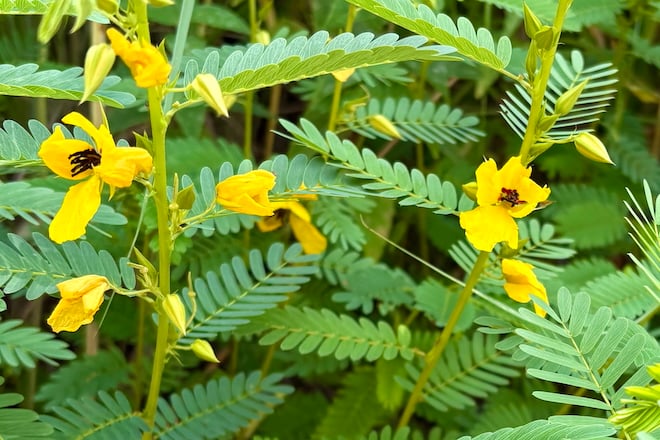
Partridge Pea grows a new plant each year from seed, completing its life cycle—sprouting, blooming, setting seed, and dying—in a single growing season. Perennials live for years, regrowing in the spring after each winter dieback. While Partridge Pea may seem to return in the same place for a few years, it’s a new plant each time, growing from the previous year’s seed.
Reasons to Plant Partridge Pea
What makes Partridge Pea worth planting? For one, it’s sometimes included in wildflower mixes because it flowers in the season it is planted, while other perennials take a season or two to appear because their seed needs a period of cold first, or the plant is spending its energy building its root system instead of flowering. Over time, the perennials take over, and Partridge Pea dies out.
Also, people plant Partridge Pea as a temporary ground cover because it’s a legume. Legumes add nitrogen, an essential nutrient for plants, to the soil. Once this “green fertilizer” enriches the soil by unlocking nitrogen, the plants can be tilled under to add compost.
It’s also a boon for birds and caterpillars. Songbirds and gamebirds rely on the seed (especially quail), and it’s the larval host for Cloudless Sulphur, Little Yellow, and Sleepy Orange butterflies and moths (I promise I didn’t make these names up).
If you’d like to add Partridge Pea to your garden, choose a sunny spot that needs a ground cover while other plants establish or while you make other plans. It grows one to three feet tall and flowers throughout the summer, then develops maroon seed pods in the fall.
Elsewhere:
Want to add native trees and shrubs to your landscape this fall while supporting the Penn State Extension Master Watershed Stewards? Check out their annual sale.
Have a great week,
Julie