
This week: Bee (Balm) Hotels
Hello!
Monarda fistulosa, also known as Wild Bergamot, is one of the most familiar of the many native bee balms (such as Monarda didyma and M. bradburiana, to name two). Wild Bergamot is a classic meadow plant with a high ecological benefit for the sheer number of pollinators and hummingbirds it attracts. But it also has a reputation for spreading—both a pro and a con, depending on your garden size and your outlook!
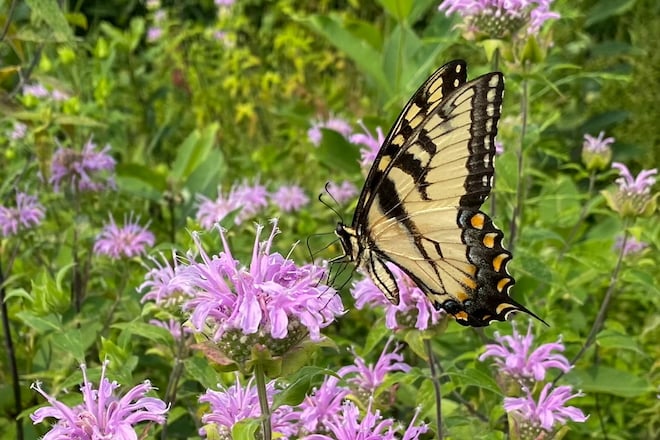
Wild Bergamot is native to the eastern half of the United States, and its range even extends into some western states. It’s a prolific bloomer in the second half of summer, when its pale pink flowers sit atop stems up to four feet tall. It prefers full sun and moist soil, and while it spreads via rhizomes and reseeds (abundantly), it can be easily weeded and divided. Deer and rabbits avoid it because it’s a member of the unappetizing mint family.
One note of caution: this plant tends to flop and develop powdery mildew. Consider planting it in the center or the back of the garden bed so it is less noticeable. Or, take the advice of Mt. Cuba Center’s Monarda trials. They recommend the naturally occurring cultivar ‘Claire Grace’ to address these less-than-desirable qualities.
Nature’s Bee Hotel
Lest you think pollen and nectar are the only ecological benefits Wild Bergamont provides, leave the plant standing through the winter, long after the flowers fade. The seed heads will feed birds, while the “dead” stems will support the bee lifecycle, according to research by NC State Extension. Cut the stems back to 12 to 24 inches anytime after the fall frost and before the last spring frost. This gives stem-nesting native bees cavities to lay their eggs in, like nature’s original bee hotel. Keep the stem stubble up for about a year to give new bees time to emerge. The following spring, if the stems haven’t already decomposed, chop them down to the ground and leave them behind as mulch.
Elsewhere:
The search for the perfect plant identification app is over. Hands-down, my favorite for native plants, insects, and more is Seek from iNaturalist. Even better, it doesn’t try to sell you anything. There are no subscription tiers, and you don’t even have to make a login to use it. Give it a try!
Have a good week,
Julie