
This week: 5 Native Flowers for Autumn Interest
Hello!
Has your garden lost some of its pizzazz this fall? If your garden feels done for the year by the end of September, you need more fall flowers—for your enjoyment and for migrating butterflies and insects preparing for winter. Here are five autumn-blooming flowers that hold their looks into October, listed from shortest to tallest.
Aromatic Aster
Full Sun to Part Sun, 2 feet tall
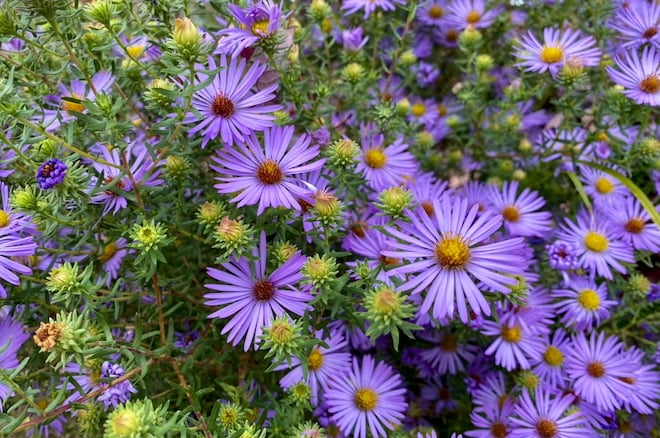
Aromatic Aster (Symphyotrichum oblongifolium) thrives in dry, full sun and spreads by rhizomes and seed, making it a good choice for sunny slopes, though it also grows well in moist soils. Its short stature is a perfect fit for smaller gardens and the front of borders. This aster is also one of the latest fall flowers to bloom—sometimes lasting into November—an extra benefit for late-season beneficial insects.
Blue Mistflower
Full Sun to Part Shade, 2 feet tall
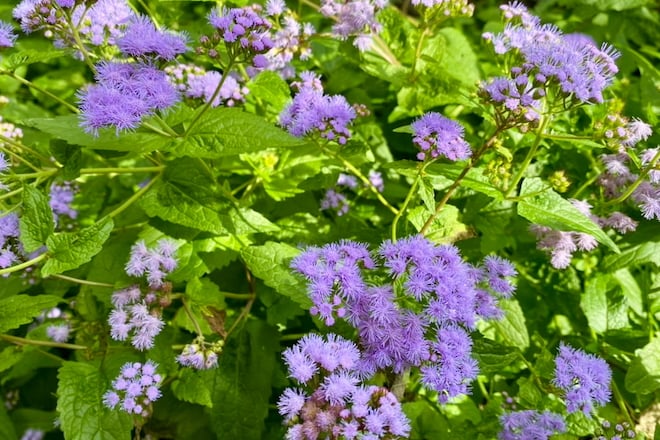
Blue Mistflower (Conoclinium coelestinum) is a vibrant, low-growing, late-blooming member of the Aster family. It tolerates wetter soils and partial shade, and spreads via rhizomes to form a groundcover. It can be aggressive, but you can easily divide or pull it when you have too much. Personally, I love how it reseeds: I enjoy seeing it pop up in the untended yard of the vacant house next door.
New England Aster
Full Sun to Part Sun, 3-4 feet tall for straight species, shorter for cultivars
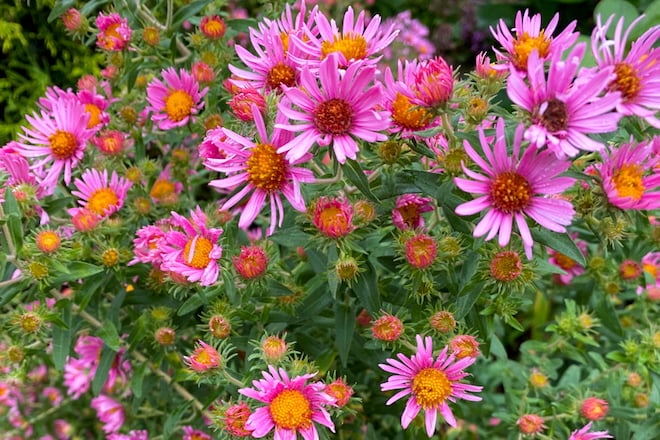
Get the look of mums for years, not just a single season, with New England Aster (Symphyotrichum novae-angliae). The straight species can grow 3-5 feet tall and reseeds, making it excellent in the center or back of a garden bed. Looking for something smaller? Cultivars like ‘Purple Dome’ or ‘Pink Crush’ are lower-growing and will fit into anyone’s garden.
Sneezeweed
Full Sun, 3-5 feet tall
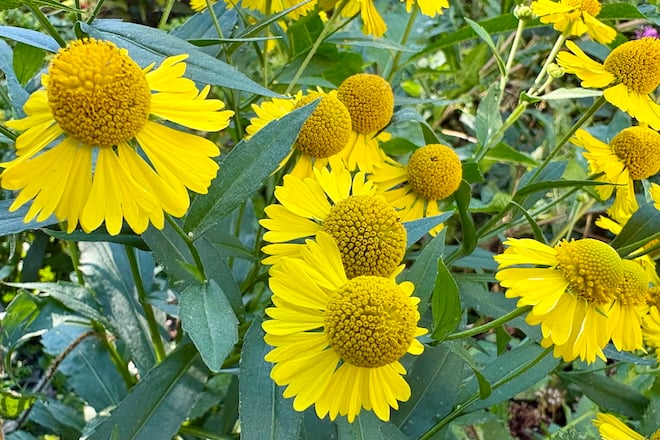
Sneezeweed (Helenium autumnale) tolerates moist, clay soils and begins blooming in August, continuing through October. The flower is unique. It’s about an inch in diameter and shaped like a small badminton shuttlecock. The straight species is tough; I’ve relocated these plants repeatedly. But skip the cultivars—they aren’t long-lived. Instead, cut the plant back by half in June or early July to create a shorter, bushier plant, if desired.
Ironweed
Full Sun, 6-10 feet tall
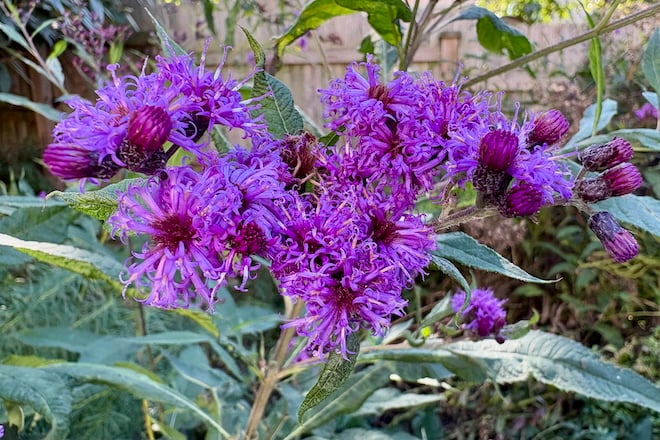
Ironweed (Vernonia) is a towering fall-blooming native with deep purple flowers. New York Ironweed (V. noveboracensis) grows to six feet tall, while V. gigantea is a truly gigantic version that easily reaches 10 feet. These garden beauties are worth cutting back by half in June or early July to control size. If their prolific reseeding overwhelms you, remove the spent flower heads. If you find cultivars of V. lettermannii, such as ‘Iron Butterfly’ or ‘Prairie Princess,’ snap them up. They are gorgeous threadleafed Ozark natives that grow two to three feet tall.
Elsewhere:
If you moved some houseplants outside for the summer, it’s time to bring them back inside! This Penn State Extension article offers strategies to discourage insects from hitchhiking indoors.
Have a great week!
Julie