Kids These Days Don't Re-Animate Their Classmates Anymore
Hey all and welcome back to So Desensitized! Today, we’re discussing a movie I think all movies should be more like, but also…classic literature? Let’s dive in to some Re-Animator analysis! 🧪🐈⬛🧠🔪🩸
It is a pretty well-known fact that Mary Shelley’s Frankenstein is the most adapted novel of all time. Lisa Frankenstein, Frankenstein (1931), Frankenstein (2025) and Edward Scissorhands make up parts of an extensive canon of movies that would not exist without Mary Shelley’s work. One movie that is oftentimes left out of the adaptation discussion, however, despite being quite possibly the most accurate, is Re-Animator (1985), in that it manages to stay true to the core moments, characters, and themes of the original text while deviating from the original plot almost completely.
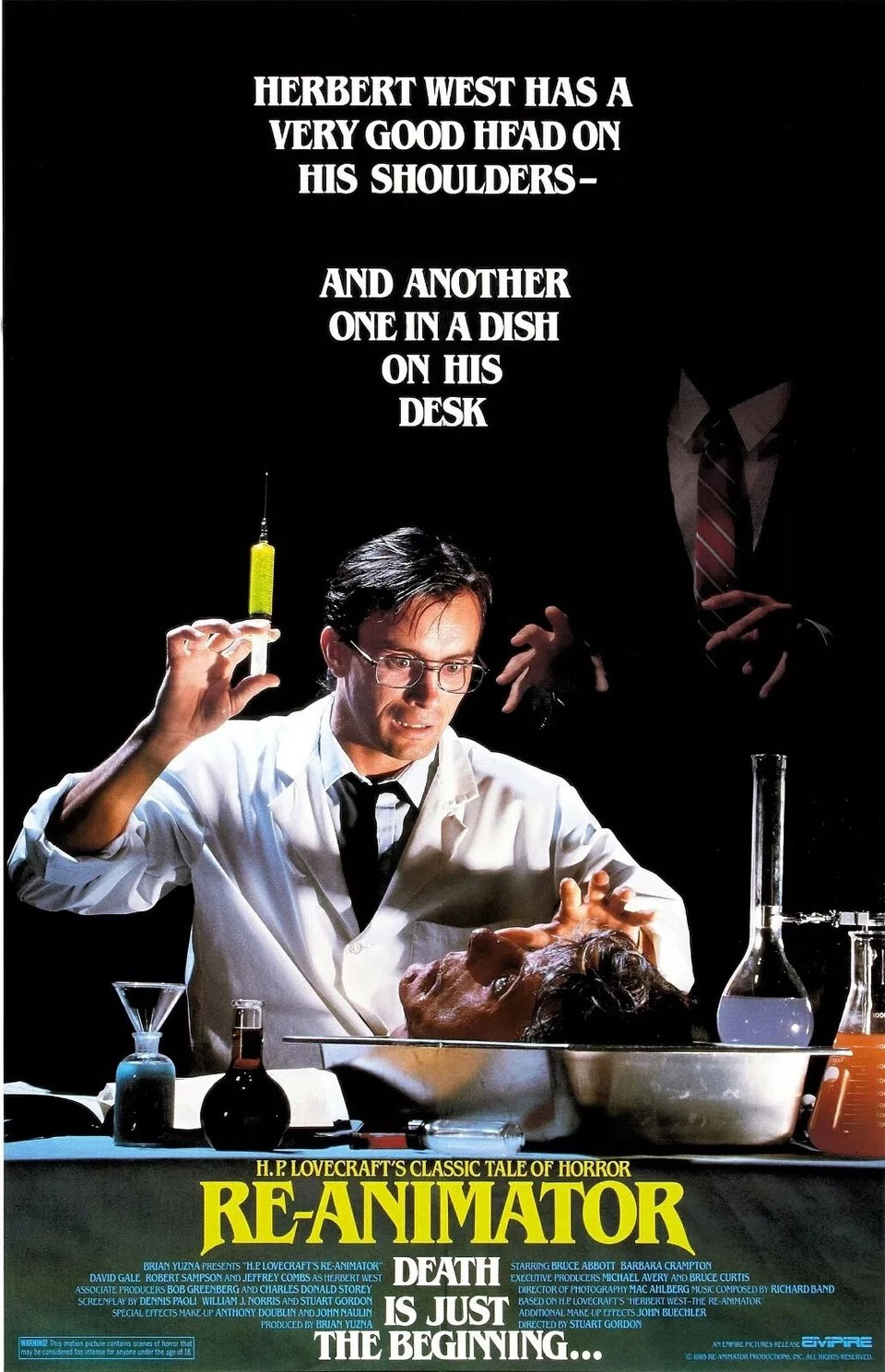
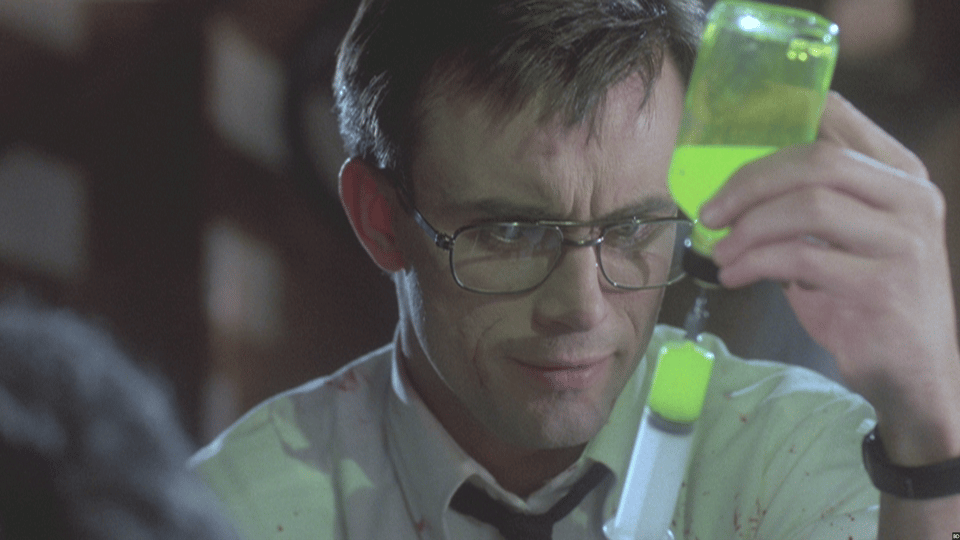
Herbert West is maybe the only true Victor Frankenstein we’ve ever had onscreen. No one in med school likes him (except Dan, but we’ll get there later), even the teachers. He regularly disrupts class. He’s doing illegal shit in his shared basement. He got kicked out of the last medical school he attended for said illegal shit and also maybe murder. This is all very much in keeping with Mary Shelley’s original Victor Frankenstein: an actual mad scientist. Herbert West manages to be a fascinating character by being also kind of boring and cerebral. He’s aggressively particular about his living space and awful at human emotions and interactions. He’s only in med school so that he can work on his serum that brings dead things back to life, and doesn’t really care that people and animals have to die in order for him to find out if it works. Herbert West is a genuinely despicable character in a way that no other adaptation of Victor Frankenstein has allowed him to be. Even James Whale’s Frankenstein has a sympathetic creator. Not so for Herbert West. The thing that makes him the perfect Victor Frankenstein is that he’s just straight up insane. In Mary Shelley’s novel, Victor Frankenstein jumps out a window, burns down his college dorm, and runs in circles around his best friend’s room, jumping over furniture and laughing hysterically until he falls into a fever for actual months upon the success of his experiment. I mean, that’s the level we’re working on. He also pushes himself out into the middle of the ocean and then blames it on his Creation. So when I say that every other film adaptation of Victor Frankenstein has been far too sane, that is what I mean. Herbert West is absolutely a man you could picture doing those things. Oscar Isaac’s Victor Frankenstein is…not.
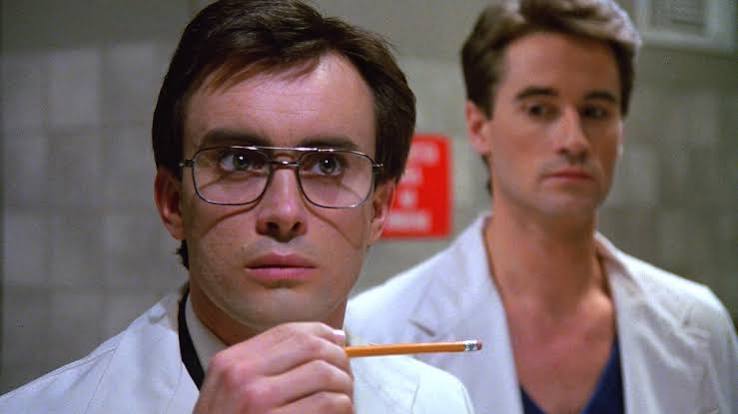
But, you may be saying, if Herbert West is Victor Frankenstein (and, by association, Meg, the only woman, is Elizabeth), then who is Dan Cain? Well, that’s what I’m here to tell you! And the answer is easier than you might think, and another notch in the accuracy column, because the character that Dan is most reminiscent of only appears, as far as I know, in Mary Shelley’s Frankenstein (1994). His name is Dr. Henry Clerval, and he actually has a medical degree. Also, he’s Victor Frankenstein’s main love interest, which does, in fact, carry into Re-Animator.
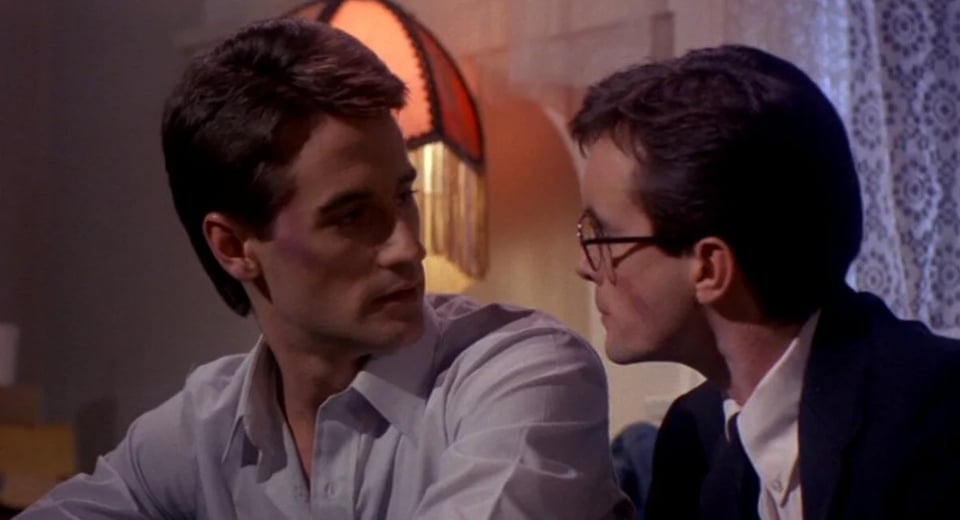
One thing that makes Re-Animator a near-perfect movie is the sheer amount of homoeroticism in it. I mean, actual spades. Any queer person who has watched Re-Animator could tell you that Herbert West, at least, is more than a little queer-coded. But throw Dan Cain, a character very clearly based on the only possible secondary male character in any Frankenstein adaptation, and you’ve got yourself an incredibly queer movie. Throughout Frankenstein, Henry Clerval serves as a counterpoint to Victor’s madness and darkness. To Victor, he is representative of everything good and beautiful and happy in the world. Not a page with Henry on it goes by where Victor doesn’t, at least once, remark on his beauty and joy. Which seems kinda gay, to me. But Henry Clerval and Dan Cain are also representative of one of the biggest tropes in queer and queer-coded fiction, which would see a heyday following Oscar Wilde’s The Picture of Dorian Gray (1890), and that is the corruptible/corrupted youth.
In the modern day, the idea of the corrupted youth is pretty common within queer media. Stemming largely from the Hayes Code and the Lavender Scare, this trope portrays homosexuality as a moral failing to be avoided at all costs, spread specifically from gay people to straight people, with films like But I’m A Cheerleader (1999) and Jennifer’s Body (2009) using it for parody purposes, as well. But this trope did not begin with the Lavender Scare or the Hayes Code. In fact, it likely began, as so many literary devices did, with Mary Shelley’s Frankenstein. Henry Clerval is the perfect corruptible youth. He’s optimistic, not yet jaded by the world or driven insane by having created a monster. He’s excited to put his medical degree to use saving lives. He doesn’t light buildings on fire. But, of course, Victor being driven insane makes him worry, takes away his sense of joy and wonder in the natural world, making him a scared, timid man who has lost his best friend just before he becomes the last victim of the Creature’s wrath towards Victor. That’s right - the last person the Creature kills is not Elizabeth. It’s Henry. The Creature kills the people Victor loves in order, essentially, of how much he loves them, and Henry is last, making him the person Victor loved the most. Henry Clerval is not only the first corrupted youth, he is the first buried gay.

Dan Cain very much embodies Henry Clerval in every one of these aspects. He wants to use his medical degree to help people, and is devastated when he is unable to save a patient. He worries for Herbert, even as he helps him with his work in the hopes that it can make the world a better, more survivable place. He is slowly driven away from the world he knew as he is drawn into Herbert’s, implicating himself in crimes that mean he makes an enemy of Meg’s father, and the entire administration at the hospital and the school. Dan Cain is a man who sees the beauty in the world, and that is why he is so invested in the re-agent - it could help people. He is the antithesis to Herbert just as Henry is the antithesis to Victor. He is outwardly emotional and caring, someone who acts within the movie as the light to Herbert’s darkness, which he carries with him even as he is driven insane with the re-agent experimentation and the slow collapse of his life as he knew it.
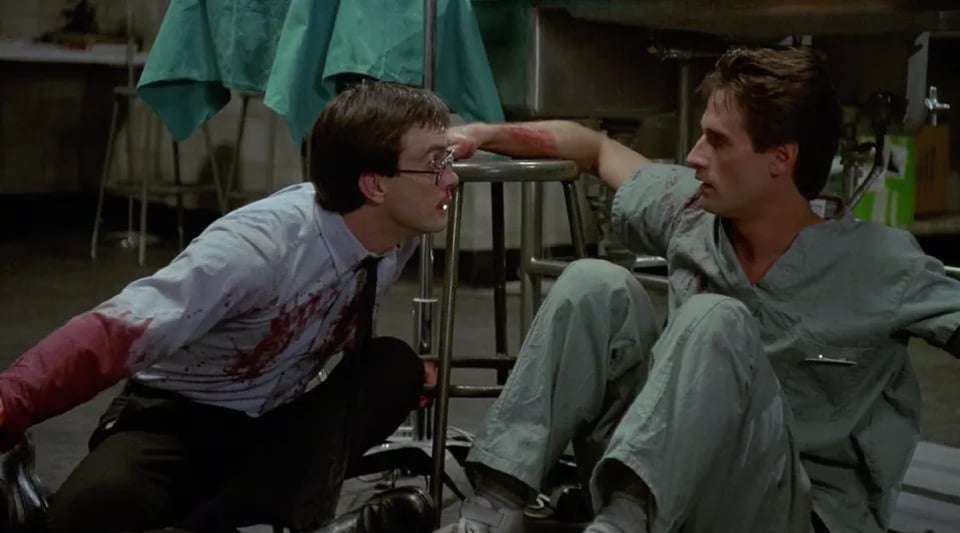
But, you may notice, Dan Cain survives the events of Re-Animator. And this is where we get into the true romance of it all, which is to say, Herbert West’s final sacrifice. Dan’s position as the corrupted youth should make him remarkably vulnerable to the story. To draw another classic literature connection, he is markedly reminiscent of Dorian Gray, drawn deeper and deeper into Herbert’s web of insanity and experimentation until he loses everyone he loves to it completely. This should, logically, lead to his death as a form of either redemption, punishment, or martyrdom, as it did for the Creature, Dorian Gray, and Henry Clerval, respectively. But it doesn’t, because Herbert West sacrifices himself to save Dan and Meg (our Elizabeth stand-in). In the final, chaotic, minutes of Re-Animator, Herbert gives himself over to the living, strangling intestines of the re-animated to give Dan and Meg a chance to escape, and to live. Not only does this solidify the romance underneath the relationship, it makes Herbert what Henry Clerval was - a buried gay. Except this is Herbert’s punishment. A fun* fact about the ‘bury your gays’ trope is that it’s a holdover from the Hayes Code, where all moral failings, including homosexuality, had to be punished onscreen. Retribution had to be shown, for bank robbers, murderers, and homosexuals. Herbert is not only being punished for defying god - he is being punished for being strange, for corrupting Dan to his ways, for drawing Dan away from his nice little sane and heterosexual life with Meg and his normal guy medical degree that he doesn’t use to kill people. But in the end, like Victor and Henry, both Herbert and Dan suffer consequences.
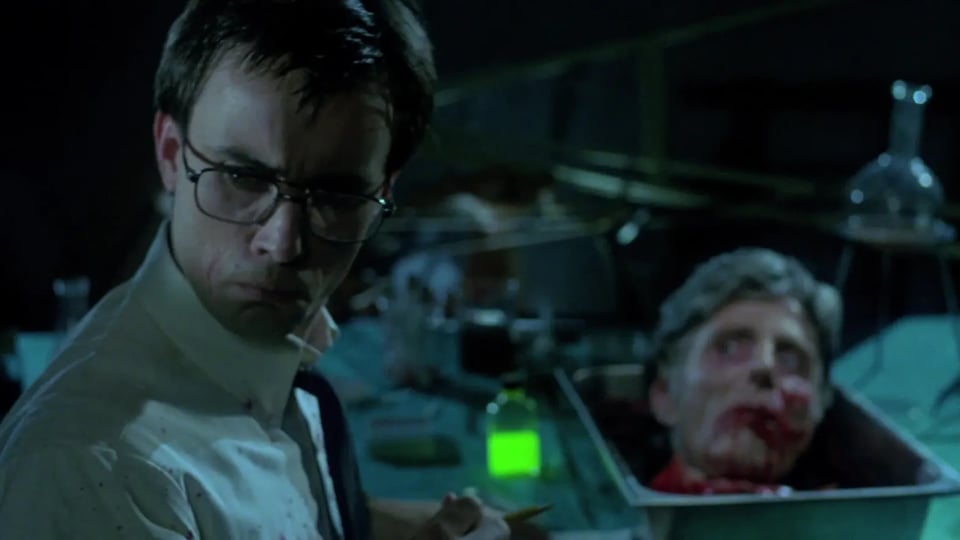
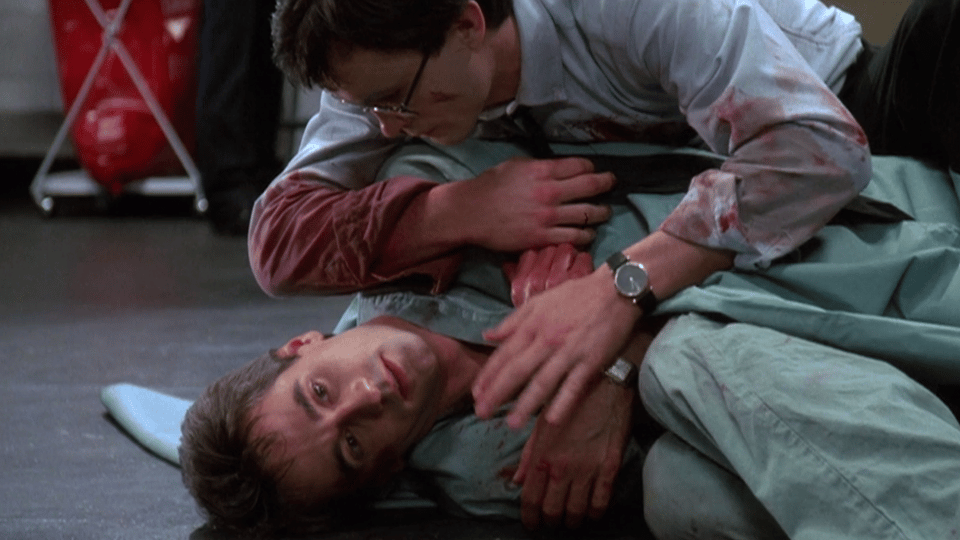
It is established in the very beginning of Re-Animator that Dan cares a little too much for someone who is going to work in the medical field. He very clearly doesn’t want people to die, which is simply a reality he is going to have to face. His heart is just a little too big for his body, for his job. But the thing people don’t tend to remember is that the same is true of Herbert. Herbert West doesn’t want anyone to die, either. He doesn’t want death to be necessary to life. So he does everything in his power to change that. Herbert West cares too much, too, just in a very different way that Dan Cain. Both men have the same level of emotion about mortality, they just show it in very different ways, that become less different as the movie progresses. The final scene of Re-Animator is a full-circle moment, mirroring the one with the patient at the very beginning, as Dan desperately tries to bring Meg back to life. Except this time, he has a way to bring her back when he fails. When Dan plunges the re-agent into Meg’s bloodstream, Herbert’s screams still echoing in his ears, he gives himself over fully to the corruption that he has been drawn into for the whole movie, completing the cycle of buried queerness in a desperate bid to regain his previous life. Which is, of course, impossible at that point.
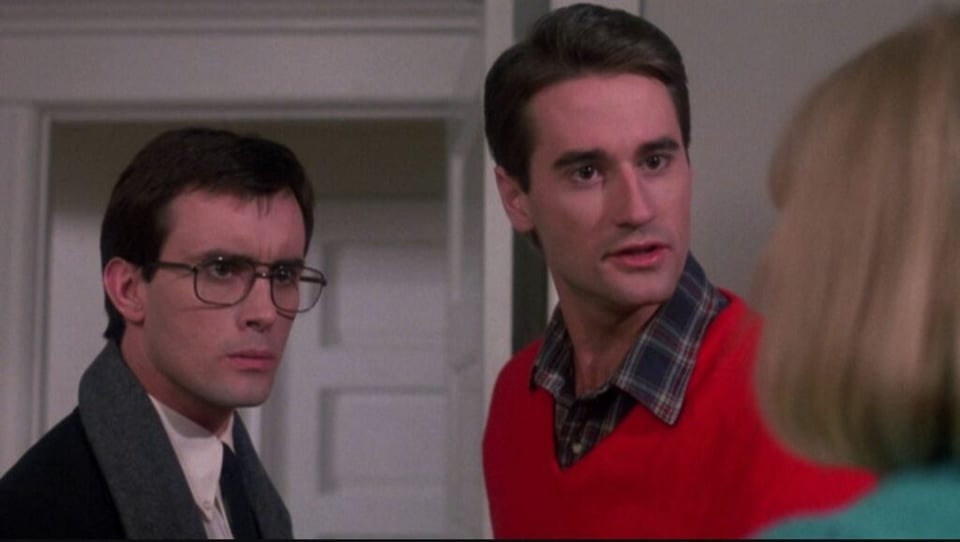
Dan Cain will never be the same, and it would be foolish to think he could just go back to Meg, that everything could go back to being alright. But he thinks that just the same, because he is still hopeful, just like Henry Clerval. And Basil Hallward, and Dorian Gray, and that poor, perfect Creature that walked out onto the ice of the Arctic to die. The re-agent is representative of many things - AIDS, life, death, hope, love - but most of all, it, like most things, is an allegory for queerness, placed inside an adaptation of one of the queerest stories ever written. So happy Pride month to Herbert West and his bullshit.
Thanks for reading, all! I ADORE this movie and loved writing about it for Pride month! In two weeks: Queer-Coded Villains in Horror! Happy reading and stay spooky!🧪🐈⬛🧠🔪🩸
BOOK RECS:
Frankenstein by Mary Shelley
The Picture of Dorian Gray by Oscar Wilde
Maeve Fly by CJ Leede