I HEARD YOUR HEARTS DANCING!: On IWTV And The Gay Vampire
Hi all and welcome to week three of the So Desensitized 2026 Spooky Season Spooktacular! This week is all about minority vampires, and today we’ll be talking about my personal favorite vampire trope - the gay vampire. Happy reading, stay spooky, and go to the library!
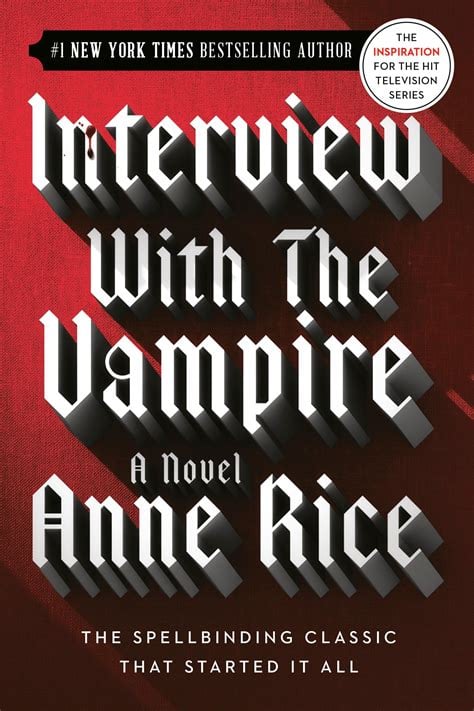
It could be argued that all vampires are gay. In fact, that is what I’m going to spend a lot of this post doing. That said, perhaps the most gay vampires of all time came to us in the nineties, with Anne Rice’s Interview With The Vampire, first the book, then the movie. It took about thirty years after the movie for there to be a TV show, and I can say that, in my admittedly limited viewing, it was worth the wait. Since Louis de Point du Lac and Lestat de Lioncourt first graced the vampire canon, they have made their place as the messiest, craziest, and, yes, gayest vampires of them all. Which is really saying a lot.
The origins of vampires in popular culture are undeniably queer. The seeds were planted with Carmilla and Dracula, and only grew from there. With the AIDS epidemic, bloodsucking monsters suddenly had both darker and queerer implications, with movies like The Lost Boys flying onto the scene as vampires adapted to the modern world. With these modern implications came, for lack of a better word, dirtiness. Vampires, who had been elegant, rich, and clean since their inception, were suddenly grimy and working class. The AIDS epidemic didn’t just make vampires more inherently tied to queerness than they already were - it made them disreputable. Beauty was no longer something that could be afforded to that kind of monster, not when blood had become death instead of the life Renfield had declared it to be so many years ago. With the end of the decade came the preventative drugs that would eventually mark the end of the AIDS epidemic (though the promised vaccine has yet to be developed), and the return of pretty vampires. While this development did give vampires their elegance back, it did so at the cost of their queerness.
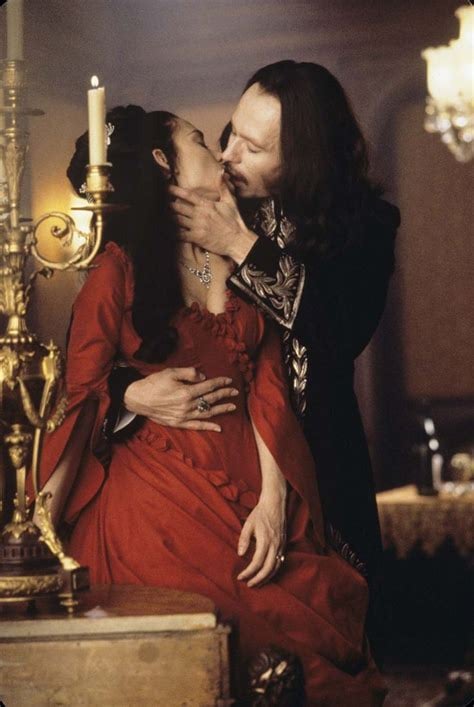
In 1992, Dracula was no longer a creepy old man who was a metaphor for the dangers of abuse and manipulation within relationships, drawn closely from the shame and fear Bram Stoker experienced as a closested gay man in 1800s England. Instead, he was a romantic hero, sweeping a swooning Winona Ryder off her feet and away from her excellent realtor husband. Francis Ford Coppola’s Bram Stoker’s Dracula almost couldn’t have been a further departure from the true meaning behind Stoker’s story, and ushered in a new era of the vampire, one where vampires could be pretty again because the days of blood being dirty and unclean were behind us, but not gay, because the days of queerness being dirty and unclean were not. The time-honored tradition was moot as vampires became fewer and far between, and those that ended up on screens were lacking in the queerness inherent in the monster. I mean honestly, imagine drawing from a piece of literature written by a gay man about another gay man and managing to remove all the queerness from it except for vaguely fetishized lesbianism. Again, if anyone has a contact for Francis Ford Coppola, please let me know. This deviation from the wonderfully queer norm was not to last, however. Anne Rice made sure of that.
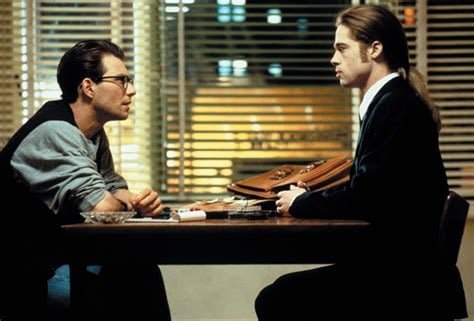
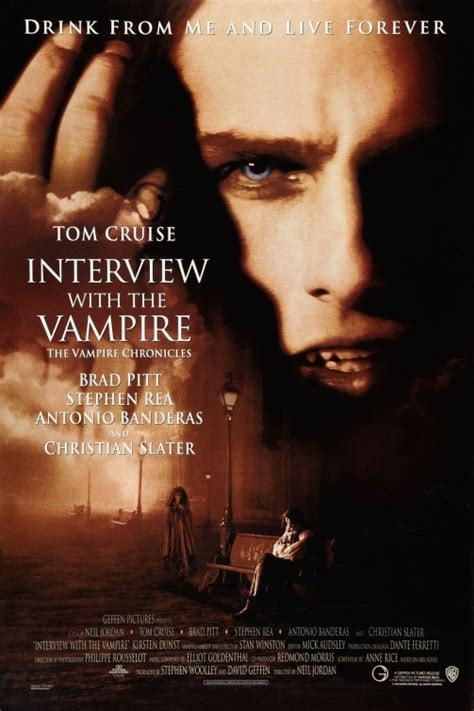
Interview With The Vampire didn’t just make vampires gay again. It made them messy. The original novel is a poorly-written pulp paperback that reads more as a messy custody battle than a horror story that almost got lost to time, but ended up being exactly the thing that was needed. With Interview With The Vampire, published in 1976, Anne Rice almost single-handedly brought supernatural horror - a genre that had been waning in favor of killer kids and urban fearmongering - back into the mainstream with what would turn out to be one of the most sprawling literary universes of all time, stretching from the full Vampire Chronicles to The Mayfair Witches and beyond. That said, it is notable that it took fifteen years to adapt the book into a movie. The eighties almost killed Interview With The Vampire, coming as it did just before the elegant vampire fell out of style as elegance stopped being associated with queerness, leaving Louis and Lestat to collect dust in favor of younger, grimier vampires like David and Michael. That said, when it came time, Interview With The Vampire brought big change. Namely, Tom Cruise and Brad Pitt starring in a distinctly queer vampire movie at the height of their careers.
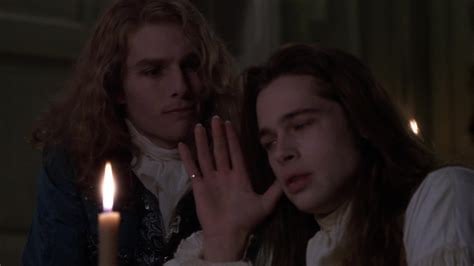
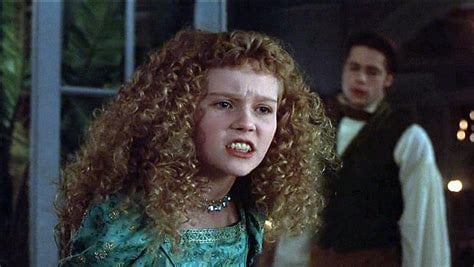
Interview With The Vampire (1994) is a masterpiece of a movie, and I mean that genuinely. It has a stacked cast, with not only the two leads, but Antonio Banderas and Christian Slater supporting as the vampire Armand and the interviewer, Daniel Molloy, as well as a very young Kirsten Dunst carrying the entire movie as Claudia de Point du Lac de Lioncourt, the adopted daughter of Louis (Pitt) and Lestat (Cruise), who is perhaps the most terrifying vampire ever put on screen. The queerness of Interview With The Vampire (1994) is more implied than anything, releasing as it did into a world still recovering from the AIDS epidemic, but it is most certainly there. Like I said before, the story functions more as a family drama than anything, as Louis and Lestat battle for Claudia’s love, and Claudia battles for her independence, struggling to live in a body that is permanently a child while her mind ages into adulthood. Midway through the movie, Louis and Claudia kill Lestat together - or so they think - and escape to Paris, where they find Armand and his ruthless Théâtre des Vampires. The relationship between Louis and Lestat is fraught in every adaptation, showcasing the complexities of immortality, love, and ethics, as they try to love each other despite it all. Well, the trying might not be universal, but I digress. Their relationship is always the point, even more so than their vampirism. Their struggles as parents, the decisions to be made in their lives, and even their means of income, are decided upon and experienced together, no matter what. Unless one of them has been murdered by the other, or one of them is on tour being a rockstar, or they’ve been kidnapped and are being held hostage, or one of them really wants to murder people all the time and the other isn’t super into that…either way, their relationship is what makes the story, messy as it is.
Modern vampires haven’t stopped being gay. The film Renfield (2023) finds Renfield trying to escape his toxic and distinctly homoerotic relationship with Dracula. What We Do In The Shadows (2014) has very queer undertones that almost harken back to the AIDS era of vampirism in movies (this is helped by the fact that each vampire in the house is based on a specific cinematic vampire), and its TV show adaptation, What We Do In The Shadows (2019-2024) is even queerer than that, with familiar Guillermo and vampire Nandor having a deeply strange and erotic relationship (complete with a classic power imbalance!). This is further enhance by the fact that Guillermo is canonically gay within the show, and the narrative uses his desire to become a vampire to act as a stand-in for his desire to be with Nandor romantically. And then there’s AMC’s Interview With The Vampire.
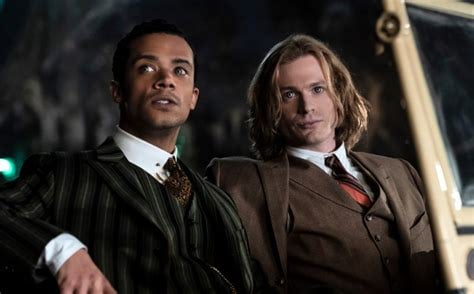
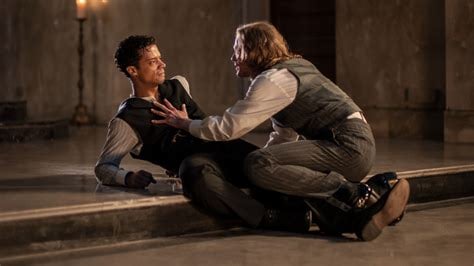
I, admittedly, haven’t watched as much of this show as I could have. I’ve been meaning to catch up on it, don’t come at me. That said, given what I’ve seen of it, AMC’s Interview With The Vampire is what Interview With The Vampire - and The Vampire Chronicles at large - was supposed to be, and Anne Rice just didn’t know that when she wrote it. First of all, whoever decided to make Louis de Point du Lac a successful Black man deserves several gold medals and every Emmy in the world. Second, with the ability to make the story more overtly queer came the ability to delve further into Louis and Lestat’s relationship.
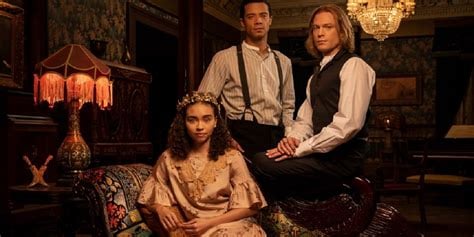
In Interview With The Vampire (1994), the romance of the main relationship is mostly implied, meaning that some of the more emotional moments fall short, or become strange within context. Louis and Lestat are raising a child together, yes, and Lestat did effectively baby-trap Louis into staying with him forever, but with no explicit definition of the nature of the relationship outside of the fact of Claudia’s existence, the dynamic comes off a bit strained and unnatural in parts. This is not true of AMC’s Interview With The Vampire. By establishing Louis and Lestat not only as a gay couple in early 1900s New Orleans, but an interracial couple at that, a new depth is added to the nature of their relationship and their interactions even before Claudia enters their lives. They are allowed more emotion in relation to each other, Lestat’s jealous side (which is to say, all of him), has more room to be explored, their roles as Claudia’s parents are clearer, and the actual implications of Lestat’s behavior are glaring. Add to that the fact that Louis’ retelling of this to Daniel Molloy, here an academic dying of Parkinson’s Disease, takes place several years after the initial interview - presumably the one that happened in 1994 - now in Louis’ mansion in Dubai, where Lestat is remarkably absent, and a man that definitely seems to be a vampire tends to Louis’ every need, and you’ve got yourself a messy, bloody, and dramatic show that’s also queer as hell.
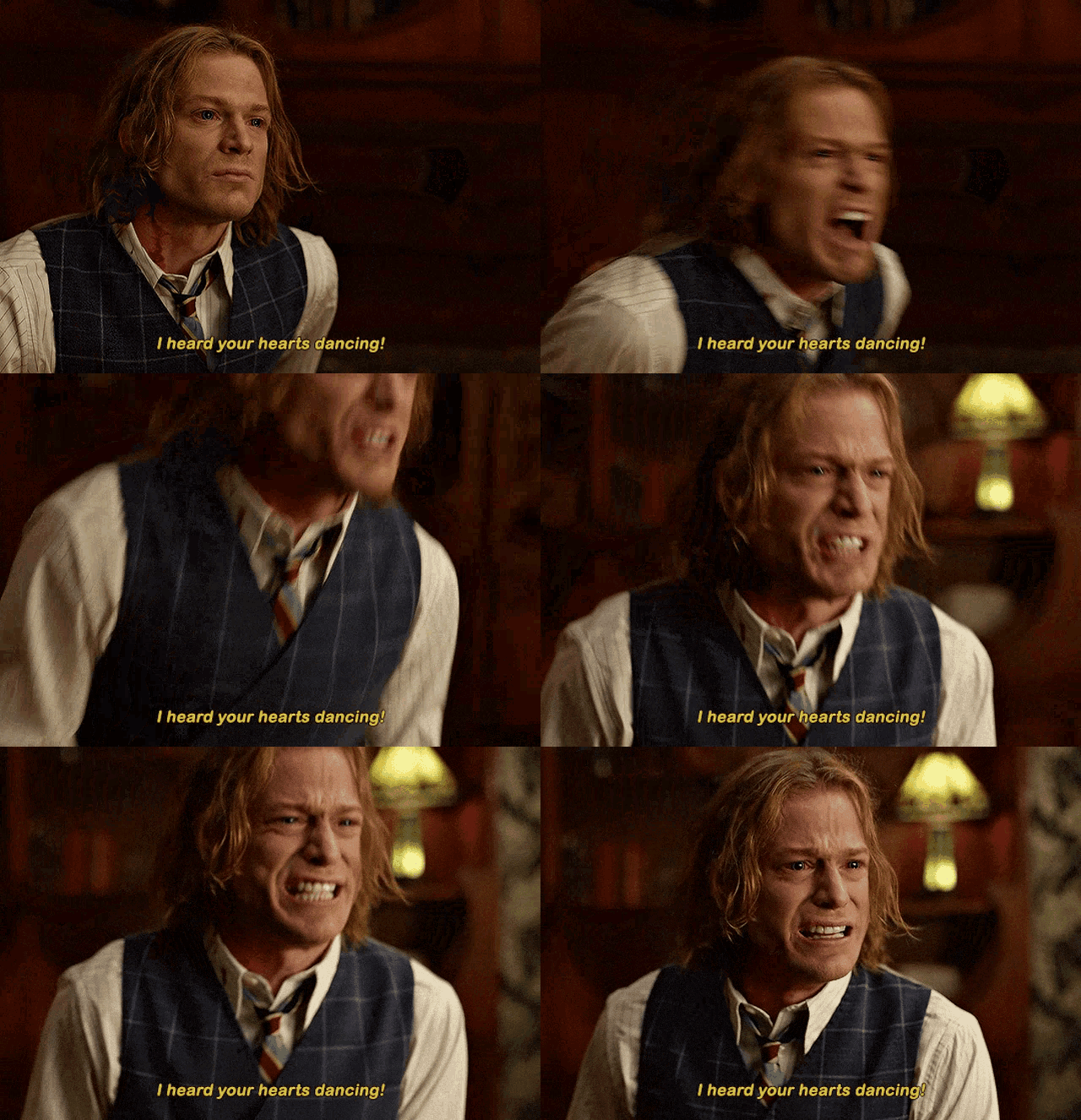
The evolution of gay vampires in media can be tracked through historical events and societal fears just as easily as any other horror phenomenon, though after 1976, it’s also quite easy to track the evolution of societal attitudes towards and fears around gay people through Interview With The Vampire adaptations. The gay vampire myth began with the modern vampire myth, which is to say, in 1897, with Dracula, and has since been spun and adapted and twisted many a time until the modern day. It would be perfectly fair to apply a Psycho theory to gay vampires, in that all modern vampire stories are at least a little based on Dracula and so are at least a little bit gay. And that is true, but it is more true to say that gay vampires have taken on a life of their own since both Dracula and Interview With The Vampire. I like to think that both Bram Stoker and Anne Rice would approve of the directions their stories have taken.
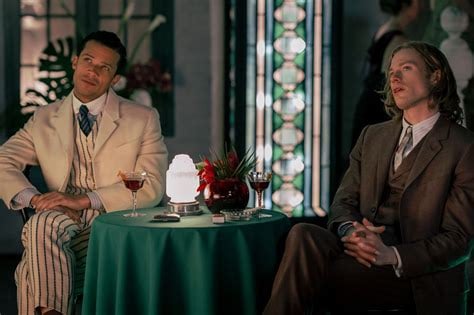
Thanks for reading, all! Tune in on Friday for some talk about Black vampires, which will mostly be talk about Sinners! Happy reading, stay spooky, and be wary of overdramatic blond frenchmen!