
🍷 Alcohol and Your Glucose Response
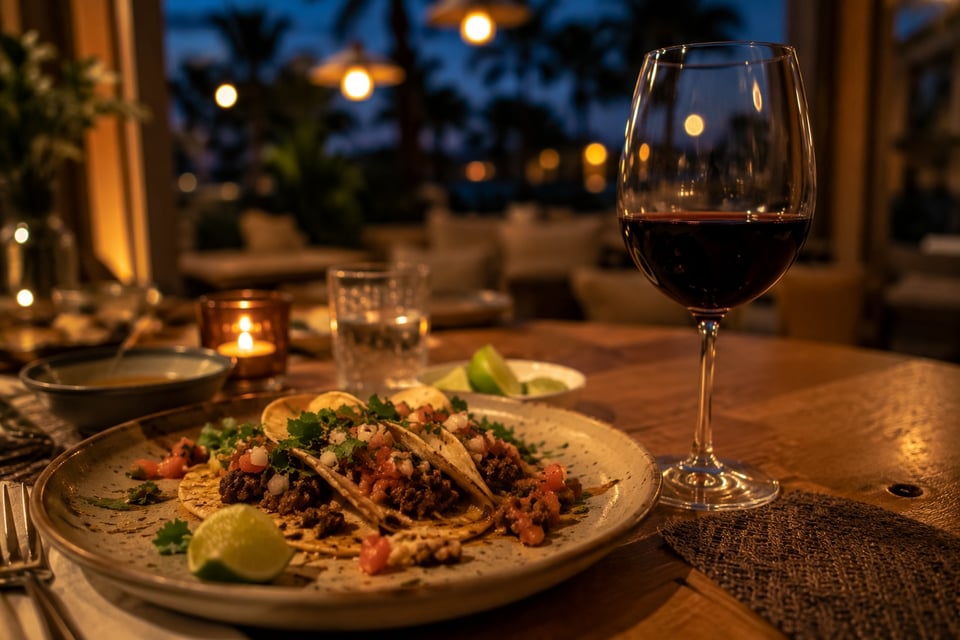
Ever notice how a night out with a couple drinks doesn't seem to do much in the moment, but the next morning your energy is off in a way food alone doesn't usually explain?
If you drink, even occasionally, there's a reason for that. And it's not just the hangover.
That weird overnight dip, or the mystery spike at breakfast, traces back to one organ. Your liver.
🍷 What's Actually Happening
Your liver has one job during a night out. Get rid of the alcohol, first, before anything else.
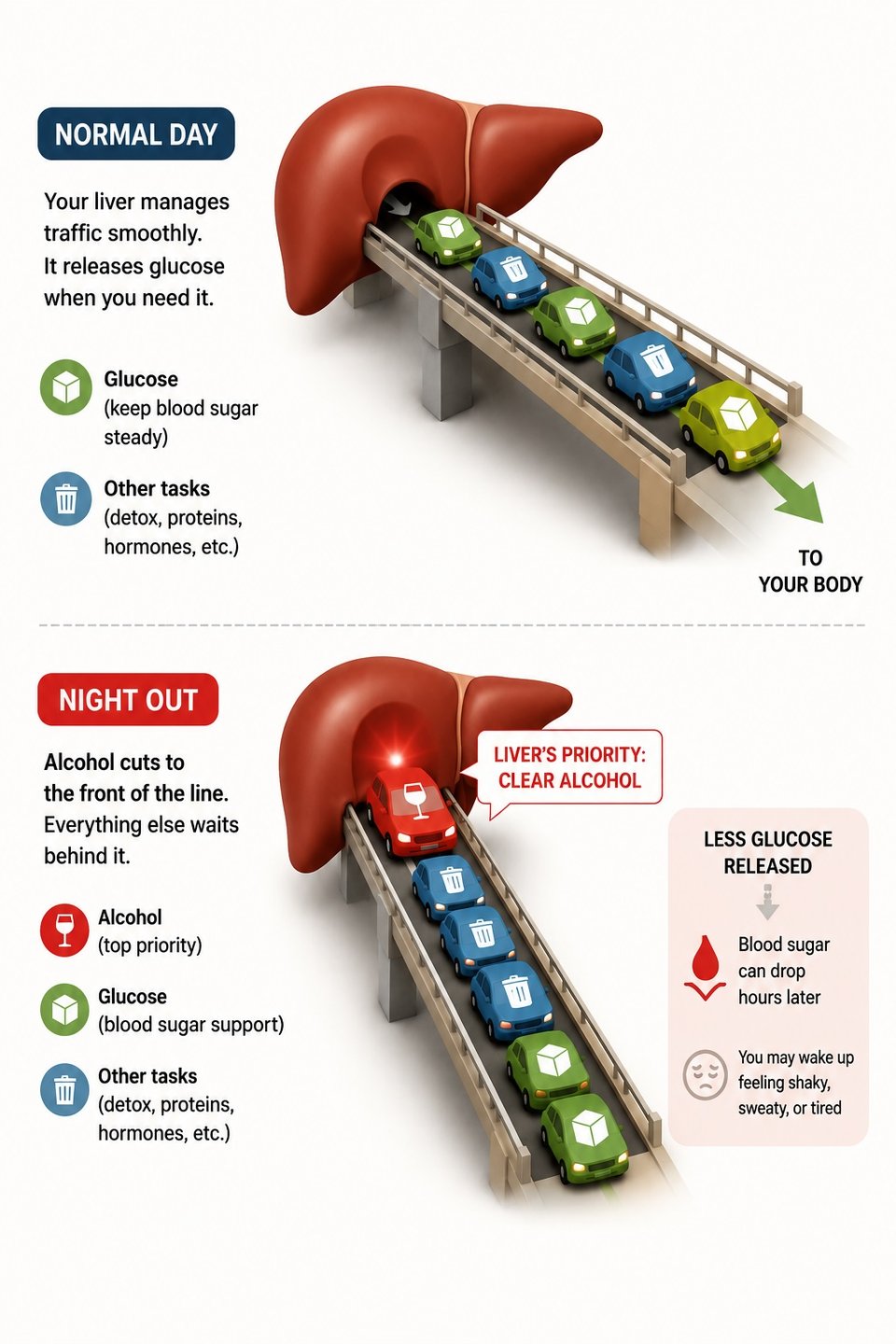
Think of it like a single lane bridge. Normally your liver handles a steady stream of traffic, releasing glucose into your blood when you need it, like between meals or overnight. The moment alcohol shows up, it cuts to the front of the line. Everything else, including keeping your blood sugar steady, waits behind it.
So while your liver is busy clearing that wine, nobody's minding your glucose. That's not a willpower thing. It's just biology working through its to-do list in the wrong order for you.
📉 The Delayed Crash
Here's the part most people don't expect: alcohol doesn't spike your blood sugar right away. It can actually drop it, sometimes hours later, while you're asleep.
That's why people who drink at night sometimes wake up groggy, shaky, or unusually hungry. It's not just the hangover talking. Your glucose took a real dip while your liver was distracted.
Then, once your liver catches up, it can overcorrect. That's the mystery spike you see at breakfast, even if you ate the same thing you always do.
👥 Meet Dana and Marcus
Dana has two margaritas at happy hour, then eats tacos. Her Dana has two glasses of wine with dinner, then eats tacos. Her glucose looks fairly normal that night, but she wakes up at 4am wide awake and starving. Classic overnight dip.
Marcus skips the wine and just has the tacos. His glucose rises after dinner like usual, dips back down, and stays steady overnight.
Same tacos. Different night. The wine was the variable.
🤔 But Wait, Isn't Wine Supposed to Be "Heart Healthy"?
You've probably heard a glass of red wine is good for your heart. That claim has gotten shakier every year. Even if there's some benefit, it doesn't undo what alcohol does to your liver and your glucose while it's in your system.
And not all drinks behave the same. A dry wine or a spirit with soda water hits differently than a sugary cocktail or a beer, which stacks carbs on top of the alcohol effect. Worth knowing which one you're actually reaching for.
✅ The Takeaway
If you're drinking, eat with it, not on an empty stomach. Then don't be surprised if the odd number shows up hours later instead of right away. That delay is the whole story here, not the drink itself.
See you next week,
—Chai
Founder
GlucoSpike
📲 From GlucoSpike
Great health starts with everyday choices. GlucoSpike is your AI food coach. Snap your meal, get quick insights, and learn how to balance what you eat with how you feel.