
Maltodextrin: is this everywhere-ingredient actually safe?
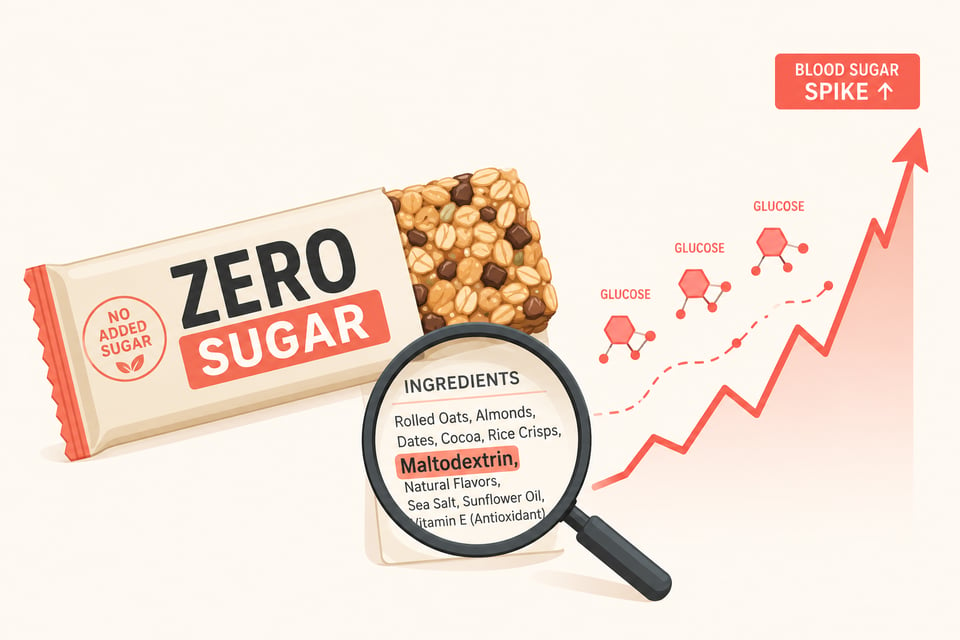
Check your pantry. Protein bar, salad dressing, instant oatmeal, "sugar-free" gum, sports drink. Odds are good that at least one of them lists maltodextrin. It's one of the most common additives in the American food supply, and most people have no idea what it actually does once it's in them.
🧪 What even is maltodextrin?
Maltodextrin is a starch made by breaking corn, rice, potato, or wheat down into short chains of glucose. It's flavorless, dissolves instantly, and is dirt cheap to produce, which is exactly why manufacturers reach for it as a filler, thickener, and texture booster in everything from sauces to supplements.
The FDA classifies it as "Generally Recognized as Safe," meaning it's approved for normal use in food. That classification, though, dates back decades, well before most of the research on gut health and the microbiome existed. GRAS means legally fine to eat. It doesn't mean nothing happens once you do.
📉 What actually happens once you eat it
It spikes fast, harder than sugar. Maltodextrin has a glycemic index around 85 to 100, on par with pure glucose. Table sugar sits around 65. Because it's technically a starch and not a sugar, it can appear in products labeled "0g sugar" or "low sugar" while still hitting your bloodstream just as fast, sometimes faster.
It may quietly mess with your gut bacteria. A 2012 study in PLOS ONE found maltodextrin altered gut microbiota and encouraged the growth of bacteria linked to Crohn's disease in susceptible people. Later research has echoed the finding: shifts in Firmicutes, Bacteroidetes, Lactobacillus, and Bifidobacterium populations after regular exposure. The research base is still growing, but gastroenterologists flag it as worth watching, especially for anyone with IBS, IBD, or SIBO.
It's calories with no nutritional payoff. No fiber, no protein, no micronutrients. Just fast glucose, which is exactly why it shows up as a "value filler" more than an ingredient chosen on purpose.
👀 Meet Sarah and Sam
Sarah grabs a protein bar most afternoons because it feels like the healthy choice between meetings. Maltodextrin is the second ingredient. Twenty minutes after eating it, she's foggy and reaching for coffee, then hungry again an hour later. Classic spike and crash, just from a bar with "high protein" on the front.
Sam is training for a marathon and sips a maltodextrin-based gel at mile 18. For Sam, that fast glucose hit is the entire point. His muscles need quick fuel and he's about to burn it off immediately. Same ingredient, completely different outcome, because context changes everything.
🔄 The twist
Maltodextrin isn't secretly dangerous for everyone who touches it. It's a genuinely useful tool during hard exercise, and the average person eating it occasionally isn't in trouble. The real issue is how invisibly it stacks up. It hides behind "starch" instead of "sugar" on labels, it's in far more everyday food than people realize, and if you're eating it daily without noticing, those repeated glucose spikes add up the same way sugar's would, just without the warning most people are trained to look for.
✅ Takeaway
You don't need to fear maltodextrin. You do need to notice it. Flip the label on anything you eat regularly, protein bars, dressings, "healthy" snacks, and see where it lands in the ingredient list. Near the top, often enough to matter.
See you next week,
— Chai
Founder
GluoSpike AI
📲 From GlucoSpike
Take the next step. Great health starts with everyday choices. GlucoSpike is your AI food coach — snap your meal, get quick insights, and learn how to balance what you eat with how you feel.