The Sound of AI Clapping
Quick housekeeping: this is the last story from buttondown. Starting October 13, these stories come from Substack instead. You don't need to do anything, I'm bringing you along. If you'd rather not, just unsubscribe below. No hard feelings (mostly).
I'm not religious, so in Kyoto, at Kōmyō-in temple, I asked a Japanese Zen priest what he thought about AI.
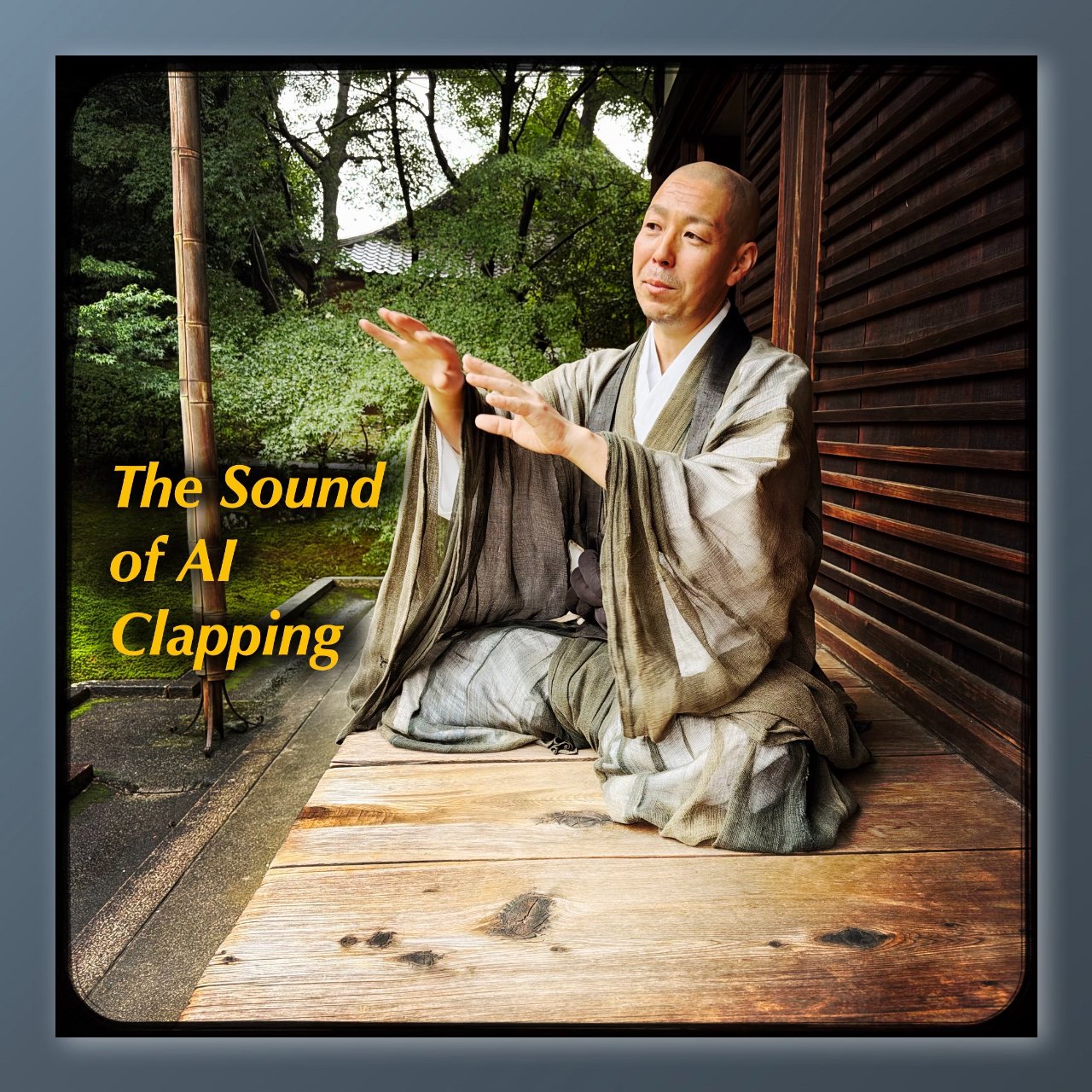
Through a translator, he began:
Two Buddhists walk together down a path, one a young student, the other his older teacher.
The student wants to be good. He also wants to be seen as good.
He asks his teacher how to achieve this. Day after day they walk the same path, yet the teacher remains completely silent.
One day the old teacher loses his footing. The student instinctively reaches out to help him.
At that moment, the teacher finally speaks.
“Thank you.”
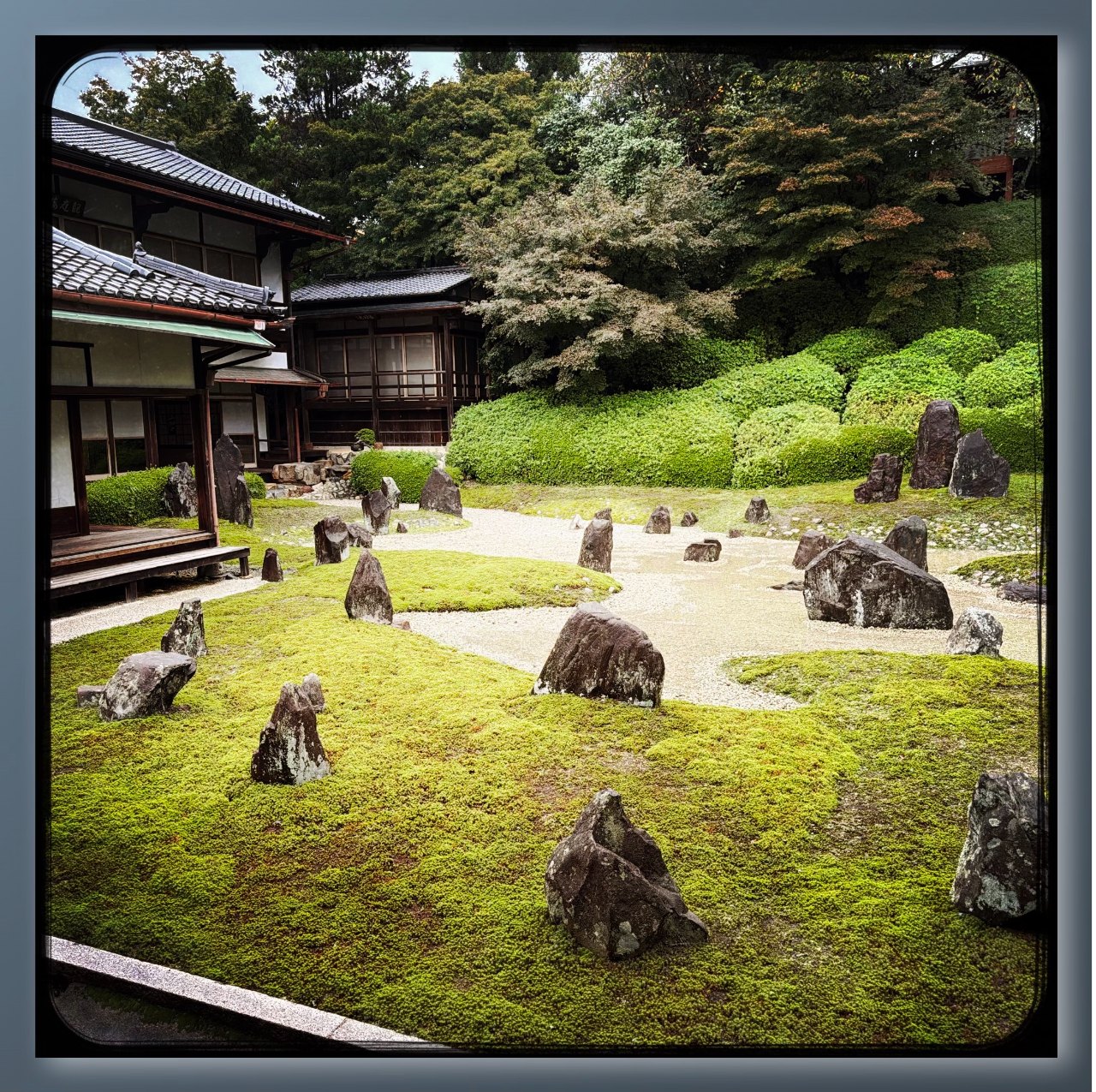
Earlier that day, we'd sat with the Zen priest by a garden of velvety moss as the hiss of a light rain fell on carefully placed stone.
The priest explained that the gravel in the garden represents the ocean, and that when there are no clouds, the moon reflects clearly in the water. I stared at the rocks and tried to see what he saw.
We asked as many questions as we could. He explained that his life wasn't so different from ours. He has two kids and a wife. He cleans every day. He sometimes gets angry when someone cuts him off in his car.
Mostly, the priest waited for our questions and answered patiently. In the silences, I wondered how many times he'd answered these same questions for hundreds of tourists just like us, each of us thinking we were somehow special.
Forty-five minutes in, I asked what he thought about AI.
Would it change his world?
Had it reached the temple?
Did it have any place in his teachings?
It was as if we'd found the secret latch to an unmarked door. The priest became animated. He smiled and made deep eye contact; he spoke of a Tokyo AI professor he'd spent time with.
He waved his arms and spoke for long stretches, the translator nodding anxiously, trying to hold onto it all.
In a break for translation, my mind wandered to our friend Sam, a researcher at Anthropic.
He studies the emotional state of AI systems.
Sam notes that AI is largely inert, and that it's surprisingly hard to get an AI system to do anything at all.
Sam likens AI to a large cauldron of soup, where emotions simmer but hardly break the surface. Left alone, it does nothing. It just waits.
It is the humans who coax it to speak.
The Zen priest thanked us for the question and said he wanted to offer us a koan of his own.
It's the one given to students at the beginning of their Zen practice.
"If you clap both hands, there's a sound," he says, clapping his hands together.
"Now go and hear the sound of one hand."
As the translator explains this, she notes that he intends it as an assignment, not a riddle to be answered.
The Zen priest then offers us a tourist-level ten-minute Zazen meditation.
As I sit, I'm thinking about the one hand. I want to impress the Zen priest. Eight minutes in, I'm sure I've found a respectable answer. After we finish, as if we've passed a test, the Zen priest offers a second Zazen, saying it may be easier than the first, and I think to myself that the first was actually pretty easy already.
Later, upstairs, we admire rice-paper doors painted with murals a young artist had spent three years painting during COVID: the movement of waterfalls to trees to rocks, dotted with monkeys and the first catfish - all leading to a sitting Daruma, who brought Zen Buddhism to China.
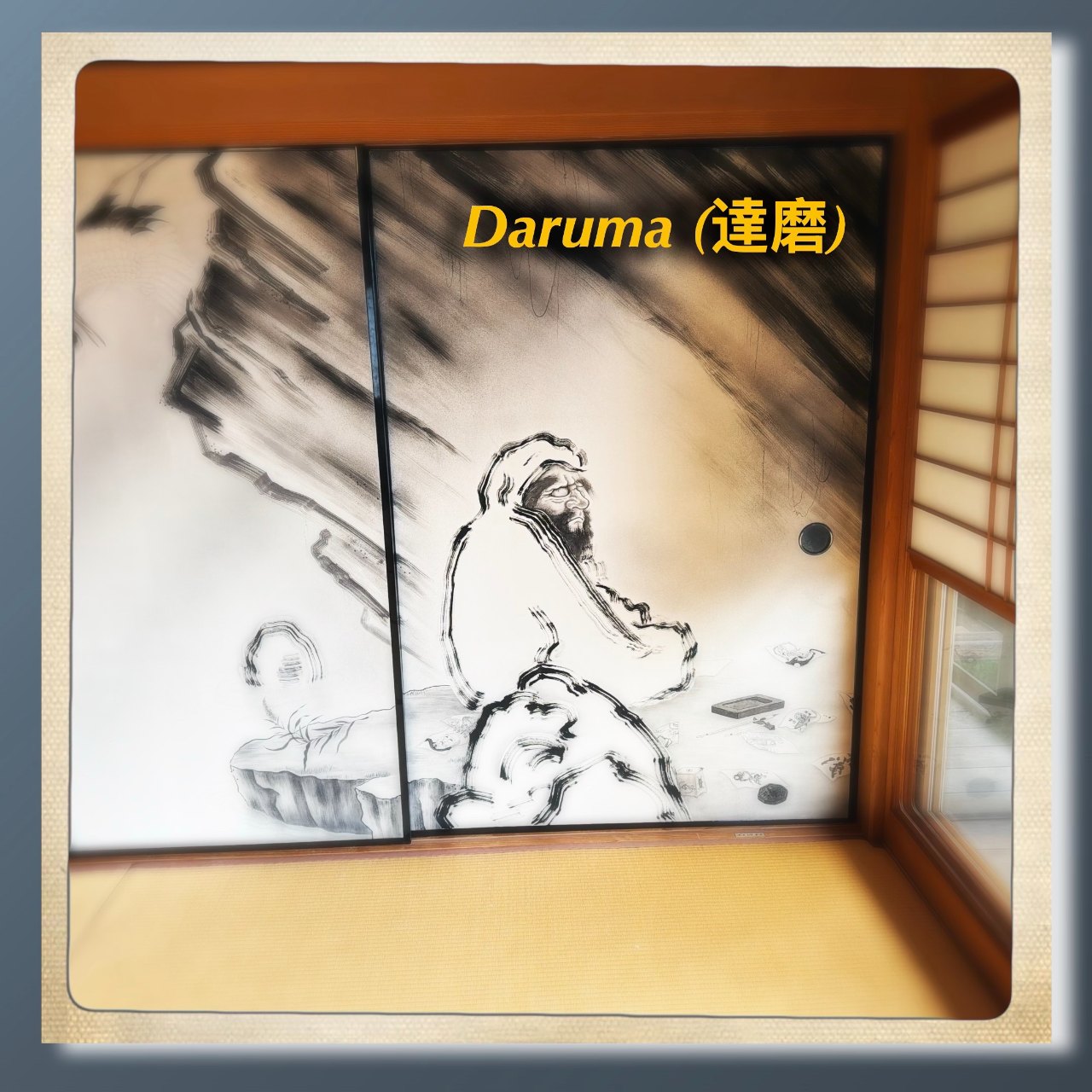
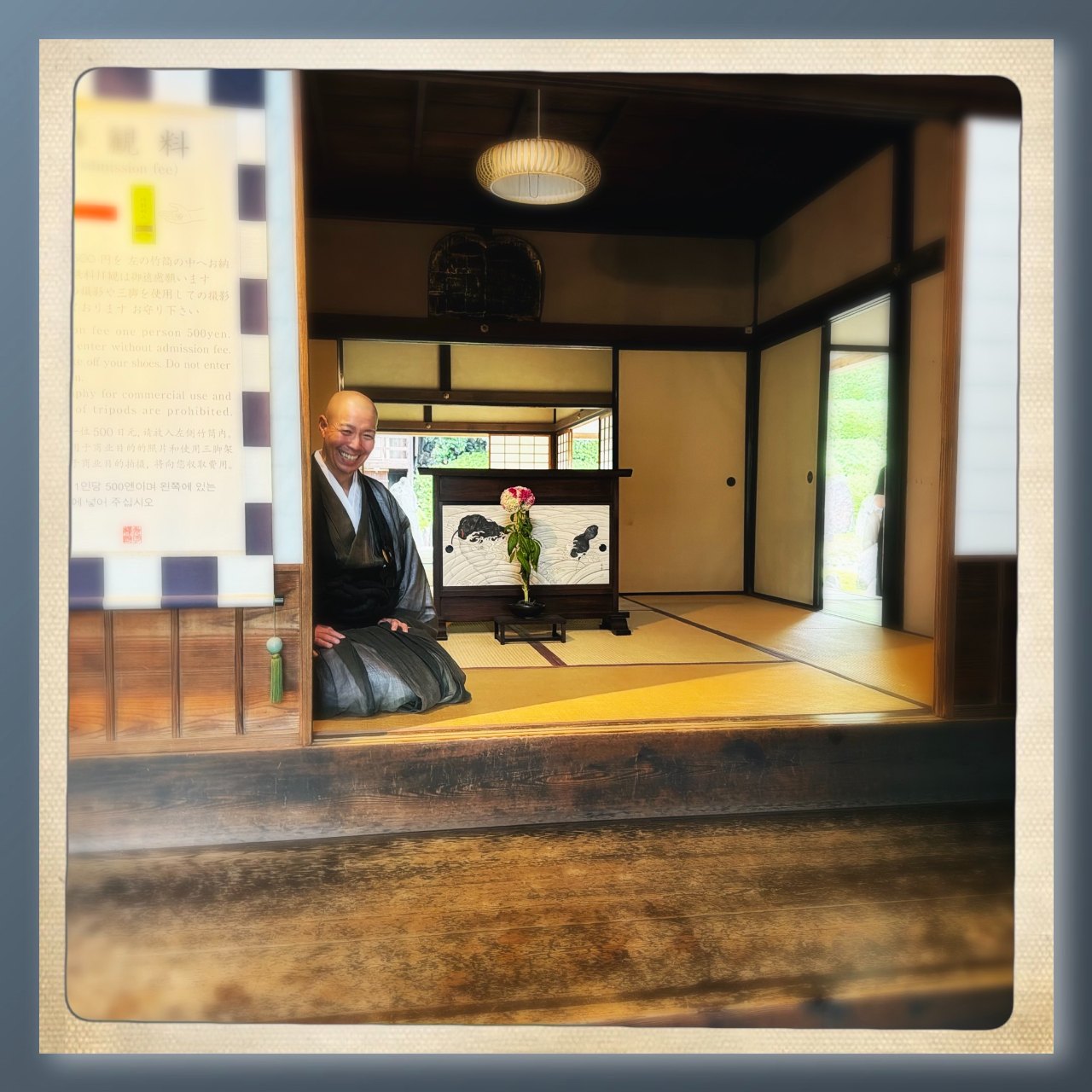
We ask for a picture and the Zen priest is more than happy to pose. It's at that moment that I give him my best answer: there is no answer. The thinking on the question itself is the sound.
He listens and chuckles. He says that he attempted to provide a response dozens of times for a full year - none of them satisfactory to his teacher.
Until one day, finally, his teacher accepted this:
He turns toward us and becomes stone-faced.
His body stiffens, his energy swells into the room.
He chops his hand sharply and shouts “KAA!” so loudly that, for a moment, the birds outside go silent.