
The Role of Technology in Healthcare
Unpacking the collaboration of healthcare & technology, its impact on the world population, and workforce challenges.

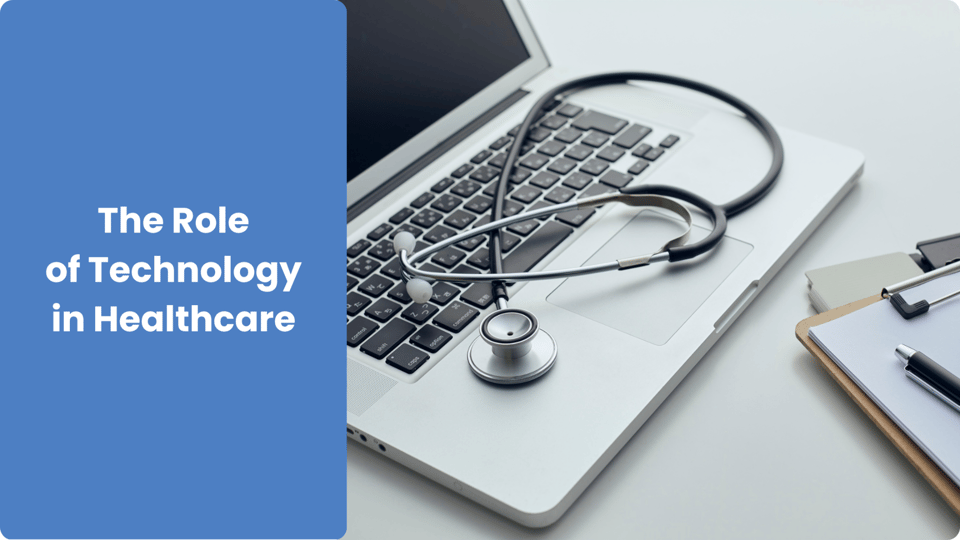
Healthcare and Technology have been linked together way before the digital revolution but in the digital era, they are more noticeable than ever.
Healthcare Technology isn't just the medical instruments or machines in hospitals and clinics. It’s the app on your smart phone or a fitness tracker on your wrist. It’s also a continuous glucose monitor (CGM) on someone’s arm, a wearable sensor that’s paired with an app.
Multidisciplinary collaboration brought these advanced technologies to reality. Also, new jobs have been created to cater to the booming Healthcare and Technology industries. But all of these don’t exist without challenges.
Inside:
Healthcare Applications (Apps) & Wearables
Non-clinical Healthcare Jobs
Workforce Challenges
Conclusion
Healthcare Applications (Apps) & Wearables
💡 Key takeaways:
The world made rapid changes fighting infectious diseases but diabetes, mental disorders, and obesity are rising challenges.
Global health recovers post-pandemic but diabetes, drug use disorders, violence, and heat waves pose some of the fastest-rising threats to human health.
Technological advances in Healthcare applications and wearables continue to rise, addressing people’s need for fast, reliable, and accessible healthcare.
The Institute for Health Metrics and Evaluation released in October 2025 their Global Burden of Disease (GBD) 2023 study. Data showed 463 health outcomes and risk factors that provide a powerful basis for insights on global health trends and challenges.
In that study, GBD 2023 showed that half of the top 10 causes of death and poor health are non-infectious diseases. And among those non-infectious diseases, diabetes and depressive and anxiety disorders are growing at the fastest rate.
So, Healthcare Technology continues to develop ways to combat diseases and disorders to help prolong people’s lives or reduce mortality rates. Manufacturers of diagnostic devices produced self-monitoring wearable medical devices to the world population.
These healthcare wearables include smart watches and fitness bands, as well as wearable continuous glucose monitors (CGM) and electrocardiograms (ECG) that help people with diabetes and heart diseases.
To address depressive and anxiety disorders, therapists developed mental health platforms and insurance companies now offer mental health coverage in their plans.
These devices and platforms provide people real-time data on health and fitness, routine diagnosis, and allow people to participate more fully in their daily lives.
Top 5 health technologies:
Smart watches
Fitness trackers
Mental health platforms
Continuous Glucose Monitor (CGM)
Wearable ECG

Non-clinical Healthcare Jobs
Technology professionals for Healthcare
The Healthcare Industry keeps a steady growth year-on-year due to the aging population across the world. Along with it is the growth of the Smart Healthcare market, which, according to Grandview Research, “attributed to technological advancements, rising healthcare costs, and the increasing demand for efficient, patient-centric care delivery.”
The Asia Pacific smart healthcare industry is also growing due to rapid digitalization and technological advancements like AI-deployment and Internet of Medical Things, among others.
And with that comes a great demand for Technology professionals. They create applications and web-based platforms for electronic health records (EHRs) that are scalable and can enhance the interoperability of systems.
Telemedicine, IoT-enabled wearables, and virtual care are in-demand and are further supported by advancement in telecommunications. As more people are able to access smart devices, they also gain better access to mobile-based healthcare platforms. This is expected to further grow by 2030.
Non-clinical Healthcare workforce
Non-clinical healthcare jobs are roles in the field of Healthcare that do not directly involve the observation or treatment of patients. These include screeners for Universal Healthcare, intake specialists, health insurance roles, customer service representatives, medical coders, and many more.
These roles don’t require a medical degree or practice but are necessary for the business operations–to keep healthcare organizations run efficiently.
Subscribe nowWorkforce Challenges
According to ZipRecruiter, one of the challenges that non-clinical healthcare professionals face is balancing multiple responsibilities while maintaining attention to detail and accuracy.
As they are handling sensitive patient data, they need to maintain and ensure compliance with healthcare regulations, for example, the Health Insurance Portability and Accountability Act (HIPAA) in the US and Personal Data Protection Acts in Asia, and similar laws.
For doctors who are transitioning to non-clinical roles, there may be unpredictable job security. As mentioned in Medical Economics, administrators are highly susceptible to job turnovers.
This may also be true for any other non-clinical roles including remote healthcare jobs. And although jobs are widely available, getting a new role may be tougher with ghost jobs and the need for ATS optimization/matching.
Follow Aspeeria on Facebook
Conclusion
People have notably become more aware of prioritizing their health and well-being after the pandemic. Plus, with the booming Healthcare Technology we see that people are more empowered despite challenges with diseases and disorders. The healthcare industry is reshaping how and where care is delivered.
Job security, compliance, and getting a new role amid AI, ATS and other advanced recruitment platforms are a few of the challenges that Technology and other non-clinical professionals face. In the AI era, it is helpful to prepare by upskilling and staying updated with industry trends.
Did you like this post? Let us know by sending us a message!
