
Product news, Cybernetics Library, Processing Foundation turns 25, and more
It’s still summer where we are, but here’s a new one — there’s smoke everywhere, from the wildfires. Anything that can happen, will happen.
We’re thinking about Murphy’s Law and listening to Eberhard Weber - The Following Morning. What have you been thinking about? What are you listening to?
Product News
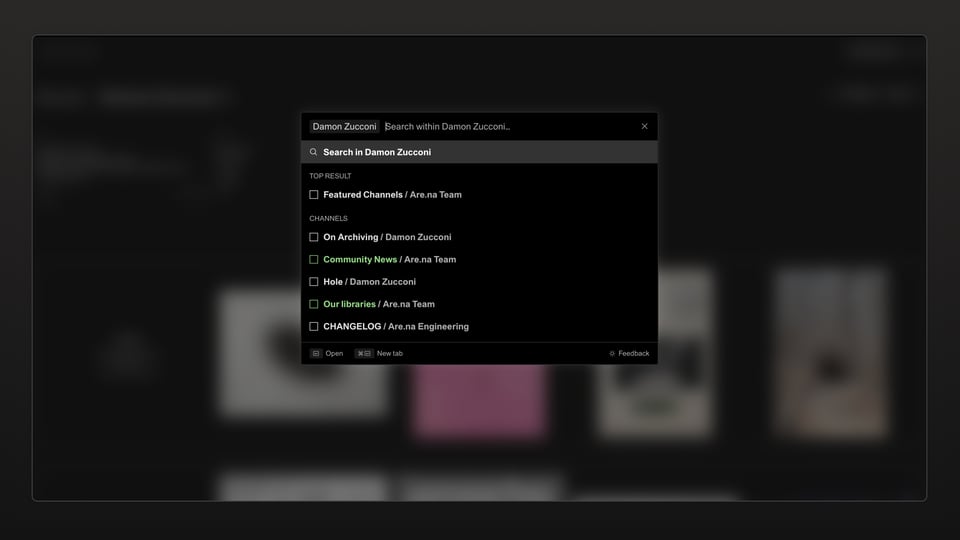
There’s been a plethora of updates since we last talked, but we’re most excited about this new command palette that Premium Supporter tier have early access to. Admittedly it’s a bit of a power-user feature, but we figure Are.na probably has a higher ratio of power users that your average platform.
Anyway, you can use it the same way you use search, but you can also do much more as it brings almost all basic actions reachable through your keyboard.
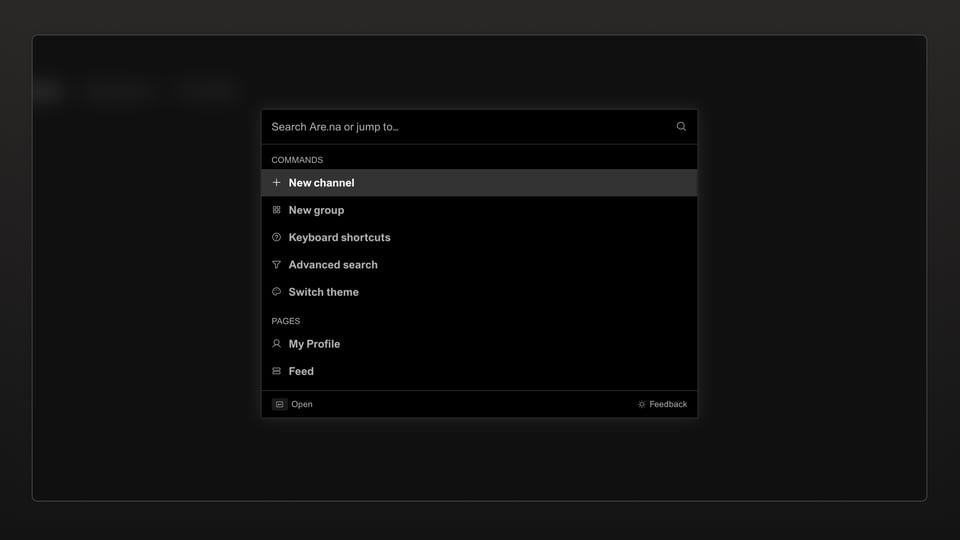
If you’re on the Premium Supporter tier, please give it a try and let us know how it’s working for you. If you’re interested in early access to new features like this, consider upgrading?
Apart from that, we’ve added extensive documentation for keyboard shortcuts (accessible in the main dropdown), more support for extracting Instagram Reels, a new “hide block title” option in print.are.na, and a RSS link in the channel dropdown. And last but not least, an expanded rich text editor for adding longer text blocks.
An Interview with Cybernetics Library
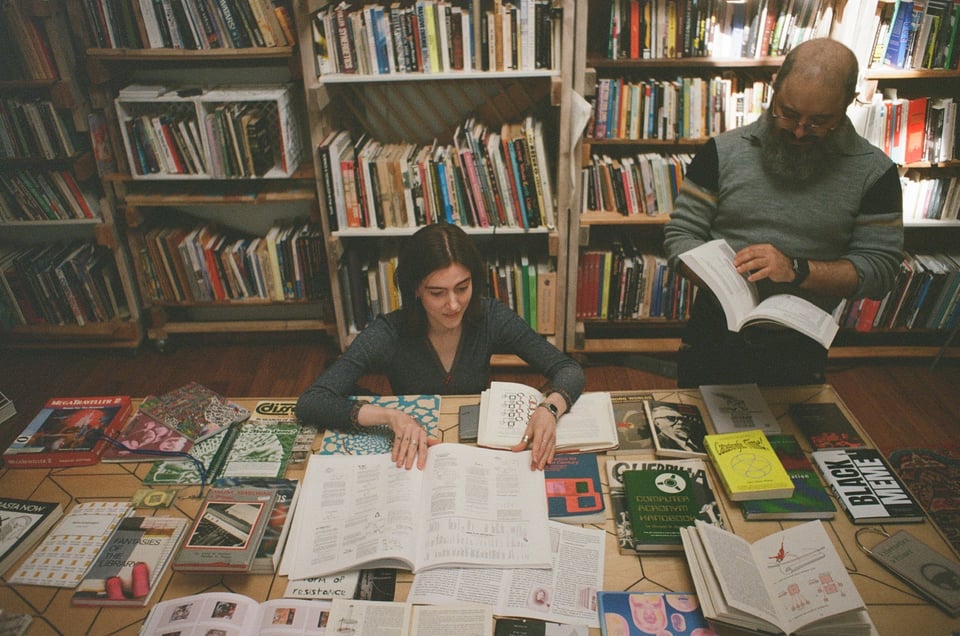
New on Are.na Editorial this month is an interview by Meghna Rao with David Isaac Hecht and Chaski of the Cybernetics Library. Located within the space of the co-op Prime Produce, the library arose from the 2018 Cybernetics Conference (which we covered here), and now collects hundreds of books and periodicals about radical software, archiving, Ted Nelson, Wikipedia, cybernetics, and much more.
As Meghna writes in her introduction:
A loose, broad definition of cybernetics might start with its origin word, the Greek kybernētēs, which means “steersman,” the person who leads a ship through treacherous, unpredictable waters. The study of cybernetics involves systems that react to and change themselves according to feedback; one belief is that constant evolution will protect against entropy’s thrashing waves.
As such, the library is cybernetic in both its form and its contents. As the librarians put it, “one way you could define a ‘cybernetic’ library is one that takes in feedback and evolves from it.” Read more here.
Are.na workshops
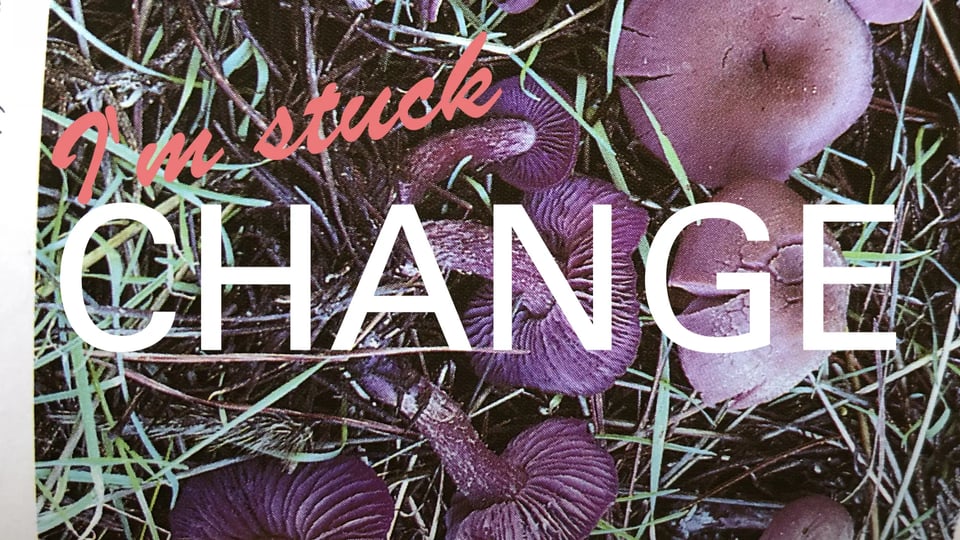
This month, we held our first Are.na workshop. Led by Sara Magenheimer, No Ego was a one-day session exploring artistic strategies for getting out of one’s head through chance and recombination. We had a really great group experimenting with collaged approaches and combinatorial methods together over the course of four hours in Brooklyn, and now we’re wondering if we should do more of these.
If Are.na workshops and educational opportunities appeal to you, would you fill out this survey? It will help us decide our next moves in this realm.
Processing Foundation on Are.na
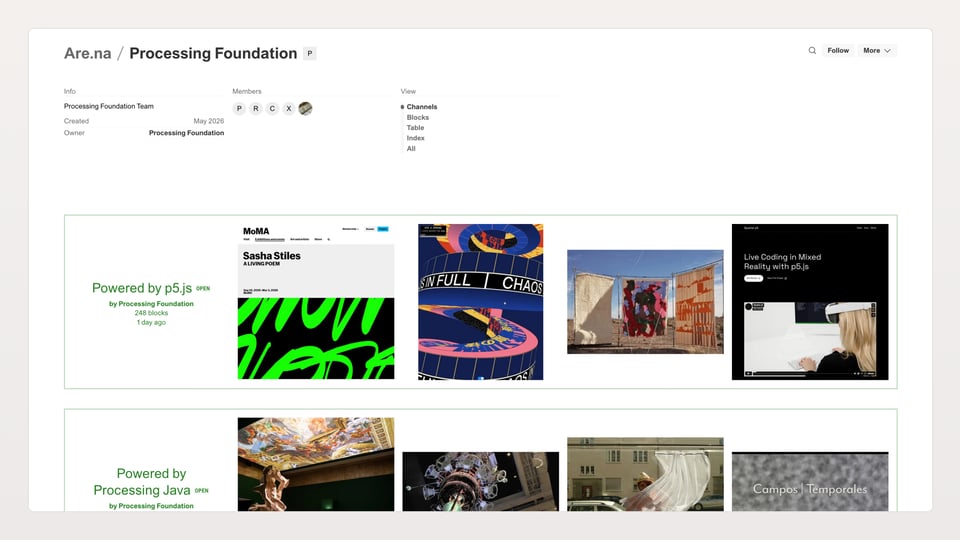
We're really excited that Processing Foundation is now on Are.na, and to celebrate 25 years of Processing, they're launching two open channels—”Powered by Processing Java” and “Powered by p5.js.” There have been a ton of resources and examples of work made with these tools over the past quarter century—if you have a Processing Java or p5.js project that you'd like to share, these two channels are open to anyone to contribute. In your block, include the project title, author’s name, and a brief note about how you used Processing.
Happy 25th birthday to Processing!
reFrame chain letter on Are.na
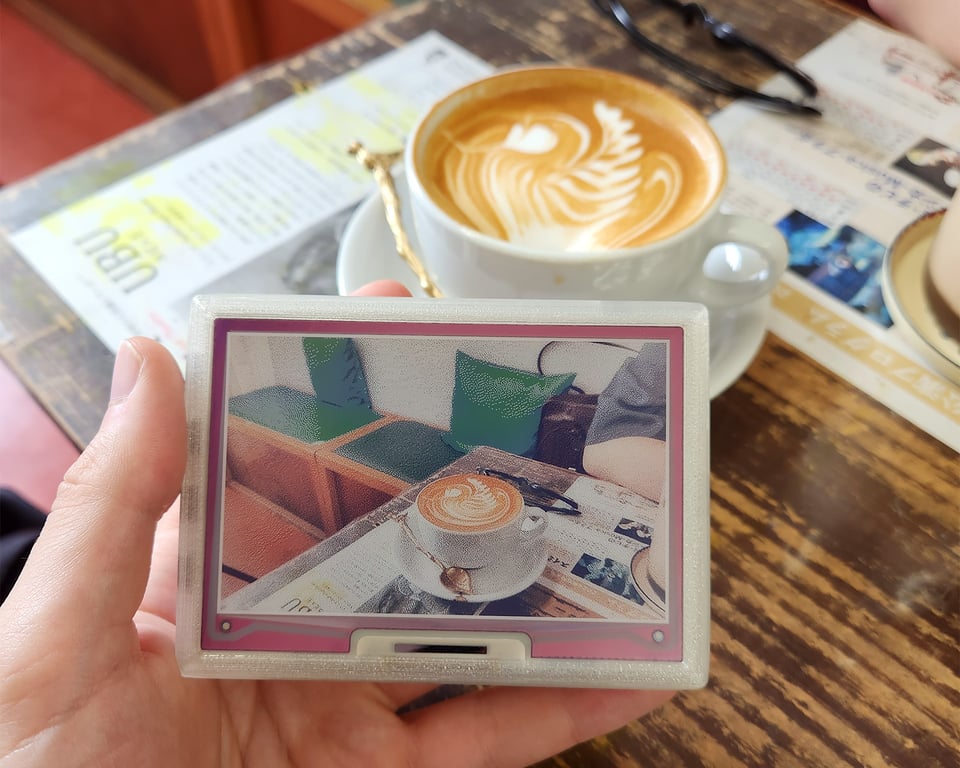
For APOSSIBLE, Kaloyan Kolev created reFrame, a digital camera that also functions as an e-ink photo frame. After the reFrame captures a photo, it uses electrical charges to physically move ink particles into place before displaying the photo as a dithered image. What’s also exciting is that the cameras have the ability to upload automatically to Are.na, which has resulted in some really beautiful images showing up on our feeds.
Because there are only five prototypes of reFrame at the moment, they are being passed from photographer to photographer in chain letter fashion, with each person loading a photo to the Are.na channel before passing it on. You can follow along with this photographic chain letter here.
More community news
On June 30, the Paris chapter of Serving the People held an Are.na meetup at Espace Parallele. They talked about Celine Nguyen’s concept of “research as a leisure activity” and tools for organizing our thought processes.
Speaking of “research as leisure activity,” Celine is teaching a weekend workshop of the same name with Laurel Schwulst through Ultralight School July 24-26. Ultralight is also having a picnic this Sunday, July 19 from 4-6pm in Valentino Jr. Park in Brooklyn.
Today, Brian Sholis and Ross Zurowski are launching Valise, an inventory software to help artists keep track of their work. They’re hosting a launch party in Toronto. Very exciting. We also love that Brian and Ross met through Are.na!
If you have any news you’d like us to share, feel free to put it in our Community News channel.
Roadmap
As always, you can check out our roadmap page which goes into the features we're building, our long-term goals, and our current numbers.
There are so many places you can spend your attention, and we’re touched that you spent it reading this letter.
until we read again,
The Are.na Team