
Earthly internet metaphors
From Earth to Sky
An excerpt from a collaborative presentation hosted with Triple Canopy
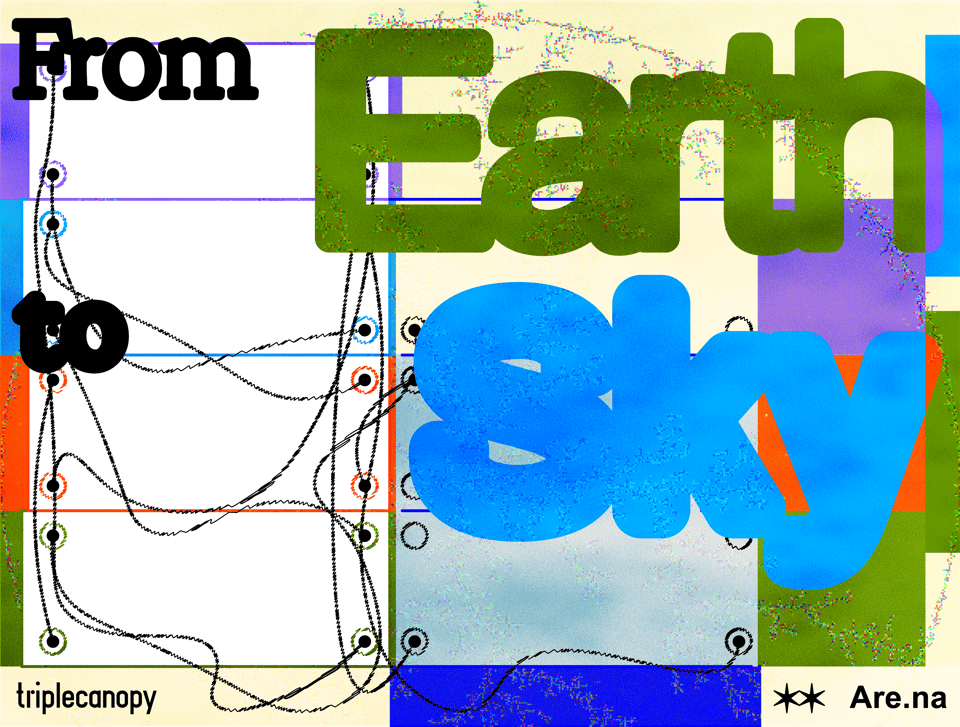
In June, we hosted an event with Triple Canopy called “From Earth to Sky,” which was focused around metaphors used to describe the internet that are drawn from the natural world. For months beforehand, we had been thinking about the figurative language used to describe the web, which seemed to suggest a bucolic digital terrain: servers that live on farms, music and movies that we stream, and a lifetime of data that floats, allegedly weightless, in “the cloud.” We thought about how, even though these figures of speech draw from our physical environment, they often work to obscure the actual physical infrastructures and material resources that undergird the internet. Acknowledging that these metaphors are continually changing, we were interested in exploring what they reveal or conceal about the historical, political, and cultural contexts in which they became popular.
Working with Triple Canopy editor Rachel Ossip and creative director Tiger Dingsun, we started to gather a group of artists and technologists who could help us with this investigation. We collected written pieces about the cloud, the Dark Forest Theory of the Internet, mapping the web, and the “internet’s back-to-the-land movement” and reached out to their authors—Ingrid Burrington, Ruby Justice Thelot, Lai Yi Ohlsen, and Becca Abbe—about presenting on these ideas, and any of the ways their thinking has changed or been updated since their pieces were published. All of these articles can be found in this Are.na channel.
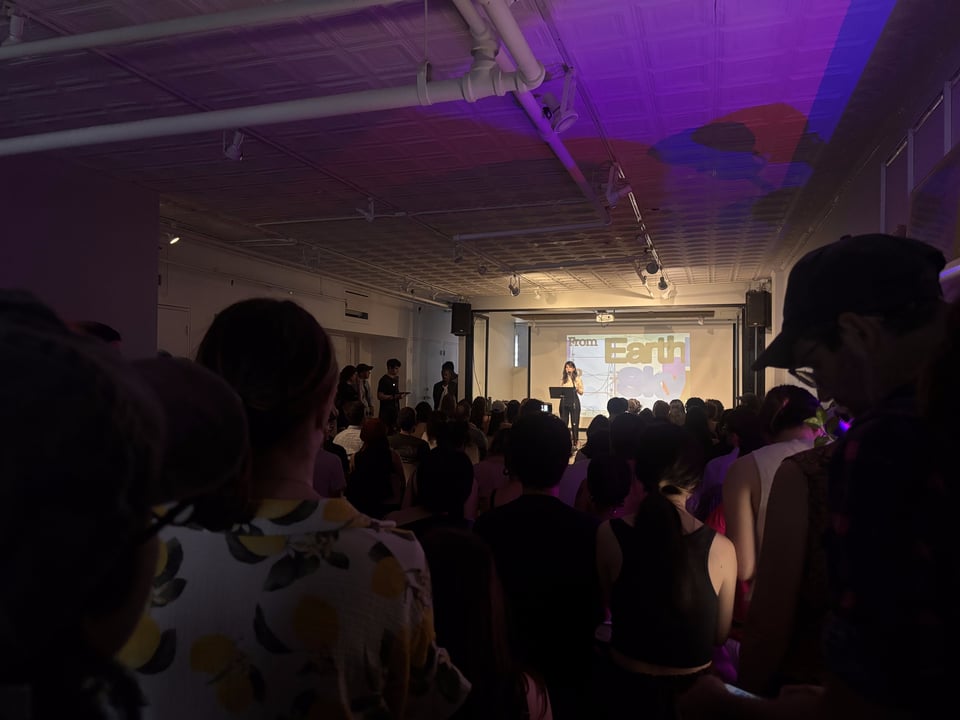
At the event, Becca started out the night speaking about how the utopic visions of the early web mirrored those of the back-to-the-land movement, and how in the end, the internet’s physical footprint became obscured by the language used to describe it. She also gave a brief etymology of “the cloud” as a term:
Ruby touched on the fragmentation of the internet into more insular, private groups and how, within these communities, new language develops. He used the terms “Balkanization” (similar in concept to Yancey Strickler and Bognia Konior’s Dark Forest Theory of the Internet) and “Babelification” to frame these phenomena.
Lai Yi talked about protocols of the internet, comparing them to policy or laws in that they shape how physical resources can be allocated. She also touched on infrastructural or transportation metaphors, like ports, docking, and “information superhighway.”
And Ingrid spoke about how the cloud as a metaphor is now essentially dead in the popular imagination, as people are now more aware of the energy costs of the internet, particularly as data centers have become a political flashpoint.
Below, we’re running an edited transcript of the panel discussion, led by Tiger Dingsun, that directly followed these presentations. We also included some questions from the audience, which was a full house and then some, even on the night of game 4 of the NBA finals (the event turned into a watch party afterwards). New York Television was there live-streaming the event, the recording of which you can watch in full on their on-demand archive with a membership (it’s worth it). All clips within this piece are from their recording.
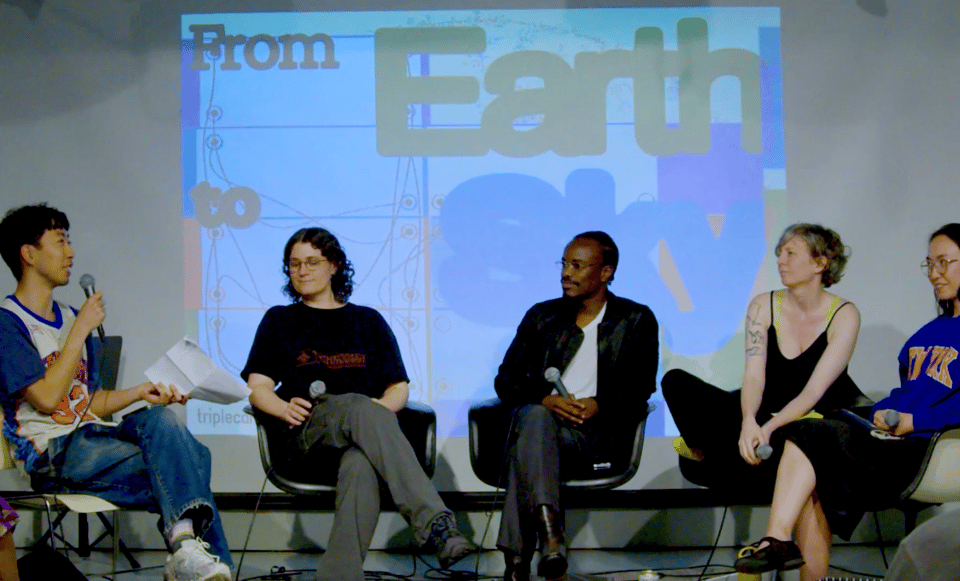
Tiger Dingsun: Thank you all for your presentations. At the end of Ingrid’s presentation, she called for more digital literacy and public education. It occurs to me that digital literacy is at this axis of inequality that’s related to, but doesn't map exactly onto, class.
It also has various definitions in different contexts. One could think about “digital literacy” as literally learning how to code, or learning about how the internet works. It could also mean being proficient in certain enterprise software for your job. Another version of digital literacy might just be knowing how to navigate online spaces or how to use your iPhone and the apps on it.
In your experiences, which aspects of public digital literacy feel the most important? And to bring it back to the topic of metaphors—how do metaphors aid this pedagogy? Or is education more about the debunking of these common metaphors?
Ingrid Burrington: I think even “literacy” itself, as the terminology here, is interesting because there are different levels of reading comprehension. What would a “close reading” of a computer really mean? A lot of digital literacy is about creating compliant labor forces and/or consumers. I’m noticing right now that there’s a shift in the education and technology space away from digital literacy, or code literacy, and towards AI literacy. And with a lot of that, I don't really believe that adults know what they’re doing with this stuff, so I’m not sure what you’re teaching children [laughs].
But there’s also the idea of making people feel like they can participate in the thing, not necessarily teaching them how it works. [And if you’re thinking about it in terms of literacy], then you can think about “close reading” and what kind of relationship you have to the thing. What is the context that a text is in and the broader ways that other people have read it? There’s that richer sense of what it is to read. And making that something that's actually compelling to do.
Ruby Thelot: If the master’s tools don’t dismantle the master’s house, literacy in the master’s tools definitely don’t dismantle it. As much as I love education, and as an educator myself, I think there’s a bit of a folly here, that if you know [digital technology] you can do something with it. But you’re still kept away from it. Comprehension is important, and one should be able to understand and read the world as it is. But I don’t really believe it leads to any significant material change.
Lai Yi Ohlsen: I don’t know if I’m pushing back on this, but the reason why I really love teaching is because it’s so tied to imagination. A lot of my work has been working with organizations that want to build internet in places that don’t have internet. So, you know, they bring in all this infrastructure. There’s a lot of policy work to be done. It’s a huge endeavor to expand the internet where commercial markets haven’t done so themselves. When all this work has gone into connecting a community, it’s such a huge bummer when the first thing people open is Facebook.
So I fully hear those points, but I think if literacy can somehow be connected to imagination, then that imagination can often be enabled by literacy. When I teach how to make a website, we are thinking about what else we can make online besides what’s been given to us. And I’m not just saying this, but that’s what Are.na does for a lot of people, too. There’s this way that it expands what we think is possible with the internet. That’s what came to my mind when you said “literacy.”
Becca Abbe: I think there was originally this assumption that the general population didn’t want to know about this stuff. At one point it was a selling tool to just kind of keep people in the dark and sell this easy alternative—like, this Steve Jobs thing of “it just works and you don't have to know how it works.” There were two worlds: the people who are in the know—the engineers and the technologists—and who have this sort of protected knowledge, and then everyone else.
But today, I think people do want to know. I think AI is showing us that people do want to code things themselves, and now they have the tool. The issue now is this sameness of what’s being produced [with that tool]. To really become literate about the fundamentals and to learn things from scratch, that’s how we’ll be able to create our own worlds and move things away from these larger platforms and larger companies.
Tiger: To that point, you mentioned in your essay, Becca, that the original back-to-the-land movement was really trying to escape corporate and governmental influence, the “dark shadow of science and industry.”
When it comes to social media platforms and trying to imagine things beyond that, I often think about the way that sociality works online and the way that online communities form. Their inherent structure is downstream from very literal and technical platform decisions, or algorithmic decisions, of Instagram, TikTok, etc. These are tools that are used every day by people, including for political organizing. So I guess my question is, are we okay with this? Are we okay with corporations having such an outsized influence, not only on communities themselves, but on the way that communities are even able to form online? How do we take up more agency in forming the communities that we want to?
Becca: That’s sort of the catch-22 of it all—if you want to connect with people and communicate with people, these larger platforms like Instagram, Facebook, etc., are where the people are. If we want to reach the most people, we’re sort of tied to participating in that. I think it takes a strong push to move people toward something alternative and to get people to go outside their comfort zone. I don’t think you’ll ever see that scale replicated elsewhere, but do we need that scale? Do we need to speak to millions of people all at once?
Ruby: Who here is on Bluesky? [Some people in the crowd raise their hands]
I spent three years of my life trying to build a small social media platform for a community. It is undebatable that people say they want it and then they don’t come. And I’m stuck looking at my MAU graph and it’s just not going up. So there’s a stated preference and a revealed preference. The stated preference is “I want small internet,” and most likely the people in this room are the people who are actually engaging with this the most. But the revealed preference year after year, month after month, quarter after quarter, is that, for the most part, there isn’t a strong enough desire for people to go outside of these platforms. The alternatives are there. And there’s a lot of people on Bluesky, so there should be enough, from a network effects standpoint, for them to migrate. Yet we don't do it.
Ingrid: To answer the question of, “Is it bad that there’s a big corporate website that we all use?” Yeah, it's not great. Mark Zuckerberg’s a bad person and I don’t like that he has as much money and power as he has.
In addition to desires and preferences, there are also economic incentives, right? So if you’re a tattoo artist and you’re not on Instagram, you’re going to have a lot more trouble getting work. Especially when you’re just trying to build a public volume. If you’re an artist and you want people to see the things you’re doing, you’re going to where the network effects are.
To the question of taking more agency, one way I’ve also thought about this is that in the 2010s, a lot of these companies did a lot of work to make themselves “too big to fail.” I think that they were allowed to do that because of naivete, in some sense. And some of it was also that the 2008 financial crisis created such a bad economic crash, and then tech was where there was money. And so it was like, “let’s let this thing keep going because it will keep America solvent,” right?
In terms of thinking about what alternatives look like and what agency looks like, you do have to consider: What does it look like for these things to fail? That would involve things like, oh, I don't know, a complete reconfiguring of the state as it currently exists. So I don’t have a good answer for that.
Lai Yi: Just to add to that, [there are] all of these different projects or organizations or apps that say that they’re making a new internet, or a new version of the internet, and that’s taking back agency. And that’s great, but most of what I see still runs on the very same internet—all the very same cables and protocols and layers. So if there are ways of taking agency, I think they have to penetrate at the infrastructural level as well. There have to be differences even with the things that we can't see. “The cloud,” if you will, has to be part of it, because otherwise it’s very limited in its scale and its impact.
Becca: Yeah. It’s kind of like, are we divesting from Meta or are we divesting from AWS?
Ingrid: Por qué no los dos?
Becca: [laughs] Exactly. But it's so much harder to divest on the infrastructure level.
Ingrid: Yeah, no, totally.
Tiger: That leads very smoothly into another question I had about terms like “decentralized” and “centralized” and “distributed.” Lai Yi, to your earlier point about the decentralized web, I think a lot of people were purporting this as a new way to structure the internet, but it kind of turned out to be more of a marketing thing. Is that true? I wonder what you guys think about this.
It’s also maybe related to Ruby’s Romance of the Three Kingdoms quote, with the ongoing cycle of consolidation and fracturing that goes on. What are your thoughts on this tension between centralizing and decentralizing, and in what ways do these metaphors ring true or not true to you guys?
Lai Yi: Well, they’re not true [laughs]. My bratty, nerdy response is that if you’re using IPTCP, you're still on the internet, girl. So when people come out with the new decentralization, I fully believe it does something different, but it’s not “new internet.” It’s actually really hard to build the internet. It’s really hard to build something that scales and that has that level of uptime.
There’s always conversations like, “okay, let’s make our own servers, let’s have our own community-driven thing.” But that just means that it’s one guy running it. I’m not saying that AWS is the only other option, but I think the utopian ideal that we’re going to just build our own internet can be very frustrating when you think about the promise of that versus the reality of having the ability to support it.
I think it gets back to Becca’s earlier point: Do we actually need to have a globally-connected world? Are there versions where it’s just a bunch of small, little worlds? But that gets messy really quickly, too. So I don’t know. But I think just the concepts of “decentralized” and “centralized” and “distributed internet” are often just sort of sitting on top of the internet.
Ruby: I think fundamentally, it’s two very different dreams. On the one end you have a globalist dream of the electronic super highway. Everyone’s connected, everyone’s speaking, and we kind of share into that corpus of information. The dream dreamt by the folks who espouse decentralization is one that’s way more atomized. It’s like the internet cowboy, very Gibsonian. It’s “I’m by myself, I have my crypto wallet, everything is just me.” And frankly, that world is a player vs. player world, and you’re competing with all the other players. There’s no call for cooperation. And the only reason why it works is because it’s, as people say in the decentralized world, trustless.
Now, when you’re building a trustless protocol, you also build a trustless society. And so think about which one you prefer. I sound like a globalist, frankly, but I don’t like that world where I have to fight and protect my keys and not get hacked by a bunch of crypto hackers. I like one where I can talk to someone who lives in The Gambia and learn something from them. But that’s just my utopia, or my dream.
Ingrid: At the risk of being the guy who wants to talk about the means of production all night [laughter], I think that the part of what’s also maybe a little bit confusing in the language choice is that it’s often talking about the way that the computers are arranged. Like, you can say that you have a decentralized system. If some of it’s on one server blade in a data center, and then it’s on another server blade in the same data center, that’s a distributed system. A distributed system is just more than two computers. So you could start like that; that’s sort of how that stuff is being used.
But if you reframe it to be about how power or capital is arranged in the system… part of the problem of “we're gonna build our own thing” [is that it] becomes one volunteer’s thankless job, and yeah, that's a bad way. Then that person just sort of has a little fiefdom. That’s too much power.
Again, I don’t really think that everyone needs to become a guy who can run a server, but you do need to have enough people who have basic comprehension of it, such that they can make collective decisions about it. I think a lot of this is more about power than it is necessarily about: how do the protocols do stuff? [Rather it’s] who gets to decide about them in the first place?
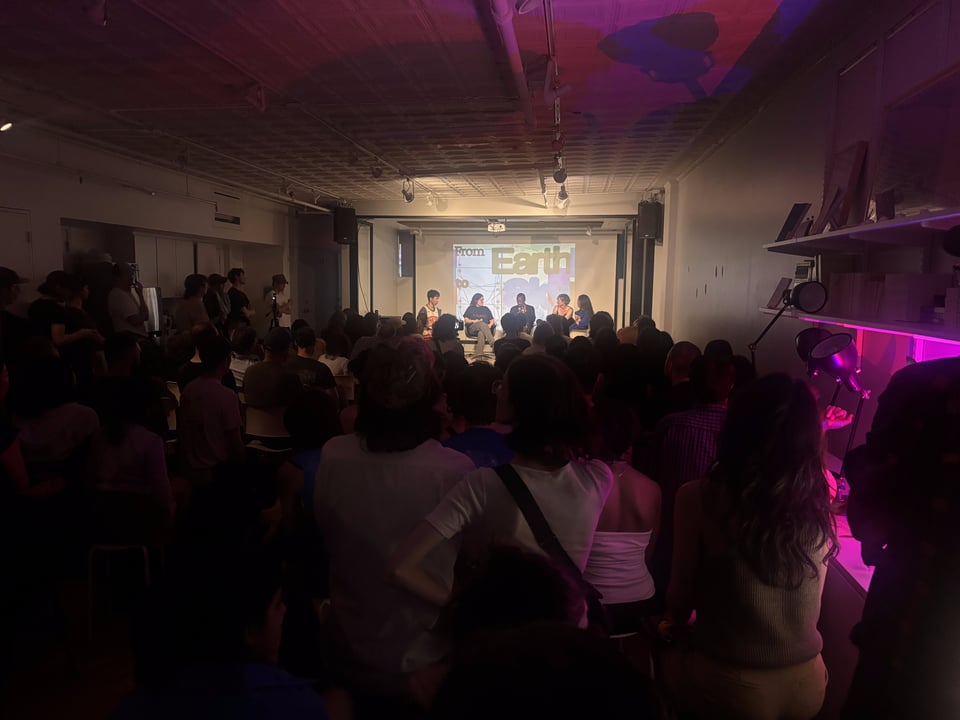
Question from the audience: Thanks for your presentations. Just to come back to literacy and agency and metaphors, I agree that literacy isn’t enough. What do you think of ecology—speaking of the natural as a metaphor—in terms of media ecology vs media literacy?
Ruby: At first listen it does center the individual with potentially a group of other individuals. There’s something like symbiosis perhaps happening. I don’t know if I have the full ecology metaphor in my head at this point in time, but I like the sound of it.
Ingrid: I tend to be a political economy guy about this stuff. I just want to see the material conditions change. But, I mean, if we get to talk about rocks, I will absolutely be down for the ecologies. Don’t get me started on computer rocks [laughs]. I will not stop.
Question from the audience: Since this was organized around metaphors, are there metaphors that either you want to retain because you have an attachment to them, or you have found them useful at some point in your life? Or that you continue to think are helpful in advancing the kind of understanding you hope people will come to with layers, stacks, infrastructure, and protocols?
Lai Yi: Can I admit something? I don’t think “the cloud” is the worst one [laughs]. I was thinking about that a lot in prepping for this. I was in search of [a metaphor] that conveyed complexity and ambiguity, and something that we don’t really understand, and I was like, “maybe like a weather system… maybe like a cl—shit.” [laughs]
Ingrid: As the person who was dancing on the cloud’s grave, I do think that if you use it as a way to explain the ever-changing, atmospheric condition of the internet—if you are really thinking about clouds as, famously, one of the hardest problems in climate modeling; you know, water droplets suspended in air is actually a really hard thing to wrap your head around—in that way, it is actually effective. But not necessarily in the way that it‘s been used.
Becca: I was reading that with early diagrams of networks, they would use the cloud as one of the nodes to represent an area that didn't matter, or was kind of undefined, or maybe they didn't know as well. So it’s funny that this thing that was meant to be a metaphor for what was too hard to explain [became] this stand-in for something unknowable.
Ruby: I still go back to Benjamin Bratton's “the stack.” I think it really has the different layers of sometimes liquid, sometimes gas, sometimes solid, and I think it really matches very well with what you have. You hate to see Benjamin win, but sometimes he's right. [laughs].
Question from the audience: Thank you. I really appreciated the presentations. I feel informed, a little smarter, and a lot happier. My question is a bit of a challenge, specifically towards Ruby, but I would love to hear what everyone has to say…
Ruby: Oh no, not a Ruby challenger in the room [laughter]. I have too many of those.
Question from the audience: [laughs] Sorry, sorry.
So just a quick recap: You discussed the divergence of human language due to digital social “balkanization” and, because of this outcome, aspiring to avoid the “babelification” of human communication. I have a question for that. Two questions…three actually [laughter]: Is building the tower again the point? Is the point of death and renewal to have a forward-reverse reclamation to fame (aka returning to Genesis)? And is the achievement of “not Babel,” not tower-shaped?
Ruby: Someone else wants to answer this? [laughter] You know, I write these essays and I put myself into big trouble. That’s what happens.
The first thing I’ll say is that I’m Christian, which just means that I’m actually against a tower, technically, from a theological perspective. And yet in the essay I kind of long for this sort of unity we had when we shared the internet. There’s a bit of a tension here that I sort of acknowledge as paradoxical.
Now, what I think I’m trying to push us towards is the realization of the meta-cycle. Not that we are going to the tower, but more of that first line—do people remember the first line from Romance of the Three Kingdoms? What is it?
[silence]
[laughter]
Okay. It’s “Kingdoms united divide. Kingdoms divided unite,” which means that this is the actual cycle. So we build a tower, we fall, we build it again. And, actually, the attempt now—at this point, when we are divided—to rebuild it, is an acknowledgement that we will ineluctably be dispersed again in the future through other technologies, other means and whatnot. I think that we need to embrace the cycle, and I’m calling for a period of unity before an inevitable future period of dispersion and separation. So we are returning to Genesis, but we are always returning to Genesis, if you will.
Tiger: Just to end, and to your point about this cycle of consolidation, we’re in a moment of extreme power and wealth consolidation, especially in tech spaces. So I would love to see the next part of that cycle happen. So yeah, thank you guys so much for coming.
Becca Abbe is a graphic designer and coder living in Brooklyn. She has worked with Japan’s Ministry of Economic Trade and Industry (METI), Columbia GSAPP, Laurie Simmons, the Manhattan Art Journal, and New York Television, and was formerly the creative director of Triple Canopy.
Ingrid Burrington has been writing about computers since 2014 and is the author of Networks of New York: An Illustrated Field Guide to Urban Internet Infrastructure.
Lai Yi Ohlsen is an artist and researcher working across writing, performance, and video. She is Head of Cloudflare Radar, a global Internet data analytics platform, and an adjunct lecturer in the Parsons Design & Technology program.
Ruby Justice Thelot is a designer, cyberethnographer, and artist based in New York. He is a professor of design and media theory at New York University and the founder of the award-winning creative research and design studio 13101401 inc.
As always, you can read this piece on Are.na Editorial.
If you’re in New York, this Saturday we’re hosting a party with Dinamo where Areal, their custom font for Are.na becomes available, for free, for everyone.
I'm always being real,
The Are.na Team