
An interview with Alice Yuan Zhang
Alice Yuan Zhang on Building Things into Being
by Meg Miller
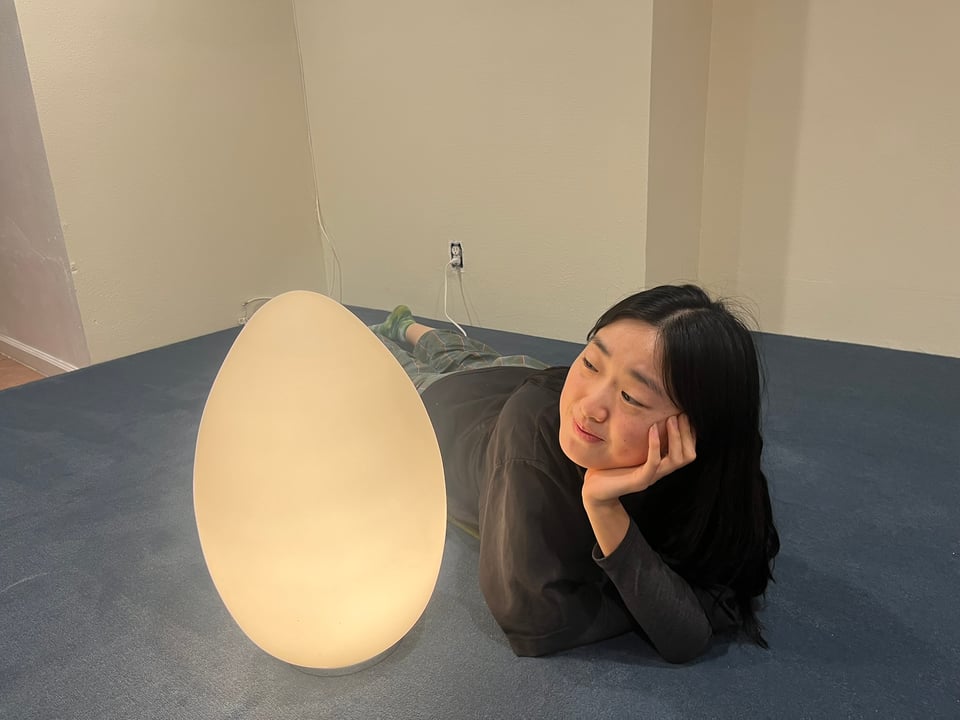
This interview is part of the series Learning in Public.
Also (if you’re in Los Angeles), there will be an Are.na + Connections Mixer at Plot 田 on Saturday October 24th. More details here.
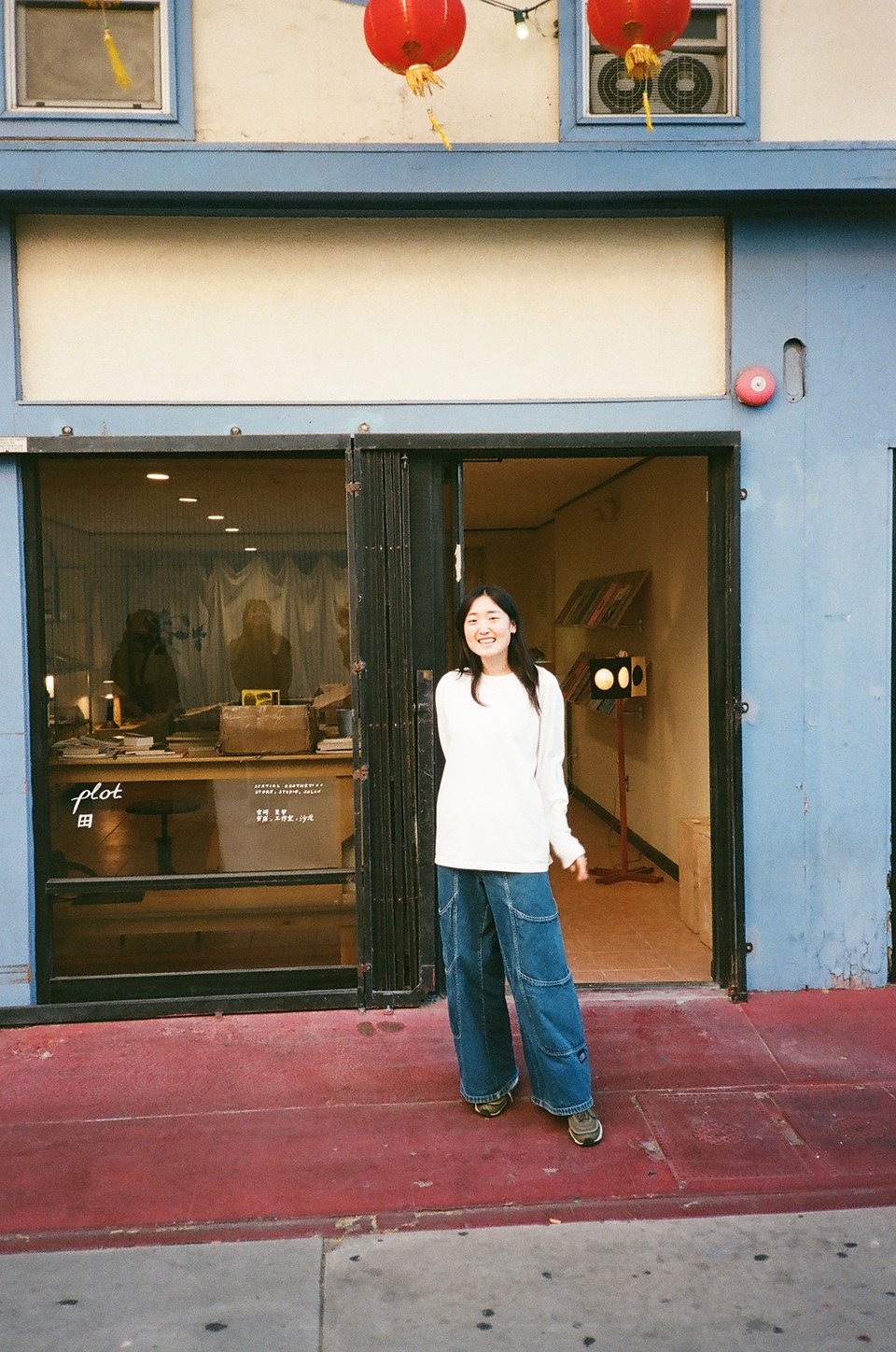
Plot 田 is a community space and bookshop in Los Angeles’ Chinatown founded by artist Alice Yuan Zhang. Alice has also described it variously as a “rec room,” “living room,” and a “pond” for thinking and making. It is a physical storefront as well as an app, both of which are run locally by Alice, and directed by the community they serve.
At Are.na, we’re fans of projects that can’t be described succinctly, and with this interview series I’ve been particularly interested in physical and community spaces that are defined by who uses them and what happens inside of them. This usually involves a person or group of people who generously do the work of setting up an environment that is structured enough to be inviting, while also open enough for things to unfold somewhat organically within them. I think Plot is exemplary of this type of space. Admittedly, I’ve viewed it mostly from across the country (the app has made it easier to do this), but there’s a collectivity and flexibility to Plot and its programming that make it feel genuinely warm, focused on knowledge-sharing, and built by many hands.
Alice wrote a piece in 2023 for the Are.na Annual on models of interdependence and a sense of place. The next year, we met again in Copenhagen at Naive Yearly where she spoke on the concept of bioregionalism as it might relate to the infrastructure of the internet. There's a throughline in all Alice’s work, which includes Plot, that I really appreciate, one that centers around social relations and community networks, both online and off. I also admire that if she wants something done she simply learns how to do it herself (with the help of friends).
Meg Miller: I love the various one-liners describing Plot, on both your website and Instagram: “A living room for creative inquiry” and “A pond for thinkers + doers,” respectively. What’s the backstory on the name? How did you land on Plot?
Alice Yuan Zhang: I happen to explain it differently depending on the visitor or context, and the space itself has also evolved so much along the way. Plot is based in LA’s historic Chinatown Central Plaza and I'm Chinese-American, so I wanted a name that would translate across Chinese and English. When 田 came to mind, I immediately connected with it. The Chinese symbol is a simple grid, and it means field. It is a root radical for many other terms, so it can flex in meaning when put in combination with other ingredients. I don’t share this with everyone but it is actually also a character in the name of my dad, who was also an artist, thinker, and foundational influence in my own creative journey.
As I translated it over to English, plot also felt very simple. It's four letters, like the four blocks of the grid. Like a seed, it could go in different directions. It could mean field but also the plot of a story. It could be conspiratorial as well, like we’re plotting something or, you know, we don't entirely know the plan yet and we’re going to figure it out together. So there's something adventurous and countercultural about that.
Meg: It feels very generative as a word.
Alice: It's open-ended, which also mirrors what it felt like to start the space. The location itself is pretty special. It used to be a cybercafe pre-2000s and more recently a politically-engaged bookstore called Tomorrow Today. When they moved to Philly, I heard that they were leaving and I asked Geoff, who ran the bookstore, what was going on with it. It all just happened very smoothly.
I was looking for a new challenge at the time, and I was really craving, after years of a very screen-based and nomadic practice, being situated and moving from theory to applied collective practice. I really wanted to have a place where I could be with others and learn from them. It was kind of a jump in the deep end that was very enabled by conversations with friends.
I’m not very loyal to seeing myself as a media artist or as part of a particular scene. I’ve always been interdisciplinary and curious, and drawn to expansive conversations. In LA, a lot of the artist-run spaces that were really inspiring for me closed during the pandemic, or, you know, they just have their life cycles. There was this moment when I was back from some time abroad and I felt like I personally needed a space like this, so I decided to be the one to make it exist.
Meg: When I was preparing to speak to you, I watched a couple of videos you made documenting the first stages of the space, when you were doing the build out. It seems like you did most of it—maybe all of it?—yourself, with help from friends.
Alice: It was a trust fall. I definitely couldn’t have gotten through it without the guidance and support of everyone. The build out was especially satisfying because I had the itch to just get hands-on and learn how to build out a physical space. There were all of these details, like figuring out what angle to cut the molding in, what color to paint, how to remove texture on the walls and ceiling. The shelves were a whole journey. And I had never used a power tool before this!
When I do anything—it doesn't matter what it is, a creative project or a practical task—I have this process. There's the research phase and the synthesizing phase, and then there’s testing things out and learning until it works. With Plot, I wanted everything in the space to be modular so we could move and change things depending on what was going on, and accommodate many possibilities.
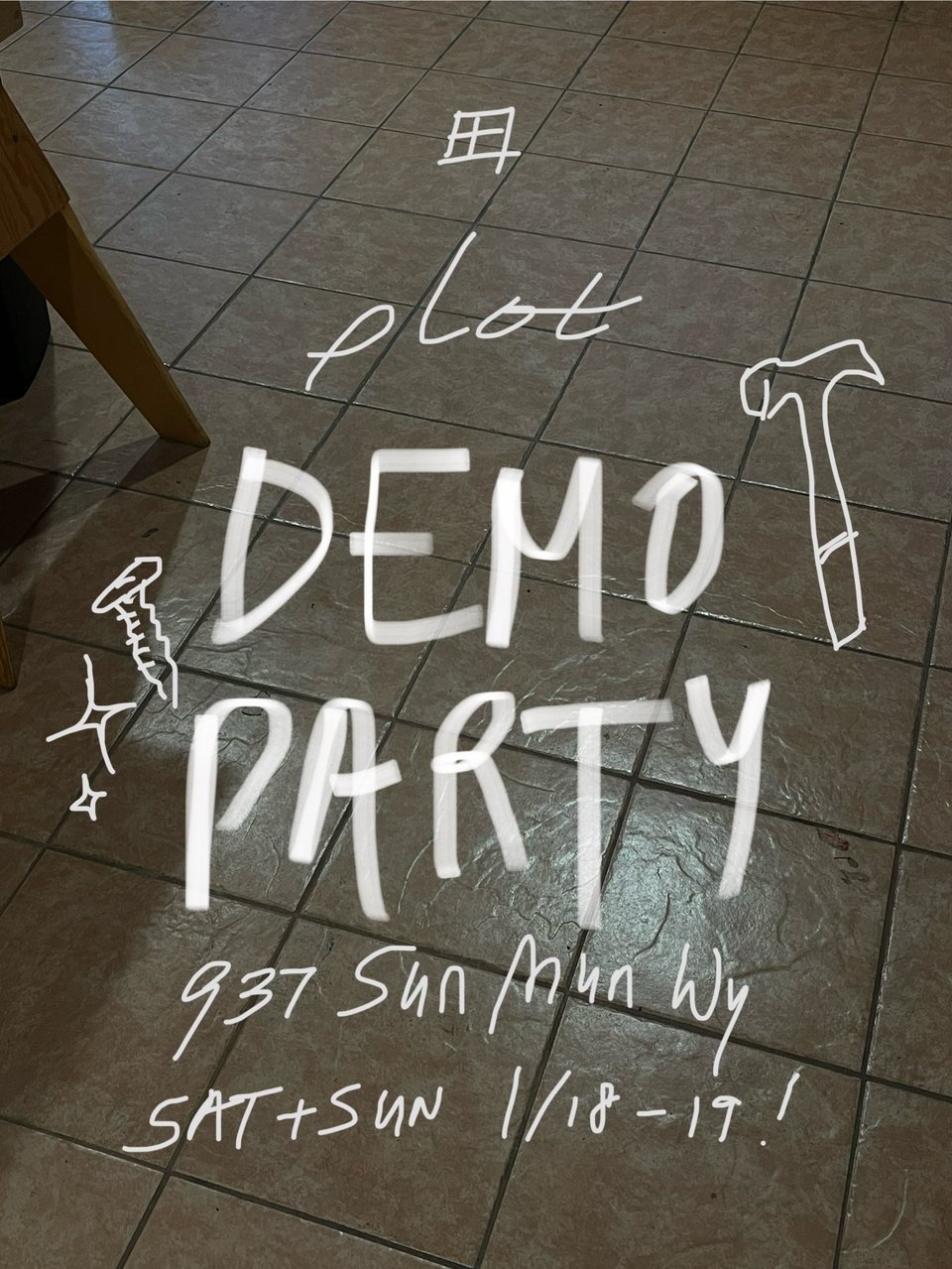
The first thing we did was a demo party. I added a bunch of friends to a group chat called “Plot Angels” and asked if people wanted to come help with taking apart the built-in’s that were left from the bookstore. It was really hardcore [laughs] and really fun, we just went nuts with it. There’s this magical feeling of when there are many hands in the space, things happen so quickly. There's a really beautiful reminder too, that in relying on others for help, it starts to take on a life of its own.
Meg: It’s also nice to see your own work in a space that you end up using. I can imagine that people were interested in helping. Did this DIY approach to building out the space yourselves translate into the programming of the space?
Alice: We’ve had such a mix of talks and workshops and other miscellaneous formats. One of the workshops that people really loved and keep asking for another run of is the Enzo Mari chair builds. Mari himself was very interested in his designs being a pedagogical process and not just products for people to buy and keep as a status symbol. My good friend, Jordan Korn, and I were talking about Mari, because she had already built his chair and table designs for her home, and we devised a workshop where people build Mari’s chair together.
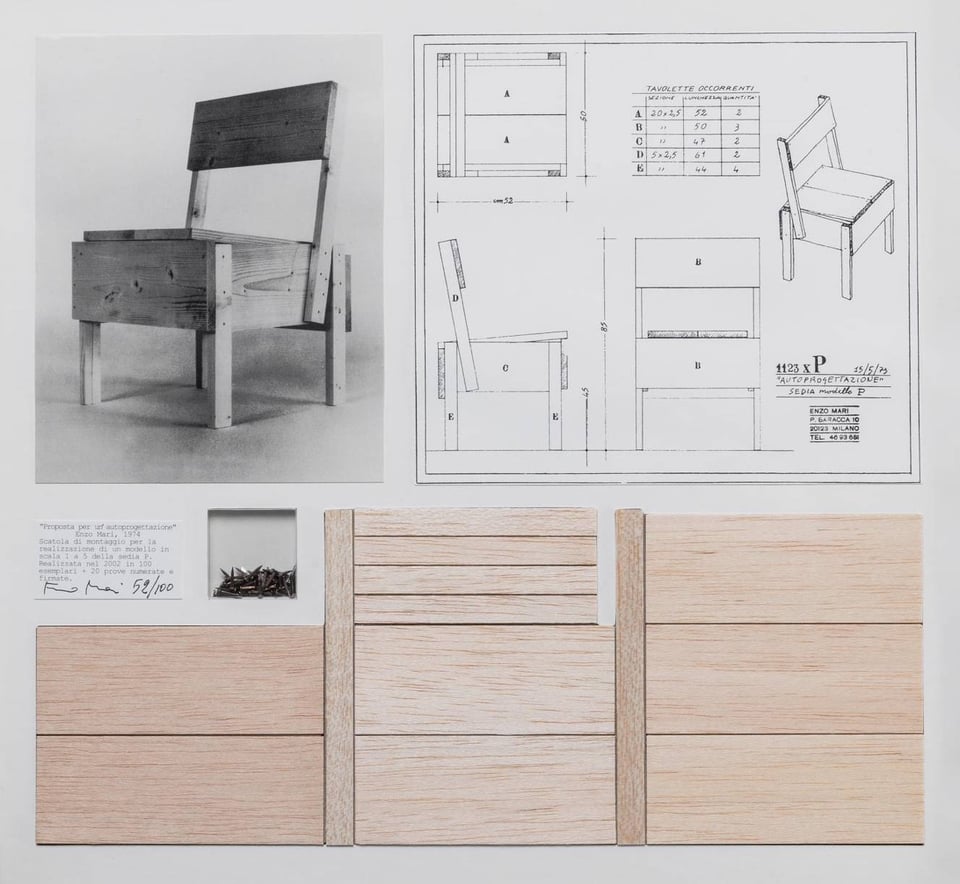
I would like for more of that hands-on programming to happen. You mentioned the one-liners—one of the other descriptions of Plot in my mind is a recreation room, where people can engage with a variety of extracurriculars both practical and thought-provoking. At the same time, I've been learning over the past year what is easier or more straightforward to do in this space, so I’ve also been keeping that constraint in mind. The programming is a mix of me inviting people to host something, and people pitching things to me now that they have a sense of what Plot is. Sometimes it feels like the space is running me and I'm just facilitating. But I'm always thinking about what the big picture should be.
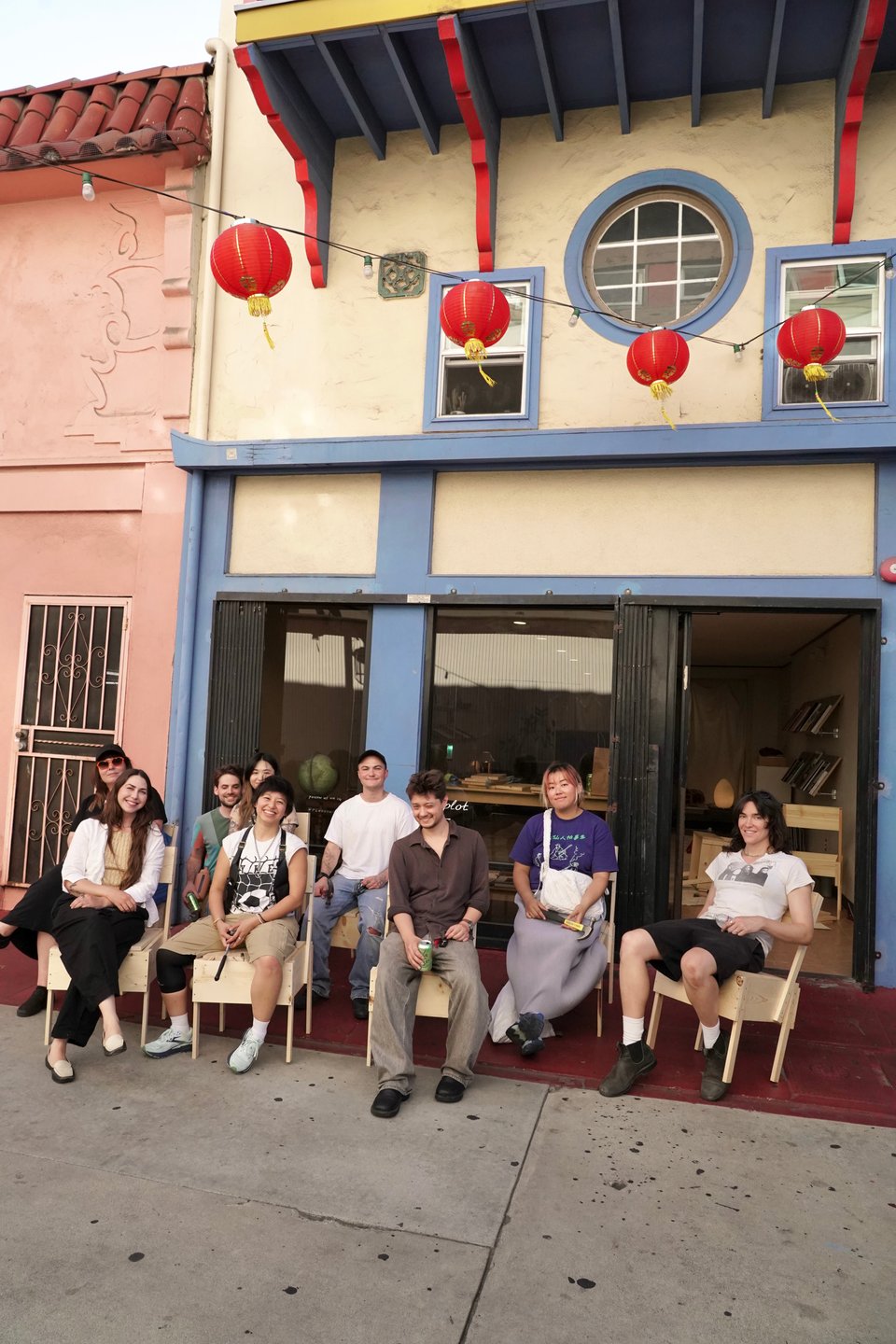
Meg: In terms of constraints, how much of the direction of the space is also dictated by finances? How are you funding Plot?
Alice: I sometimes do freelance work in strategy consulting, and I give some of those funds over to Plot. But Plot is also very low budget, and we do what we can with what we have. Ticket sales help. I ask for $15 per seat and people are usually happy to support that, and we'll split what we make with the host. Workshops can be more. We also collaborate with Emily Barner to run a monthly market so the vendor fees from that helps as well.
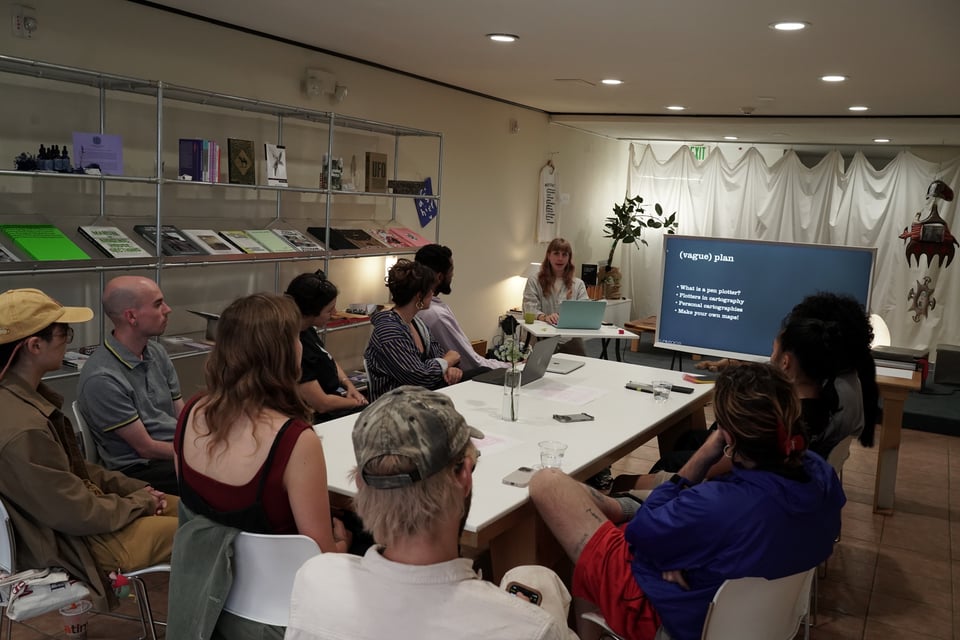
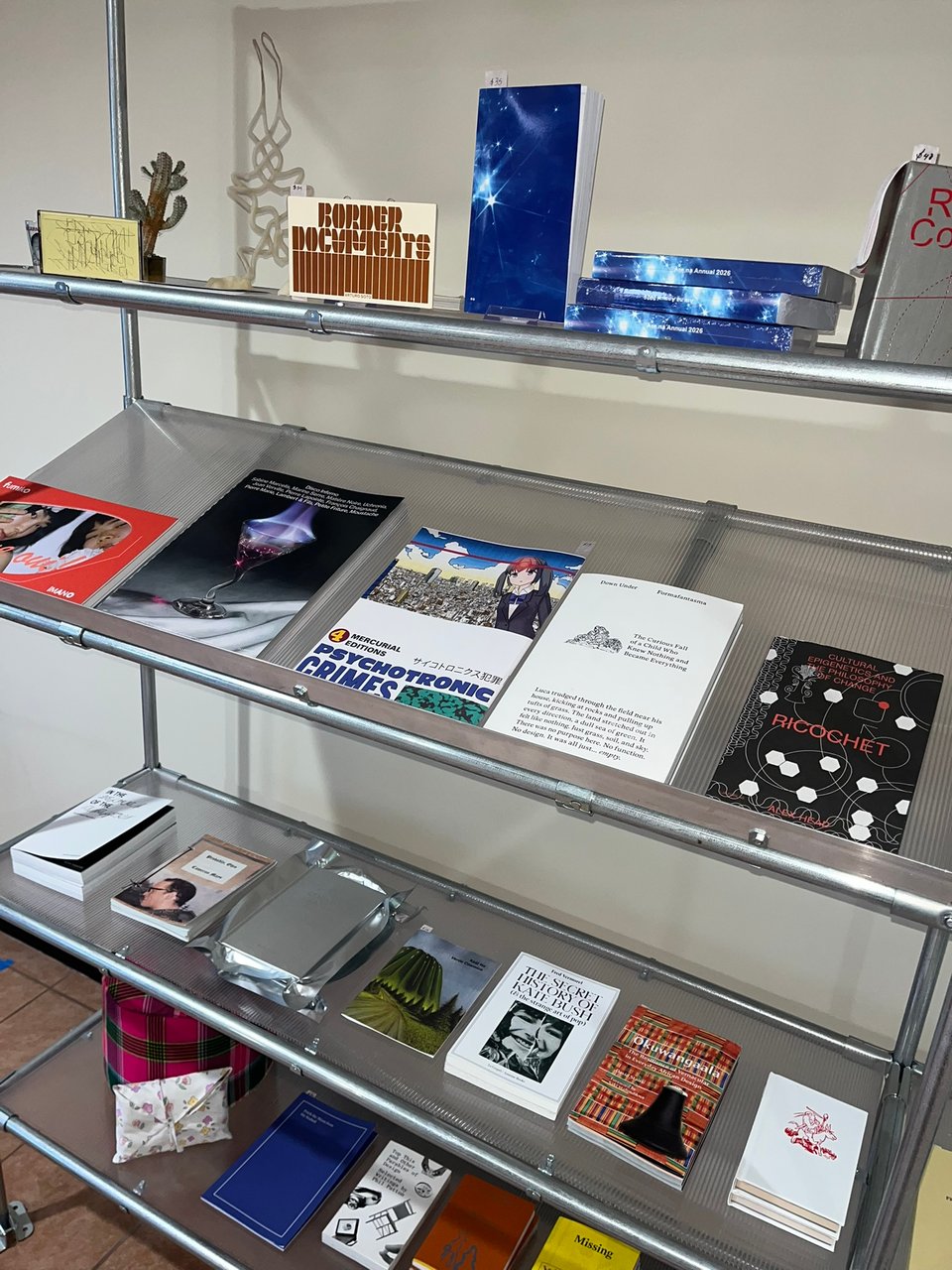
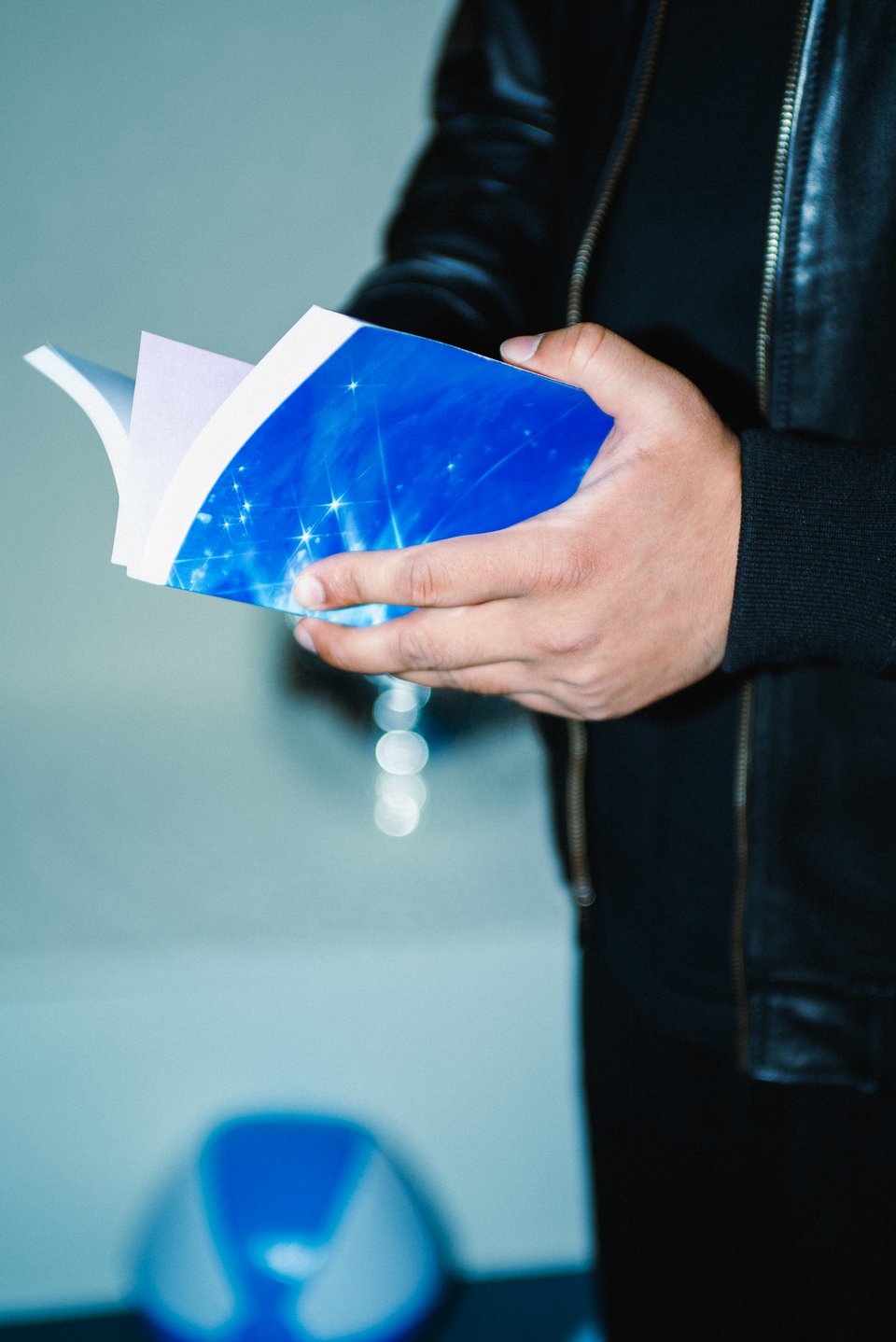
There’s also a bookshop in the space. Sometimes the local elders will take their afternoon walk and pass by this space and ask, “How do you guys earn money? Does anyone read books these days?” And I wanna say “Yes! I read books.” [laughs] “We're still reading!” But book sales don’t cover everything. I think people just like to browse and be together in a physical environment where they can experience ideas.
It's funny because I studied business, but with an idealistic project like this, I almost reject the burden of a proper business model. But I’ve been exploring grants and sponsorships, and also drafting a membership model that would be useful for our ecosystem.
Meg: When we did the Are.na Annual event with Plot, you had Cybeurre make the snacks, you found the drink sponsor. You made sure to get people paid, the logistics squared away. It all seemed very easeful and organic. I know that community and social relations are things that you think about a lot in your work and life, and I was wondering if maintaining this network of people and being a point of connection was something that feels like it comes naturally, or do you feel it’s something that’s very intentional and directional.
Alice: It's an instinct. I have a very deep memory of how I want to be in relation with others, and I try to cultivate that through friendship and collaborations. I suppose part of it comes from my upbringing, my relatives, and my family friends. I was born in northern China. At the time, in the ’90s, it was different. You would go visit family, and maybe you didn't call them ahead of time, you just went and knocked on their door. And then you’d stay for three hours and talk about all of the things that you need and that they need. Later you’d help each other get those needs met. It was this informal support system with certain protocols.
Even after migrating to the U.S. when I was nine, I saw how my parents leaned on the support of immigrant systems here that were also informal, but deeply woven. People cared and people knew the struggle. They’d link you up with resources, or everyone would come together to make something happen. That grounds me because I know that it can and it does exist. And I want to practice that.
That has been a throughline with my own art practice as well, which has always been relational. With Plot, it’s like I’m working with this open container. It also feels like a big art project, but I need others to participate for it to exist. And I am experiencing it, too; I am also the audience. It feels like a type of choreography.
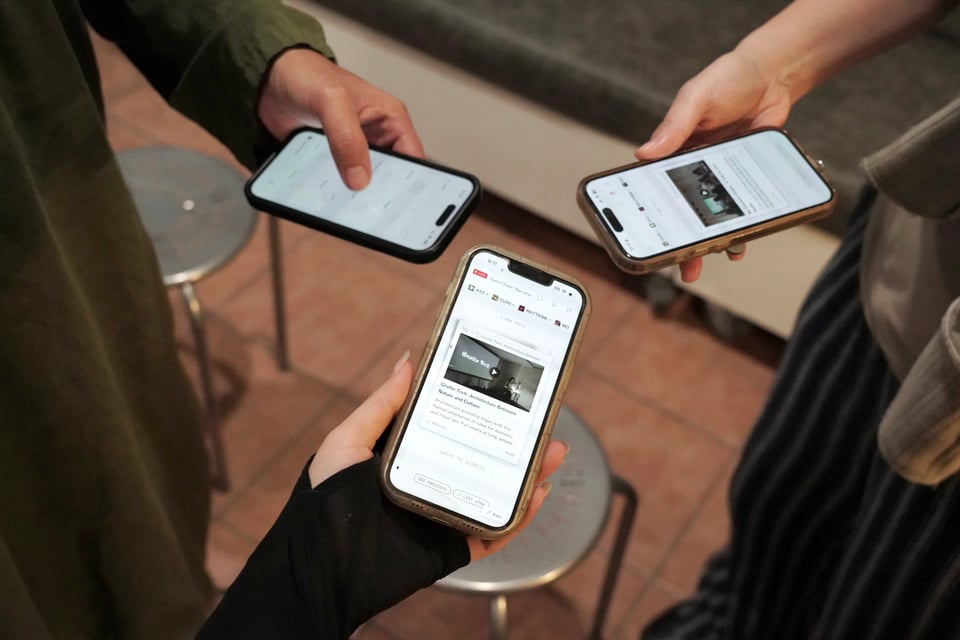
Meg: I also wanted to talk about the Plot app. In your video explaining the app you say, “It actually feels so intuitive, like how community spaces have been organizing nodes for society throughout history…” It’s easy to imagine how this mentality or philosophy toward place and people translates to a physical place, a community hub. It’s maybe less intuitive for people to imagine it as an app. But this app feels uniquely grounded in the same principles as Plot the place — it’s local, run by you, it isn’t really meant to scale. It’s designed just to connect people.
Alice: A few months ago I made a little sketch that I'll share with you where I started off drawing the space: here’s a table, here's the printer and a sofa, here are some shelves. While drawing that I was thinking about shared communal utilities. What do we want to do together? What is the need? There's the need for gathering. There’s the need to record something that happened in the space and share it, or archive it. There’s the need to just talk, have a little sidebar outside. Some of these utilities can be fulfilled in the physical space. Some of them can be fulfilled digitally. It’s an interesting exercise or design process to think about what should exist and in what form.
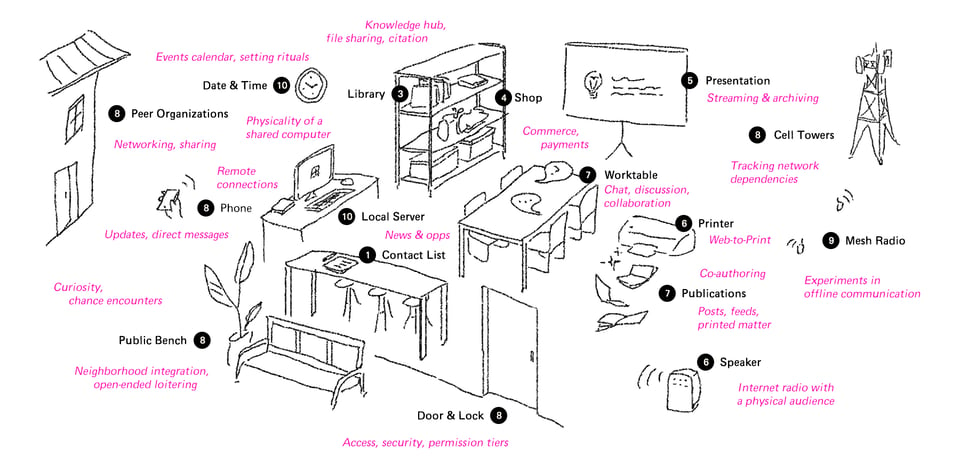
A lot of the time, if you go to your phone or laptop—for inspiration, or references, or to look for a job, or figure out what to work on next—you are immediately funneled into these huge oceans of spaces, right? You go to Instagram or Substack or even your email, and you just get lost. Your attention is scattered across what that platform wants you to be looking at. When you’re in the physical space of Plot, it’s an intentional experience. So I was trying to think about what an intentional experience would feel like with the app.
With my own practice over the past years, I’ve been looking at alternative tools and networks on the internet and ways of self-hosting those tools. There are open-source tools that you might feel more aligned or safer with, but many of them are still clunky to use. The designer and builder in me really wanted to play out the possibility of a community app that is not only owned and operated independently but can be experienced as such in its interface.
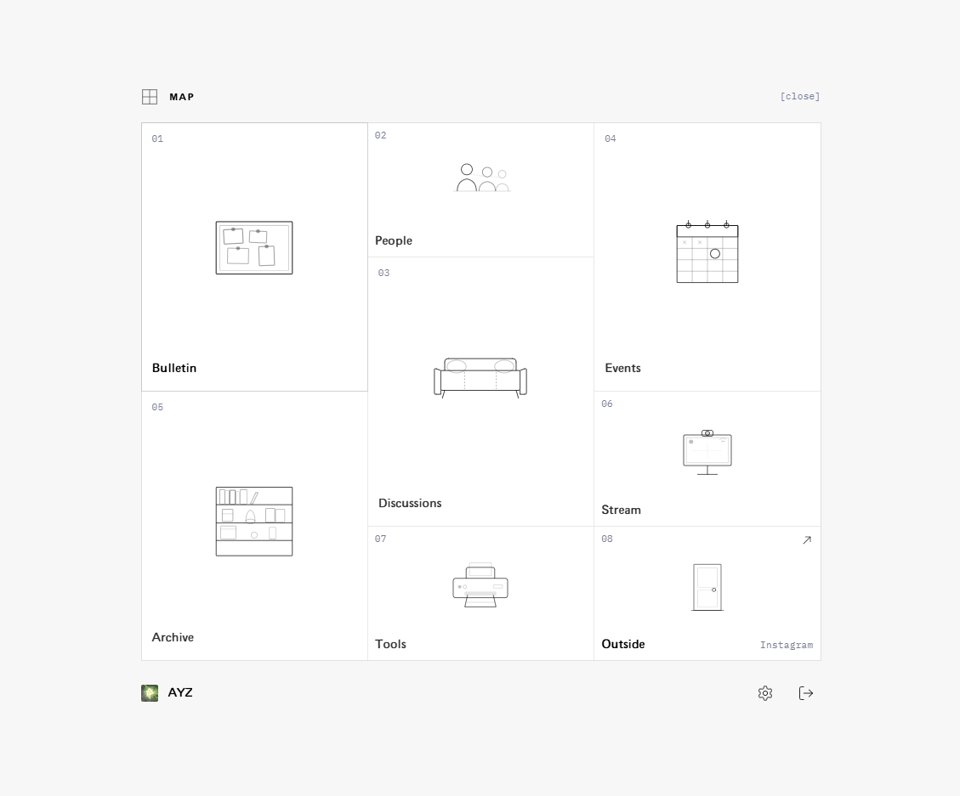
Meg: For me, your practice has this interesting duality to it — you are so technically savvy, but also invested in reuse and repair, as well as the oldest, simplest forms of social relations and connection. Equally interested in the digital and ecological, physical space and online space. How do you think about these two sides?
Alice: I tend to follow my nose in questioning the status quo. But I also have to work in the tension of what is ideal vs what is pragmatic. I think that's generally the human condition. Especially over the last few years, there's no lack of understanding about the polycrisis. We know there are things that don't feel good and that don't make sense with the world. And we still get up every day and try our best to see what else is possible.
I don’t think that the Plot app, for example, is a direct replacement to something like Instagram. But it does feel like it is contributing beyond the monoculture and that these experiments are worthwhile—bringing them to life and learning from how people respond. And then the next collective or space builds out something different that I can then learn from. I think that's just the process of being creative and an artist, or just being alive and getting up the next day and trying. I'm becoming more pragmatic, but in a way that is also energizing. I'm focusing on what I can control and what I can contribute.
Meg Miller is editorial director at Are.na.
Alice Yuan Zhang is a Chinese-American media artist with a professional background in brand strategy and skills across design (graphic, web, and spatial), coding, communications, research, cultural production, writing and teaching. Alice runs the interdisciplinary project room Plot 田 in Chinatown Los Angeles.
As always, you can read this on Are.na Editorial. You can read the other interviews in the Learning in Public series here.
Undoubtedly yours,
The Are.na Team