
Dog Days by Emily LaBarge
Emily LaBarge and Sara Magenheimer in Conversation
Flipping Dog Days over to the back copy, we note that Emily LaBarge was held hostage with her family while on vacation in 2009. As Mrs. Doubtfire and “Agnus Dei” play in the background, Emily witnesses the fragmented scene of their captivity through the miniature windows of the crocheted blanket that had been placed over her head. It is this incomplete yet all-encompassing view that Emily invites us to share through her structural choices in Dog Days: she situates us by her side, looking out at the veiled world, paying even closer attention because of our limited perspective.
It’s through these narrative cracks that we enter her story, that light enters our darkest experiences, the same light that illuminates the way stories of trauma connect as they sever. LaBarge’s “good story” is about what’s left out. It’s just as much about what’s been removed and redacted as what remains, what happens to what remains, how it has been altered, and the ways we make art in order to be changed. It’s about the gaps, how we navigate their mapless territory, and what we do next.
Emily’s writing pulses with ideas so large, so much about our mortality, creativity, and desire to connect with the world, that inviting us to enter into her world head-on would be too confounding. Absurdity and horror, humor and gravity conjoin and weave through every page. Drawing on her gifts as an art critic, Emily utilizes her deep understanding of perspective and situates the reader at an oblique angle to some situations, while plopping us right in the middle of others, trusting that we can orient ourselves, that disorientation can be as much a tool as a temporary condition. We come to understand, as Amy Hempel would put it, that “the shape of the moon is like a banana—you see it looking full, you’re seeing it end-on.”
The dense world of Dog Days points outward at the art happening all around us dancing inextricably, randomly in step with our own inner chaos. Many of these ideas are central to my work as an artist and writer. My book Beige Pursuit shares structural similarities with Dog Days, including an absent referent called X and a polyphony of voices. I was grateful Emily accepted my invitation to have this conversation.
— Sara Magenheimer
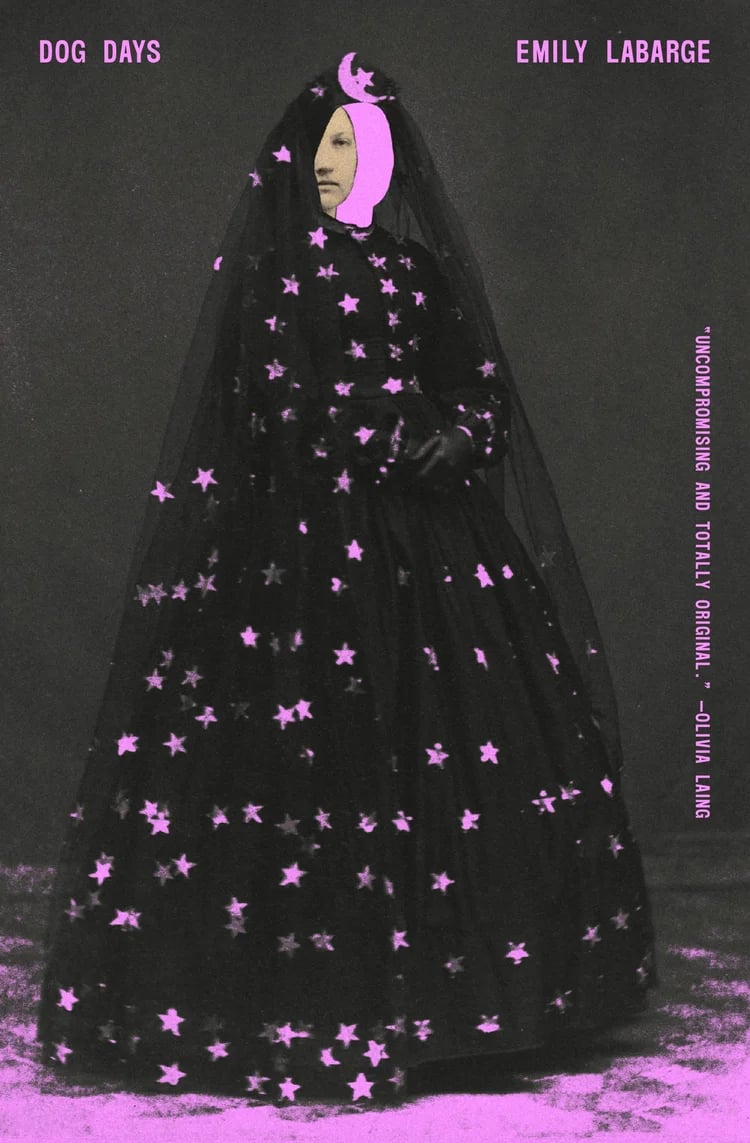
Sara Magenheimer: I want to start with humor, which might seem like an unconventional place to begin a conversation about trauma, but the laugh and the scream are both non-linguistic forms of release. Before we even open the book, we're told on the back cover that your family was held hostage while Mrs. Doubtfire played on repeat. It's such a setup, to which the book almost becomes an absurd punchline. You also have this beautiful moment where you mentioned how Aristotle says, Time is the measurement of change: if nothing changes there is no time. How did your relationship to humor change as you constructed the narrative of the event at the center of the book?
Emily LaBarge: The men who held us hostage were genuinely watching Mrs. Doubtfire and laughing at all the classic punchlines — because it is a funny movie. But I think the reason it lands on the jacket cover, and the reason people pick up on it, is that we read incongruity as a kind of uncanniness that's also horrifying. How chilling it is when something stays so ordinary despite the mismatch, a kind of collision of sensibilities or realities. I think we live in an age where that collision happens constantly, because of how media works: you get a feed of dog videos, then someone dismembered in Gaza by an Israeli assault, and holding both at once is horrifying. It certainly isn't funny, it’s something else deeper and more bizarre and yet totally recognizable to most people. I think there's also a narrative expectation that when something bad happens you're screaming and wailing, when in fact you're mostly just confused, dissociated, in shock, impassively registering things.
I've always loved Robin Williams in movies like Jumanji and Good Will Hunting, which people our age grew up with. He was so versatile, but always some version of himself: funny, restless, sad. His standup is ribald, sweaty, cocaine-fueled, but there was always a lot of pathos in him, which is why he was so moving in the more tender roles.
One of the ironic things is that my family loves movies and so every Christmas we had this months-long selection process for what to watch each evening while away. My sister even made a spreadsheet in which everyone ranked their choices and sometimes added comments. I'd been trying to get Mrs. Doubtfire through the door for years and everyone said it was just a kid’s movie, but it finally got on the list. The night of the home invasion it was my turn to pick, and about ten minutes into this violent event, I remember absurdly thinking, I wonder if people are going to be too upset to finish watching this after these guys leave. I'd thought the whole experience would only last fifteen or twenty minutes and we'd go on with our evening. Stated plainly, that's horrifying, but looking back, it's also kind of funny.
Life is genuinely ridiculous, and these incommensurate things brush up against each other when you expect them to be more profound and instead they're just very weird. There's a line in the book: It is horrible, but what is really horrible is how ordinary it is. The violence has not endowed the house with any spectacular or unusual qualities. It is exactly the same as before, just ruined. You expect something more dramatic to mark what you went through, psychologically or physically, but it's still just a room with broken stuff in it, not like a horror movie with a ghost, nothing to actually show you. So maybe humor is what displaces that absence. It's less a deflection mechanism than just the truth of what it's like once you're through something and everyone else expects you to be performing distress but somehow you cannot. You have to laugh to survive, especially once some of the poison has worn off. Life is also just very bizarre.
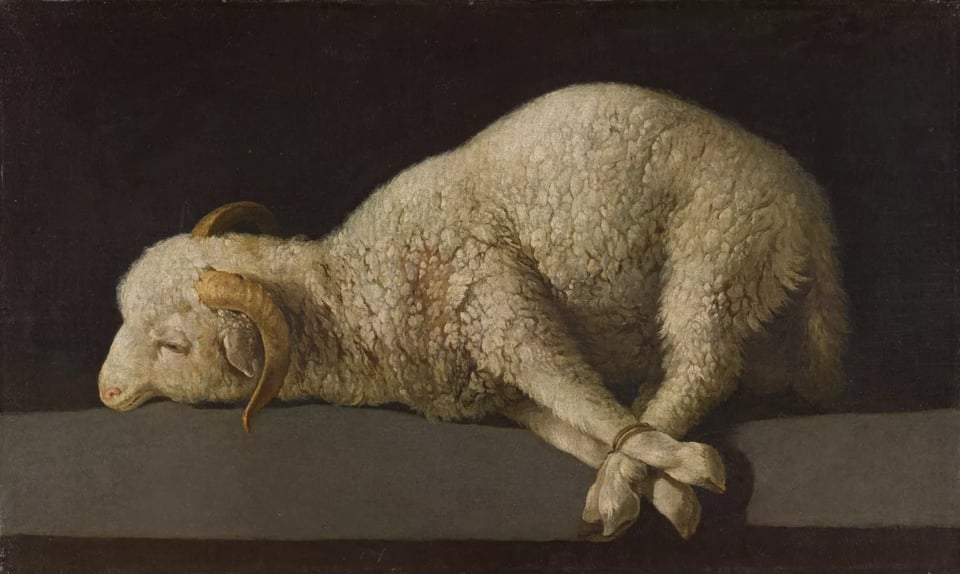
Sara: Yes, these are parallel lines, like a music staff, that don't intersect but create the structure on which your experience is played: humor is one line, horror another, and their simultaneity is undeniable. We are driven to make sense of disparate things.
Could you describe, visually, how your process of sense-making cohered into the book's final structure? Some writers talk about building islands and then connecting them, or making lists of everything they want to include.
Emily: You want me to go get my charts? [Steps away to retrieve notebooks and sketches. Comes back holding up various pages of notes and diagrams.] A lot of things start out like this, piles of paper. I need to know the shape, but it changes as I write. At the beginning, before I'd started writing at all, I sorted which sections had quotations I wanted to use and then I cut it all up. At first I thought it would be an essay. Then it became clear it would have to be a seventy-part essay, which isn't an essay.
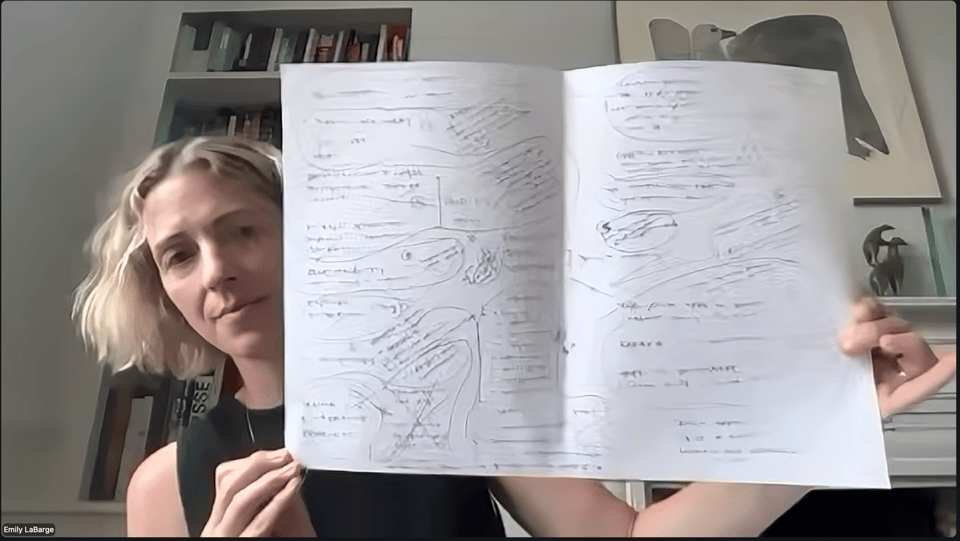
I did this during COVID, with graph paper: on one side, pieces I thought of as literary experiments; on the other, pieces I thought of as narrative, color-coded. I start with a big web and then figure out which threads can hold enough space to be an actual section, which are narrative, which are themes, which are artworks that act as metaphors but also cultural criticism, which is research (the trauma-research material). I wanted to move across all those registers.
Part of the burden of restructuring, for me, comes from believing that form is part of the argument. That’s what I love in your book, too, the crossover in how form and voice hold what can't otherwise be articulated. Some of the rearranging is purely writerly and editorial, and some of it is just knowing when something's in or out.
There were also ethical considerations about how trauma stories are usually told. I wanted to avoid flashbacks, or withholding the story for a later reveal. That's why the book opens with the event itself: get it out of the way, then let it continue through other modes. The middle section is structured around symptoms, with more cultural references in it; the last section is about writing, with a significant amount trauma research that reflects on the narrative choices made throughout the book. I wanted to show that trauma is a durational experience that continues, not a single event, and that it moves from the singular to the plural, to the collective.
Sara: The way the work keeps returning to cinema, and cinematic tropes, it seems like you very much thought about avoiding a kind of voyeuristic pleasure in relationship to the traumatic elements in your narrative. The way you're describing structure in relationship to that kind of scopophilic pleasure seems related to Hélène Cixous, or a way of thinking about narrative as, like, écriture féminine, something that's not about one climactic moment but rather a kind of unfolding investigation.
Emily: It's interesting, I love Cixous, and I always give “Bathsheba or the Interior Bible” to my students because it's one of her more explicitly art-related texts, although it's doing all of the things that écriture féminine does. Writing that resists the dominant mode of patriarchal, white, Western representation or narrative is a tendency, not a singular politics. Maybe it's also allied with ideas of the essay as a form, and that it's an anarchic form that holds heterogeneous things together. I find it slightly unusual to think about in terms of non-fiction, because I'm like, I didn't make up this plot. This thing just happened. All it leaves you with is the decision of what to do with facts, not fiction.
Sara: On the question of the facts of what happened, of disclosure, you leave a lot out. How did you land on what to redact or leave blank?
Emily: When things are redacted, it's because I don't remember. That's a decision about the reality of traumatic memory, not just an aesthetic one or a kind of coy withholding, and also about how I think people are capable of reading and understanding what is being offered to them and why. Or because I’m not legally allowed to print certain details, like people’s names. Our common friend Lynne Tillman once told me: when students say "I want to know more about this character," her answer is that the information isn't there for a reason: you should think about why that is. My relationship to the book's form is really an investment in readers' capacity to understand, and in their desire for something different. When you're handed something unfamiliar it lets you imagine your own world differently. There is really also a great deal of what I think of as incredibly personal material in the book, which was difficult to write.
Genre also exists partly to hold dissenting versions of itself. I never thought of this as a memoir, and I don't mind it being called that, but that's the context in which I've heard the most complaints about it “not giving enough information.”
Sara: Right, because it’s not delivering on a reader’s expectation of what a traditional memoir should do?
Emily: Yeah, it’s like you said: it’s a kind of voyeurism. There's a lot of information in the book, it's just not that information. It's not just a decision I'm making about the material, it's a decision about the kind of relationship I want to have with a thinking public.
There were also practical constraints: I don't remember certain things, and a memoir convention is that no one really remembers everything from childhood, but we accept that the writer fills those gaps with narrative. That’s the pact with the reader, but that's not how people actually remember. I wanted that to be part of the form itself. Trauma, or any rupturing experience, opens up possibilities: what does it tell us we can do differently if we allow it — if we allow its intellectual resonances and psychological experiences to reflect back to us what we can do on the page?
Sara: Absolutely. That’s the gift I somewhat resent about traumatic experiences: a violent rupture in reality can leave us feeling liberated to do things we wouldn't otherwise give ourselves permission to do. I think that's what you're describing with the Xs and ellipses in the book, how language can perform with fidelity to one’s experience.
This was a collective trauma for your family. What were later conversations with them like, and how did hearing what they remembered, or didn’t, shape your own retelling?
Emily: I asked my family what they remembered of the event itself, but I didn't ask much beyond factual details.
Both my parents have read the book. My mom's a writer, my dad's a lawyer, but reads everything. I'm lucky: my mother has drawn on the lives of everyone she knows for her short stories, to the point where, when I was a kid, people left her angry messages on the answering machine. There’s already a family understanding that the world is material, that you make ethical choices about how you represent people, but that it's not "about" anyone in a possessive sense. There's a respect for the art object as something separate from how you personally feel about the people in it.
Sara: Yes, there was implicit trust in you as a writer and permission to treat the world and your inner life as creative resources.
I love the Judith Butler quote you use, that for Butler, incoherence can be an ethical resource that radicalizes our sense of subjectivity and responsibility. It made me wonder, is a narrative even possible without the context of community? How can we collectively narrativize in response to bigger punctures in the narrative coherence of a culture, extrapolating from poetic and subjective interpretations of personal traumatic experiences to things like what's happening in Gaza?
Emily: So much of Butler's work is about our responsibility as relational beings, not in the flattened sense of "everything is relational," but that you're formed by what's around you and also responsible for how you engage with it, including your own trauma. Thinking of incoherence as a tool for remaking the world is a radical way to deal with rupture, but that possibility is only available to some people and experiences. So there's a limit to how far I can take this idea of collective trauma: we're responsible for understanding a shared humanity, which should let us feel less alone with our own trauma, while also understanding we're never separate from what happens to anyone else. There's a passage, I think about Artaud and his lecture on the plague, that says, of his audience, something like: I want them to know they’re already dead. It's a kind of living death not to be as human as you could be.
I wanted to avoid the sensationalized, singular memoir, the "this is an exceptional story" mode, because most traumas aren't exceptional; you have to do something formally or intellectually interesting for people to want to read about it. Believing that what happened to you is incomparable and can't be understood by anyone else is damaging, and it isn't actually a way to survive or overcome trauma, true or not. It's about placing yourself in a continuum of relational experience: what do you do with what happened to you, and how does it expand rather than shrink your sense of your place in the world in relation to everything else?
Sara: That tracks with something I've been thinking about. I just read Arundhati Roy's Mother Mary Comes to Me, her memoir about her mother, who was both her greatest adversary and her greatest teacher. Roy engages trauma with such a light touch that's also visceral.
Emily: There's an important tension right now: alongside people doing genuinely interesting work on trauma and collective practice, there's also a wave of reactionary books arguing people should "stop thinking of themselves as victims" because the real problem is structural. As if no one addressing structural poverty is also talking about individual experience. The two aren't opposed. I think we need a better language than "everyone is traumatized" or "no one is," or "the whole contemporary world is traumatic, we're all in the same boat.” None of that is really true, and talking about trauma doesn't mean a license to complain endlessly. I think that's a problem and writers like us and others are working against that oversimplification.
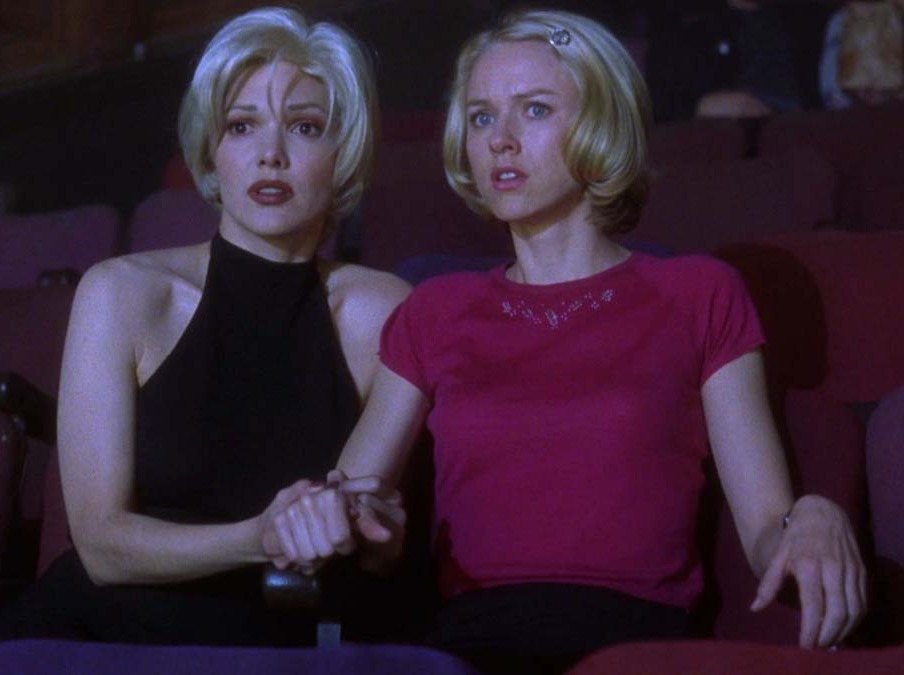
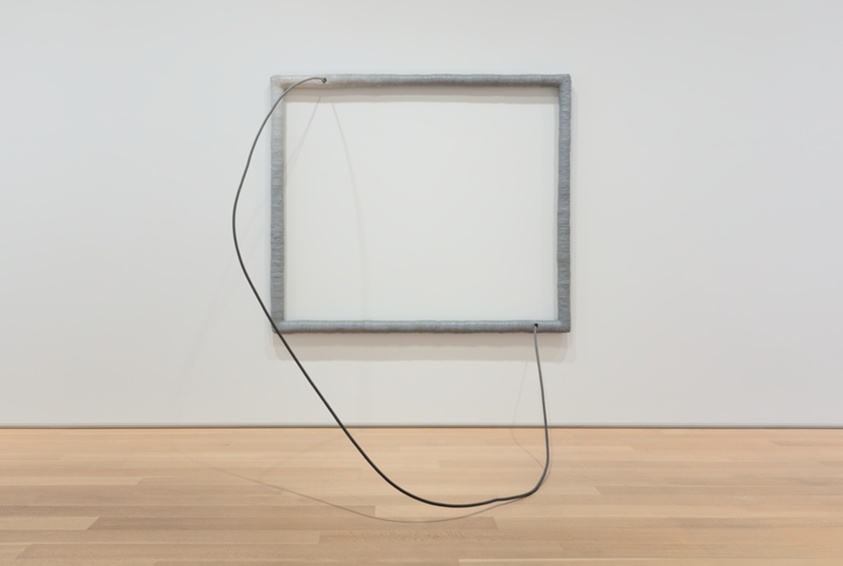
Sara: In the book, you include so many other voices and works of art: Sylvia Plath, Virginia Woolf, Antonin Artaud, Joan Didion, Eva Hesse’s Hang Up, Mulholland Drive, Funny Games, offering commentary or counterpoint to your own story. That formally mirrors what you're describing about locating the subjective within the collective. These feel at times like arbitrary reference points and yet they flesh out something with such personal resonance. Were you consciously thinking about that as you wrote, or simply following what resonated?
Emily: At first I thought of them as preoccupations, things I'd been drawn to in art, literature, film that I didn't necessarily understand at the time, but that had become touchstones. In hindsight even at the time they probably functioned as metaphors in another medium, parallel versions making manifest something I couldn't articulate directly. As I was writing, some references snowballed naturally within an essay, others I added to sharpen the rigor of the trauma research or engagement with other memoirs.
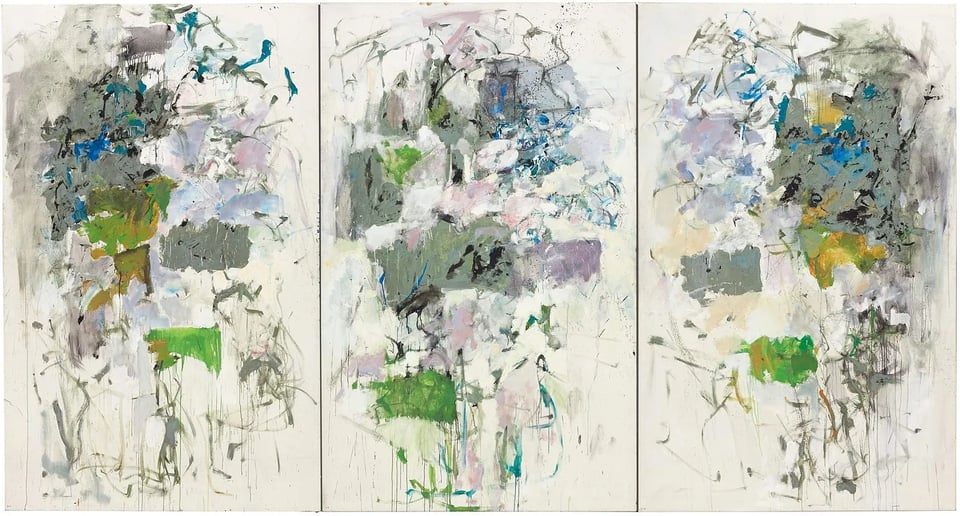
Ultimately, though, by trade I'm an art critic. My job is to look at things and understand what they're telling us about the person who made them, their formal choices, and how to survive being a person. So those works are also guides, parallels, offerings about how to engage with the world. There's a discussion of Joan Mitchell triptychs, and the book itself is a triptych with not dissimilar relationships between its parts.
In some ways this book could be seen as close to autotheory; consulting outside sources to understand and constitute itself as it unfolds. That circles back to what we said about deciding on a structure and then letting it shift, because you don't know at the start what you'll know by the end. Writing sentences produces thoughts you didn't previously have. Those touchstones were fellow travelers, offering something I didn't fully understand until I was already holding onto them. That’s the critical act: paying attention to something until it offers you infinity.
It's also a political stance, look outward at what other people are doing, rather than endlessly mining your own feelings, which are themselves shaped by the world in any case.
Sara: I remember indexing my own book, Beige Pursuit, and noticing unexpected resonances and being struck by the absurdity of seeing the breath of references flattened into something as neutral as a list. That's the ongoing dialogue we're always in with the world, and it's your vocation especially, to witness the vibration between your internal experience and the externalized product of someone else’s interior world.
Emily: There's not much else to do on this planet than pay attention. There's no other meaning to be found here, so everyone chooses how they make meaning. Wayne Koestenbaum says: We commit a cruelty against existence if we do not interpret it to death. The belief you can find something meaningful, even extraordinary in the most mundane things is such a valiant way to move through the world.
Sara: Not to valorize trauma or put it on a pedestal, but that heightened awareness is a gift, in the sense that you can't walk around every day marveling at every flower and breeze or you'd never make it to the end of the block. But being in that heightened state during a traumatic experience gives you an incredibly high-resolution image of the moment. Afterwards you unravel all those associations from that pristine kernel.
Emily: The clinical term for that is hypervigilance, a kind of paranoia, and it will make you crazy. Paying attention to the world that intensely also means paying attention to its suffering, and doing that all day will kill you, too. That sense of being freshly vulnerable to a world beneath the world, a world behind this one that only you can see, was extraordinary and beautiful but also deeply painful and sad and isolating. That's the trauma brain: a strange mix of magical thinking and profound despair. Paying attention to the world, in the Judith Butler sense, means acknowledging everything else, too, politically near and far. That’s the framework cultural criticism gives you for what art should attend to.
Sara: Now that you're on the other side of writing after such a long emotional undertaking, I’m curious if you have had the conversations you hoped for? Sometimes when I'm making something, especially when I was younger, I'd think: I need to make this thing so I have something to gather around, a kind of campfire for the conversations I want to have. Has Dog Days done that?
Emily: I've been amazed by how generously people have read it as the experiment it was offered as. Every conversation I've had about the book has mattered to me. One I loved was in San Francisco, with the writer and critic Nick Gamaso. Because he's primarily an art critic, he read the book as a kind of manifesto for criticism, which I loved. Writing about art is so foundational to this book, and to how I understand and make sense of the world. I also think criticism as a form offers as many opportunities as other genres, and it can hold a lot more experiment and openness than we typically encounter.
I also love thinking of the book as a kind of manifesto for what's possible if you make your own version of écriture féminine, not as a blueprint, but as a “what if”: what if people could tell things the way they actually wanted to?
Sara: What if you gave yourself radical permission to be as capacious as you wanted with your narrative, to let it include everything that resonates? Rather than being selfish, this is actually generous, because you're digesting and regurgitating it back in this beautiful way. If regurgitation can be beautiful.
Emily: For the baby birds!
Sara: Exactly, your readers are your baby birds, nourished by how you've re-described the world to us.
Emily: I think readers are smart and a real problem is that we often foreclose things because "it won't sell" or "it's too confusing." Is it, though? Life is pretty confusing.
Sara: I believe good books are written for the reader with whom you want to be in dialogue, someone smarter and more imaginative than you, who brings things to the work that keep it alive, otherwise you're bored by your own writing.
That's a continuation of the same idea and connects to what we were saying about criticism: you include these quotations because of your position as a critic, and rather than just handing us conclusions, you trust us to interpret. That's a hopeful and generous gesture.
Emily: It's also the pleasure of citation, part of the essayistic practice of bringing things together and asking, what if I put all of this side by side and let it show you a world that represents my mind, or what I'm trying to say? The pleasure of reading a quotation aloud and sharing it is part of the pleasure of interpretation and criticism itself.
There are different ways of including someone else's words: as a stepping stone, a hinge, not just proof of a claim. It's about holding hands and moving forward.
Sara Magenheimer is an artist preoccupied with language whose work spans moving image, writing, performance, collage, sound and sculpture. She is based in New York. Recent solo exhibitions include a survey show at Lighthouse Works, Fishers Island, NY; The New Museum, NY; Timeshare, LA; The University Art Museum in Albany, NY; Portland Institute for Contemporary Art, OR; The Kitchen, NY. Her videos have been widely screened including Oberhausen Film Festival, International Film Festival Rotterdam, Brooklyn Academy of Music, The New York Film Festival, Images Festival, Anthology Film Archives, EMPAC at RPI, Now Instant Image Hall, The LA Festival of Movies, Sydney International Film Festival, Flaherty Seminar, and the Museum of Contemporary Art Chicago. She was the recipient of a 2014 Rema Hort Mann Foundation Grant, 2015 Artadia Award, the Prix De Varti at the 2015 Ann Arbor Film Festival, a grant from the Foundation for Contemporary Arts in 2020 and awarded a Rauschenberg Residency on Captiva in 2021. Magenheimer authored Notes on Art and Resistance A–Z after the 2016 U.S. presidential election. In 2019 Wendy’s Subway published Beige Pursuit, Magenheimer’s first book of writing.
Emily LaBarge’s work has appeared in Granta, Artforum, Bookforum, London Review of Books, Frieze, Tate Etc., The White Review, and The Paris Review, among other publications. She is a regular contributor to The New York Times and 4Columns and has contributed essays for artist books, exhibitions and monographs, including on the work of Nancy Holt, Etel Adnan, Carolee Schneemann, Margaret Raspé, Prunella Clough, Camille Henrot, Meriem Bennani, Megan Rooney, Tai Shani, and others. She teaches for the writing programme at the Royal College of Art. Her first book is Dog Days.
As always, you can read this interview on Are.na Editorial.
And just a reminder, this is the last week to get in your walking scores for inclusion in the next Are.na Annual.
The Are.na Team